
Reviewed · NATIONAL GALLERY AND TATE TOURS
The Tate Modern London – Exclusive Guided Museum Tour
Tate Modern becomes much easier to enjoy when someone helps you choose what deserves your attention. This two-hour guided visit moves from Mondrian and Monet to Picasso, Rothko, Warhol, and Duchamp, with an art expert explaining the ideas behind the work rather than simply naming dates and artists.
I like the personal scale, especially when you book the private option, and I like the guides’ conversational style. Becky, Matilda, Ellie, Caroline, Jake, Sasha, and others are praised for asking questions, adjusting to each group, and making modern art approachable for both serious students and doubtful companions. The main catch is that temporary exhibitions are not included, and the museum can occasionally close rooms or delay opening without notice.
Key points to know before you book
- Expect a focused route through major works: Two hours gives you a useful introduction without trying to cover every gallery.
- The guide shapes the experience: Guides such as Becky, Matilda, Ellie, and Caroline have been especially effective at turning looking into a conversation.
- Private means genuinely personal: The private option is for your group alone. The save-priced semi-private option has different conditions.
- The art spans major turning points: You may move from Impressionism and geometric abstraction to Surrealism, Pop Art, and conceptual art.
- Bring a small bag: Large bags and suitcases are not permitted, and security may add time.
- Book with flexibility: Free cancellation is available up to 24 hours before the start time.
Why a guide helps at Tate Modern
Tate Modern is not a museum you simply tick off by walking past famous canvases. Its collection asks basic, sometimes awkward questions: What is a painting supposed to do? Does an everyday object become art when an artist places it in a museum? How much should you know before you can have a valid response?
A good guide gives you a way into those questions. Instead of stopping at every room, your guide selects important works and connects them to the artistic movements, political events, and personal choices behind them. That matters at Tate Modern because the collection includes paintings, sculpture, photography, installations, and mixed media. Without a plan, you can spend a lot of energy wandering and still miss the ideas that hold the collection together.
This is especially useful if you are unsure about modern art. A guide can explain why a work looked shocking in its own time, what an artist was reacting against, or how a simple shape or color arrangement can carry meaning. You are not required to like everything. The point is to look more carefully and leave with better questions.
More National Gallery and Tate Tours:
- London: National Gallery Guided Tour with Art Expert Guide
★ 4.7 · 440 reviews - National Gallery of London Museum Tour Semi-Private 8ppl Max
★ 5.0 · 178 reviews - British Museum & National Gallery of London Semi-Private 8ppl Max
★ 5.0 · 168 reviews
The route from Mondrian to Picasso and Dalí
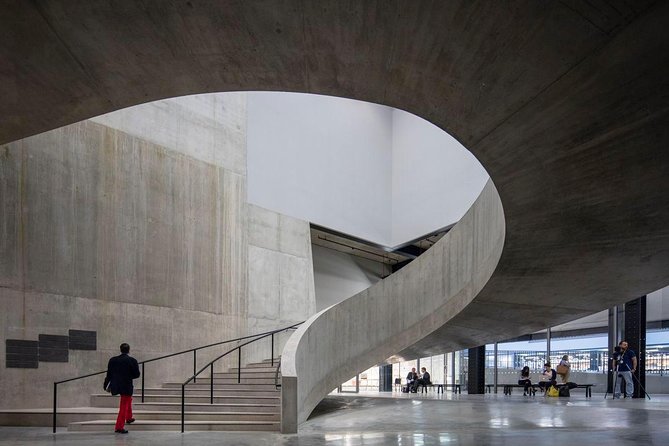
The visit begins in the galleries and halls of Tate Modern, where your guide introduces you to selected works from the museum’s modern and contemporary collection. The exact route can change because collections and rooms vary during the year, but the planned range is broad.
Mondrian offers a useful early lesson. His geometric blocks and careful fields of color may look simple at first glance. Your guide can draw your attention to balance, spacing, and the way a limited set of lines and colors can create movement. It is a good reminder that abstract art is not necessarily random. There is often a firm structure beneath the calm surface.
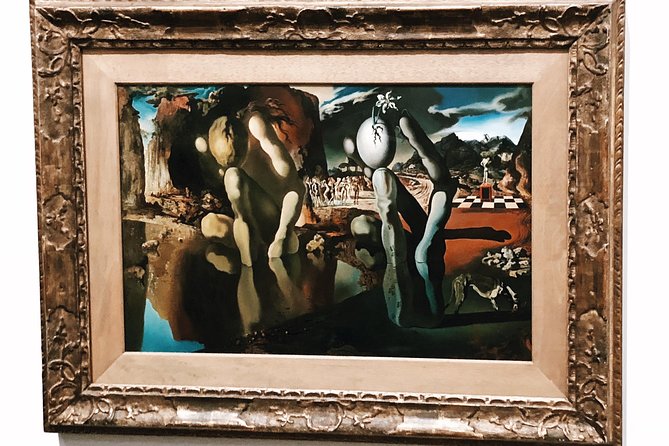
The tour also places artists in their historical setting. Picasso and Dalí are connected with Spain and the years of the Spanish Civil War, when art, politics, and personal identity were tightly linked. That background can change how you see a painting. Instead of treating a strange figure or distorted scene as an isolated puzzle, you begin to consider what fear, conflict, or social change may have contributed to it.
The guide does not simply hand you one approved interpretation. Several experiences with Becky and Matilda describe a style that encourages you to think first, then compare your own response with the artist’s intentions or the guide’s reading. That makes the hour more active than a standard lecture.
Monet, Rothko, and the value of slowing down
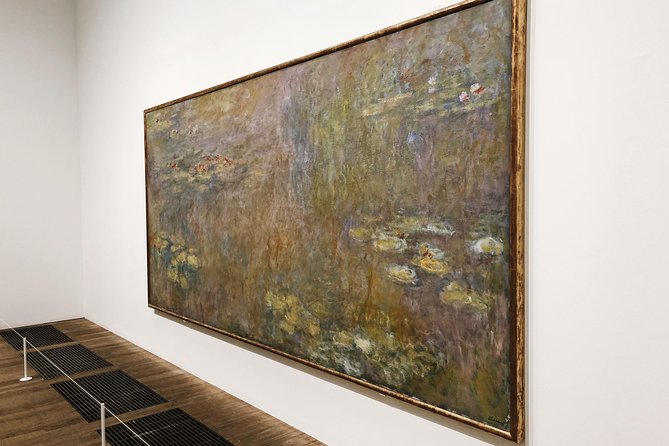
The tour also introduces Impressionism through Monet. His work gives your guide a chance to explain how artists began treating light, atmosphere, and everyday scenes in new ways. You may find that a painting looks different when viewed from a little farther away, then examined close up. That simple change in distance can help you understand how brushwork and color work together.
Mark Rothko brings a different challenge. His large areas of color are easy to dismiss as plain, especially if you expect a recognizable subject. A guide can encourage you to spend time with the edges, layers, and relationships between colors. Rothko is a useful stop because he asks you to consider whether a painting can create a mood without showing a person, place, or story.
This is one of the strongest reasons to choose the tour instead of relying only on labels. Museum text can tell you when a work was made, but it rarely gives you much time to test your own reaction. A guide can stop, ask what you notice, and help you put your response into words.
If you prefer a brisk list of famous names, the discussion may feel slower than expected. If you like conversation and want to understand why an artwork matters, that pause is where much of the value lies.
Warhol, celebrity, and the 1960s
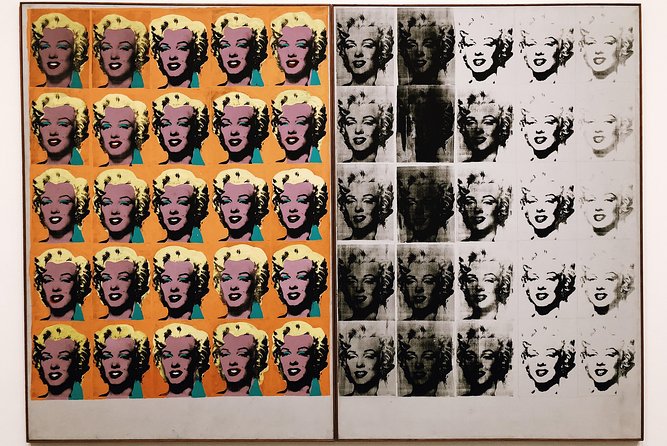
Andy Warhol gives the tour a more familiar entry point. His images of Marilyn Monroe and other public figures are instantly recognizable, but the guide can move beyond the surface. You will consider how celebrity, repetition, advertising, mass production, and the idea of an artistic original fit together.
Warhol is also a handy bridge between the museum and everyday life. The faces and visual style can feel familiar because they belong to popular culture, not just to an art book. That makes this part of the visit accessible for teenagers and adults who do not usually spend time in galleries.
Caroline received particular praise for engaging a 12-year-old and a 14-year-old while still giving the adults useful historical context. That suggests this tour can work well for a mixed-age family, provided everyone is willing to look, listen, and answer a few questions. The private format should help your guide adjust the pace and examples to your group.
More British Museum Tours:
- Tower of London and Crown Jewels Exhibition Ticket
★ 4.5 · 6,677 reviews - London: Chelsea Football Club Stadium and Museum Tour
★ 4.8 · 4,576 reviews - Chelsea FC Stadium Tours and Museum
★ 5.0 · 1,908 reviews - London: British Museum Guided Tour
★ 4.3 · 1,182 reviews
Duchamp’s Fountain and the big question
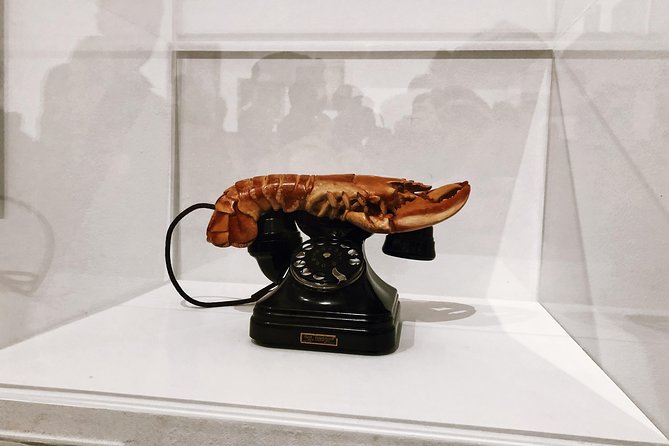
Marcel Duchamp’s Fountain is the point where many people stop and ask what exactly they are looking at. That reaction is part of the work’s power. Your guide can use it to discuss authorship, choice, the museum setting, and the possibility that an idea can matter as much as craftsmanship.
The visit does not promise to settle the argument. That is a good thing. You may leave still unsure if Fountain belongs in an art museum, but you will have a clearer sense of why it caused such a stir and why later artists continued to challenge old definitions.
Some rooms may require quiet or limit speaking. Your guide will explain those rules before you enter. That small detail matters because a lively discussion may need to pause briefly in certain spaces.
Guides who make the difference
The strongest part of this experience is the guide. The names attached to past tours include Becky, Matilda, Ellie, Caroline, Sasha, Sacha, Jake, and Eleisha. You cannot necessarily request a particular person unless the booking process allows it, but these examples show the level of experience the operator has provided.
Becky’s approach is especially suited to people who want discussion rather than a speech. She has been praised for selecting a manageable number of works, asking thoughtful questions, and judging when a group has had enough information. That last skill matters in a museum as large as Tate Modern. Too many facts can flatten the experience.
Matilda is described as clear and energetic, with strong command of art history and different ways to interpret a work. Ellie brings formal art history training and a personal style that can make the tour feel less like a classroom. Caroline has shown an ability to assess a group’s interest and prior knowledge before setting the pace.
Jake adds British and London history alongside art history. That could be a useful choice for you if you want the museum connected to the city around it, rather than treated as an isolated collection.
The common thread is interaction. You should expect your guide to ask what you see, what you think an artist intended, and how a work affects you. That approach is more rewarding than memorizing names, but it also means you need to take part.
Private or semi-private: choose with care
The experience is offered in a private format, meaning only your group participates. That is the best choice if you want the guide to adapt closely to your interests, family, or level of experience.
A semi-private option is also available at a lower price. The conditions differ: the exclusive guide is not included in the same way, and the stated wheelchair-friendly provision does not apply to that option. Read the selection carefully before paying, especially if accessibility is important or if you want a tour limited to your own party.
The advertised price is $107.74 per person. That is not a bargain museum admission, particularly because general admission to Tate Modern is not charged as part of this experience. You are paying for the guide’s time, planning, interpretation, and the efficiency of seeing important works in two hours.
I think the price makes the most sense for first-time visitors, families, and couples who would otherwise spend half their visit trying to understand where to begin. It is less compelling if you already know the Tate Modern collection well or prefer a slow, independent visit with headphones and your own route.
Groups should also ask about group discounts before booking. A private guide shared among several people can offer better value than separate individual tours, especially when you consider the time saved.
Timing, meeting point, and museum practicalities
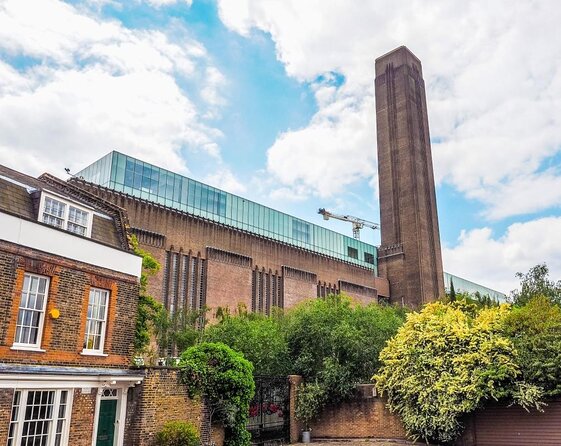
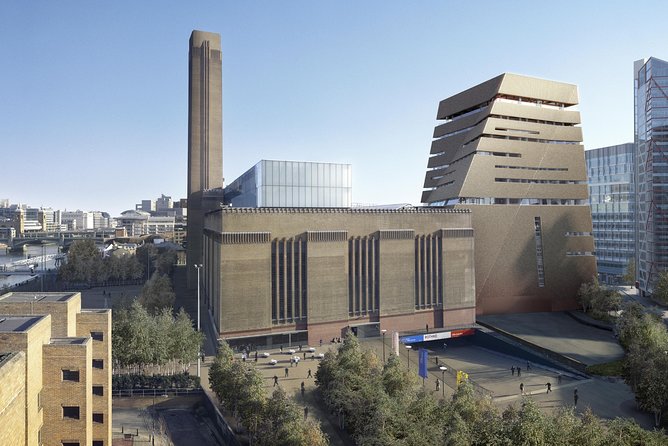
The tour begins and ends at Tate Modern, Bankside, London SE1 9TG. Hotel pickup and drop-off are not included, so plan your own route to the museum. The meeting point is near public transportation, and a taxi or Uber is suggested if you prefer a direct arrival.
Allow a little breathing room before the start. Security can create lines, even when an activity is described as having special access. The museum does not permit large bags or suitcases. Bring a handbag or a small, thin backpack instead.
The tour lasts about two hours. That is long enough for a serious introduction but not long enough to see every important room. Wear sensible clothing and shoes, since you will be moving through galleries and halls. The stated requirement is a moderate level of physical fitness.
The museum may occasionally close without warning, or delay opening. If opening is delayed by more than an hour, an alternative will be provided, but the conditions do not promise a refund or discount. Temporary exhibitions are not included, and some collections may change during the year.
If wheelchair access matters to you, confirm that you are choosing the private option. The listed wheelchair-friendly provision does not apply to the save-priced semi-private choice.
Who will get the most from this tour?
I would choose this tour if you are visiting Tate Modern for the first time and want the collection to feel manageable. It is also a strong fit for anyone who has tried modern art before and found it confusing, because the guide gives you language and context without insisting on one correct response.
Families with older children and teenagers can benefit from the private format. The guide can shift between Warhol’s celebrity images, Picasso’s wartime context, and the basic question raised by Duchamp. The experience is likely to work best when children are curious rather than simply being brought along.
Art students and serious museum visitors may also enjoy it. One participant with an art history background still found value in seeing a varied selection of painting, sculpture, photography, installation, and mixed media. A guide can point out relationships you might miss while moving alone through a large collection.
I would hesitate if your main goal is a temporary exhibition, since that is not part of the tour. I would also think twice if you dislike discussion or want complete freedom to linger for ten minutes in front of one painting. This is a planned introduction, not an unstructured afternoon.
Cancellation and booking details
You receive confirmation at booking, and free cancellation is available up to 24 hours before the local start time. Cancel later than that and the amount paid is not refunded. Changes made within 24 hours are not accepted.
Provide a mobile phone number with the country code when booking. That gives the operator a way to contact you if there is a meeting change or museum issue. Since the activity is run by Babylon Tours London, check the exact option, price, and accessibility terms before completing payment.
Should you book this Tate Modern tour?
Book it if you want a smart two-hour introduction rather than a quick walk past famous names. The best feature is not the promise of seeing dozens of masterpieces. It is the chance to stop at a smaller selection and ask why they matter.
The private format is worth considering for families, mixed-interest groups, and anyone who wants the pace adjusted. Guides such as Becky, Matilda, Ellie, and Caroline have shown the value of a warm, questioning approach that can make even a reluctant companion pay attention.
Skip it if you already know the collection, plan to visit a temporary exhibition, or prefer to wander alone. For a first Tate Modern visit, though, the guide can save time and make the museum feel far less intimidating.
FAQ
Where does the Tate Modern tour begin?
It begins at Tate Modern, Bankside, London SE1 9TG, UK.
Where does the tour end?
The activity ends back at the Tate Modern meeting point.
How long does the tour last?
The tour lasts approximately two hours.
Is admission to Tate Modern included?
The experience includes the guided museum tour. Temporary exhibitions are not included.
Is the tour private?
The private option is for your group alone. A save-priced semi-private option is also available, but its conditions differ.
Is the tour offered in English?
Yes. The tour is offered in English.
Is the tour wheelchair friendly?
The private option is listed as wheelchair friendly. This provision does not apply if you choose the semi-private option.
Can I bring a large suitcase into Tate Modern?
No. Large bags and suitcases are not allowed inside. Only handbags or small, thin backpacks are permitted through security.
Are hotel pickup and drop-off included?
No. Hotel pickup and drop-off are not included. You need to arrange your own transportation to Tate Modern.
Can I cancel for a full refund?
Yes, if you cancel at least 24 hours before the experience start time. Cancellations made less than 24 hours before the start time are not refunded.
Just added around London
- Private Chauffeur-London Heathrow from/to Southampton Cruise Port★ 5.0 · 9 reviews
- Kensington Palace VIP Garden Tour with Royal High Tea★ 4.5 · 71 reviews
- Up at The O2:Twilight Climb with Guided Tour with Panoramic Views★ 5.0 · 50 reviews
- Up at The O2: Sunset Climb with Guided Tour with Panoramic Views★ 5.0 · 110 reviews
- Secrets of the London Underground Small Group Walking Tour★ 4.5 · 38 reviews
- Urban Canvas: Exploring Shoreditch’s Vibrant Street Art★ 5.0 · 36 reviews
- Ultimate introduction to photography in Central London★ 5.0 · 19 reviews
- Full-Day Self-Guided Paris Tour from London by Eurostar with Seine River Cruise★ 3.5 · 22 reviews
National Gallery and Tate Tours, compared.
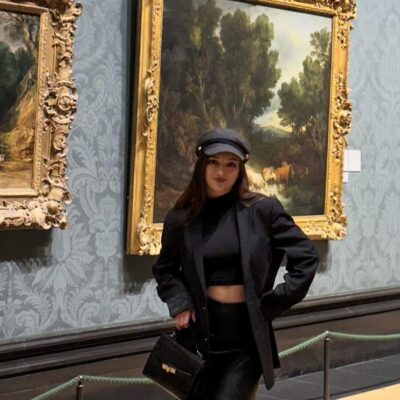
National Gallery Guided Tour with Art Expert Guide
Read our review →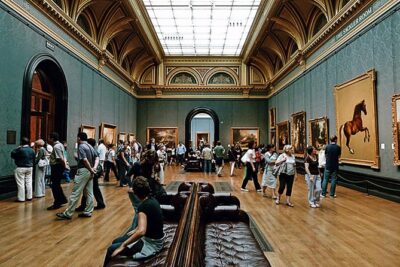
National Gallery of London Museum Tour Semi-Private 8ppl Max
Read our review →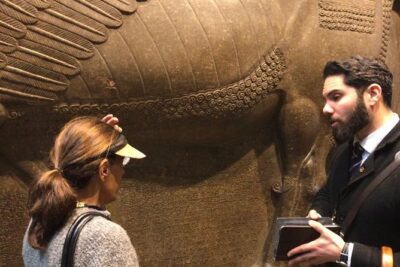
British Museum & National Gallery of London Semi-Private 8ppl Max
Read our review →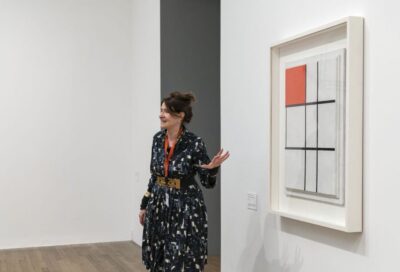
Official National Gallery Highlights Guided Tour
Read our review →
The National Gallery of London – Exclusive Guided Museum Tour
Read our review →
Browse the lists this tour appears in