
Reviewed · NATIONAL GALLERY AND TATE TOURS
The National Gallery of London – Exclusive Guided Museum Tour
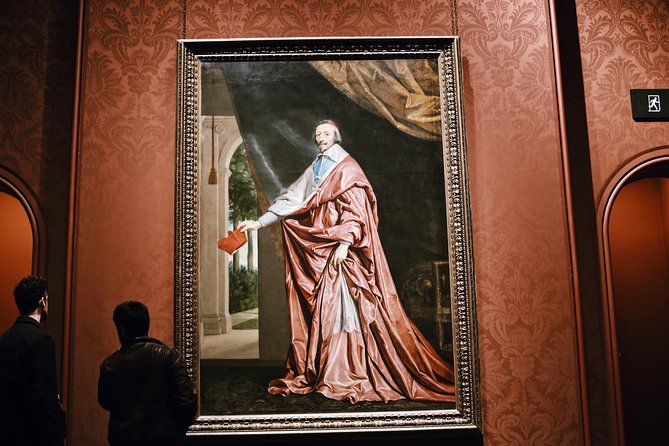
The clever part of this National Gallery tour is that it turns 2,300 paintings into a manageable story. Instead of wandering from room to room, you follow a guide through key works from the 1300s to the 1900s, with time to focus on paintings you actually care about.
I like the private format and the freedom to shape the visit around your interests. I also like the way strong guides such as Jamie, Matilda, Becky, Sheldon, and Steph use questions, comparisons, and even an iPad to make details easier to see. The main drawback is simple: two and a half hours means plenty of standing and only a carefully chosen slice of the collection.
Key points to know before you book
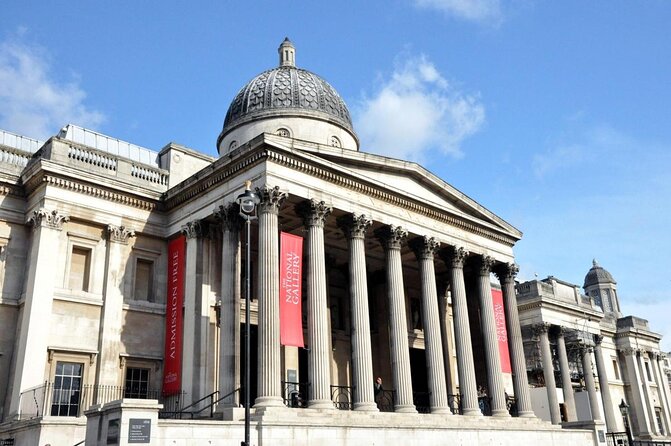
- Your guide can build the route around you: Ask for Van Gogh, Vermeer, Monet, religious art, portraiture, or a broad chronological tour.
- The route covers centuries of painting: You may see works by Botticelli, Rembrandt, Jan van Eyck, Monet, and Van Gogh.
- The small private setting helps: Your guide can answer questions and adjust the pace more easily than on a large group tour.
- The art is explained, not just pointed out: Expect attention to technique, perspective, lighting, symbols, and the lives of the artists.
- The tour is a sampler, not a complete museum visit: The National Gallery has more than 2,300 paintings, so you will not see everything.
- Plan for practical limits: Large bags and suitcases are not allowed, temporary exhibitions cost extra, and the tour involves a fair bit of walking.
Why a guide helps at the National Gallery
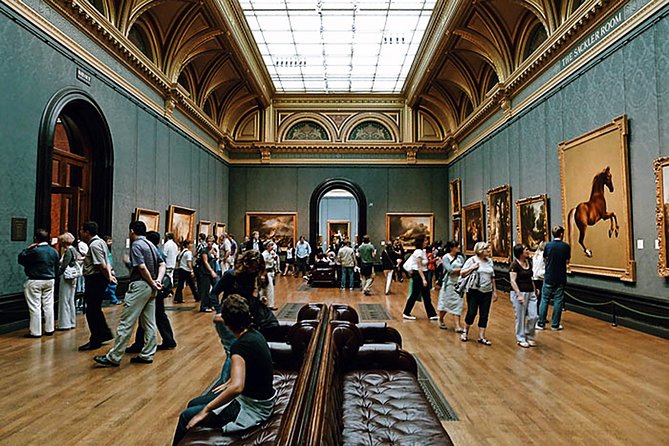
The National Gallery is free to enter, but free entry does not make it easy to visit well. Its 2,300 paintings cover several centuries, and the famous names are spread through a large building. Without a plan, you can spend a lot of time looking at wall labels and still leave unsure what you saw.
This tour gives your visit a clear shape. Your guide may begin with early European painting, move through the Renaissance, and then show how artists changed the way they handled light, space, color, and human emotion. You get a story about the art rather than a parade of famous names.
That structure matters most if you are new to art museums. You do not need to know the difference between Renaissance and Impressionist painting before you arrive. A good guide starts with what you can see, then explains why it matters.
For experienced art lovers, the private setup has a different advantage. You can ask about a particular painting, request a favorite artist, or spend more time on a work that catches your eye. The tour is not locked into one script.
More National Gallery and Tate Tours:
- London: National Gallery Guided Tour with Art Expert Guide
★ 4.7 · 440 reviews - National Gallery of London Museum Tour Semi-Private 8ppl Max
★ 5.0 · 178 reviews - British Museum & National Gallery of London Semi-Private 8ppl Max
★ 5.0 · 168 reviews
Meeting at Trafalgar Square
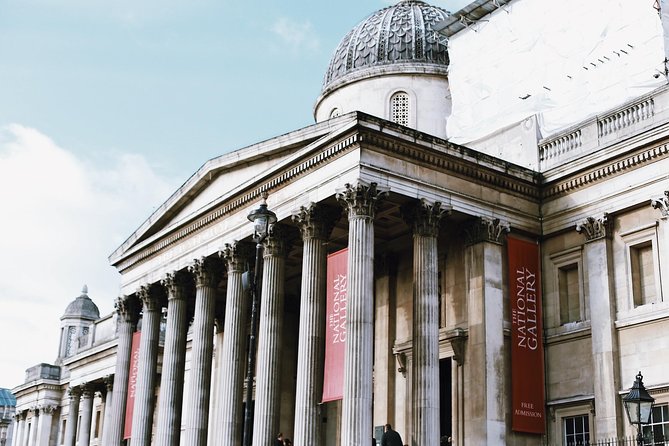
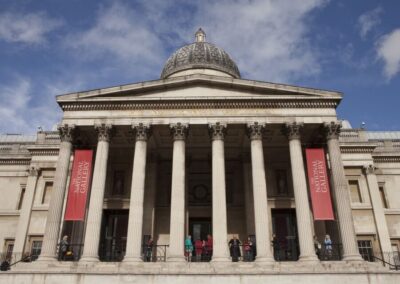
You meet your guide at the National Gallery’s front entrance on Trafalgar Square. This is a central London location near public transportation, so it fits neatly into a day of sightseeing in the West End or around Westminster.
Hotel pickup and drop-off are not included. You will need to make your own way to the gallery, with a taxi or rideshare recommended if you are carrying luggage or managing a tight schedule.
Bring a mobile phone number with the country code when booking. That contact detail is required, and it gives the tour company a way to reach you if meeting arrangements change.
Security can slow entry at major London attractions. Large bags and suitcases are not allowed inside, while handbags and small, thin backpacks can pass through security. I would keep your belongings light and avoid arriving with anything you need to store elsewhere.
A two-and-a-half-hour route through European art
The advertised duration is about 2 hours and 30 minutes. That is long enough to build a useful understanding of the collection without turning the visit into an exhausting full-day museum march.
Your guide will likely choose a group of major works and connect them across time. You might begin with early paintings from the 1300s, where religious subjects, symbols, and careful detail tell you a great deal about the society that produced them.
From there, the route can move toward Renaissance artists such as Botticelli. The value of this part of the tour is not simply seeing another famous name. Your guide can point out how artists handled the human figure, movement, storytelling, and the balance of a scene.
Works by Rembrandt offer a chance to look at light and character. Rather than treating a portrait as a formal record, the guide can direct your attention to expression, shadow, clothing, and the choices that make the subject feel present.
You may also encounter Vermeer, Monet, and other major painters as the tour moves into later periods. The exact selection can vary, and the collection changes during the year, so you should think of the route as a guided selection rather than a fixed checklist.
The famous paintings, and the details you could miss
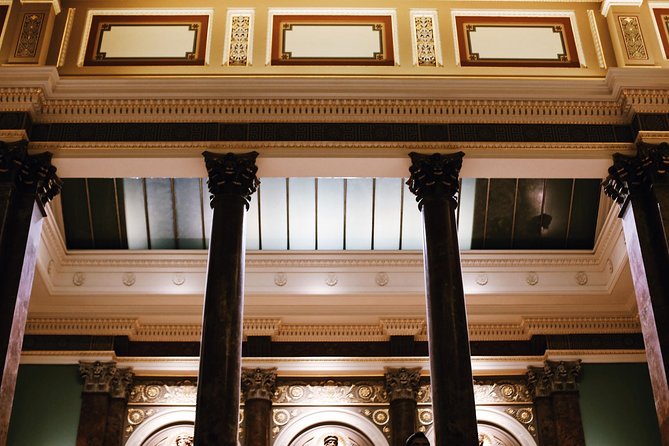
Van Gogh’s Sunflowers is an obvious highlight. Even if you have seen reproductions many times, the guide can help you look past the familiar yellow surface. Brushwork, color, paint thickness, and the relationship between the flowers and background become part of the experience.
Jan van Eyck’s The Arnolfini Portrait offers a different sort of reward. It is packed with visual details, and a guide can help you notice objects, gestures, textures, and symbols that are easy to overlook when you see the painting alone.
That is one of the strongest reasons to book this tour. The best guides do not just lead you to famous paintings. They show you what to examine once you are standing in front of them.
Several past participants singled out guides for pointing out lighting, perspective, and small details that they would have missed. Jamie used an iPad to add visual information, and his interactive approach included asking questions and inviting opinions. Wesley was also praised for making the tour a conversation rather than a string of facts.
Those teaching methods suit both beginners and experienced museumgoers. You can learn why an artist made a particular choice, then decide whether you agree with the interpretation. That is far more useful than memorizing dates.
More British Museum Tours:
- Tower of London and Crown Jewels Exhibition Ticket
★ 4.5 · 6,677 reviews - London: Chelsea Football Club Stadium and Museum Tour
★ 4.8 · 4,576 reviews - Chelsea FC Stadium Tours and Museum
★ 5.0 · 1,908 reviews - London: British Museum Guided Tour
★ 4.3 · 1,182 reviews
Choosing the right style of tour
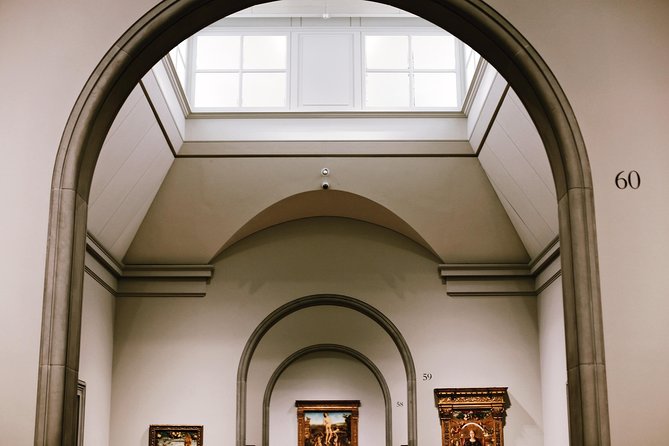
The tour is sold as an exclusive private experience, meaning only your group participates. That format is especially useful for families, couples, and mixed groups where one person loves art and another needs a clear reason to keep moving.
You can tell the guide what interests you at the start. You might request specific painters, ask for the guide’s favorite works, or simply ask for a broad introduction to the gallery. Sheldon, for example, led groups through the collection in chronological order, while other guides focused on selected works and personal interests.
The route can also suit a group with different levels of interest. A child or first-time museum visitor can ask basic questions without feeling out of place. Someone who already knows the famous works can ask for comparisons or more detail.
There is also a semi-private option described as a saving choice. The exclusive private guide and wheelchair-friendly features do not apply if you choose that option, so check the exact product before booking if privacy or accessibility matters to you.
What the guides do particularly well
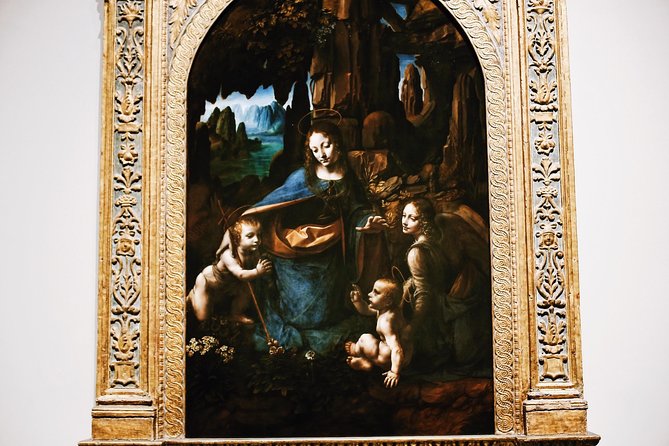
The strongest part of this experience is the human element. The guides named in the feedback include Jamie, Matilda, Becky, Sheldon, Steph, Jake, Laurence M, Wesley, Sacha, and Luis. Their styles differ, but the repeated strengths are clear: strong art knowledge, an easy speaking style, humor, and enthusiasm.
Matilda was praised for organizing the visit around the development of art and artists. Becky used comparisons between major works and gave visitors a framework they could later apply at Windsor Castle. Steph was described as energetic and entertaining, while Jake combined art information with background on London and the artists.
Sheldon’s approach was especially useful for anyone who feels lost in a large museum. A chronological route gives you a sense of progress, and his explanations helped make individual paintings part of a larger story.
A good guide will not make every painting equally important. That is a benefit. You will spend time where it counts, then receive suggestions for continuing alone after the formal tour ends.
What the tour does not cover
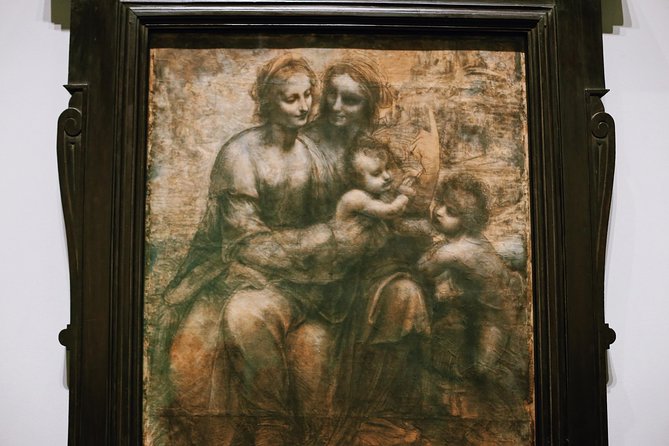
Do not book this expecting a room-by-room survey of the National Gallery. Even a full day would not allow a close look at all 2,300 paintings, and the 2.5-hour format must make choices.
Temporary exhibitions are not included. If one is a priority, you will need to arrange that separately and allow extra time.
Some rooms require very quiet behavior or limit speaking. Your guide will explain these rules before you enter, but it means the commentary may pause in particular spaces.
Museum rooms and collections can change during the year. Occasional closures may also occur without advance warning. If opening is delayed by more than an hour, an alternative will be provided, but the stated terms do not provide a refund or discount for this situation.
The tour requires a moderate level of physical fitness. Expect a fair bit of walking and standing. There may be places to rest in the museum, but that detail is not guaranteed, so anyone who needs frequent seated breaks should raise the issue before booking.
Is $108.44 good value?
At $108.44 per person, this is not the cheapest way to enter the National Gallery. The museum itself has free admission, so you are paying for planning, interpretation, and private attention rather than a basic ticket.
The value depends on how you use the guide. If you want to see every room at your own speed, the price may feel high. You can enter the gallery independently and spend nothing on admission.
I think the cost makes more sense if your London time is limited or if you want the museum to make sense on the first visit. A strong guide can save you from aimless wandering, select worthwhile paintings, and explain details that a label cannot easily cover.
The price also makes more sense for a small group sharing one private booking. Group discounts are available, though the exact saving depends on the booking details. Ask yourself how much you would pay for two and a half hours of focused help in one of London’s major museums.
Who should book this National Gallery tour?
I would recommend it to first-time National Gallery visitors, families, couples, and anyone who wants a clear introduction to European painting. It is also a good fit if you have read about Van Gogh, Rembrandt, Monet, or Vermeer but want help seeing what makes their work important.
It works well for people who do not usually visit art museums. The guides use stories, questions, comparisons, and visual clues instead of assuming you already know art history.
Experienced museumgoers can benefit too, especially if they want a guide who will follow personal interests. Tell the guide what you want to see rather than accepting a standard route.
I would skip it if you prefer complete independence, dislike standing, or want to spend hours with one single artist. I would also think twice if temporary exhibitions are your main reason for visiting, since those are not included.
Practical details for a smoother visit
Book ahead if your schedule is fixed. The experience is booked, on average, 39 days in advance, which suggests that popular dates can fill well before a London trip.
Wear appropriate clothing for museum entry, keep your bag small, and arrive ready for security checks. Do not plan to bring a suitcase into the gallery.
The tour ends back at the National Gallery meeting point. That makes it easy to continue exploring Trafalgar Square or remain inside the museum on your own after the guide finishes.
Free cancellation is available up to 24 hours before the start time for a full refund. Changes or cancellations made less than 24 hours in advance are not accepted for a refund, and the cut-off follows local London time.
Should you book it?
Book this tour if you want the National Gallery to feel understandable rather than overwhelming. The private format, flexible route, and consistently strong guide names make it a useful choice for a first visit, especially when your London schedule leaves only one museum afternoon.
Skip it if free independent entry is enough for you or if you want to browse without a timetable. For everyone else, $108.44 buys more than directions through the galleries. It buys a sensible route, lively explanations, and a better chance of remembering what you saw after you leave Trafalgar Square.
FAQ
Where does the tour start?
It starts at the National Gallery’s front entrance at Trafalgar Square, London WC2N 5DN, UK.
Where does the tour end?
The activity ends back at the National Gallery meeting point.
How long does the tour last?
The tour lasts approximately 2 hours and 30 minutes.
Is the tour private?
Yes. The private activity is limited to your group. The exclusive private guide does not apply if you choose the semi-private saving option.
What language is the tour offered in?
The tour is offered in English.
What does the tour cost?
The listed price is $108.44 per person. Group discounts are available.
Does the price include museum admission?
The experience includes a guided museum tour, and the itinerary lists the admission ticket as free. Temporary exhibitions are not included.
Can I request particular paintings or artists?
Yes. You can discuss your interests with the guide and customize the itinerary. Possible highlights include Van Gogh, Botticelli, Monet, Rembrandt, Vermeer, and Jan van Eyck.
Is the tour wheelchair friendly?
The exclusive tour is wheelchair friendly. This feature does not apply to the semi-private saving option.
Are hotel pickup and drop-off included?
No. Hotel pickup and drop-off are not included. You must make your own way to the National Gallery.
Can I bring a large bag or suitcase?
No. Large bags and suitcases are not allowed inside. Handbags and small, thin backpacks can pass through security.
What happens if the museum closes or opens late?
The National Gallery can occasionally close without advance warning. If opening is delayed by more than one hour after the tour start time, an appropriate alternative will be provided, but the stated terms do not provide a refund or discount in that situation.
Just added around London
- Up at The O2:Twilight Climb with Guided Tour with Panoramic Views★ 5.0 · 50 reviews
- Private Chauffeur-London Heathrow from/to Southampton Cruise Port★ 5.0 · 9 reviews
- Kensington Palace VIP Garden Tour with Royal High Tea★ 4.5 · 71 reviews
- Up at The O2: Sunset Climb with Guided Tour with Panoramic Views★ 5.0 · 110 reviews
- Secrets of the London Underground Small Group Walking Tour★ 4.5 · 38 reviews
- Urban Canvas: Exploring Shoreditch’s Vibrant Street Art★ 5.0 · 36 reviews
- Ultimate introduction to photography in Central London★ 5.0 · 19 reviews
- Full-Day Self-Guided Paris Tour from London by Eurostar with Seine River Cruise★ 3.5 · 22 reviews
National Gallery and Tate Tours, compared.
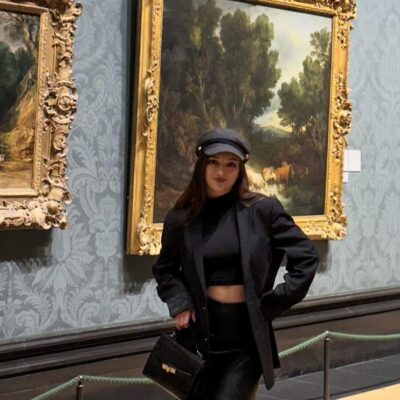
National Gallery Guided Tour with Art Expert Guide
Read our review →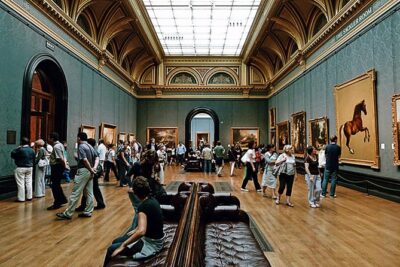
National Gallery of London Museum Tour Semi-Private 8ppl Max
Read our review →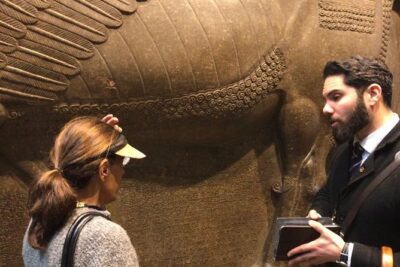
British Museum & National Gallery of London Semi-Private 8ppl Max
Read our review →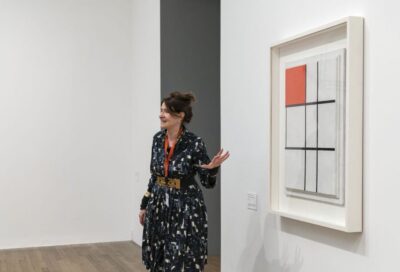
Official National Gallery Highlights Guided Tour
Read our review →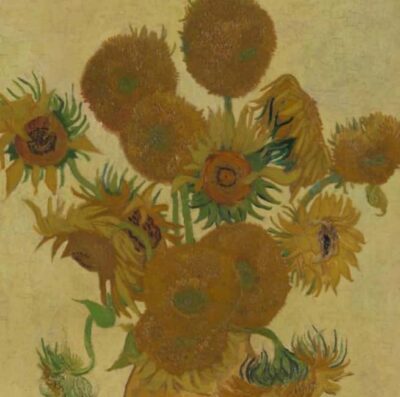
British Museum & National Gallery of London – Exclusive Guided Combo Tour
Read our review →Browse the lists this tour appears in