
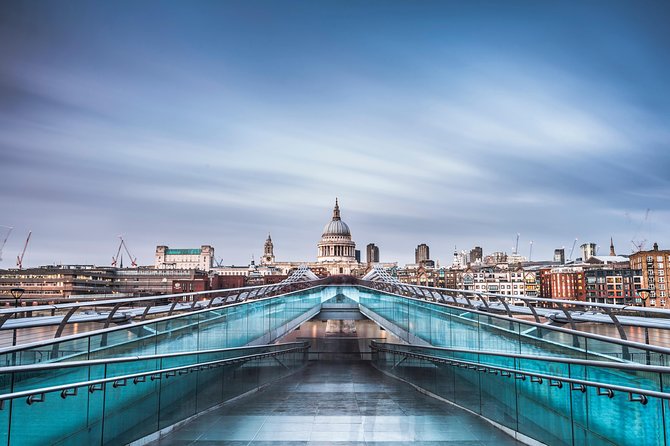
Reviewed · LONDON PHOTOGRAPHY TOURS AND PHOTO SHOOTS
Ultimate introduction to photography in Central London
The most useful part of this London workshop is that you learn with the camera in your hands, not from a classroom slide show. Matthew Williams-Ellis takes you from the London Eye and South Bank to Leake Street’s graffiti tunnels, using each place to explain settings, focus, composition, and the choices behind a good photograph.
I like the small group of no more than eight, which gives Matthew room to help different skill levels. I also like the way the session moves from fast action at the skate park to slow shutter work and evening light over the Thames. The main catch is the price, $232.25 per person, and the experience depends on suitable weather.
Key points before you book
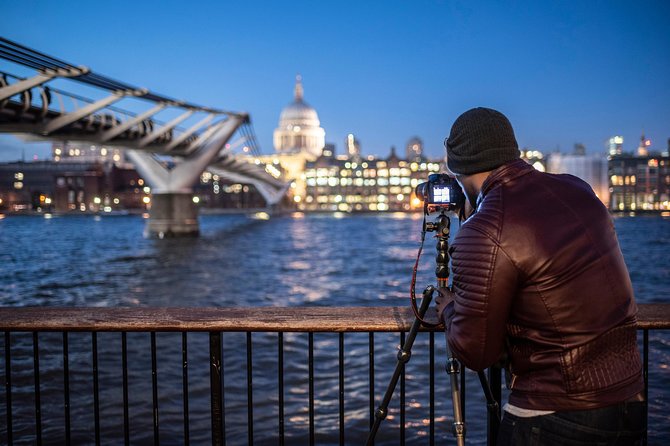
- A practical five-and-a-half-hour workshop: You learn by making images on location, then testing each new setting straight away.
- A patient named instructor: Matthew Williams-Ellis teaches beginners without talking down to them and can adjust his guidance for more experienced photographers.
- Three camera-control basics: ISO, aperture, and shutter speed are explained as working tools, not abstract terms.
- A varied London route: The London Eye, Leake Street Arches, South Bank skate park, and Thames views provide different light, motion, and composition problems.
- Evening photography included: The final session works toward sunset, blue hour, or night shooting, depending on conditions.
- Phones may be suitable: The workshop has helped people use phone cameras more effectively, though the exact level of support for each phone model is not specified.
Why this workshop works better than learning from camera menus
Photography gets easier once the technical controls have a reason. ISO is not just a number on a screen. Aperture is not simply an f-stop. Shutter speed becomes clear when you try to freeze a skater, blur movement, or hold detail as daylight fades.
That is the strength of this course. Matthew teaches the basics in the field, then gives you a reason to use them. You can change a setting and see the effect in the next frame. That quick loop between explanation, practice, and correction is useful for anyone who has spent months stuck in auto mode.
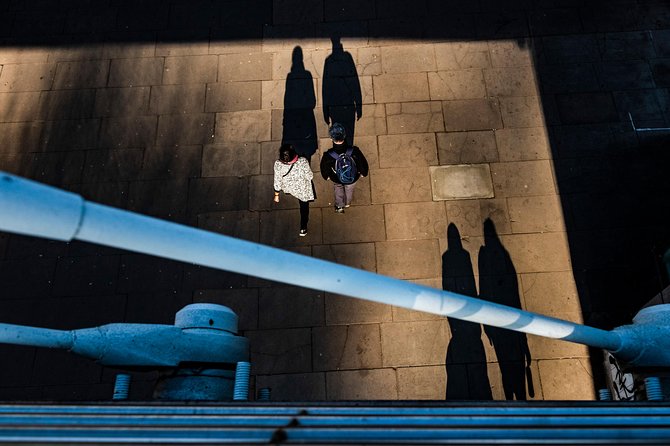
The other half of the workshop is about seeing. You work on how to frame a scene, find a subject, and build a photograph rather than merely point at a landmark. This matters in London, where the obvious view is often the least interesting one. The London Eye is famous, but the challenge is to make your picture feel like your own.
The group limit also matters. With eight people at most, Matthew can check how each person has set up their camera. That is particularly helpful at the start, when menus and buttons can slow everything down. The teaching style described by past participants is gentle and encouraging, which should suit beginners who feel unsure about asking basic questions.
More London Photography Tours and Photo Shoots:
- London: Private Photoshoot with Video Clip Option
★ 4.8 · 182 reviews - Professional Photoshoot in London Photographer
★ 5.0 · 102 reviews - Private landmarks photoshoot for families and couples
★ 5.0 · 92 reviews
Starting beside the London Eye
The meeting point is the Starbucks on Belvedere Road, London SE1 7GQ. This places you in the South Bank area, close to the London Eye and the first working locations. The experience ends back at the same meeting point, which keeps the day simple from a transport point of view.
The London Eye provides an easy opening exercise. You have a familiar subject, strong lines, changing viewpoints, and plenty of chances to think about composition. Matthew can use the area to explain the camera controls before the route becomes more demanding.
This first stage should be useful if you are new to manual shooting. You can learn how ISO affects sensitivity, how aperture changes the look of a photograph, and how shutter speed controls motion. You also cover shooting modes and focusing, two areas that often remain confusing when a camera is used only on automatic.
I would not expect a quiet, private photo session here. The South Bank is a public setting, and the London Eye area can have plenty going on. That is part of the point, though. You learn to make choices in a real city rather than wait for perfect conditions.
Leake Street Arches and London’s graffiti
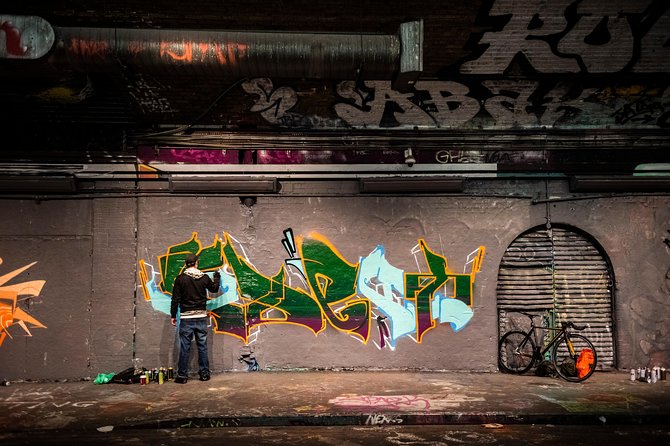
The route continues to Leake Street Arches, the graffiti-covered passageways near Waterloo. This is a strong location for learning about color, texture, lines, and visual clutter. The walls give you bold subjects, but they also force you to decide what belongs inside the frame.
A place like this can expose a common beginner problem: putting too much into one photograph. Matthew’s focus on the thought process behind an image should help you separate a striking detail from the whole wall. You can work on leading lines, balance, viewpoint, and the difference between a record shot and a considered composition.
The arches also bring changing light and darker areas. That gives you a useful reason to discuss ISO and exposure rather than treating them as isolated settings. You may find that a scene looks more effective when you accept some shadow, or that a higher ISO is worth using to keep the image sharp.
The area is also one of the more distinctive parts of the route. You are not simply collecting another picture of a major attraction. You are working in a setting with layers, strong patterns, and plenty of possible subjects.
South Bank skate park and the challenge of movement
The skate park is where shutter speed becomes practical. Fast movement gives you a clear test: use a quick shutter to freeze the action, or slow it down to suggest speed and motion.
You may not get the same result in every frame, and that is useful. Photography courses often improve when you are encouraged to make several attempts instead of chasing one perfect picture. You can compare the effect of different shutter speeds and learn how timing affects the final image.
This section also asks you to pay attention before pressing the button. A good action photograph depends on position, anticipation, background, and timing. Matthew’s emphasis on creating rather than simply taking photographs fits this setting well. You are learning to predict a moment and prepare for it.
The skate park may be less comfortable for anyone who prefers slow, static subjects. It also requires a moderate level of physical fitness for moving between locations and spending much of the day on foot. The supplied details do not give a walking distance, so anyone with mobility concerns should ask the provider before booking.
A different sort of day out in London altogether:
- From London: Harry Potter Warner Bros Studio Tour
★ 4.7 · 26,588 reviews - London: Westminster to Greenwich River Thames Cruise
★ 4.5 · 22,836 reviews - Magical London: Harry Potter Guided Walking Tour
★ 4.7 · 22,044 reviews - London: Madame Tussauds London
★ 4.6 · 20,915 reviews
St. Paul’s Cathedral and building a stronger frame
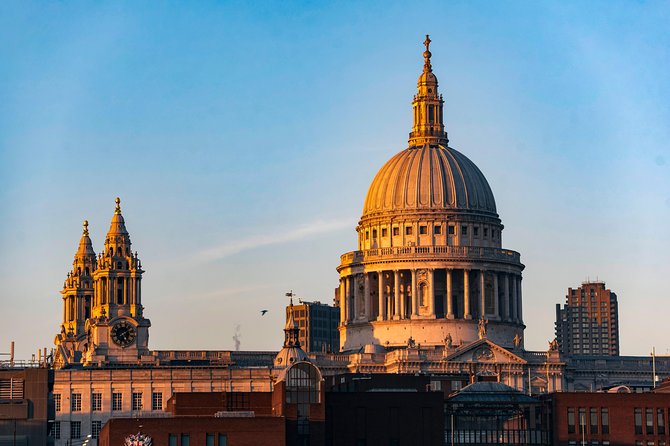
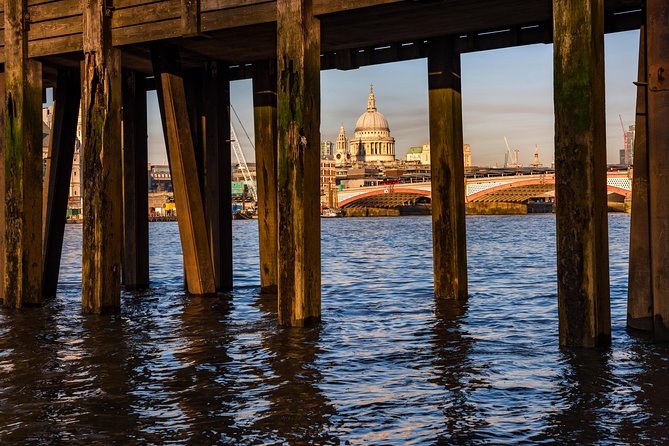
St. Paul’s Cathedral adds a major architectural subject to the route. It gives you a chance to think about scale, symmetry, perspective, and how much of the surrounding city belongs in the image.
Architecture can look flat if you photograph it from the first available viewpoint. The workshop’s composition work should encourage you to look for angles, foreground elements, repeating shapes, and a clear subject. You also get a useful contrast with the graffiti arches and skate park. Each setting asks for a different response.
The cathedral stop is especially valuable for people who normally rely on automatic mode. You can practise focusing, exposure, and aperture while considering the relationship between the building and its surroundings. You are not just learning what each control does. You are deciding why one setting fits a particular picture.
The exact time spent at each stop is not stated. That means the pace may depend on the group, light, and how much help people need with their cameras. For some people, that flexibility will be welcome. If you want a tightly timed sightseeing tour with fixed minutes at each landmark, this is not that kind of experience.
Slower shutter speeds as daylight fades
Once the basic controls feel more familiar, the workshop turns toward slow shutter speeds. This is one of the most useful steps in the session because it takes you beyond basic exposure and into creative control.
A slow shutter can blur movement, soften water, or record the changing light of the city. It also demands more care. You need to think about camera movement, subject movement, and the result you want before making the exposure.
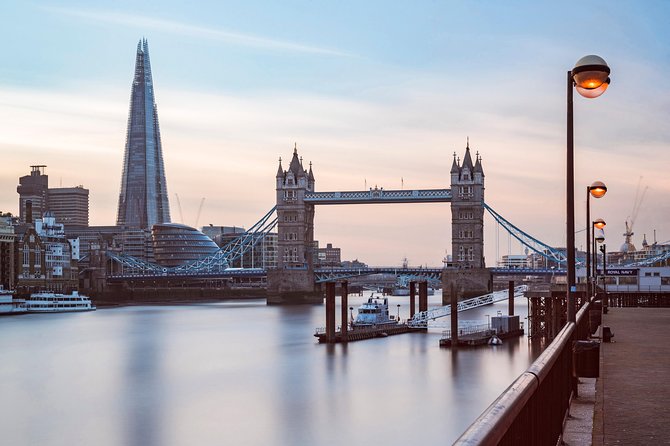
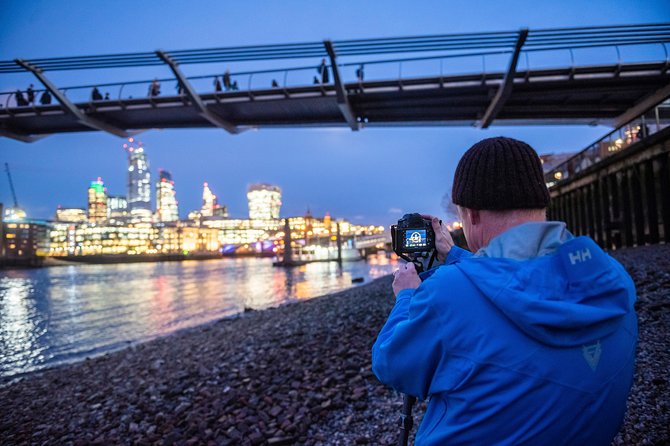
The final part takes place beside the Thames, with a sunset, blue hour, or night shoot depending on the conditions. Blue hour is the short period after sunset when the sky still holds color but city lights begin to show. It can give you a more balanced exposure than full darkness, with detail in both the sky and the city.
The Thames setting gives the workshop a natural finish. You have already worked with a landmark, graffiti, action, and architecture. Now you bring together exposure, composition, and timing in a changing scene. It is also a chance to leave with photographs that feel different from standard daytime sightseeing pictures.
Weather is an important factor here. The experience requires good weather, and poor conditions can lead to a new date or a full refund. You should not book this expecting the same final light in every season or on every date.
A good fit for beginners, families, and phone photographers
The course is aimed at people who want to understand their camera rather than simply collect London views. Beginners should get the most from it, especially if ISO, f-stops, and shutter speeds currently feel like a jumble of numbers.
It can also suit someone who has owned a digital SLR for years but still uses automatic mode. The teaching covers the camera from the ground up, including settings and functions, then moves into composition and more creative choices.
The course has worked for mixed-age pairs too. A parent and a 14-year-old can take part together, and the small group format allows Matthew to adjust the level of help. That makes it a possible choice for a family activity, a birthday gift, or a shared project before a major trip.
Phone photographers may also benefit. The course has been used by a group of retirees who wanted to make better use of their phone cameras. Still, you should confirm that your particular phone and its camera controls are suitable if you want detailed guidance on mobile photography.
More experienced photographers may find the opening material familiar. The value for them will depend on how much they want to refine composition, storytelling, slow shutter work, or low-light technique. The course is not described as an advanced specialist class.
What makes Matthew’s teaching style useful
The strongest thread running through the session is its teaching style. Matthew Williams-Ellis is described as patient, approachable, and able to explain technical ideas at the right level. That matters more than a long list of camera topics.
You should expect coaching rather than a lecture. The goal is to understand how to set up your camera, try a technique, and make a better choice next time. That approach is especially helpful if you are nervous about manual settings or have learned photography in scattered pieces online.
Past course participants have also used what they learned soon afterward, including preparing for northern lights photography. That does not mean this London workshop teaches a dedicated northern lights course. It does show that the basic ideas can carry into other settings, from low light to travel photography.
A notebook may be useful. One person left with written tips and settings for a future trip, and you may want to record simple reminders in your own words. Camera controls are easier to remember when linked to a real situation, such as freezing action or keeping detail as the sky darkens.
Is $232.25 good value?
At $232.25 per person, this is a serious spend for a half-day experience. You are paying for about five and a half hours, a professional instructor, a group capped at eight, and practical guidance across several parts of central London.
The value is strongest if the course saves you months of trial and error. Several people who had used cameras for years without understanding manual controls came away more confident after one session. If that sounds like you, the price may compare well with buying a camera and continuing to leave it in auto mode.
The cost is harder to justify if you already understand exposure and composition. You may prefer a shorter specialist session focused only on night photography, street photography, or action work. The course gives you a broad foundation rather than a narrow expert masterclass.
You should also factor in your equipment. The details do not state that cameras are supplied, so ask before booking if you do not have a camera. The workshop can work with phone cameras, but the level of phone support is not fully defined.
Practical details before you go
The tour is offered in English and uses a mobile ticket. Confirmation is sent within 48 hours of booking, subject to availability. It runs near public transport, begins and ends at the Starbucks on Belvedere Road, and allows service animals.
You need a moderate level of physical fitness. Expect an active session across several central London locations, with time spent standing, walking, and working outdoors. Wear comfortable shoes and dress for changing evening conditions.
Free cancellation is available up to 24 hours before the start time for a full refund. Changes or cancellations made inside that window are not accepted for a refund. Since weather can affect the experience, check the forecast and keep some flexibility in your plans.
Should you book this photography workshop?
Book it if you want to stop guessing with your camera and start making deliberate choices. It is particularly well suited to beginners, people stuck in automatic mode, families learning together, and photographers who want practical practice with action, architecture, graffiti, and low light.
I would think twice if you want a relaxed sightseeing walk, a private lesson, or an advanced class focused on one narrow style. The price is high, and the day depends on weather and outdoor conditions.
For the right person, though, this offers more than a set of London snapshots. You leave with a working grasp of ISO, aperture, shutter speed, focus, and composition, plus a varied set of subjects on which to practise. That is a useful souvenir, and one you can keep using long after the Thames light has faded.
FAQ
How long does the photography workshop last?
The experience lasts approximately five hours and 30 minutes.
Where does the workshop begin and end?
It begins at the Starbucks on Belvedere Road, London SE1 7GQ, and ends back at the meeting point.
What locations are included?
The route includes the London Eye, Leake Street Arches, South Bank skate park, the Thames area, and St. Paul’s Cathedral.
What photography skills will I learn?
You will cover ISO, aperture, shutter speed, shooting modes, focusing, composition, photographic storytelling, and slow shutter techniques.
How many people can join the workshop?
The group has a maximum of eight participants.
What happens if bad weather cancels the experience?
If poor weather causes a cancellation, you will be offered another date or a full refund.
Just added around London
- Up at The O2:Twilight Climb with Guided Tour with Panoramic Views★ 5.0 · 50 reviews
- Private Chauffeur-London Heathrow from/to Southampton Cruise Port★ 5.0 · 9 reviews
- Kensington Palace VIP Garden Tour with Royal High Tea★ 4.5 · 71 reviews
- Up at The O2: Sunset Climb with Guided Tour with Panoramic Views★ 5.0 · 110 reviews
- Secrets of the London Underground Small Group Walking Tour★ 4.5 · 38 reviews
- Urban Canvas: Exploring Shoreditch’s Vibrant Street Art★ 5.0 · 36 reviews
- Full-Day Self-Guided Paris Tour from London by Eurostar with Seine River Cruise★ 3.5 · 22 reviews
- Ultimate Royal London: Tower of London & City of Westminster Tour★ 5.0 · 38 reviews
London Photography Tours and Photo Shoots, compared.
Professional Photoshoot in London Photographer
Read our review →
Browse the lists this tour appears in