
Reviewed · NATIONAL GALLERY AND TATE TOURS
Tate Modern Museum London Guided Tour Semi-Private 8ppl Max
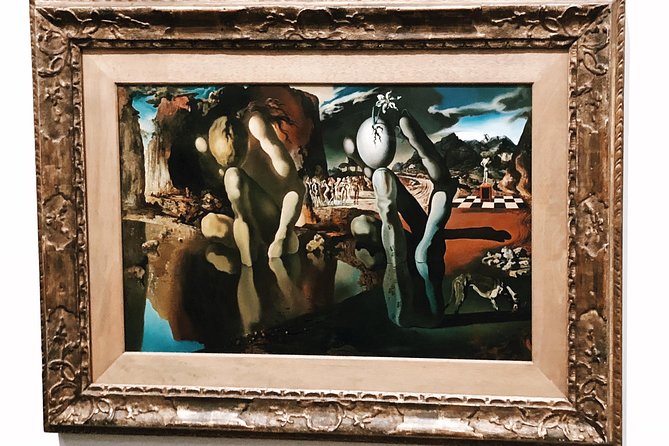
Tate Modern is a fine place to ask the question many visitors quietly carry through the door: What am I supposed to be looking at? This two-hour tour uses a small group of eight or fewer to make modern art less puzzling, with discussion around Mondrian, Picasso, Dalí, Monet, Rothko, Warhol, and Duchamp.
I like the small-group format, which gives you room to ask honest questions rather than trail behind a large crowd. I also like the personal angle, as the guide connects artists’ lives to their work and explains how a former power plant became one of London’s great art spaces. The main drawback is the price, $107.45 per person, which is a lot for two hours if you only want a quick look at the museum.
- Eight people maximum: You get a more personal discussion and a better chance to speak with the guide.
- A useful first lesson in modern art: The route covers several major movements and artists without assuming you already know the subject.
- Strong guide-led interpretation: Sasha and Becky are specifically praised for making the art interactive and easier to understand.
- The building is part of the story: You learn about Tate Modern’s conversion from a power plant, not just the paintings.
- Two hours with room for questions: The visit gives you a guided foundation, plus ideas for what to see afterward.
- Practical limits matter: Temporary exhibitions are not included, large bags are restricted, and the tour requires moderate walking.
Tate Modern Is Easier With a Guide
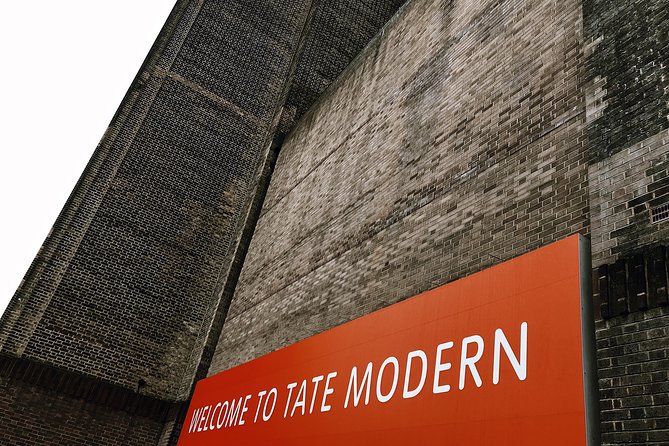
Tate Modern can feel like several museums joined together. Its galleries cover major 19th and 20th-century movements, and the art often refuses to explain itself at first glance. A guide gives you a route through that maze and, more importantly, a way to think about what you are seeing.
This is not designed as a quick parade of famous paintings. The guide introduces you to artists and ideas, then leaves space for questions. That matters at Tate Modern because your first reaction to a work may be confusion, amusement, or even irritation. All three are reasonable starting points.
The group size is capped at eight people. That is small enough for a real exchange rather than a one-way speech. If you are traveling with family or friends, you can ask about a work that puzzles you without feeling you are holding up a busload of people.
The tour is offered in English and lasts about two hours. It ends back at the Tate Modern meeting point, so you can continue exploring afterward or make your way to the South Bank.
From Power Plant to Art Museum
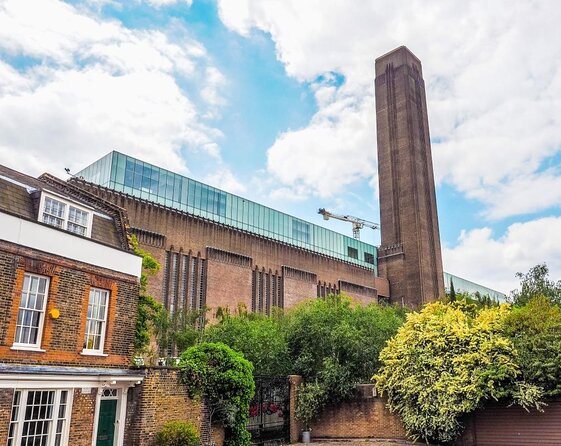
Before the art begins, the building gives you a useful piece of context. Tate Modern occupies a converted power plant, and the architecture helps explain why the museum feels unlike a traditional palace-style gallery.
You will learn how the building was adapted for art and how its halls and galleries hold works from different periods. This is more than a side note. The scale and industrial character of the former power station affect the way you encounter the collections.
I find this especially helpful if modern art feels too abstract or disconnected from daily life. The museum itself is a large example of reuse and reinvention. An old industrial site now houses works that also challenged old ideas about what art could be.
The exact rooms and collections can change during the year. Some parts may also be quiet zones where speaking is restricted. Your guide will explain those rules before you enter, so you should be ready to listen at a lower volume in certain spaces.
More National Gallery and Tate Tours:
- London: National Gallery Guided Tour with Art Expert Guide
★ 4.7 · 440 reviews - National Gallery of London Museum Tour Semi-Private 8ppl Max
★ 5.0 · 178 reviews - British Museum & National Gallery of London Semi-Private 8ppl Max
★ 5.0 · 168 reviews
Mondrian and the Order of Color
Mondrian gives the tour a clear way into modern art. His geometric patterns and blocks of color may look simple at first, but they raise questions about balance, order, rhythm, and the point at which a picture stops copying the visible world.
A guide can help you slow down and notice decisions that are easy to miss. Look at how lines divide the surface, how colors relate to one another, and how much visual force can come from a limited set of shapes.
You do not need a background in art to benefit from this section. The point is not to memorize terms. It is to see how an artist reduced an image to essential parts and made that reduction the subject itself.
This is also a good moment to ask the guide a direct question. Why these colors? Why this arrangement? What makes a geometric composition feel finished rather than random? The small group gives you a practical chance to explore such questions.
Picasso and Dalí During War
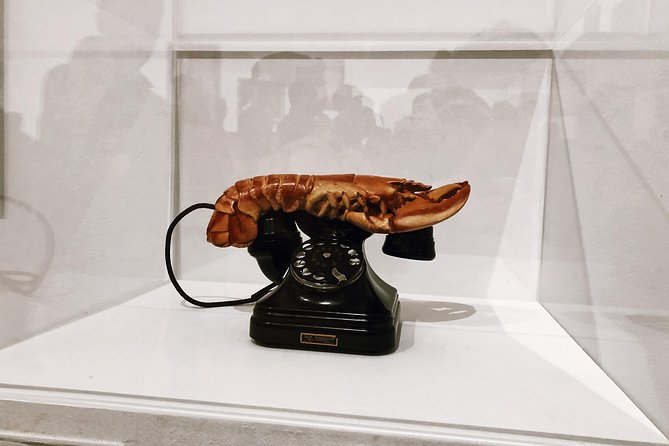
The tour places Spanish-born Picasso and Dalí in the setting of the Spanish Civil War. That personal and political background helps connect their work to events beyond the gallery wall.
Picasso and Dalí are often treated as famous names that need no explanation. Yet knowing something about the period in which they worked can change how you approach their images. The guide discusses how the war informed some of their greatest work, giving you a frame for the tension and distortion in the art.
This is one of the tour’s strongest features: it links an artist’s personal history to the work without reducing the work to a simple biography lesson. You are encouraged to look at the art itself, then consider how events and beliefs may have shaped its form.
The tour does not promise every major Picasso or Dalí piece in the museum. Collections can vary through the year, and the guide chooses a route within the available galleries. If a particular work is your priority, ask about it early in the visit.
From Monet to Rothko
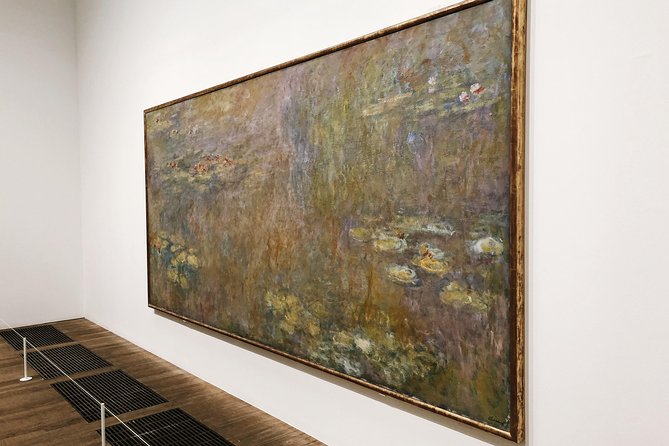
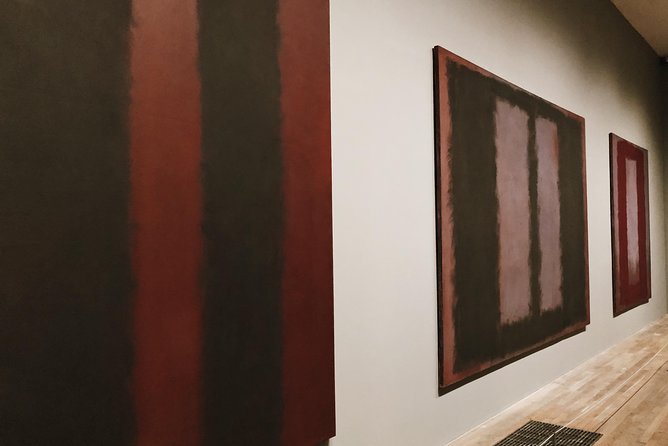
Monet introduces Impressionism, while Mark Rothko represents abstract expressionism. These artists may seem far apart, yet the comparison can help you track the changing role of color, mood, and perception.
With Monet, you can consider how an artist records light and atmosphere rather than presenting every object with hard detail. The work invites you to look at the overall impression and the way separate marks or colors combine in your eye.
Rothko asks something different. His large areas of color can appear spare, but the experience depends on scale, color relationships, and the feeling produced by standing before the work. A guide can help you put words to a response that may otherwise remain vague.
This is where the tour can be especially useful for beginners. You are not expected to pretend that every work speaks to you. Instead, you get tools for explaining why a work feels calm, heavy, unsettled, or difficult.
The guide’s role is not to dictate one approved reaction. Becky, one of the named guides associated with the experience, is praised for offering context without interpreting every work for the group. That approach leaves you room to form your own view.
More British Museum Tours:
- Tower of London and Crown Jewels Exhibition Ticket
★ 4.5 · 6,677 reviews - London: Chelsea Football Club Stadium and Museum Tour
★ 4.8 · 4,576 reviews - Chelsea FC Stadium Tours and Museum
★ 5.0 · 1,908 reviews - London: British Museum Guided Tour
★ 4.3 · 1,182 reviews
Warhol, Celebrity, and Pop Art
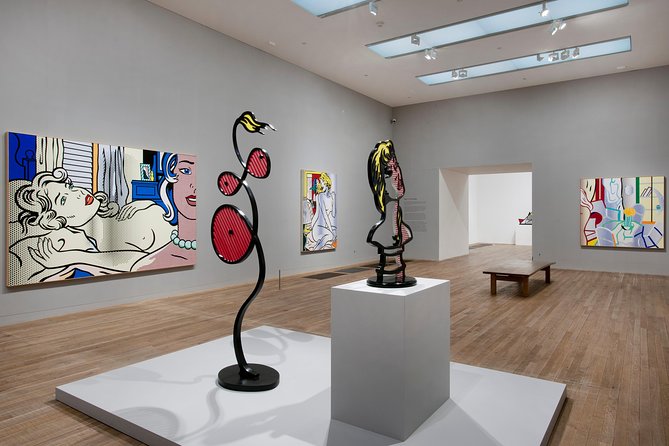
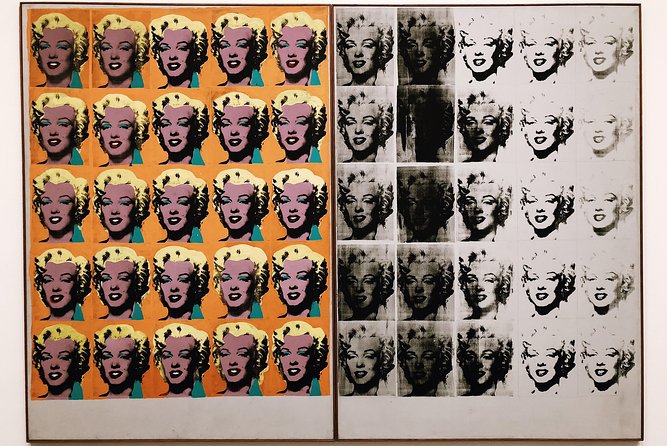
The tour then steps into the 1960s and Andy Warhol’s pop art. His images of Marilyn Monroe and other celebrities offer a familiar doorway into modern art because you may already know the faces.
Warhol’s work gives you a chance to consider repetition, fame, mass production, and the way commercial images enter a museum. The subject may look simple, but the method raises questions about what changes when a public face is repeated and presented as art.
This is a useful stop for families and first-time art museum visitors. You do not have to begin with a difficult abstract canvas. A recognizable celebrity image can lead to a broader discussion about popular culture and the value placed on famous people.
The guide can also help you distinguish between liking an image and understanding what it is doing. Those are not the same thing, and modern art becomes more approachable once you stop treating them as the same test.
Duchamp and the Problem of What Counts as Art
Marcel Duchamp’s Fountain is likely to produce the most direct challenge of the visit. It asks you to think about whether an ordinary object can become art through selection, presentation, and context.
You may find the work funny, irritating, clever, or hard to accept. That is precisely why it works well in a guided conversation. Instead of rushing past it, you have a chance to ask what the artist was challenging and why the piece remains important.
This part of the tour reaches beyond one object. It asks who decides what belongs in a museum and whether artistic skill is the only measure of value. Those are big questions, but the guide makes them manageable by starting with one work in front of you.
Sasha is specifically praised for choosing a broad mix of art and making the group think. That is a good match for Duchamp, where the most useful response may be a question rather than an answer.
What Two Hours Really Gives You
Two hours is enough to build a useful introduction, not enough to cover every corner of Tate Modern. That is a fair trade if you want a clear route and a human explanation instead of wandering through gallery after gallery.
The guide selects major examples from different movements. You move from geometric abstraction to artists shaped by war, then to Impressionism, abstract expressionism, pop art, and Duchamp’s challenge to traditional definitions.
The value lies in the connections. You begin to see modern art not as one confusing block, but as a series of artists responding to earlier ideas, new technology, public events, personal experience, and changing views of culture.
You also get advice about what to see on your own after the guided portion. Plan to keep some time free after the tour if you want to follow up on a particular artist or revisit a work that caught your attention.
The format suits people who prefer a focused visit. If you already know the museum well and want long, quiet stretches with each artwork, the guide’s schedule may feel too brisk. For a first visit, though, the structure can save time and reduce the risk of leaving after seeing only the most obvious rooms.
Price, Group Size, and Practical Value
At $107.45 per person, this is not a budget museum visit. You are paying for the professional guide, the small group, and the chance to ask questions in real time. The price is easier to justify if modern art feels unfamiliar or if you want a strong introduction during a short London stay.
The eight-person limit is important. A cheaper large-group tour may give you facts, but it may not give you much opportunity to speak. Here, the format is closer to a guided conversation, provided the other members of the group are willing to participate.
Group discounts are available, which may improve the calculation for some bookings. The tour requires at least two people to run. If that minimum is not met, an alternative or full refund is offered.
The main collection visit is listed with admission ticket free, but temporary exhibitions are not included. If you have your eye on a special exhibition, plan to check its separate arrangements and cost rather than assuming it forms part of this tour.
There is no hotel pickup or drop-off. Tate Modern is near public transportation, and you are advised to use a taxi or Uber if that suits your plans. The meeting point is Tate Modern on Bankside, London SE1 9TG.
Bags, Walking, and Museum Rules
You need moderate physical fitness for this experience. It is not available to people with walking disabilities or those using a wheelchair, so check this carefully before booking.
Large bags and suitcases are not allowed inside. Only handbags or small, thin backpacks can pass through security, and security checks may still create lines even when a tour is advertised with priority access.
Wear appropriate clothing for entry into some sites on the tour. Tate Modern can also have occasional closures or delayed opening times without advance warning. If the opening is delayed by more than an hour, an alternative may be provided, but a refund or discount is not offered in those circumstances.
Give the provider your mobile phone number, including the country code. Confirmation arrives at booking, and you should keep your phone available for any meeting or schedule messages.
Free cancellation is available up to 24 hours before the start time. Cancellations or changes made less than 24 hours ahead are not accepted for a refund.
Who Will Get the Most From This Tour
I would choose this tour for a first or early visit to Tate Modern, especially if you are unsure how to approach modern art. It also suits parents with older children, couples with different levels of art interest, and anyone who wants a conversation rather than a silent audio guide.
It is a good fit if you like asking questions. The most useful moments may come when you admit that a work makes no sense and the guide gives you a new way to look at it.
The experience is less suitable if you want to see temporary exhibitions, avoid walking, or spend the whole visit alone with one favorite artist. It is also a poor match for a very tight budget, since the fee is high compared with visiting a museum independently.
The strongest guide style here seems to be interactive and thoughtful. Becky is noted for making the art approachable while leaving room for personal interpretation. Sasha is noted for selecting varied works and encouraging discussion. Guide assignments can change, so do not book solely on a promise of one named person.
Should You Book the Tate Modern Small-Group Tour?
Book it if you want modern art explained in plain language, with enough time to ask questions and enough variety to understand how major movements differ. The eight-person limit, personal stories, and building history give you more than a fast list of famous names.
Skip it if you already feel confident in Tate Modern, only want the temporary exhibitions, or prefer a self-guided visit at a lower cost. At $107.45, the value comes from the guide’s interpretation and the small group, not from the length of the visit alone.
For a first introduction, I think the structure makes sense. You will leave with a clearer way to look at Mondrian, Picasso, Dalí, Monet, Rothko, Warhol, and Duchamp, plus a better idea of what to explore next on your own.
FAQ
How long does the Tate Modern guided tour last?
The tour lasts approximately two hours.
How many people can join the tour?
The group has a maximum of eight people. At least two guests are required for the tour to operate.
Where does the tour start and end?
It starts at Tate Modern, Bankside, London SE1 9TG, UK, and ends back at the meeting point.
Which artists are covered?
The tour may cover Mondrian, Picasso, Dalí, Monet, Mark Rothko, Andy Warhol, and Marcel Duchamp, including works such as Fountain. The exact collections and rooms can vary during the year.
Are temporary exhibitions included?
No. Temporary exhibitions are not included in the tour price.
Is the tour suitable for wheelchair users?
No. The activity is not available for people with walking disabilities or those using a wheelchair. A moderate level of physical fitness is required.
What is the cancellation policy?
You can cancel up to 24 hours before the experience start time for a full refund. Cancellations or changes made less than 24 hours before the start time are not accepted.
Just added around London
- Up at The O2:Twilight Climb with Guided Tour with Panoramic Views★ 5.0 · 50 reviews
- Private Chauffeur-London Heathrow from/to Southampton Cruise Port★ 5.0 · 9 reviews
- Kensington Palace VIP Garden Tour with Royal High Tea★ 4.5 · 71 reviews
- Up at The O2: Sunset Climb with Guided Tour with Panoramic Views★ 5.0 · 110 reviews
- Secrets of the London Underground Small Group Walking Tour★ 4.5 · 38 reviews
- Urban Canvas: Exploring Shoreditch’s Vibrant Street Art★ 5.0 · 36 reviews
- Ultimate introduction to photography in Central London★ 5.0 · 19 reviews
- Full-Day Self-Guided Paris Tour from London by Eurostar with Seine River Cruise★ 3.5 · 22 reviews
National Gallery and Tate Tours, compared.
National Gallery Guided Tour with Art Expert Guide
Read our review →
National Gallery of London Museum Tour Semi-Private 8ppl Max
Read our review →
British Museum & National Gallery of London Semi-Private 8ppl Max
Read our review →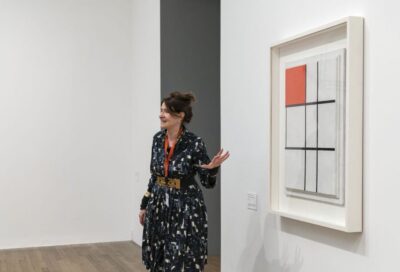
Official National Gallery Highlights Guided Tour
Read our review →
The National Gallery of London – Exclusive Guided Museum Tour
Read our review →
Browse the lists this tour appears in