
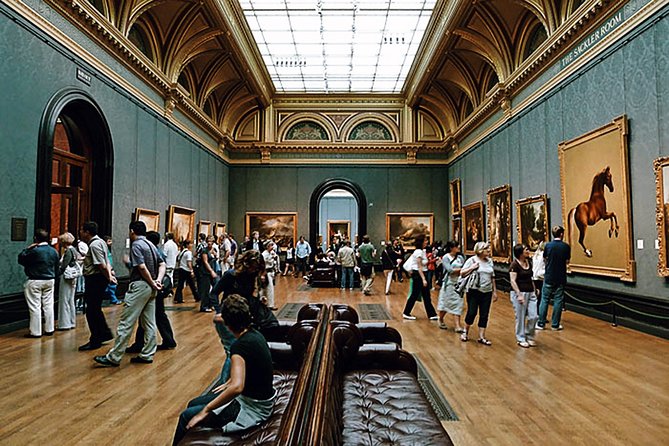
Reviewed · NATIONAL GALLERY AND TATE TOURS
National Gallery of London Museum Tour Semi-Private 8ppl Max
The best reason to book this National Gallery tour is simple: you get a clear path through a huge collection instead of wandering from room to room hoping you have found the good stuff. In two and a half hours, your guide links paintings from the 1300s through the late Impressionist period, explaining the artistic choices and stories behind works by Van Gogh, Monet, Rembrandt, Vermeer, and others.
I like the maximum group size of eight, which makes it easier to hear the guide and ask questions. I also like that you may stay inside afterward and follow your guide’s suggestions at your own pace. The main catch is that the experience depends heavily on your guide’s approach, and one account found the discussion too focused on personal reactions rather than historical facts.
Key points to know
- Eight people maximum: This is small enough for questions and easier movement through busy galleries.
- A chronological art lesson: The route can connect early European painting with Renaissance works, Dutch masters, and Impressionism.
- Strong guide feedback: Stephanie, Becky, Jake, Luis, Matilda, Alex, Laurence, and Ellie are specifically praised for energy, insight, and clear explanations.
- Free time afterward: The museum admission lets you continue looking around after the guided portion ends.
- Meet in Trafalgar Square: The meeting point is the Sainsbury Wing entrance, not your hotel.
- Plan for walking: The tour is not suitable for wheelchair users or people with walking disabilities.
Why a small group helps inside the National Gallery
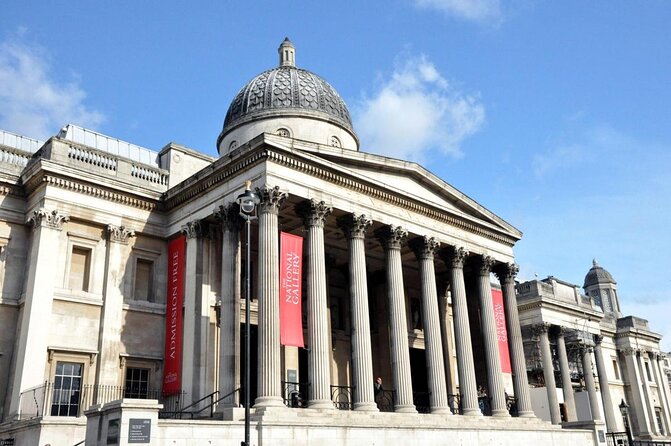
The National Gallery can be a lot to take in. Its collection covers paintings from the 1300s to the 1900s, with more than 2,300 works on display. You could spend hours reading labels and still miss the visual clues that make a painting important.
A group capped at eight gives this tour a useful middle ground. You are not paying for a fully private guide, but you are also not standing in a crowd trying to hear a speech from several rooms away. A small group gives you room to ask why a painter used a certain color, how a scene fits its period, or what detail you should notice first.
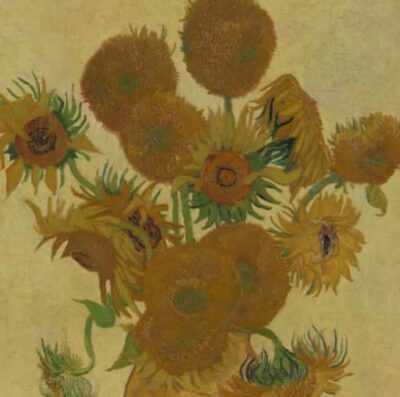
That matters most in front of famous works. Van Gogh’s Sunflowers is easy to recognize, but recognition alone does not explain its brushwork, color choices, or place in the artist’s career. A good guide gives you a way to look beyond the name on the wall.
The same applies to Jan van Eyck’s The Arnolfini Portrait. You might notice the figures and the setting, but a guide can point you toward the small details and symbols that make the painting worth a longer look. The tour’s purpose is not to rush you past famous canvases. It is to show you how to see them.
More National Gallery and Tate Tours:
- London: National Gallery Guided Tour with Art Expert Guide
★ 4.7 · 440 reviews - British Museum & National Gallery of London Semi-Private 8ppl Max
★ 5.0 · 168 reviews - London: Tate Modern Official Guided Tour
★ 4.6 · 154 reviews
Meeting at Trafalgar Square and entering through the Sainsbury Wing
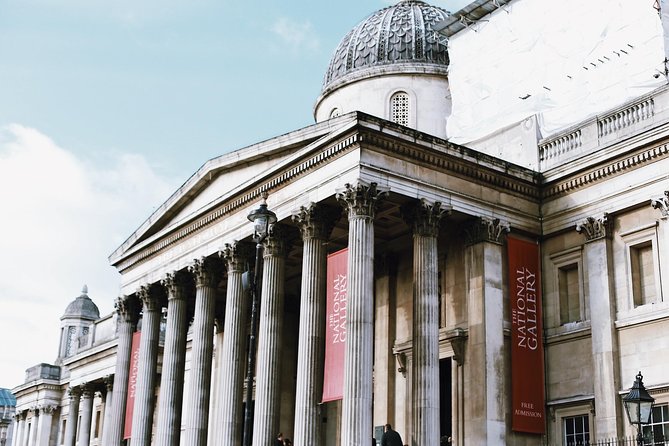
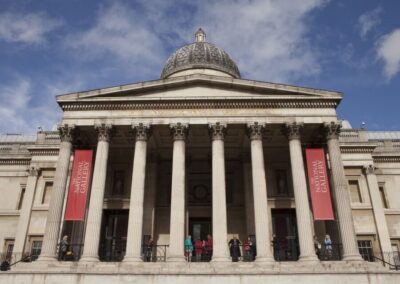
You meet your guide and group at the Sainsbury Wing entrance of the National Gallery, at Trafalgar Square. This is a central London location and is near public transportation, but you should allow time to find the correct entrance and arrive ready to start.
The tour does not include hotel pickup or drop-off. The operator recommends a taxi or Uber if you need door-to-door transport. Public transportation is also nearby, but the exact route depends on where you are staying.
Bring your mobile phone with the country code attached to your number when booking. The operator says this is essential, presumably so the guide can reach you if meeting details change. Keep your belongings light. Large bags and suitcases are not allowed inside, and only handbags or small, thin backpacks can pass through security.
The museum can occasionally close rooms or delay opening without much warning. If the opening is delayed by more than an hour, an alternative may be offered. Refunds or discounts are not provided for these museum-controlled changes, so keep your schedule flexible if you book this early in a London visit.
A two-and-a-half-hour route through European painting
The tour is built around selected highlights rather than every gallery. That is the right approach for a first visit or a short London stay. You will not see all 2,300 paintings, and no honest tour could promise that in one afternoon.
Instead, your guide uses major works to explain how painting changed over time. The route may include early works, Renaissance painting, Dutch and Flemish masters, French Impressionism, and later nineteenth-century art. The exact selection can vary because museum displays change during the year.
This broad span gives the visit a useful shape. You are not just collecting famous names. You are seeing how artists handled light, color, perspective, symbolism, portraiture, and everyday life in different periods.
Several guides are praised for organizing the visit in chronological order. Stephanie, for example, is described as using the collection to explain the development of painting from the eleventh century through the late Impressionists. Alex is praised for creating a chronological and inclusive route. That structure helps you remember what you saw after you leave.
The paintings become easier to read
The strongest part of this experience is the guide’s explanation of visual details. You may hear about shadows, color, perceptual completion, technique, and changes in style. These are not dry terms when they are tied to a painting in front of you.
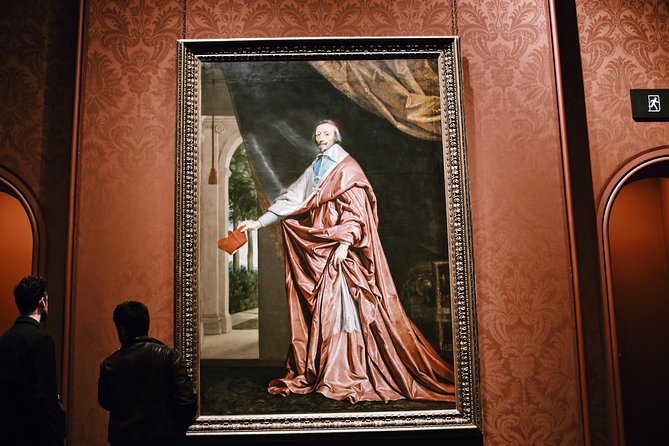
A good guide can make you notice something that would otherwise pass unseen. You might look at a face and suddenly understand how an artist used light to shape it. You might see why a group of colors feels balanced, or how a painter suggests depth without making every surface look perfectly real.
The guides praised most highly are not simply reciting dates. Stephanie is repeatedly described as passionate and able to connect paintings across different periods. Becky is praised for explaining artists and styles to people without a background in art history. Jake is singled out for pointing out historical context and fine details that are easy to miss alone.
Luis is described as explaining shadows, colors, and perceptual completion in a way that made the art more accessible. Matilda is praised for keeping a long visit interesting. Ellie is described as energetic from beginning to end.
This range of names tells you something useful. Babylon Tours London has several guides who can make the gallery engaging, but the tone may differ from one guide to another. Some guides lean toward a structured art history lesson. Others invite more personal reactions and discussion.
More British Museum Tours:
- Tower of London and Crown Jewels Exhibition Ticket
★ 4.5 · 6,677 reviews - London: Chelsea Football Club Stadium and Museum Tour
★ 4.8 · 4,576 reviews - Chelsea FC Stadium Tours and Museum
★ 5.0 · 1,908 reviews - London: British Museum Guided Tour
★ 4.3 · 1,182 reviews
Famous works, lesser-known connections
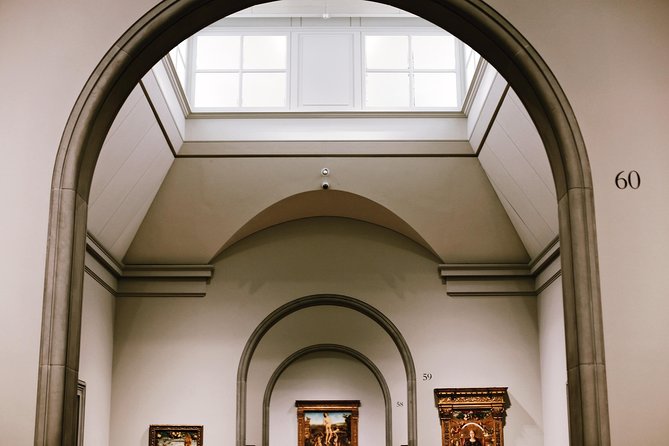
The itinerary includes major names such as Botticelli, Monet, Rembrandt, Vermeer, Seurat, Leonardo da Vinci, and Van Gogh. The value is in the connections between them.
You might move from a religious or mythological scene to a portrait, then to a landscape or still life. Your guide can show how artists solved similar problems in different ways. How do you make a figure appear solid? How do you suggest movement? How do you use an ordinary object to communicate status or belief?
The tour also makes room for paintings that are less familiar. That prevents the visit from becoming a parade of postcard images. You will likely leave with a few new favorites, not just a mental checklist of works you already knew.
One useful detail from the tour feedback is the attention given to women artists and Van Gogh. If those subjects matter to you, mention your interests early. The small group format makes it more realistic for a guide to adjust the focus than it would be on a large coach-style tour.
The collection can also support a visit centered on one particular painting. If you booked because you wanted to see Sandro Botticelli’s Venus and Mars, tell your guide. The tour may not spend as much time there as you hoped, since the route has to cover a large collection, but your priorities can help shape the conversation.
The guide makes or breaks the experience
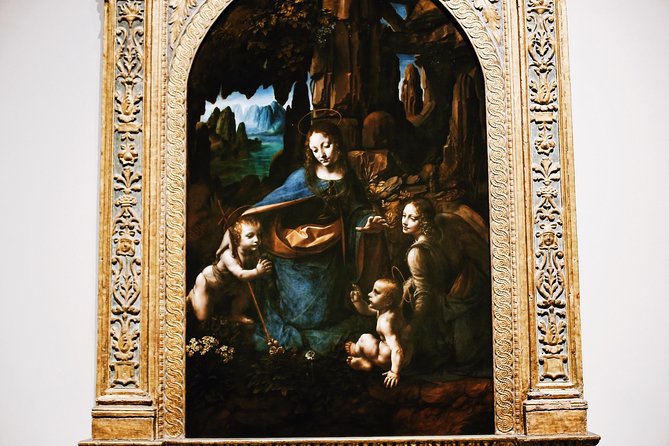
At $108.49 per person, this is not the cheapest way to enter the National Gallery. The museum admission included in the tour is free, so most of what you are paying for is the guide’s time, the planning, and the small group.
That can be good value if you have limited time, feel unsure where to begin, or want more than an audio guide can provide. Two and a half hours of focused explanation can save you from spending half a day wandering without a plan. It is especially useful for people who want art history placed in plain language.
The price is harder to justify if you already know the collection well or prefer to move at your own pace. You can visit the National Gallery without paying admission, then choose your own paintings and spend as long as you like in each room.
Guide quality is therefore central. The strongest accounts praise Stephanie, Becky, Jake, Luis, Matilda, Alex, Laurence, and Ellie for being friendly, organized, lively, and well informed. Several descriptions go beyond basic competence, saying the guides made the gallery feel like an art appreciation class.
There is one important caution. A less successful visit focused more on group opinions and the guide’s reactions than on historical information. The group left with about thirty minutes still available so they could see Monet and Picasso independently. If you want a firmly factual route with wide coverage, make that clear at the start.
Staying after the guided visit
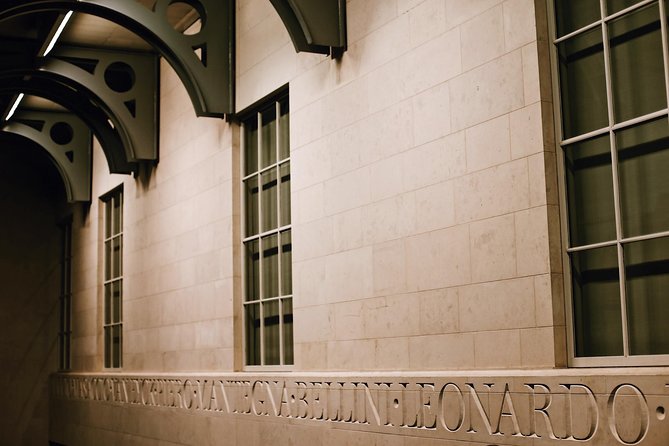
Once the guided portion ends, you may remain inside and look at other works on your own. This is one of the tour’s better practical features.
Use the guide’s recommendations as a short personal list. If you have spent most of the tour with Renaissance through Impressionist works, you can seek out rooms or artists that did not fit the route. You might also return to a painting that moved too quickly during the group visit.
The extra time matters because two and a half hours can feel long while you are walking, yet short inside a museum this large. The tour gives you a framework, then lets you decide what deserves a second look.
Do not assume temporary exhibitions are included. They are specifically excluded, so check the museum’s current arrangements if a special exhibition is the main reason for your visit.
Practical fit, walking, and timing
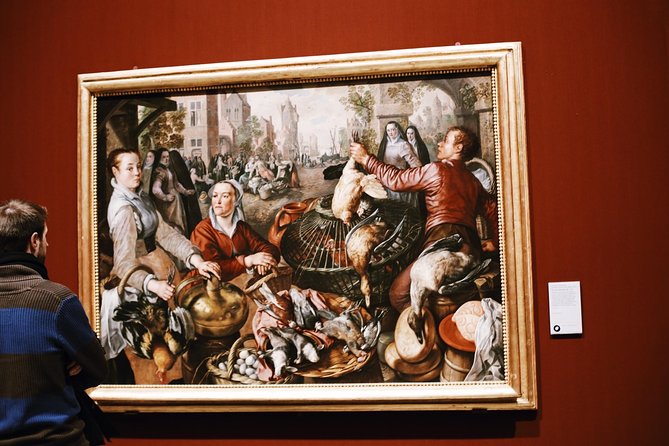
This is an active museum visit. You should be comfortable walking and standing for much of the two and a half hours. The experience is not available to people using wheelchairs or those with walking disabilities.
Security can cause a wait, even when a tour is described as avoiding lines. Increased security measures may create delays, and some rooms require quiet or limit speaking. Your guide will explain those rules before you enter restricted areas.
Wear suitable clothing for museum entry. Keep your bag small, and do not arrive with luggage. Since the tour ends back at the meeting point, plan your next activity from Trafalgar Square rather than expecting a hotel transfer.
The tour is offered in English and uses a mobile ticket. A minimum of two people is required for it to operate. If that minimum is not met, you will be offered another date or experience, or a full refund.
Cancellation is free up to 24 hours before the local start time. Changes or cancellations inside that window are not accepted for a refund. If something goes wrong, the operator asks you to contact them within 24 hours after the tour and give them a chance to address the problem before seeking a resolution.
Who should book this National Gallery tour?
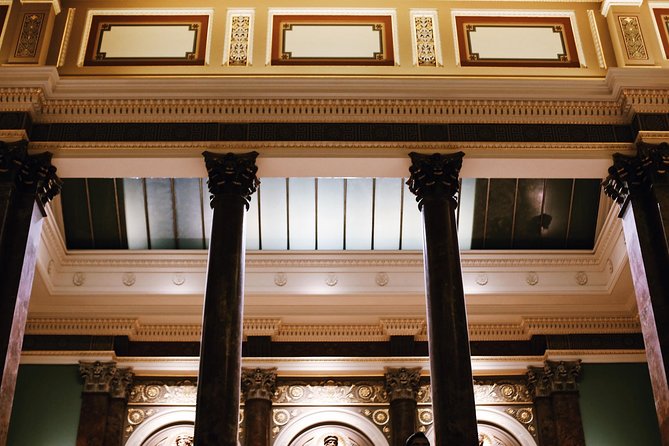
I would choose this tour if you have never visited the National Gallery, have only a few hours in London, or find major museums hard to approach without a plan. It is also a good match if you want to learn how to look at art rather than simply take photographs of famous paintings.
Families with older children and mixed-interest groups may find the small size helpful, since a guide can respond to questions and keep the route moving. People with a strong interest in Van Gogh, Impressionism, Renaissance painting, or women artists should mention those interests early.
I would skip it if you want complete independence, need wheelchair access, or mainly want to visit temporary exhibitions. I would also think twice about the price if you are already comfortable building your own museum route.
Should you book it?
Book this National Gallery tour if a guide’s explanations will make the collection more rewarding for you. The small group, two-and-a-half-hour format, and ability to stay afterward create a useful balance between structure and free time.
The main risk is variation in guiding style. Ask questions, state the kind of information you want, and tell the guide which artists matter most to you. At its best, this is not just a march past famous paintings. It is a focused lesson that helps you see why those paintings still matter.
FAQ
Where does the National Gallery tour start?
The tour starts at the Sainsbury Wing entrance of the National Gallery, at Trafalgar Square, London WC2N 5DN.
How long does the tour last?
The guided experience lasts approximately two hours and thirty minutes.
What is the maximum group size?
The semi-private tour has a maximum of eight people.
Is museum admission included?
The tour includes admission to the National Gallery. Temporary exhibitions are not included.
Can I stay in the museum after the tour?
Yes. After the guided visit, you may remain in the gallery and continue looking at works recommended by your guide.
Which artists might I see?
The route can include works by Van Gogh, Monet, Rembrandt, Vermeer, Botticelli, Seurat, Leonardo da Vinci, Jan van Eyck, and other major artists. Collections and room displays can vary during the year.
Is hotel pickup included?
No. Hotel pickup and drop-off are not included. The operator recommends using a taxi or Uber if needed.
Is the tour suitable for wheelchair users?
No. The tour is not available for people with walking disabilities or those using a wheelchair.
What should I bring into the museum?
Bring your mobile ticket and keep bags small. Large bags and suitcases are not allowed. Handbags and small, thin backpacks are permitted through security.
Can I cancel for a full refund?
You can cancel for a full refund up to 24 hours before the experience start time. Cancellations or changes made less than 24 hours before the start are not refunded.
Just added around London
- London: “Queen” Highlights Walking Tour★ 4.3 · 48 reviews
- Couple’s photo: Romantic photoshoot in London★ 4.8 · 22 reviews
- London: Private Tour with Locals – Highlights & Hidden Gems★ 5.0 · 8 reviews
- Luxury Private Tour in London with Lunch★ 5.0 · 7 reviews
- London 1- or 2-Hour Professional Photo Shoot★ 4.9 · 6 reviews
- London: Private Black Cab Night Tour with Hotel Pick Up★ 5.0 · 11 reviews
- London: Christmas Lights Tour – With Christmas Music★ 4.8 · 9 reviews
- London: A Unique Photoshoot Experience at Famous Sites★ 4.6 · 22 reviews
National Gallery and Tate Tours, compared.
National Gallery Guided Tour with Art Expert Guide
Read our review →
British Museum & National Gallery of London Semi-Private 8ppl Max
Read our review →


Browse the lists this tour appears in