
Reviewed · NATIONAL GALLERY AND TATE TOURS
Private Guided Tour of the National Gallery – Fast Track Ticket
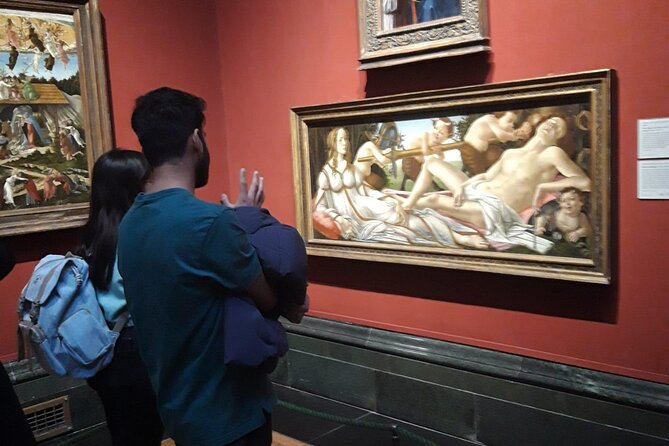
London’s National Gallery can feel like an art-history ocean, with hundreds of paintings spread across grand rooms on Trafalgar Square. This private two-hour tour gives you a clear route through the big names, from Leonardo da Vinci and Botticelli to Turner, Monet, and Van Gogh. I like the private format, since your guide can adjust the pace and explain a painting instead of delivering a fixed speech.
I also like the fast-track ticket, especially when your London day is packed. Guides including Damiano and Stefania have been praised for making art approachable, helping visitors notice small details, and adapting explanations for teenagers, beginners, and experienced art fans. The main limitation is time: two hours is enough for a strong introduction, not a complete visit to this enormous museum.
Key points to know before you book
- A focused route through famous art: Expect major works linked to the Renaissance, Romanticism, and Impressionism.
- Private attention for up to six people: You share the guide only with your own group.
- Fast-track entry saves valuable London time: The ticket is included, with delivery by text the day before.
- Guides can adjust the experience: Damiano, Stefania, and Tony are among the named guides praised for clear explanations and lively storytelling.
- Two hours works best as an introduction: You can remain afterward and continue exploring on your own.
- The price makes more sense for a group: At $179.14 for up to six people, the per-person cost drops as your party grows.
Why a private National Gallery tour helps
The National Gallery is free to enter in general, but getting value from a visit is not as simple as walking through the front door. The collection covers centuries of European painting, and the famous works are not arranged as one tidy greatest-hits corridor. You can easily spend an hour wandering, then realize you have missed the pictures you most wanted to see.
A private guide solves that problem by giving you a route and a story. Instead of trying to read every label, you can ask why a picture matters, how an artist worked, or what detail you should notice first. That is particularly useful if you are new to art museums or visiting with teenagers who need more than a list of names and dates.
The strongest part of this format is conversation. Guides such as Damiano have adjusted the tour to what a group already knows, rather than repeating the same speech to everyone. Stefania has also been praised for helping visitors find a new way to look at art, even when they do not normally choose guided gallery tours.
You should still arrive with realistic expectations. This is not a leisurely examination of every room. It is a well-directed introduction to the museum’s major artists, followed by time for you to revisit the paintings that caught your eye.
More National Gallery and Tate Tours:
- London: National Gallery Guided Tour with Art Expert Guide
★ 4.7 · 440 reviews - National Gallery of London Museum Tour Semi-Private 8ppl Max
★ 5.0 · 178 reviews - British Museum & National Gallery of London Semi-Private 8ppl Max
★ 5.0 · 168 reviews
Meeting at Trafalgar Square
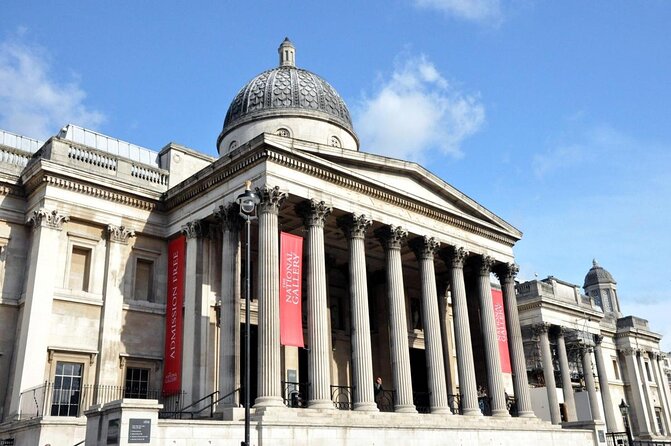
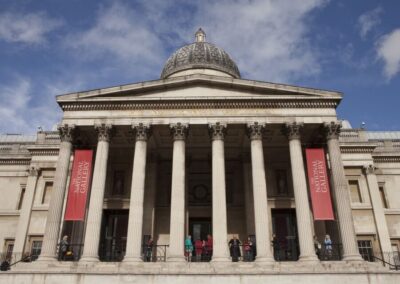
The meeting point is the National Gallery entrance at Trafalgar Square, London WC2N 5DN. That central location is easy to pair with other London sights, and the museum is close to public transportation.
The practical detail that matters most is the ticket handoff. Your entry tickets are sent by text the day before the tour, so check that the phone number attached to your booking is correct and make sure your group has access to the message. The activity begins and ends at the National Gallery, which keeps the plan simple.
A meeting at the museum entrance is helpful, but Trafalgar Square can be busy. Give yourself enough time to find the correct entrance and gather your group. One group arrived from different parts of the city and took time to assemble, yet the guide was patient. Still, I would not build tardiness into your plan. A late start means less time with the paintings, and two hours passes quickly.
The ticket is described as fast track, but you should understand what that does and does not mean. It is designed to reduce time spent waiting for entry. It does not turn the museum into a private building or guarantee that every room will be quiet. The benefit is a smoother start, not a museum free of other people.
The two-hour route through European painting
The tour covers the National Gallery’s main artistic developments, beginning with Renaissance painting and moving through later periods such as Romanticism and Impressionism. Your exact route can vary with the guide and your group, but the stated focus includes major works by Leonardo da Vinci, Claude Monet, Michelangelo, Raffaello, Botticelli, Canaletto, Titian, Caravaggio, John Constable, J. M. W. Turner, and Vincent van Gogh.
That range gives you a useful sense of how painting changed over time. You may move from religious images made with careful symbolism to scenes where light, movement, atmosphere, and brushwork become the main subject. A good guide helps connect those shifts instead of treating each painting as an isolated masterpiece.
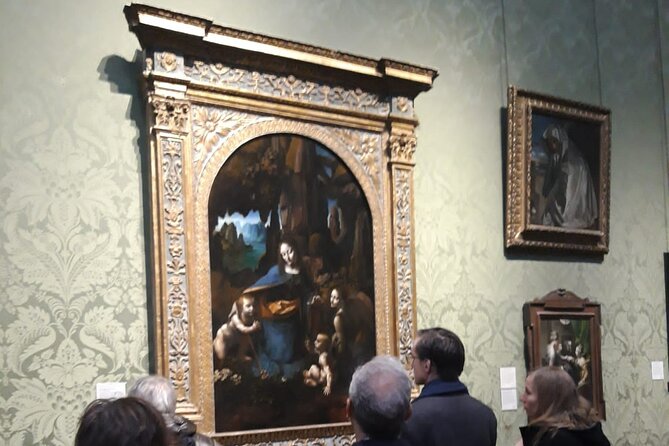
Leonardo’s The Virgin of the Rocks is one of the key works mentioned for the tour. It gives you a chance to consider Leonardo’s handling of faces, landscape, gesture, and mysterious mood. You might also discuss the way Renaissance painters used composition and symbolism to direct your eye.
Claude Monet’s Ninfee, or water lilies, offers a different experience. Rather than asking you to follow a narrative packed with figures and symbols, the painting asks you to look at color, reflection, and changing light. Seeing works from different periods together is where the tour earns its keep. You begin to understand that art history is not only a line of famous names, but a change in what artists wanted painting to do.
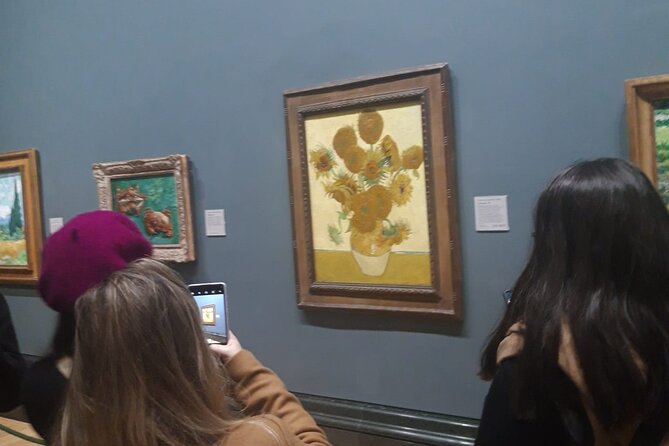
Van Gogh is another likely highlight. His work is familiar from books and posters, but a guide can point out choices in line, color, and surface that are easy to miss when you simply take a photograph and move on. The same applies to Turner and Constable, whose paintings can help you see how British artists treated weather, light, and open space.
You should expect the guide to select the most important works rather than cover every artist listed. Two hours cannot provide equal attention to Leonardo, Michelangelo, Raffaello, Botticelli, Caravaggio, Titian, Canaletto, Monet, Turner, Constable, and Van Gogh. The value is in choosing well and explaining clearly.
What the guide adds to the paintings
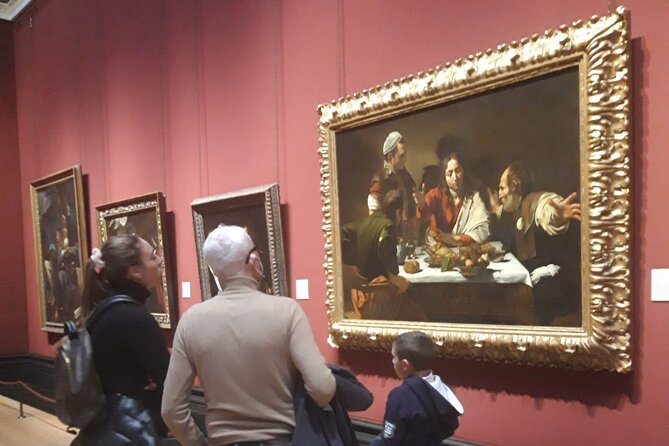
The tour’s most praised feature is the quality of the personal explanation. Damiano is described as bringing paintings to life with stories about the artists, their techniques, and the details hidden in the image. He has also been singled out for wit, flexibility, and a willingness to answer follow-up questions after the visit.
That kind of guidance changes the rhythm of a museum visit. Instead of standing in front of a famous picture and wondering why it matters, you get a starting point. Look at the hands. Notice the direction of the light. Compare the treatment of a face with another artist’s approach. Once you have those tools, you can keep using them after the tour ends.
Stefania’s approach appears especially useful for people who do not think of themselves as art lovers. Her role is not simply to recite facts. She helps you approach a painting with curiosity, then makes room for questions. Tony has also been praised for making the visit interesting and entertaining, which can matter when your group includes people with different levels of enthusiasm.
The experience can work well for families. One tour group with teenagers aged 16 and 18 found that the guide kept the visit engaging while explaining both the art and the lives of the painters. That is a good sign if you are trying to introduce older children to museums without turning the afternoon into a lecture.
You can also ask for a more personalized route. The available feedback describes guides adjusting the visit to a group’s existing knowledge, rather than giving a standard talk. That does not mean every request can be guaranteed, but it is worth explaining your interests at the beginning. Tell the guide if you prefer religious art, British painting, Impressionism, technique, or stories about the artists.
More British Museum Tours:
- Tower of London and Crown Jewels Exhibition Ticket
★ 4.5 · 6,677 reviews - London: Chelsea Football Club Stadium and Museum Tour
★ 4.8 · 4,576 reviews - Chelsea FC Stadium Tours and Museum
★ 5.0 · 1,908 reviews - London: British Museum Guided Tour
★ 4.3 · 1,182 reviews
Headphones, pace, and mobility
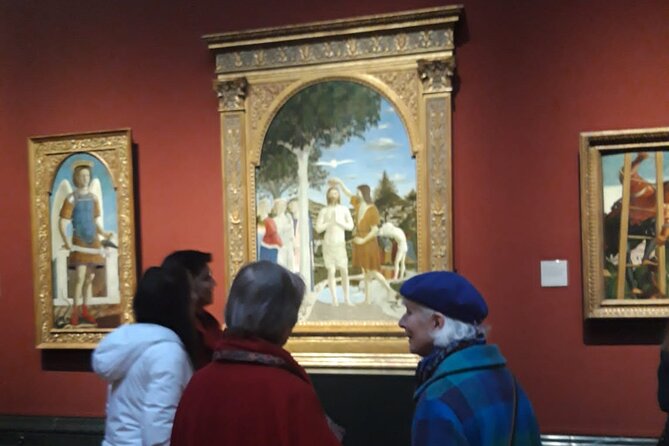
Headphones are available if needed. That is useful in a large gallery, where nearby conversations and room noise can make it hard to hear. For a private group of up to six, you may be able to stand close to the guide, but headphones can still help if you have hearing difficulties or prefer not to crowd around one painting.
The pace is another point to consider. A two-hour tour may include several rooms and a good number of major works. You will probably spend longer at the most important paintings and move more quickly through others. If you want long periods of silent looking, this format may feel brisk. If you want to cover the museum’s essentials without getting lost, the pace is a strength.
Mobility needs can be discussed with the guide. One guide, Damiano, helped a visitor with mobility issues obtain a wheelchair and reach the artworks. The information provided does not promise a particular accessibility arrangement for every booking, so contact the operator if your group has specific requirements. The general participation note says most people can take part.
I would also wear comfortable shoes. That is ordinary museum advice, but it matters here because the tour takes place inside a large national collection and finishes back at the meeting point. You may want to remain afterward, so plan for more standing and walking if you intend to continue exploring.
Is $179.14 good value for up to six people?
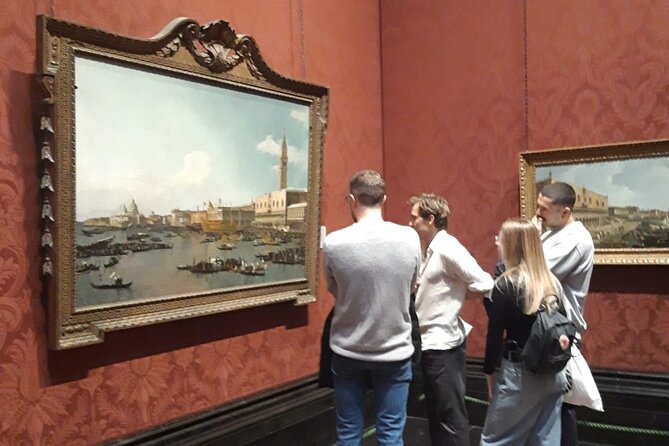
The listed price is $179.14 per group, with up to six people included. That makes the calculation important. For six people, the cost is about $30 per person. For two people, it is about $90 each, before considering the value of the guide’s time and the included entry arrangement.
I see the strongest value for families or friends traveling as a small group. You receive private attention, a planned route, and the chance to ask questions without sharing the guide with strangers. The cost becomes harder to justify for one person or a couple on a tight budget, especially since general National Gallery admission is not normally expensive.
The fast-track element adds practical value when your schedule is tight. If you have only one afternoon in central London and want to see the museum before another booking, avoiding an entry queue can matter. The guide also helps prevent time lost to aimless wandering.
The tour is less compelling if you already know the National Gallery well or prefer exploring alone. You can visit independently, choose your own rooms, and spend as long as you like with one painting. The private tour is buying structure and interpretation, not simply access.
One especially useful benefit is what happens after the two hours. A well-led introduction can leave you with a plan for the rest of your visit. One group finished with a firm grasp of the main works, then stayed several more hours to explore independently. That is the best way to use the tour: let the guide orient you, then follow your own interests.
Who will get the most from this tour?
I would recommend it most to first-time National Gallery visitors, families, small groups of friends, and anyone who wants the famous works to make more sense. It is also a good fit if you have limited London time and do not want to spend your first hour figuring out the museum’s layout.
Art beginners should feel comfortable booking it. The guides are praised for explaining paintings in an approachable way, not assuming a degree in art history. You can ask basic questions, and you do not need to know the difference between Renaissance and Impressionist painting before you arrive.
Experienced art fans may also enjoy the private format, especially if they request a particular focus. The guide’s knowledge can go beyond the works on display, and one guide even followed up later with a detailed answer to a question that could not be answered immediately during the tour.
I would think twice if your main goal is a slow, unhurried visit. Two hours is a framework, and the guide will shape your route. It is not the best choice for someone who wants to sit quietly in front of a single painting for half an hour.
The tour is offered in English. That should be clear when you book, since no other language is listed. Confirmation arrives at booking, and free cancellation is available if you cancel at least 24 hours before the local start time. Changes or cancellations inside that window are not accepted for a refund.
My verdict: book it for orientation and insight
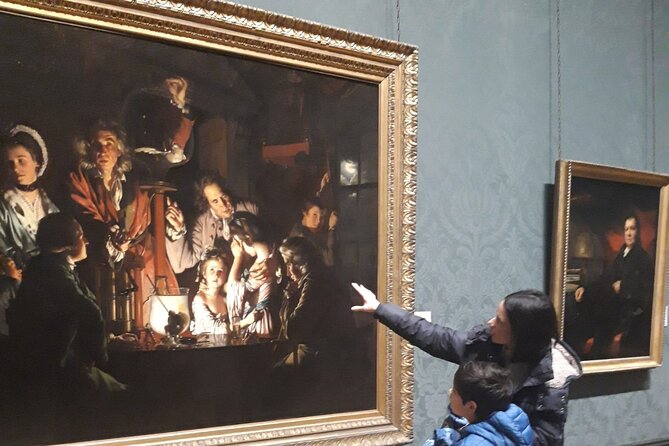
I would book this tour if the National Gallery feels intimidating, if your group wants a private guide, or if you have only two hours to get the essentials. The combination of fast-track entry, a small private group, and guides such as Damiano and Stefania gives you more than a quick walk past famous canvases.
I would skip it if you are a confident museum visitor who prefers setting your own route or if the price for a small party feels too high. For everyone else, it offers a practical first look, lively explanations, and a useful foundation for staying longer on your own. Bring questions, arrive on time, and treat the two hours as your introduction rather than your entire National Gallery visit.
FAQ
Where does the tour begin?
It begins at the National Gallery entrance, Trafalgar Square, London WC2N 5DN, UK.
Where does the tour end?
The activity ends back at the National Gallery meeting point.
How long does the tour last?
The tour lasts approximately two hours.
How many people can join the private tour?
The private tour is available for a group of up to six people.
Is admission to the National Gallery included?
Yes. An admission ticket is included.
How are the tickets delivered?
The tickets are sent by text message the day before the tour.
What language is the tour offered in?
The tour is offered in English.
Are headphones provided?
Headphones are available if needed.
Is the meeting point near public transportation?
Yes. The National Gallery meeting point is near public transportation.
Can I cancel for a full refund?
Yes, if you cancel at least 24 hours before the experience start time. Cancellations made less than 24 hours before the start time are not refunded.
Just added around London
- Up at The O2:Twilight Climb with Guided Tour with Panoramic Views★ 5.0 · 50 reviews
- Private Chauffeur-London Heathrow from/to Southampton Cruise Port★ 5.0 · 9 reviews
- Kensington Palace VIP Garden Tour with Royal High Tea★ 4.5 · 71 reviews
- Up at The O2: Sunset Climb with Guided Tour with Panoramic Views★ 5.0 · 110 reviews
- Secrets of the London Underground Small Group Walking Tour★ 4.5 · 38 reviews
- Urban Canvas: Exploring Shoreditch’s Vibrant Street Art★ 5.0 · 36 reviews
- Ultimate introduction to photography in Central London★ 5.0 · 19 reviews
- Full-Day Self-Guided Paris Tour from London by Eurostar with Seine River Cruise★ 3.5 · 22 reviews
National Gallery and Tate Tours, compared.
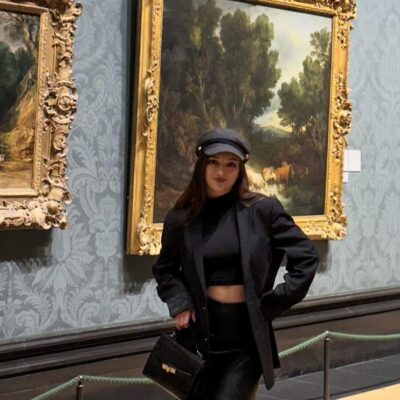
National Gallery Guided Tour with Art Expert Guide
Read our review →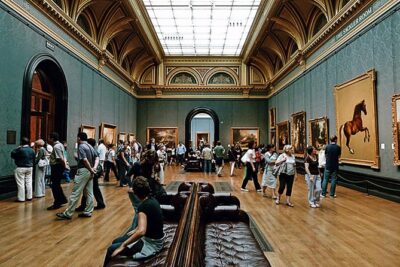
National Gallery of London Museum Tour Semi-Private 8ppl Max
Read our review →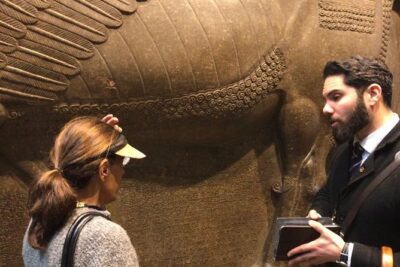
British Museum & National Gallery of London Semi-Private 8ppl Max
Read our review →
Official National Gallery Highlights Guided Tour
Read our review →
The National Gallery of London – Exclusive Guided Museum Tour
Read our review →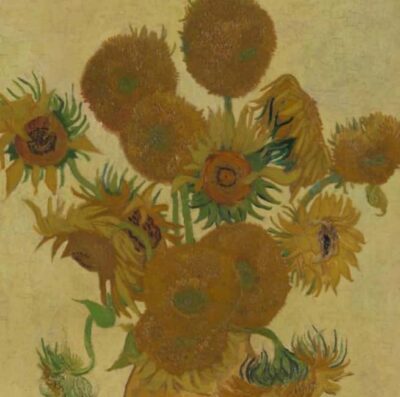
Browse the lists this tour appears in