
Reviewed · NATIONAL GALLERY AND TATE TOURS
London Tate Modern Museum – Guided Tour 8 guests 2,5h
Tate Modern is at its best when someone helps you connect the dots between Mondrian’s strict geometry, Picasso’s wartime paintings, Warhol’s celebrity images, and Duchamp’s mischievous Fountain. This 2.5-hour tour gives you that guided path through major 19th- and 20th-century art without making you fight for the guide’s attention in a large group.
I like the choice of a maximum eight guests for the semi-private version, and I like that the guide is an art historian rather than a general sightseeing escort. The main caution is value: at $112 per person, you are paying for interpretation and convenience, not food or temporary exhibitions, and one verified booking found the experience pricey and fairly standard.
Key points at a glance
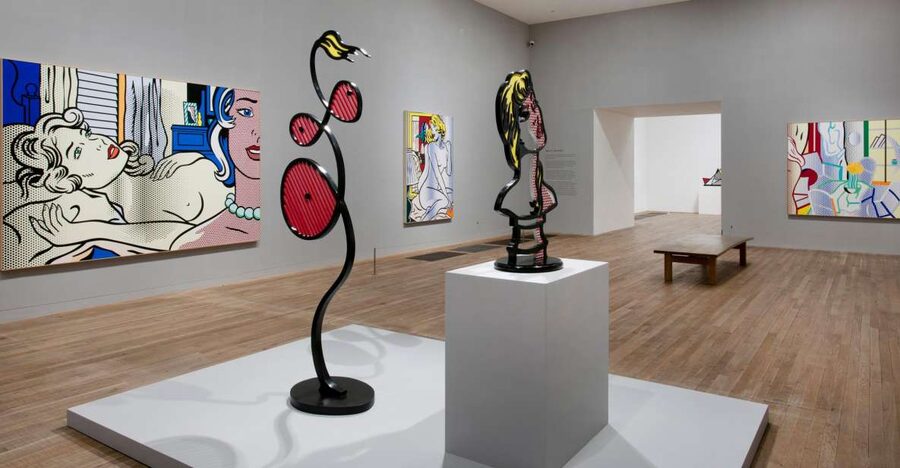
- Mondrian, Picasso, Dalí, Monet, Rothko, Warhol, and Duchamp: The route brings together artists from several major modern art movements.
- Small groups of up to eight: You should have a better chance to ask questions than on a standard large museum visit.
- Becky received especially warm praise: One verified booking described her as a perfect guide after an engaging 2.5 hours.
- Private and semi-private choices: You can book a more personal visit or join a smaller shared group.
- Chinatown and Buckingham Palace may be part of the wider package: Food and drinks are not included, and you should confirm exactly what your selected option contains.
- Pack light: Large bags and suitcases are not allowed, and valid photo ID is required.
What the 2.5-hour Tate Modern visit is really about
This is not simply a walk past famous paintings while a guide recites dates. The point is to show how artists changed the rules of painting, sculpture, and popular imagery during the 19th and 20th centuries.
You begin with the broad story of modern art, then move through artists and movements that challenged older ideas of beauty and representation. That approach suits Tate Modern well. The collection can feel scattered if you wander without a plan, especially when one room favors strict abstraction and the next presents a familiar face or a deliberately puzzling object.
I like tours that give you a few strong ideas to carry from room to room. Here, you can watch art shift from the light and outdoor impressions associated with Claude Monet to the hard edges of Piet Mondrian, the fractured forms of Pablo Picasso, and the broad fields of color associated with Mark Rothko.
The tour is conducted in English, and the guide is described as a professional art historian. That matters most if you want to ask why a work was made, how it fits an artistic movement, or why a piece that looks simple took such a sharp turn from earlier traditions.
More National Gallery and Tate Tours:
- London: National Gallery Guided Tour with Art Expert Guide
★ 4.7 · 440 reviews - National Gallery of London Museum Tour Semi-Private 8ppl Max
★ 5.0 · 178 reviews - British Museum & National Gallery of London Semi-Private 8ppl Max
★ 5.0 · 168 reviews
Mondrian’s lines and squares
Mondrian offers an excellent early test of your patience. His lines, blocks, and limited colors can look almost childlike at first glance. The guide’s job is to explain why that apparent simplicity was so radical, and why exact placement mattered so much to him.
This is one of the more useful parts of the experience for anyone who tends to say, I could make that. Mondrian’s work opens a discussion about balance, order, and the idea that art does not need to copy the visible world.
A guide can also help you see the difference between a decorative grid and a carefully controlled abstract composition. That kind of comparison is difficult to get from a label alone, especially if you are moving quickly through the museum.
Picasso and Dalí in wartime Spain
The route then brings in Spanish-born artists Pablo Picasso and Salvador Dalí, including work shaped by the Spanish Civil War. Their paintings offer a sharp contrast.
Picasso’s approach can be fractured, forceful, and openly political. Dalí’s work may pull you toward dream images and strange, polished details. Looking at the two together helps you see that modern art was not one single style. Artists were responding to politics, psychology, technology, and each other in very different ways.
This section should appeal to you if you enjoy art with a story behind it. The Spanish Civil War gives the guide a serious historical frame, but the tour is still about looking closely at the art rather than turning into a full political history lecture.
From Monet’s impressions to Rothko’s color
Claude Monet provides a bridge into Impressionism. His work is useful because it shows a period when artists began to focus less on precise, polished scenes and more on light, atmosphere, and the experience of seeing.
From there, the tour moves forward to abstract expressionism and Mark Rothko. Rothko’s paintings can appear to be simple blocks of color, but their scale and mood invite a different kind of attention from Monet’s changing light.
I find this sequence valuable because it makes modern art feel like a conversation rather than a collection of disconnected names. You can ask how artists moved away from recognizable subjects and why color, shape, and texture became enough for some painters.
Do not expect every stop to produce instant affection. Rothko and other abstract artists can divide a group. That is part of the point. A good guide gives you a way to look without insisting that you must like everything.
More British Museum Tours:
- Tower of London and Crown Jewels Exhibition Ticket
★ 4.5 · 6,677 reviews - London: Chelsea Football Club Stadium and Museum Tour
★ 4.8 · 4,576 reviews - Chelsea FC Stadium Tours and Museum
★ 5.0 · 1,908 reviews - London: British Museum Guided Tour
★ 4.3 · 1,182 reviews
Marilyn Monroe and Andy Warhol’s pop art
Andy Warhol’s Marilyn Monroe imagery is one of the easier entry points for visitors who feel unsure about modern art. You recognize the face immediately, yet Warhol changes its meaning by repeating it, brightening it, and turning a famous person into a mass-produced image.
The guide can use this work to explain pop art’s interest in advertising, celebrity, consumer goods, and popular culture. Warhol did not need to paint an unknown subject in an old-fashioned style. He took an image already circulating everywhere and made repetition the subject.
This part is especially useful if you want to connect museum art with the world outside the museum. The question is not only what the image shows. It is also why certain faces become public property and how repetition affects the way you see them.
Duchamp’s Fountain and the art argument
Marcel Duchamp’s Fountain is the stop most likely to make you scratch your head. It is also the one most likely to produce a good conversation.
The work challenges the idea that an artist must create an object by hand. It asks whether selection, context, and intention can be enough to turn an ordinary manufactured object into art.
You may leave this section still unconvinced. That is perfectly fine. The tour is designed to make you question the rules you brought into the museum, not to force a tidy answer. If you enjoy debate, this could be one of the most memorable moments. If you prefer beautiful pictures and clear explanations, it may feel like a detour into art-world argument.
The small-group format and guide quality
The semi-private option is limited to eight people, while private tours are also available. That is a useful middle ground. You get more personal contact than on a large coach-style tour, but you do not necessarily have to pay for an entirely private guide.
A small group also makes it easier to hear the guide in gallery spaces and to ask a question without stopping an entire crowd. The tradeoff is that a semi-private tour requires at least two people to run. If that minimum is not reached, an alternative date or a full refund is offered.
The strongest individual praise available is for Becky, who led one April 2025 booking. Markus from Germany described her as a perfect guide after 2.5 hours of modern-art discussion and fun. That is a useful sign that the right guide can make this tour lively rather than academic.
Still, the guide experience can vary. Another verified booking from May 2023 rated the tour three out of five and found it expensive for what was provided, with a fairly standard presentation. I would take that criticism seriously if you already know Tate Modern well or prefer exploring museums on your own.
What the $112 price covers
At $112 per person, this is not a low-cost museum orientation. The price pays for a professional art historian, skip-the-ticket-line access, and either a private or small-group format.
The value is strongest when you want structure. You do not need to decide which galleries matter most, and you can use the guide to connect artists who may otherwise seem unrelated. A private option can make sense for a family, couple, or group with specific interests.
The value is weaker if your priority is simply entry to Tate Modern. Food and drinks are not included, and temporary exhibitions are excluded. You are also not buying a full museum day with unlimited specialist access. The planned experience lasts 2.5 hours.
I would compare the cost with your own museum habits. If you enjoy reading every label and setting your own pace, admission plus an independent visit may suit you better. If you want someone to explain why Duchamp matters, how Warhol changed popular imagery, and where Rothko fits, the added fee has a clearer purpose.
Chinatown food and Buckingham Palace timing
The advertised highlights also include authentic food in Chinatown and timed entry to Buckingham Palace after the guided tour. These details need careful attention when you choose your option.
Food and drinks are specifically not included, so Chinatown should not be treated as a prepaid meal. If that part applies to your booking, plan to pay for your own food. The available details do not state how long the Chinatown stop lasts, which restaurants are used, or whether a guide joins you for the meal.
The Buckingham Palace entry is described as timed and scheduled after the guided tour. That could make the package useful if you want to link museum time with a major royal sight in one day. But the information provided does not spell out the transfer time, the exact meeting point, or how much time you have between Tate Modern and the palace.
Meeting points can vary by option. I would check the confirmation carefully before paying, especially if you are booking for a fixed palace entry time. Do not assume that the Tate visit alone explains every part of the package.
Timing, bags, and what to bring
Bring valid photo ID, such as a passport or ID card. Large bags, luggage, and suitcases are not allowed inside the museum. Only a handbag or small, thin backpack is permitted through security.
This is an easy rule to overlook on a day when you are moving between hotels, stations, and attractions. Leave bulky luggage elsewhere before meeting the guide. A small amount of walking is involved, so wear sensible clothing and shoes.
Appropriate dress may be required for some sites included in the wider experience. Museum and attraction closures can also happen without advance warning. If a museum opening is delayed by more than one hour, an alternative is provided, but a refund is not offered in that situation.
Wheelchair-friendly tours are available only on request, while the experience is marked as not suitable for wheelchair users. If access needs matter to your plans, contact the provider before booking rather than relying on the standard tour format.
Cancellation is flexible up to 24 hours before the start for a full refund, and you can reserve now and pay later. Those terms help if your London schedule is still changing, but they do not remove the need to check the exact option details.
Who will enjoy this Tate Modern tour
I would recommend it most to you if modern art feels interesting but slippery. The guide gives you a route through major artists and movements, and the small group leaves room for questions.
It also suits first-time visitors who want to see well-known works without spending hours guessing which rooms to choose. The sequence from Monet and Mondrian to Picasso, Dalí, Rothko, Warhol, and Duchamp gives you a useful first map of modern art.
Families and mixed-interest groups may also benefit. A recognizable Marilyn Monroe image can draw in someone who is not keen on abstract painting, while Duchamp offers a debate for anyone who likes a challenge.
I would hesitate if you want a quiet, self-directed museum visit, if temporary exhibitions are your main goal, or if $112 feels high for a 2.5-hour guided visit. The three-out-of-five assessment from one booking suggests the presentation may feel standard to some people, so the price depends heavily on the guide and your interest in interpretation.
Should you book it?
Book this tour if you want a focused introduction to Tate Modern, value an art historian’s explanations, and like the idea of a group capped at eight people. Becky’s strong April 2025 performance suggests the right guide can make the visit both clear and enjoyable.
Before booking, confirm whether your selected option includes the Chinatown stop and timed Buckingham Palace entry, since the details vary by option and food is not included. If those additions fit your schedule, the package may justify the price. If you only want Tate Modern, compare the cost with a self-guided visit and decide how much expert explanation is worth to you.
FAQ
How long does the Tate Modern guided tour last?
The guided Tate Modern visit lasts 2.5 hours.
What language is the tour conducted in?
The live tour guide speaks English.
How many people can join the semi-private tour?
The semi-private tour has a maximum of eight guests.
Is a private tour available?
Yes. You can choose either a private tour or a semi-private small-group option.
What artists are covered?
The tour discusses artists including Claude Monet, Piet Mondrian, Pablo Picasso, Salvador Dalí, Mark Rothko, Andy Warhol, and Marcel Duchamp.
Are food and drinks included?
No. Food and drinks are not included. The wider experience advertises authentic food in Chinatown, but you should expect to pay for food yourself.
Do I need photo identification?
Yes. Bring a valid passport or ID card.
Can I bring luggage into Tate Modern?
No. Large bags and suitcases are not allowed. Only handbags or small, thin backpacks can pass through security.
Just added around London
- Up at The O2:Twilight Climb with Guided Tour with Panoramic Views★ 5.0 · 50 reviews
- Private Chauffeur-London Heathrow from/to Southampton Cruise Port★ 5.0 · 9 reviews
- Kensington Palace VIP Garden Tour with Royal High Tea★ 4.5 · 71 reviews
- Secrets of the London Underground Small Group Walking Tour★ 4.5 · 38 reviews
- Urban Canvas: Exploring Shoreditch’s Vibrant Street Art★ 5.0 · 36 reviews
- Up at The O2: Sunset Climb with Guided Tour with Panoramic Views★ 5.0 · 110 reviews
- Ultimate introduction to photography in Central London★ 5.0 · 19 reviews
- Full-Day Self-Guided Paris Tour from London by Eurostar with Seine River Cruise★ 3.5 · 22 reviews
National Gallery and Tate Tours, compared.
National Gallery Guided Tour with Art Expert Guide
Read our review →
National Gallery of London Museum Tour Semi-Private 8ppl Max
Read our review →
British Museum & National Gallery of London Semi-Private 8ppl Max
Read our review →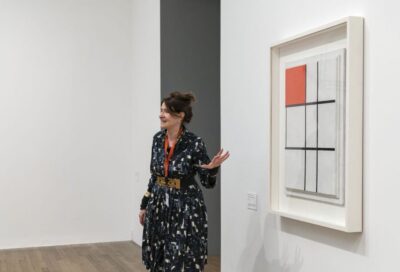
Official National Gallery Highlights Guided Tour
Read our review →
The National Gallery of London – Exclusive Guided Museum Tour
Read our review →
Browse the lists this tour appears in