
Reviewed · MUSEUMS
London Transport Museum One Day Ticket
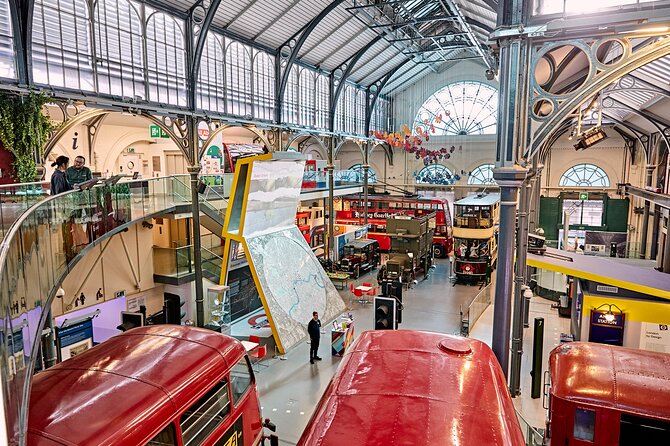
London Transport Museum packs 200 years of city life into a handsome old flower market in Covent Garden. You move from horse-drawn buses to the first underground trains, then on to the red buses, black cabs, tube maps, and electric vehicles that made modern London possible.
I like the freedom to set your own pace, and I like the way the museum works for both adults and children. You can study transport design and wartime London, while younger visitors stamp cards, climb aboard vehicles, and play in the All Aboard area. The main caution is noise and crowding during school holidays, when the family zones can make it harder to focus on the exhibits.
Key points at a glance
- See the first underground trains: The collection includes early steam and electric railway vehicles.
- Explore Covent Garden: The museum sits in a central, historic setting at The Piazza.
- Let children play transport roles: The All Aboard zone allows kids to act as drivers, conductors, and mechanics.
- Follow London’s growth: Displays connect buses, trams, taxis, and the Tube with the city’s development.
- Plan for about two hours: You can move through the museum at your own speed and stay longer if you wish.
- Use a mobile ticket: The admission ticket covers entry, while food and drink cost extra.
Why London Transport Museum is worth your time
London’s transport system is more than a way to get from one postcode to another. It helped the city expand, changed where people lived and worked, and gave London some of its most familiar symbols. This museum makes that story easy to follow through real vehicles, colorful posters, maps, and hands-on displays.
You are not simply looking at old machines behind glass. You can see restored buses, trams, tube trains, taxis, and other vehicles at close range. Some displays let children climb aboard or take on transport jobs, while adults can stop to read about the engineering and social changes behind the vehicles.
The setting helps. The museum occupies a refurbished old flower market in Covent Garden, so it fits naturally into a day spent around The Piazza, shops, restaurants, and street performers. That central location also makes it a practical choice when you want an indoor activity without crossing the city.
The ticket is listed at $33.76 per person. That is not a cheap museum admission, especially for a family, but the ticket gives you room to stay beyond a quick look. If you spend two hours exploring the vehicles, play areas, displays, shop, and cafe-bar, the value becomes more reasonable. It works best as a substantial stop in a Covent Garden day, not as a five-minute attraction between errands.
More Day Trips from London:
- Windsor Castle, Stonehenge, and Oxford Day Trip from London
★ 4.5 · 5,292 reviews - London: Windsor, Stonehenge, Bath, and Roman Baths Day Trip
★ 4.5 · 5,131 reviews - London: Harry Potter Studio Tour and Oxford Day Trip
★ 4.7 · 5,098 reviews
Starting with horse buses and London’s early streets
The museum begins with the transport systems that came before the Tube. Horse-drawn buses show how London moved around in the 18th and 19th centuries, when public transport depended on animals, road conditions, and crowded streets.
This early section gives useful context. You can see that London’s transport story did not begin underground. It developed step by step, from horse power to steam, electricity, and the highly organized network recognized today.
I would take time with the posters and written panels here, especially if you want to understand London beyond its famous red buses. The exhibits explain how transport helped the city grow over the past two centuries. The focus is practical rather than purely decorative, so you come away with a clearer sense of why certain neighborhoods and routes developed.
The layout can take a little getting used to. The museum covers several floors, and the sequence may not feel perfectly obvious at first. Rather than trying to hurry through in a strict order, take a moment to get your bearings, then follow the areas that interest you most.
The Tube story, from steam to the iconic map
The underground railway is the museum’s natural star. You can see examples of the world’s first underground steam and electric trains, a reminder that London was an early testing ground for a transport idea that later shaped cities around the world.
The early trains also show how different underground travel once was. Steam engines, machinery, and older carriages make the first Tube systems feel like a bold experiment rather than the polished network you use today.
The iconic London Tube map receives attention too. Its clear colored lines and simple design helped turn a complicated system into something passengers could understand quickly. Even if you have used the Underground for years, it is worth pausing to consider how much thought went into making the network readable.
This part suits adults who enjoy design, engineering, and city planning. Children may move on quickly unless they have something interactive to do, so families should balance the reading areas with the vehicles and play sections. That mix is one of the museum’s strengths. You can spend ten minutes studying a map while a child takes a turn pretending to drive a train.
Red buses, black cabs, trams, and vintage vehicles
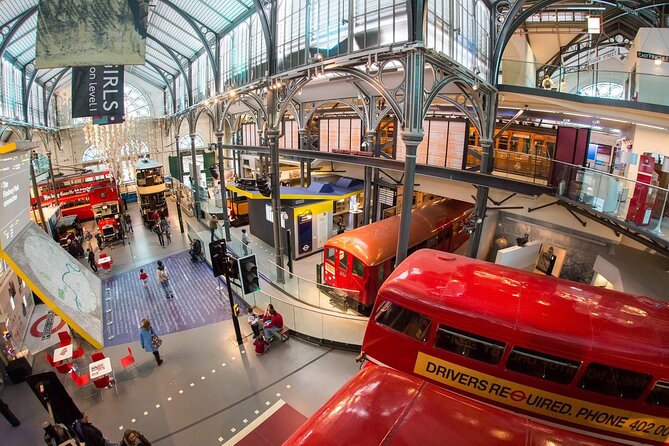
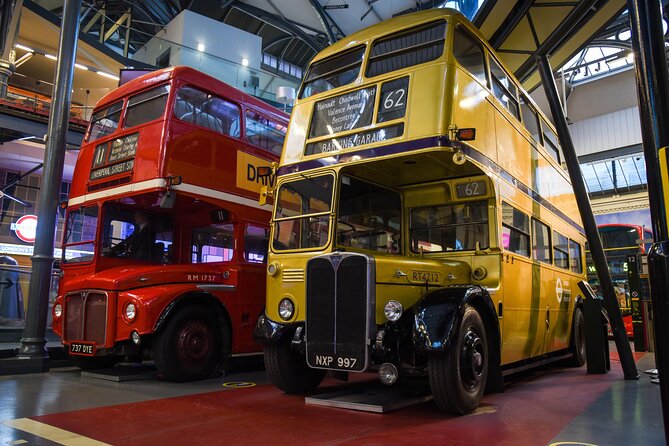
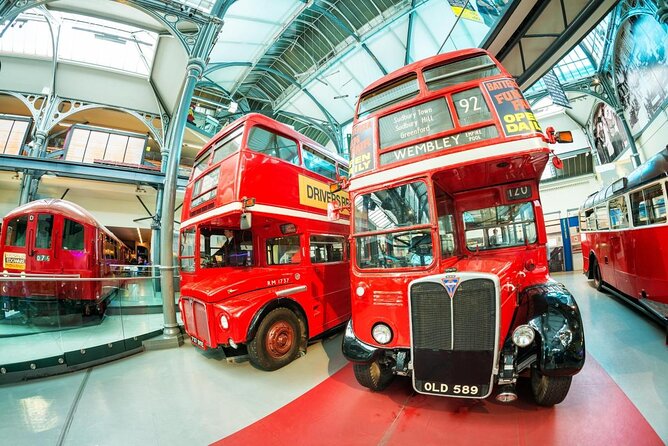
London’s familiar red buses are here in physical form, along with black cabs, trams, and other vintage vehicles. These are the exhibits that make the museum feel unmistakably London. The shapes, colors, and signs are instantly recognizable, even to someone visiting the city for the first time.
The buses are particularly effective because they connect transport with everyday experience. You can think about the difference between riding on an old open or early enclosed bus and using a modern city route. The vehicles are not presented only as museum pieces. They show how practical needs, comfort, safety, and city growth changed public transport.
The black cabs add another familiar piece of London identity. Trams and older vehicles broaden the story beyond the Tube, showing that the city has always depended on several forms of public transport working together.
I like this section for mixed-age groups. Adults get the visual history and transport details, while children have large objects to inspect and, in some cases, enter. If you have only a short visit, prioritize the vehicles over trying to read every panel.
More British Museum Tours:
- Tower of London and Crown Jewels Exhibition Ticket
★ 4.5 · 6,677 reviews - London: Chelsea Football Club Stadium and Museum Tour
★ 4.8 · 4,576 reviews - Chelsea FC Stadium Tours and Museum
★ 5.0 · 1,908 reviews - London: British Museum Guided Tour
★ 4.3 · 1,182 reviews
All Aboard gives children a role to play

The All Aboard playzone is the main reason this museum works so well for families with young children. Kids can take on roles such as conductor, mechanic, or driver, using interactive vehicles and activity areas to turn the transport story into play.
Children can also stamp cards and get behind the controls of vehicles. Those small tasks give them a reason to keep moving through the museum and help the visit feel like something they are doing, not something being explained at them.
The play areas are especially suited to children around the early school years. One family described a five-year-old enjoying the chance to ask questions, stamp a card, and drive vehicles, while remembering what she learned afterward. That is a good measure of the museum’s success: it gives children a physical activity to anchor the information.
There is a tradeoff. The same play features that make the museum appealing can create noise and movement. During school breaks, the family areas may be loud, and adults looking for a quiet museum visit may find it difficult to concentrate. If calm matters to you, consider visiting outside school holidays and allow time for the busiest areas rather than expecting the whole museum to be quiet.
Posters and wartime transport history
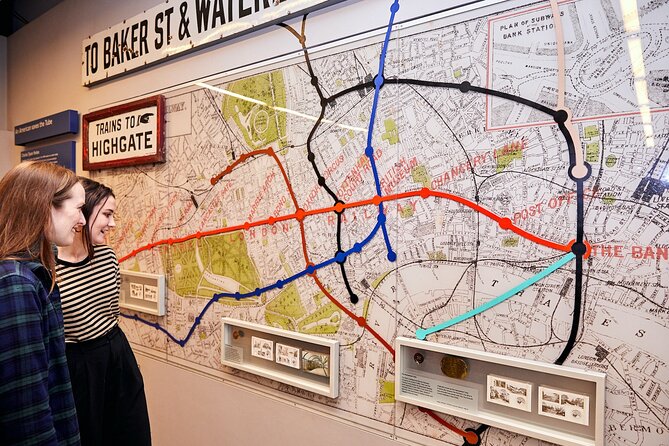
The vehicles catch your eye first, but the posters and written displays give the visit its wider meaning. They show how transport supported London through periods of change, including wartime. The museum also links transport history with the history of the city itself.
This is where the attraction becomes more than a collection of buses. You can see how public transport affected work, neighborhoods, movement, and daily routines. A visitor who only wants photographs of red buses may move through quickly, but I recommend reading at least a few panels in each period.
Some material is written in English, so readers who are less comfortable with the language may find the displays slower to follow. The visual exhibits still communicate a great deal, but the historical detail depends on being able to read the accompanying text.
A sensible two-hour visit plan
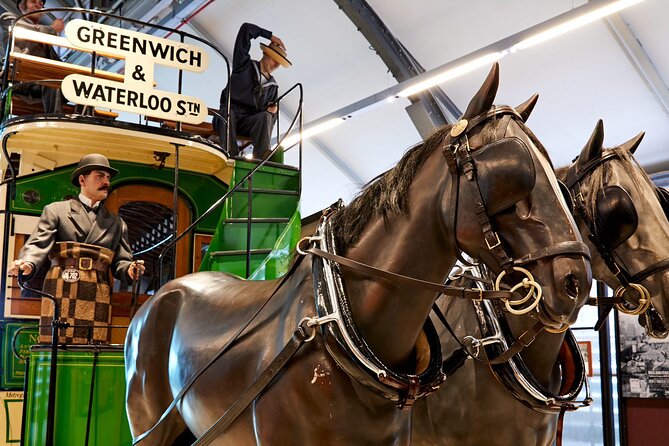
The stated visit time is about two hours, though you are free to spend longer. That makes the museum easy to fit into a larger London day, especially because it is in central Covent Garden.
For a focused visit, start with the early horse-drawn transport, then follow the story toward the Tube and modern city vehicles. After that, allow time for the interactive displays and All Aboard playzone if you are visiting with children. Finish with the shop or Canteen, rather than trying to squeeze those in while rushing toward the exit.
Families should expect the pace to be uneven. Adults may want to read every panel, while children may want to board every vehicle and repeat the same activity. Two hours is a useful target, but a family with enthusiastic children could easily need longer.
If you are visiting alone or with other adults, the museum can be shorter. Focus on the underground trains, Tube map, posters, and restored vehicles. You do not need to treat every display as a required stop.
Covent Garden location and practical details

The museum is at The Piazza, London, WC2E 7BB, in the heart of Covent Garden. It is near public transportation, so you can combine the visit with other central London plans rather than setting aside a full day for travel.
The attraction offers mobile tickets and multiple time slots. Keep the ticket available on your phone when you arrive. One booking problem has been reported, involving difficulty accessing a ticket and having to pay again at the museum, so it is sensible to check your confirmation before leaving your hotel and keep the booking details easy to open.
Food and drink are not included. The museum has a cafe-bar called Canteen, but you should budget separately if you plan to eat there. The shop sells transport-themed gifts, which can be a pleasant final stop, though families should expect children to notice it.
The museum has buggy access and a lift between floors. Service animals are allowed, and most people can take part. Those details make the attraction easier for families and for visitors who need step-free access between the museum’s levels.
Who will enjoy this museum most
This is a strong choice for families with children, especially those who enjoy vehicles, role play, and hands-on activities. The All Aboard zone gives younger children a clear reason to engage, while the full-size buses and trains make the subject easy to understand.
It also suits adults interested in London design, public transport, engineering, and urban growth. The Tube map, vintage posters, and early underground trains give the museum plenty for adults to study beyond the play areas.
It may be less suitable if you want a silent, highly ordered museum visit. The layout can feel confusing, and school holidays can bring noise and crowds. The price is also worth weighing carefully for larger families, since each person needs an admission ticket and food is separate.
For a first London visit, the museum adds useful context to the buses and Underground you will use elsewhere in the city. For repeat visitors, it explains why those familiar systems look and work as they do.
Should you book the London Transport Museum ticket?
Book it if you want a central London attraction that combines real transport vehicles with hands-on activities. It is especially good for families, transport fans, and anyone looking for an indoor stop in Covent Garden. The museum’s best features are the restored buses and trains, the Tube history, and the All Aboard playzone.
Think twice if your group dislikes noise, if you are visiting during a school break, or if the $33.76 price per person feels high for a two-hour activity. You can improve the value by staying longer, reading the historical displays, and treating the museum as part of a full Covent Garden outing.
I would choose a quieter time if possible, check your mobile ticket in advance, and allow at least two hours. With those simple steps, this becomes a useful and enjoyable way to understand the transport system that helped shape London.
FAQ
Where is the London Transport Museum?
The museum is located at The Piazza, London, WC2E 7BB, in Covent Garden.
How long does a visit take?
The visit is expected to take about two hours, but you can explore at your own pace and stay longer if you wish.
What does the ticket include?
The ticket includes entrance to the London Transport Museum.
Are food and drinks included?
No. Food and drinks are not included, although the museum has a cafe-bar called Canteen.
Is the museum suitable for children?
Yes. The museum has interactive displays, transport vehicles, and the All Aboard playzone, where children can pretend to be drivers, conductors, or mechanics.
Can I visit at a time that suits me?
Multiple time slots are available, allowing you to choose a suitable entry time.
Is the museum accessible with a buggy?
Yes. The museum has buggy access and a lift for reaching its different floors.
Can I cancel for a refund?
Yes. You can cancel at least 24 hours before the experience start time for a full refund. Cancellations or changes made less than 24 hours in advance are not accepted for a refund.
Just added around London
- London: “Queen” Highlights Walking Tour★ 4.3 · 48 reviews
- Couple’s photo: Romantic photoshoot in London★ 4.8 · 22 reviews
- London: Private Tour with Locals – Highlights & Hidden Gems★ 5.0 · 8 reviews
- Luxury Private Tour in London with Lunch★ 5.0 · 7 reviews
- London 1- or 2-Hour Professional Photo Shoot★ 4.9 · 6 reviews
- London: Christmas Lights Tour – With Christmas Music★ 4.8 · 9 reviews
- London: Private Black Cab Night Tour with Hotel Pick Up★ 5.0 · 11 reviews
- London: Private Pub Tour★ 4.5 · 4 reviews
Museums, compared.
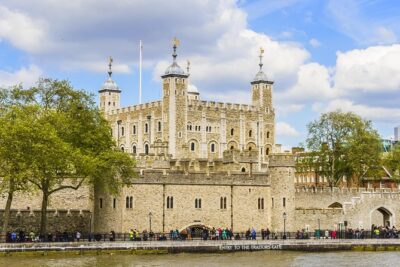
Tower of London and Crown Jewels Exhibition Ticket
Read our review →
Chelsea Football Club Stadium and Museum Tour
Read our review →


Official tickets: Moco Modern & Contemporary Art Museum
Read our review →
British Museum London Guided Tour Semi-Private 8ppl Max
Read our review →
British Museum Audio Tour & Priority Entrance Ticket
Read our review →Browse the lists this tour appears in