
Reviewed · JACK THE RIPPER TOURS
London: Jack the Ripper Museum Tickets
Jack the Ripper Museum takes you into the grimy world of Whitechapel in 1888, using six floors of recreations, documents, sound effects, and crime evidence. You move from a murder scene to the police station, then into the rooms and lives of the women who were killed. It is part museum, part theatrical set, and very much aimed at visitors who can handle disturbing material.
I like the way the museum gives the victims more attention than the killer, especially in Mary Jane Kelly’s bedroom. I also like the police-room displays, including the From Hell and Dear Boss letters, P. C. Watkins’s equipment, and old newspapers. The main drawback is size: some people finish in 45 minutes, and the cramped, dark presentation will not suit everyone.
Key points to know before you go
- Six floors in an old East End setting: The museum is at 12 Cable Street, in a building that can look more like a house than a conventional museum from the outside.
- The women’s stories matter here: Photographs, clothing, family details, and a recreated bedroom give the murders a human context.
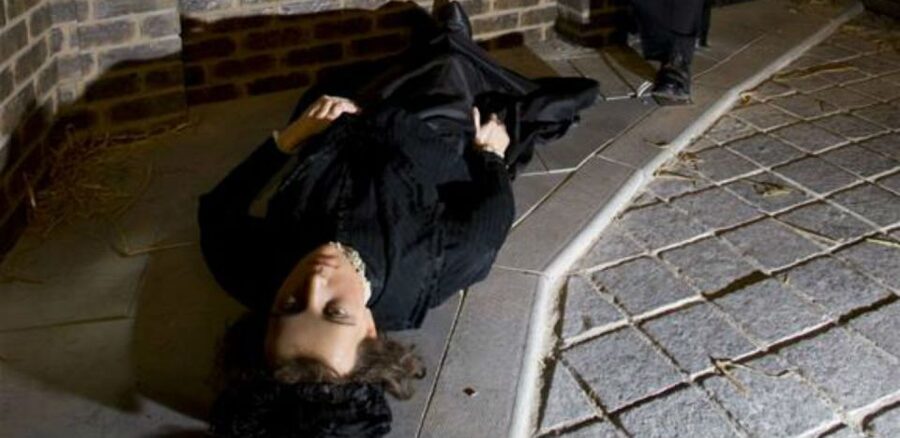
- Crime scenes are recreated with wax figures: Mitre Square and the discovery of Catherine Eddowes’s body are presented in a deliberately unsettling style.
- The police station room is a highlight: Crime boards, letters, newspapers, handcuffs, a truncheon, a notebook, and a whistle help explain the investigation.
- The morgue is genuinely graphic: Actual autopsy photographs and reports are displayed, so this is not a light family attraction.
- Plan on 45 to 90 minutes: You can move quickly, or read every panel and spend much longer with the material.
Entering the Jack the Ripper Museum on Cable Street
The museum is at 12 Cable Street in London’s East End, close to Tower Gateway, Tower Hill, and Aldgate East stations. Transportation is not included, so you make your own way there and return to the same meeting point when you are finished.
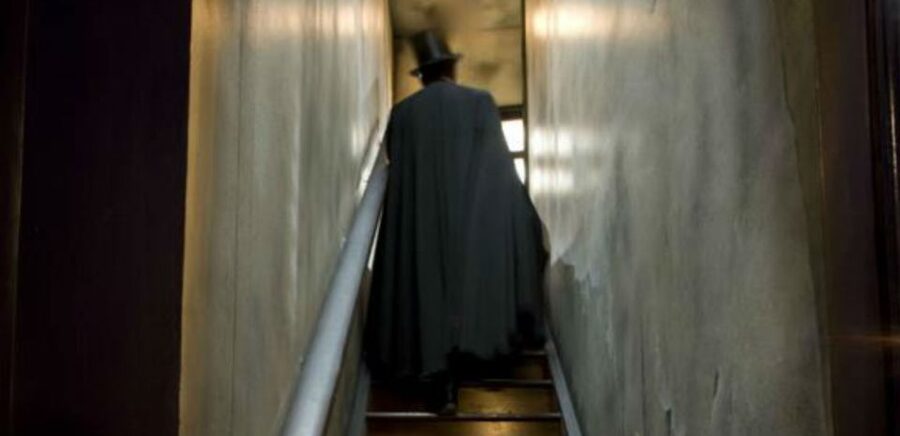
The building may not look like a grand public museum at first. That is part of the experience. Once inside, the dark rooms and period-style displays create a stronger sense of place than a modern gallery with bright lights and glass cases would.
This is a self-guided visit. You move through the six floors at your own pace, reading information and examining the displays. Staff at the entrance can explain the best route around the museum, and some sessions may include a guide. Names noted by visitors include Jasony and George, but you should not book this expecting a guaranteed guided tour by either person.
The attraction has an overall rating of 4.2 from 894 reviews, which fits the experience well. It is popular because it is atmospheric, unusual, and easy to fit into a London day. It is not a large national museum with extensive original collections, and you should set your expectations accordingly.
More Jack the Ripper Tours:
- London: The Original Jack the Ripper Walking Tour
★ 4.7 · 7,833 reviews - London Jack the Ripper Guided Tour with Ripper-Vision
★ 4.5 · 4,840 reviews - London: Jack the Ripper Small Group Tour
★ 4.7 · 3,159 reviews
Mitre Square and the first crime scene
One of the early major displays recreates Mitre Square, where P. C. Watkins discovered Catherine Eddowes’s body. A wax figure presents the moment of discovery in a deliberately theatrical way, with the officer and the scene arranged for maximum effect.
This room gives you a sense of how the museum works. It does not simply place a label beside an artifact. It builds a scene, adds lighting and sound, and asks you to look closely at the setting. That makes the story easier to follow, but it also makes the material more intense.
The display is not suitable for anyone who wants a quiet, detached history lesson. The murder scenes are designed to unsettle you. If you are interested in criminal history and Victorian London, the staging may help you understand the shock of the events. If you dislike wax figures or theatrical horror, this is one of the parts you may want to pass through quickly.
Jack the Ripper’s sitting room
The next section presents a recreation of the killer’s sitting room. It contains medical instruments, books, maps, letters, and Victorian objects connected with the case.
The room is useful because it places the crimes within the wider world of late Victorian London. You see the sort of objects and printed material that help build the museum’s picture of the period, rather than encountering only a series of murder dates and names.
A particularly unusual display is a drawing attributed to prime suspect Walter Sickert. It shows a woman’s body on a metal bed and is signed in red ink. The museum presents it as a major object in the collection, and it adds another layer to the long-running question of who Jack the Ripper may have been.
Keep in mind that the mystery remains unresolved. The museum presents suspects, clues, letters, and theories, but the evidence does not produce a confirmed identity. The appeal is in seeing how the case has been interpreted, not in expecting a final answer.
The recreated Whitechapel Police Station
For me, the police station room is among the most useful sections because it shifts attention from the murders to the investigation. Whitechapel Police Station is recreated with crime-scene boards, newspaper reports, police objects, and written evidence.
You can inspect the From Hell and Dear Boss letters, along with original newspapers and police artifacts. These displays show how the case was communicated and investigated at the time, while also reminding you that Victorian police work lacked many tools that modern investigators take for granted.
The museum also displays a whistle linked to P. C. Watkins, which he blew after finding the body in Mitre Square. His notebook, handcuffs, and truncheon are displayed as well.
These objects are modest in appearance, but that is their strength. A whistle or notebook gives you a more direct link to the people who handled the case than another dramatic wax figure does. The museum describes these as among the most important Ripper-related items outside Scotland Yard’s private Crime Museum.
You will find plenty to read here. If you hurry, you can miss the best material, so allow time to study the crime boards and letters. The museum does not force you into a fixed tour schedule, making it possible to linger in this room.
More British Museum Tours:
- Tower of London and Crown Jewels Exhibition Ticket
★ 4.5 · 6,677 reviews - London: Chelsea Football Club Stadium and Museum Tour
★ 4.8 · 4,576 reviews - Chelsea FC Stadium Tours and Museum
★ 5.0 · 1,908 reviews - London: British Museum Guided Tour
★ 4.3 · 1,182 reviews
Mary Jane Kelly’s bedroom and the victims’ lives
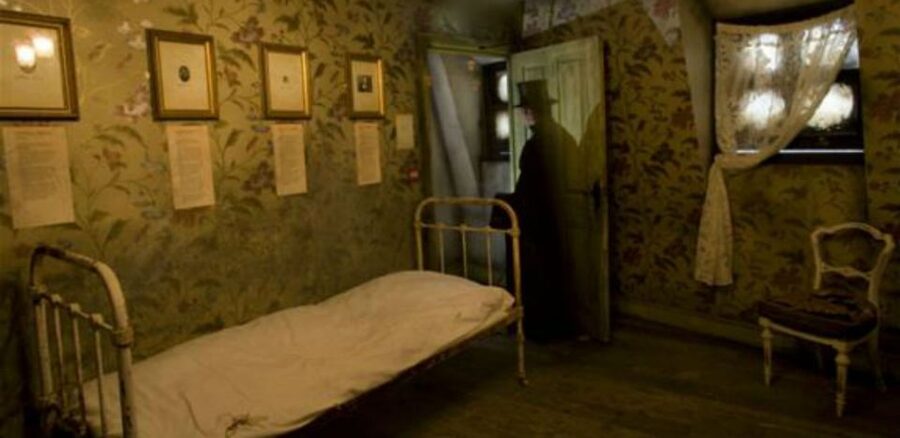
The attic contains a recreation of Mary Jane Kelly’s bedroom, the setting of the most horrific murder associated with the case. The room includes a metal-framed bed with a straw mattress, boots, bonnets, photographs, and other sparse household possessions.
This is where the museum is at its most affecting. Instead of showing the women only as names in a murder case, it gives you glimpses of their families, domestic lives, and limited belongings. The room suggests how poor Victorian East End women lived, using ordinary objects rather than sensational displays alone.
The sound design adds to the mood. A woman singing through a speaker creates a haunting effect in the attic. It is a small detail, but it changes the room from a static display into something more personal and uneasy.
I especially appreciate that the museum does not spend every minute asking you to think about the killer. The women were not simply characters in a famous mystery. They had homes, relatives, work, and daily struggles. This room makes that point more clearly than the murder recreations do.
The presentation is still theatrical, and it should not be confused with a fully documented social-history museum. But for a short visit, the combination of photographs, clothing, sound, and period furnishings gives useful context.
The morgue and the graphic material
The final section is the morgue. Here you can examine actual autopsy photographs and read reports describing the murders and mutilations of the nine women connected with the museum’s presentation of the case.
This is the point where you need to make an honest choice. If you are sensitive to medical images, graphic crime material, or descriptions of violence, skip this room or move through it quickly. The museum does not hide the grim nature of the evidence.
For true-crime fans and visitors with a serious interest in the case, the morgue provides material that the wax scenes cannot. The photographs and reports show why the crimes caused such fear and why the investigation became one of London’s most notorious cases.
Still, actual images do not automatically make an exhibit more historically rigorous. Read the accompanying information carefully, and remember that the museum is designed as a dramatic visitor experience. It works best when you treat the displays as a combination of historical interpretation and atmospheric storytelling.
How long should you spend inside?
The official ticket is valid for one day, with admission available according to the selected starting time. The museum is self-paced, so your visit can be short or fairly leisurely.
Many people can see the main rooms in around 45 minutes. If you read the panels, examine the letters, and spend time in the police station and victim displays, allow about 90 minutes. One visitor described taking an hour and a half, while others moved through in about 45 minutes.
That range matters when planning your London schedule. This is not an all-day museum. It works well between Tower Hill, the Tower of London area, and other East End sights. You can also pair it with a walk around the surrounding streets, though the museum ticket itself includes no transport.
The stairs and multi-floor layout may be worth considering if you have mobility concerns. The information provided does not specify a full accessibility plan, so contact the provider before booking if you need detailed access arrangements.
Is the $18.86 ticket good value?
At about $18.86 per person, the ticket is reasonably priced for a themed museum visit in central London, particularly if you spend 60 to 90 minutes inside. The value comes from the number of rooms, the period staging, the police artifacts, and the freedom to read at your own speed.
It is less convincing value if you expect a large collection of original objects or a long guided tour. The museum is small, and the theatrical recreations account for much of the experience. You are paying for atmosphere, interpretation, and a concentrated visit rather than a major institution with broad collections.
The price works best for three types of visitors: people interested in Jack the Ripper, fans of Victorian crime stories, and visitors who enjoy horror attractions with historical material. Families can visit, and children have enjoyed it, but parents should decide first if the graphic displays are suitable.
Free cancellation is available up to 24 hours before the visit, and you can reserve now and pay later. The museum is closed on Christmas Day. An accompanying person for a disabled visitor receives free admission.
Who should book this experience?
You should book if you want a focused, atmospheric look at one of London’s most famous unsolved crimes. The museum gives you a clear route through the story, from crime scenes and suspects to police work, victim biographies, and autopsy evidence.
It is also a good choice if you prefer visiting independently. You can take your time, skip a room if it becomes too graphic, and spend extra minutes with the police displays or the women’s stories. The entrance staff are described as friendly and helpful, and some visitors have had a lively experience with guides such as Jasony or George.
You may want to skip it if you dislike horror-style presentation, wax figures, or graphic photographs. You should also avoid squeezing it into a very tight schedule. The building is small, but the content is dense, and rushing will reduce the value.
Should you book the Jack the Ripper Museum?
Book it if your interests run to Victorian London, true crime, and atmospheric history. The strongest parts are the Whitechapel Police Station, the victim-focused bedroom display, and the original letters and police equipment.
Do not book it expecting a conventional museum or a definitive answer about the killer’s identity. Think of it as a compact, dramatic introduction to the case, with enough documents and social detail to give the story weight. At the price, it is a fair London stop for the right audience, especially if you allow an hour or more and approach the darker rooms with care.
FAQ
Where is the Jack the Ripper Museum?
The museum is at 12 Cable Street, London E1 8JG, in Greater London.
Which stations are closest to the museum?
The nearest underground and train stations are Tower Gateway, Tower Hill, and Aldgate East.
How long is the museum visit?
The ticket is valid for one day. Most visits take about 45 to 90 minutes, depending on how closely you read the displays.
Is transportation included?
No. The admission ticket covers the museum only, and you make your own way to and from 12 Cable Street.
Is the visit guided?
The experience is described as a self-guided walking visit. Staff provide an introduction and route advice, and some visits may include guides, but a specific guide is not guaranteed.
What can you see inside the museum?
You can see recreated crime scenes, a recreation of Whitechapel Police Station, Jack the Ripper’s sitting room, Mary Jane Kelly’s bedroom, Victorian objects, police artifacts, letters, newspapers, and a morgue containing autopsy photographs and reports.
Are the displays graphic?
Yes. The museum includes murder recreations, descriptions of mutilation, and actual autopsy photographs. Consider this before bringing children or anyone sensitive to graphic material.
Is the museum open on Christmas Day?
No. The museum is closed on Christmas Day.
Can a disabled visitor bring a companion for free?
Yes. The person accompanying a disabled visitor receives free entrance.
Just added around London
- London: “Queen” Highlights Walking Tour★ 4.3 · 48 reviews
- Couple’s photo: Romantic photoshoot in London★ 4.8 · 22 reviews
- London: Private Tour with Locals – Highlights & Hidden Gems★ 5.0 · 8 reviews
- Luxury Private Tour in London with Lunch★ 5.0 · 7 reviews
- London 1- or 2-Hour Professional Photo Shoot★ 4.9 · 6 reviews
- London: Private Black Cab Night Tour with Hotel Pick Up★ 5.0 · 11 reviews
- London: Christmas Lights Tour – With Christmas Music★ 4.8 · 9 reviews
- London: Private Pub Tour★ 4.5 · 4 reviews
Jack the Ripper Tours, compared.

London Jack the Ripper Guided Tour with Ripper-Vision
Read our review →
German Language : Original Jack the Ripper Tour
Read our review →
Jack the Ripper Walking Tour – Ripper Vision Tours
Read our review →
Ultimate Jack the Ripper : Guided Tour of London
Read our review →
Browse the lists this tour appears in