
Reviewed · MUSEUMS
London: Florence Nightingale Museum Ticket
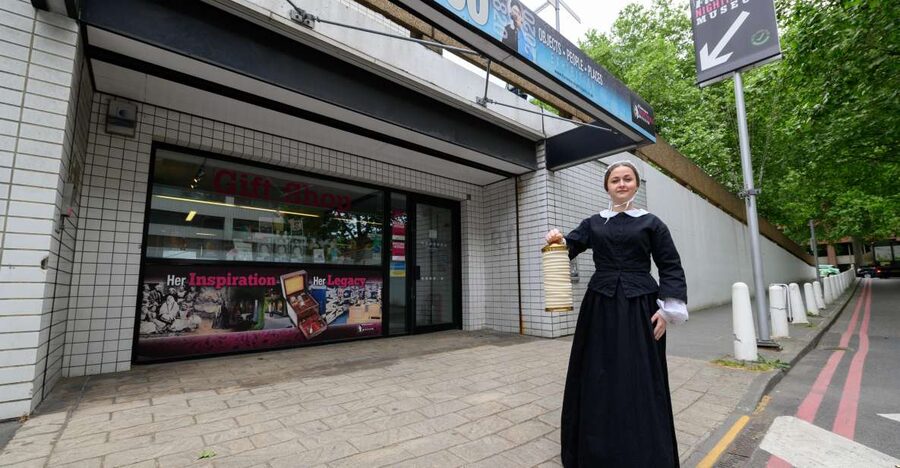
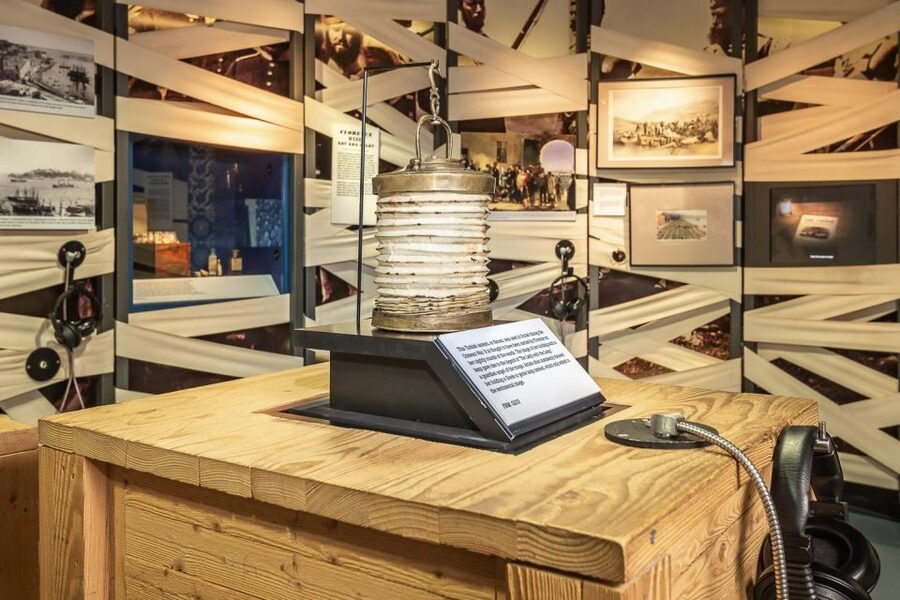
Florence Nightingale’s famous lamp is here, along with her medicine chest and a stuffed reminder of her pet owl, Athena. The museum gives you more than the familiar Lady with the Lamp image: it shows how an affluent Victorian woman fought family expectations and helped reshape nursing and public healthcare.
I like the original personal objects, which make Nightingale’s story feel close and human. I also like the museum’s central London location, just across from the Houses of Parliament and a short walk from the London Eye. The main consideration is size: this is a compact museum, not a full-day attraction, so you should pair it with other sights nearby.
Key points
- See Nightingale’s lamp and medicine chest: These are the objects that connect her public reputation with her practical work.
- Meet Athena, her pet owl: This unusual detail adds a personal touch to a serious story.
- Follow her life from childhood to nursing reform: The displays cover her family, education, Crimean War service, and campaigns for ordinary people.
- Visit inside St Thomas’ Hospital: The museum sits at parking level, close to Westminster and the London Eye.
- Choose your own pace: Your ticket allows entry at any time during opening hours on the booked date.
- Plan around limited hours: The museum opens Tuesday through Sunday from 10 a.m. to 5 p.m., with last entry at 4:30 p.m.
Starting at St Thomas’ Hospital near Westminster
The Florence Nightingale Museum sits in the grounds of St Thomas’ Hospital, at parking level. Look for hospital signs pointing you toward the museum. From the Houses of Parliament and the London Eye, it is a short walk, making this an easy add-on to a Westminster sightseeing day.
That setting matters. Nightingale’s work is closely tied to hospital care, so visiting inside St Thomas’ Hospital gives the subject a useful sense of place. You are not going to a distant museum in a quiet residential area. You are visiting a collection connected to the medical world she helped change.
Allow a little extra time to find the entrance. The directions identify the museum by its position in the hospital grounds rather than by a large street-front facade. Once you reach the right area, the museum itself is straightforward.
The location works best as part of a walking plan. You could visit after seeing Westminster Abbey, the Houses of Parliament, or the London Eye, then continue along the South Bank. I would not cross London just for a quick visit unless Nightingale or nursing history is a strong interest, but the museum is convenient when you are already nearby.
More British Museum Tours:
- Tower of London and Crown Jewels Exhibition Ticket
★ 4.5 · 6,677 reviews - London: Chelsea Football Club Stadium and Museum Tour
★ 4.8 · 4,576 reviews - Chelsea FC Stadium Tours and Museum
★ 5.0 · 1,908 reviews
What the collection reveals about Florence Nightingale

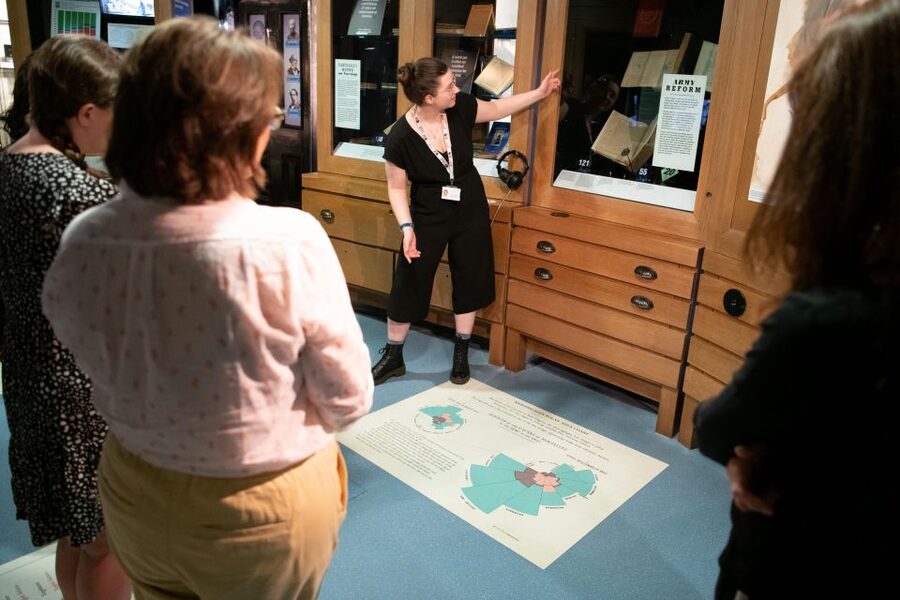
The museum follows Nightingale’s life rather than presenting only a collection of famous objects. You begin with her affluent childhood and family background, then see how unusual her decision to become a nurse was for a woman of her social position.
That family conflict is one of the most useful parts of the story. Nightingale did not simply receive permission to follow a calling. She fought against her parents’ wishes, choosing nursing at a time when the profession did not carry the status or respect it has today.
I like this approach because it gives you a clearer picture of her courage. The famous lamp is memorable, but the larger story is about persistence. Nightingale had to argue for the value of nursing before she could influence how hospitals were run and how nurses were trained.
The displays also place her work in the Crimean War. This is the point in the visit where her public image became famous, but the museum goes beyond the romantic picture of a woman walking through hospital wards at night. You can connect the lamp to the practical setting in which she worked and to the wider push for cleaner, better-organized care.
The collection then moves toward her campaigns for improved healthcare. Her interests extended beyond treating soldiers. She argued for better care for ordinary people, helping to make nursing and hospital reform part of a larger public issue.
You should leave with a more complete understanding of Nightingale. She was not only a nurse remembered for one wartime image. She was also an organizer, campaigner, and reformer whose work reached into the structure of healthcare.
The famous lamp, medicine chest, and Athena
The lamp is the obvious star of the collection. Seeing the actual object gives the nickname Lady with the Lamp a physical anchor. Instead of treating the phrase as a piece of folklore, the museum lets you connect it with the person who carried it.
The medicine chest offers a different kind of detail. A lamp creates a powerful image, while a medicine chest points to the practical side of nursing. It reminds you that Nightingale’s work involved supplies, treatment, organization, and daily responsibility.
Then there is Athena, her pet owl. This is the sort of small personal detail that can make a historical figure easier to picture. Nightingale’s public life involved war hospitals and healthcare reform, but Athena brings the story back to her private world.
The collection includes authentic artifacts once owned by Nightingale. For me, that is a strong reason to pay the admission fee rather than settle for a general online account of her life. Personal belongings can be modest, but they give the displays a direct link to the person being studied.
Do not expect every object to be large or dramatic. A museum built around one person often works through documents, belongings, and context. The value comes from how the pieces fit together, not from the size of the collection.
A compact visit with plenty to think about
The ticket is listed at $16 per person and is valid for one day. You may enter at any time during the museum’s opening hours on your booked date, rather than being tied to a single tour departure.
That flexible timing is useful in central London. You can fit the museum between other plans, visit before lunch, or stop in after sightseeing along the South Bank. It also means you can avoid treating the museum as a rigid scheduled excursion.
At the same time, the ticket is for the museum rather than a long guided program. An English-speaking host or greeter is listed, but no named guide or extended guided itinerary is provided. You should expect to explore the displays at your own pace, not join a lecture-led walking tour through London.
The small-group note says the experience is limited to nine participants. That should help keep the visit from feeling crowded, though the museum ticket itself remains the main feature. If you prefer quiet, focused museum visits to large group attractions, this format should suit you.
I would allow roughly an hour for a careful visit, though the exact time depends on how closely you read the displays. The official duration is listed as one day because the ticket is valid for that date, not because you need a full day inside the museum.
That distinction is important for planning. The museum can anchor a short stop, but it is not likely to fill an entire day. Pair it with the London Eye, Parliament, or another South Bank sight for better value from your time in London.
More Tickets:
- London: Tower Bridge Entry Ticket
★ 4.7 · 15,560 reviews - London: St Paul’s Cathedral Entry Ticket
★ 4.7 · 9,813 reviews - London: London Eye and Madame Tussauds Combo Ticket
★ 4.7 · 7,428 reviews - Buckingham Palace: The State Rooms Entrance Ticket
★ 4.6 · 7,395 reviews
Why Nightingale’s story still matters

The strongest part of the museum is the link between one woman’s career choice and wider changes in healthcare. Nightingale challenged the idea that nursing was a low-status occupation and pushed for higher standards in care.
Her Crimean War work made her famous, but the museum also shows her later campaigning. That broader view helps you understand why she remains important. Her influence was not limited to one war or one hospital ward.
I especially value the attention to her affluent family background. It gives you a useful contrast: she had social advantages, but choosing nursing still placed her against expectations. Her decision was difficult precisely because of the life her family thought she should lead.
The museum can also appeal to visitors with a personal interest in healthcare. One recent response highlighted the quality of the medical information and the way the exhibits showed Nightingale interacting with very young children. That points to an important strength of the collection: it does not treat her only as an abstract reformer, but also presents her relationship with patients and care.
You may find the material especially meaningful if you work in medicine, nursing, or public health. It can also work well for families with older children, students, and anyone interested in women who challenged the limits placed on them.
Younger children may respond most to the lamp and Athena. The more serious reform material could require explanation, depending on their age. The museum is educational, but it is not designed as a noisy, hands-on family attraction.
Opening hours, access, and simple planning tips
The museum opens Tuesday through Sunday from 10 a.m. to 5 p.m. Last entry is at 4:30 p.m. It is closed on Mondays according to the stated opening schedule, so check your date before booking.
On the last Thursday of the month, the museum stays open until 8 p.m., with final admission at 7:30 p.m. There is a cash and card bar in the museum shop from 5 p.m. on those late-opening evenings. The late schedule does not apply in December.
That late opening can be handy if you spend the day around Westminster and want to visit after other sights close. Do not assume it is available every month in December, and do not arrive at the last minute if you want time to see the collection.
Food and drinks are not allowed inside. Plan to eat before or after your visit, particularly if you are combining the museum with several South Bank stops.
The museum is wheelchair accessible, which makes it a practical choice for visitors who need step-free access. English is the stated language for the host or greeter and the experience information.
For the smoothest visit, I would:
- Check that your date falls Tuesday through Sunday.
- Aim to arrive well before the final admission time.
- Use the hospital signs rather than relying only on a street address.
- Combine the museum with Westminster or the London Eye.
- Keep your expectations focused on a compact museum, not a full-day attraction.
- Avoid bringing food or drinks into the collection.
Is the $16 ticket good value?
At $16, the ticket is reasonably priced for a central London museum focused on an important historical figure. The value comes from the authentic objects and the focused presentation, especially the lamp, medicine chest, and Athena.
The ticket is less compelling if you want a large museum with many rooms, major artworks, or a full day of entertainment. You are paying for access to a specialist collection. That can be excellent value for someone interested in nursing, social reform, women’s history, or Victorian Britain, but less so for someone simply looking for another general London attraction.
The flexible entry helps. You are not forced to build your day around one starting time, and you can combine the visit with nearby sights. Free cancellation up to 24 hours before the visit and the option to reserve now and pay later also reduce the risk when your London plans are still changing.
The museum’s rating is 4.7 from 54 reviews, with especially strong praise for the ease of booking, timely reminders, the museum’s quality, and its medical information. I would give the most weight to the repeated practical strengths: the visit is easy to arrange, the collection is well focused, and the subject has real substance.
Who should visit the Florence Nightingale Museum?

I would recommend this museum to you if you enjoy small, specialist collections with a clear story. It is a good fit for nursing and medical professionals, students, families with older children, and anyone interested in social reform or women’s achievements.
It also suits a short gap in a Westminster itinerary. You can see the museum without sacrificing a whole day, then continue to the London Eye or the South Bank.
I would be more cautious if you dislike museums built around one person or prefer large interactive attractions. The museum’s appeal depends on your interest in Nightingale and the care with which you approach personal artifacts and historical context.
The experience is also better for visitors who read displays carefully. The lamp may catch your eye first, but the most useful part of the visit is understanding how her childhood, family conflict, wartime work, and healthcare campaigns connect.
Should you book this museum ticket?
Book it if Florence Nightingale’s story interests you, or if you are already sightseeing near St Thomas’ Hospital. The $16 price, flexible entry, accessible setting, and central location make it an easy addition to a London day.
Skip it if you need a major attraction to fill several hours or if your schedule leaves no room for a compact specialist museum. For the right visitor, though, the collection turns a familiar name into a more human and impressive story, with the lamp, medicine chest, and Athena providing memorable points along the way.
FAQ
Where is the Florence Nightingale Museum?
The museum is at parking level in the grounds of St Thomas’ Hospital in London. It is a short walk from the Houses of Parliament and the London Eye. Follow the St Thomas’ Hospital signs for directions.
How much does admission cost?
The stated price is $16 per person.
When is the museum open?
The museum is open Tuesday through Sunday from 10 a.m. to 5 p.m., with last entry at 4:30 p.m. It opens until 8 p.m. on the last Thursday of the month, with last admission at 7:30 p.m. There is no late opening in December.
What can I see at the museum?
The collection covers Florence Nightingale’s family life, childhood, decision to become a nurse, Crimean War work, and healthcare campaigns. You can also see her lamp, medicine chest, and pet owl Athena.
Is the museum wheelchair accessible?
Yes. The museum is listed as wheelchair accessible.
Can I cancel the booking?
Yes. You can cancel up to 24 hours in advance for a full refund. You can also reserve now and pay later, according to the stated booking terms.
Just added around London
- London: “Queen” Highlights Walking Tour★ 4.3 · 48 reviews
- Couple’s photo: Romantic photoshoot in London★ 4.8 · 22 reviews
- London: Private Tour with Locals – Highlights & Hidden Gems★ 5.0 · 8 reviews
- Luxury Private Tour in London with Lunch★ 5.0 · 7 reviews
- London 1- or 2-Hour Professional Photo Shoot★ 4.9 · 6 reviews
- London: Private Black Cab Night Tour with Hotel Pick Up★ 5.0 · 11 reviews
- London: Christmas Lights Tour – With Christmas Music★ 4.8 · 9 reviews
- London: Private Pub Tour★ 4.5 · 4 reviews
Museums, compared.

Tower of London and Crown Jewels Exhibition Ticket
Read our review →
Chelsea Football Club Stadium and Museum Tour
Read our review →

Official tickets: Moco Modern & Contemporary Art Museum
Read our review →
British Museum London Guided Tour Semi-Private 8ppl Max
Read our review →
British Museum Audio Tour & Priority Entrance Ticket
Read our review →Browse the lists this tour appears in