
Reviewed · LONDON UNDERGROUND AND TUBE TOURS
Secrets of the London Underground Small Group Walking Tour
London’s Underground is more than a way to get across town. It is a city below the city, built through Victorian streets with early steam trains, bold engineering, wartime uses, and stations that have vanished from the map. This tour follows that story from Baker Street, one of the original Metropolitan Railway stations, to Westminster.
I like the route’s mix of station history and ordinary London streets, and I like the guides’ lively delivery. John has been praised for his clear explanations and humor, while Angela and Peter are also noted for bringing construction, politics, and wartime stories to life. The main catch is that this is not a behind-the-scenes tour of locked station areas. You will spend part of the time riding trains and walking outdoors, and you pay your own Tube fare.
Key points to know before booking
- Start at a genuine 1863-era Tube site: Baker Street connects you with the Metropolitan Railway, the world’s first underground railway.
- Six central London stops: The route runs through Baker Street, Oxford Circus, Green Park, Piccadilly Circus, Victoria Embankment, and Westminster.
- Expect a moving history lesson: You will ride the Underground between sections, with walking and station stairs forming a large part of the experience.
- Hear about abandoned stations: Down Street, once served by the Piccadilly line, closed in 1932 because of low use and nearby stations.
- Budget for public transport: Your contactless card, Oyster card, or suitable Travelcard is not included in the $41.13 tour price.
- Best for history-minded visitors: The tour suits you if engineering, architecture, wartime London, and transit history interest you more than sightseeing photographs.
What this London Underground tour actually offers
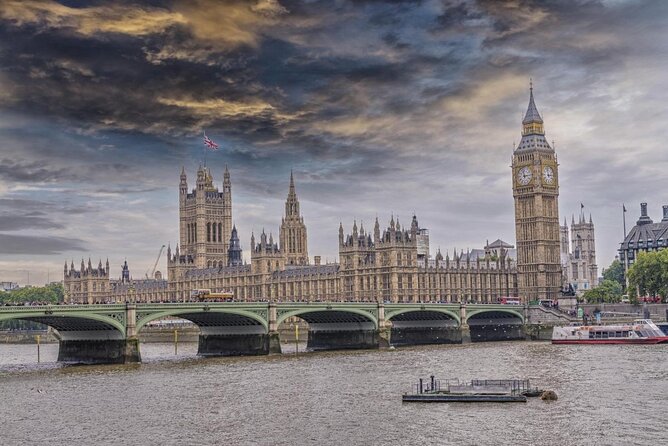
This is a two-and-a-half-hour walking and Tube tour through central London. It begins at 1:00 p.m. at Baker Street Underground Station and finishes at Westminster Station, near the Houses of Parliament and the Thames.
The word walking matters. You will move through stations, use stairs, stand on platforms, and walk between parts of the route. The tour includes many steps, so it is not suitable if you have reduced mobility. A moderate level of fitness is expected.
The small-group label is useful, but the maximum group size is 25 people. That is more personal than a large coach tour, though it is not a private outing. A good guide should help you keep up in busy stations, and one guide has been specifically praised for watching the group and making it easy to follow.
The emphasis is on explanation rather than special access. You hear how the Underground was built before modern technology, how stations changed, and how the network served different roles over time. You should not book it expecting entry into closed platforms or restricted service tunnels.
More London Underground and Tube Tours:
- London: Secrets of the London Underground Walking Tour
★ 4.6 · 211 reviews - Aldwych: Hidden Tube Station Guided Tour
★ 4.8 · 54 reviews - London: Hidden Baker Street Tube Station Tour
★ 4.7 · 51 reviews
Baker Street and the Underground’s first chapter
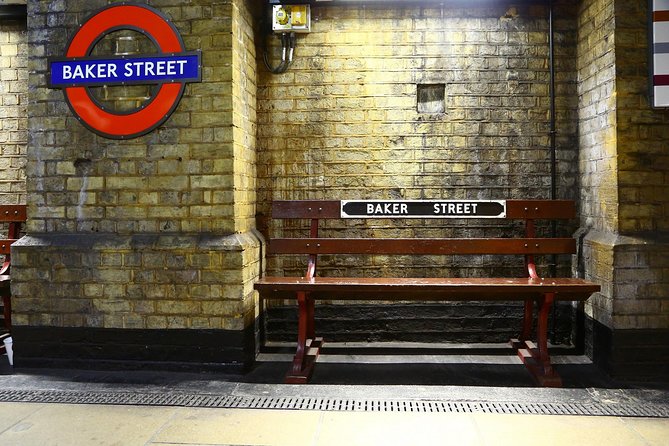
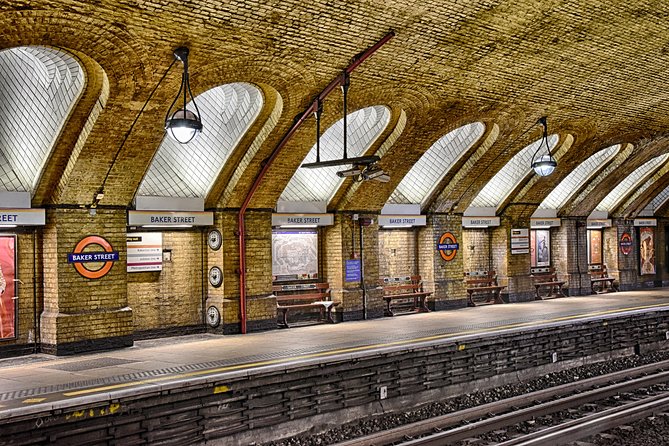
Baker Street is a fitting starting point. The station was part of the Metropolitan Railway, opened in 1863 as the world’s first underground railway. That date gives the tour its main theme: London’s Tube was not designed all at once as a polished system. It grew through experiments, extensions, engineering problems, and competing railway companies.
At this first stop, you can expect the guide to set out the basic story of underground construction during the Victorian era. The point is not simply that London had an early railway. It is how remarkable the idea was at the time, before the technical advances that made underground travel easier and more efficient.
Baker Street also helps put the rest of the route in context. You begin with the oldest part of the system, then move through stations built, rebuilt, or extended as London expanded. If you already use the Tube every day, this opening can change the way you look at familiar signs and platforms.
You receive about 10 minutes at each listed stop, so this is an introduction rather than a long architectural inspection. The guide’s storytelling carries much of the value. John, Angela, and Peter have each been praised for clear explanations, historical anecdotes, and a good sense of humor, though your guide will depend on the departure date.
Oxford Circus and the Tube as a growing network
The Oxford Circus stop shifts the story from the first underground railway to the complicated network London uses today. The Victoria line platforms opened on March 7, 1969, as part of the extension from Warren Street to Victoria.
That detail shows how the Underground kept changing long after the Victorian era. The station was planned with cross-platform interchange in mind, a practical response to the need for faster connections between lines. You get a useful reminder that Tube stations are not just holes in the ground. They are carefully planned meeting points between separate railway routes.
Oxford Circus is also a busy part of central London. You will likely be more aware of crowds, station movement, and the need to stay close to the guide here. The tour is not designed for lingering over shops or the surrounding streets. Its purpose is to explain the station and the network.
This is one place where the tour’s format may surprise you. You might imagine a specialist railway walk with long stops inside each station. Instead, the group keeps moving. That pace works well if you want a broad story, but it may feel too quick if you want detailed architectural study.
Green Park and the story of Down Street

Green Park brings one of the tour’s more unusual subjects: a station that no longer serves passengers. Down Street opened in 1907 under the Great Northern, Piccadilly and Brompton Railway. It later became part of the Piccadilly line, positioned between Dover Street, now Green Park, and Hyde Park Corner.
Down Street closed in 1932. Its low passenger numbers and closeness to other stations made continued service impractical. The abandoned station gives the guide a chance to explain how the Underground changes when a station no longer earns its keep.
This is an important distinction. You hear about Down Street, but the supplied route does not promise entry into the disused station. Think of it as a story about the forgotten parts of the network, not a secret-access excursion.
The abandoned and haunted station material adds atmosphere, especially if you enjoy the stranger side of London’s transport system. Still, the strongest value is historical rather than spooky. You learn why stations disappear, how a network adapts, and how much of London’s transport past remains out of sight.
More London Walking Tours:
- Magical London: Harry Potter Guided Walking Tour
★ 4.7 · 22,044 reviews - London: The Original Jack the Ripper Walking Tour
★ 4.7 · 7,833 reviews - Tour for Muggles The Ultimate Harry Potter Walking Tour in London
★ 5.0 · 4,684 reviews - London Jack The Ripper Guided Walking Tour
★ 5.0 · 3,131 reviews
Piccadilly Circus and early Tube competition
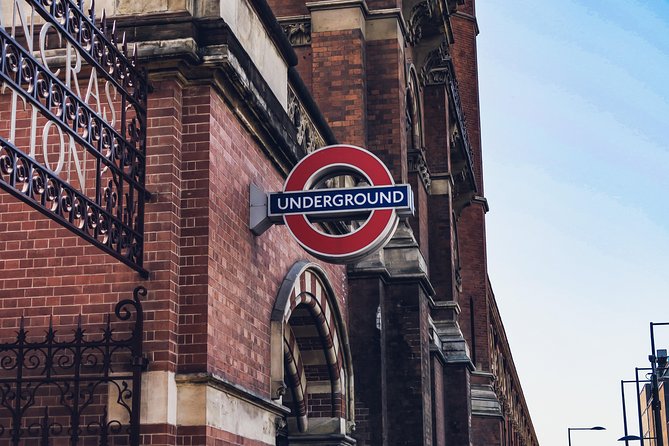
Piccadilly Circus adds another chapter to the Underground’s layered development. The station opened on March 10, 1906, for the Baker Street and Waterloo Railway, now the Bakerloo line. Its Piccadilly line platforms opened later that year, on December 15.
The dates matter because they show how separate railway companies built lines that eventually became part of one system. London’s Tube map looks unified now, but the stations reflect decades of rivalry, expansion, and joining up.
Piccadilly Circus is also a good place to think about the gap between the public image of the Underground and the machinery behind it. Above ground, you are in one of London’s best-known central areas. Below ground, the station records the practical decisions that shaped how people moved around the capital.
You get about 10 minutes here, so do not expect an exhaustive tour of every platform feature. The guide’s job is to select useful details and connect them to the larger story. That is where the tour works best: familiar places become examples in a bigger history of transport and city planning.
Victoria Embankment and the city beside the Thames
The route then reaches Victoria Embankment, the riverside stretch running along the north bank of the Thames from Westminster toward the City of London. The embankment was developed in the 19th century, reclaiming marshy land along the river.
This stop widens the subject beyond railway history. The Underground did not develop in isolation. Its stations, tunnels, roads, embankments, and public spaces were part of London’s wider rebuilding and expansion.
Embankment Station gives you another chance to see how transport connects with the city above it. The nearby river helps explain why major construction projects were needed and why central London has the shape it does today.
The walking section can be rewarding, but it is also where weather matters most. If rain is in the forecast, bring an umbrella or waterproof layer. One disappointing experience came from a wet day combined with the amount of outdoor walking, so do not treat this as an indoor attraction.
Westminster and the Underground’s oldest working story
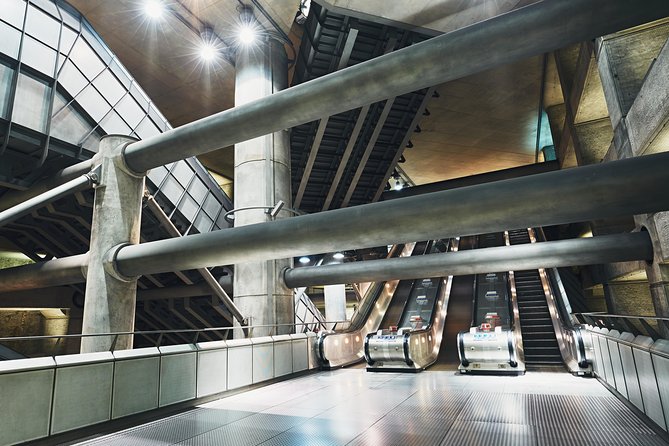
The tour ends at Westminster Tube Station, which opened as Westminster Bridge on December 24, 1868. It was built by the steam-operated District Railway, now the District line, when the first section ran from South Kensington.
Early access was through a passage from Bridge Street and a pedestrian subway under the road. That small detail helps explain how different the station experience was in the 19th century. Underground travel required new ways to move people from street level to platforms, long before the modern signs and escalators you take for granted.
Ending at Westminster is practical as well as historical. You finish near one of London’s major central landmarks and a major Tube connection. The tour itself does not include a separate Westminster sightseeing program, so plan your next activity independently.
The final stop also reinforces the tour’s central idea: London’s Underground is a living system built in layers. The route begins with the Metropolitan Railway and finishes with a station tied to the District Railway, showing how different companies and eras became one network.
The guides make the difference
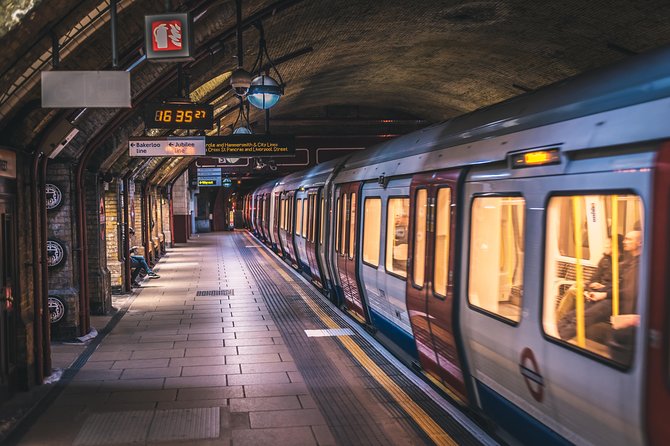
The strongest part of this experience is the guide. The content covers engineering, politics, architecture, wartime uses, abandoned stations, and the jobs involved in building and operating the Underground. Those subjects could become dry, but the best guides keep them moving.
John has been singled out for his enthusiasm, transit knowledge, interesting facts, lively pace, and calm delivery. Angela has used historical photographs to make construction and World War II stories easier to picture. Peter has been praised for historical anecdotes and humor.
That does not mean every departure will feel identical. Guide style can affect the experience, and the listed names do not guarantee who will lead your tour. Still, the feedback points to the qualities you want here: a clear voice, good group control, and the ability to turn technical facts into stories.
You should also expect a brisk pace. One guide was appreciated for keeping the group moving, while another experience felt tiring because of the walking and train changes. If you like a steady flow and plenty of information, that pace should suit you. If you want long pauses for photographs, it may not.
What the $41.13 price gets you
At $41.13 per person, the tour is reasonably priced for a specialist history walk, but the value depends on your expectations. You are paying for a guide who interprets the Underground and links several central London locations. You are not paying for a day pass, private access, or a long stop inside each station.
Your Tube fare is extra. The tour information says to purchase a day Travelcard for Zones 1 to 2, while also noting that a contactless card, Oyster card, or Travelcard valid for Zone 1 is required. Check the current transport option that suits your plans before you arrive, because the ticket is not included in the tour price.
This extra cost has caused some concern for people comparing the tour with other paid activities. If you already plan to use the Tube during the day, the required transport may be useful beyond the tour. If you are buying a transport product only for these movements, add that cost before judging the total price.
The tour becomes better value if you care about the subject and would not know where to find these stories alone. It is weaker value if you expect a rare-access station visit or a fully guided sightseeing tour of London.
Who should book this experience
I would choose this tour for a first-time visitor who likes city infrastructure, a repeat London visitor who wants a different angle, or anyone interested in engineering and urban history. It also suits you if you enjoy learning while moving through ordinary parts of a city rather than stopping only at major landmarks.
History buffs should get the most from it, especially those curious about Victorian construction, wartime uses, disused stations, and the politics of expanding a railway system. The tour also gives frequent Tube users a fresh way to understand stations they may otherwise treat as simple transfer points.
I would hesitate if you have reduced mobility, dislike stairs, or want a relaxed pace. I would also skip it if your main goal is to enter closed stations or see restricted areas. The tour discusses those places, but the route is a public walking and Tube journey.
It operates on Tuesdays, Thursdays, and Sundays from April through March, except December 24 to 26 and January 1. Confirmation arrives at booking, and the group can reach 25 people. The experience is offered in English.
Practical advice for a smoother afternoon
Arrive ready to begin at 1:00 p.m. at Baker Street Underground Station on Marylebone Road. Wear shoes you can comfortably use for two and a half hours, and keep your payment card or Oyster card easy to reach at station gates.
Take rain protection seriously. The route includes outdoor walking between stations, and wet weather can make the day less pleasant. You may also want to bring water, though no refreshment service is included.
Keep your group size in mind when moving through central London stations. Stay close to the guide, especially at Oxford Circus, Piccadilly Circus, and other busy points. A small group is easier to manage than a large coach party, but 25 people can still spread out quickly.
Book ahead if your London dates are fixed. The experience is often reserved well before the day itself, with average bookings made 49 days in advance. That is useful planning information, but it does not mean every departure sells out.
Should you book the Secrets of the London Underground tour?
Book it if you want the Tube explained as a piece of London history, not just a transport service. The strongest reasons are Baker Street’s connection with the 1863 railway, the story of closed Down Street, the contrasting eras at Oxford Circus and Piccadilly Circus, and the guides’ clear, good-humored storytelling.
Skip it if you expect a Hidden London style access tour, because this experience does not promise entry into abandoned stations. Also skip it if stairs and outdoor walking are a problem, or if you dislike paying a separate Tube fare.
For the right audience, $41.13 is a fair price for a focused, informative afternoon. Bring comfortable shoes, a valid transport card, and realistic expectations. You will leave with a better sense of how London was built below street level, even if you never see a locked tunnel.
FAQ
How long does the Secrets of the London Underground tour last?
The tour lasts approximately two hours and 30 minutes.
Where does the tour begin?
It begins at Baker Street Underground Station on Marylebone Road, London NW1 5LJ.
Where does the tour finish?
The tour ends at Westminster Tube Station on Bridge Street, London SW1A 2JR.
What time does the tour start?
The scheduled start time is 1:00 p.m.
Which locations are included?
The route includes Baker Street, Oxford Circus, Green Park, Piccadilly Circus, Victoria Embankment, and Westminster.
Is public transport included in the price?
No. You need a contactless card, Oyster card, or suitable Travelcard, and transport costs are not included.
Is the tour suitable for people with reduced mobility?
No. The tour includes many steps and requires a moderate level of physical fitness.
What is the cancellation policy?
You can cancel up to 24 hours before the start time for a full refund. Cancellations or changes made less than 24 hours before the start time are not refunded.
Just added around London
- Up at The O2:Twilight Climb with Guided Tour with Panoramic Views★ 5.0 · 50 reviews
- Private Chauffeur-London Heathrow from/to Southampton Cruise Port★ 5.0 · 9 reviews
- Kensington Palace VIP Garden Tour with Royal High Tea★ 4.5 · 71 reviews
- Urban Canvas: Exploring Shoreditch’s Vibrant Street Art★ 5.0 · 36 reviews
- Up at The O2: Sunset Climb with Guided Tour with Panoramic Views★ 5.0 · 110 reviews
- Ultimate introduction to photography in Central London★ 5.0 · 19 reviews
- Full-Day Self-Guided Paris Tour from London by Eurostar with Seine River Cruise★ 3.5 · 22 reviews
- Ultimate Royal London: Tower of London & City of Westminster Tour★ 5.0 · 38 reviews
London Underground and Tube Tours, compared.


Guided Tour of Hidden Tube Station at Charing Cross
Read our review →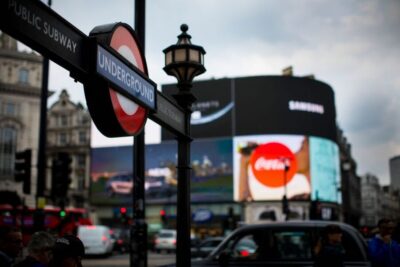
Hidden Tube Tour – Piccadilly Circus: The Heart of London
Read our review →
Browse the lists this tour appears in