
Reviewed · LONDON UNDERGROUND AND TUBE TOURS
Clapham South: Subterranean Shelter Guided Tour
Thirty metres below South London, Clapham South’s abandoned air raid shelter opens into a long, cramped world of tunnels, bunks, canteens, and wartime memories. You will hear how it protected more than 8,000 people, then later housed Caribbean arrivals who had just reached Britain on HMT Empire Windrush.
I like the original sleeping quarters and the personal stories attached to them. I also like the two-guide format, especially the guide portraying a 1940s ARP Warden, which gives the wartime setting a human voice. The main drawback is physical: there is a lot of walking, uneven ground, low light, and static escalators, so this is not a good choice if you dislike enclosed spaces or have mobility limits.
Key points at a glance
- Eleven stories below a Tube station: Feel Northern line trains pass above as you explore more than a mile of wartime tunnels.
- Original bunks and shelter fittings: Sit on the old bunk beds, now used as benches, and see spaces linked to overnight air raids.
- A recreated 1940s setting: The warden’s cabin and canteen have been restored using London Transport Museum archive material.
- Stories beyond the Blitz: Learn how the shelter later connected with the Windrush generation and the Festival of Britain.
- A theatrical guide element: One guide takes the role of an ARP Warden, helping you picture a family arriving for its first night underground.
- A demanding visit: Expect stairs, static escalators, uneven floors, dim lighting, and no cloakroom for large bags.
Entering Clapham South’s wartime shelter
Your meeting point is in front of the Marks & Spencer Food Hall on Balham Hill, SW12 9EA. It is about a two-minute walk from Clapham South station. After leaving the station, turn right, and arrive 15 minutes before the scheduled start.
That small bit of planning matters. The shelter entrance is not a grand museum doorway with a large sign. You are meeting beside an ordinary South London street, then heading into a place most people pass without noticing. The contrast is part of the appeal.
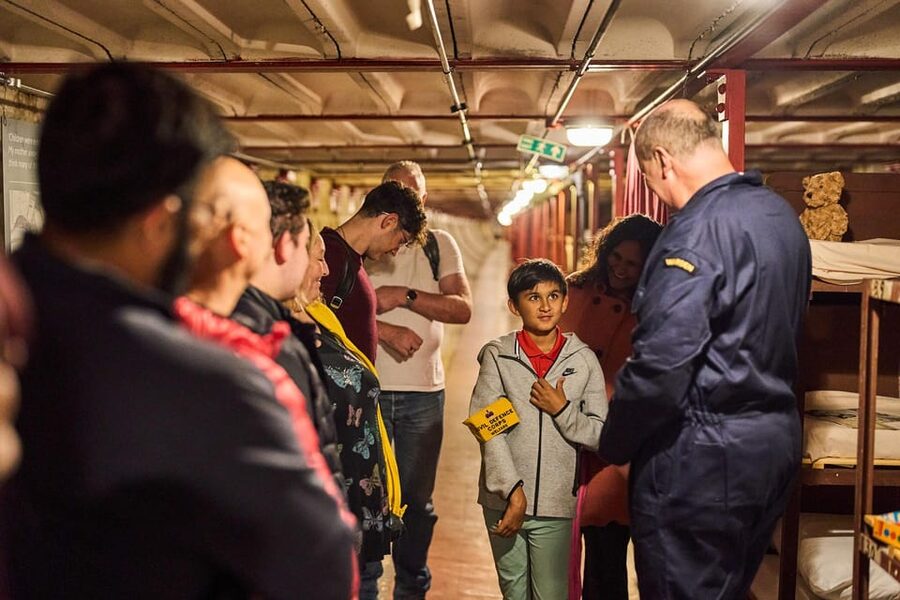
The tour lasts 75 minutes and is conducted in English by two guides. One takes on the role of a 1940s ARP Warden, while the other helps lead the historical explanation. This combination received particular praise for making the setting feel more immediate without turning the visit into a full theatrical performance.
You are not simply shown an empty set of tunnels. The guides explain why the shelter was built, how it was used during the Second World War, and how its purpose changed afterward. That broad time span gives the place more meaning than a quick look at old bunks would provide.
More London Underground and Tube Tours:
- London: Secrets of the London Underground Walking Tour
★ 4.6 · 211 reviews - Aldwych: Hidden Tube Station Guided Tour
★ 4.8 · 54 reviews - London: Hidden Baker Street Tube Station Tour
★ 4.7 · 51 reviews
Descending 11 stories beneath the Northern line
The journey underground is the first memorable part of the visit. Clapham South is one of eight large underground air raid shelters built beneath London. This one was opened in 1944 and was designed to shelter more than 8,000 people.
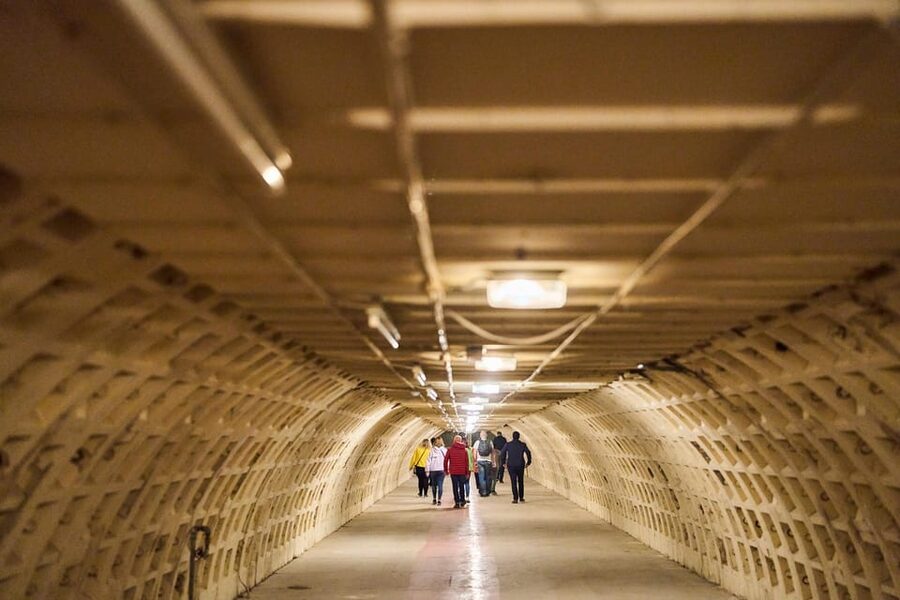
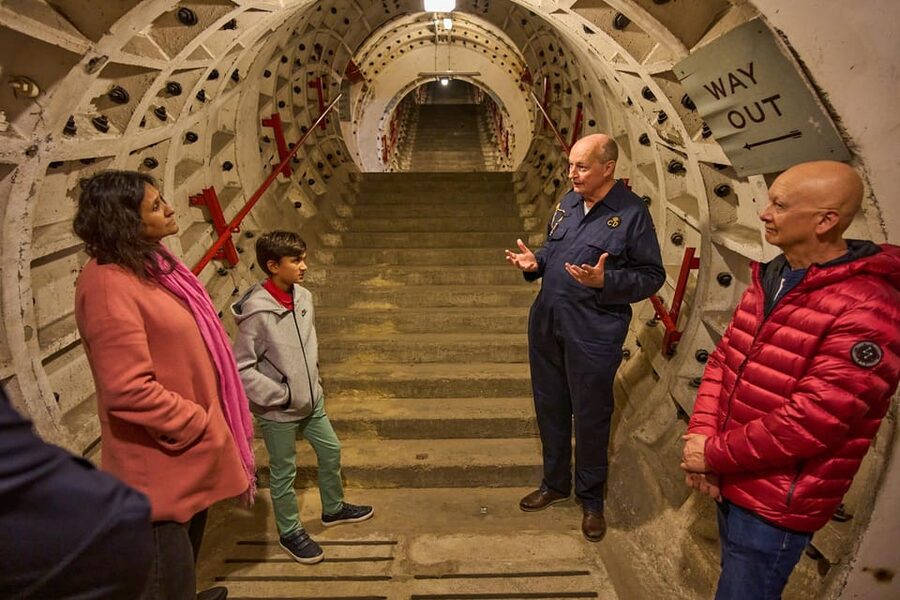
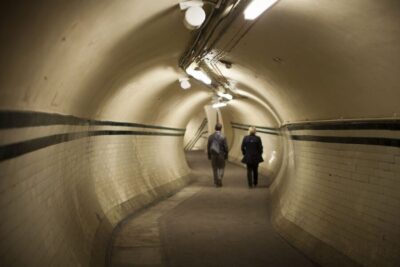
You descend 11 stories below the Tube station, then begin walking through a system of passages stretching for more than a mile. The scale is hard to grasp from the street. The shelter is not just one basement room. It is a small underground world built for large numbers of people during periods of danger.
As you walk, Northern line trains pass above your head. The sound and movement connect the shelter to modern London, while the tunnels below preserve a very different chapter of the city. I find that contrast more effective than a display case in a standard museum. You are standing in a place designed for fear and endurance, while everyday Tube journeys continue overhead.
The setting is also physically plain. Do not expect polished galleries or wide, bright corridors. Low lighting, uneven ground, and narrow sections are part of the experience. They help you understand the conditions, but they also require care with your footing.
Seeing where thousands slept during air raids
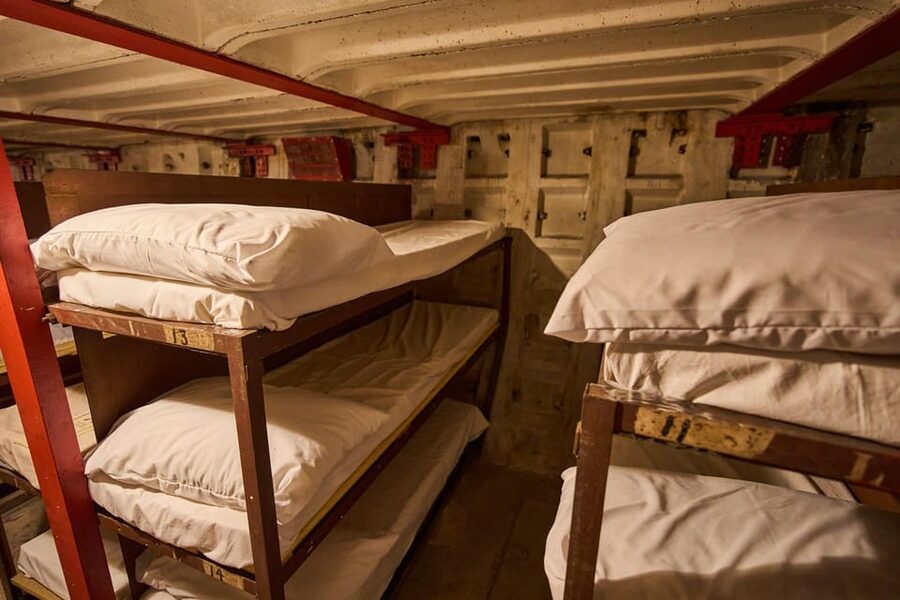
The original bunk areas are the heart of the tour. During air raids, families and individuals could spend the night in tightly arranged sleeping quarters below the city. The bunks were practical, closely packed, and made for large numbers rather than comfort.
Some of the original bunk beds have been turned into benches, allowing you to sit where people once waited out the night. This is a useful detail because it changes your sense of scale. A row of beds can look abstract from a distance. Sitting on one helps you picture the lack of privacy and the sheer number of people sharing the shelter.
The tour follows the experience of a South London family spending its first night there. That story gives the visit a clear thread. Instead of receiving disconnected facts about construction, crowd capacity, and wartime rules, you can imagine how an ordinary family might have entered, found a place to sit or sleep, and waited for the all-clear.
The ARP Warden character adds to this section. Air Raid Precautions wardens had a practical role during attacks, helping manage shelter life and respond to danger. The role play gives the guide a way to explain that work while keeping the focus on the people who used the shelter.
The tour does not suggest that underground safety meant comfort. The shelter offered protection, but it was still crowded, enclosed, and basic. That balance is important. You see a major wartime engineering effort, but you also see the human cost of spending night after night underground.
Restored canteen and the warden’s cabin
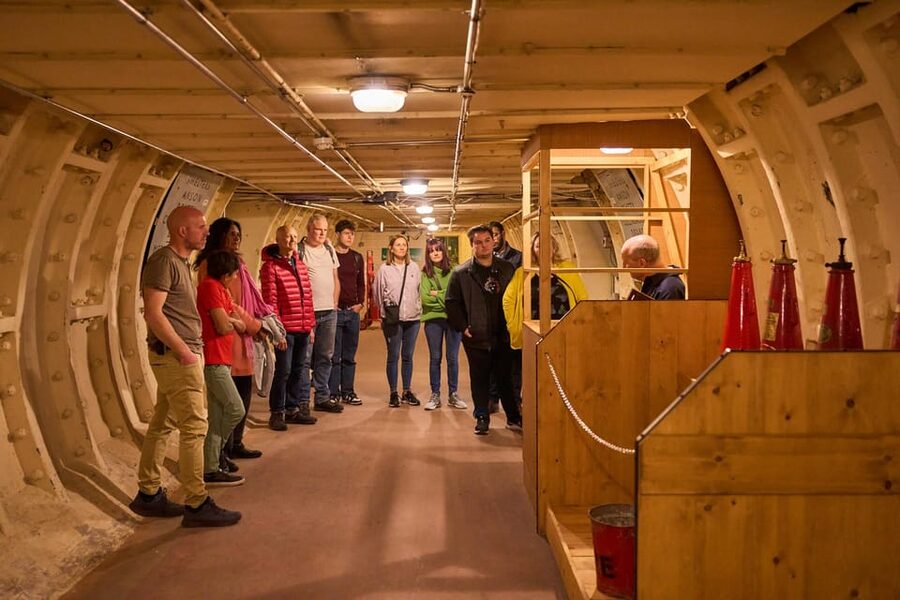
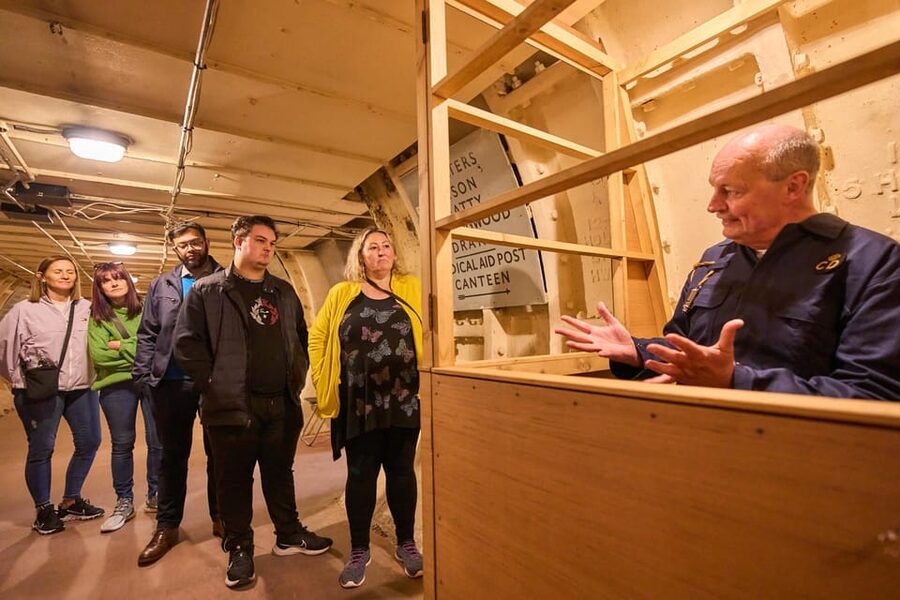
Two refurbished areas help bring the 1940s setting into focus: the warden’s cabin and the canteen. They have been recreated using findings from the London Transport Museum’s archives and collection.
The warden’s cabin helps explain the shelter as an organised place rather than a random refuge. A facility for thousands needed supervision, routines, and staff. The canteen points to the ordinary needs of life underground: food, drink, waiting, and social contact during an emergency.
You also see medical stations as part of the shelter’s original arrangement. These details show that the site was designed as a functioning refuge, not merely a tunnel where people could hide. It had sleeping areas, food service, medical provision, and staff facilities.
The restored spaces are useful because the rest of the shelter can feel stark. A recreated cabin or canteen gives you visual clues about how the tunnels operated. Still, the tour remains a walk through an old underground site, not a large interactive exhibition. If you prefer extensive museum displays, you may find the visit more atmospheric than hands-on.
More Guided:
- Magical London: Harry Potter Guided Walking Tour
★ 4.7 · 22,044 reviews - London: Emirates Stadium Entry Ticket and Audio Guide
★ 4.7 · 5,513 reviews - Stonehenge, Windsor Castle and Bath Full Day Guided Tour
★ 4.5 · 5,346 reviews - London Jack the Ripper Guided Tour with Ripper-Vision
★ 4.5 · 4,840 reviews
Reading graffiti left by shelter occupants
One of the most personal things to look for is the graffiti left by people who stayed in the shelter. These marks connect the site to real occupants in a way that formal signage cannot.
The graffiti is not presented as decoration. It is evidence of people passing time, making their presence known, or leaving something behind in a place where they might have spent only one night or many. You should take time to look closely as you move through the tunnels.
This is also where a guide makes a difference. The shelter itself cannot explain every mark. The tour places the graffiti within the larger story of wartime shelter life, helping you consider who might have written it and why.
There is no need to expect a dramatic reveal at every turn. Much of the impact comes from small details: a worn bunk, a name or mark on a wall, a narrow passage, or the rumble of a train overhead. I like that the visit asks you to pay attention rather than simply presenting a series of large objects.
From wartime refuge to Windrush housing
The shelter’s story did not end when the war was over. In the post-war period, parts of the site were used in connection with the arrival of Caribbean migrants to Britain, including people who came on HMT Empire Windrush.
You hear first-hand accounts from people who worked and sheltered there during the post-war years. You also see the beds where some new arrivals spent their first nights in London. This gives the site a second human story, one tied to migration, arrival, and the difficult practical question of where people could stay.
That connection makes the tour more than a wartime attraction. It links the underground shelter to the changing life of modern Britain. The same rooms that had been built for air raids later became part of a different national story, involving people who had travelled from the Caribbean to begin life in the United Kingdom.
The tour also refers to visitors connected with the Festival of Britain. Together, these stories show how a place built under emergency conditions could be reused in peacetime. The tunnels were not frozen in 1944. Their meaning shifted as London changed above them.
For me, this post-war section is one of the strongest reasons to book. If you already know a fair amount about the London Blitz, the Windrush material gives the experience another layer. It also prevents the visit from treating the shelter as a single-period curiosity.
Handling wartime objects and seeing an Anderson shelter
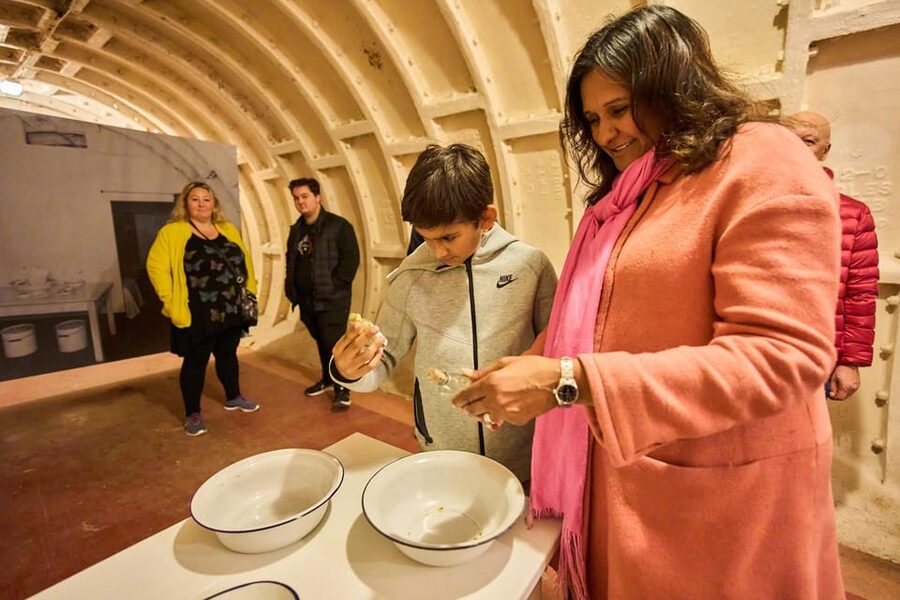
The tour includes genuine Second World War artefacts, including torches that you can handle. You also see what an Anderson shelter looked like.
These objects help explain how protection worked at different levels. Clapham South was a large public shelter below the city, while an Anderson shelter was associated with domestic or local protection. Seeing the two ideas together gives you a better sense of the choices available to Londoners during air raids.
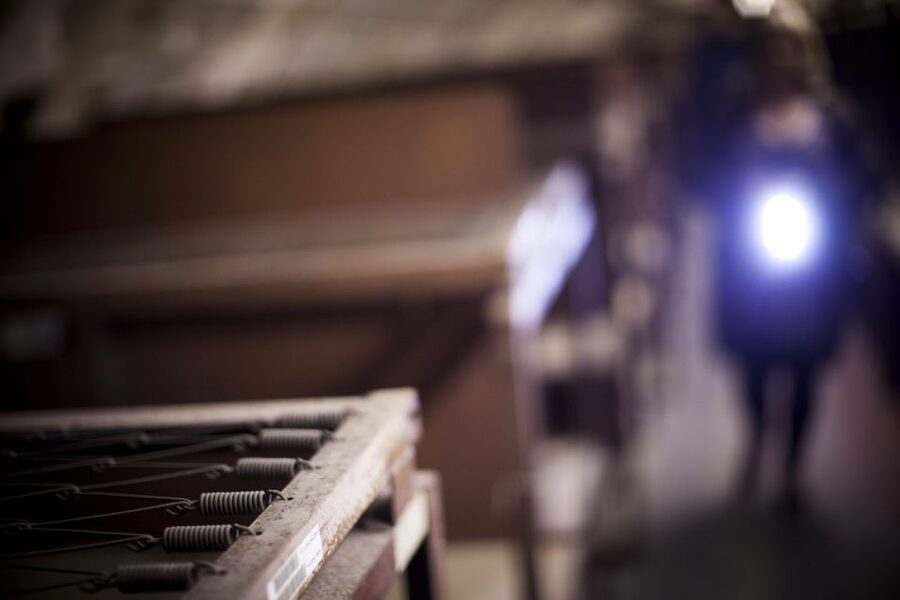
The torches are small objects, but that is exactly why they work well. They suggest the practical problems of moving through dark spaces during blackouts and emergencies. They also make the history less distant. You are looking at equipment made for use, not just an old photograph of equipment.
The chance to sit on the old bunk beds is similarly simple but effective. The visit does not depend on flashy technology. Its best moments come from being in the original space, using a few authentic objects, and listening to the people who explain what happened there.
How much does the $51 price offer?
At $51 per person, this is not a cheap add-on to a day in London. The value depends on what you want from a museum visit.
You are paying for a 75-minute guided experience in a site that is not part of the regular Tube network. The price includes access to the shelter, two guides, the restored areas, original fittings, wartime objects, and stories covering both the war and the post-war period.
I think the price is reasonable for visitors who want a focused historical experience rather than a general sightseeing stop. The site requires specialist access, careful guiding, and a small group movement through an unusual underground space. You also get interpretation that would be difficult to gather by walking around independently.
It is less attractive if you are looking for a long museum visit. Seventy-five minutes goes quickly, and there is no suggestion that you can spend the rest of the day wandering through a large exhibition. The London Transport Museum itself is a separate attraction. This tour is best treated as a distinct booking, not a replacement for the main museum.
Free cancellation up to 24 hours before the start and a reserve-now, pay-later option make the booking less rigid. Travel to Clapham South is not included, so allow time to reach the meeting point and arrive early.
Who should book this tour?
I would recommend it to adults and older children who enjoy London history, wartime sites, transport history, or stories of migration. Children must be at least 10 years old, and the dark tunnels may not suit every child in that age group.
It is especially worthwhile if you have already visited London’s better-known museums and want a place with a stronger sense of location. You hear trains above you, walk through the original passages, and see the physical spaces connected to the stories.
You should skip it if you have claustrophobia, serious mobility limitations, or difficulty walking for an extended period. The tour is not step free and includes walking up and down static escalators. There are uneven surfaces and low-light areas, and open-toed shoes are not allowed.
Wear sturdy, comfortable shoes and clothing suitable for the weather. Although you are underground for much of the visit, getting to the meeting point and entering the site still involves outdoor movement. Food and drinks are not allowed, and there is no cloakroom, so leave large bags and luggage elsewhere.
Should you book Clapham South?
Book this tour if you want to experience London history from inside the original place where it happened. The strongest parts are the cramped bunks, the shelter graffiti, the rumble of Tube trains above, and the post-war accounts connected with the Windrush arrivals.
The guide-led format is a real advantage. The ARP Warden role helps set the scene, while the second guide adds context and keeps the story moving. The tour has also earned a perfect 5 rating from the supplied bookings, with specific praise for the organisation, enthusiasm, and effort to make the setting feel real.
I would not book it for a relaxed, step-free museum outing. It is physical, dim, and enclosed. But if you can manage the walking and want an honest look at how Londoners sheltered, slept, worked, and started again in these tunnels, the $51 cost buys a memorable piece of the city that you cannot understand from street level alone.
FAQ
Where does the Clapham South shelter tour meet?
Meet in front of the Marks & Spencer Food Hall on Balham Hill, SW12 9EA. It is about a two-minute walk from Clapham South station. Turn right after exiting the station.
How early should I arrive?
Arrive 15 minutes before your scheduled tour time.
How long does the tour last?
The guided tour lasts 75 minutes.
What language is the tour in?
The live guided tour is conducted in English.
How far underground does the tour go?
The route descends 11 stories, reaching about 30 metres below ground.
How large is the shelter?
The shelter contains more than a mile of tunnels and was built to shelter over 8,000 people during air raids.
Can children join the tour?
Children must be at least 10 years old.
Is the tour suitable for people with claustrophobia?
No. The tour is not suitable for people with claustrophobia because it takes place in enclosed underground tunnels.
Is the tour step free?
No. The tour is not step free and includes walking up and down static escalators. It also includes uneven ground and low lighting.
What should I wear and bring?
Wear comfortable, sturdy shoes and weather-appropriate clothing. Bring a passport or ID card. Open-toed shoes, food, drinks, luggage, and large bags are not allowed, and there is no cloakroom.
Just added around London
- London: “Queen” Highlights Walking Tour★ 4.3 · 48 reviews
- Couple’s photo: Romantic photoshoot in London★ 4.8 · 22 reviews
- London 1- or 2-Hour Professional Photo Shoot★ 4.9 · 6 reviews
- London: Private Tour with Locals – Highlights & Hidden Gems★ 5.0 · 8 reviews
- Luxury Private Tour in London with Lunch★ 5.0 · 7 reviews
- London: Private Black Cab Night Tour with Hotel Pick Up★ 5.0 · 11 reviews
- London: Christmas Lights Tour – With Christmas Music★ 4.8 · 9 reviews
- London: Private Pub Tour★ 4.5 · 4 reviews
London Underground and Tube Tours, compared.
Guided Tour of Hidden Tube Station at Charing Cross
Read our review →
Hidden Tube Tour – Piccadilly Circus: The Heart of London
Read our review →
Browse the lists this tour appears in