

Reviewed · MUSEUMS
The Postal Museum Admission Ticket
London’s post was once moved through a secret railway beneath the city. At The Postal Museum, you can ride that underground Mail Rail, then explore the people, machines, bicycles, stamps, and social changes tied to five centuries of postal service.
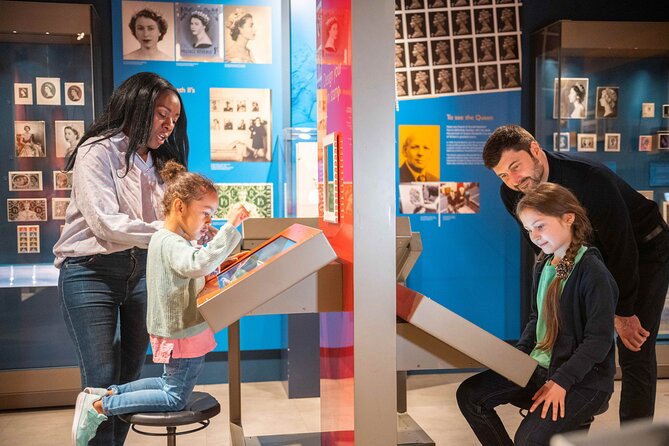
I like the Mail Rail ride, which turns a serious subject into a short, dark, rumbling adventure. I also like the hands-on displays, especially the pneumatic tubes and interactive models that give children something to do beyond reading labels.
The main drawback is that the museum is split between two buildings across the street, and signage can be easy to miss. The train can also be unavailable for maintenance or weather-related reasons, so check before you go if that ride is the main reason for your visit.
Key points to know before you go
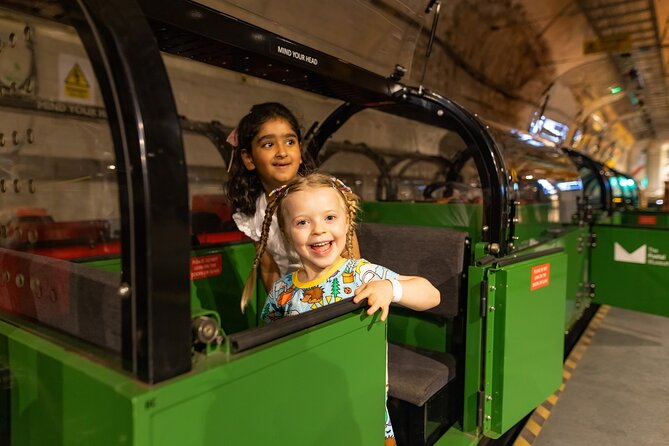
- Ride London’s secret postal railway: Mail Rail is the star attraction, with a narrated journey through the old underground tunnels.
- Plan for two buildings: The Mail Rail building and the main museum are across the street from one another.
- Best for curious families: Interactive exhibits work well for children, while adults get a useful look at communication and social change.
- Allow up to two and a half hours: A quick visit can take 90 minutes, but children may want much longer with the hands-on displays.
- Start with Mail Rail: This helps you avoid missing the train and leaves the main museum for a slower visit.
- Check the extra charges: The standard admission covers the museum visit, but annual exhibition entry and Sorted! play space access cost extra.
Why a postal museum is more fun than it sounds
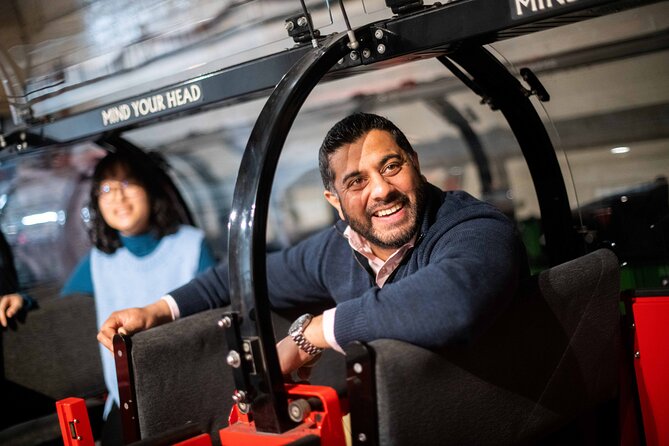
Postal systems can seem like dry institutional history. The Postal Museum avoids that trap by showing how people actually moved messages, parcels, money, and news through Britain and beyond.
You will see unusual equipment, including five-wheeled cycles, early stamps, postal machinery, and pneumatic tubes. These objects help explain how communication changed daily life, from the work of postal employees to the way families kept in touch.
The subject also reaches well beyond envelopes. The museum connects postal communication with community life, government, work, resistance, and social change. An exhibition called Voices of Resistance: Slavery and Post in the Caribbean adds a serious historical layer and shows that the postal service was part of larger global events.
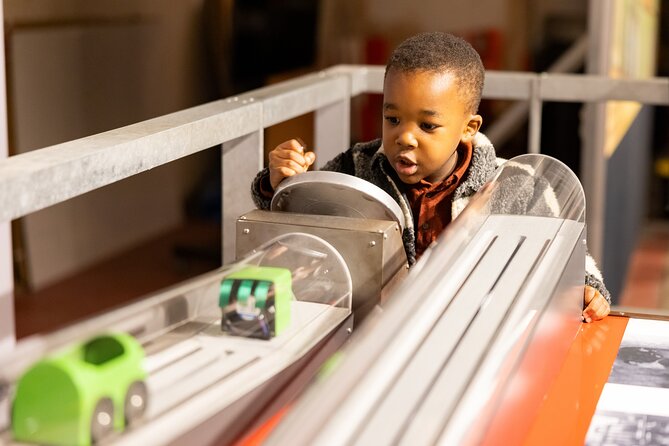
I especially like the way the museum gives children a path into the subject. They can press buttons, operate models, watch systems work, and then ask why people once needed such complicated ways to send a message.
Adults should not treat this as only a children’s outing. The museum gives you a useful look at a service that once reached into nearly every neighborhood. It also invites you to think about what has changed now that most quick communication happens online.
More British Museum Tours:
- Tower of London and Crown Jewels Exhibition Ticket
★ 4.5 · 6,677 reviews - London: Chelsea Football Club Stadium and Museum Tour
★ 4.8 · 4,576 reviews - Chelsea FC Stadium Tours and Museum
★ 5.0 · 1,908 reviews
Mail Rail: the reason to book first
The Mail Rail ride is the most distinctive part of the visit. London’s former underground postal railway carried mail beneath the streets, and the ride presents that system as both working transport and social history.
The train journey is short, but it packs in plenty. As you move through the tunnels, information and visual effects explain how the railway operated and how its workers used it. The old stations, equipment, and workers’ lockers help make the place feel less like a display and more like a preserved workplace.
For children, this is usually the easiest part to love. The train is small, dark, and exciting, with enough explanation to make the ride educational without turning it into a lecture. One practical warning: the carriage can feel cramped, especially for taller adults. If you are around 5 feet 11 inches, you may find the roof uncomfortably close.
The ride can also be loud and dark. That may thrill some children and unsettle others, so prepare younger children before boarding. A child who dislikes enclosed spaces, darkness, or sudden noise may enjoy the museum more than the train.
Do Mail Rail first. The train building is across the street from the main museum, and it is easy to spend too much time in the first section and then rush the rest. Starting with the ride gives you a clear plan: railway first, main exhibitions second.
Do not assume the ride will always operate. Planned maintenance has caused temporary closures, and poor weather can also affect the experience. Since the ticket is non-refundable, check the museum’s current operating information before setting out.
The main museum and its hands-on displays
After Mail Rail, cross to the main museum building. This is where the visit broadens from one railway into the larger story of postal communication.
The displays cover five centuries, with objects and explanations that show how the service developed. You can expect a mix of machinery, vehicles, stamps, uniforms, communication equipment, and personal details from postal work.
The interactive sections are the main strength. Pneumatic tubes are a particular favorite, and the working models give you a reason to stop rather than simply walk past. Children can explore at their own pace, while adults can read the background and connect the objects to familiar parts of British life.
The museum also gives space to the people behind the service. Postal workers were once a highly visible part of local communities, and the displays help explain why the post mattered beyond delivering letters. For families, this can lead to a good conversation about how neighborhoods worked before mobile phones and instant messaging.
Give children time here. A rushed half-hour will show you the basic exhibits, but it will not allow much room for the interactive pieces. A family arriving before 11 a.m. may easily spend two to three hours across both buildings, especially if there is a wait for Mail Rail.
The main museum can feel less exciting than the train if you have come mainly for a ride. That is a fair point. The railway supplies the drama, while the museum supplies the context. The best visit includes both.
Two separate buildings and the right order
The layout is simple once you understand it, but not always obvious when you arrive. The Mail Rail building and the main museum are separate locations across the street, not two rooms in one large museum.
I would allow a few minutes to get your bearings before choosing what to do first. Follow the signs carefully, and do not leave the railway building without checking that you have seen its displays as well as taken the ride.
The most efficient order is:
- Check in and complete the Mail Rail visit.
- Explore the railway displays and former working areas.
- Cross to the main museum.
- Take your time with the interactive models and exhibitions.
- Stop at the café if you need a break.
This order matters because some visitors have nearly missed the main museum after focusing on the train. It also prevents the most time-sensitive part of the visit from being pushed aside.
More Tickets:
- London: Tower Bridge Entry Ticket
★ 4.7 · 15,560 reviews - London: St Paul’s Cathedral Entry Ticket
★ 4.7 · 9,813 reviews - London: London Eye and Madame Tussauds Combo Ticket
★ 4.7 · 7,428 reviews - Buckingham Palace: The State Rooms Entrance Ticket
★ 4.6 · 7,395 reviews
How long you need, and what the price represents
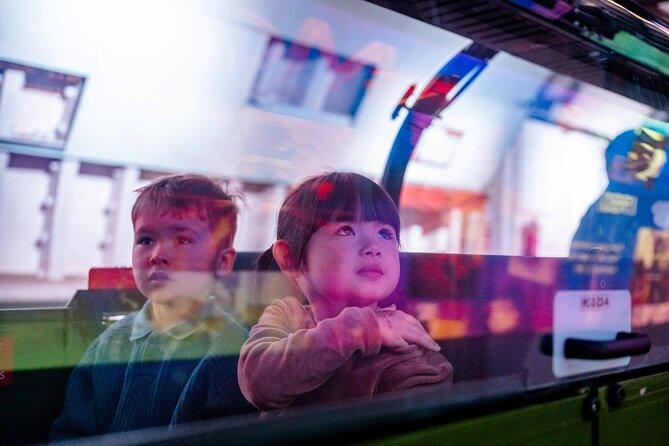
The visit takes about 1 hour 30 minutes to 2 hours 30 minutes. I would use the shorter estimate for adults moving steadily through the displays, and the longer one for families, history fans, or anyone who wants to try the interactive exhibits properly.
The price is $25.55 per person. That is not a bargain-basement museum ticket, especially compared with London museums that have free general admission. Still, the cost covers more than a room of display cases: you get the museum exhibitions and the unusual Mail Rail experience in one visit.
The value improves if you appreciate unusual transport, industrial history, or interactive learning. It is also a sensible choice on a wet London day when you want a structured indoor activity that can occupy much of an afternoon.
There are two extra charges to note. Annual entry to the museum’s exhibitions costs £2 per person, and Sorted!, the Postal Play Space for children aged 0 to 8, costs £4.50 per person. Those extras can matter for a family budget, so check what your selected admission includes before paying.
The café gives you a place to rest, but keep expectations modest. It is family-friendly and useful for a drink or pause, though the food selection may be limited and hot food may not always be available.
Who will enjoy this most

Families with children roughly in the primary-school years have the clearest reason to visit. The train gives younger children an exciting focus, while the interactive displays offer more to explore after the ride. Children must be accompanied by an adult.
The museum also suits adults who enjoy transport, engineering, social history, or old working systems. You do not need a special interest in stamps. The underground railway, early communication technology, and human stories give the visit several entry points.
It is a good choice for grandparents visiting with children. The displays can prompt useful conversations about postmen and women, neighborhood life, and how families communicated before digital technology.
The experience is less suitable if you want a quiet, linear museum with long galleries and minimal noise. The Mail Rail section is dark and enclosed, and the family areas can be lively. An archive in the main building is open on the second Saturday of each month, offering a quieter option at that particular time.
Access, comfort, and practical limits

All spaces in The Postal Museum have step-free access. All spaces in the Mail Rail building are also step-free except for the ride itself.
You need to be able to walk unaided for at least 100 metres over uneven surfaces in minimal lighting and climb at least 70 steep steps. That requirement is important, even though much of the museum is step-free. Check the full access information before booking if you have concerns.
The museum has gender-neutral accessible toilets, a Changing Places facility, and welcomes service animals. Resources are available for autistic visitors, along with an audio-described introduction to the museum.
An audio guide can be added to the ticket. This is worth considering if you want more explanation than the labels provide, though the interactive elements and Mail Rail presentation already supply plenty of information for a shorter visit.
The experience is offered in English. If you are deaf or hard of hearing, note that some of the railway presentation relies on spoken information, particularly during the train journey. Contact the museum directly about the most suitable arrangements before booking.
Booking, weather, and timing
You can choose from several time slots, which makes it easier to fit the museum around other London plans. It is usually booked about 13 days ahead, so I would reserve early for school holidays and weekends.
The ticket is mobile, which is convenient when you are building a full day around nearby attractions. Allow extra time for the two-building layout and any queue for Mail Rail.
The experience requires good weather and may be canceled if conditions are poor. If the operator cancels for that reason, you are offered another date or a full refund. If you cancel or request a change yourself, the ticket is non-refundable and cannot be amended.
That policy makes a last-minute check sensible. If you are booking mainly for the train, confirm that Mail Rail is running before leaving your hotel.
Is The Postal Museum worth your time?
I would book this if you want an unusual London museum with a genuine hands-on element. Mail Rail is the deciding feature: it gives the visit a sense of place that a standard postal exhibition could not match.
Book it for children who like trains, tunnels, machines, or pressing every button in sight. Book it for adults who want a break from royal palaces and art galleries. Allow the full two and a half hours, start with the railway, and treat the main museum as more than a waiting area for the ride.
I would skip it only if you need a fully quiet museum, have difficulty with steep steps or enclosed transport, or would be disappointed by a temporary train closure. For most families and history-minded visitors, the mix of underground railway, social history, and interactive displays earns its place on a rainy London itinerary.
FAQ
How long does The Postal Museum visit take?
The visit takes approximately 1 hour 30 minutes to 2 hours 30 minutes. Families may need the longer estimate because children often spend extra time with the interactive exhibits.
Is Mail Rail included with admission?
A visit includes the Mail Rail experience as well as the museum exhibitions. Mail Rail is in a separate building across the street from the main museum.
Should I ride Mail Rail before visiting the main museum?
Yes. Starting with Mail Rail helps you avoid missing the train and leaves the main museum for a slower visit afterward.
Is the museum suitable for children?
Yes. The museum has family-friendly interactive exhibitions, and Mail Rail appeals to children who enjoy trains and tunnels. Children must be accompanied by an adult.
Is the museum accessible?
All museum spaces have step-free access. The Mail Rail building is step-free except for the ride, and visitors must be able to walk unaided for at least 100 metres over uneven surfaces in minimal lighting and climb at least 70 steep steps.
Are there accessible facilities?
Yes. The museum has gender-neutral accessible toilets and a Changing Places facility. Service animals are allowed, and resources are available for autistic visitors.
Can I add an audio guide?
Yes. An audio guide upgrade is available, and the experience is offered in English.
Are there extra costs beyond the admission ticket?
Annual entry to the museum’s exhibitions costs £2 per person. Sorted!, the Postal Play Space for children aged 0 to 8, costs £4.50 per person.
What happens if the experience is canceled because of weather?
If the experience is canceled due to poor weather, you are offered a different date or a full refund. If you cancel or request an amendment yourself, the ticket is non-refundable.
Just added around London
- Couple’s photo: Romantic photoshoot in London★ 4.8 · 22 reviews
- London: “Queen” Highlights Walking Tour★ 4.3 · 48 reviews
- London: Private Tour with Locals – Highlights & Hidden Gems★ 5.0 · 8 reviews
- Luxury Private Tour in London with Lunch★ 5.0 · 7 reviews
- London 1- or 2-Hour Professional Photo Shoot★ 4.9 · 6 reviews
- London: Private Black Cab Night Tour with Hotel Pick Up★ 5.0 · 11 reviews
- London: Christmas Lights Tour – With Christmas Music★ 4.8 · 9 reviews
- London: Private Pub Tour★ 4.5 · 4 reviews
Museums, compared.
Tower of London and Crown Jewels Exhibition Ticket
Read our review →
Chelsea Football Club Stadium and Museum Tour
Read our review →

Official tickets: Moco Modern & Contemporary Art Museum
Read our review →
British Museum London Guided Tour Semi-Private 8ppl Max
Read our review →
British Museum Audio Tour & Priority Entrance Ticket
Read our review →Browse the lists this tour appears in