
Reviewed · LONDON UNDERGROUND AND TUBE TOURS
London: The Lost Tunnels of Euston Station Guided Tour
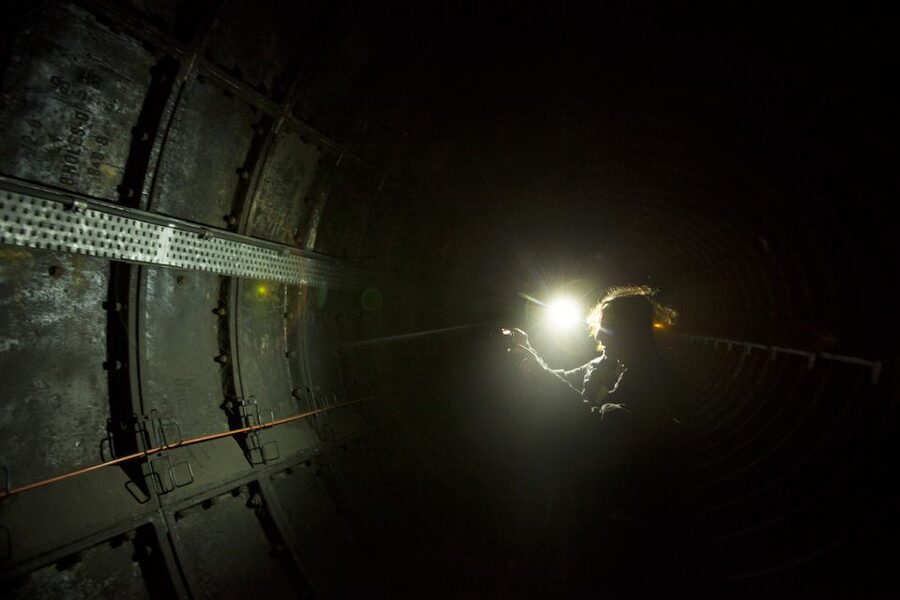
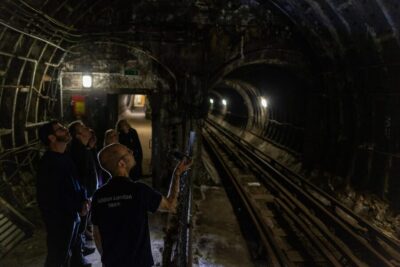
Euston’s busy Tube station has a quieter life below street level. On this 75-minute guided walk, you enter disused tunnels, pass old advertising posters hidden for decades, and look down on Victoria Line trains from a secret ventilation shaft. It is London transport history with dust, darkness, and plenty of stairs.
I like the tour’s access to spaces normally closed to the public and its clear link between old and new London, from the station’s early days to the arrival of HS2. I also like the human touch reported from guides such as Scott and Anthony, who give visitors time for photographs instead of rushing them through.
The main drawback is physical: expect uneven ground, low light, stairs, and no toilets. The tour is not suitable for children under 10, people with mobility impairments, or anyone uncomfortable in enclosed spaces.
Key points at a glance
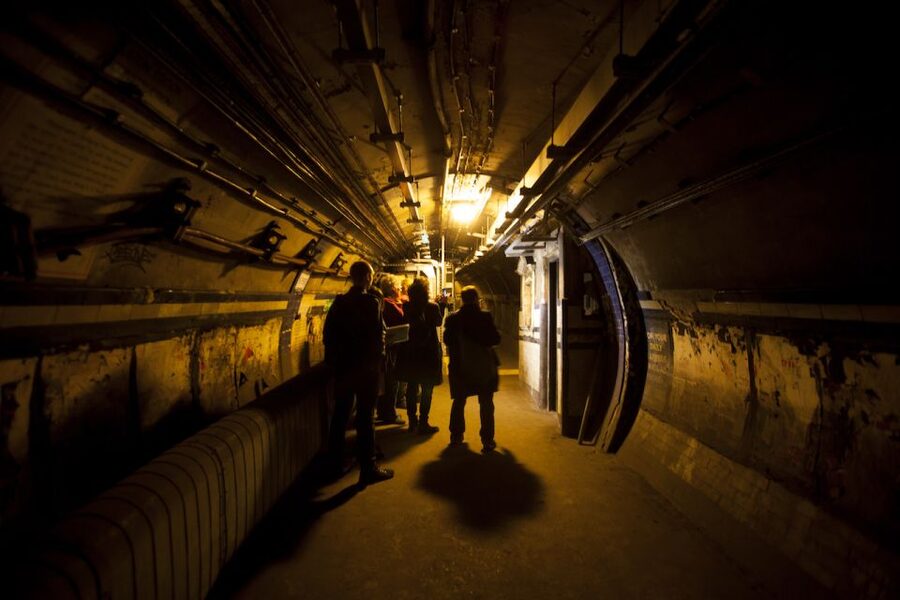
- Old Euston under your feet: Walk through disused tunnels and passageways once used by the traveling public.
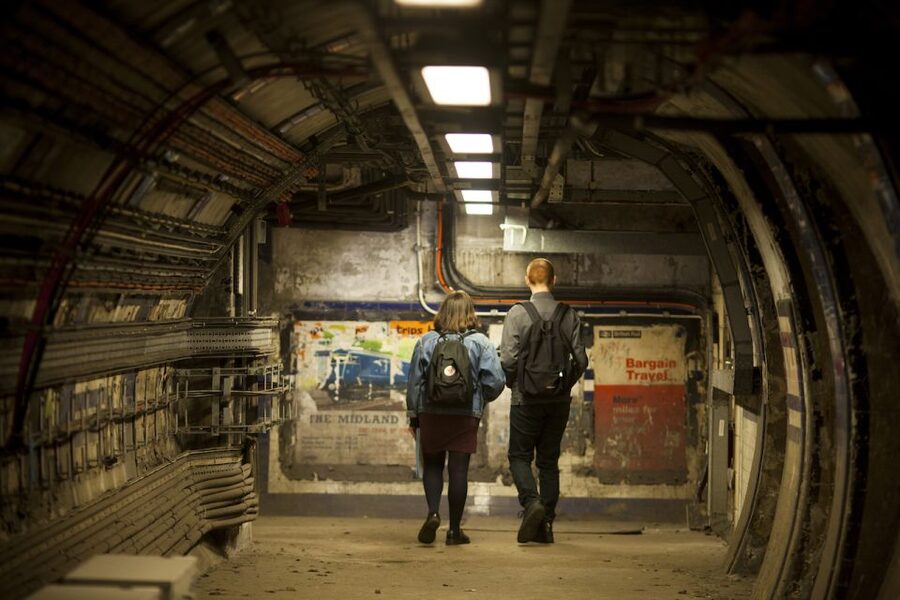
- Vintage posters still on the walls: See advertising remnants that have been out of sight for more than 50 years.
- A rare view of the Victoria Line: Look down from a hidden ventilation shaft onto passing trains.
- A station facing major change: Learn how HS2 is set to reshape Euston and its role as a London terminus.
- A small, personal-style tour: Guides such as Scott and Anthony make room for questions and photographs.
- A demanding walk: Wear sturdy, closed-toe shoes and expect stairs, uneven ground, and dim lighting.
Entering Euston Square from the hospital side
Your meeting point is not inside Euston station itself. Meet at the south exit of Euston Square station, NW1 2BF, on the corner of Gower Street and Gower Place.
Euston Square has more than one entrance, so this detail matters. Look for the station entrance with the glass façade on the hospital side of Euston Road. The listed what3words location is baked.bend.worry, which can help if you are using a phone to find the exact spot.
The tour ends back at this meeting point. That makes the outing easy to fit around other plans, but allow a little extra time to arrive. Euston, Euston Square, and the surrounding roads can be confusing if you are hurrying between them.
Before the walk begins, you meet your English-speaking guide and receive the basic instructions for entering restricted station areas. This is a guided experience throughout. You are not simply handed access to an abandoned corridor and left to work things out.
More London Underground and Tube Tours:
- London: Secrets of the London Underground Walking Tour
★ 4.6 · 211 reviews - Aldwych: Hidden Tube Station Guided Tour
★ 4.8 · 54 reviews - London: Hidden Baker Street Tube Station Tour
★ 4.7 · 51 reviews
The early station hidden beneath modern Euston
The first part of the tour puts Euston’s underground spaces into context. The station began modestly on the corner of Melton and Drummond Streets, a far cry from the huge transport complex you see today.
That contrast is one of the tour’s pleasures. Above ground, Euston is a practical station used by more than 42 million passengers each year. Below ground, older sections preserve the marks of earlier Tube planning, station design, and passenger movement.
You will hear how the station developed and why certain areas were closed or changed. The experience is not only about abandoned infrastructure. It shows how a working transport system keeps adapting, often leaving older corridors behind as passenger needs and engineering plans shift.
The guide’s explanation matters here. Without it, a disused tunnel can look like a dark hallway with peeling surfaces. With the story, the same space becomes evidence of how London’s transport network grew in layers.
Dark passageways and the remnants of public life
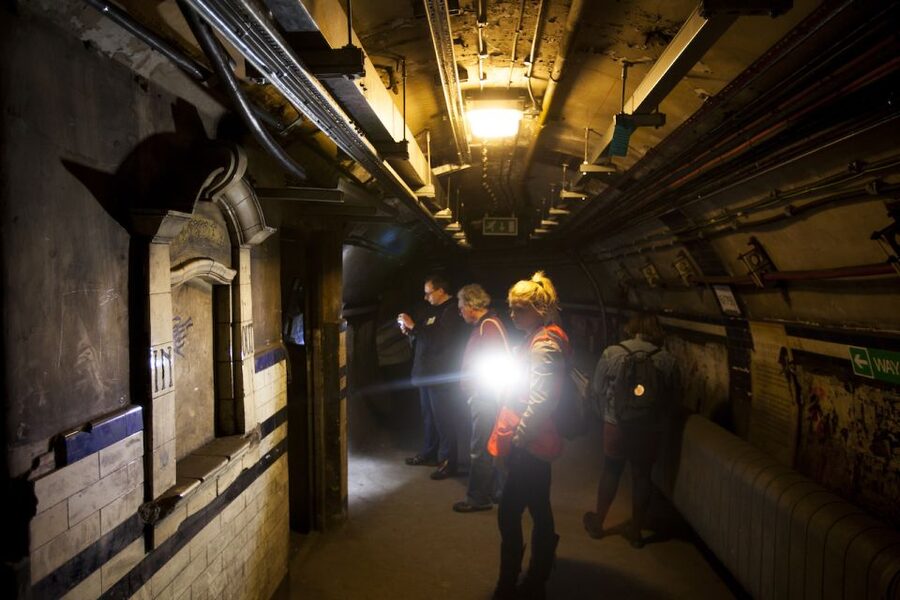
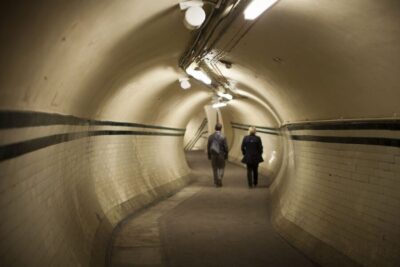
The walk leads through a network of disused tunnels and passageways. Some of these areas were once used by passengers, so you are following routes that had a practical purpose rather than exploring a space designed as a museum exhibit.
Expect a dim, dusty setting. Low lighting and uneven ground are part of the experience, not an inconvenience that staff can simply remove. You will also walk up and down stairs, so comfortable clothing and sturdy footwear are essential.
The old advertising posters are among the most memorable details. Remnants concealed from sight for more than 50 years offer a direct link to the station’s everyday past. You are not looking at a polished display behind glass. You are seeing fragments that survived because the public stopped passing them.
These posters also give the tour a human scale. A station is more than tracks, signals, and concrete. It is a place where people waited, hurried, read advertisements, and followed signs. Even partial artwork can bring that ordinary activity back into view.
Bring a camera if you like taking photographs. Guides such as Scott and Anthony have been praised for giving people enough time to take pictures, a useful detail in a tour where the walls and lighting deserve a careful look.
A look at the Leslie Green station surroundings
The tour also points out the iconic Leslie Green station and its surroundings before they are swept away by redevelopment. Leslie Green stations are known for their distinctive early Underground design, so this part gives the walk architectural interest as well as transport history.
The value is partly in the timing. Euston is not a frozen historic site. It is an active station facing major construction and planning changes. Some of the spaces you see may not remain available in their current form, making the tour feel more like a record of a changing place than a standard sightseeing stop.
You should keep expectations realistic. This is not a grand palace of underground architecture with restored rooms and bright displays. The setting is rougher and more functional. If you enjoy original surfaces, old signs, and the remains of working infrastructure, that raw quality is a strength. If you prefer clean, fully restored attractions, it may feel spare.
The guide helps you notice what you are seeing. A good explanation can turn a plain wall, corridor, or station remnant into part of the larger story of London’s Tube.
More Guided:
- Magical London: Harry Potter Guided Walking Tour
★ 4.7 · 22,044 reviews - London: Emirates Stadium Entry Ticket and Audio Guide
★ 4.7 · 5,513 reviews - Stonehenge, Windsor Castle and Bath Full Day Guided Tour
★ 4.5 · 5,346 reviews - London Jack the Ripper Guided Tour with Ripper-Vision
★ 4.5 · 4,840 reviews
The ventilation shaft and the Victoria Line below
One of the tour’s most unusual moments comes at a secret ventilation shaft. From this position, you look down on Victoria Line trains.
This is a different sort of transport view. You are not watching trains arrive from a platform or standing behind a barrier at track level. You are seeing a working part of the Underground from above, from an area most passengers never know exists.
The stop also explains why the station’s hidden network is not simply an abandoned curiosity. Tunnels, shafts, passageways, and service spaces help a major transport system function, even when the public no longer uses every route.
For photography, listen closely to the guide and follow the instructions. The environment is dark, and the shaft is part of an operational station setting. The point is to see a rare angle safely, not to wander freely through the infrastructure.
This section may be especially appealing if you enjoy engineering and transport. It offers a better sense of the Tube as a three-dimensional system, with working lines and support spaces layered beneath the city.
Why HS2 changes the story at Euston
Euston’s future is a central part of the tour. The station is set to become the London terminus for HS2 services to the Midlands, bringing a major new chapter to a place already shaped by transport expansion.
The HS2 discussion gives the old tunnels a useful present-day connection. You are not only looking backward at closed routes. You are also learning how a large station may change as new rail infrastructure arrives.
That future focus makes the tour more useful for visitors who want to understand London beyond its famous sights. Euston is often treated as somewhere to catch a train and leave. This walk shows why its location and underground structure matter to the city’s wider transport plans.
The tour does not promise a full technical briefing on every HS2 detail. Instead, you get the station’s past, present, and expected future in one short walk. That is a good balance for a 75-minute experience.
I especially like this connection because it keeps the tour from becoming a simple abandoned-tunnel visit. The old spaces have meaning because they sit within a living station that still serves a huge number of passengers.
The pace, group feel, and guide quality
The experience lasts 75 minutes, which is long enough to cover several areas without taking half a day from your London plans. It is also short enough to combine with nearby sightseeing, though the walking and stairs may leave you ready for a rest afterward.
Group size can affect the mood. A small group of four creates a quiet, personal outing where it is easier to hear the guide, ask questions, and stop for photographs. A larger group may feel less intimate, and narrow passageways can make movement less easy.
The guides are a major part of the experience. Scott and Anthony have been singled out for being friendly, informative, and willing to allow time for photographs. That matters in a setting where visitors need both historical explanation and practical direction.
The tour content is prepared by historical experts from the London Transport Museum and draws on the museum’s archive and collection. You can expect a structured account rather than a guide improvising a few spooky stories about an old tunnel.
The guides also explain why the spaces were closed and how Tube service was improved. That practical detail keeps the walk grounded. You learn not only what disappeared, but why station design and passenger movement changed.
Is $60.61 a fair price?
At $60.61 per person, this is not a cheap way to spend an hour in London. You are paying for a guided access experience in restricted areas, not for a standard Tube ride or a self-guided station visit.
The value depends on what you want from a London attraction. If you are interested in transport history, architecture, engineering, or places normally closed to the public, the price is easier to justify. The tour gives you a specialist guide, historical interpretation, access to disused tunnels, old posters, and the ventilation-shaft viewpoint.
If you are mainly looking for a broad introduction to London, you can find better value elsewhere. This is a focused experience. It does not include a meal, transport, or a large collection of restored exhibits. It also lasts only 75 minutes.
I would treat it as a good addition to a London itinerary for someone who has already seen the standard landmarks. The experience offers something you cannot recreate by walking around Euston on your own, since the key areas are closed to ordinary passengers.
Free cancellation up to 24 hours before the start and the option to reserve now and pay later reduce the risk when your schedule is still changing. Check the available start times before booking, as the tour operates at set times rather than whenever you happen to arrive.
Who should book this Euston tunnel walk?
This tour suits you best if you enjoy:
- London’s Tube and railway history
- Old posters, station architecture, and original infrastructure
- Guided walks in unusual places
- Practical stories about how transport systems change
- Short activities that fit into a busy city itinerary
- Photography in atmospheric, low-light settings
It is also a good choice if you want to see a less polished side of London. The tunnels are dark and dusty, and that is precisely the appeal. You get a working city’s leftovers rather than a staged attraction.
Families can book, but children must be at least 10 years old. No more than four children aged 10 to 15 are allowed per adult. Because the walk includes stairs, uneven ground, and low lighting, it is not suitable for people with mobility impairments.
You should also skip it if enclosed spaces make you uncomfortable. There are no toilets during the activity, and food and drinks are not allowed. Large bags and luggage are not allowed either, so do not arrive with your full airport load.
Wear closed-toe, comfortable shoes and clothing suited to the weather. Even though much of the activity takes place underground, the meeting point and parts of the approach are outside.
Should you book the Lost Tunnels of Euston tour?
Book it if you want a focused look at London’s transport past and future, and if the idea of dark passageways, old posters, and a view over Victoria Line trains sounds more interesting than another busy landmark.
The strongest reasons to go are the restricted access, the preserved traces of earlier passenger life, and the connection to HS2. The guides add real value by explaining why the tunnels changed and by allowing time for photographs.
Skip it if you dislike stairs, uneven surfaces, enclosed spaces, or modest industrial settings. At $60.61, it needs to match your interests. For Tube fans, photographers, and curious repeat visitors to London, it offers a rare look at a station most people only cross on the way somewhere else.
FAQ
Where does the Euston tunnel tour start?
Meet your guide at the south exit of Euston Square station, NW1 2BF, on the corner of Gower Street and Gower Place. Use the entrance with the glass façade on the hospital side of Euston Road.
Where does the tour end?
The activity ends back at the meeting point at the south exit of Euston Square station.
How long does the tour last?
The guided walk lasts 75 minutes. Starting times vary, so check availability when choosing your date.
What language is the tour in?
The tour is conducted in English with a live English-speaking guide.
Can children join the tour?
Children under 10 are not allowed. No more than four children aged 10 to 15 may attend per adult.
Is the tour suitable for people with mobility impairments or claustrophobia?
No. The walk includes uneven ground, low lighting, and stairs, and it is not suitable for people with mobility impairments or claustrophobia. There are also no toilets during the tour.
Just added around London
- Couple’s photo: Romantic photoshoot in London★ 4.8 · 22 reviews
- London: “Queen” Highlights Walking Tour★ 4.3 · 48 reviews
- London: Private Tour with Locals – Highlights & Hidden Gems★ 5.0 · 8 reviews
- Luxury Private Tour in London with Lunch★ 5.0 · 7 reviews
- London 1- or 2-Hour Professional Photo Shoot★ 4.9 · 6 reviews
- London: Private Black Cab Night Tour with Hotel Pick Up★ 5.0 · 11 reviews
- London: Christmas Lights Tour – With Christmas Music★ 4.8 · 9 reviews
- London: Private Pub Tour★ 4.5 · 4 reviews
London Underground and Tube Tours, compared.


Guided Tour of Hidden Tube Station at Charing Cross
Read our review →
Hidden Tube Tour – Piccadilly Circus: The Heart of London
Read our review →
Browse the lists this tour appears in