
Reviewed · NATURAL HISTORY MUSEUM TOURS
Natural History Museum London – Exclusive Guided Museum Tour
The Natural History Museum is not a museum you casually finish. It is a grand, crowded maze of dinosaurs, fossils, gemstones, plants, human remains, and Earth science. This two-hour tour gives you a clear route through the big sights, including Archaeopteryx, Sophie the Stegosaurus, the Dodo skeleton, Pompeii casts, and a giant slice of sequoia.
I like that the guide explains the building as well as the displays, and I like that the route can bend toward your interests. Guides such as Ivo, Becky, Matilda, Sacha, Andi, and Anthony Matthews have been praised for lively storytelling and patience with children. The catch is price: at $108.49 per person, this is a serious supplement to a free museum admission.
Key points at a glance
- A focused route through a huge museum: Two hours helps you see major specimens without wandering until your energy gives out.
- Archaeopteryx is a central highlight: You come face to face with the rare fossil often described as a link between dinosaurs and birds.
- Strong family appeal: Guides have kept children engaged with dinosaurs, fossils, and hands-on storytelling.
- Private and semi-private choices: The standard private option gives your group its own guide, while a lower-cost semi-private choice is also available.
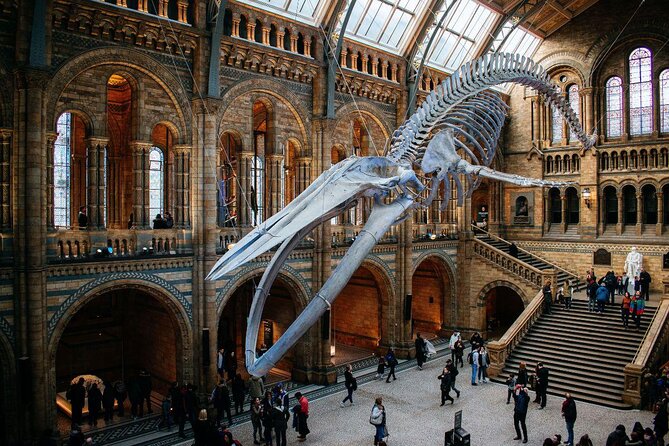
- The museum building gets attention too: Guides point out architectural details you could easily miss while rushing between exhibits.
- Plan for museum security: Large bags and suitcases are not allowed, and temporary exhibitions cost extra.
Why this museum benefits from a guide
The Natural History Museum offers far more than most people can absorb in one visit. You can spend an hour in the dinosaur galleries alone, then realize you have barely reached the fossils, minerals, plants, human origins, or Earth science displays.
I find a guide most useful here as a filter. You are not paying simply to enter the building. You are paying for someone to choose a sensible route, explain why an object matters, and keep the visit moving when the museum feels crowded.
The tour covers thousands of years of Earth’s story. It begins with the planet’s origins and volcanic disasters, then moves through fossils, extinction, dinosaurs, early humans, plants, and unusual cultural practices. The guide does not try to show you everything. That would be impossible in two hours. Instead, you get a brisk selection of the museum’s strongest pieces.
This approach suits you if you want context rather than a long, quiet wander. It also works well if your museum attention span is limited. One guide, Matilda, was praised for taking a route that avoided much of the crowd while still reaching the major displays. That is a practical benefit in a building where poor navigation can waste half your morning.
More Natural History Museum Tours:
- London: Natural History Museum Entry Ticket and Guided Tour
★ 3.8 · 212 reviews - London: Natural History Museum Guided Tour
★ 5.0 · 87 reviews - London: Natural History Museum Private Tour & Skip the line
★ 5.0 · 42 reviews
Entering on Cromwell Road
The meeting point is at the Natural History Museum on Cromwell Road, South Kensington, London SW7 2DH. The tour begins and ends at the museum, so you arrange your own transport. The location is near public transportation, and the operator suggests using a taxi or Uber if you need door-to-door travel.
Give yourself enough time to reach the Cromwell Road entrance. The museum can be busy, and security checks may add a little delay. Bring your mobile phone with the full international country code because the operator says this number is required for the booking.
Large bags and suitcases are not allowed inside. Only handbags or small, thin backpacks can pass through security. This is worth taking seriously if you are coming straight from a hotel or train station. A small day bag is the sensible choice.
The tour is listed as wheelchair friendly in the private option. That note does not apply to the save-money semi-private option, so check the exact choice before booking if access is important to you. A moderate level of physical fitness is requested, which suggests you should expect time on your feet while moving through the galleries.
The opening story: Earth, fire, and extinction
Your guide frames the museum as a story of change. You move from the planet’s origins to volcanic disasters, mass extinction, dinosaurs, and the rise of humankind.
This opening gives the later displays a useful order. Instead of seeing a fossil as an isolated object, you hear how it fits into the larger story of life. The guide’s job is to make those links quickly, since the tour has only about two hours.
The pace can feel fast at first. That is not necessarily a flaw. If the guide stopped at every case, you would see only a fraction of the museum. The better approach is to accept that this is an introduction to the collection, not a full survey.
Sacha C was praised for initially seeming rushed, then proving why the quick pace mattered. The route made more sense once the group understood the scale of the building. You should expect a similar rhythm: brief stops at lesser displays, longer explanations at the important specimens, and steady movement between rooms.
Archaeopteryx, Sophie, and the dinosaur galleries
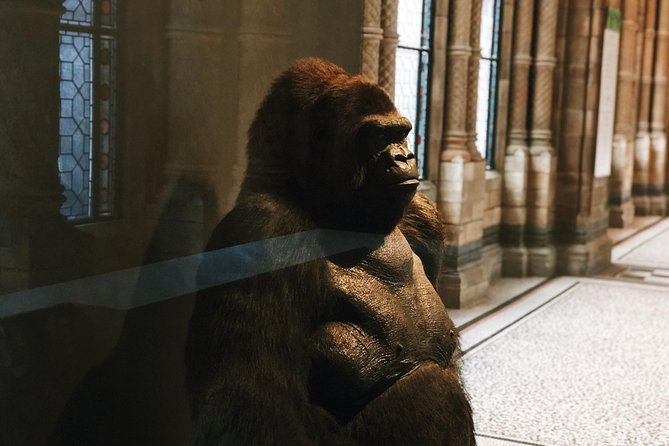
The dinosaur section supplies the obvious thrills, but the tour adds more than a quick look at bones. You see a rare Archaeopteryx, an important fossil in discussions of the link between dinosaurs and birds.
You also meet Sophie the Stegosaurus, a memorable specimen with a name that makes the science easier for younger children to grasp. The skeleton of the extinct Dodo adds a different sort of interest. It brings extinction into sharper focus, moving the subject away from prehistoric creatures and toward a species lost in relatively recent human history.
I would put this portion near the top of the tour for families. Guides including Ivo and Becky have been especially praised for making dinosaurs accessible to children. One guide kept a three-year-old engaged, while another helped a child named Xander enjoy the dinosaur displays. Those details matter because a two-hour museum visit can be a long stretch for small children.
The guide can also adjust the amount of detail. If your group wants dinosaurs, say so early. The tour is designed to respond to interests, and several guides have been praised for tailoring the route rather than delivering the same speech to every group.
More Historical Tours:
- London Small Group Tour of Historical Pubs
★ 5.0 · 10,422 reviews - Soho Music & Historic Pubs Tour
★ 5.0 · 1,993 reviews - London: Historic Pubs of Central London Walking Tour
★ 4.9 · 1,065 reviews - London: Soho Music and Historic Pubs Walking Tour
★ 4.9 · 836 reviews
Pompeii casts and the museum’s darker stories
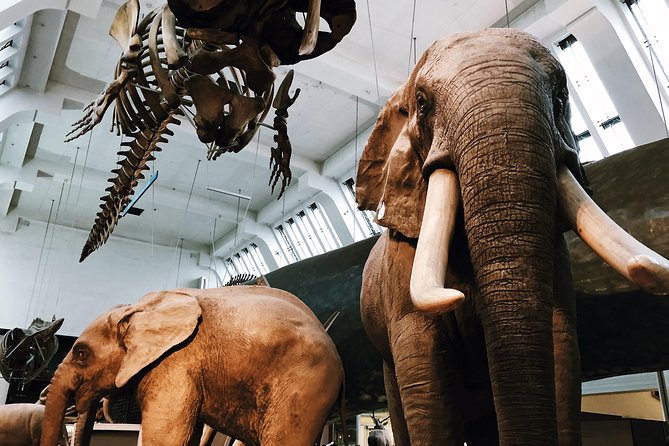
The tour also reaches casts of people caught in the disaster at Pompeii. These displays can be confronting, especially for children, but they put a human face on a volcanic catastrophe.
You may also hear about civilizations that used human skulls as drinking vessels. This is one of the tour’s more unusual talking points. It shows the range of the collection: the museum is not limited to attractive fossils and glittering minerals. It also asks difficult questions about death, ritual, preservation, and the ways people have understood the human body.
Your guide should explain the setting before you enter rooms where speaking must be very quiet or restricted. Some areas have special rules, so do not expect constant commentary at every display.
This section is best for you if you appreciate a museum that mixes science with human culture. If you are visiting with very young children, you may want to tell the guide what subjects to handle gently. The tour is adaptable, but not every exhibit has the same tone.
Plants, preserved animals, and giant sequoia wood
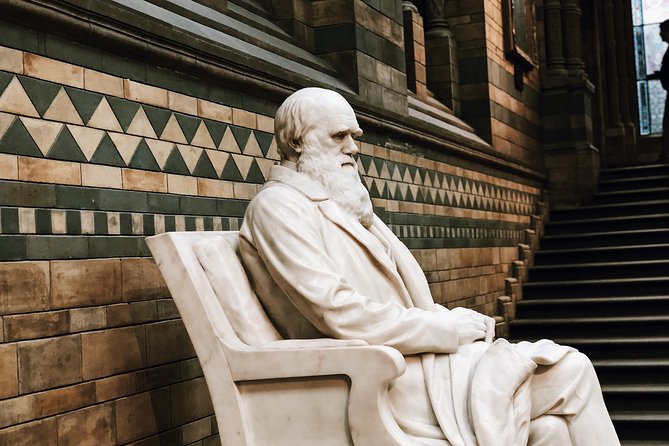
Natural history is not only about extinct animals. The tour includes rare plants, alcohol-preserved animals, and a huge slice of a Giant Sequoia.
The sequoia section gives you a powerful sense of scale. A label can tell you how old or large a tree was, but standing beside a broad cross-section makes the point at once. It is one of the displays that helps break up the dinosaur focus.
The preserved specimens offer a different kind of fascination. They may not have the instant appeal of a dinosaur skeleton, but they show how museums record living things for study. One guide also highlighted the enormous library behind some areas, a detail you could easily miss if you concentrate only on the main cases.
I like this variety because it prevents the tour from becoming a parade of bones. You move between geology, zoology, botany, human history, and museum architecture. The trade-off is that each subject gets only a short visit.
Gemstones, the vault, and the building itself
The tour includes rare and unusual gemstones, including so-called cursed gemstones. The name alone gives the guide an easy way into stories about belief, value, superstition, and the human desire to attach drama to precious objects.
The vault was singled out as an astonishing area, and it is a fitting stop for anyone who likes minerals, jewels, or unusual museum displays. You should not expect the tour to linger over every stone. Instead, the guide selects pieces that help explain why the collection matters.
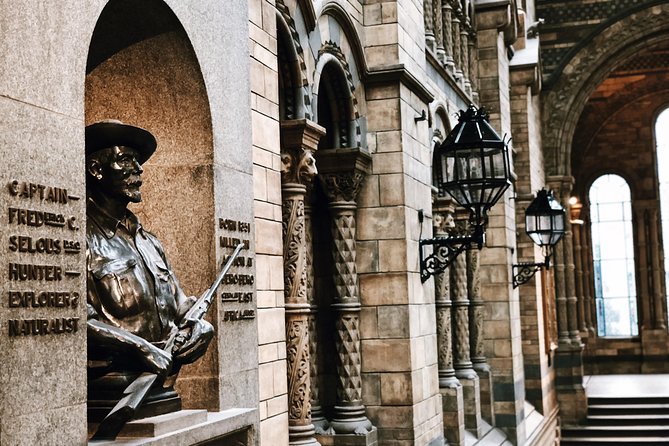
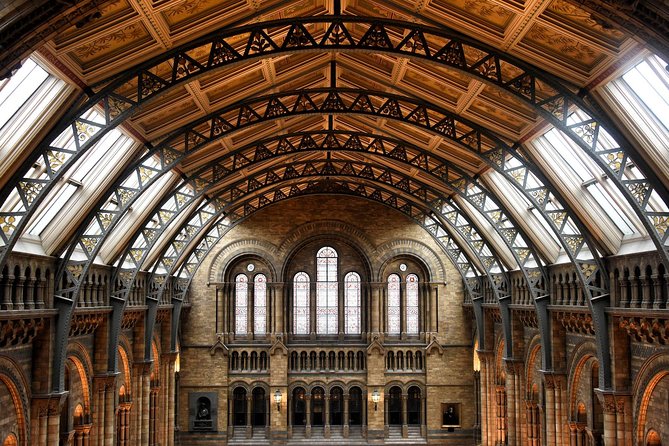
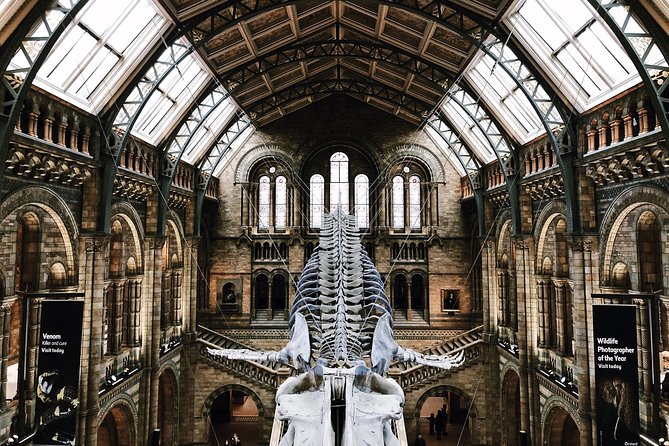
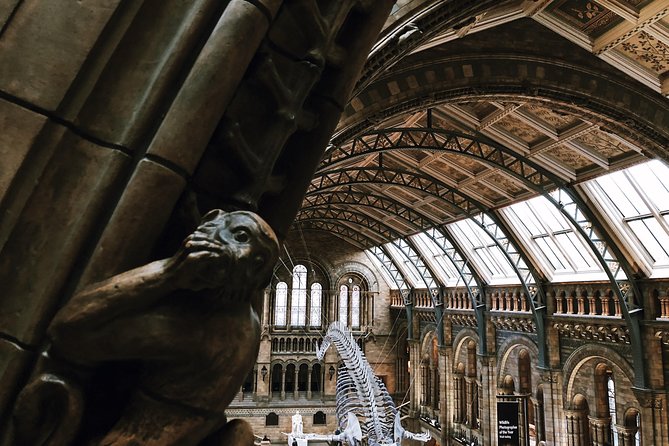
The building deserves attention too. Its grand architecture can feel like part of the exhibition, with carved details and large spaces that reward a slow look upward. Ivo was praised for pointing out features of the building that a self-guided visit might miss.
This is an important reason to choose a guide even if you normally prefer museums alone. A guide can direct your eyes toward the doorway, ceiling, case, or corridor that you would otherwise pass while trying to reach the dinosaurs.
How the two-hour route feels
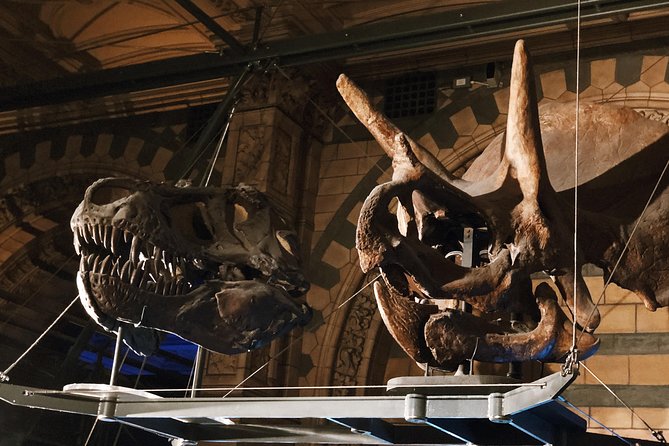
Two hours is enough to see the museum’s major highlights, but not enough for a relaxed look at every gallery. Think of the experience as an orientation tour with substance.
Expect to walk, stop, listen, ask questions, and move on. The group may pause longer at dinosaurs or gemstones if that is where your interests lie. Some quieter rooms require limited speech, so the guide may give instructions before you enter.
Crowds can be a problem, especially around the best-known exhibits. Andi was praised for guiding a group through a packed museum and saving time. Becky was also praised for knowing how to move around crowds while still showing the important displays.
That crowd management can be worth real money. The museum itself may be free to enter, but a confusing route can cost you hours. The tour does not promise that every queue disappears, and increased security can still create lines. It does give you someone who knows where to go next.
Private, semi-private, and family considerations
The standard private option means the guide is exclusively for your group. That is the best choice if you want to ask questions, adjust the pace, or focus on one subject.
A semi-private save-money option is also available. The exclusive guide and wheelchair-friendly notes do not apply to that choice, so read the exact option carefully before paying. The tour is offered in English.
Families are a strong match for the private format. Guides have been praised for patience with children and for turning science into a story rather than a lecture. Dinosaurs are the natural hook, but children may also respond to the Dodo, the giant tree slice, gemstones, and the more surprising human customs.
For adults, the private route gives you room to ask about the building, fossils, extinction, or the cultural meaning behind particular objects. Guides such as Anthony Matthews have been praised for mixing facts with personal stories, which can make the information easier to remember after you leave.
Is $108.49 per person good value?
At $108.49 per person, this is not a bargain museum visit. The museum admission itself is listed as free, and temporary exhibitions are not included. You are paying for the guide’s time, route planning, interpretation, and private attention.
I would consider the price fair for a first visit if you have limited time in London, dislike wandering through enormous museums, or are traveling with children who need a lively pace. It is also more defensible for a group that can share the cost of one private guide.
The value is weaker if you enjoy reading every label, have several hours to spare, or plan to return to the museum. In that case, a self-guided visit may give you more freedom for less money. One unhappy assessment put the cost at about £450 for two people and felt a self-guided visit would have been better. That is a useful warning: the guide improves efficiency, but it does not change the fact that the museum itself has free admission.
The best value comes from using the tour as an introduction. After two hours, you can decide which galleries deserve a second look. If you want a complete museum day from the guide, the time limit will feel short.
Practical limits before you book
Temporary exhibitions are not included, and some collections can change during the year. Museum management can also close areas or delay opening without warning. If opening is delayed by more than an hour, an alternative may be offered, but the operator states that refunds or discounts are not provided in those cases.
Appropriate dress may be required for entry into some sites on the wider tour, though the museum is the main location here. Security rules can change, and some lines may still form despite any priority arrangements.
Free cancellation is available if you cancel at least 24 hours before the start time. Cancellations or changes made inside that window are not accepted for a refund. The cut-off follows local London time.
Who should book this museum tour?
I would book it for a first-time visitor who wants the essential displays without spending a day finding them. It is particularly useful for families, short London breaks, and anyone who feels overwhelmed by large museums.
I would also choose it if the building itself interests you. Guides do more than point at dinosaurs. They can draw your attention to architectural details, quiet rooms, preserved specimens, the library, and the less obvious parts of the collection.
I would skip it if your main goal is to save money or explore at your own pace. You can visit the museum without this added cost, and a two-hour guided route will always leave galleries unseen.
Should you book it?
Book this tour if you value clear direction, lively explanation, and a private route more than the lowest possible price. The strongest guides, including Ivo, Becky, Matilda, Sacha, Andi, and Anthony Matthews, have been praised for adapting to families, answering questions, and making a huge museum manageable.
Skip it if you have plenty of time and enjoy setting your own route. For everyone else, the tour offers a sensible first look at one of London’s most demanding museums, with enough dinosaurs, fossils, gemstones, plants, and human stories to make the two hours count.
FAQ
Where does the Natural History Museum tour begin?
It begins at the Natural History Museum on Cromwell Road, Stop H, South Kensington, London SW7 2DH.
Where does the tour end?
The activity ends back at the meeting point at the Natural History Museum.
How long does the guided tour last?
The tour lasts approximately two hours.
Is museum admission included?
The guided tour is included, and the museum admission is listed as free. Temporary exhibitions are not included.
Is the guide private?
The standard option is a private activity for your group only. A save-money semi-private option is also available, but the exclusive-guide feature does not apply to that choice.
Is the tour offered in English?
Yes. The tour is offered in English.
Is the experience wheelchair friendly?
The private tour option is wheelchair friendly. This does not apply to the save-money semi-private option.
What exhibits are included?
The route can include Archaeopteryx, Sophie the Stegosaurus, the Dodo skeleton, fossils, rare plants, gemstones, Pompeii casts, preserved animals, and a giant sequoia section. Collections may vary during the year.
Can I bring a large suitcase?
No. Large bags and suitcases are not allowed inside. Only handbags or small, thin backpacks can pass through security.
Can I cancel for a full refund?
Yes, if you cancel at least 24 hours before the experience start time. Cancellations or changes made less than 24 hours before the start time are not refunded or accepted.
More British Museum Tours
- Tower of London and Crown Jewels Exhibition Ticket
★ 4.5 · 6,677 reviews - London: Chelsea Football Club Stadium and Museum Tour
★ 4.8 · 4,576 reviews - Chelsea FC Stadium Tours and Museum
★ 5.0 · 1,908 reviews - London: British Museum Guided Tour
★ 4.3 · 1,182 reviews
Just added around London
- London: “Queen” Highlights Walking Tour★ 4.3 · 48 reviews
- Couple’s photo: Romantic photoshoot in London★ 4.8 · 22 reviews
- London: Private Tour with Locals – Highlights & Hidden Gems★ 5.0 · 8 reviews
- Luxury Private Tour in London with Lunch★ 5.0 · 7 reviews
- London 1- or 2-Hour Professional Photo Shoot★ 4.9 · 6 reviews
- London: Private Black Cab Night Tour with Hotel Pick Up★ 5.0 · 11 reviews
- London: Christmas Lights Tour – With Christmas Music★ 4.8 · 9 reviews
- London: A Unique Photoshoot Experience at Famous Sites★ 4.6 · 22 reviews
Natural History Museum Tours, compared.
Natural History Museum Entry Ticket and Guided Tour
Read our review →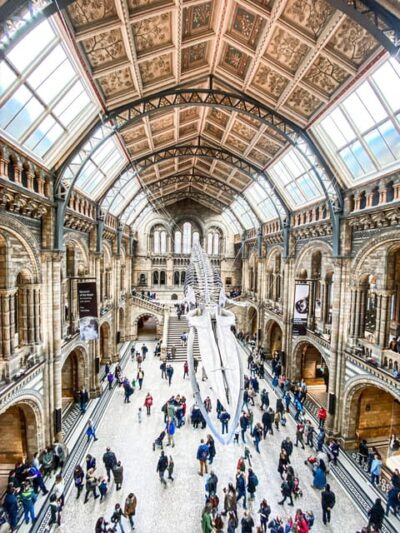
Browse the lists this tour appears in