
Reviewed · NATURAL HISTORY MUSEUM TOURS
London: Natural History Museum Entry Ticket and Guided Tour
The best reason to book this tour is simple: the Natural History Museum is huge, and one hour goes quickly. A guide helps you find the major sights, from the Diplodocus in Central Hall to the enormous blue whale in Hintze Hall, without spending your whole visit studying the map.
I like the quick route through the museum and the useful explanations that bring specimens to life. I also like the chance to return afterward and explore the rooms that catch your eye. The main drawback is the short running time: this is an introduction, not a full museum visit, and $76 is a serious price for only one hour.
Key points at a glance
- See the 82-foot blue whale: Hintze Hall’s suspended skeleton is one of the museum’s most striking sights.
- Start with the major exhibits: The route includes dinosaurs, butterflies, minerals, Earth science, and evolution.
- Use your time well: A guide can help you get your bearings before you explore alone.
- Look for Paul: Several bookings were led by Paul, who is praised for answering questions and engaging children.
- Meet outside on Exhibition Road: The meeting point is by the metal plate marked The Royal Borough of Kensington and Chelsea.
- Plan for one focused hour: The tour includes admission, a guide, and headsets if needed, but not food, drinks, or transport.
Why a one-hour tour helps inside this vast museum
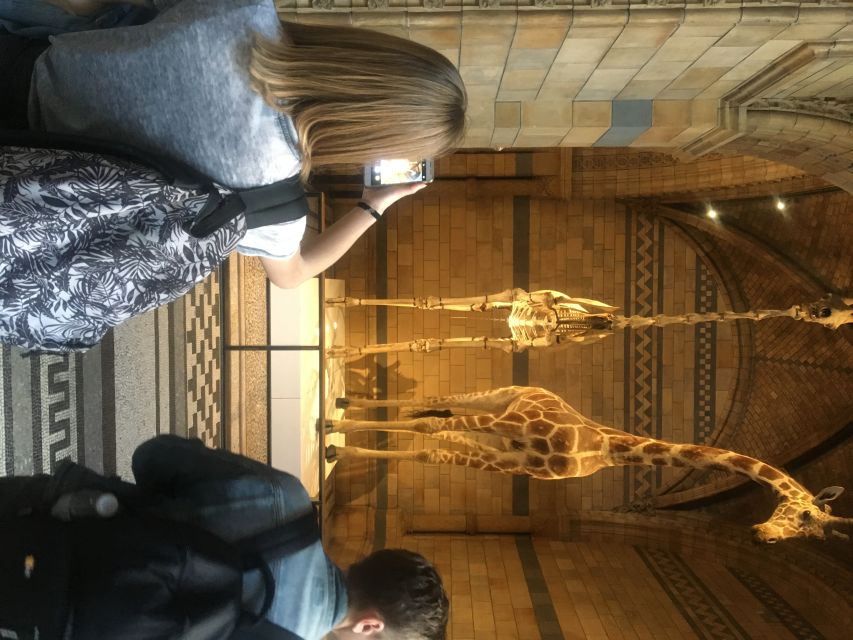
The Natural History Museum can feel like several museums in one. You have grand halls, scientific collections, fossils, Earth science, animals, plants, and displays that invite you to stop every few steps. Without a plan, you may spend much of your time simply deciding where to go.
This tour gives you a clear first look. Your guide leads you through key rooms and explains why the objects matter. That is especially useful if you are visiting London for a short stay, traveling with children, or want an overview before returning to the galleries at your own pace.
The format is fast but not empty. You should expect a guided introduction to the museum’s best-known exhibits, not time to read every label. The strongest use of the tour is to note the rooms and displays you want to revisit afterward.
The tour is conducted in English. Headsets are available if necessary, which matters in a large hall where other groups and general museum noise can make it harder to hear.
More Natural History Museum Tours:
- Natural History Museum London – Exclusive Guided Museum Tour
★ 5.0 · 153 reviews - London: Natural History Museum Guided Tour
★ 5.0 · 87 reviews - London: Natural History Museum Private Tour & Skip the line
★ 5.0 · 42 reviews
Meeting your guide at South Kensington
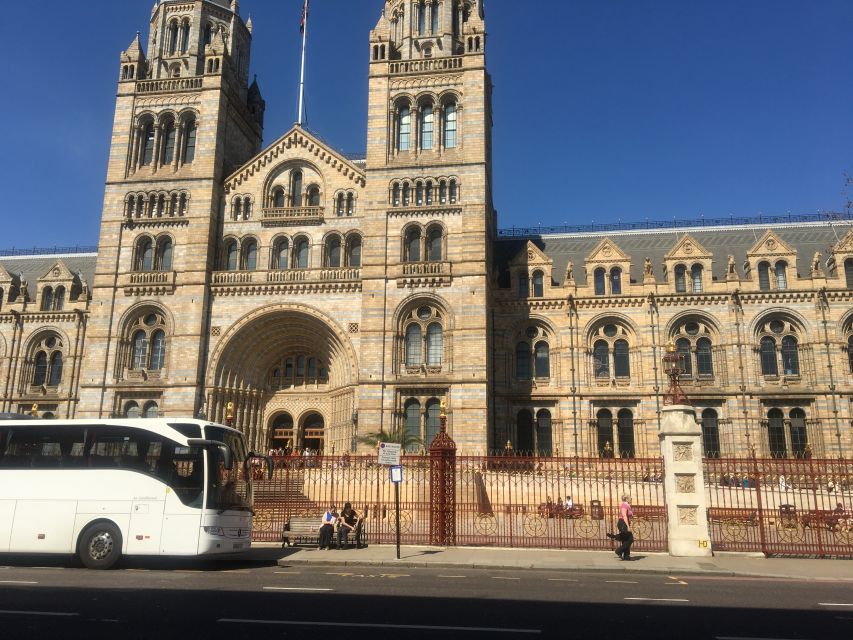
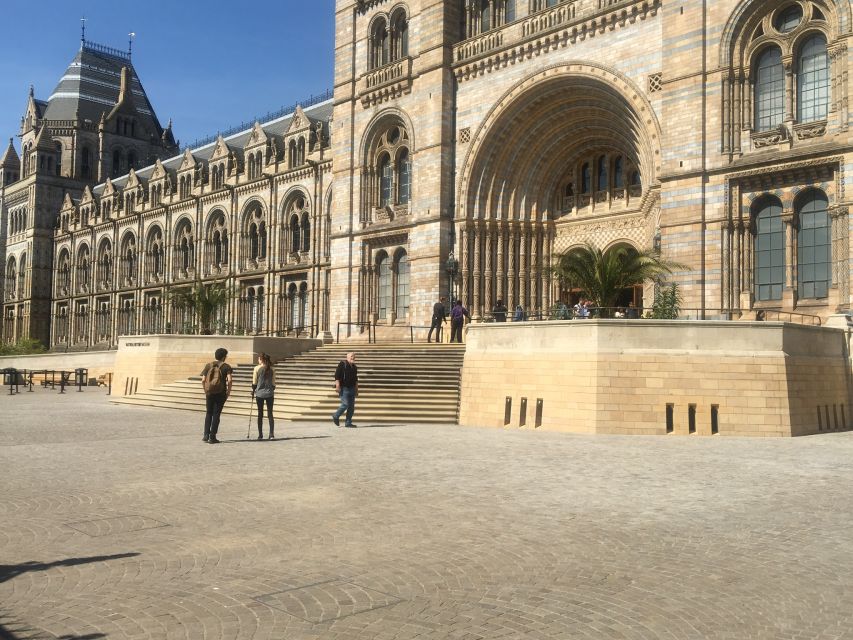
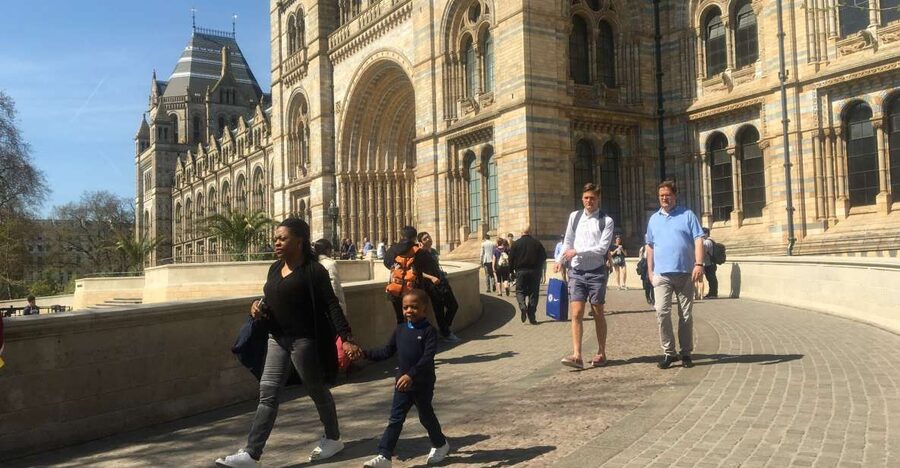
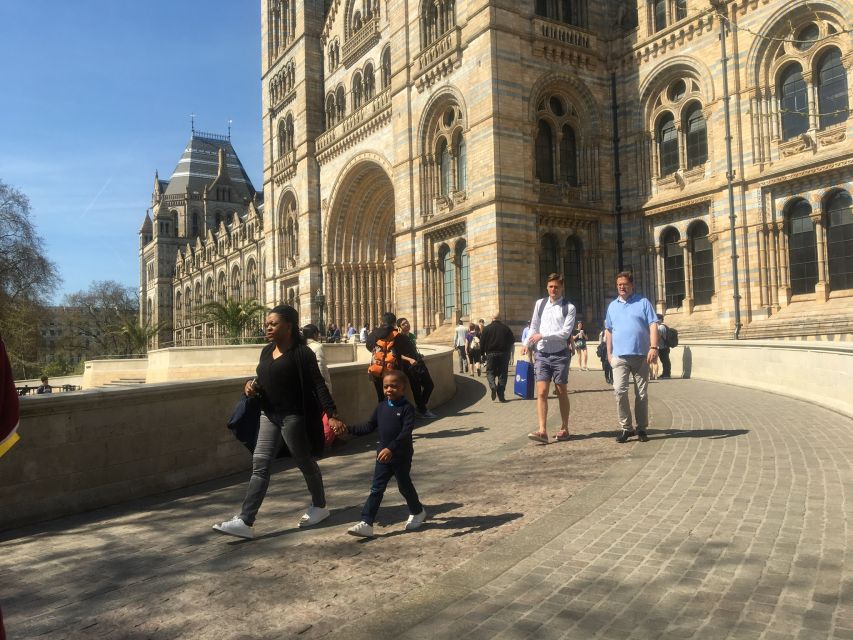
You are asked to travel to South Kensington station and take the exit marked Natural History Museum Ismaili Centre Exit. The meeting point is on Exhibition Road, by the metal plate marked The Royal Borough of Kensington and Chelsea.
Give yourself time to find this spot. One booking specifically found the meeting-point description hard to follow, so do not leave it until the last minute. Exhibition Road has several major cultural attractions, and the museum entrances can be confusing if you are looking at the wrong side of the building.
You are meeting outside, not simply wandering into the museum and hoping to find the guide. Once the group is together, the reservation ticket helps you enter through the arranged route. The activity includes an express security check, which can save time, though security procedures can still affect your exact entry speed.
Transportation is not included. The practical choice is the Underground to South Kensington, followed by the short walk to Exhibition Road. Food and drinks are also not included, so plan those separately.
Central Hall and the Diplodocus
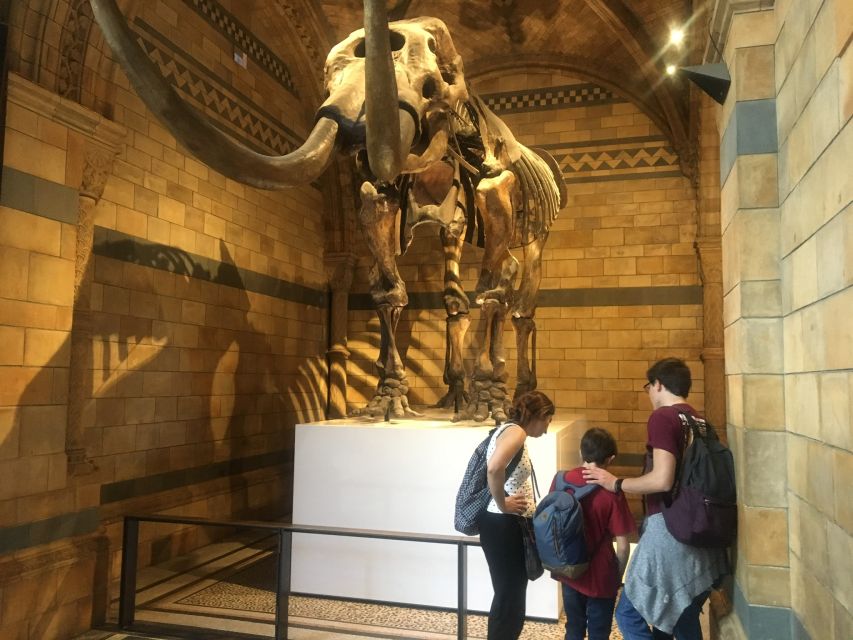
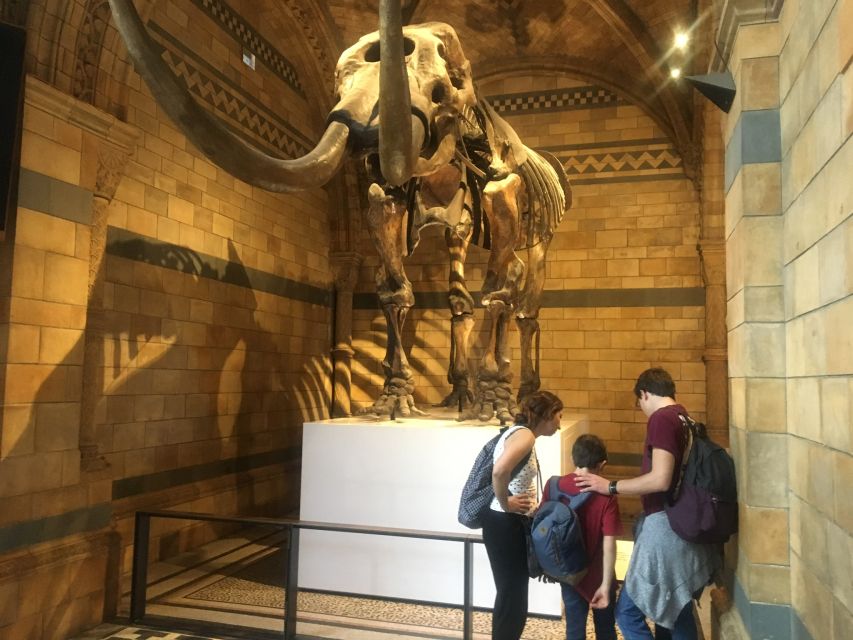
The tour begins with one of the museum’s most memorable settings. The Central Hall has the scale and drama you expect from a great Victorian museum, and the Diplodocus skeleton gives the room its classic dinosaur moment.
A guide adds useful context here. Instead of seeing only a long line of bones, you get an explanation of what the skeleton represents and how museum scientists work with specimens. That turns a familiar photograph stop into a better starting point for understanding the museum’s purpose.
Families should find this part easy to enjoy. The dinosaur is instantly appealing, while the guide can add enough detail for adults. Still, keep your expectations realistic. A one-hour visit will not allow long stops at every dinosaur display or fossil label.
This is also where the guide’s value becomes clear. Paul, one of the guides associated with this experience, has been praised for explaining subjects clearly to both adults and children. Several bookings describe him as friendly, responsive, and able to handle a steady stream of questions.
Hintze Hall and the blue whale
The blue whale skeleton in Hintze Hall is another major stop. At 82 feet, or 25 meters, long, it gives you a quick sense of the scale of life on Earth. The display is visually powerful even if you have only a few minutes.
Your guide can help connect the whale to the wider themes of the museum: adaptation, anatomy, extinction, and the study of living creatures. This is more useful than simply taking a photograph and moving on, especially if you are visiting with children who want to know how such a huge animal fits into the natural world.
The hall itself can be busy, and the whale draws attention from people on both guided and independent visits. Headsets may help you follow the guide, but you should still stay close to the group and keep an eye on where the tour moves next.
The whale and Diplodocus create a strong beginning and middle for the visit. You see two very different examples of animal scale, then move toward displays that explain Earth and evolution in greater detail.
More Historical Tours:
- London Small Group Tour of Historical Pubs
★ 5.0 · 10,422 reviews - Soho Music & Historic Pubs Tour
★ 5.0 · 1,993 reviews - London: Historic Pubs of Central London Walking Tour
★ 4.9 · 1,065 reviews - London: Soho Music and Historic Pubs Walking Tour
★ 4.9 · 836 reviews
Volcanoes, earthquakes, and the story of Earth
The Volcanoes and Earthquakes Gallery shifts the focus from animals to the planet itself. Here, you explore the forces that shape Earth and learn about its formation and changing structure.
This part suits curious adults and older children who want more than dinosaur bones. The guide can connect earthquakes and volcanoes to the museum’s wider scientific work, helping you understand why the displays matter rather than treating them as isolated objects.
A short guided visit cannot cover every panel or model in depth. If Earth science is your main interest, you may want to return to this gallery after the tour. The advantage is that you will already know where it is and what subjects deserve more of your time.
The museum’s value comes partly from this change of scale. You move from individual specimens to the forces that shape entire continents and oceans. A good guide makes that change easier to follow.
Minerals, gems, and the butterfly collection
The minerals and gems displays offer a quieter contrast to the giant skeletons. The specimens are known for their intricate forms and patterns, and they show how much visual variety can come from nonliving parts of Earth.
This is a good stop for anyone who likes close detail. You may find yourself slowing down here, but the one-hour schedule means the guide will keep the route moving. Pay attention to the examples that catch your eye, then return later if you want more time.
The butterfly collection provides a similar change in mood. Instead of enormous bones and dramatic geology, you see delicate forms and fine natural detail. It helps show the range of the museum’s collections, from the largest animal skeleton to small, fragile specimens.
The tour’s quick pace is both its strength and its limit. You get a taste of several very different collections, but you will not have time to study them all. Think of the hour as a well-chosen introduction.
Evolution and the work behind the displays
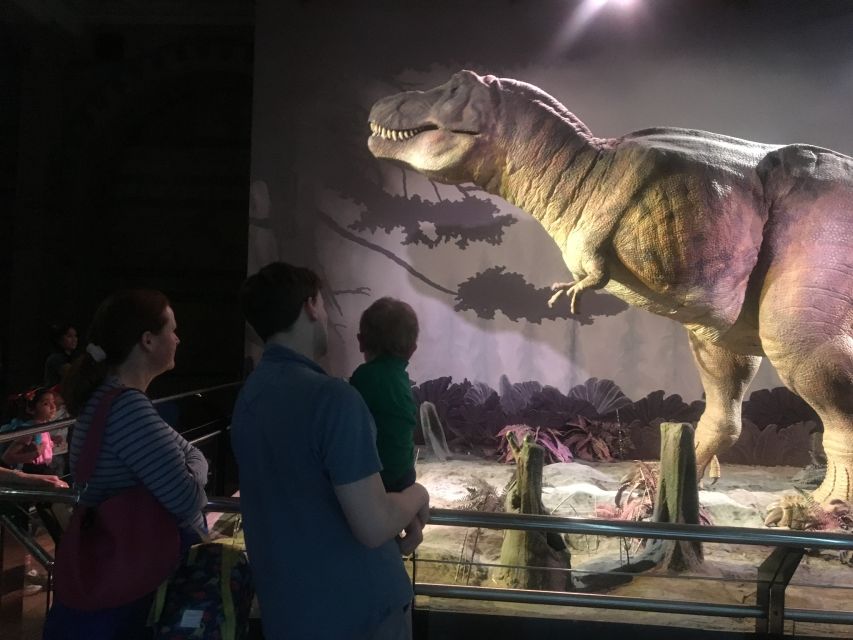
The Evolution Gallery brings the separate parts of the visit together. After seeing animals, fossils, Earth materials, and geological forces, you can look at the wider question of how life changes and develops.
Your guide also explains how the museum’s scientists preserve and study specimens. That behind-the-scenes context is one of the more valuable parts of the experience. The displays are not just decorative objects. They form part of an ongoing effort to understand the natural world.
This is where a guide’s answers matter most. If you ask about a specimen, the route, or how scientists use the collection, you can get more than the basic information printed beside the display. Paul has been praised for answering a large number of questions, which makes this tour a good match for families and curious adults.
English ability matters here. The tour is offered in English, and the guide’s explanations are central to the experience. One family even found that a guide was able to include a child who did not speak English, but you should not treat that as a standard language service. No other tour language is listed.
The Wildlife Garden and a quieter side of the museum
The Wildlife Garden is described as a haven for birds, bees, and other animals. It gives the visit an outdoor dimension and shows that natural history is not limited to cases and skeletons inside the building.
If the route includes this area during your time slot, it can be a welcome change from the grand indoor halls. The garden connects the museum’s subjects with living habitats, though you should remember that the activity lasts only one hour and the exact amount of time at each stop can vary.
The garden may be especially appealing if you prefer everyday wildlife to large fossils. It also gives families another type of stop, with living creatures and outdoor space rather than only indoor displays.
Because the itinerary is focused, do not assume you will have a long garden visit. If this is your main reason for booking, check the route with the guide at the start.
What $76 means in practical terms
At $76 per person, this is not a budget museum entry. The price pays for a reserved ticket, a live English-speaking guide, and an express security check, with headsets available when needed.
The value depends on how you use the hour. If you are likely to walk into a large museum, feel overwhelmed, and leave without seeing the main displays, the guide can save time and give structure. The best value comes when you continue exploring alone after the guided portion.
If you want to spend half a day reading labels and returning to favorite rooms, the price is harder to defend. You may prefer to visit at your own pace and spend your money elsewhere. The tour is designed for orientation and interpretation, not an all-day guided program.
The flexible booking terms help reduce the risk. You can cancel up to 24 hours ahead for a full refund, and you can reserve now and pay later. Those options are useful if your London schedule is still changing.
Who will enjoy this tour most
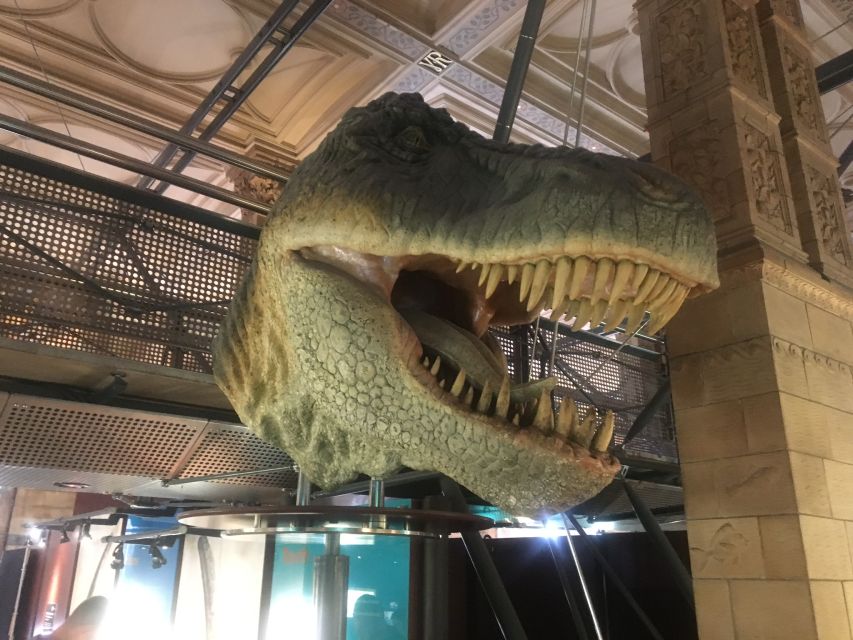
I would choose this for a first visit, a tight London schedule, or a family that wants a clear route through a large museum. It also suits anyone who prefers asking questions rather than reading every display independently.
Older children should enjoy it more than toddlers. The route covers science, fossils, animals, and Earth processes, but the guide’s explanations require some attention. One family specifically found the experience better for older children and not ideal for toddlers.
It can also work well for adults who are not natural-history specialists. You do not need prior knowledge to appreciate the Diplodocus or blue whale, and the guide supplies the context that makes the displays easier to understand.
The museum is wheelchair accessible. If you have mobility concerns, tell the guide at the start. One person using a knee brace found that the guide adjusted the visit so the rooms remained enjoyable, but the tour is still a walking experience through a large building.
Booking advice and final verdict
Book this tour if you want a strong first look at the Natural History Museum, value live explanations, and can accept a brisk one-hour route. The guides, especially Paul, have been praised for friendliness, clear explanations, and working well with children.
Skip it if you want a slow museum day, already know the building well, or are mainly seeking the lowest-cost entry. At $76, the tour makes sense only when the structure and guide save you time and help you plan the rest of your visit.
My practical plan would be to arrive early at the Exhibition Road meeting point, take the one-hour route, and then return to the galleries that interest you most. That gives you both the guide’s overview and the freedom to explore at your own speed.
FAQ
How long does the Natural History Museum guided tour last?
The guided tour lasts one hour.
What language is the tour offered in?
The live tour guide speaks English.
What is included in the price?
The price includes a guide, a reservation ticket, and headsets if they are needed to hear the guide.
Is museum entry included?
Yes. The activity includes a reservation ticket for entry to the Natural History Museum.
Does the tour include food or drinks?
No. Food and drinks are not included.
Is transportation included?
No. You must make your own way to the meeting point.
Where is the meeting point?
Meet on Exhibition Road, SW7, by the metal plate marked The Royal Borough of Kensington and Chelsea. From South Kensington Underground station, use the Natural History Museum Ismaili Centre Exit.
Is the tour wheelchair accessible?
Yes, the activity is listed as wheelchair accessible.
Can I cancel the booking?
You can cancel up to 24 hours in advance for a full refund.
Can I pay later?
Yes. The reserve-now-and-pay-later option lets you book your place without paying immediately.
More British Museum Tours
- Tower of London and Crown Jewels Exhibition Ticket
★ 4.5 · 6,677 reviews - London: Chelsea Football Club Stadium and Museum Tour
★ 4.8 · 4,576 reviews - Chelsea FC Stadium Tours and Museum
★ 5.0 · 1,908 reviews - London: British Museum Guided Tour
★ 4.3 · 1,182 reviews
Just added around London
- London: “Queen” Highlights Walking Tour★ 4.3 · 48 reviews
- Couple’s photo: Romantic photoshoot in London★ 4.8 · 22 reviews
- London: Private Tour with Locals – Highlights & Hidden Gems★ 5.0 · 8 reviews
- Luxury Private Tour in London with Lunch★ 5.0 · 7 reviews
- London 1- or 2-Hour Professional Photo Shoot★ 4.9 · 6 reviews
- London: Private Black Cab Night Tour with Hotel Pick Up★ 5.0 · 11 reviews
- London: Christmas Lights Tour – With Christmas Music★ 4.8 · 9 reviews
- London: Private Pub Tour★ 4.5 · 4 reviews
Natural History Museum Tours, compared.
Natural History Museum London – Exclusive Guided Museum Tour
Read our review →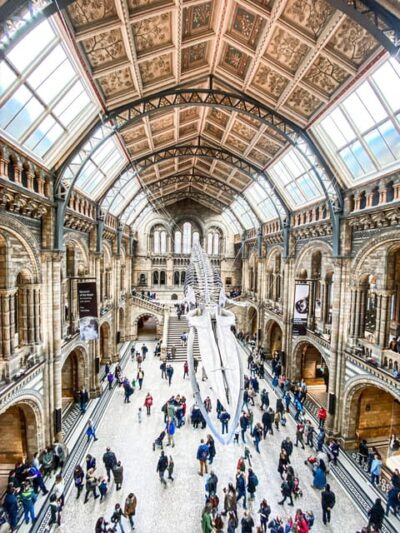
Browse the lists this tour appears in