
Reviewed · LONDON UNDERGROUND AND TUBE TOURS
London: Secrets of the London Underground Walking Tour
The London Underground is not simply a way to cross town. It is a living record of London’s growth, engineering ambition, wartime survival, and occasional oddities. This 2.5-hour walk begins at Baker Street Station, one of the original stops on the Metropolitan Railway, opened in 1863, then uses the Tube itself to connect the stories.
I like two things in particular: the guide-led explanations turn familiar stations into places worth looking at, and the audio headsets help you hear above the clatter of trains. Guides such as John, Aaron, Angela, and Peter have been praised for clear storytelling and good humor. The main drawback is that this is not a true behind-the-scenes tour. You may see a disused station or its traces, but you should not book expecting to enter abandoned platforms.
Key points
- Begin at an original 1863 station: Baker Street gives the tour a genuine connection to the first underground railway.
- Follow the Tube’s technical story: Learn how the system moved from steam power to electric trains and how its earliest tunnels were made.
- Look for history in plain sight: Station architecture, old details, and the famous roundel become part of the lesson.
- Hear the stranger side of London: Stories include haunted stations, a Pharaoh’s daughter, a nun, and a station above 1,000 bodies.
- See how the Tube served London in crisis: Underground spaces sheltered people during the Blitz, stored British Museum treasures, and even housed an aircraft factory.
- Budget for your own transport fare: The $40 tour price includes the guide and headset, but not the Tube ticket or Oyster card.
Why Baker Street is the right place to begin
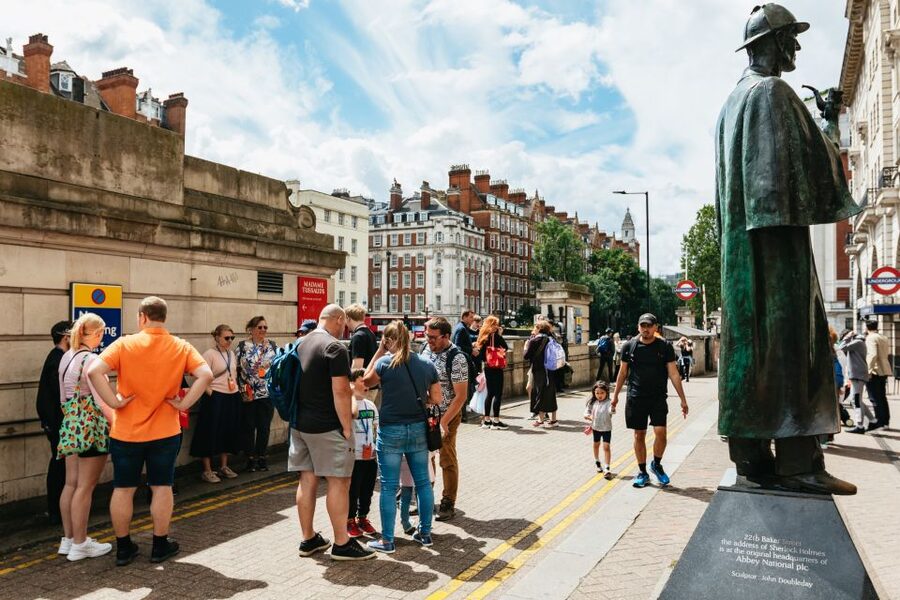
Meet your guide beside the Sherlock Holmes statue outside Baker Street Station. It is an easy landmark, though you should allow enough time to find the correct station exit and gather before the walk begins.
Baker Street matters because it was one of the first stations on the Metropolitan Railway, the world’s first underground railway. The original line opened in 1863, at a time when London was struggling with crowded streets, bad air, and a fast-growing population. Putting trains below ground was a bold answer to a very practical city problem.
The opening section sets up the rest of the tour. You hear how the first tunnels were built, how early trains were powered by steam, and why later electrification changed the system. I like this approach because it gives you a reason to notice the physical setting instead of treating the station as just a starting point.
The tour also places the Underground in the wider story of London. It is both a transport network and a piece of civic infrastructure that helped the city expand. More than 1.3 billion passenger journeys now take place across its 270 stations each year, so the system you see today grew from a much smaller experiment into part of daily life for millions.
More London Underground and Tube Tours:
- Aldwych: Hidden Tube Station Guided Tour
★ 4.8 · 54 reviews - London: Hidden Baker Street Tube Station Tour
★ 4.7 · 51 reviews - London: Private Underground and Tube Tour
★ 4.6 · 42 reviews
The Tube becomes the subject, not just the transport
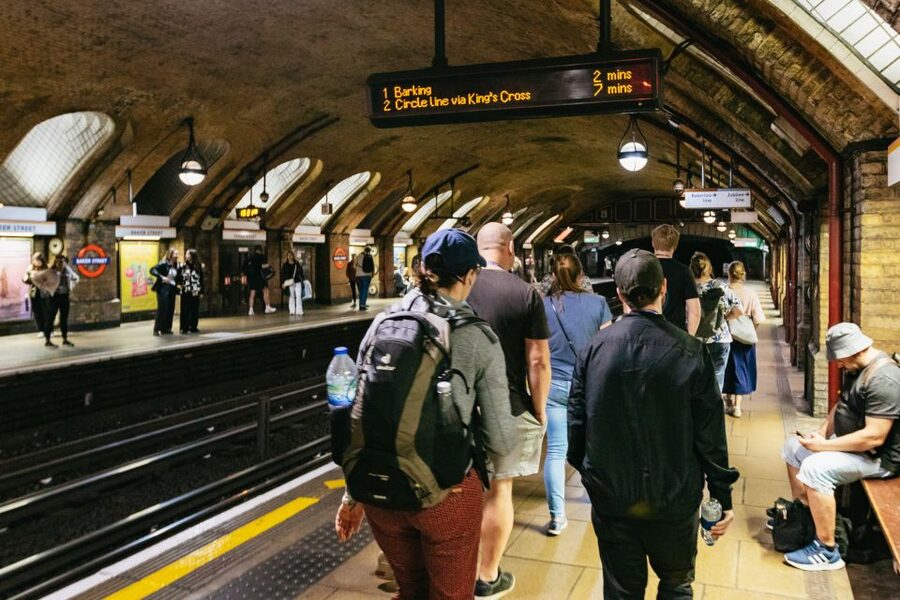
At some point, the group uses public transport for about 10 minutes. Your ticket is not included, so bring a valid travel card, Oyster card, or other accepted public transport payment. A Zones 1 to 2 day travel card is specifically recommended.
This short Tube journey is useful because the tour does not leave the Underground as an abstract museum subject. You move through the system while hearing how it works and how it changed. That makes the story easier to follow than a talk given entirely in one room.
It also means you need to be ready for normal London transport conditions. Trains can be delayed, lines can close, and routes may need to change. One guide, Aaron, was praised for managing a detour and continuing the tour when delays and strikes affected the planned route. That flexibility is reassuring, but it also means the precise order of stops can vary.
The walk includes station corridors, stairs, and stretches above ground. You should expect a moderate amount of walking rather than a slow museum visit. One participant found the tour longer than expected, while another liked the pace and the amount covered. At 2.5 hours, it is substantial enough to feel worthwhile, but you will want sensible shoes.
What the original tunnels tell you about London
The earliest Underground tunnels were built using methods that fit the technology of the time. The tour explains how engineers created the first routes and how the system developed from steam-powered trains to electrified rails.
You do not need an engineering background to enjoy this section. The value is in understanding why the Underground looks and operates as it does. The technology was shaped by limits on construction, the need to work around existing streets and buildings, and the pressure to carry more people through a crowded capital.
The guides are the main strength here. John is repeatedly praised for making technical and historical information entertaining, while Aaron is noted for adding details about landmarks above ground as well as the stations below. Angela has also been praised for speaking clearly and answering questions throughout the walk.
That matters in a noisy environment. The included audio headset lets you listen while standing on a platform or walking through a busy station. One participant found the equipment invaluable, and another noted that it worked better underground than above ground. A little crackling is possible outside, but the headset is still a useful part of the tour rather than a minor extra.
Station details hiding in plain sight
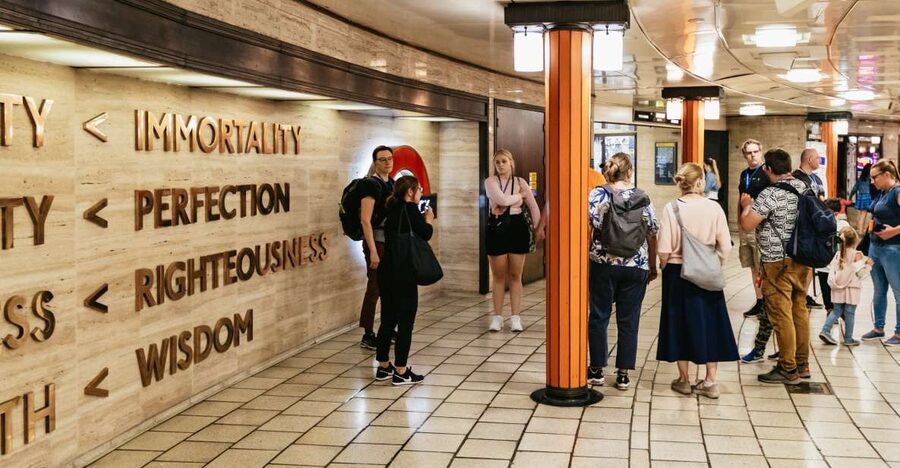
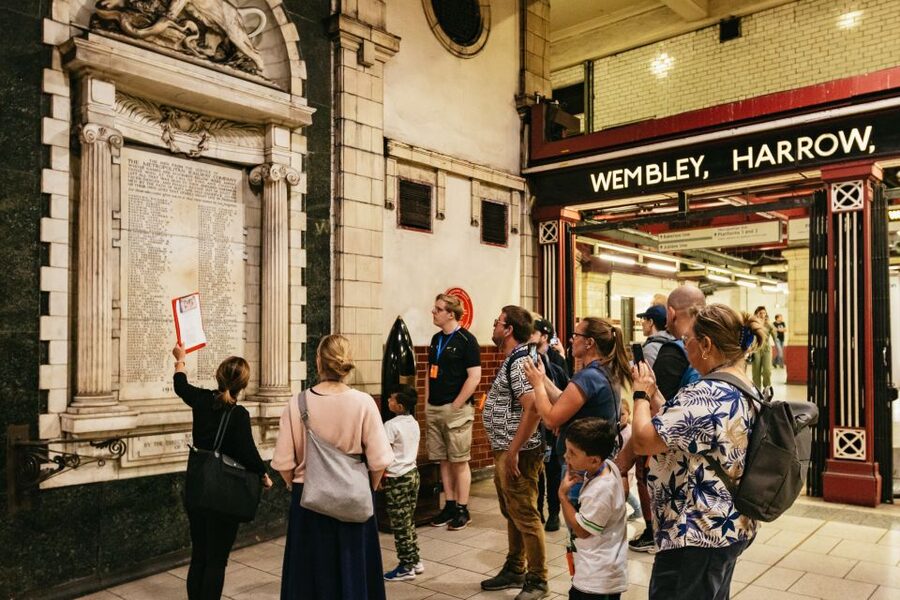
A good part of this experience is learning to look at stations differently. You might pass through a station many times without noticing its architecture, old fittings, changes in design, or links to the areas above it. The guide points out details you would probably miss while trying to catch a train.
The famous Underground roundel gets its own story. Today it is one of London’s most recognizable signs, but the tour explains how the symbol developed and why it became so effective. It is a small design feature with a large role in helping people find their way around the system.
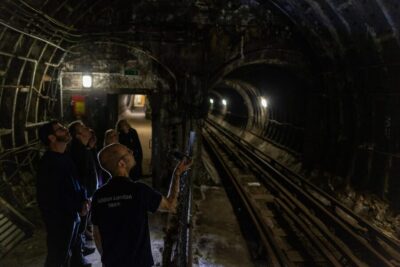
You also hear about more than 40 stations that have been abandoned or taken out of regular use. These closed stations are one of the biggest draws for people booking this experience. The important expectation to set is that the tour usually discusses disused stations, shows their traces, or passes locations connected with them. It does not promise entry into a closed station.
That distinction matters. Several people enjoyed seeing a ghost station or learning about stations hidden in the present-day network, while others hoped for access to platforms and were disappointed. If you want a history walk that explains what you are seeing, this works well. If you want restricted access below ground, choose your expectations carefully.
More London Walking Tours:
- Magical London: Harry Potter Guided Walking Tour
★ 4.7 · 22,044 reviews - London: The Original Jack the Ripper Walking Tour
★ 4.7 · 7,833 reviews - Tour for Muggles The Ultimate Harry Potter Walking Tour in London
★ 5.0 · 4,684 reviews - London Jack The Ripper Guided Walking Tour
★ 5.0 · 3,131 reviews
The stranger stories beneath the city

The tour has a lighter, more theatrical side too. You hear stories about haunted stations and alleged ghosts, including the spirit of a Pharaoh’s daughter and a nun. These tales are presented as part of the folklore attached to the system, not as a promise that you will encounter anything supernatural.
There is also the macabre detail of a station located above the remains of 1,000 bodies. This kind of story shows how the Underground is tied to older layers of London. Building a railway through the capital often meant working around churches, burial grounds, streets, and structures that predated the railway by centuries.
The Jack the Ripper connection also appears in the tour’s wider storytelling, which will appeal to anyone interested in London’s darker past. The best guides keep these tales tied to place and history rather than turning the whole walk into a ghost tour.
I like this balance. The eerie stories keep younger visitors and curious adults engaged, but the tour still spends most of its time on engineering, transport, architecture, and social history. It is not designed only for fans of ghost stories.
From Blitz shelter to aircraft factory
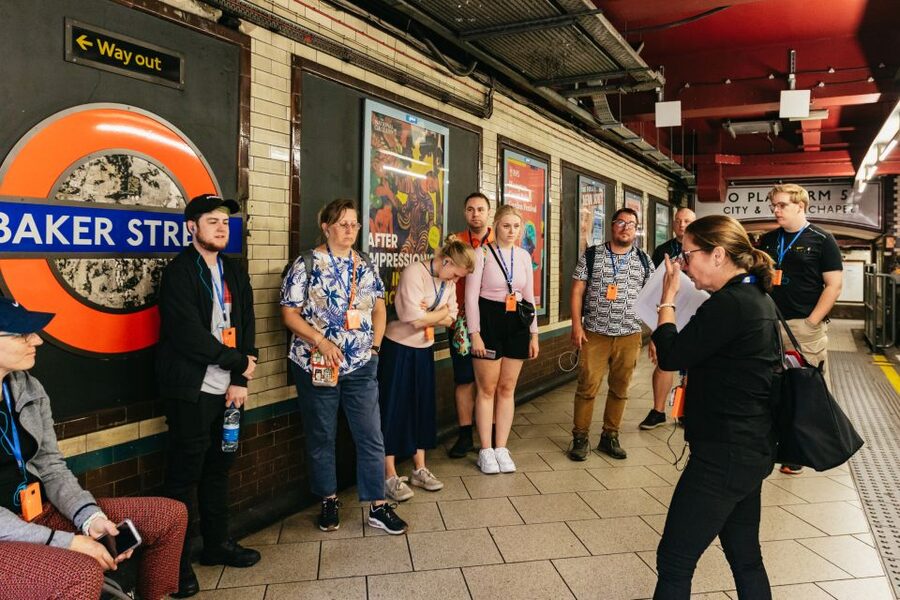
The Underground’s wartime role is one of the strongest reasons to take this walk. During the Blitz, stations were repurposed as shelters, giving Londoners protection during bombing raids. The tour explains how these spaces became part of civilian life during the war.
The network also served less obvious purposes. You hear how Underground locations were used as an aircraft factory and how treasures from the British Museum were stored below ground for protection. These examples show the system as flexible civic space, not just railway property.
This section adds real weight to the tour. A station can look ordinary when you pass through it on your way to Westminster or Baker Street, yet its walls may have played a role in wartime refuge, manufacturing, storage, or emergency planning.
You are not promised access to all the wartime spaces discussed. The value comes from connecting the visible station to the larger events that took place there or nearby. If you enjoy seeing how a city adapts in a crisis, this may be the most memorable part of the walk.
Finishing near the London Transport Museum
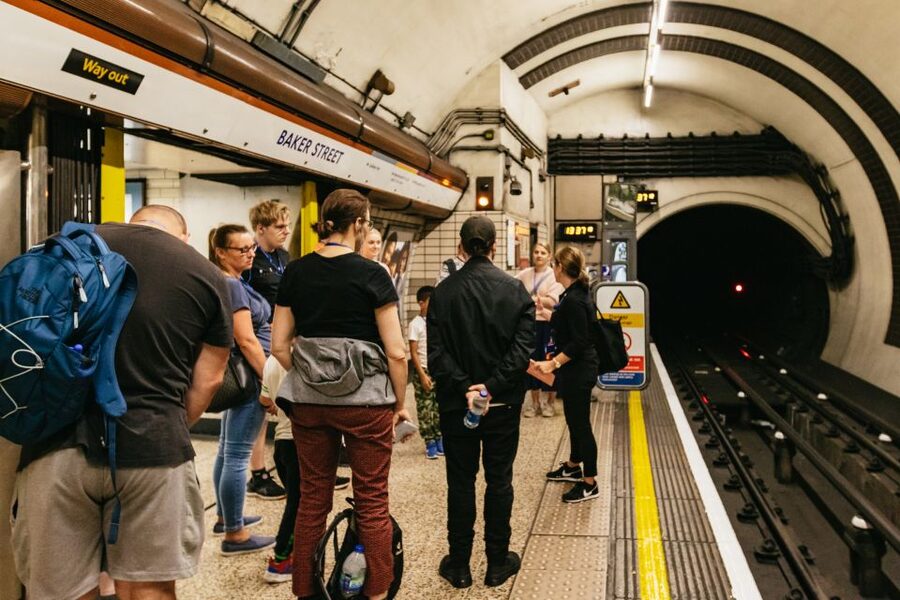
After the Tube section, the itinerary includes a visit to the London Transport Museum and finishes at 10B Bridge Street in Westminster. The museum stop gives the tour a natural closing point, since its subject is the wider story of London’s transport system.
The museum visit is especially useful if you want to continue with vehicles, signs, maps, and transport design after the walking portion. The supplied information does not specify how long you spend inside the museum, so do not assume it is a full museum tour with extensive free time. Treat it as part of the scheduled experience and check the day’s timing if you are booking another attraction afterward.
The final location near Westminster is convenient for continuing into central London. You may want to keep the rest of your schedule flexible, since the walking pace, transport delays, and questions from the group can affect the exact finish time.
Is $40 a fair price?
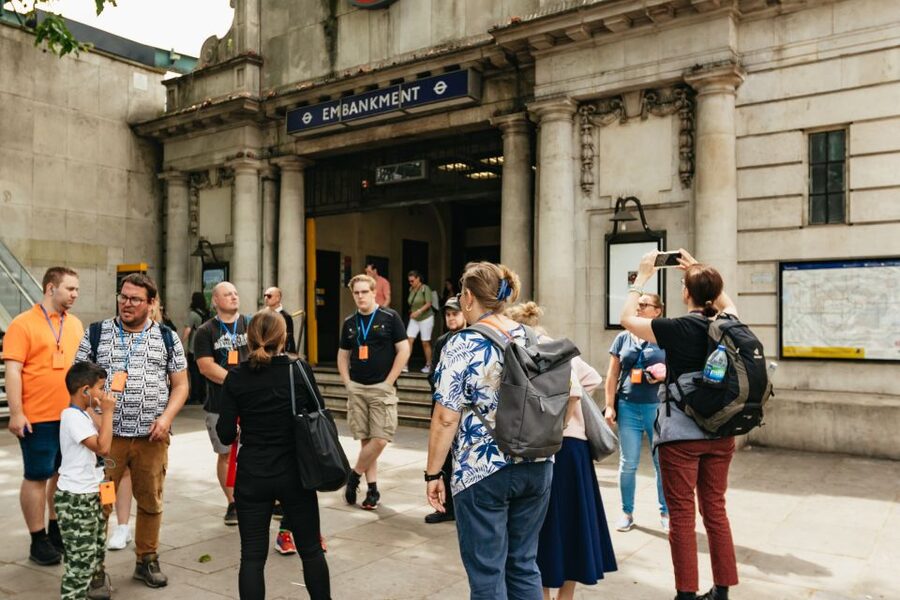
At $40 per person, the price is reasonable if you want a guided introduction rather than a self-guided Tube history lesson. You are paying for 2.5 hours with a live English-speaking guide, the route planning, the historical research, and the audio headset.
The extra transport fare is the cost to watch. The tour price does not include an Underground ticket, Oyster card, or travel card. One person reported paying much more by using a bank card for the journey, while a day travel card worked out cheaper. The exact fare depends on how you pay and the current transport rules, but the practical advice is simple: arrange your Tube payment before you arrive.
The tour gives better value to first-time visitors and London residents who use the Tube without thinking about it. It is less useful if you already know the Underground’s technical and social history or if you want a long museum visit instead of walking between stations.
Who will enjoy this walk most?
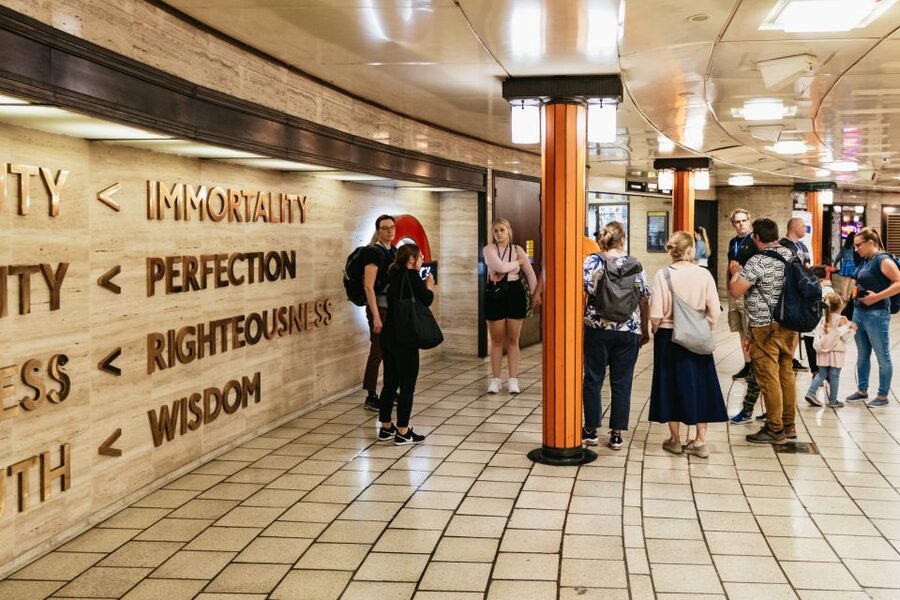
You will get the most from the tour if you like cities as working places, not just collections of famous sights. The Underground offers engineering, architecture, wartime history, urban growth, design, and folklore in one subject.
It also suits families with older children who can manage the stairs and walking. One guide was able to answer an inquisitive child’s questions, and the combination of trains, tunnels, ghosts, and wartime stories gives younger visitors plenty to follow.
The experience is not suitable for wheelchair users or people with reduced mobility. There are many steps in the Underground system, and a moderate amount of walking is involved. Baby strollers and large bags are not allowed, so pack lightly.
English is the only listed tour language. Guides are generally praised for clear delivery, and one participant who was not a native English speaker found the guide easy to understand. Still, the headset and station noise may make the experience harder if you have serious difficulty hearing spoken English.
Small details that make the day easier
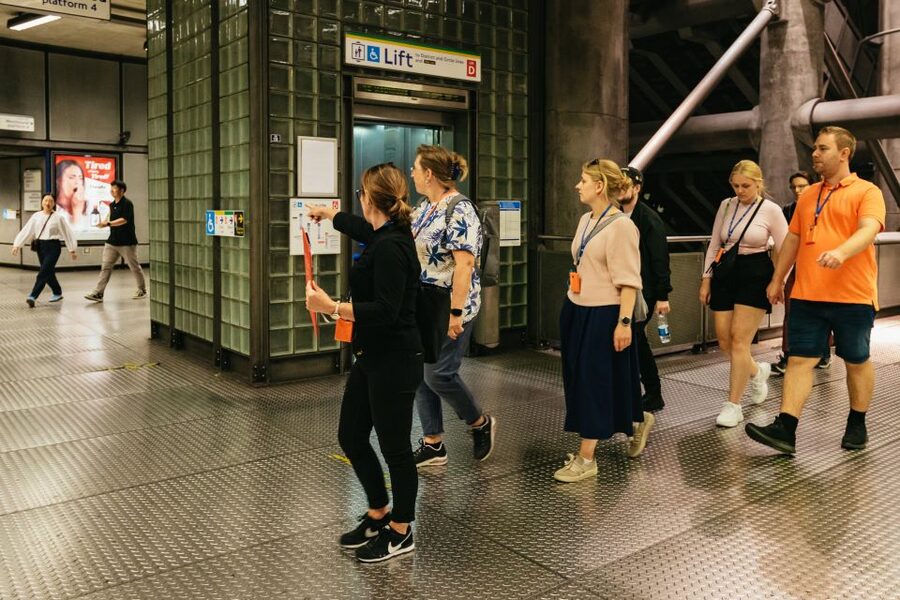
Arrive at the Sherlock Holmes statue outside Baker Street Station with your transport payment ready. Do not assume that the $40 covers the Tube journey.
Wear comfortable shoes and leave large bags at your accommodation. You will walk through stations, use stairs, move between transport areas, and spend time standing while the guide talks.
Keep some flexibility after the scheduled finish. Train delays and line closures can force a route change, although the guides have shown they can adapt. If you need to reach a timed booking immediately afterward, allow extra time.
The included headset is worth using. Underground noise can swallow a normal speaking voice, and the device helps you keep up without standing shoulder to shoulder with the guide.
Should you book the Secrets of the London Underground tour?
Book it if you want to understand the Tube as part of London’s story. The strongest parts are the Baker Street beginning, the explanation of early construction and electrification, the wartime uses, the station details you might otherwise miss, and the guides’ lively delivery. John, Aaron, Angela, and Peter are among the guides praised for making the material clear and entertaining.
Skip it if your main goal is to enter a closed station or explore restricted tunnels. The tour can reveal the stories and traces of disused stations, but it is not a guaranteed underground access experience.
For most visitors, this is a useful and unusual way to spend half a day in central London. Just budget for your own Tube fare, expect stairs, and arrive ready to look up from the map and notice the city beneath the city.
FAQ
Where does the tour begin?
Meet your guide beside the Sherlock Holmes statue outside Baker Street Station in London.
How long does the tour last?
The tour lasts 2.5 hours and includes walking, a public transport journey of about 10 minutes, and a visit to the London Transport Museum.
Is the Underground ticket included?
No. You need to arrange your own public transport ticket, Oyster card, or travel card. A Zones 1 to 2 day travel card is recommended.
Does the tour enter a disused Underground station?
Entry into a disused station is not promised. The tour explains abandoned stations and may show a disused or closed station, but you should not expect regular access to restricted platforms.
Is the tour suitable for wheelchair users?
No. The tour includes many Underground steps and a moderate amount of walking, so it is not suitable for wheelchair users or people with reduced mobility.
What is included in the $40 price?
The price includes the live English-speaking tour guide and an audio headset. Food, drinks, hotel pickup, hotel drop-off, and public transport fares are not included.
Just added around London
- London: “Queen” Highlights Walking Tour★ 4.3 · 48 reviews
- Couple’s photo: Romantic photoshoot in London★ 4.8 · 22 reviews
- London 1- or 2-Hour Professional Photo Shoot★ 4.9 · 6 reviews
- London: Private Tour with Locals – Highlights & Hidden Gems★ 5.0 · 8 reviews
- Luxury Private Tour in London with Lunch★ 5.0 · 7 reviews
- London: Private Black Cab Night Tour with Hotel Pick Up★ 5.0 · 11 reviews
- London: Christmas Lights Tour – With Christmas Music★ 4.8 · 9 reviews
- London: Private Pub Tour★ 4.5 · 4 reviews
London Underground and Tube Tours, compared.



Guided Tour of Hidden Tube Station at Charing Cross
Read our review →
Hidden Tube Tour – Piccadilly Circus: The Heart of London
Read our review →
Browse the lists this tour appears in