
Reviewed · NATURAL HISTORY MUSEUM TOURS
London: Natural History Museum Guided Tour
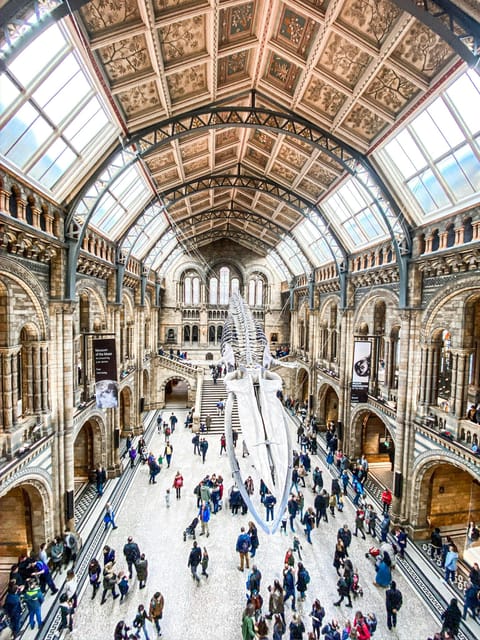
The most memorable part of this museum tour is the range. In a single visit, you can move from Sophie the Stegosaurus, one of the most complete skeletons of her kind, to casts of Pompeii’s victims, a 1,300-year-old Giant Sequoia, and rocks from the Moon and Mars. It is a brisk trip through life, extinction, geology, and human science.
I like the way a guide gives shape to a huge museum that holds about 80 million specimens. I also like the mix of famous objects and odd, specific treasures, especially Darwin’s first edition of On the Origin of Species and the rare Archaeopteryx fossil. The drawback is value: at $93 per person, the tour may feel expensive if you already know the basic story of dinosaurs, volcanoes, earthquakes, and gemstones.
- Sophie the Stegosaurus: See one of the world’s most complete stegosaurus skeletons.
- Archaeopteryx fossil: Examine a rare fossil linked to the story of birds and dinosaurs.
- Pompeii casts: View plaster casts made from the forms left by victims of Mount Vesuvius.
- 1,300-year-old tree: See a cross-section of a Giant Sequoia that was already ancient when it was felled.
- Moon and Mars rock: Compare rare samples from beyond Earth with notable earthly gemstones.
- Private attention: Choose a private or small-group tour with a live English-speaking guide.
Why a Guided Visit Helps in an 80 Million Specimen Museum
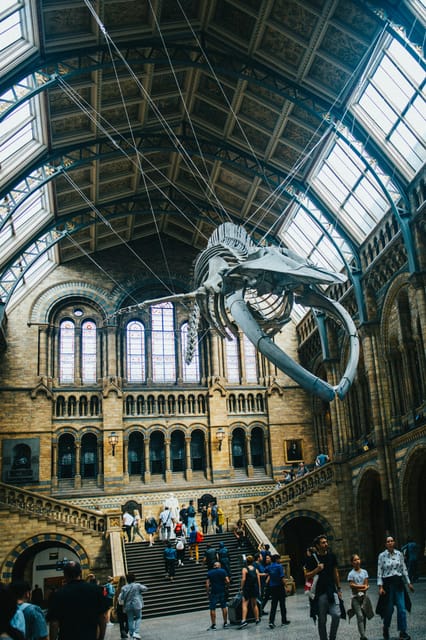
London’s Natural History Museum is the kind of place where you can spend hours looking at impressive objects and still miss the point of many of them. The building is large, the collection is enormous, and the displays cover subjects that can feel disconnected if you simply wander from room to room.
A two-hour guided route gives you a clear thread. Instead of trying to see everything, you focus on the museum’s main highlights and hear why each object matters. That matters most if you have limited time in London, or if you are visiting with children who need a steady sequence of discoveries.
The advertised experience lasts 2.5 hours, while the guided museum portion is described as two hours. The extra half-hour may allow for meeting, security, and movement through the building. Treat this as a focused introduction, not a complete visit to every gallery.
The tour is available as a private or small-group experience. That can make a practical difference. In a smaller setting, you have a better chance of asking questions and keeping the pace suited to your group. The live guide speaks English, so you should be comfortable following an English-language explanation for the full visit.
Meeting at the Exhibition Road Entrance
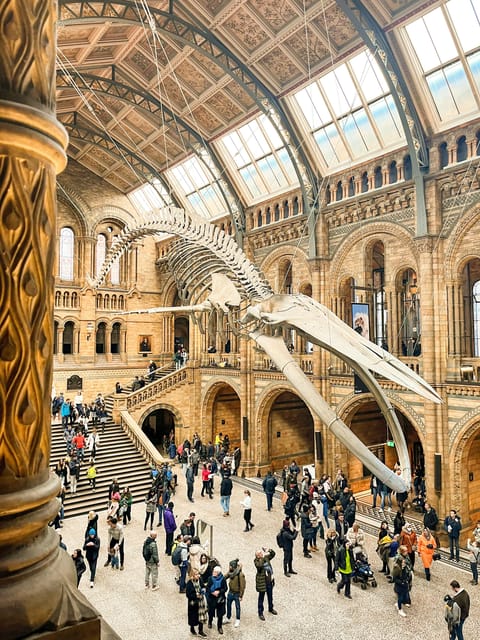
You meet outside the red telephone box opposite the museum’s Exhibition Road entrance. This is a useful landmark, but give yourself enough time to locate it before the start. A busy museum entrance is not the place to arrive at the last minute while trying to match faces and signs.
The experience includes an express security check, which should help you get inside without spending as much time waiting. Security rules still apply, and flash photography is not allowed. Keep your camera ready for non-flash photos, but do not assume every display can be photographed freely.
The museum is in South East England, in central London’s museum district. This tour does not include transport, meals, or any attraction outside the Natural History Museum, so plan your route to the meeting point separately.
More Natural History Museum Tours:
- London: Natural History Museum Entry Ticket and Guided Tour
★ 3.8 · 212 reviews - Natural History Museum London – Exclusive Guided Museum Tour
★ 5.0 · 153 reviews - London: Natural History Museum Guided Tour
★ 5.0 · 87 reviews
Sophie the Stegosaurus and the Dinosaur Story
Sophie the Stegosaurus is one of the clearest reasons to book this tour. You see the skeleton in a way that makes the animal’s size and shape easy to grasp. A stegosaurus can seem like a familiar dinosaur from books and films, but a full skeleton gives you a more useful sense of its body plan.
The guide can help connect the bones to the wider story of dinosaurs without leaving you to read every display panel. For a family, that focus is valuable. Children can begin with the animal they came to see, then move into questions about extinction, fossils, and how scientists reconstruct creatures from incomplete evidence.
The appeal is not limited to young visitors. Sophie is also a strong stop for adults who want to understand how a museum specimen works as scientific evidence. The exact amount of detail will depend on the guide and the questions your group asks.
This is also where the tour’s limits become clear. One verified booking described the information as basic and felt it offered too little for someone who already knows the fundamentals of dinosaurs and related subjects. If you have a serious paleontology background, you may want a more specialist experience.
Archaeopteryx and the Bird-Dinosaur Link
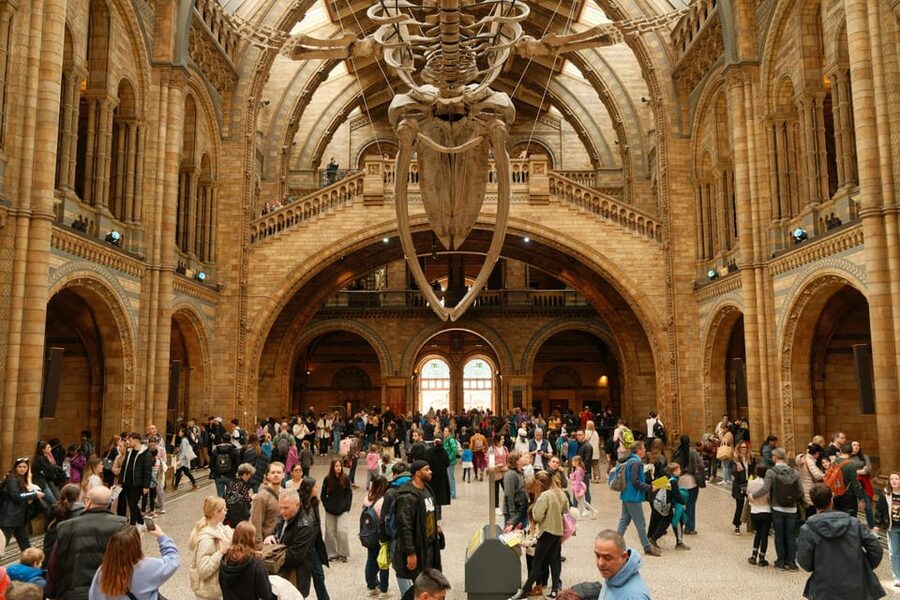
The Archaeopteryx fossil brings a different kind of interest. It is often presented as an important link in the story connecting birds and dinosaurs, making it one of the museum’s most scientifically significant fossils.
You are not just looking at an old piece of stone. You are looking at evidence used to think about how animal groups change over time. That makes this stop especially useful for anyone who enjoys the reasoning behind science, rather than only the visual impact of a large skeleton.
The display may be small compared with Sophie, so a guide is helpful. Without context, a rare fossil can be easy to overlook among larger objects. With an explanation, its importance becomes easier to appreciate.
The tour pairs the fossil with the long-extinct Dodo. Together, these objects create a simple route through extinction and scientific study. One represents a deep prehistoric past; the other is linked to a more recent loss that people can more readily picture.
A Giant Sequoia That Was Ancient Before It Fell
The cross-section of the Giant Sequoia is one of the tour’s best reminders that natural history is not only about fossils and extinct animals. The tree was already 1,300 years old when it was felled in the 19th century.
That number is hard to picture until you stand beside the wood and see the rings gathered across its trunk. The display gives you a physical sense of time that a date on a museum label rarely can. A dinosaur skeleton tells you about a vanished world; the sequoia makes age visible in front of you.
I particularly like this stop because it changes the pace. After bones and fossils, the tree offers something familiar in material but extraordinary in duration. It also helps you see the museum as a place about the full natural world, not simply a dinosaur attraction.
The main drawback is that the stop’s impact depends on your guide’s explanation and your own patience. If you want a route made entirely of dramatic animals and precious objects, the tree may feel quieter. Give it a moment, though, and its scale of time becomes one of the visit’s strongest ideas.
More Historical Tours:
- London Small Group Tour of Historical Pubs
★ 5.0 · 10,422 reviews - Soho Music & Historic Pubs Tour
★ 5.0 · 1,993 reviews - London: Historic Pubs of Central London Walking Tour
★ 4.9 · 1,065 reviews - London: Soho Music and Historic Pubs Walking Tour
★ 4.9 · 836 reviews
Pompeii Casts and the Human Cost of Vesuvius
The plaster casts of victims from Pompeii bring the tour into human history. They were made from the forms left behind after the eruption of Mount Vesuvius, and they offer a direct, unsettling look at the disaster’s victims.
This is a serious section of the visit. The casts are not simply archaeological curiosities. They remind you that volcanic eruptions affect real people, and they give physical shape to an event that can otherwise seem distant and textbook-like.
The material may be difficult for young children or anyone sensitive to representations of death. The tour does not present only cheerful museum highlights, so consider your group before booking. A guide can provide context, but the objects remain emotionally heavy.
This section also adds variety to the museum route. You move from extinct animals and ancient trees to a disaster that affected human communities. It gives the visit a broader purpose and helps connect geology with lived experience.
Darwin, Gemstones, and Rocks from Beyond Earth
The tour includes a first edition of Darwin’s On the Origin of Species. The book is important not because it is visually large, but because it represents a major shift in how people understood life and change over time.
Seeing an early edition brings the history of scientific ideas into the same visit as fossils. The connection is useful: you can look at the evidence displayed in the museum, then consider how scientists built explanations from that evidence. If you enjoy books, science, or the development of modern thought, this is a rewarding stop.
The route also includes fine gemstones and rock from the Moon and Mars. These objects provide a sharp change in scale. Gemstones show the beauty and variety produced by Earth’s geological processes, while lunar and Martian samples remind you that the museum’s story reaches beyond our planet.
The space-rock section is likely to be a highlight for children and adults alike, but do not expect a full astronomy tour. The information provided describes access to selected highlights, not an extended study of planetary science. The guide’s skill matters here, especially if you want more than a quick look.
How Much Value Do You Get for $93?
At $93 per person, this is a premium museum visit. The price is easiest to justify when you value structure, a live guide, and a private or small-group setting. You are paying to avoid planning your own route through a very large collection and to have someone explain why the selected objects matter.
The value is stronger for first-time visitors with only a few hours. You get a planned sequence that includes dinosaurs, extinction, trees, volcanoes, scientific books, gemstones, and space rocks. That is a lot of ground in one visit, and the guide can save you from spending your available time searching for each highlight.
The price is harder to defend if you are already comfortable navigating museums or reading scientific displays on your own. One booking described the tour as basic and expensive for someone with existing knowledge of earthquakes, volcanoes, gems, and dinosaurs. That is fair criticism to keep in mind.
Guide quality also affects the value. Sasha received praise for engaging an entire family, and Wesley was described as well informed and able to keep the visit moving without boredom. Those examples suggest that the personal element can make the experience much better, but the exact guide assigned to you may vary.
Who Will Enjoy This Tour Most?
I would recommend this experience most readily to:
- First-time visitors who want the museum’s main highlights without planning a route
- Families who need a clear pace and a guide who can connect different subjects
- Adults who like science but do not want a highly technical specialist tour
- Small groups that value personal attention and the chance to ask questions
- Visitors with only part of a day available for the Natural History Museum
You may want to skip it if you already know the museum well, prefer to read displays at your own pace, or have advanced knowledge of the subjects covered. The route is designed around major highlights, so it may not satisfy someone seeking obscure specimens or long technical discussions.
The tour is not suitable for wheelchair users, according to the activity information. If accessibility is essential for your visit, confirm the arrangement before paying.
Practical Tips for a Smoother Visit
Arrive early at the red telephone box opposite the Exhibition Road entrance. The meeting point is specific, and a little extra time will help you deal with London traffic, the museum’s size, and security.
Wear comfortable shoes. The experience lasts 2.5 hours overall, and the museum route includes several major displays. You will get more from the tour if you are ready to keep moving and listen while standing.
Do not use flash photography. If taking pictures matters to you, check your camera before the tour and keep the flash turned off.
Think about your group’s interests before booking. If your children love dinosaurs, Sophie and Archaeopteryx provide a strong opening. If adults in the group prefer books, geology, or human history, Darwin, the gemstones, Pompeii, and the space rocks broaden the appeal.
The activity offers free cancellation up to 24 hours in advance and allows you to reserve now and pay later. That gives you some flexibility when building a London schedule, especially if your plans are still changing.
Should You Book the Natural History Museum Tour?
Book it if you want a compact, guided introduction to the museum and would rather follow a thoughtful route than make your own way through 80 million specimens. Sophie the Stegosaurus, the Archaeopteryx fossil, the Giant Sequoia, Pompeii casts, Darwin’s book, and Moon and Mars rock make a varied program.
At $93, I would treat this as a convenience and interpretation purchase, not a bargain museum ticket. It is best for first-time visitors, families, and small groups who value a live English-speaking guide. If you already know the basics or prefer independent museum time, enter on your own and spend the admission savings elsewhere.
FAQ
How long does the Natural History Museum tour last?
The overall activity lasts 2.5 hours. The guided museum portion is described as two hours.
What does the tour cost?
The listed price is $93 per person.
Is the tour private or shared?
Private and small-group options are available.
What language is the tour conducted in?
The live tour guide speaks English.
Where is the meeting point?
Meet outside the red telephone box opposite the Exhibition Road entrance to the Natural History Museum.
Does the tour include museum entry?
Yes. The experience includes access to the museum’s main highlights with a tour guide.
Does the tour include an express security check?
Yes. The activity includes skip-the-line access through an express security check.
Can I take photographs during the tour?
Photography is allowed, but flash photography is not allowed.
Is the tour suitable for wheelchair users?
No. The activity is listed as not suitable for wheelchair users.
Can I cancel the booking?
Yes. You can cancel up to 24 hours in advance for a full refund. You can also reserve now and pay later.
More British Museum Tours
- Tower of London and Crown Jewels Exhibition Ticket
★ 4.5 · 6,677 reviews - London: Chelsea Football Club Stadium and Museum Tour
★ 4.8 · 4,576 reviews - Chelsea FC Stadium Tours and Museum
★ 5.0 · 1,908 reviews - London: British Museum Guided Tour
★ 4.3 · 1,182 reviews
Just added around London
- London: “Queen” Highlights Walking Tour★ 4.3 · 48 reviews
- Couple’s photo: Romantic photoshoot in London★ 4.8 · 22 reviews
- London: Private Tour with Locals – Highlights & Hidden Gems★ 5.0 · 8 reviews
- Luxury Private Tour in London with Lunch★ 5.0 · 7 reviews
- London 1- or 2-Hour Professional Photo Shoot★ 4.9 · 6 reviews
- London: Private Black Cab Night Tour with Hotel Pick Up★ 5.0 · 11 reviews
- London: Christmas Lights Tour – With Christmas Music★ 4.8 · 9 reviews
- London: Private Pub Tour★ 4.5 · 4 reviews
Natural History Museum Tours, compared.
Natural History Museum Entry Ticket and Guided Tour
Read our review →
Natural History Museum London – Exclusive Guided Museum Tour
Read our review →
Browse the lists this tour appears in