

Reviewed · BRITISH MUSEUM TOURS
Unveil the Rosetta Stone, Parthenon at British Museum
The Rosetta Stone, Parthenon Sculptures, Egyptian mummies, Sutton Hoo Helmet, and Winged Bulls from Khorsabad all appear in one compact museum tour. That is a lot of civilization in two hours, and a good guide helps you focus on what matters instead of wandering through the British Museum’s enormous galleries.
I like the clear route through major highlights and the chance to hear the story behind objects that can seem hard to understand on your own. I also like the lively guiding style associated with Joe, who is praised for keeping even a child interested. The main drawback is time: two hours gives you a strong introduction, not a complete visit to this huge museum.
Key points to know before booking
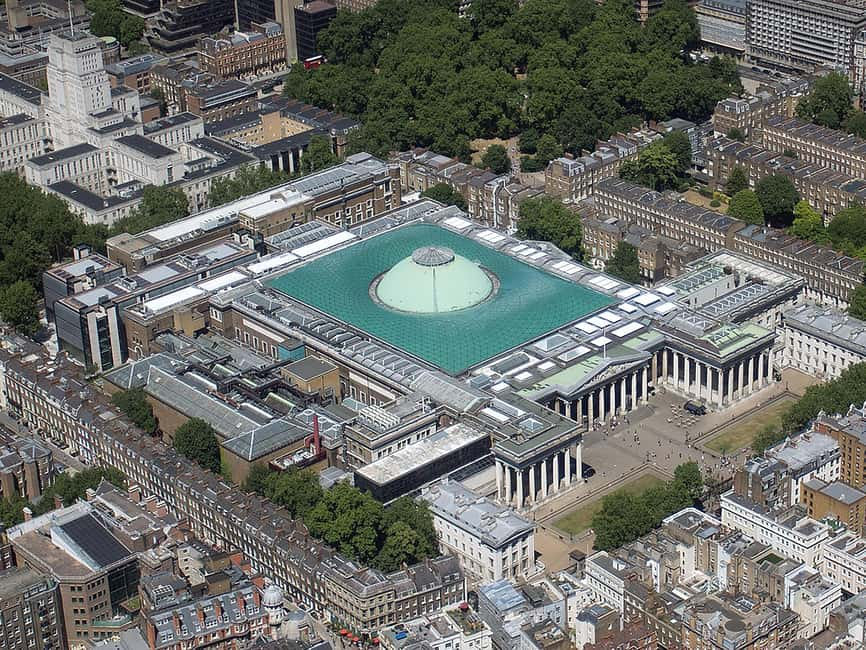
- Rosetta Stone first: See the famous object that helped scholars read Egyptian hieroglyphs.
- Parthenon Sculptures: Examine the Athenian marble carvings while learning about the ongoing cultural heritage debate.
- Ancient Egyptian galleries: Study mummies and burial customs with context from an English-speaking guide.
- Sutton Hoo Helmet: See one of early medieval England’s best-known archaeological treasures.
- Assyrian Winged Bulls: Stand before colossal guardians from the palace of Sargon II.
- Two-hour walking tour: Comfortable shoes matter, and the experience is not suitable for wheelchair users.
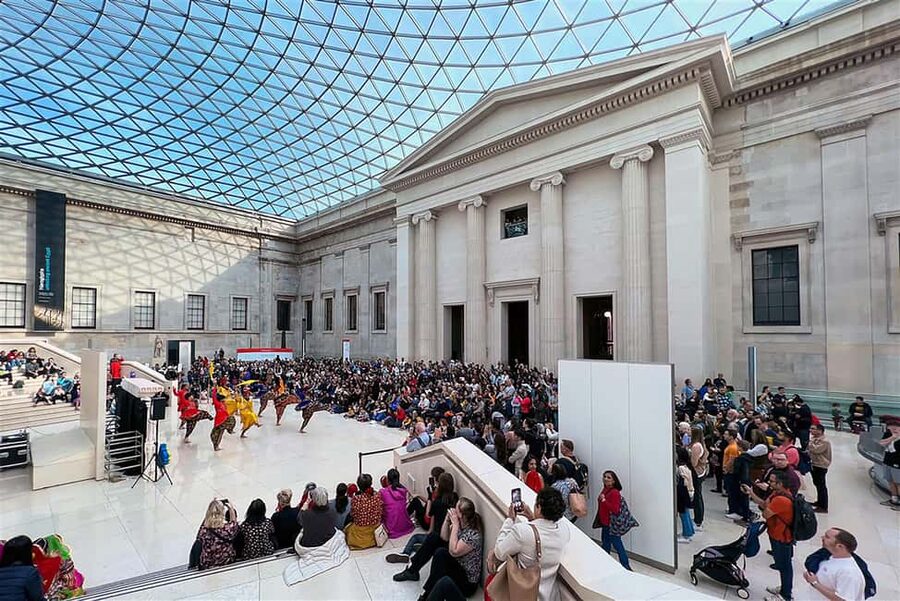
Starting beneath the British Museum’s glass roof
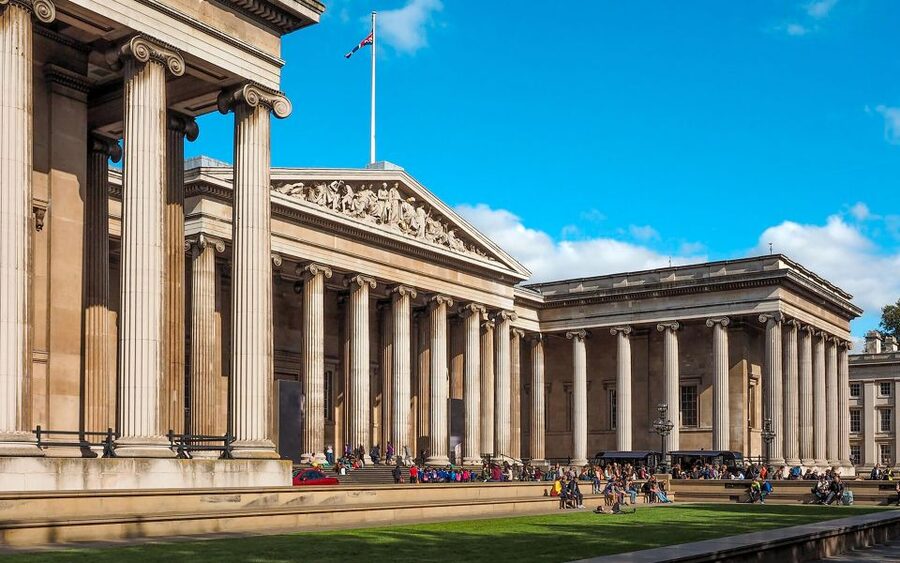
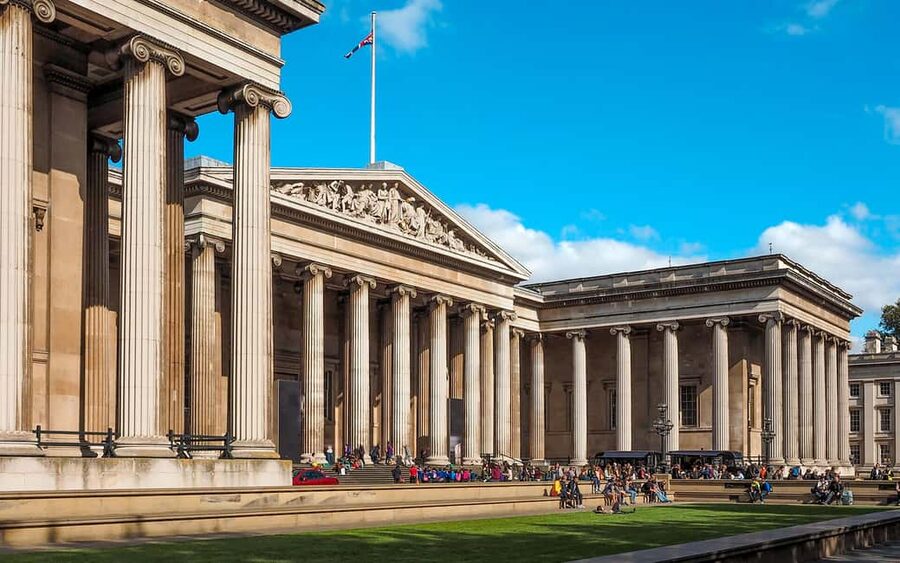
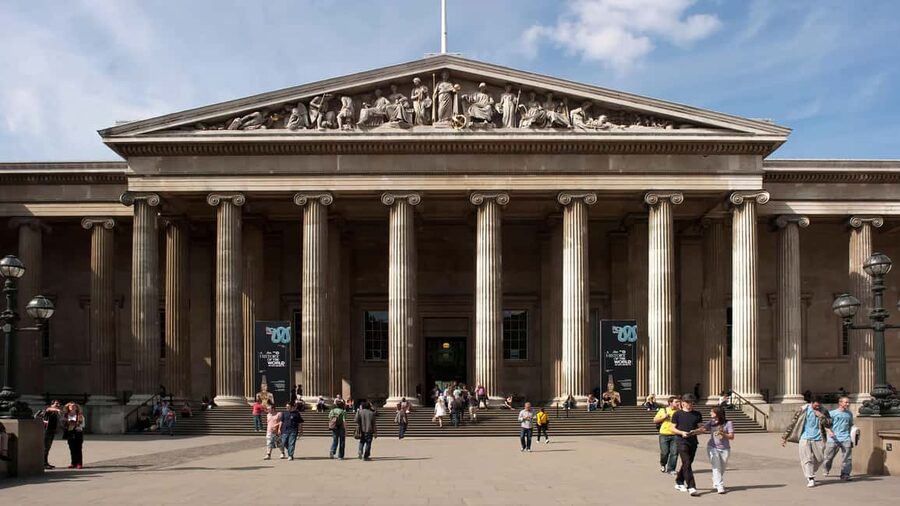
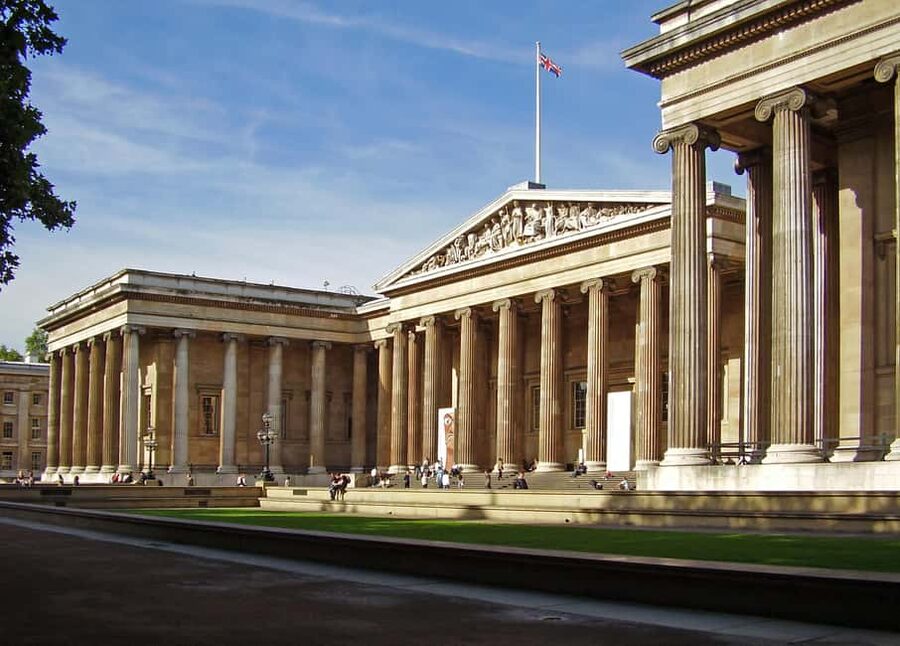
Your meeting point is on the stairs at the main entrance, after you pass through security. Arrive at least 15 minutes before your scheduled time. This is not a hotel pickup, so plan your route to the museum before you set out.
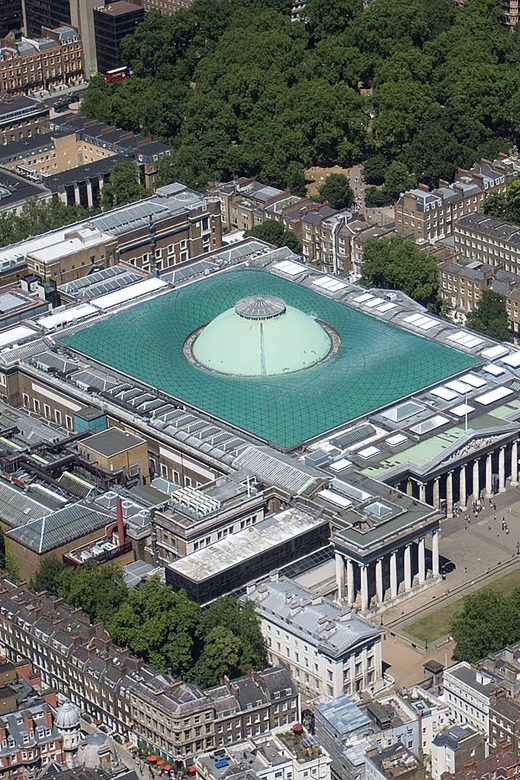
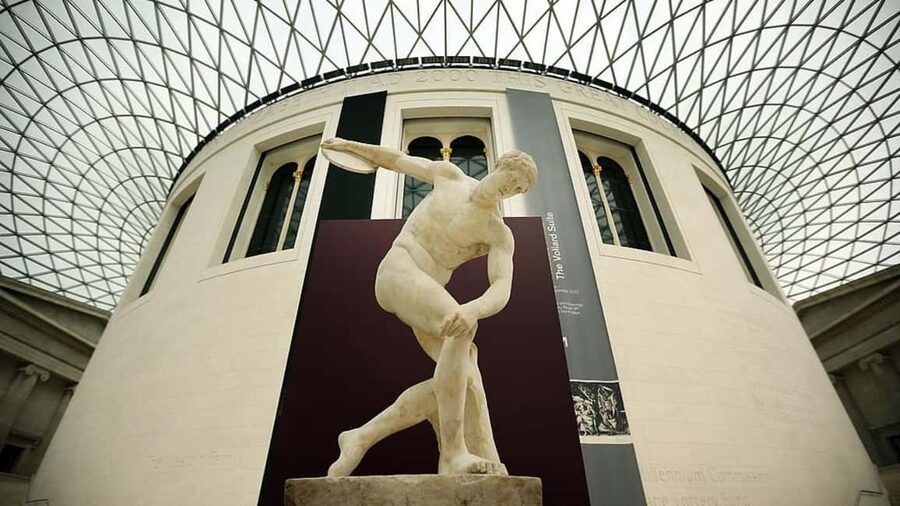
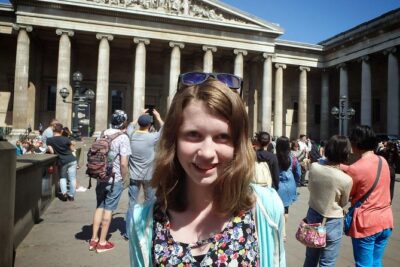
The first visual treat comes before the objects themselves. The Great Court is covered by a vast glass roof designed by Norman Foster, and daylight pours into the central space. It gives you a memorable sense of place before the tour moves into the galleries.
I like this beginning because it helps you get your bearings. The British Museum can feel sprawling and confusing, especially on a first visit. Starting in the Great Court gives you a clear meeting point and a dramatic introduction to the building.
The tour is shared rather than private. That usually means the guide must keep a steady pace for the group, so expect a focused route rather than long, individual stops at every object. If you want to spend half an hour with one display, you will probably need to return on your own after the tour.
More British Museum Tours:
- London: British Museum Guided Tour
★ 4.3 · 1,182 reviews - British Museum London Guided Tour Semi-Private 8ppl Max
★ 5.0 · 984 reviews - London: Tour of the British Museum
★ 4.1 · 678 reviews
The Rosetta Stone and the story of decipherment
The Rosetta Stone is the natural first major stop. Found in 1799, it carries the same decree in three forms of writing, including Egyptian hieroglyphs. Comparing the scripts helped scholars work out how to read a long-lost written language.
That makes the stone more than a famous slab behind glass. It represents a turning point in the study of ancient Egypt. A guide can explain why the inscriptions mattered and how the different versions helped researchers connect signs, sounds, and meaning.
You will likely find the Rosetta Stone surrounded by plenty of attention, so a guide is useful here. Instead of simply taking a photograph and moving on, you get a reason to care about the object. The strongest part of this stop is the explanation, not the size of the stone.
Because the museum is large, do not expect to return repeatedly during the same two-hour route. Take in the guide’s commentary, look closely at the writing, and keep your group in sight when the stop ends.
The Parthenon Sculptures and a difficult museum question
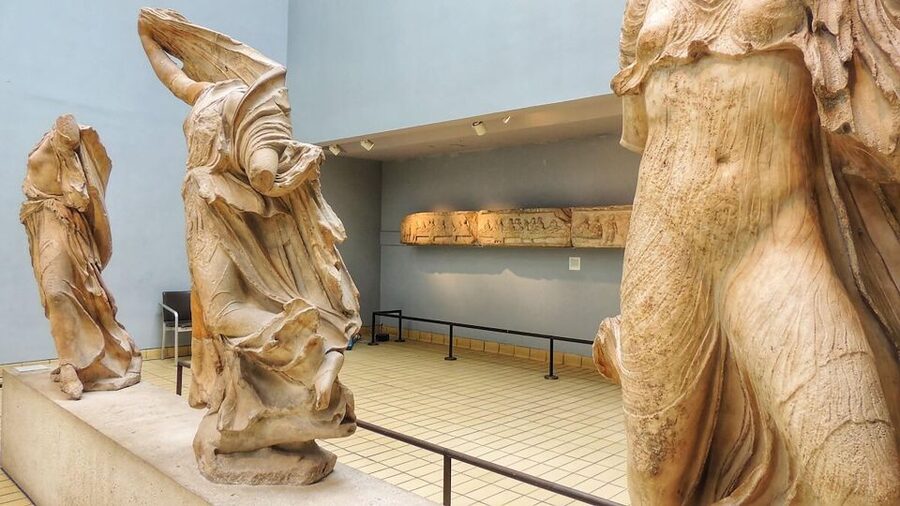
The next major focus is the Parthenon Sculptures, also called the Elgin Marbles. These marble carvings once formed part of the Parthenon in Athens and were brought to Britain by Lord Elgin, who served as British ambassador to the Ottoman Empire.
The sculptures are impressive on artistic grounds alone. You can study the carved figures, drapery, and movement at close range, while the guide explains how they belonged to a larger temple design. Seeing them in a museum also requires you to picture their original setting on the Acropolis.
This is where the tour becomes more than a parade of old objects. The sculptures remain at the center of a major dispute over cultural heritage and repatriation. A useful guide should give you the background without turning the stop into a shouting match, and the tour promises a balanced explanation of the issue.
I would give this section your full attention. The question is not simply who has the better display. It is also about how ancient works were acquired, what museums owe to their countries of origin, and how modern institutions should handle contested collections.
The drawback is that a short tour cannot settle the debate. You will receive an introduction to the main points, not a full legal and historical study. Still, that is enough to make your later visit to Athens, or your reading about the sculptures, more informed.
Egyptian mummies and ancient burial customs
The Ancient Egyptian galleries provide one of the tour’s most approachable sections. The mummies are striking, but the useful part is learning what they reveal about burial practices and beliefs.
A mummy can be easy to treat as a spectacle. With explanation, you begin to see the object as part of a larger system of preparation, ceremony, and ideas about death. The guide connects the preserved remains to the culture that created them, giving the display more meaning than a quick glance can offer.
This stop should suit families and first-time museum visitors particularly well. The subject is visual, but the story also has enough depth to hold an adult’s attention. The guide’s role matters here because the galleries contain far more material than you can absorb in one pass.
You may want to return to the Egyptian rooms after the guided tour if this becomes your favorite section. Two hours is not enough to examine every case, and the main route has several other civilizations to cover.
A different sort of day out in London altogether:
- From London: Harry Potter Warner Bros Studio Tour
★ 4.7 · 26,588 reviews - London: Westminster to Greenwich River Thames Cruise
★ 4.5 · 22,836 reviews - Magical London: Harry Potter Guided Walking Tour
★ 4.7 · 22,044 reviews - London: Madame Tussauds London
★ 4.6 · 20,915 reviews
Sutton Hoo and early medieval England
The tour then shifts from ancient Egypt to early medieval England with the treasures from Sutton Hoo. The site is linked to a seventh-century burial ship, and the famous helmet is the centerpiece.
The Sutton Hoo Helmet has a powerful presence, even though it is a very different kind of object from the Rosetta Stone or the Egyptian mummies. Its craftsmanship offers a glimpse into the status, skill, and beliefs connected with an early medieval burial.
This stop helps widen the story of the museum. You are not looking only at Egypt, Greece, and the Near East. You are also seeing material connected with England’s own early medieval past.
Pay attention to the shift in mood. The Egyptian displays encourage you to think about preservation and the afterlife. Sutton Hoo raises questions about elite burial, ceremony, and the people who made and used the objects. A guide can make that contrast clear in a way that labels alone may not.
For families, this may be one of the easiest objects to remember. The helmet has a strong visual identity, and an engaging guide can turn it into a story rather than just another display case. Joe is specifically praised for being upbeat and for keeping a son interested throughout the tour, which is useful if you are visiting with children.
Winged Bulls from Khorsabad
The final major highlight is the group of Winged Bulls from Khorsabad. These colossal figures once guarded the entrance to the palace of Assyrian king Sargon II.
Their scale changes your sense of the museum. After seeing smaller objects and carved marble panels, you come face to face with guardians made to impress and intimidate. The human head, animal body, wings, and imposing size communicate royal power before you know the details.
The guide explains the figures’ role and their connection to the Assyrian palace. That context matters because the statues were not placed as random decoration. They formed part of an entrance designed to announce the authority of the king and protect the palace.
This is a good final stop because it ends on a grand visual note. It also shows how the British Museum’s collection moves across regions and periods. You might leave remembering the scale of the bulls even if you began the tour mainly for the Rosetta Stone.
What the two-hour format really gives you
Two hours is a sensible length for a first look at the museum’s headline objects. You get a planned route, an English-speaking guide, and enough time to encounter several major cultures without spending an entire day on your feet.
The tradeoff is speed. The British Museum is huge, and this tour cannot cover every gallery or give every object equal attention. Think of it as a guided orientation with selected highlights, not a complete museum visit.
I recommend arriving rested and wearing comfortable shoes. The tour is on foot, and the information provided warns you to expect a lot of walking. If you tire easily, the pace and size of the building are important factors to consider before booking.
The activity is not suitable for wheelchair users. That is a significant practical limitation, so check this carefully when making plans.
The experience ends back at the British Museum meeting point. There is no food or drink included, and there is no hotel pickup. You will need to handle your own refreshments and transport before or after the visit.
The guide makes the difference
A museum tour succeeds or fails on explanation. The objects are already impressive, but a guide gives you the links between them: writing and decipherment, temple sculpture and repatriation, burial customs, early medieval England, and Assyrian royal power.
The strongest praise for this experience centers on the guides’ delivery. Joe is described as upbeat and highly informed, and his style helped keep a child engaged. Another assessment describes the guide as entertaining and able to hold a son’s interest.
That detail matters if you are booking for a family. Children may not stay focused through a long museum visit without a clear story and a lively voice. A shared tour cannot adjust perfectly to every age, but an energetic guide can make a major difference.
The tour is offered in English. If you want a quiet, self-directed visit, you may prefer to explore alone. If you want help choosing the essential rooms and understanding why the objects matter, the guide is the main reason to pay for this experience.
Is the $70.35 price good value?
At $70.35 per person, this is not the cheapest way to enter the British Museum. The museum itself is one of London’s major cultural institutions, and you are paying for the guided structure, commentary, and selected route rather than simply access to rooms.
The value depends on how you use your time. If you have only a short window in London, the tour can make the museum feel manageable. You are less likely to lose time deciding which floor or gallery to visit, and you receive background on objects that can be difficult to understand from labels alone.
The price is harder to justify if you already know the collection well or prefer to read at your own pace. You may still want to visit the Parthenon Sculptures, mummies, or Sutton Hoo independently and spend longer with your personal favorites.
Free cancellation is available up to 24 hours before the scheduled time, and you can reserve now and pay later. Be careful with timing, though. If your chosen slot is unavailable, you may be moved to another time on the same day. Same-day or next-day bookings can also be shifted to the following day if there are no places left.
The advertised skip-the-line arrangement means a priority queue shared with other customers who chose that option. It does not mean walking straight through every security or entrance procedure, so arrive early and allow time for checks.
Who should book this British Museum tour?
I would recommend this tour to a first-time visitor who wants the major highlights without planning a museum route from scratch. It also suits families who need a guide to keep the visit moving and make the displays easier to follow.
History fans will appreciate the range. In a single morning or afternoon, you move from Egyptian writing to classical Greek sculpture, ancient burial customs, early medieval England, and Assyrian palace guardians.
The tour may not suit you if you want a slow art-focused visit, a private guide, or a deep look at one civilization. It is also a poor fit if you need wheelchair access or dislike walking through large museums.
Bring a passport or ID card as requested, wear comfortable shoes, and arrive at the main entrance stairs 15 minutes early. Those simple steps will make the experience less rushed.
Should you book it?
Book this tour if you want a lively, guided introduction to the British Museum’s most famous objects and you value context over wandering. The combination of the Rosetta Stone, Parthenon Sculptures, mummies, Sutton Hoo Helmet, and Winged Bulls gives you an unusually broad two-hour snapshot.
Skip it if you already know the museum well, need a private pace, or want to spend most of your visit in one gallery. For everyone else, the $70.35 cost can be worthwhile when your London schedule is tight and you want a clear route led by an engaging English-speaking guide.
FAQ
How long does the British Museum tour last?
The tour lasts two hours. Starting times vary, so check availability when booking.
Where do I meet the guide?
Meet the guide on the stairs at the British Museum’s main entrance after completing security checks. Arrive at least 15 minutes before your scheduled time.
Which objects are included in the tour?
The route includes the Rosetta Stone, Parthenon Sculptures, Egyptian mummies, Sutton Hoo Helmet, and Winged Bulls from Khorsabad.
Is the tour offered in English?
Yes. The activity includes a live English-speaking guide.
Is hotel pickup included?
No. You must make your own way to the British Museum. Food and drinks are also not included.
Can I cancel the booking?
Yes. You can cancel up to 24 hours in advance for a full refund. You can also reserve now and pay later.
Just added around London
- Up at The O2:Twilight Climb with Guided Tour with Panoramic Views★ 5.0 · 50 reviews
- Private Chauffeur-London Heathrow from/to Southampton Cruise Port★ 5.0 · 9 reviews
- Kensington Palace VIP Garden Tour with Royal High Tea★ 4.5 · 71 reviews
- Secrets of the London Underground Small Group Walking Tour★ 4.5 · 38 reviews
- Urban Canvas: Exploring Shoreditch’s Vibrant Street Art★ 5.0 · 36 reviews
- Up at The O2: Sunset Climb with Guided Tour with Panoramic Views★ 5.0 · 110 reviews
- Ultimate introduction to photography in Central London★ 5.0 · 19 reviews
- Full-Day Self-Guided Paris Tour from London by Eurostar with Seine River Cruise★ 3.5 · 22 reviews
British Museum Tours, compared.
British Museum London Guided Tour Semi-Private 8ppl Max
Read our review →
British Museum Audio Tour & Priority Entrance Ticket
Read our review →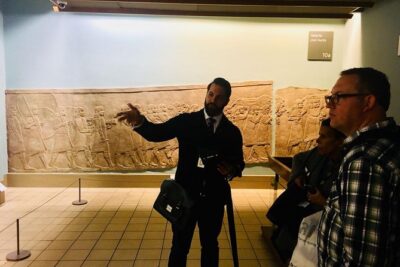
The British Museum London – Exclusive Guided Museum Tour
Read our review →
Private Guided Tour of the British Museum – Tickets Included
Read our review →Browse the lists this tour appears in