
Reviewed · BRITISH MUSEUM TOURS
Private Highlights Tour of the British Museum
The best thing about this private British Museum tour is its flexibility. Your guide starts by asking what you care about, then builds a path through objects from Egypt, Assyria, Britain, the Americas, and beyond. You get the famous pieces, but also the strange ones, including the FeeJee Mermaid and an Aztec double-headed serpent.
I like the personal focus and the guide’s willingness to tackle difficult subjects. I also like that a private group of up to 10 can move at a sensible pace, with room for teenagers, older relatives, and serious history fans. One consideration is the price: at $468.78 per group, it makes the most sense when several people share the cost.
Key points
- Your interests shape the route: Tell the guide which periods, cultures, or galleries matter most before you begin.
- Three hours covers major highlights: Expect the Rosetta Stone, Parthenon sculptures, Lewis Chessmen, Sutton Hoo, Egyptian mummies, and more.
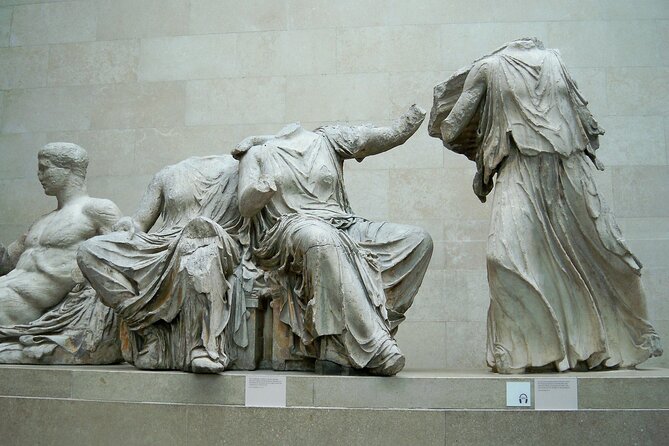
- Hard questions are part of the tour: The guide discusses controversy around objects such as the Parthenon sculptures rather than skating past it.
- Private groups get a calmer visit: Your party alone takes part, with a maximum of 10 people.
- The guide brings objects to life: Jessica has worked especially well with mixed-age groups, including teenagers and a family of 10.
- Entry is included: The guide meets you on Montague Place and finishes inside the British Museum.
A private route through the British Museum
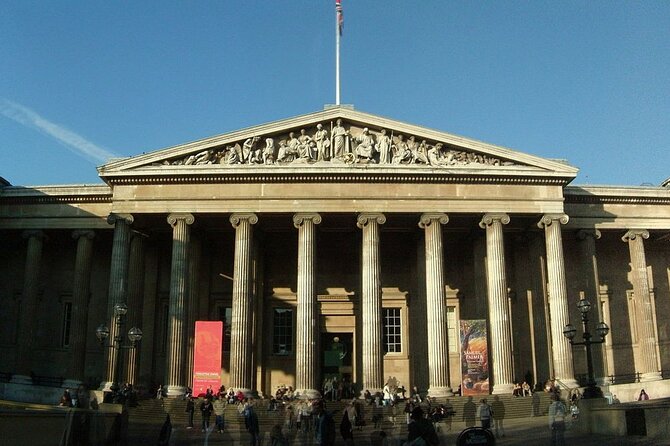
The British Museum can feel like a small city of galleries. Its collection crosses continents and thousands of years, so a three-hour visit needs a plan. This tour gives you one without locking you into a fixed script.
At the start, your guide asks what you want from the museum. That simple question matters. You might be fascinated by ancient Egypt, want to understand Britain under Roman rule, or prefer objects with strange stories and moral complications. The route can respond to that interest.
You will still see the major sights. The difference is that you are not left to find them alone, read a label, and then guess which corridor comes next. Your guide connects the objects and explains why each one matters.
The private format is especially useful inside a museum this large. You do not have to keep pace with a mixed public group or wait while a stranger asks a long question. You can ask for more detail, change the balance of the tour, or spend a little longer with an object that catches your attention.
More British Museum Tours:
- London: British Museum Guided Tour
★ 4.3 · 1,182 reviews - British Museum London Guided Tour Semi-Private 8ppl Max
★ 5.0 · 984 reviews - London: Tour of the British Museum
★ 4.1 · 678 reviews
Meeting at Montague Place
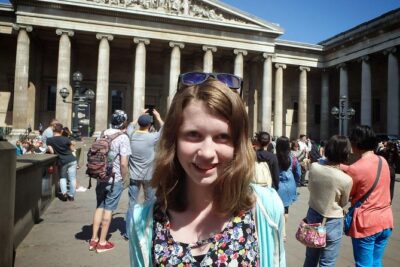
The tour begins at Montague Place, outside the museum. You then enter with your guide and finish inside the British Museum on Great Russell Street.
The experience includes free museum entry through a lesser-known entrance. That can make the start less awkward, particularly if you are unfamiliar with the surrounding streets and are trying to find the correct meeting point. Your confirmation arrives at booking, so check the exact meeting details before setting off.
The museum is near public transportation, and most people can take part. Service animals are allowed. The activity is private, so only your group joins the guide.
There is no need to plan a separate museum admission purchase for this tour. The admission ticket is listed as free because entry is included as part of the guided experience. You should still allow a little time to reach Montague Place, since a late arrival can cut into a three-hour visit.
The Rosetta Stone and the problem of first impressions
The Rosetta Stone is an obvious first stop for many visitors, but it deserves more than a quick photograph. It helped scholars read Egyptian hieroglyphs by presenting the same decree in three scripts, including Greek and two forms of Egyptian writing.
Your guide can use it to show how one object can be both a breakthrough in scholarship and part of a larger story about war, collecting, and ownership. That balance is one of the strongest features of this experience. You are not asked to choose between admiring the object and questioning how it reached London.
The stone can attract plenty of attention, so a guide is useful here. Instead of treating it as a trophy to tick off, you get a clear explanation of what you are looking at and why the object changed the study of ancient Egypt.
The Parthenon sculptures and difficult museum questions
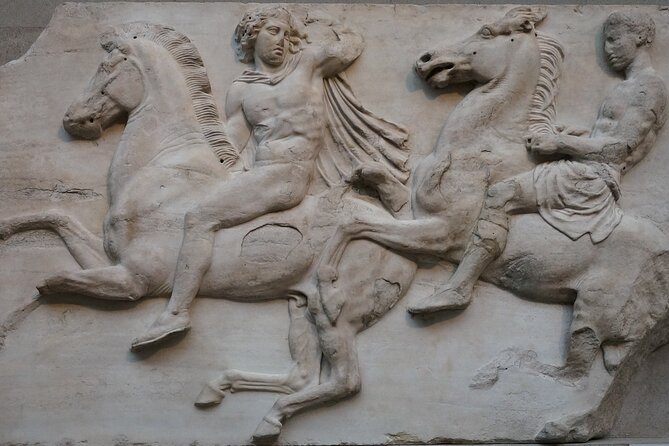
The Parthenon sculptures, also called the Elgin Marbles, bring another major issue into the tour. They are beautiful works from ancient Athens, but their removal from the Parthenon and their present location remain contested.
This is exactly the kind of subject the guide does not avoid. You can expect discussion of the sculptures themselves, along with the wider questions: Who should care for ancient objects? What counts as legal ownership? How should museums handle material taken during periods of imperial power?
You do not need to arrive with a firm opinion. The value is in seeing the pieces in person while gaining enough context to understand why their display remains controversial. For anyone interested in museums, ethics, or British and Greek cultural relations, this may be one of the most useful parts of the visit.
More London Sightseeing and Highlights Tours:
- London: London by Night Sightseeing Open-Top Bus Tour
★ 4.5 · 5,516 reviews - London: Tootbus Must-See Hop-On Hop-Off Bus Tour with Cruise
★ 4.0 · 3,653 reviews - London: River Thames Hop-On Hop-Off Sightseeing Cruise
★ 4.4 · 3,112 reviews - Westminster to Greenwich Sightseeing Thames Cruise in London
★ 4.5 · 2,969 reviews
British stories in the Lewis Chessmen and Sutton Hoo
The Lewis Chessmen offer a lighter, more human encounter with the past. These small medieval figures are famous for their expressive faces and distinctive forms. They make an excellent stop for families because the objects are easy to understand at first glance, yet they invite questions about play, trade, craftsmanship, and daily life.
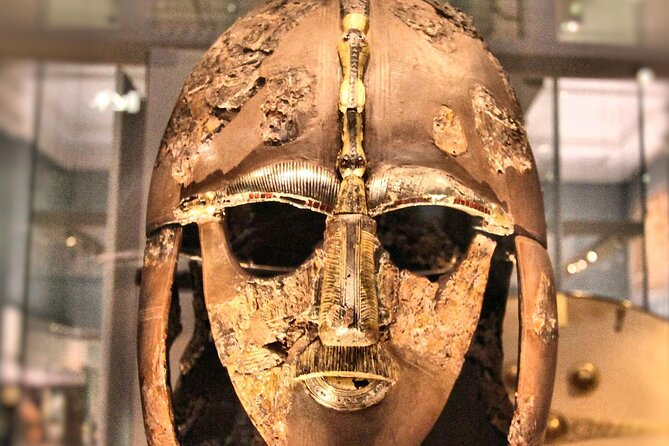
Sutton Hoo shifts the mood. The burial finds reveal the scale and skill of early medieval society in Britain. You may recognize the famous helmet, but the wider collection matters just as much. These objects challenge the old idea that Britain’s early medieval period was only a rough interval between the Roman era and the Middle Ages.
I like this part of the route because it keeps the British material connected to the museum’s global collection. You are not seeing British history in isolation. The guide can show how trade, belief, power, and craftsmanship linked communities across Europe and farther away.
Roman Britain through the Vindolanda Tablets
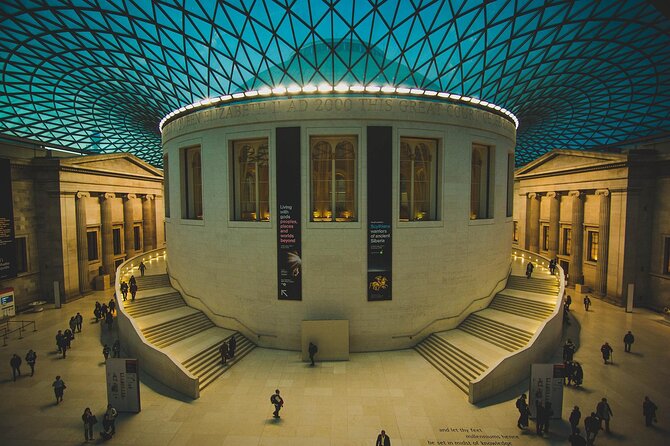
The Vindolanda Tablets provide a close-up view of life on the edge of the Roman Empire. These written records are valuable because they deal with ordinary concerns as well as official matters. They help make Roman Britain feel less like a list of emperors and battles and more like a place where people wrote letters, arranged supplies, and managed daily routines.
The tablets can be hard to appreciate without explanation. Their importance is not always obvious from a quick look at the objects themselves. A guide gives you the needed setting and shows why small written records can tell a larger story than a grand monument.
This is a good stop for you if you enjoy social history. It adds a human scale to the tour and balances the museum’s most famous monumental objects.
The Standard of Ur and the reach of ancient Mesopotamia
The Standard of Ur is one of the museum’s most visually striking objects. Its decorated panels show scenes of warfare, ceremony, and feasting, offering clues about status and power in ancient Mesopotamia.
The object also works well in a guided setting because its meaning is not self-explanatory. Your guide can help you read the scenes and consider what the arrangement says about society. Look closely at the difference between the upper and lower levels. The images were designed to communicate hierarchy.
A stop here broadens the tour beyond the better-known Egyptian and Greek material. If you want to understand how cities, rulers, armies, and ceremony developed in the ancient Near East, this is an important part of the museum.
Mummies, Ramesses II, and ancient Egypt
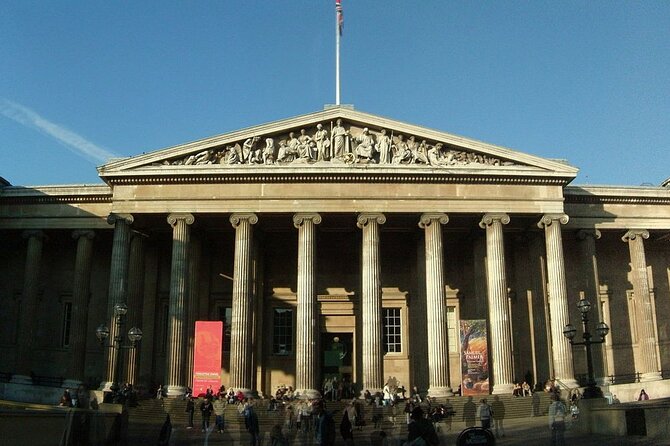
The Egyptian galleries provide several of the museum’s most popular sights. You may see mummies, monumental sculpture, and objects connected with burial customs and religious belief.
Ramesses II brings royal power into view. His image is large, formal, and carefully designed to last. The mummies bring you closer to the individual human story, though they also raise questions about how modern museums display the dead.
A good guide helps you move beyond the familiar image of Egypt as pyramids and pharaohs. You can look at the techniques used to preserve bodies, the beliefs behind burial, and the way museum displays shape your understanding of ancient people.
Families may appreciate the range here. Younger visitors can focus on the visual details, while adults can ask more difficult questions about archaeology, excavation, and the treatment of human remains.
Objects from the Americas and the Pacific
The Aztec double-headed serpent is a compact but powerful object. Its form and materials draw you in quickly, but the real interest lies in the beliefs and rituals behind it. The guide can help you place it within the culture that made and used it rather than treating it as an exotic curiosity.
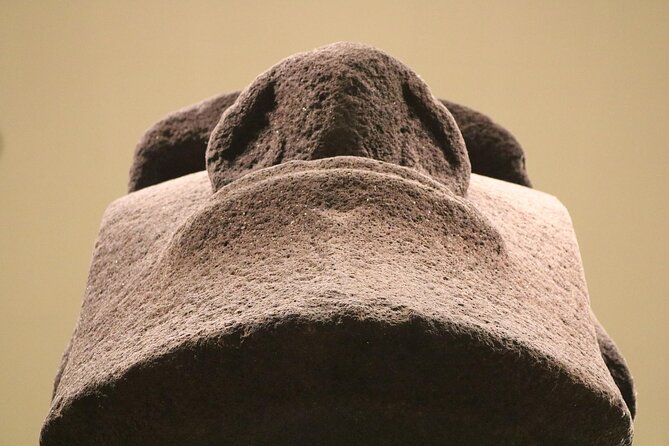
Hoa Hakananai’a, a monumental stone figure from Rapa Nui, raises another set of questions. It is visually commanding, but its presence in London connects the museum to debates about removal, cultural ownership, and the rights of communities whose heritage is held far away.
These objects show why the guide’s direct approach matters. The museum contains remarkable things, but the old habit of presenting them simply as treasures from distant places can leave out too much. A thoughtful explanation gives you a fuller view of both the objects and the circumstances around their arrival.
The Portland Vase, the Ife Head, and careful looking
The Portland Vase rewards close attention. Its delicate decoration and craftsmanship can be easy to overlook if you are racing between the larger galleries. The guide can slow you down and point out why this small vessel has mattered to artists, collectors, and historians.
The Ife Head offers a different lesson. Its realism challenges assumptions about African art that were common in older European accounts. You can consider the skill of the artist and the cultural setting without forcing the object into a narrow European comparison.
These stops show the benefit of a customized tour. You get help noticing objects that might otherwise lose out to the museum’s famous headline pieces. A private guide can also adjust the level of detail, keeping the explanation clear for first-time museum visitors while offering more depth to people who already know the basics.
Assyrian guards and the museum’s stranger corners
The Assyrian guards are among the museum’s most imposing works. Their scale and carved detail make them memorable, but they also reveal how rulers used architecture and images to project authority.
Then there is the FeeJee Mermaid, a very different kind of object. It is strange, macabre, and entertaining, and it gives the tour a welcome change of tone. The museum is not only a place for polished masterpieces. It also contains curiosities that show how people have created, collected, displayed, and believed in unusual things.
I like the contrast. After serious discussions about empire, religion, and political power, a peculiar object can reset the pace. The guide’s job is not to make every stop solemn. A little humor helps you stay alert during a long museum visit.
How the three-hour pace works
Three hours is enough to see many major objects, but it is not enough to cover every gallery properly. That limitation is worth accepting from the start. The point is not to leave knowing the entire museum. The point is to finish with a clear sense of its best-known works and a few less obvious objects that match your interests.
The custom approach helps the time feel purposeful. You can ask for more ancient history, more British material, more controversial objects, or more unusual items. If you have a specific gallery in mind, contact the provider so the guide can prepare a more focused route.
The pace should suit most adults and older children, but the museum’s size can still be tiring. Wear comfortable shoes and avoid planning another demanding activity immediately afterward. You will be moving through galleries for most of the three hours.
Guide style and family fit
The guide is described as a professional with advanced degrees in Cultural Heritage and Museum Studies. That background matters most when the conversation moves beyond dates and labels. You get a guide prepared to explain how museums collect, interpret, and display objects.
Jessica has led a particularly strong family tour, keeping a group of 10 engaged, including teenagers. That detail is useful if your party includes several ages. A private format lets the guide explain a difficult topic in plain terms, then add more detail for adults who want it.
The guide also brings a balanced tone to controversial material. You should expect direct discussion rather than a polished version of history that avoids uncomfortable facts. That makes this a better fit for curious visitors than for anyone wanting only a quick parade of famous objects.
Is $468.78 good value?
The listed price is $468.78 for a private group of up to 10. That is a serious cost for one museum visit, but the calculation changes when you divide it among a full group. At 10 people, the cost is about $47 per person. A smaller group will pay more per person.
You are paying for more than entry. The price covers a three-hour private guide, a route shaped around your interests, and the ability to ask questions without competing with a large public group. It also includes museum admission through a less familiar entrance.
For a couple, the cost may be difficult to justify unless the British Museum is a major priority. For a family reunion, a group of friends, or a party with several history fans, the value is stronger. The experience is also useful if you have only one museum visit in London and want help using your time well.
Who should book this British Museum tour?
I would recommend it most strongly to first-time visitors who feel overwhelmed by the museum’s size, history fans who want context, and families who need a guide able to hold different ages together.
It also suits London residents. You do not need to be a first-time tourist to benefit from a planned route and a guide who can connect familiar objects to less familiar stories.
This is less suitable if you want to wander alone, spend an entire afternoon in one gallery, or move at a very slow pace. Three hours gives you a strong overview, not unlimited time for close study.
The tour is offered in English, and the activity is private. Confirmation is provided at booking. You can cancel for a full refund up to 24 hours before the start time, but changes or cancellations inside that window are not accepted.
Should you book it?
Book this tour if you want the British Museum to feel understandable rather than enormous. The best reasons are the private group, the flexible route, and the guide’s readiness to discuss difficult subjects alongside famous masterpieces.
I would choose it for a group of several people, especially one with teenagers or mixed interests. I would skip it if your main goal is a cheap museum entry or an unhurried solo visit. At its best, this is a focused introduction to the museum that leaves you with a useful map for returning on your own.
FAQ
How long does the private British Museum tour last?
The tour lasts approximately three hours.
How much does the tour cost?
The price is $468.78 per group, with up to 10 people included.
Is museum admission included?
Yes. Free entry to the British Museum through a lesser-known entrance is included with the guided experience.
Where does the tour begin?
The tour begins at Montague Place in London.
Where does the tour finish?
The tour finishes inside the British Museum on Great Russell Street.
What language is the tour offered in?
The tour is offered in English.
Can the tour be customized?
Yes. Your guide asks about your interests at the beginning, and you can contact the provider about a specific topic or gallery for a more tailored route.
Just added around London
- Kensington Palace VIP Garden Tour with Royal High Tea★ 4.5 · 71 reviews
- Up at The O2:Twilight Climb with Guided Tour with Panoramic Views★ 5.0 · 50 reviews
- Private Chauffeur-London Heathrow from/to Southampton Cruise Port★ 5.0 · 9 reviews
- Up at The O2: Sunset Climb with Guided Tour with Panoramic Views★ 5.0 · 110 reviews
- Secrets of the London Underground Small Group Walking Tour★ 4.5 · 38 reviews
- Urban Canvas: Exploring Shoreditch’s Vibrant Street Art★ 5.0 · 36 reviews
- Ultimate introduction to photography in Central London★ 5.0 · 19 reviews
- Full-Day Self-Guided Paris Tour from London by Eurostar with Seine River Cruise★ 3.5 · 22 reviews
British Museum Tours, compared.
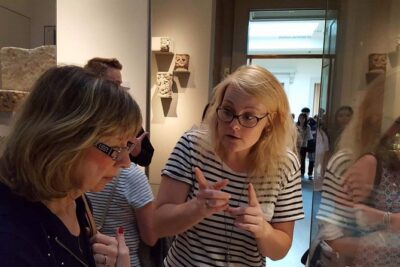
British Museum London Guided Tour Semi-Private 8ppl Max
Read our review →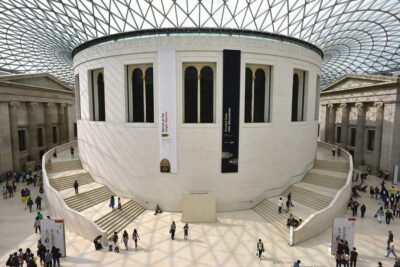
British Museum Audio Tour & Priority Entrance Ticket
Read our review →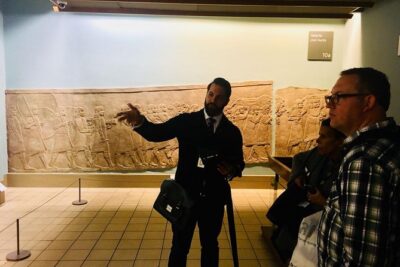
The British Museum London – Exclusive Guided Museum Tour
Read our review →
Private Guided Tour of the British Museum – Tickets Included
Read our review →Browse the lists this tour appears in