
Reviewed · BRITISH MUSEUM TOURS
Private Guided Tour of the British Museum
The best reason to book this private British Museum tour is simple: the museum is enormous, and a good guide gives you a clear path through it. Anthony Matthews, a retired archaeologist and Blue Badge Guide, focuses on major objects while explaining how archaeologists read, date, excavate, and interpret them. The Rosetta Stone, Egyptian mummies, Roman armor, Greek sculpture, and gold jewelry become connected pieces of a story instead of a parade of glass cases.
I like the private format because you can shape the visit around your group, and I like the guide’s reported skill with both adults and children. Anthony has been praised for his humor, his ability to translate ancient writing, and his knack for keeping teenagers involved. The main consideration is time: two to two and a half hours passes quickly in a museum this large, so this tour gives you highlights rather than a complete survey.
Key points to know
- A private group of up to six: You share the guide only with your own party, making questions and changes of focus easy.
- Anthony Matthews brings an archaeologist’s eye: His background helps explain not just what objects are, but how they were found, read, and understood.
- The route covers major ancient collections: Expect the Rosetta Stone, Tutankamun, Egyptian funerary objects, Greek sculpture, Roman material, jewelry, and more.
- Morning timing can help: Anthony has met groups early and positioned them near the front of the line, which can mean a calmer start.
- Strong for families: The tour has worked well for children and teenagers, especially those interested in Egypt, Greece, or Rome.
- The price works best for a full group: At $344.49 for up to six people, the per-person cost drops sharply when you fill the group.
Why a private guide helps at the British Museum
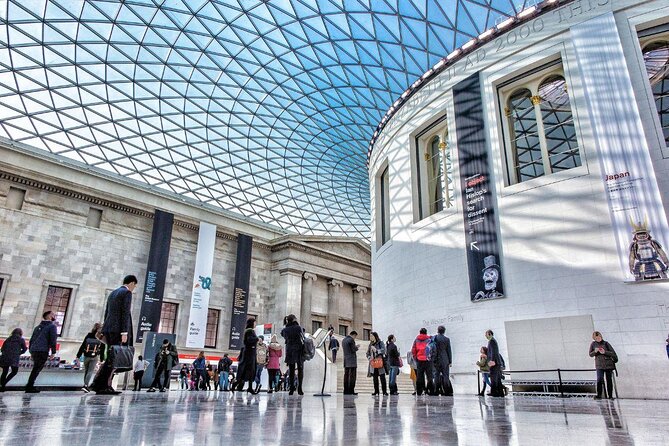
The British Museum is one of those places where enthusiasm alone is not enough. You can walk in, admire the Great Court, and then lose an hour trying to decide which gallery to enter. The collection covers thousands of years and several continents, so even a well-planned visit can feel scattered.
A private guide gives you a route and a reason for each stop. Instead of reading a short label and moving on, you can ask why an object mattered, how it was made, or what evidence supports the story being told. That extra layer is especially useful at a museum where the objects are famous but their context is not always obvious.
This tour is also more flexible than a standard group walk. You can tell Anthony that your family wants ancient Egypt, that your teenagers prefer Greece and Rome, or that your short visit requires a fast tour of the essential objects. The experience is not built around a fixed list for strangers with different interests.
There is a practical benefit, too. A museum guide who knows the floor plan can cut down on backtracking. Several families used the time to see the major pieces without feeling lost, then continued on their own after the guided portion.
More British Museum Tours:
- London: British Museum Guided Tour
★ 4.3 · 1,182 reviews - British Museum London Guided Tour Semi-Private 8ppl Max
★ 5.0 · 984 reviews - London: Tour of the British Museum
★ 4.1 · 678 reviews
Meeting Anthony Matthews at the museum
The meeting information gives London as the starting point, with the activity ending back at the meeting point. The exact meeting instructions are supplied after booking, and confirmation is sent at the time you reserve.
Anthony is the guide most closely associated with this experience. The details provided describe him as a retired archaeologist and Blue Badge Guide, with further academic work in progress. That background matters because his approach goes beyond dates and royal names. He can discuss excavation, inscriptions, materials, and the process of turning physical evidence into a historical explanation.
His style also appears well suited to mixed-age groups. He uses stories, questions, humor, and small details to keep the pace moving. Children are not expected to absorb a lecture, and adults can ask more technical questions when an object catches their attention.
If you have a strong interest, tell him before the tour begins. The more precise you are, the more useful the private format becomes. Egyptology, Greek mythology, Roman technology, ancient languages, or the museum’s collecting practices can each shape the route.
The Rosetta Stone and the Egyptian galleries
The Rosetta Stone is the natural opening point for many first visits. It is not simply a famous slab of dark stone. Its importance comes from the repeated text in different scripts, which helped scholars work toward reading Egyptian hieroglyphs.
Anthony explains how the translation process worked and can read some ancient writing for you. That changes the experience from seeing a celebrated object to understanding why it changed the study of ancient Egypt. You may also see inscriptions on walls, sarcophagi, or other objects interpreted in the same way.
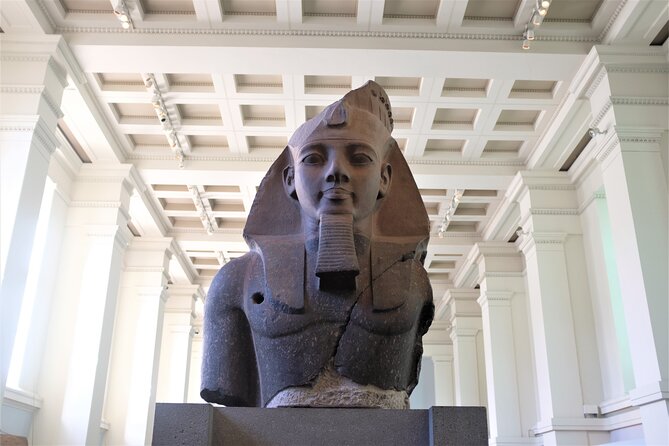
The Egyptian portion of the tour can include a statue of Tutankamun, with attention to his short life and death. Tutankamun is often reduced to his burial mask, but the broader story of his reign gives the collection more meaning. A guide can help you place his statue and burial objects within the political and religious world of ancient Egypt.
Expect attention to funerary material as well. Sarcophagus decoration, canopic jars, and the Book of the Dead reveal how Egyptians prepared for death and imagined the next life. These displays can be visually striking, but they make more sense when you understand the purpose of each object and the beliefs behind the images.
This part of the visit is a good fit for families because the objects offer clear questions. Why were organs placed in canopic jars? What did the symbols on a coffin mean? Why were words written beside a body? A skilled guide can turn those questions into a running story rather than a series of unrelated facts.
The Egyptian galleries can also take up the entire visit if you let them. That is one reason to state your priorities early. If Egypt is your main interest, you may want to give it the largest share of the two-hour or two-and-a-half-hour session.
Greek sculpture, Amazons, and ancient myths
The Greek material offers a different experience. Here the emphasis may shift from writing and burial to the human form, mythology, conflict, and artistic technique.
You can expect Greek statuary and stories of Amazons fighting. These works reward close looking. Body position, clothing, weapons, and damaged details all help explain how the scene was meant to be read. Anthony’s use of questions and anecdotes can make sculpture less remote, especially for teenagers who may not automatically connect with marble figures.
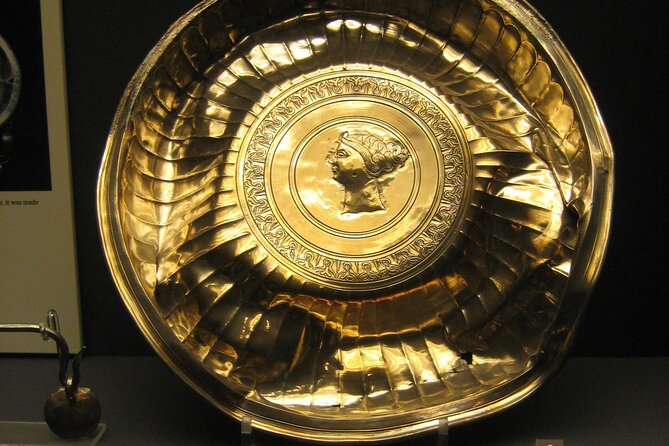
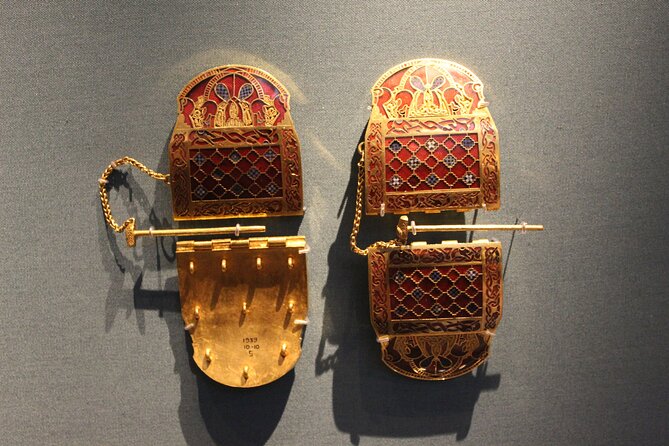
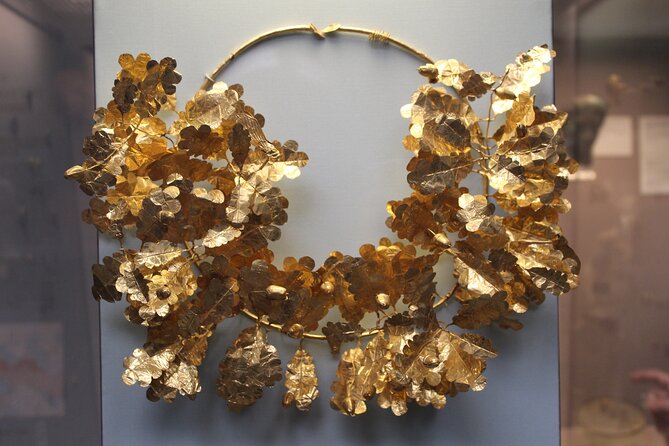
A gold headdress adds another angle. Gold objects can seem like simple displays of wealth, but they also speak to ceremony, status, identity, and craftsmanship. The same is true of the museum’s gold jewelry. A guide helps you notice the small decisions in the work instead of walking past it on the way to a more famous object.
The Greek section also works well if your group is continuing to Rome later. One family used the tour to connect the museum objects with a later Roman trip, and the guide offered suggestions for understanding what they would see next. That kind of link is useful because ancient cultures are often taught separately, even though their art, politics, and technology affected one another.
A different sort of day out in London altogether:
- From London: Harry Potter Warner Bros Studio Tour
★ 4.7 · 26,588 reviews - London: Westminster to Greenwich River Thames Cruise
★ 4.5 · 22,836 reviews - Magical London: Harry Potter Guided Walking Tour
★ 4.7 · 22,044 reviews - London: Madame Tussauds London
★ 4.6 · 20,915 reviews
Rome, technology, and a few surprising objects
The Roman portion is not limited to emperors and busts. The route can cover the origins of Rome, its technology, and the way art was used as political messaging.
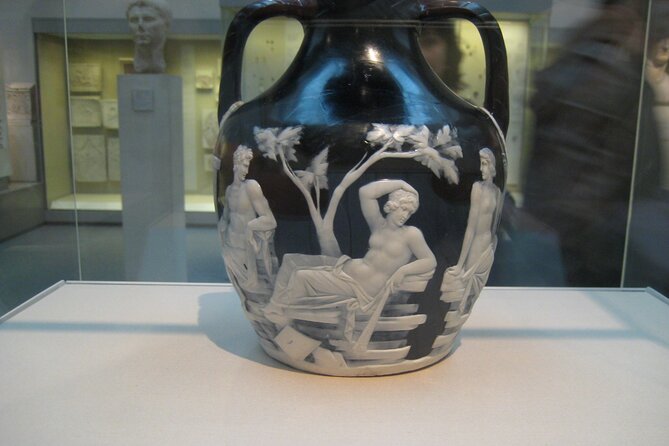
One memorable example is propaganda in glass. The phrase may sound dry, but it points to the way Roman objects could carry public messages, honor rulers, or display social rank. Seeing political ideas expressed through everyday or luxury materials helps you understand Rome as more than a collection of battles and famous names.
You may also encounter alligator armor, an object that adds a welcome bit of oddness to the visit. Unusual pieces like this can keep the tour from feeling like a predictable march through textbook highlights. They also show the breadth of the museum’s holdings.
The Roman galleries are a good place to ask about technology. How was an object made? What material was chosen, and why? Who had access to it? These questions turn a display case into evidence about engineering, trade, class, and power.
The tour’s mix of famous objects and unexpected examples is one of its strengths. You get the Rosetta Stone and Greek sculpture, but you also get the sort of detail you might miss if you relied only on the museum labels.
What the two-hour route can realistically cover
The stated duration is approximately two hours and thirty minutes, while the museum portion is also described as two hours. Treat that as a flexible estimate rather than a guarantee of a full museum day.
In that time, you can expect a focused highlights tour. The guide introduces the museum and its collections, then leads you through selected Egyptian, Greek, and Roman objects. The emphasis is on quality of explanation, not on checking every gallery.
If you stop often for questions, the route may become narrower. That is not a problem if your group cares strongly about one subject. It is a reason to decide what matters most before you arrive.
The private setting makes the time more productive. You do not have to wait while a large group gathers or listen to a long explanation of a subject that does not interest you. You can also continue independently after Anthony has given you the basic map of the museum and its major objects.
For a short London visit, that arrangement can be excellent. One family with limited time used the tour to focus on the most important displays before an afternoon commitment. The guide adjusted the pace so they could see the Rosetta Stone, the Egyptian material, and other key historical pieces without wasting time.
Morning visits, crowds, and family pacing
Morning and afternoon departures are available, so you can fit the tour around the rest of your day. If you have a choice, an early start may be worth considering.
Anthony has arrived before the meeting time for some morning groups and helped them be near the front when the doors opened. That can give you a quieter beginning, though it does not mean the museum will remain quiet for the entire visit. Popular galleries can become crowded as the day develops.
Early timing is especially useful for families. Children usually have more patience at the start of the day, and a less crowded first gallery makes it easier to hear. It also gives you room to pause at objects without blocking a large group.
The guide’s reported success with children aged roughly eight through the teenage years is a real advantage. Younger visitors may enjoy the stories and visual objects, while older children can engage with questions about language, archaeology, and ancient politics. Still, the tour involves walking and sustained attention, so families should not expect a purely hands-on activity.
Teenagers who already like Greek or Egyptian history are likely to get the most from it. The tour can also help a reluctant child because the guide uses humor and direct questions rather than relying only on long explanations.
Price and the value of a private group
The price is $344.49 per group of up to six people. That distinction matters. A full group pays about $57.42 per person, while two people pay about $172.25 each.
For six people, the value is strong if you want expert help in a huge museum and prefer not to join strangers. For a couple, the cost is much harder to justify unless you place a high value on personal attention, have limited time, or want a specialist focus on Egypt, Greece, or Rome.
The entrance ticket is included, and there is no separate charge for the guide’s museum access in the supplied details. Transportation is not included, and there is no air-conditioned vehicle. This is a walking tour inside the museum, so you need to make your own way to the meeting point.
I see the price as paying for judgment and time management as much as for facts. You are paying someone to choose a sensible route, answer questions, connect objects, and keep the visit from becoming an exhausting search through hundreds of rooms.
The tour is particularly good value for a family of four to six. A large family can otherwise split up, miss major objects, or spend valuable London hours finding its way around. A couple on a long London stay may prefer a less expensive self-guided visit and return to the galleries at its own pace.
Access, language, and practical limits
The tour is offered in English and uses a mobile ticket. Service animals are allowed, and the museum is near public transportation.
Accessibility is not described as complete throughout the experience. London is a two-thousand-year-old city, and while most areas are accessible, not every area is fully so. If your group has specific mobility needs, ask for current details before booking rather than assuming every route and gallery will work equally well.
Most people can participate, but you should expect a walking visit with periods of standing. The provided information does not mention an included vehicle, hotel pickup, food, or drinks, so plan this as a museum-only experience.
Cancellation is free up to 24 hours before the local start time. A cancellation inside that window is not refundable, and late changes are not accepted. That is a useful safety net for a London itinerary, but you still need to protect the final day before the tour.
Who should book this British Museum tour
I would choose this tour for a family of four to six, a first-time visitor with limited time, or anyone who wants archaeology rather than a quick photo stop. It is also a good choice if you want to ask plenty of questions without holding up a larger group.
The strongest subject match is ancient Egypt, Greece, and Rome. The route includes other material, but the supplied details center on those cultures. If your priority is modern art, Asian collections, or a full survey of every department, you should ask whether the guide can tailor the visit that way before you book.
The tour is less compelling for a solo visitor on a tight budget. The group price does not shrink for one person, so the cost per head becomes high. It is also not the right fit if you want several hours to browse alone without a planned route.
Should you book it?
Book it if the British Museum feels too large to tackle on your own, especially if you are traveling with children or have only one short window in London. Anthony Matthews brings archaeological training, clear storytelling, humor, and strong control of the museum route. The ability to focus on your interests is the key benefit.
Think twice if you want a cheap visit, a long unstructured wander, or a subject outside the ancient Mediterranean and Egypt. For a full group of six, the price is reasonable for private attention and efficient sightseeing. For two people, it is a splurge, but one that can make sense when time matters more than cost.
FAQ
How long does the private British Museum tour last?
The experience lasts approximately two hours and thirty minutes. The museum visit itself is also described as about two hours, so the exact time may vary.
How many people can join the private tour?
The price covers a private group of up to six people. Only your group participates in the activity.
Who is the guide?
The guide associated with the experience is Anthony Matthews. The supplied details describe him as a retired archaeologist and Blue Badge Guide.
What parts of the British Museum are included?
The tour can include the Rosetta Stone, Tutankamun, Egyptian funerary objects, sarcophagus decoration, canopic jars, the Book of the Dead, Greek sculpture, Amazons, Roman objects, glass propaganda, alligator armor, gold jewelry, and other highlights.
Can the tour be tailored to my interests?
Yes. The tour can be customized to suit your needs and interests. You can discuss preferred subjects such as ancient Egypt, Greece, or Rome.
Are morning and afternoon times available?
Yes. You can choose a morning or afternoon tour.
Is transportation included?
No. An air-conditioned vehicle is not included. The activity begins and ends at the stated meeting point in London.
What is the cancellation policy?
You can cancel for a full refund up to 24 hours before the experience start time. Cancellations or changes made less than 24 hours before the local start time are not accepted for a refund.
Just added around London
- Kensington Palace VIP Garden Tour with Royal High Tea★ 4.5 · 71 reviews
- Up at The O2:Twilight Climb with Guided Tour with Panoramic Views★ 5.0 · 50 reviews
- Private Chauffeur-London Heathrow from/to Southampton Cruise Port★ 5.0 · 9 reviews
- Up at The O2: Sunset Climb with Guided Tour with Panoramic Views★ 5.0 · 110 reviews
- Secrets of the London Underground Small Group Walking Tour★ 4.5 · 38 reviews
- Urban Canvas: Exploring Shoreditch’s Vibrant Street Art★ 5.0 · 36 reviews
- Ultimate introduction to photography in Central London★ 5.0 · 19 reviews
- Full-Day Self-Guided Paris Tour from London by Eurostar with Seine River Cruise★ 3.5 · 22 reviews
British Museum Tours, compared.
British Museum London Guided Tour Semi-Private 8ppl Max
Read our review →
British Museum Audio Tour & Priority Entrance Ticket
Read our review →
The British Museum London – Exclusive Guided Museum Tour
Read our review →
Private Guided Tour of the British Museum – Tickets Included
Read our review →Browse the lists this tour appears in