
Reviewed · CHURCHILL WAR ROOMS TOURS
London in WW2 Walking Tour with Churchill War Rooms Visit
The most memorable part of this London tour is the change of setting. You begin above ground, among Parliament, Westminster Abbey, memorials, and government offices, then finish below street level in the cramped wartime rooms where Britain directed its fight against Nazi Germany. The walk gives the museum context, rather than dropping you into it cold.
I like the small group limit of 15 and the way the guide connects famous sights to wartime decisions. I also like that the Churchill War Rooms ticket is included, with an audio guide for the self-guided museum visit. The main consideration is pace: you spend about 90 minutes outdoors, then roughly an hour inside, so this is an introduction rather than a full day with the museum.
Key points at a glance
- The route links seven major Westminster sights, including Parliament Square, Whitehall, and Horse Guards Parade.
- Churchill’s War Rooms admission is included, saving you the need to arrange a separate museum visit.
- Guides such as Nathan, Babs, Jeremy, Paul, Francis, and Richard have been praised for clear storytelling, humor, and strong knowledge of Churchill and the Second World War.
- The War Rooms portion is self-guided, so you can move through the underground complex at your own pace after your guide sees you inside.
- The group is capped at 15 people, a useful middle ground between a private tour and a large public walk.
- The $104.02 price makes the most sense if you want both a guided Westminster walk and museum entry in one compact experience.
Why the above-ground walk matters
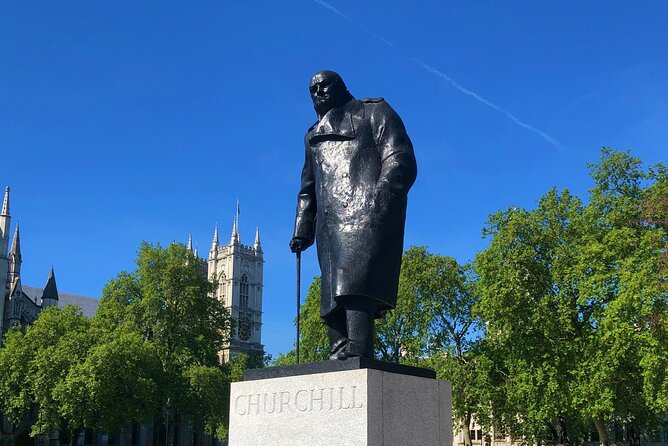
It is easy to visit the Churchill War Rooms as a stand-alone museum and miss the setting around it. This walk fixes that. Westminster was not simply a collection of grand buildings during the war. It was the working center of British government, surrounded by military planning, public memorials, speeches, ceremonies, and the constant threat of bombing.
The meeting point is at Boadicea and Her Daughters on Victoria Embankment. From there, the route moves through central Westminster and ends at the War Rooms on King Charles Street. You do not return to the starting point, so plan your day around finishing near Whitehall.
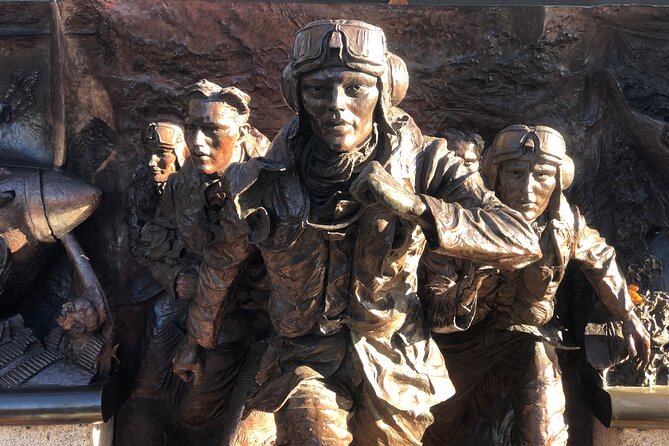
The guide’s job is less about pointing out pretty buildings and more about explaining what they meant during the 1940s. That is where the tour earns its keep. You hear about government under pressure, the silence of Big Ben during the blackout period, the Luftwaffe raids, and the human cost represented by the memorials along Whitehall.
The outdoor portion is not a battlefield tour. You will not see preserved trenches or bomb-damaged buildings at every turn. Instead, you get political and civic context, with the streets themselves acting as the backdrop.
More Churchill War Rooms Tours:
- Westminster 3 Hour Walking Tour and Visit of Churchill War Rooms
★ 5.0 · 967 reviews - WW2 London Walking Tour & Churchill War Rooms Entrance Ticket
★ 4.5 · 933 reviews - London: Westminster WW2 Tour & Churchill’s War Rooms Ticket
★ 4.5 · 925 reviews
Westminster Bridge and the Houses of Parliament
The first stop is Westminster Bridge, painted green to match the Houses of Commons. It is a quick orientation stop, but it brings the wartime story down to street level. Bombs are still found in London from time to time, including around the bridge, a reminder that the city’s wartime danger was not an abstract story from a history book.
You visit the bridge from outside and spend about five minutes there. That short time is sensible. The value comes from the explanation, not from lingering at the structure itself.
The Houses of Parliament receive a longer look. From outside, the guide explains how Britain’s central government responded as the threat from the Third Reich grew. You hear about Parliament during the air raids and the decision to keep government functioning even when German aircraft filled the skies over London.
Big Ben’s wartime silence is one of the details that helps you picture the period. The famous clock tower was not simply part of the skyline. Its bells could have helped enemy aircraft navigate, so the familiar sound disappeared during the war.
You do not enter the Houses of Parliament on this tour. That matters if you hoped to see the interior. The stop is about Westminster as a seat of power, not a parliamentary building tour.
Parliament Square and Westminster Abbey
Parliament Square gives the guide a chance to connect the war to the idea of democracy. Its statues include Mahatma Gandhi, Millicent Fawcett, and Abraham Lincoln, among other public figures. The square’s meaning becomes clearer when viewed against the dictatorship and occupation spreading across Europe in the 1940s.
This is one of the better stops for visitors who want more than military facts. The tour also looks at the political values Britain claimed to defend. That wider frame keeps the walk from becoming a list of aircraft, battles, and dates.
Westminster Abbey is visited from outside. The building is one of London’s great symbols, but the tour treats it as part of the wartime story rather than offering an interior visit. You should not expect admission to the Abbey, and the price does not include it.
That limitation is worth knowing before you book. If you want to tour the Abbey inside, plan a separate visit and allow extra time. On this walk, the guide’s attention stays on its place within Westminster and the surrounding wartime events.
Whitehall’s memorials and wartime government
Whitehall is where the route begins to feel especially focused. It remains the center of several government departments, and during the Second World War it was tied closely to the decisions that shaped Britain’s response.
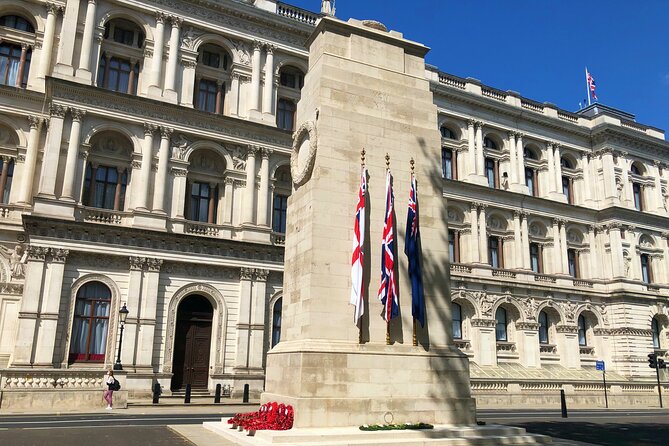
The Cenotaph is the key memorial stop. The guide also points out the Women in War memorial, helping broaden the story beyond the famous male leaders whose names dominate many accounts of the period. You get a chance to pause and pay respect to those who served and died, rather than rushing from one landmark to the next.
The details shared here can make the tour feel personal. Francis, one of the guides praised for his storytelling, has included family connections to wartime life and personal experience from his time in Scotland Yard. Those kinds of anecdotes can give a face to the public history, although your guide will depend on the date you choose.
The tour’s strongest guides appear to bring both facts and a sense of proportion. Nathan is repeatedly praised for his command of the subject, dynamic delivery, and ability to adjust the conversation to the group. Jeremy is noted for witty explanations, while Babs is praised for passion and for handling a busy day in Westminster with ease.
More London Walking Tours:
- Magical London: Harry Potter Guided Walking Tour
★ 4.7 · 22,044 reviews - London: The Original Jack the Ripper Walking Tour
★ 4.7 · 7,833 reviews - Tour for Muggles The Ultimate Harry Potter Walking Tour in London
★ 5.0 · 4,684 reviews - London Jack The Ripper Guided Walking Tour
★ 5.0 · 3,131 reviews
Horse Guards Parade and the route’s lighter moments
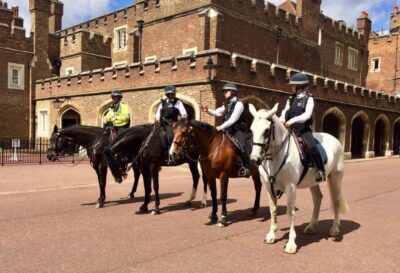
Horse Guards Parade provides a change of mood. You visit from outside and have the chance to photograph the mounted Queen’s Horse Guards. The stop also points toward the official entrance to Buckingham Palace, although the palace itself is not part of the tour.
This section is not strictly about wartime strategy. It gives you a familiar London scene and a chance to take photos before the final museum visit. The contrast works well: one moment you are discussing air raids and government offices, and the next you are watching ceremonial cavalry in a famous public space.
The guide may also add local stories, political background, or small pieces of London lore. Nathan, for example, has been praised for mixing serious Second World War material with lighter cultural anecdotes. That balance matters on a walking tour. Three hours of uninterrupted military detail would feel heavy for many people, especially younger visitors.
The route uses public streets and is near public transportation. Wear comfortable shoes and expect ordinary city walking, crossings, and outdoor exposure. The tour does not provide hotel pick-up, drop-off, food, or drinks.
Entering Churchill’s underground headquarters
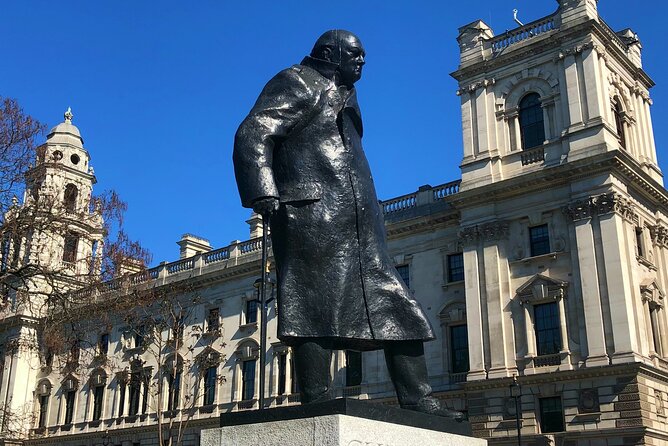
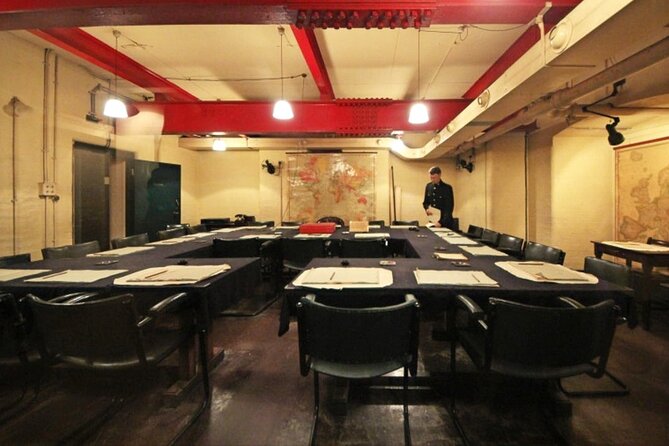
The Churchill War Rooms are the centerpiece. This underground complex became the working headquarters for Britain’s wartime government, as leaders and staff planned how to resist invasion and direct the conflict.
Your walking guide sees you into the museum, then the visit becomes self-guided. That arrangement is useful. The guide can provide the setting and key ideas outside, while you spend your museum time with the displays that interest you most.
Admission is included, as is an audio guide. The museum portion is scheduled for about one hour, though the overall experience is listed at roughly three hours and actual timing can vary. If you are the kind of person who reads every panel and listens to every audio segment, one hour may feel brief.
The War Rooms are particularly effective because of their physical character. You are not only looking at objects behind glass. You are moving through the underground offices, corridors, and working spaces built to keep the government operating during bombing. The setting shows the pressure of wartime leadership in a way that a regular gallery cannot.
The Churchill Museum section adds a broader look at his life and role. That makes the visit useful even if you already know the basic story of Churchill as prime minister. The museum helps connect the public figure to the decisions, arguments, and practical work carried out beneath London.
Several guides are praised for making the transition into the museum worthwhile. James has been credited with guiding groups through key areas and explaining important exhibits before letting them continue independently. Paul has also been praised for clear explanations and enthusiasm for both London and Churchill.
What the guides add
The quality of this experience depends heavily on the person leading the walk. The strongest feedback centers on guides who can tell a story rather than simply recite dates.
Nathan is frequently singled out for his expertise, energy, and ability to match the discussion to the group’s interest. Babs is praised for passion and for answering questions patiently. Jeremy is described as funny, clear, and precise, while Paul is noted for his love of London and lively delivery.
Francis and Richard are also praised for personal, engaging tours. Richard has led groups of nine, which suggests the small-group format can work well for families or friends traveling together. One private group arranged a slight change in its route with Paul, but you should not assume every standard departure can be customized.
The tour has earned a 4.9 rating from 721 reviews, with 98 percent recommending it. Those figures point to a consistent experience, though they cannot guarantee which guide you will receive. If a particular guide is important to you, ask the operator, Urban Saunters, before booking rather than assuming a named guide will lead your departure.
Is $104.02 a fair price?
At $104.02 per person, this is not a cheap walking tour. The price makes more sense when you separate it into two parts: a guided Westminster walk and admission to one of London’s major history museums.
You are paying for an English-speaking local guide, a small group of 15 or fewer, the outdoor route, the War Rooms entrance, and the museum audio guide. You are also paying for the story that links the buildings together. A museum ticket alone cannot explain why Parliament, Whitehall, the memorials, and the underground headquarters belong in one narrative.
The value is strongest for a first visit to London, a short stay, or anyone who wants a clear introduction to Britain in the Second World War. If you already know Westminster well and prefer to spend several hours inside the War Rooms, buying museum admission separately and visiting alone could give you more time.
Group discounts are available. The activity is often booked about 48 days in advance, so popular dates may require planning. Free cancellation is available until 24 hours before the start time. If the minimum number is not reached and the tour is canceled, you are offered another date or experience, or a full refund.
Who should take this tour?
I would choose this for history-minded visitors who want structure. It suits adults, families with older children, and teenagers who respond better to stories tied to real places than to a museum visit on its own.
The reviews include several references to teenagers enjoying the tour, particularly because the guides combine serious material with humor and personal stories. That does not mean every young person will love three hours of wartime history, but the outdoor stops and Horse Guards Parade provide some variety.
This is also a good choice if you have limited time in London. The route covers several major Westminster sights without asking you to spend a whole day on the subject. You finish near the War Rooms and can continue exploring Whitehall afterward.
I would think twice if you dislike group walks, need a slow pace, or want to enter Westminster Abbey or Parliament. Those buildings are seen from outside only. You should also allow extra time if the museum is your main goal, since the scheduled indoor portion is about one hour.
Practical details before you go
The meeting point is Boadicea and Her Daughters on Victoria Embankment, London SW1A 2JH. The tour ends at Churchill War Rooms, King Charles Street, London SW1A 2AQ.
The experience is offered in English and uses a mobile ticket. Service animals are allowed, most people can participate, and the route is near public transportation. Food and drinks are not included, so plan those around the tour rather than expecting a refreshment stop.
The walking portion takes place outdoors, while the War Rooms visit is indoors and self-guided. Bring the same practical gear you would use for any central London walk: comfortable shoes and clothing suitable for the weather.
Should you book it?
Book this tour if you want the story behind Westminster, not just photographs of its landmarks. The best feature is the progression from public squares and government buildings to the underground rooms where wartime decisions were made.
I would especially recommend it for a first London visit, a short itinerary, or a family with older children interested in Churchill and the Second World War. I would skip it if your priority is a long, unhurried museum visit or entry into Westminster Abbey and Parliament.
For most people seeking a focused introduction, the included War Rooms admission and consistently strong guiding make the $104.02 price reasonable. Just remember that the museum time is limited, and the guide you receive will shape the outdoor portion.
FAQ
How long does the London in WW2 Walking Tour last?
The experience lasts approximately three hours. About 90 minutes are spent walking through Westminster, followed by roughly one hour in Churchill’s War Rooms.
Is admission to Churchill’s War Rooms included?
Yes. Entrance to Churchill’s War Rooms is included, along with an audio guide for the self-guided museum visit.
Is Westminster Abbey included?
No. Westminster Abbey is visited from outside, and admission to the Abbey is not included.
Does the tour enter the Houses of Parliament?
No. The Houses of Parliament are visited from outside only, and admission is not included.
How large is the tour group?
The activity has a maximum of 15 travelers, creating a smaller group than a large public walking tour.
Where does the tour start and finish?
It starts at Boadicea and Her Daughters on Victoria Embankment and ends at Churchill War Rooms on King Charles Street.
Is the War Rooms visit guided?
The walking portion is guided by an English-speaking local expert. After the guide sees you into the War Rooms, the museum portion is self-guided with an audio guide.
Can I cancel for a full refund?
Yes. You can cancel at least 24 hours before the experience starts for a full refund. Cancellations or changes made less than 24 hours before the start time are not refunded or accepted.
Just added around London
- London: “Queen” Highlights Walking Tour★ 4.3 · 48 reviews
- Couple’s photo: Romantic photoshoot in London★ 4.8 · 22 reviews
- London: Private Tour with Locals – Highlights & Hidden Gems★ 5.0 · 8 reviews
- Luxury Private Tour in London with Lunch★ 5.0 · 7 reviews
- London 1- or 2-Hour Professional Photo Shoot★ 4.9 · 6 reviews
- London: Private Black Cab Night Tour with Hotel Pick Up★ 5.0 · 11 reviews
- London: Christmas Lights Tour – With Christmas Music★ 4.8 · 9 reviews
- London: Buckingham Palace & Big Ben & Abbey Private Tour★ 5.0 · 7 reviews
Churchill War Rooms Tours, compared.
Westminster 3 Hour Walking Tour and Visit of Churchill War Rooms
Read our review →
WW2 London Walking Tour & Churchill War Rooms Entrance Ticket
Read our review →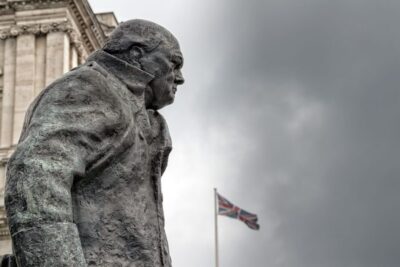
Westminster WW2 Tour & Churchill’s War Rooms Ticket
Read our review →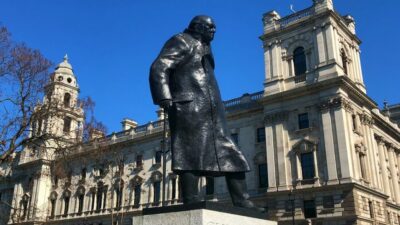
Westminster Tour and Churchill War Rooms Visit
Read our review →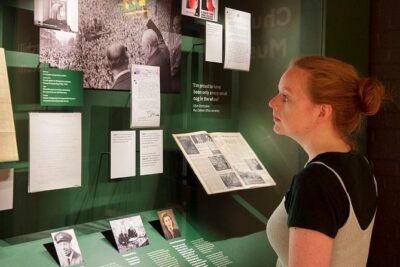
Churchill War Rooms “Behind The Glass” and Private Car Tour
Read our review →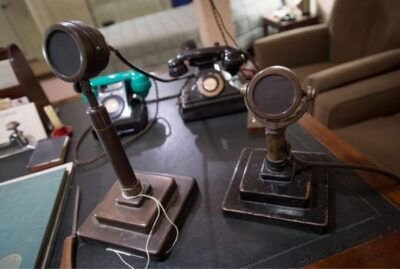
Churchill War Rooms Ticket & Political London Audio
Read our review →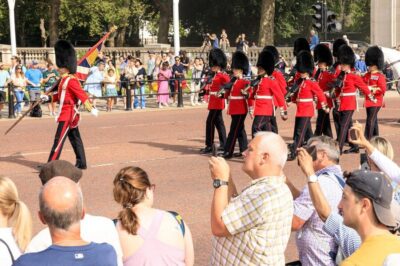
Big Ben, Churchill War Rooms & Buck’ham Palace Tour
Read our review →Browse the lists this tour appears in