
Reviewed · LONDON UNDERGROUND AND TUBE TOURS
London: Hidden Tube Tour of Holborn’s Secret Platforms
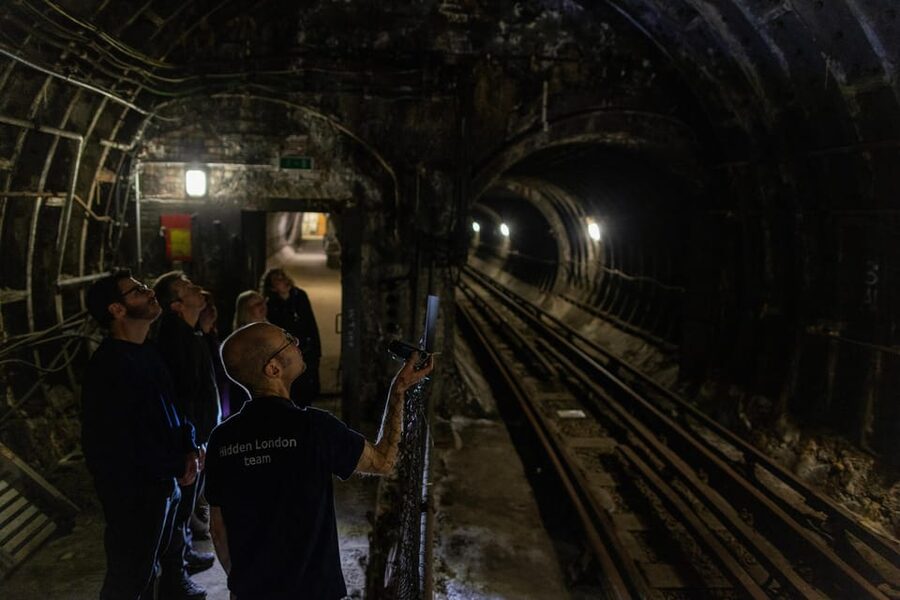
Holborn has a secret life behind its ticket barriers. On this 85-minute tour, you step through concealed doors into disused areas, including two closed platforms from the old Aldwych branch. You also get an unusual view of the Piccadilly line and see parts of the station that have been off-limits to the public for nearly 30 years.
I like the authentic station setting, where original Edwardian design, old posters, and a signalling cabin do the storytelling. I also like the way the tour links Tube engineering to London life, from the 1930s modernization program to wartime shelter during the Blitz. The main drawback is physical: expect stairs, uneven ground, low light, and no elevators.
Key points
- Closed Aldwych branch platforms: See two disused platforms with original details from this little-used branch line.
- Concealed Holborn spaces: Go behind doors in one of central London’s busiest stations.
- Edwardian design: Look for Leslie Green features, vintage posters, and an early 20th-century signalling cabin.
- 20th-century stories: Learn how the spaces served as laboratories, wartime shelter, and a model rail club.
- 85-minute English tour: The experience begins and ends at the corner of Gate Street and Kingsway.
- Strict access limits: You need comfortable shoes, must avoid large bags and open-toed shoes, and should be comfortable with stairs and enclosed spaces.
Why Holborn has more Tube history than it first reveals
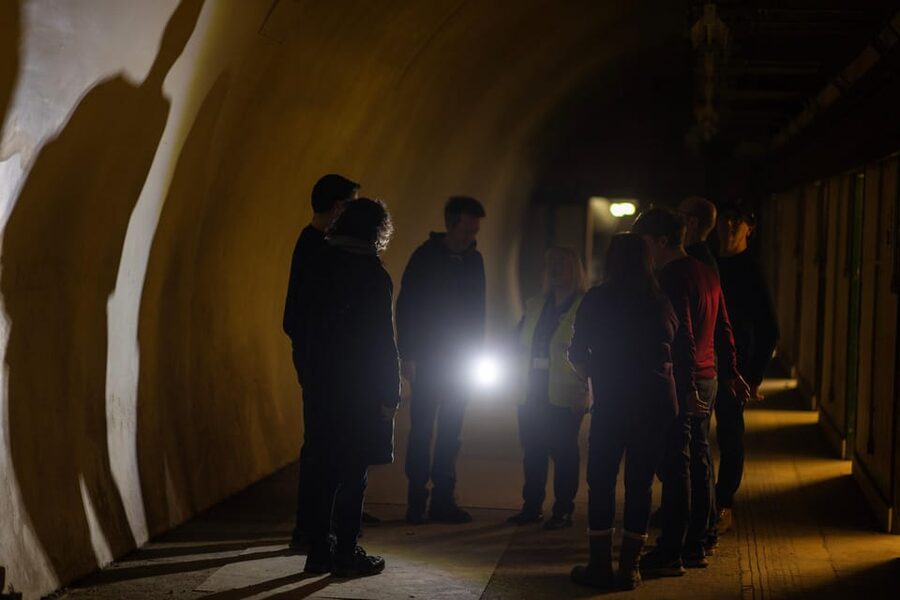
Holborn is easy to treat as a transport stop between Covent Garden, the British Museum area, and London’s legal and business districts. Yet the station began in 1906 as a complicated four-platform arrangement serving the Piccadilly line. Its old layout reflects a time when London’s underground railway was still expanding, competing, and changing quickly.
This tour lets you see the remains of that earlier plan. You are not simply walking through a museum display. You are moving through a working station and then into areas that have been closed for decades. That difference matters. The walls, platforms, stairs, and equipment remain tied to the practical business of moving people beneath London.
The tour also explains how Holborn helped change the character of the surrounding area. The station played a role in turning a district once associated with disreputable activity into a prime business quarter. You get that urban story alongside the railway story, which gives the visit more weight than a simple look at abandoned platforms.
Your guide speaks in English and leads the group through the station’s concealed areas. The supplied information does not provide guide names, so you should not expect a particular named host when booking. It does indicate that the guides are experts in the station and its transport history, and one review specifically praised the guides as knowledgeable. I would expect the guide’s explanations to be central to the experience, not an optional extra.
More London Underground and Tube Tours:
- London: Secrets of the London Underground Walking Tour
★ 4.6 · 211 reviews - Aldwych: Hidden Tube Station Guided Tour
★ 4.8 · 54 reviews - London: Hidden Baker Street Tube Station Tour
★ 4.7 · 51 reviews
From Gate Street to the concealed doors
The meeting point is on the corner of Gate Street and Kingsway, postal code WC2B 6AA. The What3Words location is towers.rift.forest. The activity ends at the same meeting point, so you do not need to arrange transport from a different finish point.
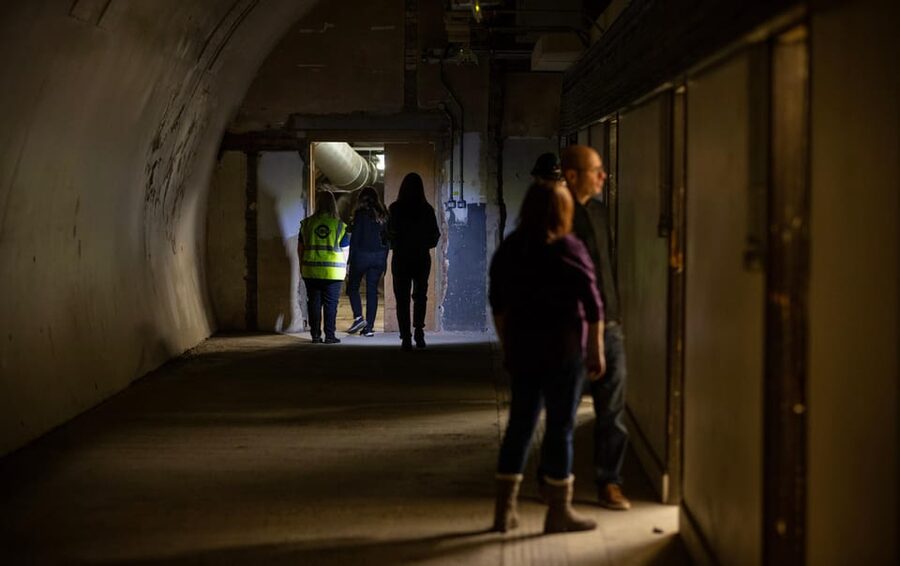
Arrive ready to walk. This is not a coach outing or a general sightseeing stroll around central London. The action takes place inside and around Holborn station, with access to spaces that require stairs and careful footing.
You should bring identification, comfortable shoes, and water. Food and drinks are not allowed on the tour, and large bags or luggage are not permitted. Open-toed shoes are also not allowed. These rules make practical sense in old railway areas, where narrow routes, stairs, and uneven surfaces can make bulky belongings awkward.
The exact starting time depends on the date you choose. The total duration is 85 minutes, which is long enough to cover the main spaces without taking up half a day. I would pair it with nearby sightseeing before or after, but leave a little breathing room around the scheduled time rather than trying to squeeze in a distant attraction immediately afterward.
Two closed platforms from the Aldwych branch
The strongest part of the tour is the visit to the two closed platforms from the former Aldwych branch line. This little-used branch gives the experience its unusual character. Instead of seeing only the polished, active side of the Underground, you get a look at an abandoned operational world.
The platforms retain original features, including vintage posters and elements of Leslie Green’s Edwardian design. Those details help you read the space as a working Tube station rather than an empty tunnel. The design is part of London’s transport identity, with the station’s older surfaces showing how early Underground architecture was built and presented to the public.
You may also see an original early 20th-century signalling cabin. That is an important detail for anyone interested in how the system was controlled before modern technology took over. It gives the tour a mechanical side, showing that the Underground’s story is not only about trains and platforms. It is also about signals, staff, operating decisions, and the equipment that kept services moving.
The drawback is that disused platforms are not arranged for easy sightseeing. Low lighting and uneven ground are part of the setting. You should watch your footing and listen carefully to instructions. If you want a smooth, step-free museum visit, this is not the right choice.
An unexpected view of the working Piccadilly line
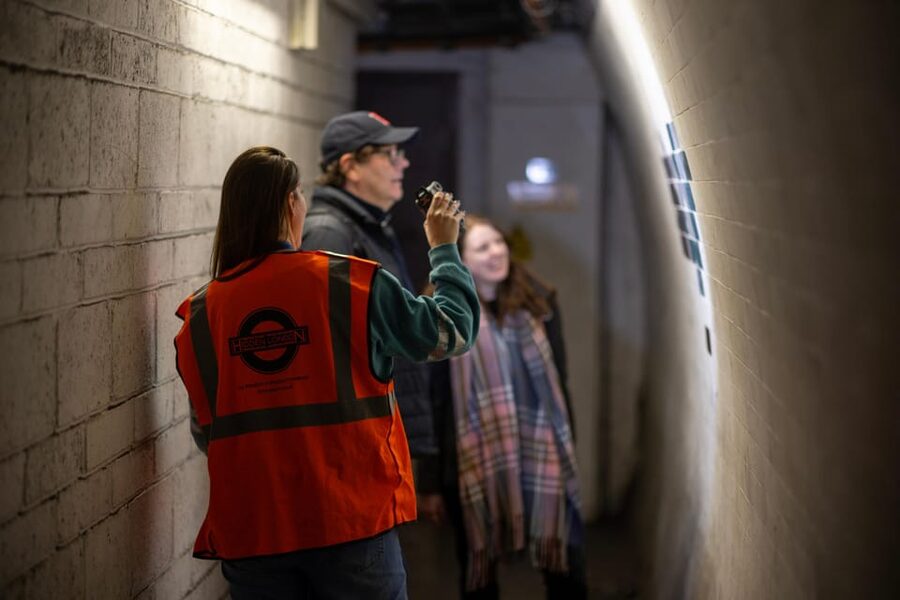
The tour includes an unusual view of the Piccadilly line. You are still in the heart of a busy station, but the perspective changes when you see the active railway from behind the scenes.
That contrast is one of the most useful parts of the experience. It shows you how a modern Tube interchange sits beside older spaces that no longer serve passengers. The station is not presented as a frozen relic. It remains part of the Underground, with its past and present occupying the same tight network of platforms, tunnels, and service areas.
The Piccadilly line connection also helps explain why Holborn mattered so much. The station was built as part of a larger plan for moving people through central London, and its later changes reflect the pressure placed on the system as the city grew. You see the old branch platforms, then consider the active line still carrying people through the station today.
You should not expect a long ride or a standard station tour. The focus is on the spaces around the railway and the stories attached to them. The tour is best for you if a close look at transport infrastructure sounds more interesting than simply taking the Tube from one attraction to another.
A different sort of day out in London altogether:
- From London: Harry Potter Warner Bros Studio Tour
★ 4.7 · 26,588 reviews - London: Westminster to Greenwich River Thames Cruise
★ 4.5 · 22,836 reviews - Magical London: Harry Potter Guided Walking Tour
★ 4.7 · 22,044 reviews - London: Madame Tussauds London
★ 4.6 · 20,915 reviews
The 1930s modernization program and British Museum station
A major thread of the tour is London’s 1930s modernization program. This period brought changes to the Underground, including the closure of nearby British Museum station. The decision helps explain why stations cannot be judged only by their original purpose. As routes, platforms, and passenger needs changed, some stations became less useful or were replaced by improved arrangements.
The tour connects these decisions to Holborn. That makes the old platforms easier to understand. They are not just unused rooms left behind by accident. They are evidence of a system being reshaped to serve a changing city.
I like this part because it moves the experience beyond spooky atmosphere. Old Tube spaces can be visually striking, but the practical story is more valuable. You learn why railway companies altered stations and how modernization affected the people who used them. The former British Museum station is part of that larger story, even though the tour is based at Holborn.
The guide also brings in first-hand accounts from people who worked in and used the station and Aldwych branch. These personal details should help put human scale on an otherwise technical subject. You can think about what it was like to staff these spaces, wait on the platforms, or work through changes that may have made familiar routes obsolete.
Laboratories, wartime shelter, and a model rail club
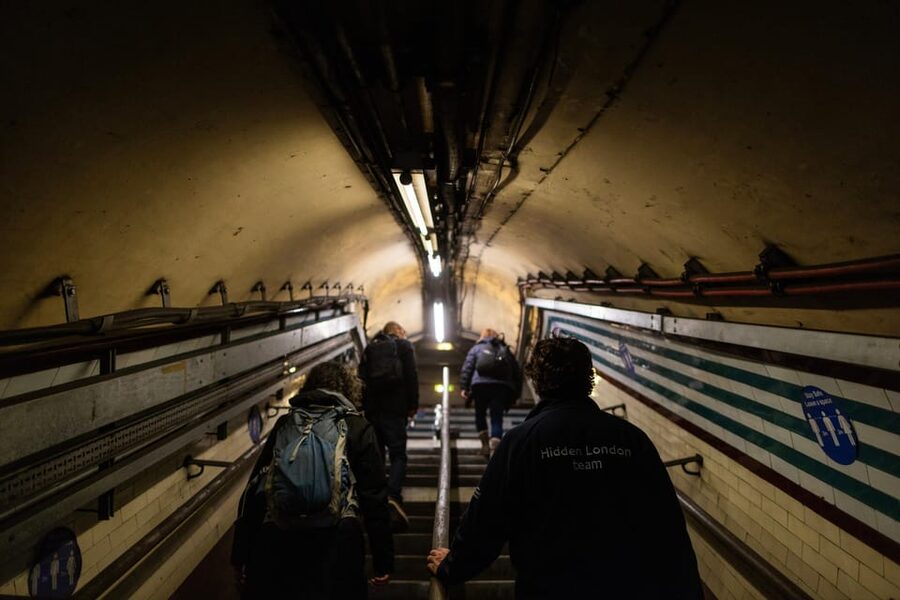
The disused areas had several lives after they stopped serving ordinary passengers. They were used as scientific laboratories, provided shelter for London Transport staff during wartime, and even housed a model rail club.
These details are a reminder that empty transport spaces often find new purposes. During the Blitz, the station was part of the wider wartime experience of London Transport staff. The tour considers how staff may have felt working there during the height of the bombing, giving the old platforms a human and emotional dimension without turning the visit into a memorial tour.
The laboratory use adds another layer. It shows that underground rooms could support work far removed from ticketing and train operations. The model rail club, meanwhile, brings an unexpectedly modest and familiar note to the story. A place built for full-size trains later became a home for miniature railway enthusiasts.
I find this range of uses more interesting than a single dramatic tale. You get engineering, war, scientific work, staff life, and hobby culture in one compact visit. It also encourages you to look closely at the rooms and ask what traces of each period might still be present.
Do keep your expectations grounded. The tour information does not promise preserved laboratories, club equipment, or a fully furnished wartime shelter. You are being shown the spaces and given their stories, not entering a complete period set.
What the 85-minute route feels like on foot
The experience lasts 85 minutes and involves a lot of walking. You will encounter stairs, uneven ground, low lighting, and areas without elevator access. The route is therefore more active than a typical museum visit.
Wear comfortable closed shoes with good footing. Leave luggage at your accommodation or use a storage option elsewhere before arriving, since large bags are not allowed. Water is recommended, but food and drinks cannot be taken on the tour.
The enclosed setting may feel uncomfortable if you have claustrophobia. The activity is also not suitable for people with mobility impairments, according to the access information. There are no elevators, so do not assume the route can be adapted once you arrive.
Children must be at least 10 years old. There can be no more than four children aged 10 to 15 per adult. For families who meet those conditions, the railway stories and closed platforms could be memorable, but younger children may find the walking, darkness, and restricted areas tiring.
The activity is guided in English only. If you are comfortable following spoken English in a technical setting, you should be able to get much more from the visit than by simply looking around. The guide’s explanations are what connect the physical details to the station’s larger story.
Is $60.61 a fair price?
At $60.61 per person, this is not a cheap way to spend an hour and a quarter. You are paying for limited access, specialist guiding, and the chance to enter parts of Holborn that ordinary Tube passengers cannot visit.
The value depends on your interests. If you already plan to visit the London Transport Museum, this tour offers something different: a real station environment rather than a conventional exhibition. If your interest is specifically London Underground design, closed stations, railway signals, or wartime transport, the price is easier to justify.
The tour is less compelling if you want a broad introduction to London or a long list of major sights. It does not include pickup, drop-off, or a wider city route. You meet at Holborn, walk through the station’s restricted areas, and return to the same meeting point.
I see the price as reasonable for a short, specialist experience with controlled access. It is not a bargain attraction, but it offers something that ordinary Tube tickets cannot provide. Book it because you want this particular story, not because you are looking for the cheapest central London activity.
Free cancellation is available up to 24 hours before the tour for a full refund, and you can reserve now and pay later. Those options help if your London schedule is still shifting.
Who should book the Holborn hidden platforms tour?
I would recommend this tour to you if you enjoy:
- London transport history and old railway architecture
- Closed stations, disused platforms, and behind-the-scenes access
- Practical engineering details, including signalling and station design
- Stories about how city spaces were reused during wartime and afterward
- Short guided experiences that fit into a central London day
It is also a good choice for repeat visitors who have already seen the obvious sights. Holborn offers a different side of London, one that does not depend on grand monuments or panoramic views.
I would not choose it for a relaxed, step-free outing. The stairs, uneven ground, low light, and lack of elevators are real limitations. It is also a poor fit if enclosed spaces make you anxious or if you need to carry luggage.
The strongest praise attached to this experience is directed at the guides, with one short review calling them knowledgeable. In practical terms, that means you should value the spoken history as much as the physical access. Without the explanations, you would see old platforms. With the guide, you can connect them to the Aldwych branch, the 1930s changes, wartime staff life, and the future of the Underground.
Should you book it?
Book this tour if you want an unusual, tightly focused look at London’s Tube system and can manage stairs, dim areas, and uneven ground. The closed Aldwych platforms, old posters, Leslie Green design, and signalling cabin offer details you will not get from a normal ride on the Piccadilly line.
Skip it if you need step-free access, dislike enclosed spaces, or prefer a broad sightseeing tour. For the right visitor, $60.61 buys genuine access to a working station’s forgotten corners and an 85-minute explanation of how London’s Underground changed over time.
FAQ
Where does the Hidden Tube Tour of Holborn’s Secret Platforms begin?
The tour begins on the corner of Gate Street and Kingsway, WC2B 6AA. The What3Words location is towers.rift.forest.
Where does the tour end?
The activity ends back at the meeting point on the corner of Gate Street and Kingsway.
How long does the tour last?
The tour lasts 85 minutes. Starting times depend on availability for the date you select.
What language is the tour conducted in?
The live guided tour is conducted in English.
Are children allowed on the tour?
Children under 10 are not allowed. For children aged 10 to 15, there can be a maximum of four children per adult.
Is the tour suitable for people with mobility impairments or claustrophobia?
No. The tour includes extensive walking, stairs, uneven ground, low lighting, and no elevators. It is also not suitable for people with claustrophobia.
Just added around London
- London: “Queen” Highlights Walking Tour★ 4.3 · 48 reviews
- Couple’s photo: Romantic photoshoot in London★ 4.8 · 22 reviews
- London: Private Tour with Locals – Highlights & Hidden Gems★ 5.0 · 8 reviews
- Luxury Private Tour in London with Lunch★ 5.0 · 7 reviews
- London 1- or 2-Hour Professional Photo Shoot★ 4.9 · 6 reviews
- London: Private Black Cab Night Tour with Hotel Pick Up★ 5.0 · 11 reviews
- London: Christmas Lights Tour – With Christmas Music★ 4.8 · 9 reviews
- London: Private Pub Tour★ 4.5 · 4 reviews
London Underground and Tube Tours, compared.
Guided Tour of Hidden Tube Station at Charing Cross
Read our review →
Hidden Tube Tour – Piccadilly Circus: The Heart of London
Read our review →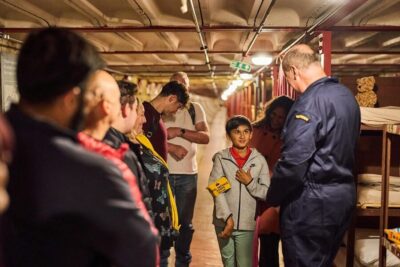
Browse the lists this tour appears in