
Reviewed · BRITISH MUSEUM TOURS
London: British Museum Highlights Tour: How Beauty Was Born
The British Museum is easiest to enjoy when someone gives its vast collection a clear thread. This two-hour tour uses beauty, belief, love, death, and storytelling to connect objects from ancient Egypt, Greece, Mesopotamia, India, and medieval Europe.
I like the small maximum of eight people, which gives you a better chance to hear the guide and ask questions. I also like the focused route through famous pieces such as the Rosetta Stone and Parthenon Marbles, rather than trying to see everything in a museum holding more than 8 million objects. The main caution is the pace: there is a moderate amount of walking, and the tour is not suitable for wheelchair users or people with mobility impairments.
Key points to know before you go
- The Rosetta Stone anchors the tour: See the artifact that helped scholars read Egyptian hieroglyphs.
- Beauty is the main theme: Greek sculpture and the Parthenon Marbles become part of a wider story about changing ideals.
- The group is capped at eight: That makes an enormous museum feel more manageable and personal.
- The route crosses several cultures: Expect Egypt, Greece, Mesopotamia, India, and medieval Europe in one compact visit.
- The guide uses stories, not just dates: Tragic love, death, rebirth, and alternative stories about Jesus shape the visit.
- Bring light luggage only: Large bags and backpacks are not allowed, and photography must be without flash.
Why a beauty-themed tour works at the British Museum
The British Museum can be thrilling, but it can also leave you staring at a map and wondering where to begin. Its collection covers thousands of years and many parts of the world. A guided theme gives your visit a useful backbone.
Here, beauty is not treated as a fixed idea. The tour asks how people in different times represented the human body, the gods, love, death, youth, and the soul. That approach helps you compare objects rather than view each one as an isolated display.
I like this format for a first visit because it gives famous works a purpose. You are not simply told that an object is old or important. You are asked what it says about the people who made it and how their ideas still affect modern culture.
The English-speaking guide is described as an expert storyteller, which matters in a museum of this size. A good story can help you remember why the Rosetta Stone matters, why Greek sculpture still shapes popular ideas of the body, and why ancient religious images were made for more than decoration.
The humor in the tour description suggests a relaxed style rather than a formal lecture. That may suit you if you want history explained in plain language. If you prefer a slow, highly academic art course, this may feel more brisk and theatrical.
More British Museum Tours:
- London: British Museum Guided Tour
★ 4.3 · 1,182 reviews - British Museum London Guided Tour Semi-Private 8ppl Max
★ 5.0 · 984 reviews - London: Tour of the British Museum
★ 4.1 · 678 reviews
Meeting the guide at Edward VII’s Entrance
You meet at the group entrance to the British Museum, specifically Edward VII’s Entrance. The guide will hold a My London Guide sign, so you have a clear marker in a busy central London area.
The tour includes fast-track entry through an express security check. That is useful at a major museum, though you should still arrive ready for security procedures. Do not bring a large bag or backpack. Food and drinks are not allowed inside the exhibition halls.
Wear comfortable shoes. Two hours on museum floors with regular walking can be tiring, especially if you are already spending the day sightseeing in central London. Bring water for before or after the visit, but do not plan to carry food and drinks through the galleries.
The tour ends back at the meeting point. That makes it easy to continue your day in the British Museum or head elsewhere in London without arranging a separate pickup. Hotel transfers are not included, so you make your own way to and from the museum.
The Rosetta Stone and the power of written language
The Rosetta Stone is one of the most useful first stops for understanding how objects can change modern knowledge. It helped scholars read Egyptian hieroglyphs by presenting the same decree in different forms of writing.
The appeal is not only visual. The stone represents a major breakthrough in understanding a civilization whose inscriptions had long been unreadable to modern scholars. Your guide can use it to explain how language, power, and memory are tied together.
This is also where the tour’s storytelling method makes sense. The Rosetta Stone is not merely an attractive piece of dark stone behind glass. It is evidence of a long effort to recover voices from the ancient world.
You should expect other visitors around famous objects, even with express entry. The small group helps you stay together, but it does not turn the museum into a private gallery. Listen closely and keep your belongings light so you can focus on the explanation.
Greek sculpture and the Parthenon Marbles
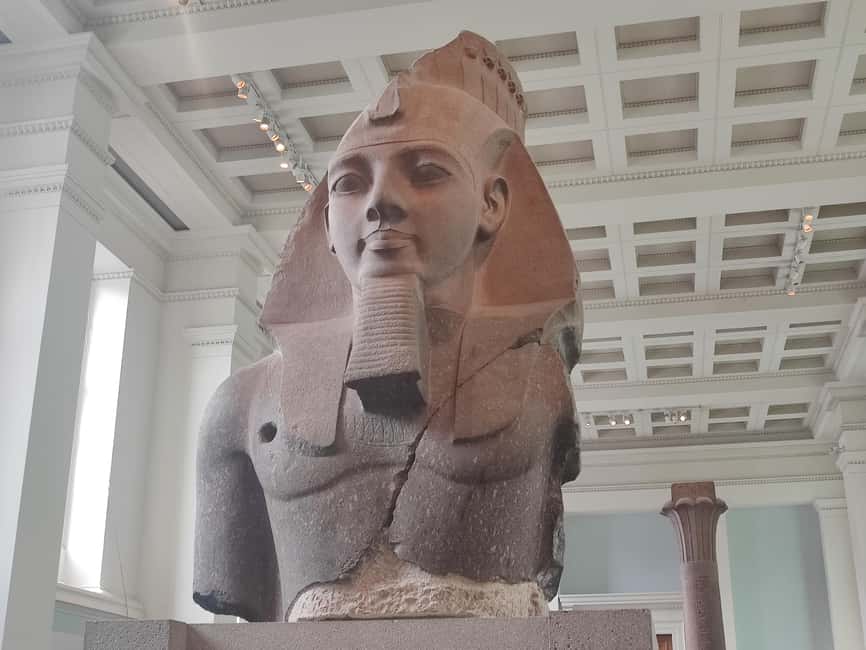
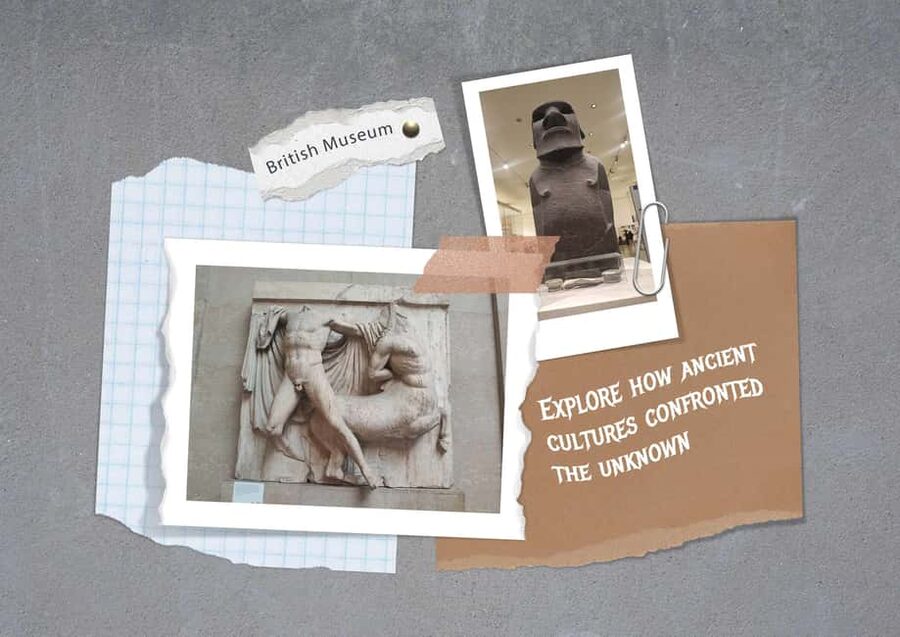
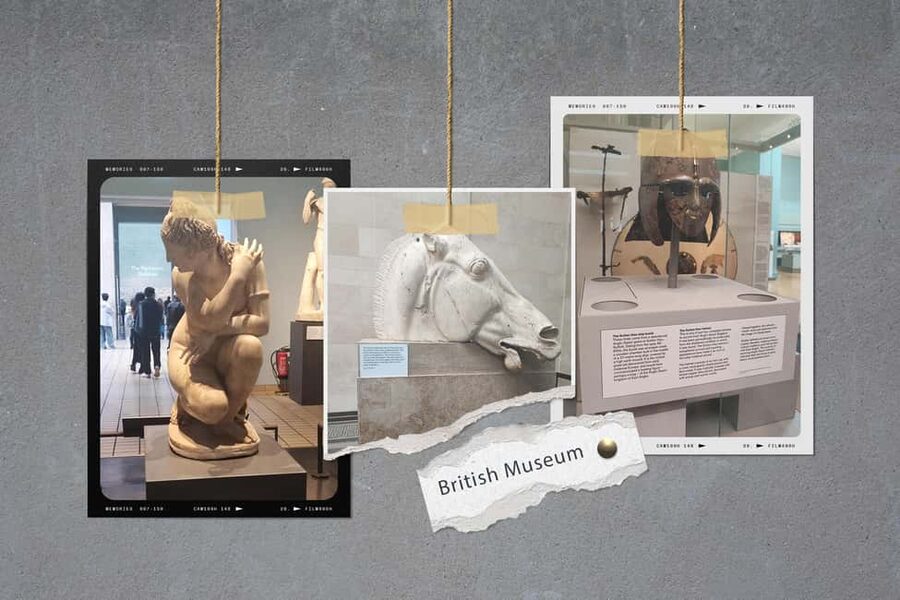
The Greek section carries the tour’s central question about beauty. Ancient Greece gave the Western world major traditions in philosophy, democracy, drama, and art, and its treatment of the human form still influences modern ideas of proportion and attractiveness.
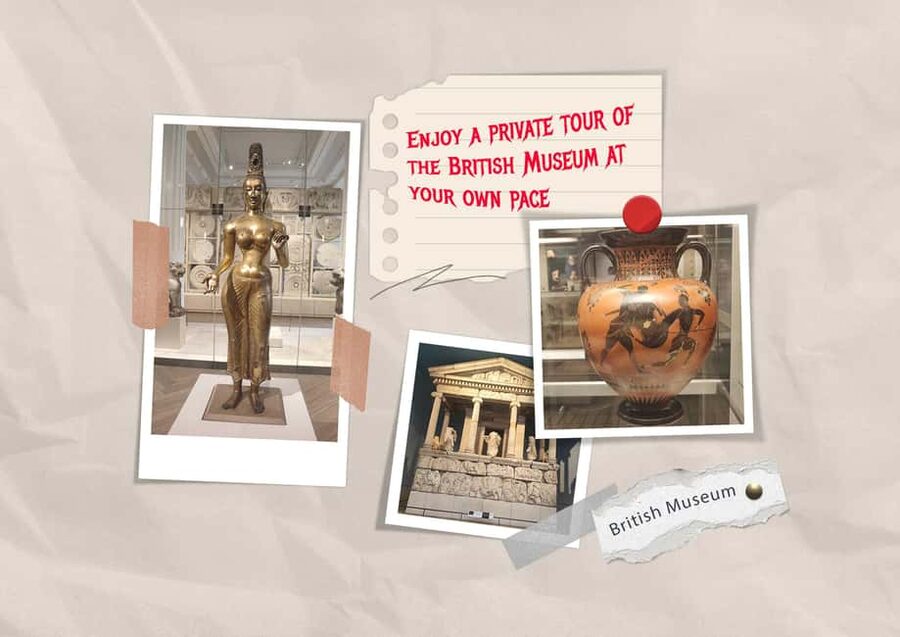
The Parthenon Marbles are especially important here. They allow the guide to discuss how Greek artists presented bodies, movement, balance, and ideal form. You can consider why these images continue to shape museums, public buildings, art schools, and popular culture.
The display also raises a practical question about the meaning of famous objects outside their original setting. The tour information does not promise a long discussion of ownership or museum policy, so do not book this experience expecting a dedicated debate on that subject. The emphasis is beauty, artistic development, and cultural influence.
I like this stop because it gives you a clear way to look at sculpture. Instead of asking only Is this beautiful?, you can ask who decided what beauty should look like, what the body was meant to express, and how those choices were passed down.
More London Sightseeing and Highlights Tours:
- London: London by Night Sightseeing Open-Top Bus Tour
★ 4.5 · 5,516 reviews - London: Tootbus Must-See Hop-On Hop-Off Bus Tour with Cruise
★ 4.0 · 3,653 reviews - London: River Thames Hop-On Hop-Off Sightseeing Cruise
★ 4.4 · 3,112 reviews - Westminster to Greenwich Sightseeing Thames Cruise in London
★ 4.5 · 2,969 reviews
Egyptian mummies, life, and death
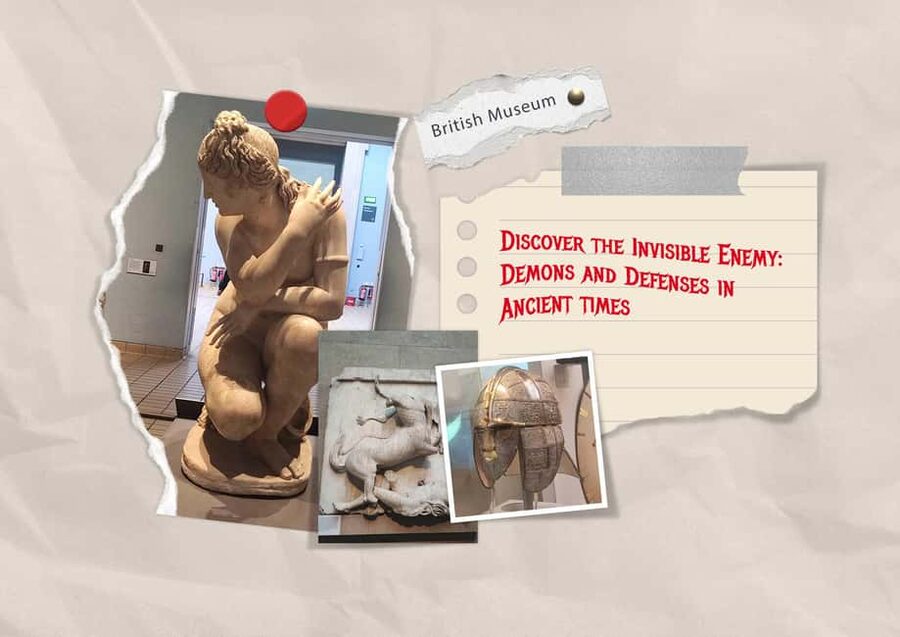
The Egyptian collection brings the tour toward mortality. Mummies can attract attention because of their physical presence, but the more useful question is what they reveal about Egyptian beliefs concerning the body, the afterlife, and the journey after death.
The experience promises a chance to consider the dance of life and death alongside Egyptian mummies. That means you should expect interpretation rather than a simple parade of preserved bodies. The guide connects physical remains with ideas about medicine, religion, and the human desire to continue beyond death.
Egypt also offers a contrast with Greece. Greek art often leads you toward ideals of human form and balance. Egyptian objects can lead you toward ritual, order, protection, and the relationship between the living and the dead.
Some people may find this section intense. If you are sensitive to human remains, keep in mind that mummies are part of the route. The tour description presents them as a way to discuss belief and mortality, but the subject may still not suit every visitor.
Mesopotamia and the inventions that still shape daily life
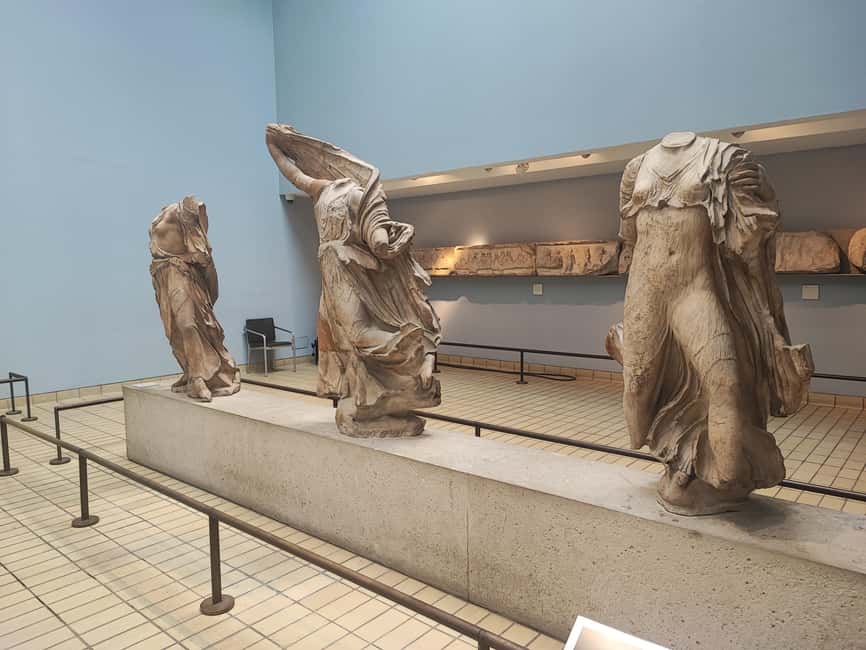
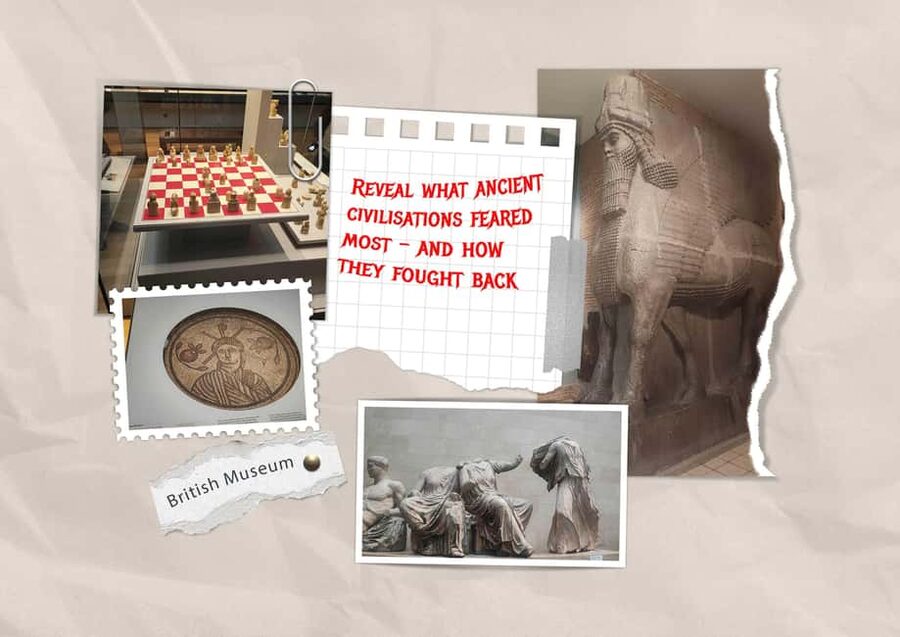
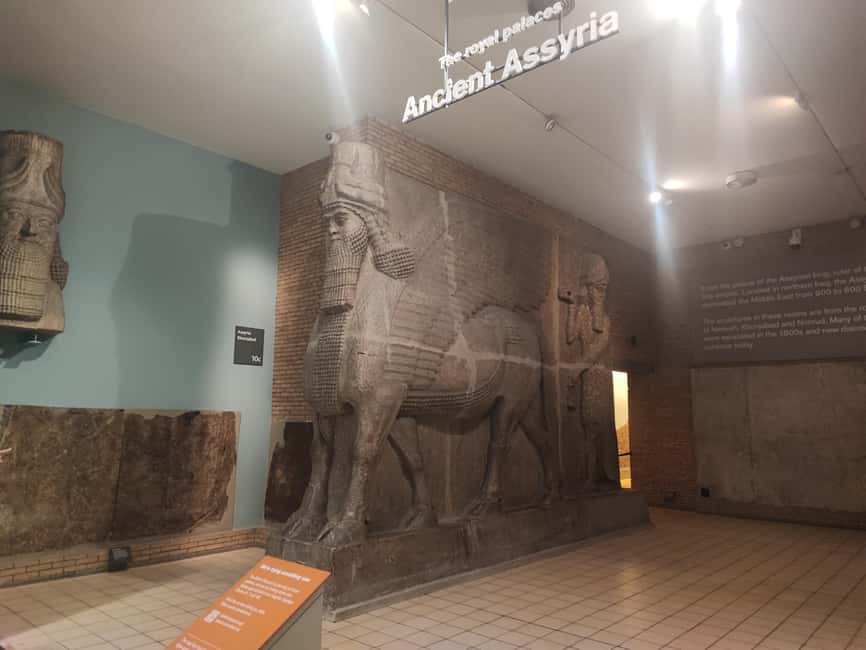
The ancient Mesopotamian section adds a practical side to the beauty theme. Mesopotamia is associated here with the wheel, siege engines, and modern farming. These are reminders that a civilization can influence your daily life through tools and systems, not just through grand sculpture or royal art.
This stop helps prevent the tour from becoming a narrow study of physical beauty. It asks what kind of human achievement deserves admiration. A wheel may look less glamorous than a carved figure, but its impact on transport and technology is enormous.
You may also find that Mesopotamian objects are less instantly familiar than the Rosetta Stone or Parthenon Marbles. That is one reason a guide is useful. Without context, early writing, reliefs, and tools can be hard to read. With a story, you can connect them to farming, conflict, trade, and the growth of organized society.
The tour does not claim to cover every part of Mesopotamian culture in detail. In a two-hour visit, this is a compact introduction. Think of it as a prompt to look more closely, not a complete survey.
Ancient India and ideas about the soul
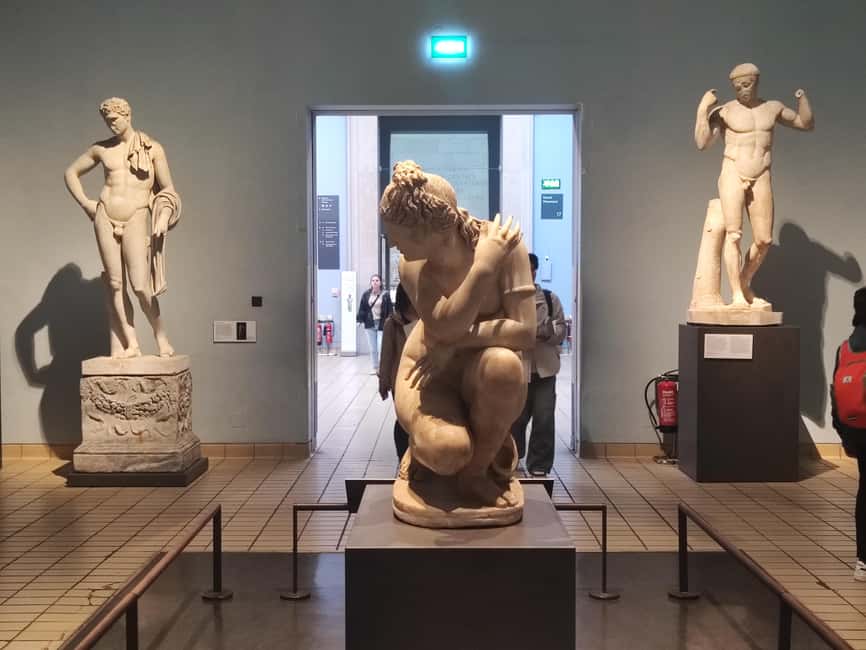
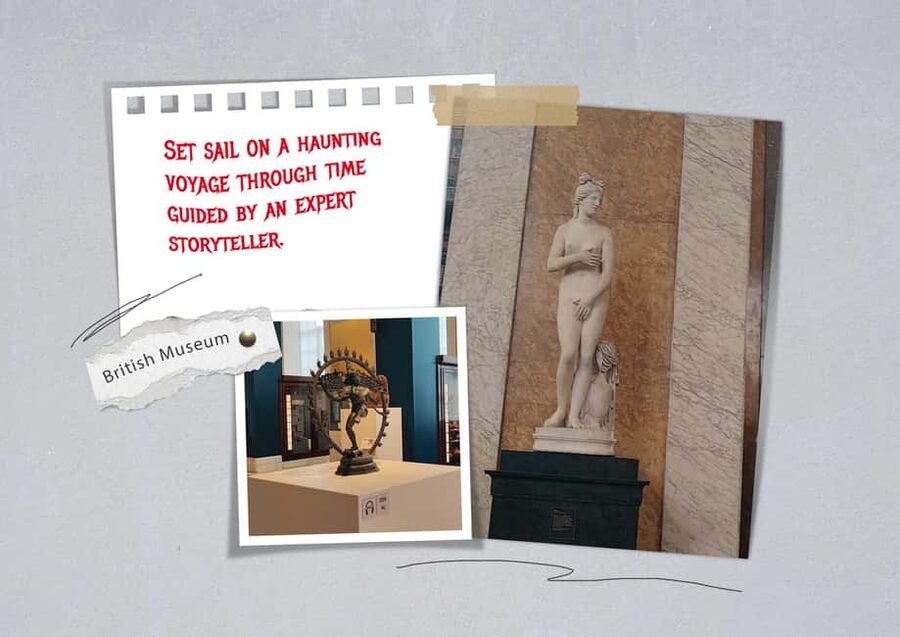
The India section shifts attention from the body to the inner life. The tour connects ancient India with yoga, rebirth, and paths toward enlightenment, then asks how those ideas continue to shape modern thoughts about life and the soul.
This is a useful change of pace after the Egyptian material. Instead of focusing mainly on what happens to the body after death, you consider broader beliefs about consciousness, rebirth, and spiritual release.
You should keep expectations measured. The supplied details do not name specific Indian objects or promise a full account of Indian religions. The value is in the comparison across cultures. The guide uses the museum’s objects to open a conversation about beliefs that remain familiar to many people today.
If you enjoy connections between ancient ideas and modern habits, this may be one of the more memorable sections. The light references to finding inner peace and needing a yoga mat suggest that the guide keeps the material accessible rather than overly solemn.
Tragic love and the emotions behind ancient art
The tour also looks at stories of tragic love and fate. This section asks what emotions these tales created for their original audiences and how artists presented those stories.
That is a strong choice for a museum tour because love and loss give you an emotional route into ancient art. You can look at a scene and think about the fear, longing, grief, or hope it was meant to create, not just its date or material.
The focus on audience reaction is especially helpful. Art was not made only for modern museum visitors. It once had a role in religious practice, public storytelling, private remembrance, or entertainment. The tour encourages you to imagine how earlier audiences might have responded.
The exact works included in this part are not specified, so the experience may vary in emphasis depending on the guide and the day. Still, the subject fits the overall theme well. Ideas of beauty often appear alongside desire, loss, youth, and fate.
Medieval stories about Jesus beyond the familiar accounts
One of the more unusual highlights is the discussion of Jesus Christ’s childhood in medieval visual storytelling. The description presents these works almost like medieval comic books, with images helping tell stories that are not part of the familiar biblical accounts.
This is a good reminder that religious art often contains more than the central narratives most people know. Artists and audiences created, circulated, and enjoyed additional stories about important figures. Those stories could satisfy curiosity, teach lessons, or make sacred subjects more human and approachable.
The subject may appeal to you if you enjoy seeing how religious traditions change through art and popular storytelling. It also fits the tour’s wider interest in alternative narratives, fate, and the way people shape meaning through images.
Do not expect a full course in Christian theology. The stop is one part of a broad museum route, and the focus is on visual stories and cultural imagination. Its unusual subject may be a welcome change from the museum’s most famous ancient objects.
What $33.67 gets you
At $33.67 per person, this is priced as an affordable guided introduction rather than a private museum experience. The fee includes the English-speaking guide, about two hours of touring, express security entry, and a group limited to eight people.
The value depends on what you want from the British Museum. If you already know the galleries well and enjoy choosing objects at your own pace, you may prefer a free self-guided visit. The museum’s scale gives independent visitors plenty to explore without paying for a tour.
If you are visiting for the first time, the price can make sense. You get a route through major highlights and several less obvious themes without spending hours deciding where to go. The small group is also more appealing than a large crowd gathered around a guide.
The tour does not include food, drinks, transportation, or hotel pickup. Those omissions are easy to plan around, but they matter when you compare the total cost of your day. You are paying for interpretation and structure, not an all-inclusive outing.
The tour has a full-refund cancellation policy up to 24 hours before the start, and you can reserve now and pay later. Those terms give you some flexibility if your London plans are still changing.
Who will enjoy this two-hour museum route?
I would suggest this tour to a first-time British Museum visitor who wants the famous pieces explained in a clear sequence. It also suits you if you like history presented through human questions rather than a list of rulers, dates, and materials.
The small group works well for solo visitors, couples, and families with older children who can manage moderate walking. The guide’s storytelling style and occasional humor may help keep the visit moving.
You may want a different option if you need wheelchair access or have limited mobility. The activity is specifically not suitable for wheelchair users or people with mobility impairments. Large bags are another concern, since backpacks are not allowed inside.
Photography is allowed without flash, so bring a camera if you want a few quiet reminders of the visit. You cannot use flash, and you should not expect to photograph every object without other visitors in the way.
Should you book the British Museum Highlights Tour?
Book it if you want a focused first look at the museum and enjoy comparing cultures through ideas of beauty, death, love, belief, and storytelling. The Rosetta Stone, Parthenon Marbles, Egyptian mummies, and medieval religious art give the two hours a strong range.
I would be especially comfortable recommending it at $33.67 if you value a very small group and do not want to plan your own route through millions of objects. The tour turns a huge institution into a manageable visit.
Skip it if you want hours with one collection, a specialist lecture, or complete freedom to stop wherever you like. Also skip it if walking is difficult or you need wheelchair access.
For most first-time visitors who can manage the pace, this is a practical way to see major British Museum highlights while asking larger questions about what people have admired, feared, loved, and believed across the centuries.
FAQ
How long does the British Museum Highlights Tour last?
The tour lasts about two hours.
What language is the tour conducted in?
The live tour guide speaks English.
How many people can join the tour?
The group is limited to a maximum of eight participants.
Where does the tour meet?
You meet at the group entrance to the British Museum, Edward VII’s Entrance. The guide will hold a My London Guide sign.
Where does the tour end?
The activity ends back at the meeting point.
Is entry to the museum included?
The tour includes fast-track entry through an express security check at the British Museum.
Can I bring a backpack or large bag?
No. Large bags and backpacks are not allowed inside the museum, so bring only what you can carry under the venue’s restrictions.
Is the tour suitable for wheelchair users?
No. The activity is listed as unsuitable for wheelchair users and people with mobility impairments.
Just added around London
- London: “Queen” Highlights Walking Tour★ 4.3 · 48 reviews
- Couple’s photo: Romantic photoshoot in London★ 4.8 · 22 reviews
- London: Private Tour with Locals – Highlights & Hidden Gems★ 5.0 · 8 reviews
- Luxury Private Tour in London with Lunch★ 5.0 · 7 reviews
- London 1- or 2-Hour Professional Photo Shoot★ 4.9 · 6 reviews
- London: Private Black Cab Night Tour with Hotel Pick Up★ 5.0 · 11 reviews
- London: Christmas Lights Tour – With Christmas Music★ 4.8 · 9 reviews
- London: A Unique Photoshoot Experience at Famous Sites★ 4.6 · 22 reviews
British Museum Tours, compared.
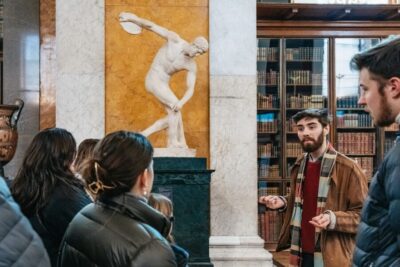
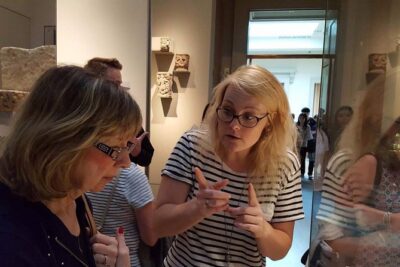
British Museum London Guided Tour Semi-Private 8ppl Max
Read our review →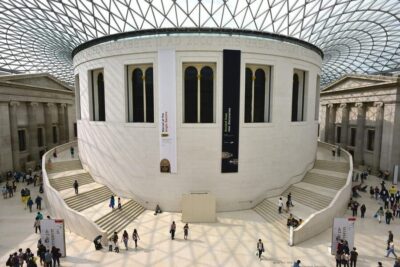
British Museum Audio Tour & Priority Entrance Ticket
Read our review →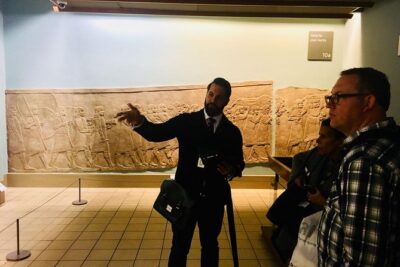
The British Museum London – Exclusive Guided Museum Tour
Read our review →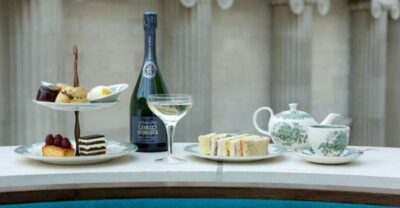
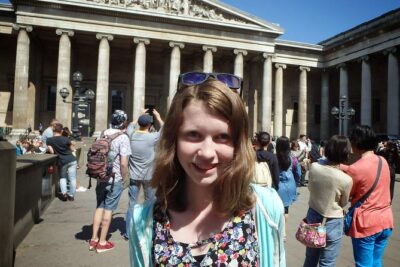
British Museum & National Gallery of London Semi-Private 8ppl Max
Read our review →Browse the lists this tour appears in