
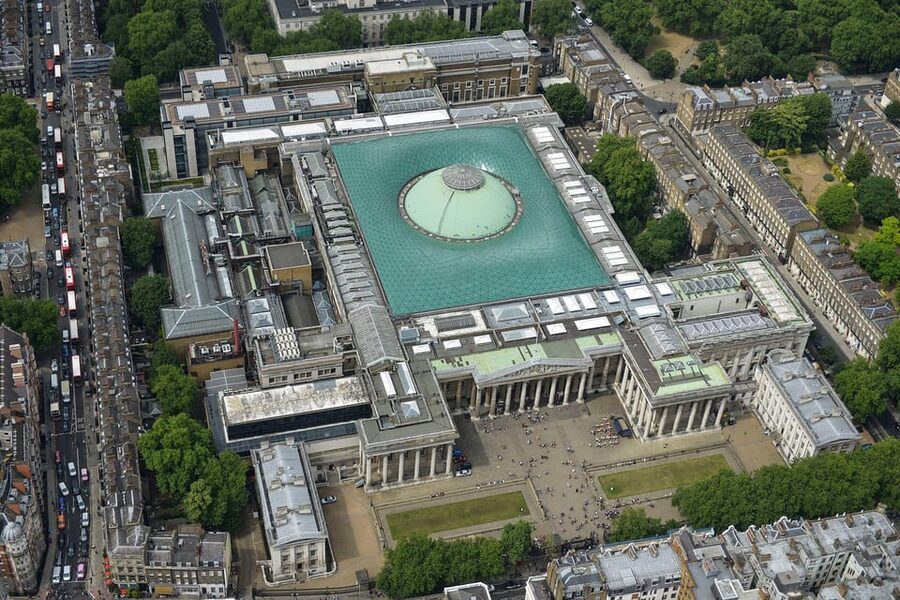
Reviewed · BRITISH MUSEUM TOURS
London: British Museum Guided Tour with Free Entrance Ticket
The British Museum can feel like a small city under one roof, so this two-hour tour makes a sensible first visit. You’ll move from the Rosetta Stone and Ramses II to the Parthenon sculptures, Assyrian winged lions, and an Aztec double-headed snake, with stories to give each object a point.
I like the clear route through famous highlights, and I like the fast-track entry, especially at a museum where the line and security check can slow you down. The main consideration is time: two hours gives you a strong introduction, not a full look at one of the world’s largest collections.
Key points
- The Rosetta Stone anchors the tour: See the stone that helped scholars read ancient Egyptian hieroglyphs.
- Ramses II brings ancient Egypt to life: The colossal statue offers a striking look at royal power and image-making.
- The Parthenon sculptures raise real questions: You’ll see the famous Athens sculptures and learn why their ownership remains controversial.
- The route reaches beyond the headline objects: Look for Moai, Sutton Hoo, the Lewis Chessmen, and the Mold Cape.
- Fast-track entry saves useful time: You still need security screening, and the meeting entrance may change during crowded periods.
- Angel has earned special praise: One recent tour with Angel was noted for strong stories and clear communication during a train delay.
Why a guided British Museum visit helps
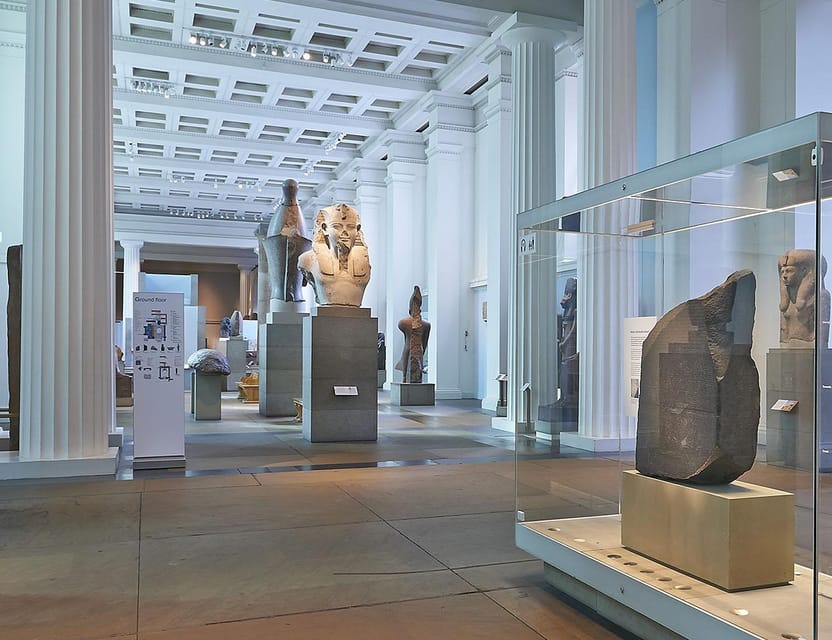
The British Museum is free to enter, but free admission does not make it easy to understand. Its rooms cover objects from ancient Egypt, Greece, Rome, Assyria, Britain, Easter Island, and the Aztec world. On your own, you can easily spend an hour wandering between galleries without seeing the objects you came for.
This tour gives you a short, deliberate path. Your guide points out major pieces, explains why they matter, and adds the stories that labels often leave out. That is useful if you have only one afternoon in London or if you want a strong introduction before returning later on your own.
The advertised price is $35 per person. Since general museum admission is free, you are paying for the guide, the organized route, and fast-track entry rather than for access alone. I consider that fair if you value context and want to use your time well. It is less appealing if you enjoy reading every label at your own pace or already know the collection well.
The tour is available in English, Spanish, or Italian. A private group option is also available, which may suit families or friends who want a more personal pace.
More British Museum Tours:
- London: British Museum Guided Tour
★ 4.3 · 1,182 reviews - British Museum London Guided Tour Semi-Private 8ppl Max
★ 5.0 · 984 reviews - London: Tour of the British Museum
★ 4.1 · 678 reviews
Meeting your guide after security
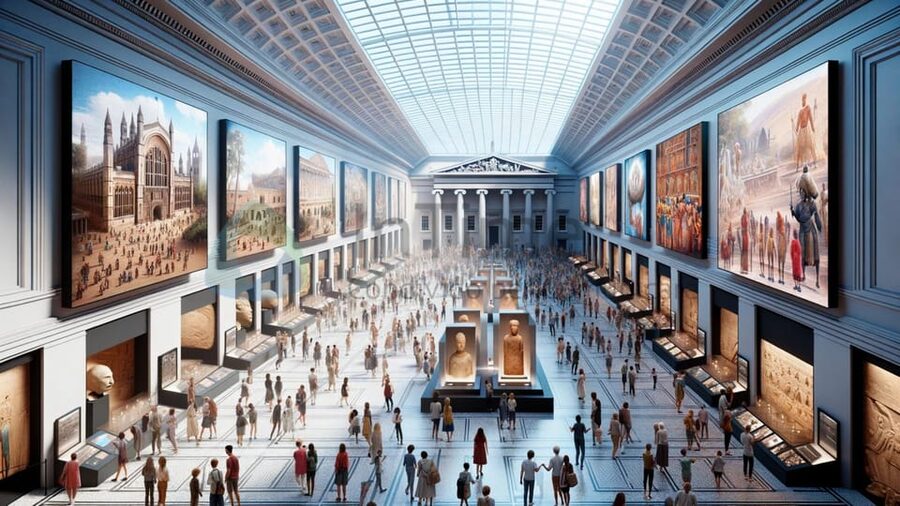
Plan to arrive at least 15 minutes before your scheduled start. The meeting point is at the main entrance, after the security check, on the staircase. You should not treat this as a quick walk straight into the galleries. Bags are checked, and busy periods can make the entrance slow.
The British Museum is one of London’s most visited museums, and the entrance plan can change when crowds are heavy. The instructions specifically warn that groups may sometimes be sent to the Montague Place entrance instead. Check your WhatsApp messages before leaving for the museum and again as you approach.
One practical wrinkle came up with a larger group. Groups of more than eight people may not be allowed to enter through the front route described in the standard meeting instructions. In that case, you may need to walk around to the back entrance. This is not a major problem, but it is a good reason to arrive early and keep your phone available.
Fast-track entry helps once the group is in position, but it does not mean you can ignore security or arrive at the last minute. Wear comfortable shoes, keep your belongings light, and remember that backpacks are not allowed.
The Rosetta Stone and the key to Egyptian writing
The Rosetta Stone is usually the first major stop, and it earns its place. The stone carries the same decree in three forms of writing, including ancient Greek and two Egyptian scripts. Comparing those versions helped scholars make progress with Egyptian hieroglyphs.
You will not simply be shown a famous slab and hurried along. The point of the stop is to understand why the object mattered. It is a piece of evidence, not just a famous artifact. Once you see how the scripts relate to one another, the museum’s Egyptian displays become easier to approach.
Crowds can gather around the Rosetta Stone, so your guide’s position matters. Stay close enough to hear and look for the details being discussed. Flash photography is not allowed, and you should expect to share the space with other museum visitors.
Ramses II and the image of royal power
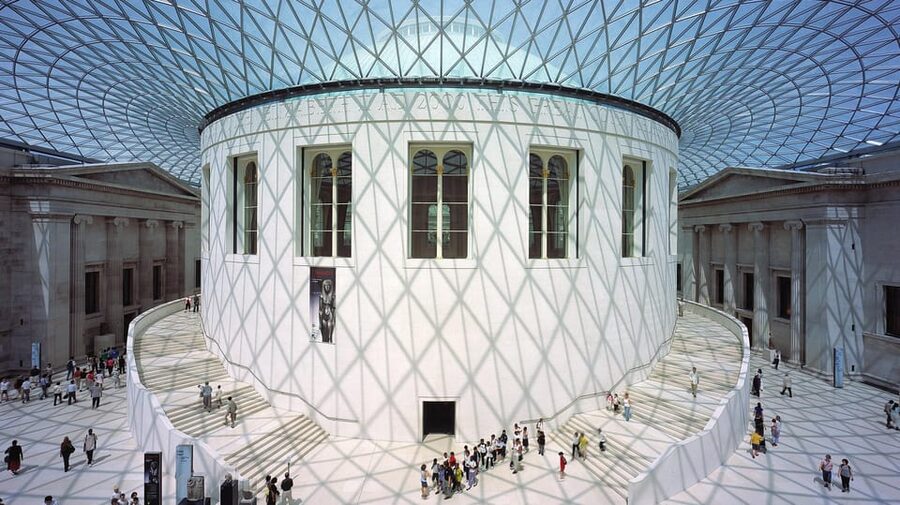
The colossal statue of Ramses II gives the Egyptian section a different kind of impact. The Rosetta Stone is important because of what it helped scholars read. Ramses is impressive because of scale, pose, and political message.
The statue presents the pharaoh as powerful and enduring. A guide can help you read the posture and setting as part of an official image, rather than treating it as a simple portrait. This is one of the stops where a short explanation adds real value, since size alone does not tell you what the statue meant to the people who saw it in ancient Egypt.
You may find this part of the tour especially useful if you are new to Egyptian art. The guide links the object to the wider collection without asking you to memorize dates or names. The route keeps moving, so you get the main idea without becoming stuck in one gallery.
A different sort of day out in London altogether:
- From London: Harry Potter Warner Bros Studio Tour
★ 4.7 · 26,588 reviews - London: Westminster to Greenwich River Thames Cruise
★ 4.5 · 22,836 reviews - Magical London: Harry Potter Guided Walking Tour
★ 4.7 · 22,044 reviews - London: Madame Tussauds London
★ 4.6 · 20,915 reviews
The Parthenon sculptures and a difficult museum question
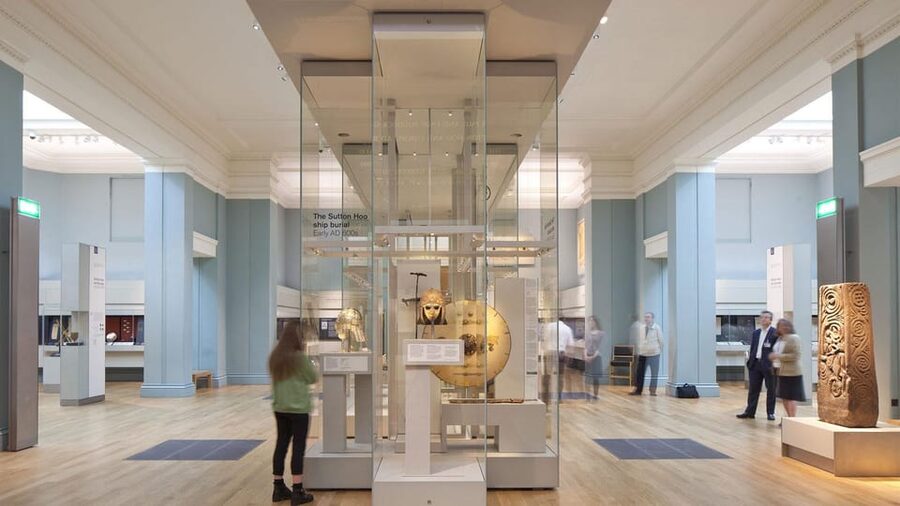
The sculptures commonly called the Elgin Marbles are among the museum’s most debated objects. They came from the Parthenon in Athens and are often presented as examples of ancient Greek art. They also raise a direct question: who should own and display objects removed from another country?
A good stop here should do more than praise the craftsmanship. You will have a chance to look at the sculptures while hearing about their contested place in the museum. The tour does not turn into a full seminar on museum ethics, but it gives you useful context for why these rooms can feel politically charged as well as artistically important.
This is an important benefit of a live guide. A label can identify a sculpture. A guide can help you understand why its location matters and why the name Elgin Marbles is not neutral for everyone. If you want a long discussion of repatriation, two hours will not be enough, but this stop gives you a solid starting point.
Assyrian lions and the force of monumental art
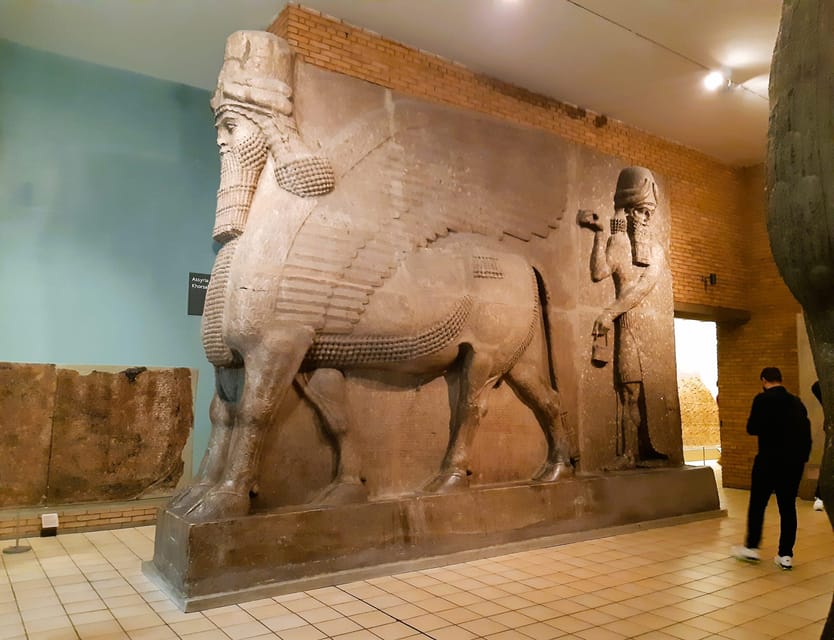
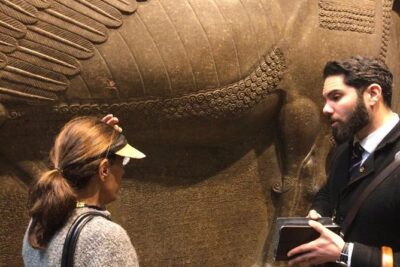
The Assyrian human-headed winged lions are among the most memorable objects on the route. They combine a human head, wings, and a lion’s body, creating guardians that look both intelligent and physically powerful.
These figures were made to protect important spaces and to project authority. Their size and hybrid design make them easy to appreciate even if you know little about Assyrian history. Your guide can draw your eye to the mixture of animal strength, human thought, and supernatural protection.
This is also a good change of pace after the Egyptian and Greek highlights. The museum’s collection is not only a sequence of famous individual objects. It shows different societies using art to present power, defend sacred or royal spaces, and shape public memory.
The Aztec double-headed snake
The Aztec double-headed mosaic snake is a smaller object in spirit than the colossal Egyptian statue, but it has its own force. Its surface is covered with mosaic material, and the two heads give it a striking, almost surreal appearance.
The tour describes it as one of the museum’s rarest objects. That makes this stop easy to miss on an unguided visit, especially when larger galleries pull your attention away. A guide helps you pause for the details and place the snake within the artistic world of the Aztec civilization.
You should expect the tour to move fairly quickly here. The point is to see a remarkable object and understand why it matters, not to spend half an hour studying every piece of the mosaic.
Moai, Sutton Hoo, and the wider collection
The route does not stop with the usual ancient Mediterranean and Egyptian favorites. You will also see a Moai sculpture from Easter Island. Its simple outline is immediately recognizable, but the important experience is seeing it within a museum collection that brings objects from distant cultures into the same building.
The Sutton Hoo material offers a very different story. The burial ship is one of the most important discoveries in British archaeology, and its objects show the sophistication of early medieval Britain. This part of the visit helps correct the idea that the British Museum is mainly about Egypt, Greece, and Rome.
You will also see Roman Britain, where the objects connect the wider Roman world to the history of the British Isles. The Mold Cape, associated with the Stonehenge era, gives another glimpse of prehistoric Britain. It is an ornate gold object, and its presence shows how much artistic skill existed in Britain long before the Roman period.
The Lewis Chessmen add a lighter but still valuable stop. These medieval chess pieces from the Isle of Lewis are among the most recognizable objects in the collection. Their carved faces make them approachable, while their age and setting open a window onto medieval life, trade, and leisure.
This mix is one of the tour’s strengths. You get a rapid tour across continents and periods rather than a narrow lesson on one civilization. The drawback is that each stop receives only a short explanation. If Sutton Hoo or the Lewis Chessmen interests you most, plan to return after the guided visit and spend more time there.
What the two-hour format feels like
Two hours is long enough to cover the museum’s headline objects without turning the visit into an all-day commitment. It is also short enough to fit before dinner, a theater booking, or another central London activity.
The pace may feel brisk. You will walk between rooms, stop for explanations, and then move on before every detail has had time to sink in. That is the trade-off for seeing such a broad range of objects in one visit.
I would treat this as an orientation tour. Let the guide give you the framework, note the objects you want to revisit, and then stay behind afterward if museum access and your schedule allow. The organized route matters most when you are visiting for the first time or have limited time in London.
Guide quality can shape the experience. Angel received particularly warm feedback for his stories and for contacting the group during a train delay so they knew what to do while waiting. That detail matters because communication is important when meeting instructions can change. Tours are still live experiences, so guides will have different personalities and pacing, but the available information points to strong storytelling as a notable strength.
Practical details that affect your visit
Book online if you want the fast-track arrangement. Arriving without the tour booking may leave you dealing with the regular entry process and a crowded museum entrance.
Bring a camera if you wish, but do not use flash photography. Water and comfortable shoes are sensible, since the visit involves walking and standing. Backpacks are not allowed, so pack lightly and check the current museum instructions before setting out.
The experience is not suitable for wheelchair users or people with mobility impairments. That restriction is important to consider before booking. If anyone in your group has difficulty walking or standing, this is not the right format based on the stated conditions.
The tour includes the guide, fast-track entry, and access to the featured museum objects. It does not include hotel pickup, food, drinks, or personal expenses. You need to make your own way to the museum and handle any refreshments separately.
Free cancellation is available up to 24 hours before the scheduled tour for a full refund. You can also reserve now and pay later, which is useful when your London plans are still shifting.
Who should book this British Museum tour?
I would recommend it to a first-time visitor who wants the major objects explained without spending hours planning a route. It also suits couples, families with older children, and anyone who prefers stories and connections over reading dozens of gallery labels.
The tour is a good match if the Rosetta Stone, Ramses II, Parthenon sculptures, Assyrian lions, and Aztec snake are on your must-see list. It is also useful if you want to discover less obvious highlights such as Sutton Hoo, the Mold Cape, and the Lewis Chessmen.
I would think twice if you want a slow, scholarly visit. The museum is too large to cover in two hours, and the guide has to keep the group moving. You may also prefer another option if you use a wheelchair or have significant mobility limits.
At $35, the value rests on your priorities. You are not paying for a rare admission ticket. You are paying to save time at the entrance and to turn a huge collection into a manageable, meaningful route. For many first visits, that is money well spent.
Should you book it?
Book this tour if you want a clear introduction to the British Museum, fast-track entry, and a guide who can connect famous objects with less familiar ones. The Rosetta Stone, Ramses II, Parthenon sculptures, Assyrian lions, Aztec snake, Moai, and Sutton Hoo make a strong two-hour lineup.
Skip it if you prefer to wander alone, need wheelchair access, or want to spend a full day on just a few galleries. If you do book, arrive early, check WhatsApp for entrance changes, keep your bag small, and plan to return to your favorite section after the guide finishes.
FAQ
How long does the British Museum guided tour last?
The tour lasts two hours. Starting times vary, so check availability when booking.
What objects will I see on the tour?
The route includes the Rosetta Stone, the colossal statue of Ramses II, the Parthenon sculptures known as the Elgin Marbles, Assyrian human-headed winged lions, the Aztec double-headed snake, a Moai sculpture, Sutton Hoo, Roman Britain, the Mold Cape, and the Lewis Chessmen.
Where do I meet the guide?
Meet at the British Museum’s main entrance after the security check, on the staircase. During busy periods, the entrance may change to Montague Place, so check your WhatsApp messages for updates.
How early should I arrive?
Arrive at least 15 minutes before your scheduled tour. Security and crowded entry conditions can take time.
What languages are available?
Live tours are available in English, Spanish, and Italian. A private group option is also available.
Is museum admission included?
Fast-track entry and access to the British Museum’s featured objects are included with the tour.
Can wheelchair users join the tour?
The experience is not suitable for wheelchair users or people with mobility impairments.
Just added around London
- London: “Queen” Highlights Walking Tour★ 4.3 · 48 reviews
- Couple’s photo: Romantic photoshoot in London★ 4.8 · 22 reviews
- London: Private Tour with Locals – Highlights & Hidden Gems★ 5.0 · 8 reviews
- Luxury Private Tour in London with Lunch★ 5.0 · 7 reviews
- London 1- or 2-Hour Professional Photo Shoot★ 4.9 · 6 reviews
- London: Private Black Cab Night Tour with Hotel Pick Up★ 5.0 · 11 reviews
- London: Christmas Lights Tour – With Christmas Music★ 4.8 · 9 reviews
- London: Private Pub Tour★ 4.5 · 4 reviews
British Museum Tours, compared.
British Museum London Guided Tour Semi-Private 8ppl Max
Read our review →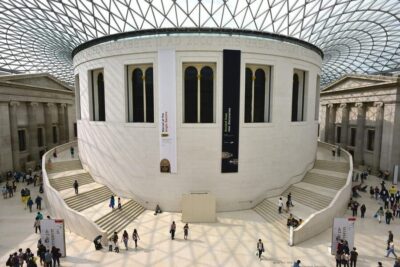
British Museum Audio Tour & Priority Entrance Ticket
Read our review →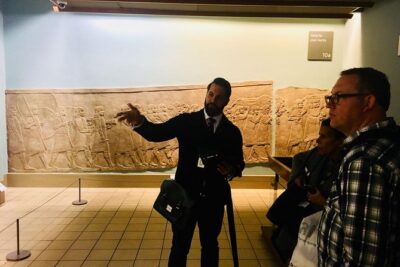
The British Museum London – Exclusive Guided Museum Tour
Read our review →

British Museum & National Gallery of London Semi-Private 8ppl Max
Read our review →Browse the lists this tour appears in