
Reviewed · BRITISH MUSEUM TOURS
British Museum Private Tour: Ancient Daemons and Timeless Beauty
The British Museum can swallow a whole morning before you reach the exhibits you came to see. This private tour gives you a clear route through its greatest treasures, with an art specialist such as Richard or Yuliya turning objects into stories rather than leaving you to read your way through room after room.
I like the small private format, which lets you ask questions and adjust the focus. I also like the way the tour links distant cultures through big ideas: writing, death, beauty, power, strategy, and creation. The main drawback is simple: two hours can only cover a fraction of a museum holding more than 8 million objects. The advertised details also refer to groups of up to six in one place and up to eight in another, so confirm your exact group limit before booking.
Key points to know before you book
- The Rosetta Stone anchors a story about forgotten languages and deciphering the past.
- Sutton Hoo and the Lewis chessmen add memorable British and European treasures to the route.
- Egyptian mummies, Parthenon Marbles, and Shiva Nataraja bring very different beliefs and artistic traditions together.
- Richard and Yuliya have both received special praise for clear storytelling, flexibility, and thoughtful answers.
- The tour takes about two hours, with fast track entry and no separate museum admission charge listed.
- The $203.65 group price can make sense for a larger party, but less so for one or two people.
Why a private British Museum route helps
The British Museum is free to enter, but free does not mean easy. Its collection covers thousands of years and many parts of the world. Without a plan, you can spend a lot of time walking, checking maps, and wondering if you have missed the pieces that matter most.
This tour gives you a human guide and a central theme. The title points toward ancient daemons and timeless beauty, but the route reaches well beyond sculpture. You move from writing and empire to burial customs, games, religion, and changing ideas about the human body.
That approach suits me better than a rapid march through a list of famous objects. You are not simply shown a stone, a helmet, or a statue. You are given a reason to look at it, then a connection to the next stop.
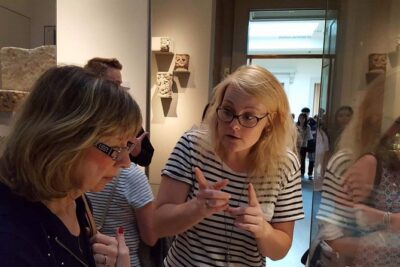
The private setting matters most for families and small groups. You can ask why an object was made, how it was found, or what its symbols mean. One family had the route adjusted toward its main interests, and the guide added another half-hour without an extra charge. That kind of flexibility is not guaranteed, but it shows why a private booking can be more useful than a large scheduled group.
More British Museum Tours:
- London: British Museum Guided Tour
★ 4.3 · 1,182 reviews - British Museum London Guided Tour Semi-Private 8ppl Max
★ 5.0 · 984 reviews - London: Tour of the British Museum
★ 4.1 · 678 reviews
Meeting the guide at Montague Place
The tour begins at Montague Place in London, outside the British Museum area. The meeting point is near public transportation, which makes it practical for a day in central London.
You receive confirmation when you book, and the activity ends back at the same meeting point. Plan to arrive with enough time to find Montague Place and meet your guide without rushing. One guide was especially accommodating when a group arrived a little late, but I would not treat that kindness as permission to cut it close.
The tour is offered in English. The guides named in the supplied information are Richard and Yuliya, also written as Yulywa in one account. Richard is praised for making the museum approachable and for answering many questions. Yuliya is praised for her detailed explanations, warm manner, and ability to tailor the route.
The exact guide depends on availability. If one person in your party has a particular interest, it is sensible to raise it at the start. A private tour works best when the guide knows what you want to understand, not only what you want to photograph.
Under the British Museum’s glass roof
Once inside, the museum’s Great Court provides an impressive start. The roof is a large glass canopy designed by Norman Foster, and it gives the central space a bright, open feel. From here, the museum spreads into galleries holding more than 8 million artifacts.
That number explains both the appeal and the problem. You will see only a small portion during this tour, but a carefully chosen portion can be far more satisfying than a hurried attempt to cover everything.
The guide’s job is to help you move between galleries without losing the thread. The advertised route includes some of the museum’s best-known objects, but the pace and order can change according to your interests. You may spend more time on ancient sculpture, for example, or ask for greater attention to Egypt, Britain, India, or classical Greece.
Admission to the museum is listed as free, while the tour includes fast track entry. The paid element is the private guiding service, not a standard museum ticket. That distinction is important when comparing this option with a free self-guided visit.
The Rosetta Stone and the power of written words
The Rosetta Stone is one of the strongest early stops because it turns a large historical question into a physical object. It carries the same decree in different scripts, allowing scholars to make progress with Egyptian writing.
You do not need specialist training to appreciate the point. The stone shows how language can disappear from common use, then become readable again through patient comparison. A guide can make that process understandable without turning the stop into a lecture.
For families, this is a useful moment because it feels like a puzzle. For adults, it offers a reminder that museums preserve more than beautiful things. Some objects provide the key for understanding entire cultures.
Expect the area around major objects to attract attention. A private guide cannot make the museum empty, but can help you focus quickly and place the object in context before moving on.
A different sort of day out in London altogether:
- From London: Harry Potter Warner Bros Studio Tour
★ 4.7 · 26,588 reviews - London: Westminster to Greenwich River Thames Cruise
★ 4.5 · 22,836 reviews - Magical London: Harry Potter Guided Walking Tour
★ 4.7 · 22,044 reviews - London: Madame Tussauds London
★ 4.6 · 20,915 reviews
The Parthenon Marbles and the question of empire
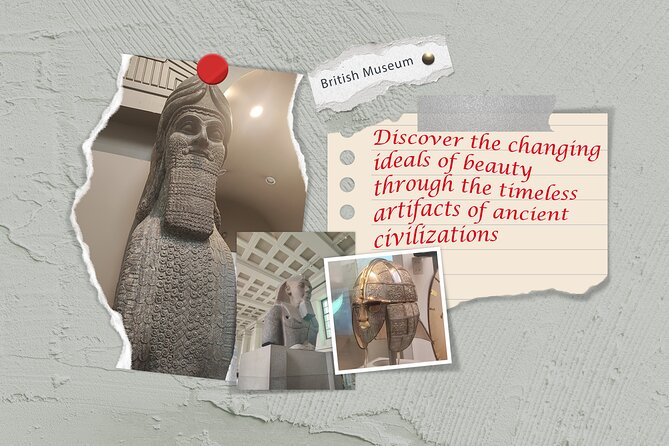
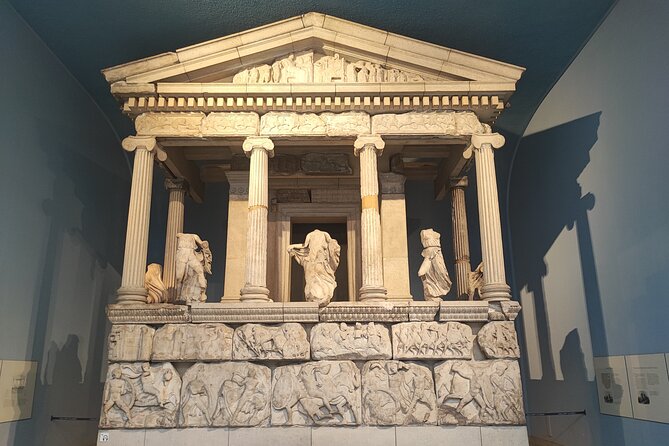
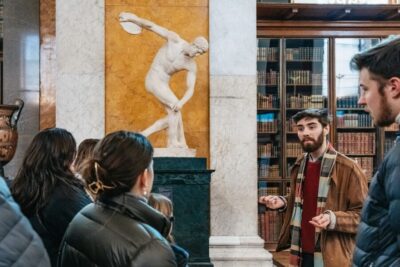
The Parthenon Marbles bring the tour into ancient Greece and also into the modern debate about ownership, empire, and museum display. They are admired for their carved figures, movement, and attention to the human form, but they also raise questions that do not have a simple answer.
A good guide should let you appreciate the art while acknowledging the controversy around how these sculptures came to London. This is one reason a live conversation is valuable. You can ask questions rather than accept a single polished explanation.
The sculptures also fit the tour’s theme of beauty. Their treatment of bodies, fabric, and motion gives you a chance to consider how ideals of proportion and grace change across time.
I would expect the guide to spend more or less time here based on your interests. If classical art matters most to you, say so early. If you prefer objects connected to daily life, religion, or Britain, the route can likely shift.
Egyptian mummies and the meaning of death
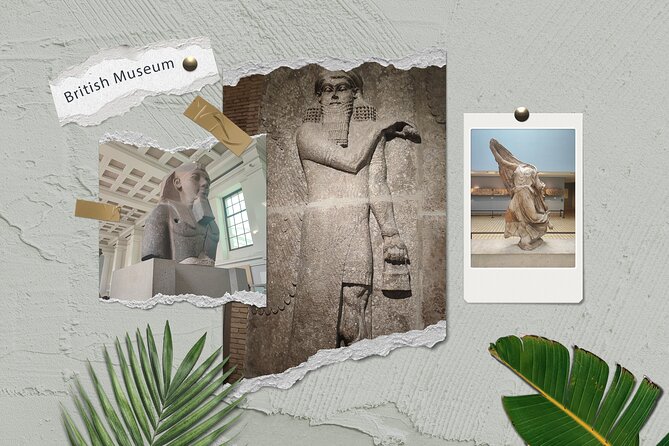
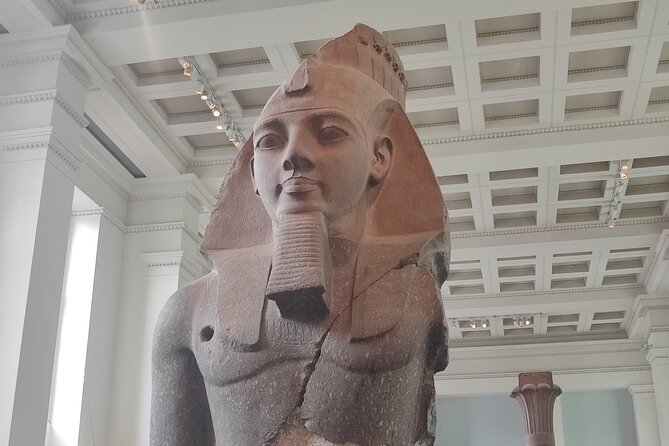
The Egyptian galleries change the mood. Mummies rest in silence, but the objects around them can reveal much about care for the dead, religious belief, and ideas about what comes after life.
This is not only a stop for dramatic displays. It can also help you think about the people behind the objects. Burial practices show what a society valued, feared, and hoped to preserve.
The guide can help you read the images and objects as part of a belief system rather than as isolated curiosities. That matters in a museum where it is easy to look briefly, take a picture, and move on.
Some younger children may find mummies unsettling, though the supplied information does not set an age restriction. If anyone in your group is sensitive to the subject, mention it when the tour begins so the guide can judge the pace.
Sutton Hoo and an Anglo-Saxon voyage
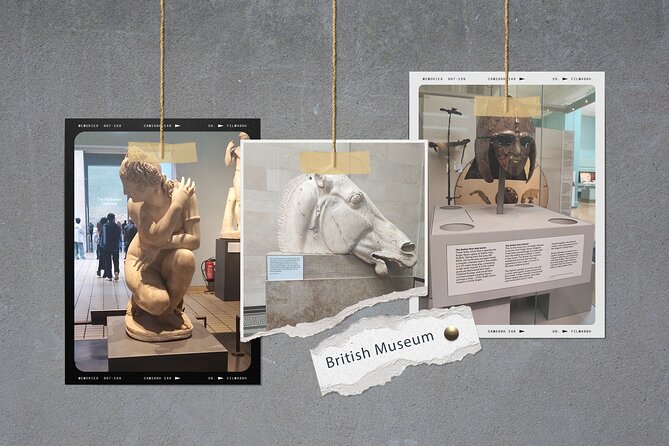
Sutton Hoo brings the story closer to Britain. The burial find is linked with an Anglo-Saxon warrior and a ship burial, creating a vivid question about status, travel, warfare, and the journey into death.
This is one of the route’s most memorable contrasts. You can move from famous Mediterranean sculpture to a British burial site with its own clues about power and belief. The object does not need a long explanation to create interest, but the guide can show you how small details build a picture of a vanished world.
For visitors focused on London and British culture, Sutton Hoo may be especially important. It adds local relevance to a museum that otherwise reaches across continents.
The wording of the tour presents this as a mystery surrounding the warrior’s last voyage. You should expect interpretation rather than a final answer to every question. Archaeology often works by assembling partial evidence.
The Lewis chessmen and the fun of a small object
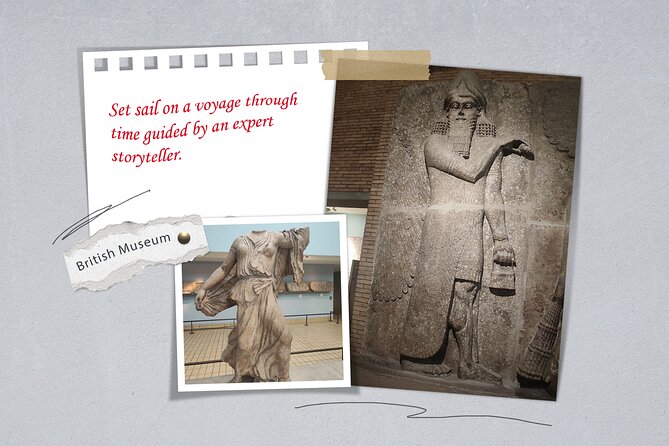
The Lewis chessmen offer a lighter, more playful stop. These carved pieces connect art with strategy, competition, and personality. Their faces and postures make them unusually easy to remember, even for people who are not keen on ancient objects.
The chessmen also show how a small group of objects can carry several stories at once. You can look at craftsmanship, game culture, social rank, and the way people entertained themselves. A guide can use them to show that a museum visit is not only about temples, rulers, and funerals.
I like this stop because it breaks up the solemnity of mummies and monumental sculpture. It also works well for mixed-age groups. Children may respond to the game, while adults can focus on the carving and the clues about medieval life.
Shiva Nataraja and the cycle of creation
Shiva Nataraja introduces a different visual language and a different way to think about time. The dancing figure presents creation and destruction as part of a cosmic cycle, giving the tour a strong connection between movement, religion, and art.
This is a good example of why a guide matters. Without explanation, a sculpture can be admired only for its shape. With context, the pose, gestures, surrounding symbols, and dance become part of a larger idea.
The stop also broadens the tour beyond the familiar European and Egyptian highlights. You are encouraged to compare how different cultures express the forces that shape life and death.
If South Asian art is a priority, tell the guide at the start. The route includes many civilizations, but two hours will not allow a long treatment of every gallery.
Ancient sculpture and changing ideas of beauty
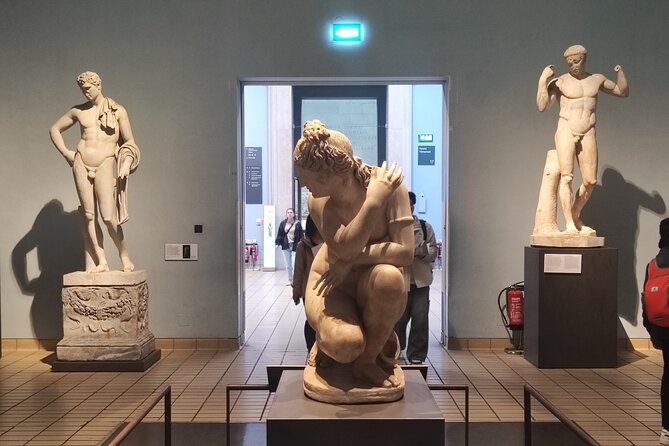
The tour also looks at how standards of beauty have changed. Ancient sculptures are useful for this because they show how artists represented bodies, faces, clothing, youth, strength, and ideal form.
This is more interesting than asking which statue is the most beautiful. The better question is what a culture wanted the human body to communicate. A figure might suggest power, virtue, divinity, fertility, or control.
I appreciate this theme because it ties the museum’s objects together. It can connect the Parthenon Marbles with other sculptures and help you notice choices that might otherwise pass without comment.
Do not expect a complete survey of beauty across every civilization. The guide will select examples that fit the available time and your group’s interests. The value is in learning how to look, then carrying that habit into the rest of the museum.
How much can you see in two hours?
The tour is described as lasting about two hours, while the wider experience is listed as roughly two to three hours. That extra flexibility may reflect the pace of a private group, questions, or time spent at the meeting and entry point.
Two hours is enough for a strong introduction to major objects. It is not enough to explore the British Museum in full. If you want every gallery, this is the wrong format. If you want a guided selection that gives you a structure for returning later, it is a sensible choice.
The guide may move at a smooth pace from one major stop to the next. You should wear comfortable shoes and keep your expectations realistic, though the supplied information does not promise a specific route or number of galleries.
The fast track entry is useful because it protects more of your limited time for the collection. It does not mean every room will be quiet or that you will bypass every possible wait. It simply gives the tour a more efficient start.
Is $203.65 good value for your group?
The listed cost is $203.65 per group, not per person, with the information giving two different maximum group sizes: up to eight in the price summary and up to six in the tour highlights. Confirm the limit before paying, especially if your party has more than six people.
For six or eight people, the price works out far better per person than it does for a couple. A group of eight would pay about $25 per person, while two people would pay a little over $101 each. The exact value depends on your group size and how much you want personal attention.
I would consider it good value for a family or small group that wants guidance, questions answered, and a route shaped around specific interests. A solo visitor or couple who enjoys reading labels and wandering at their own pace may prefer the free museum entry.
Food and drinks are not included. Plan for those separately, particularly if you book a longer session or continue sightseeing afterward.
Who should choose this tour?
This tour suits you if:
- You are visiting the British Museum for the first time.
- You want the famous objects without planning your own route.
- Your group includes children or mixed interests.
- You prefer conversation and questions to a recorded guide.
- You want to compare Egypt, Greece, Britain, India, and other cultures in one visit.
- You have a short London schedule and need an efficient introduction.
It is less suitable if you want a quiet, unstructured museum day or a specialist treatment of just one collection. The theme is broad, and the time is limited.
The private format is also useful for groups with different energy levels or interests. Richard and Yuliya have been praised for kindness, flexibility, and clear explanations. Those qualities can make a large museum feel less tiring, especially when the guide adjusts the route rather than forcing everyone through the same script.
Booking, cancellation, and practical details
The experience is offered in English and uses a mobile ticket. Confirmation arrives at the time of booking, and most people can participate. The meeting and ending point is Montague Place, near public transportation.
Free cancellation is available if you cancel at least 24 hours before the local start time. A cancellation made less than 24 hours before the start is not refunded, and changes inside that window are not accepted.
Since the museum itself is free, compare this tour with your own interest in planning. The real purchase is the guide’s time, the private setting, and a faster path through the collection.
Should you book the British Museum private tour?
I would book it for a family, small group, or first-time visitor who wants the museum to make sense quickly. The strongest reasons are the private format, the mix of major objects, and guides who can explain difficult subjects in plain language while adjusting the route.
I would skip it if your group is very small and comfortable exploring alone. In that case, the $203.65 cost may be hard to justify when museum entry is free.
For most people who feel overwhelmed by the British Museum’s size, this is a practical way to begin. You will not see everything, but you should leave with a clear sense of what you saw and why it matters.
FAQ
How long does the British Museum private tour last?
The guided portion lasts about two hours. The full experience is listed as approximately two to three hours.
What does the tour cost?
The listed price is $203.65 per group. The information gives a group limit of up to eight in one place and up to six in another, so confirm the applicable maximum when booking.
Is British Museum admission included?
The museum admission ticket is listed as free. The experience includes fast track entry and a guided museum tour.
Which objects are included on the route?
The planned highlights include the Rosetta Stone, Parthenon Marbles, Egyptian mummies, Sutton Hoo, the Lewis chessmen, Shiva Nataraja, and ancient sculptures showing changing ideas about beauty.
Who leads the tour?
The named guides are Richard and Yuliya. The tour is offered in English, and the assigned guide depends on availability.
Where does the tour start and finish?
The tour starts at Montague Place, London, and ends back at the meeting point.
Can I cancel for a full refund?
Yes. You can cancel at least 24 hours before the experience start time for a full refund. Cancellations or changes made less than 24 hours before the start are not accepted for a refund.
Just added around London
- Private Chauffeur-London Heathrow from/to Southampton Cruise Port★ 5.0 · 9 reviews
- Kensington Palace VIP Garden Tour with Royal High Tea★ 4.5 · 71 reviews
- Up at The O2:Twilight Climb with Guided Tour with Panoramic Views★ 5.0 · 50 reviews
- Up at The O2: Sunset Climb with Guided Tour with Panoramic Views★ 5.0 · 110 reviews
- Secrets of the London Underground Small Group Walking Tour★ 4.5 · 38 reviews
- Urban Canvas: Exploring Shoreditch’s Vibrant Street Art★ 5.0 · 36 reviews
- Ultimate introduction to photography in Central London★ 5.0 · 19 reviews
- Full-Day Self-Guided Paris Tour from London by Eurostar with Seine River Cruise★ 3.5 · 22 reviews
British Museum Tours, compared.
British Museum London Guided Tour Semi-Private 8ppl Max
Read our review →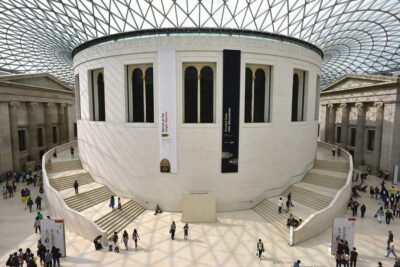
British Museum Audio Tour & Priority Entrance Ticket
Read our review →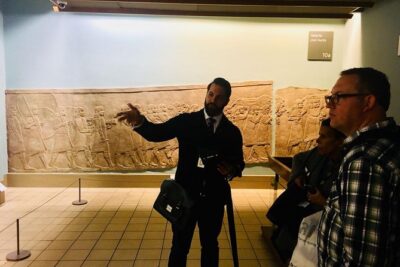
The British Museum London – Exclusive Guided Museum Tour
Read our review →
Private Guided Tour of the British Museum – Tickets Included
Read our review →Browse the lists this tour appears in