
Reviewed · BRITISH MUSEUM TOURS
British Museum Highlights Private Tour in London including the Rosetta Stone
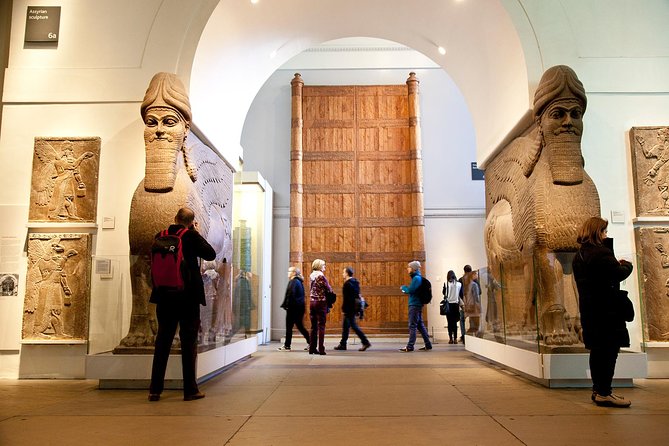
The British Museum can swallow a whole day before you reach the Rosetta Stone. This private highlights tour gives you a route through the museum’s biggest draws, from Egyptian mummies to the Parthenon Frieze, with a guide explaining why each object matters.
I like the focused route and the chance to ask questions without a large public group setting the pace. I also like the freedom afterward: you can return to the galleries that caught your eye and keep exploring on your own.
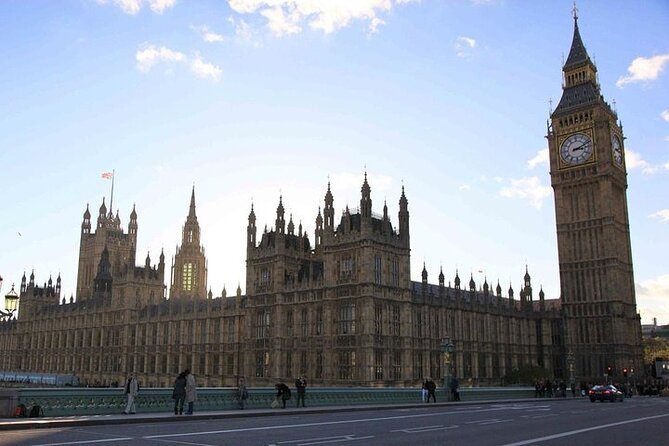
The main caution is value. The museum itself is free, so $141.56 per person buys guidance, organization, and time saved rather than admission. Meeting your guide can also be awkward if the sign or instructions are unclear, so arrive early and know the north entrance on Montague Place.
Key points at a glance
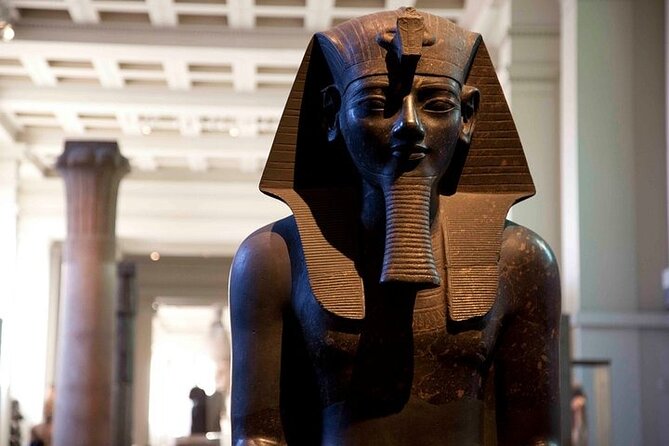
- Rosetta Stone and Egyptian rooms: See the famous stone that helped decode Egyptian hieroglyphs, then explore mummies and ancient ideas about death and the afterlife.
- A fast route through a huge museum: The British Museum has more than eight million objects across 70 galleries, making a guide useful when you have only a few hours.
- Major Greek and British treasures: Expect the Parthenon Frieze, Athenian marbles, and Anglo-Saxon finds from the Sutton Hoo burial.
- Private English-speaking guide: Your group can ask questions and request extra attention to subjects that interest you.
- Good for a short London visit: The tour is designed to help you see important objects without spending hours finding your way around.
- Plan the meeting carefully: Meet on Montague Place by the north entrance, marked by stone lions. The guide is meant to hold a sign, but this has not always gone smoothly.
Why the British Museum needs a plan
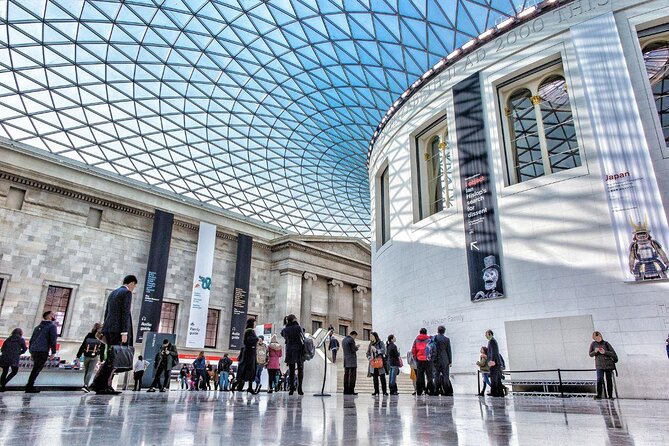
The British Museum is free to enter, but free does not mean simple. More than eight million objects are held here, spanning about two million years of human culture. The collection fills roughly one million square feet and is spread through 70 galleries.
You can wander in and enjoy the building, but it is easy to spend an hour looking at attractive objects without seeing the pieces you came to London for. A private guide changes the basic problem from Where should I go? to What do I want to understand?
This tour is built around the museum’s headline objects. It does not attempt to cover everything, because no sensible two-hour visit could. Instead, you move between a few major sections and get the story behind objects that can otherwise feel disconnected.
That focus matters most if you have a half-day or less in London. It also helps on crowded days, when a direct route saves energy and prevents you from repeatedly consulting a map.
The advertised experience lasts approximately two hours and 30 minutes. The detailed tour description gives about one hour and 30 minutes for the guided museum visit, so you should allow extra time for meeting, movement through the building, and any follow-up exploring. The exact pace can depend on the guide, crowd levels, and your questions.
More British Museum Tours:
- London: British Museum Guided Tour
★ 4.3 · 1,182 reviews - British Museum London Guided Tour Semi-Private 8ppl Max
★ 5.0 · 984 reviews - London: Tour of the British Museum
★ 4.1 · 678 reviews
Meeting on Montague Place
The meeting point is Montague Place, beside the museum’s north entrance. Look for the stone lions at the doorway. Your guide is supposed to be holding a sign, and confirmation is provided when you book.
Still, this is one place where you should not arrive casually. Some people have had trouble locating the guide, including cases where no sign was visible or the contact number did not immediately solve the problem. Arrive with enough time to spare, keep your booking details handy, and identify the north entrance before the start time.
The museum is near public transportation, which makes the meeting point practical once you know where you are going. Hotel pickup and drop-off are not included, so you make your own way to Montague Place.
The activity is offered in English. The guide is meant to be a professional museum specialist who can lead your group through the main rooms and answer questions along the way.
The Rosetta Stone and the Egyptian rooms
The Rosetta Stone is the natural opening star of this tour. It is not simply a famous slab behind glass. Its importance comes from the fact that it carries the same decree in three scripts, including Greek and Egyptian forms, helping scholars work out the meaning of Egyptian hieroglyphs.
Seeing it in person gives you a useful lesson in how historians recover the past. The stone is not beautiful in the conventional sense, and its surface can look crowded with writing. The guide’s explanation supplies the missing piece: this object helped turn an undeciphered writing system into readable evidence about ancient Egypt.
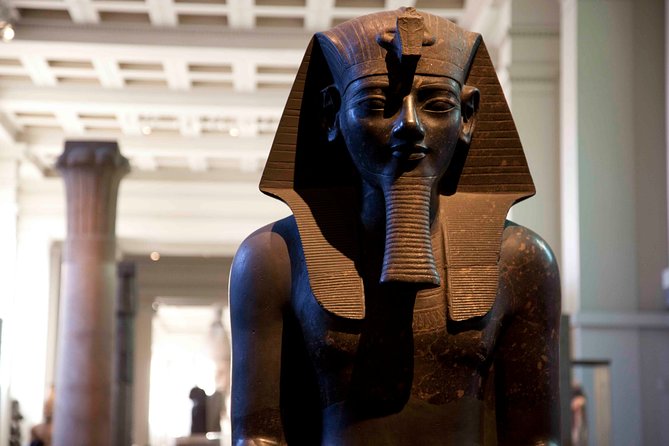
From there, the Egyptian galleries offer a very different experience. Mummies and burial objects make the ancient Egyptian approach to death feel concrete. Your guide explains why the afterlife mattered so much and how objects connected with burial were meant to serve the dead.
This section can be especially effective for families and first-time museum visitors. It gives you a clear human question to follow: what did people believe happened after death, and what did they do to prepare for it?
The Egyptian collection is large, so do not expect to see every mummy, statue, or burial object. The point is to understand the main ideas and see selected highlights without getting lost among hundreds of cases.
One practical limitation is crowding. The Egyptian rooms can feel busy, and some galleries are warm. You may spend more time listening and looking at a small group of objects than walking continuously through every display.
The Parthenon Frieze and Athenian marbles
The Greek galleries bring you to the Parthenon Frieze, one of the museum’s most important displays. The sculpture once formed part of the Acropolis in Athens. It is just over three feet high and, when assembled as a continuous work, stretches about 525 feet.
The scale is easy to underestimate in photographs. In the gallery, the length and repeated procession create a strong sense of movement. Your guide can point out how the figures fit into the larger design and explain the frieze’s connection to classical Athens.
The wider Greek collection includes Athenian marbles and other objects from the ancient Mediterranean. A guide helps you distinguish a major historical work from an object that simply happens to be large or visually striking.
This part of the tour also raises questions about ownership and removal, though the exact emphasis depends on your guide and interests. If the history of the Acropolis sculptures matters to you, ask directly. A private format gives you more room for that sort of question than a tightly scripted group walk.
You should expect stops rather than a long, slow examination of every panel. The aim is to give you a usable overview and show you where the major Greek works are located. Afterward, you can return to the frieze if you want more time with the details.
More London Sightseeing and Highlights Tours:
- London: London by Night Sightseeing Open-Top Bus Tour
★ 4.5 · 5,516 reviews - London: Tootbus Must-See Hop-On Hop-Off Bus Tour with Cruise
★ 4.0 · 3,653 reviews - London: River Thames Hop-On Hop-Off Sightseeing Cruise
★ 4.4 · 3,112 reviews - Westminster to Greenwich Sightseeing Thames Cruise in London
★ 4.5 · 2,969 reviews
Sutton Hoo and the British Isles
The tour does not focus only on Egypt and Greece. It also includes objects from the British Isles, particularly the Anglo-Saxon treasures associated with Sutton Hoo.
Sutton Hoo is linked to an ancient ship burial, where objects survived for centuries despite grave robbers and the passage of time. The finds offer a look at early medieval Britain through metalwork, burial customs, and evidence of status.
This section helps correct a common impression that the museum is only about faraway civilizations. You see material connected to Britain itself, and the burial story gives the objects a strong narrative thread.
The Sutton Hoo material is also useful because it shows how much can be learned from a burial site. The objects are not isolated decorations. Together, they reveal something about power, ceremony, trade, and beliefs surrounding death.
Time is the constraint. You will not study every Anglo-Saxon case in detail during a highlights visit. If British archaeology is your main interest, tell the guide early so the route can give it more attention.
What a private guide adds
The strongest reason to book this experience is not the museum entrance. It is the human explanation.
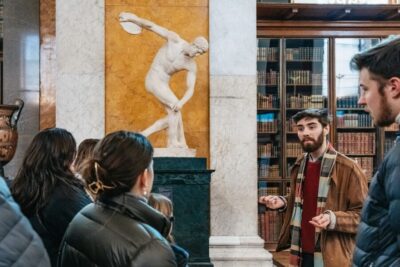
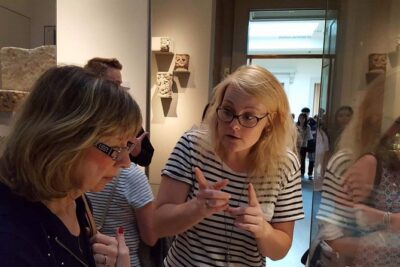
A good guide helps you notice what the display label cannot explain in a few lines. Several guides have received particularly warm praise for their style, including Rob, Trudy, Guy, and Norma. Rob has been described as clear and friendly, with a knack for identifying the must-see objects without overloading the group. Trudy is praised for energy, storytelling, and her ability to bring the objects to life. Guy has been noted for making the highlights easy to follow, while Norma is described as enthusiastic and well prepared.
Those names do not guarantee who will lead your tour, but they show the sort of guide experience the operator aims to provide. The best guides do more than recite dates. They explain why an object mattered, connect it to a wider story, and admit when a question falls outside their expertise.
The private format should also let you ask about your own interests. You might want more Egypt, more Greece, more British archaeology, or more attention to the museum’s architecture. State that preference at the beginning. With only a short visit, the guide needs to know where to spend the limited minutes.
There is an important balance here. A private guide can make the museum easier to understand, but quality can vary. One poor experience included difficulty understanding the guide, incorrect information, an overpowering cigarette smell, and the use of a flashlight in a low-light gallery after a museum staff member objected. That is not the expected standard, but it is a useful reminder to speak up politely if something seems wrong.
How the pace feels inside
This is a walking tour through a large museum. You should be reasonably fit for about two hours of movement, and there may be stairs. One report described a wheelchair user joining despite the tour’s stated limitations, but you should not assume the route is suitable for every mobility need.
Baby strollers are not permitted on the tour. Most people can participate, but the compact pace may be tiring for young children or anyone who needs frequent breaks.
A guide can keep the visit moving, which is useful when crowds fill the galleries. You may stop in front of a case, listen to an explanation, and then move on rather than wait for the entire room to clear.
Some people prefer a slower visit with an audio guide or printed guide. That approach makes sense if you want to spend a full day at the museum or read every label. The private tour is better suited to someone who wants a clear first pass and a sense of what deserves a return visit.
Price and what you are really buying
At $141.56 per person, this is a significant fee for a museum with free admission. You are paying for the guide, the route, the explanations, and the time saved. Admission and taxes are included in the tour price, but food, drinks, and transport are not.
The value improves when your London schedule is tight. If you have only one afternoon, wandering without a plan can mean missing the Rosetta Stone, the Parthenon Frieze, or Sutton Hoo. A guide can also help you find the rest of the museum after the official portion ends.
The value is weaker if you already enjoy planning museums, want to move slowly, or have a full day available. You could enter free, use a museum map or digital guide, and choose your own route. That option gives you less interpretation but more freedom.
Group discounts may be available. Since the experience is described as private, only your group should participate, although some past bookings have been described as small groups rather than strictly one party. Confirm the arrangement if group size is central to your decision.
Use the tour as a first visit
The smartest way to handle this experience is to treat it as an introduction, not the entire British Museum.
During the guided portion, pay attention to where the major galleries are and note which objects you want to revisit. At the end, the tour returns to the meeting point, and you can continue exploring independently.
That follow-up time is valuable. You may want another look at the Rosetta Stone once the guide’s explanation has settled in. You may also discover that a smaller gallery, not one of the headline rooms, is what interests you most.
Bring questions. Ask about the writing on the Rosetta Stone, the meaning of the Egyptian burial objects, the setting of the Parthenon Frieze, or the Sutton Hoo ship burial. The best part of a private visit is the chance to follow your curiosity instead of waiting for a scripted speech to finish.
The museum has no shortage of visual material, but context determines what stays with you. A short explanation can turn a stone, sculpture, or burial object into a piece of evidence in a much larger human story.
Who should book this British Museum tour?
I would recommend it to a first-time visitor with limited time, anyone uneasy about navigating a huge museum, and people who want a live explanation rather than labels alone. It is also a strong choice if the Rosetta Stone, Egyptian mummies, Greek sculpture, or Sutton Hoo are high on your London list.
Families may appreciate the clear stories and shorter route, though children who need a stroller cannot bring one on the tour. The walking and standing also deserve consideration for anyone with mobility concerns.
I would be more cautious if you have already visited the museum, want to examine objects at length, or dislike paying for access to a free institution. In that case, enter independently and use the saved money for more time inside.
The tour has a free-cancellation policy up to 24 hours before the start time. Changes or cancellations inside that window are not accepted for a refund. That gives you some flexibility, but the meeting details still deserve attention.
Final verdict
Book this tour if you want the British Museum’s essential stories without trying to conquer all 70 galleries yourself. The Rosetta Stone, Egyptian rooms, Parthenon Frieze, and Sutton Hoo make a strong route, and an excellent guide can turn a crowded museum into a manageable visit.
Skip it if you have a full day, enjoy independent museum planning, or would rather spend the admission-free visit at your own pace. For a short London stay, though, the fee can be justified by the time saved and the chance to ask questions. Just meet at the north entrance on Montague Place, arrive early, and plan to explore on your own after the guided route.
FAQ
Where does the British Museum tour meet?
The meeting point is on Montague Place by the museum’s north entrance, near the stone lions beside the doorway.
Where does the tour end?
The activity ends back at the meeting point.
How long does the tour last?
The experience is listed as approximately two hours and 30 minutes. The detailed museum itinerary describes about one hour and 30 minutes of guided touring, so allow extra time around the visit.
Is museum admission included?
Yes. Admission fees and taxes are included in the tour price.
Is the British Museum free to enter without this tour?
Yes. The museum is open to the public free of charge. This tour charges for the private guide, route, and interpretation.
What language is the tour offered in?
The tour is offered in English and includes a professional English-speaking guide.
Is this a private tour?
Yes. It is described as a private activity for your group only. Group discounts may also be available.
What objects are included in the route?
The route includes the Rosetta Stone, the Parthenon Frieze, Egyptian mummies and related galleries, Athenian marbles, and Anglo-Saxon objects connected with Sutton Hoo.
Can I bring a baby stroller?
No. Baby strollers are not permitted on the tour.
Can I cancel for a full refund?
Yes, if you cancel at least 24 hours before the experience start time. Cancellations or changes made less than 24 hours in advance are not accepted for a refund.
Just added around London
- Up at The O2:Twilight Climb with Guided Tour with Panoramic Views★ 5.0 · 50 reviews
- Private Chauffeur-London Heathrow from/to Southampton Cruise Port★ 5.0 · 9 reviews
- Kensington Palace VIP Garden Tour with Royal High Tea★ 4.5 · 71 reviews
- Up at The O2: Sunset Climb with Guided Tour with Panoramic Views★ 5.0 · 110 reviews
- Secrets of the London Underground Small Group Walking Tour★ 4.5 · 38 reviews
- Urban Canvas: Exploring Shoreditch’s Vibrant Street Art★ 5.0 · 36 reviews
- Ultimate introduction to photography in Central London★ 5.0 · 19 reviews
- Full-Day Self-Guided Paris Tour from London by Eurostar with Seine River Cruise★ 3.5 · 22 reviews
British Museum Tours, compared.
British Museum London Guided Tour Semi-Private 8ppl Max
Read our review →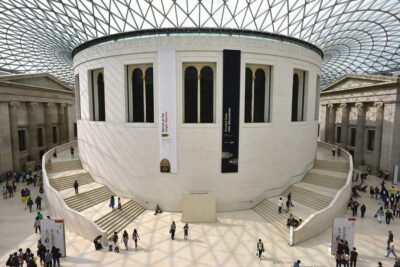
British Museum Audio Tour & Priority Entrance Ticket
Read our review →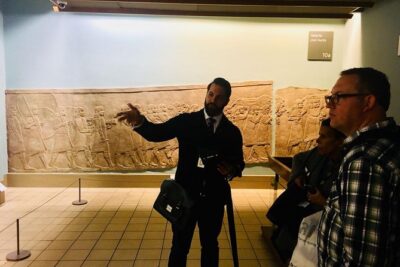
The British Museum London – Exclusive Guided Museum Tour
Read our review →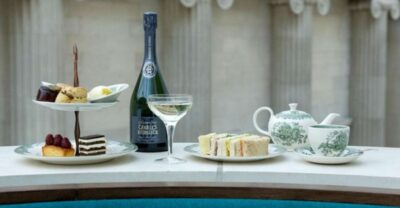
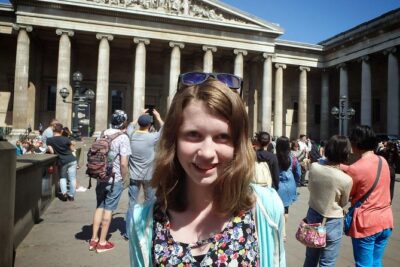
Private Guided Tour of the British Museum – Tickets Included
Read our review →Browse the lists this tour appears in