

Reviewed · BRITISH MUSEUM TOURS
British Museum Guided Tour
The best reason to book this British Museum tour is simple: the collection is enormous, with about 8 million objects and roughly 80,000 on display. In 2.5 hours, a guide leads you to major pieces such as the Rosetta Stone, Elgin Marbles, Sutton Hoo treasures, and Lewis Chessman instead of leaving you to wander without a plan.
I like the focused route and the chance to ask questions along the way. Guides Wesley and Matt have earned especially strong praise for their clear explanations, patience, and memorable anecdotes. The main drawback is the price, $93 per person, and the fact that even a good tour can only show a small slice of the museum.
Key points to know
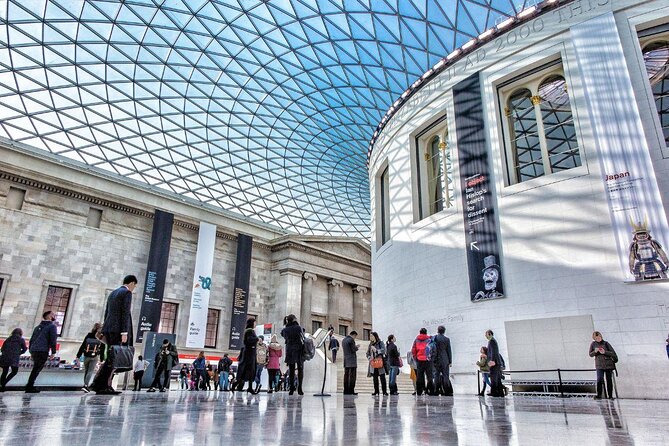
- Major objects in one morning: See the Rosetta Stone, Elgin Marbles, Sutton Hoo, Lewis Chessman, and prehistoric tools.
- A guide keeps you moving: The 2.5-hour route helps you avoid spending your whole visit deciding which room to enter next.
- Egypt, Assyria, Greece, and more: The itinerary can include several civilizations, with room for personal interests.
- Timed entry included: You enter through a separate entrance, which can save time at a busy museum.
- Private groups are available: A private format gives you more room to shape the visit and ask questions.
- Worth checking the meeting point: Instructions mention the red telephone boxes on Great Russell Street and, elsewhere, outside The Museum Tavern. Confirm the exact location for your booking.
Why the British Museum needs a guided visit
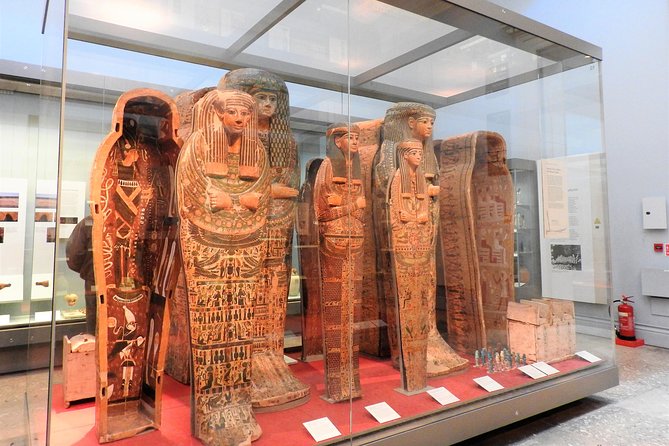
The British Museum can overwhelm even confident museum-goers. About 8 million artefacts belong to the collection, but only around 80,000 objects are on display. That is still far too much to cover in one visit, and the galleries span thousands of years and many parts of the world.
A guided tour gives you a usable plan. Instead of trying to choose between Egypt, Assyria, Greece, prehistoric Britain, and other galleries, you follow a route built around major objects and their stories. That matters here because the museum’s greatest challenge is not a lack of things to see. It is deciding what deserves your limited time.
The tour lasts 2.5 hours and involves walking between galleries, though the distance is not extensive. You should still wear comfortable shoes. The pace is likely to feel active, especially if you stop often for questions, but it is not a long-distance walking tour.
The guide also provides context that a label cannot. A display label may identify an object and give its date. Your guide can explain why it matters, how it was found, and how it fits into the wider collection. That extra layer is the main reason to consider paying for a guided visit rather than simply entering on your own.
More British Museum Tours:
- London: British Museum Guided Tour
★ 4.3 · 1,182 reviews - British Museum London Guided Tour Semi-Private 8ppl Max
★ 5.0 · 984 reviews - London: Tour of the British Museum
★ 4.1 · 678 reviews
Meeting your guide near Great Russell Street
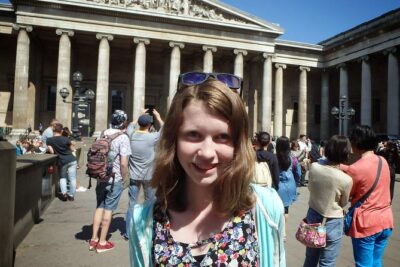
The stated meeting point is next to the red telephone boxes on Great Russell Street, beside the museum entrance. Another instruction gives Outside The Museum Tavern as the meeting location, so check the exact point attached to your booking before you set off.
This is a useful detail to handle in advance. The British Museum sits in a busy central London area, and you do not want to lose the first few minutes of a timed tour searching for your guide. Arrive early enough to identify the entrance and look for the guide before the scheduled start.
The tour includes timed entry and access through a separate entrance. That does not mean every possible wait disappears, but it should make the arrival process more direct than joining a general line. Your guide handles the transition into the museum, allowing you to concentrate on the visit itself.
The activity is conducted in English. Private groups are available, which may suit families or small parties that want a more personal pace. If you choose a private option, ask at the start how much control you have over the route and how much time can be spent on particular galleries.
Starting with the museum’s story
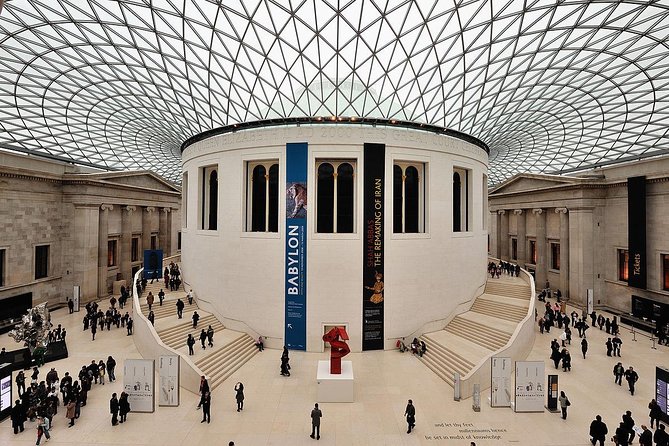
A good opening should help you understand what kind of place you are entering. The British Museum is not a small collection with one clear theme. It is a huge storehouse of objects from many cultures and periods, and the first job of the guide is to give your visit shape.
Expect an introduction to the museum and an explanation of how the selected objects fit into its wider collection. From there, the route moves through key galleries rather than attempting to show every room.
This approach works well for a first visit. You receive a broad sense of the collection while stopping at objects that are visually striking or historically important. It also gives you a framework for returning later on your own.
One useful improvement would be a quick overview of each room before the detailed explanations begin. That way, you know what else is nearby and can return to galleries that catch your eye after the tour. The museum is so large that a guided highlights route cannot cover everything, and you should treat this experience as an introduction, not a complete survey.
Ancient Egypt and the Rosetta Stone
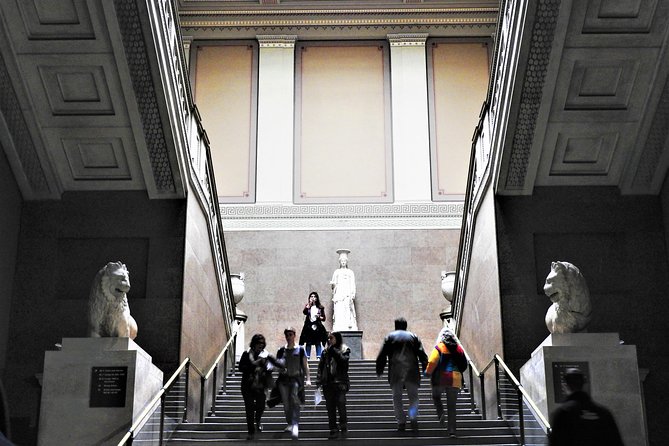
The Egyptian galleries are among the tour’s central stops. The Rosetta Stone is the obvious headline object, and seeing it in person gives you a firm starting point for understanding how historians read ancient Egyptian writing.
Your guide explains the stone’s role and places it within the broader story of Egyptian objects at the museum. The value here is not simply seeing a famous slab behind glass. It is understanding why this particular object changed the study of ancient Egypt.
You may also see other Egyptian pieces during the route, depending on the guide’s plan and the group’s interests. The Egyptian collection is extensive, so listen for suggestions about which galleries deserve a closer look after the tour ends.
The guide-led format is especially useful in this section because several objects may look familiar from books or films. A guide can separate the truly important details from the surface appeal and point out what you might otherwise walk past.
A different sort of day out in London altogether:
- From London: Harry Potter Warner Bros Studio Tour
★ 4.7 · 26,588 reviews - London: Westminster to Greenwich River Thames Cruise
★ 4.5 · 22,836 reviews - Magical London: Harry Potter Guided Walking Tour
★ 4.7 · 22,044 reviews - London: Madame Tussauds London
★ 4.6 · 20,915 reviews
Assyria and the power of the galleries
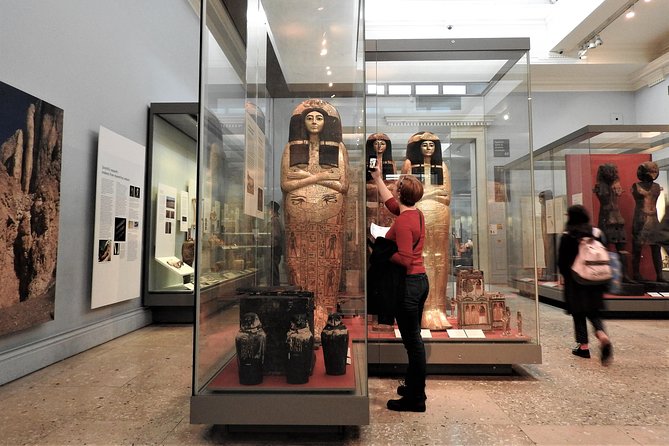
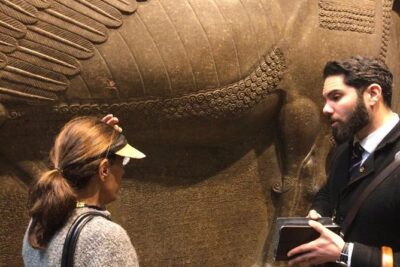
Assyrian objects add a different mood to the visit. The tour may include carved reliefs and other pieces connected with ancient Assyria, giving you a chance to compare imperial art and storytelling with the objects seen in the Egyptian rooms.
This is where a strong guide can make the museum feel less like a row of displays and more like a sequence of human choices. You are not only looking at old stone. You are considering who commissioned it, what message it was meant to send, and how it ended up in a London museum.
The route through Egypt, Assyria, and Greece provides useful contrast. Each section has its own visual language and historical setting. With the guide linking the rooms, you can see how different cultures used sculpture, writing, and monumental art to record power and belief.
The drawback is time. The museum contains far more material from these civilizations than any 2.5-hour route can explain. If Assyrian art is a priority for you, say so early and ask whether the itinerary can spend extra time there.
The Elgin Marbles and ancient Greece
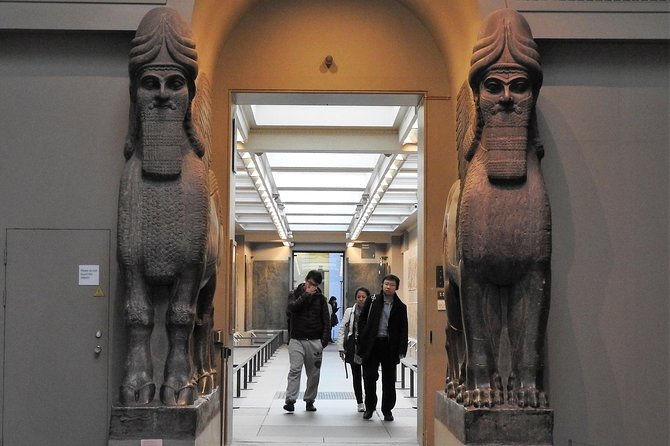
The Elgin Marbles are among the museum’s best-known highlights. They are also part of a continuing debate about ownership and the removal of cultural objects, making them more than a stop for attractive classical sculpture.
Your guide can explain what you are seeing and place the marbles within ancient Greek art and the museum’s own story. This is one of the moments when a guided visit is more useful than a quick photo stop. You can ask about the sculptures, their original setting, and the wider question of how major objects came to London.
The tour does not turn the visit into a specialist seminar, but it gives you a chance to understand why the gallery matters. If the marbles are high on your list, tell the guide. The itinerary is described as adaptable, especially for private groups, and your interests can help shape the stops.
Allow yourself time to return to this area after the tour if it captures your attention. The guide must keep the whole route moving, so you may want a second, slower look at the details once the formal visit has ended.
Sutton Hoo and early Britain
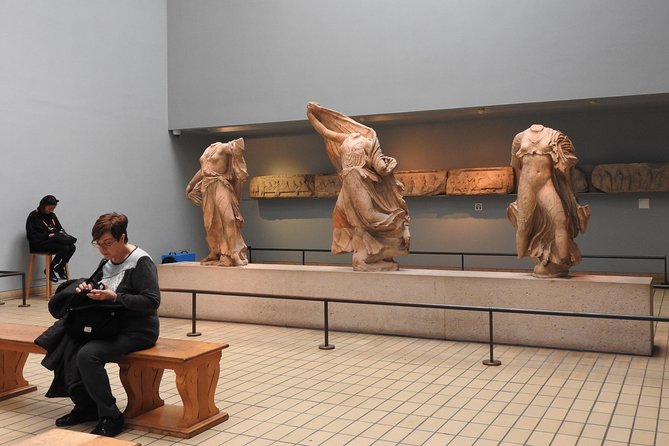
Sutton Hoo brings the focus closer to Britain. The objects are linked with an Anglo-Saxon ship burial and offer a look at early British society through metalwork, weapons, and burial customs.
This section is useful because it prevents the tour from becoming a march through only the best-known Mediterranean and Egyptian objects. Sutton Hoo gives you a local connection and shows how the museum presents Britain’s own past alongside material from other parts of the world.
The value of a guide here comes from explanation. Individual pieces can seem small compared with the monumental galleries, but their setting and purpose give them weight. Ask about the burial and how archaeologists use objects to reconstruct a society when written records are limited.
The stop also works well for families and first-time museum visitors because it tells a clear story. You can see how a group of objects, considered together, reveals more than any one item could do alone.
The Lewis Chessman and smaller treasures
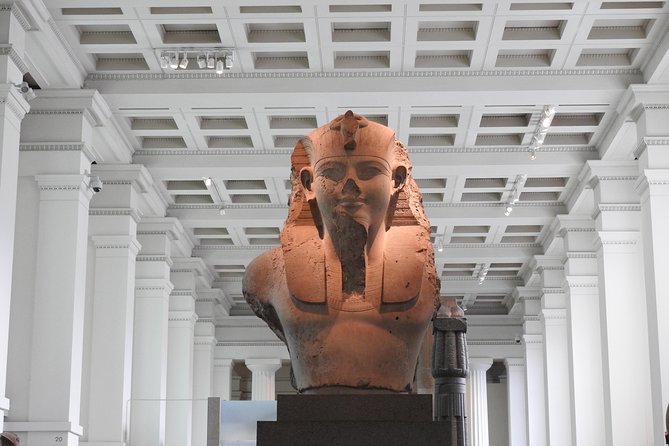
The Lewis Chessman offers a welcome change of scale. These medieval chess pieces are familiar, expressive, and easy to appreciate even if you are not an expert in medieval history.
A guide can point out why the pieces are memorable and explain how they fit into the museum’s wider collection. Their faces and poses make them more immediately approachable than some large, formal objects, and they often become a favorite stop for people who enjoy personal details in museum displays.
Prehistoric tools provide another useful contrast. They may not have the fame of the Rosetta Stone, but they show how much the museum’s collection covers. A short explanation can help you see a chipped stone tool not as a simple object, but as evidence of a very different way of making and using things.
These stops also show the benefit of a tailored route. The tour is not limited to one famous gallery. Your guide can balance headline pieces with objects that reveal daily life, technology, and craftsmanship.
How the guide shapes the 2.5-hour route
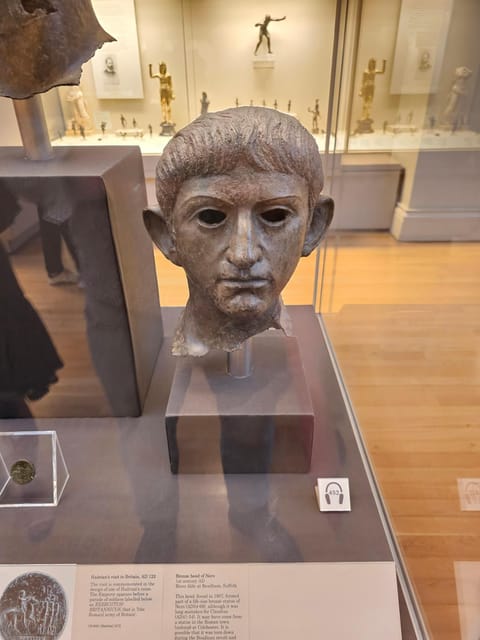
The quality of this experience depends heavily on the individual guide. The strongest feedback centers on guides who explain clearly, add anecdotes, answer questions, and keep the route personable.
Wesley is described as especially strong at giving a broad overview while remaining patient and approachable. Matt is praised for his anecdotes and for choosing a well-balanced selection of rooms, including Egypt, Assyria, and ancient Greece.
Those names are useful if the booking option allows you to request a guide, though assignment cannot be guaranteed from the information provided. What you can do is explain your interests at the start. Tell the guide if you care most about Egypt, classical art, Britain, or the museum’s own collecting story.
One practical point: the tour may run longer than the advertised 2.5 hours in some cases. That can be a pleasant bonus if you have no tight plans afterward, but do not schedule a train, theatre booking, or restaurant reservation immediately after the stated end time.
The route is designed to feel efficient, but efficient does not mean exhaustive. You should expect a selection of galleries and objects, not a room-by-room tour. Keep the museum map or make a note of any rooms you want to revisit after the guide leaves.
What $93 gets you
At $93 per person, this is not the cheapest way to enter the British Museum. The price makes the most sense if you value a planned route, timed entry, a separate entrance, and direct explanations from an English-speaking guide.
I would consider it good value for a first visit when your London schedule is tight. You spend 2.5 hours seeing major objects without losing time to navigation or indecision. That can be worth paying for in a city where every hour matters.
The value is less clear if you already know the museum well or prefer to move slowly through one specialist collection. You might get more from a self-guided visit if you want to read every label, sketch, photograph, or return repeatedly to one gallery.
Private groups can make the higher price easier to justify for a family or small party. You receive more opportunity to ask questions and may have a better chance of adjusting the route. For a solo visitor or couple on a strict budget, compare the cost with the value of a clear introduction and the time saved.
Free cancellation up to 24 hours before the tour and the option to reserve now and pay later add flexibility. Still, the key decision is not the booking policy. It is whether you want expert direction in a museum that can easily consume an entire day.
Who should book this British Museum tour?
I would recommend it most strongly for a first-time visitor to the British Museum, especially if you have only one morning or afternoon in London. It also suits anyone who wants the major objects explained rather than simply photographed.
Families may appreciate the movement between galleries and the mix of large monuments, ancient tools, and the Lewis Chessman. The private option is worth considering if children have specific interests or need a more flexible pace.
History fans will benefit from the range, but specialists should set expectations carefully. A highlights tour cannot provide a detailed study of every civilization or resolve every debate connected with the collection. Use it to get your bearings, then return alone to the subjects that catch your attention.
You should also book if you dislike large museums without a plan. The guide’s route removes much of the guesswork and helps you leave with a coherent picture of what you saw.
Should you book it?
Book this tour if you want the British Museum’s major sights explained in a focused 2.5-hour visit, and if $93 feels reasonable for saving time and having a guide lead the way. The route covers strong choices, including the Rosetta Stone, Elgin Marbles, Sutton Hoo, Lewis Chessman, Egyptian objects, Assyrian pieces, and prehistoric tools.
Skip it if you prefer slow, independent museum visits or want to spend several hours in one collection. If you do book, arrive early, confirm the exact meeting point, wear comfortable shoes, and tell your guide what interests you most. That small bit of preparation can turn a huge museum into a manageable and memorable London stop.
FAQ
How long is the British Museum guided tour?
The scheduled duration is 2.5 hours. One reported experience lasted more than three hours, so avoid placing an important appointment immediately after the stated finish time.
What objects are included on the tour?
The listed highlights include the Rosetta Stone, prehistoric tools, Elgin Marbles, Sutton Hoo, and Lewis Chessman. The route can also include Egyptian, Assyrian, ancient Greek, and other galleries.
Is museum entry included?
Yes. The experience includes timed entry to the museum and access through a separate entrance.
What language is the tour conducted in?
The tour is conducted in English with a live English-speaking guide.
Is this a private tour?
Private groups are available. The exact group format depends on the option you book.
Where do I meet the guide?
The meeting information refers to the red telephone boxes on Great Russell Street next to the museum entrance. Another instruction says Outside The Museum Tavern. Confirm the exact meeting point for your selected option.
Can I cancel the booking?
You can cancel up to 24 hours in advance for a full refund. The booking also offers a reserve-now, pay-later option.
Just added around London
- London: “Queen” Highlights Walking Tour★ 4.3 · 48 reviews
- Couple’s photo: Romantic photoshoot in London★ 4.8 · 22 reviews
- London: Private Tour with Locals – Highlights & Hidden Gems★ 5.0 · 8 reviews
- Luxury Private Tour in London with Lunch★ 5.0 · 7 reviews
- London 1- or 2-Hour Professional Photo Shoot★ 4.9 · 6 reviews
- London: Private Black Cab Night Tour with Hotel Pick Up★ 5.0 · 11 reviews
- London: Christmas Lights Tour – With Christmas Music★ 4.8 · 9 reviews
- London: Private Pub Tour★ 4.5 · 4 reviews
British Museum Tours, compared.
British Museum London Guided Tour Semi-Private 8ppl Max
Read our review →
British Museum Audio Tour & Priority Entrance Ticket
Read our review →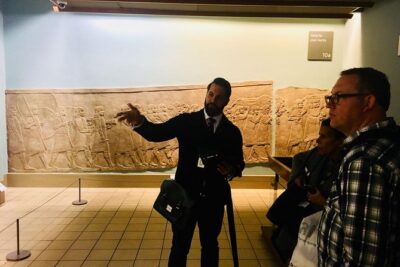
The British Museum London – Exclusive Guided Museum Tour
Read our review →
British Museum & National Gallery of London Semi-Private 8ppl Max
Read our review →Browse the lists this tour appears in