
Reviewed · BRITISH MUSEUM TOURS
British Museum Tour: Rosetta Stone, Parthenon, Mummies
The Rosetta Stone is the star here, but the real strength of this tour is the way it links several of the British Museum’s most important rooms in two focused hours. You’ll move from Egyptian writing to Greek sculpture, Anglo-Saxon burial objects, and enormous Assyrian guardians without trying to swallow the whole museum in one sitting.
I like the carefully chosen highlights, especially the combination of the Rosetta Stone and Egyptian mummies with Sutton Hoo and the Winged Bulls from Khorsabad. I also like having a licensed English-speaking guide explain how the objects were made, used, and brought to London.
The main drawback is the museum’s size and noise. The tour covers a lot on foot, and one review notes that a soft-spoken guide was sometimes hard to hear in crowded galleries. This is a shared tour, not a private visit, so the experience depends partly on group size and the guide’s delivery.
Key points at a glance
- Two hours of major sights: The route focuses on the museum’s best-known objects rather than attempting every gallery.
- The Rosetta Stone leads the story: See the stone that helped scholars read Egyptian hieroglyphics.
- Parthenon sculptures with controversy included: Learn about Lord Elgin’s removal of the sculptures from Athens.
- Egyptian mummies and burial objects: Connect funerary customs with daily life and religious beliefs.
- Sutton Hoo adds British history: See early medieval treasures from an Anglo-Saxon burial site.
- A practical shared tour: Meet on the entrance stairs after security, arrive 15 minutes early, and wear comfortable shoes.
Why this two-hour route works at the British Museum
The British Museum is too large for a casual, complete visit. Its holdings cover thousands of years and many parts of the world, so a first visit can easily turn into a march from one room to the next with little sense of how the objects fit together.
This tour solves that problem by giving you a clear route and a human voice. In two hours, you get a guided look at several famous pieces, along with enough background to understand why they matter. You will not see everything, but that is a strength here. A focused visit leaves room to remember what you saw.
The route also crosses several major cultures. Ancient Egypt, classical Greece, Mesopotamia, and Anglo-Saxon England all appear in the same morning or afternoon. That wide range gives you a useful introduction to the museum and helps you decide which galleries deserve a longer return visit.
The pace will be active. This is a walking tour inside a very large museum, and comfortable shoes are a sensible choice. If you prefer to study each case at length, two hours may feel brisk. If you want orientation and context before exploring alone, the timing is much more useful.
More British Museum Tours:
- London: British Museum Guided Tour
★ 4.3 · 1,182 reviews - British Museum London Guided Tour Semi-Private 8ppl Max
★ 5.0 · 984 reviews - London: Tour of the British Museum
★ 4.1 · 678 reviews
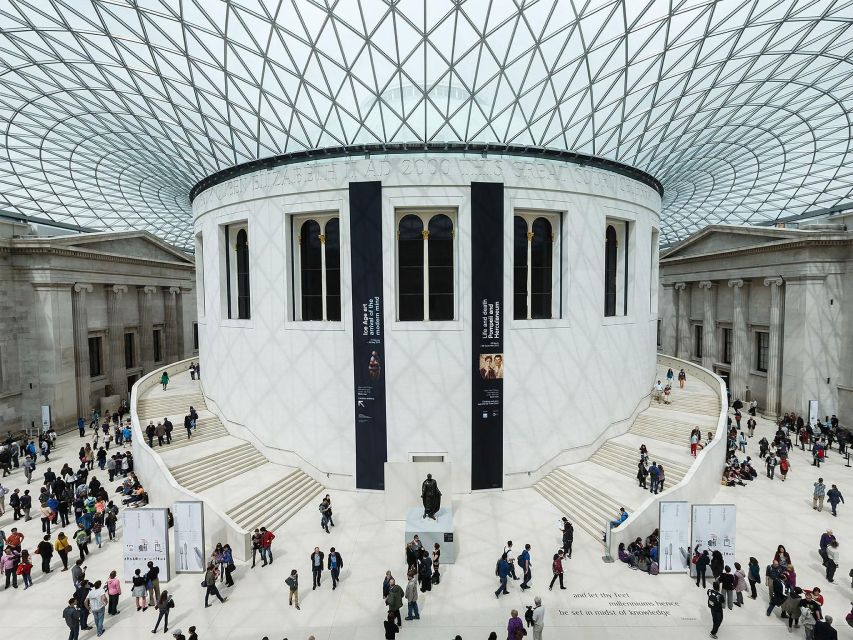
Starting beneath the Great Court roof
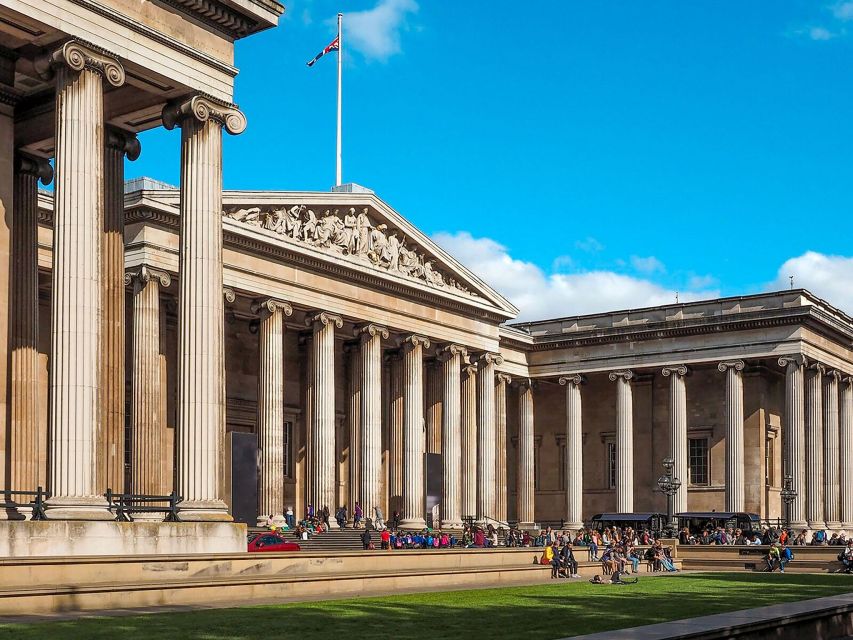
You meet your guide at the stairs by the main entrance, after passing through security. Arrive at least 15 minutes before your scheduled time. The activity begins and ends at the British Museum, with no hotel pickup and no transport between stops.
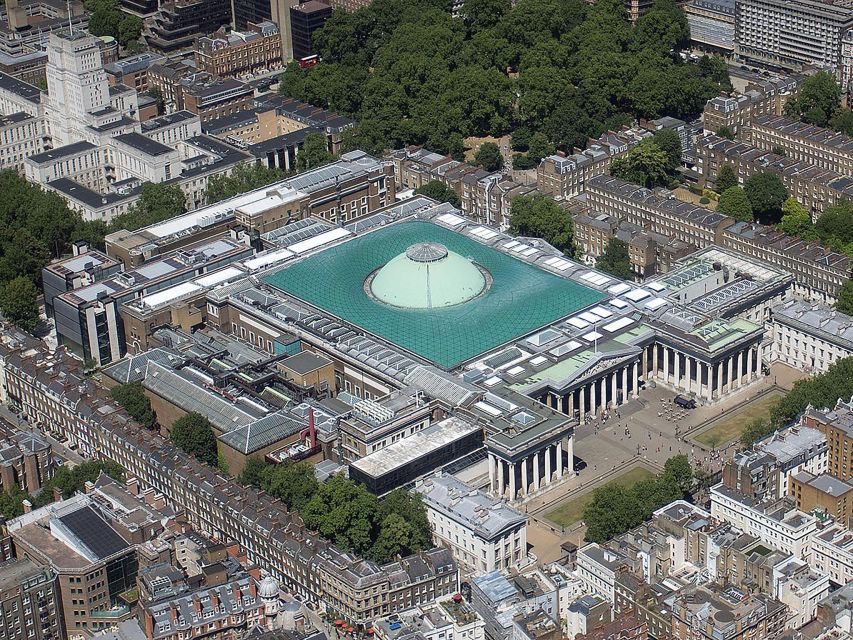
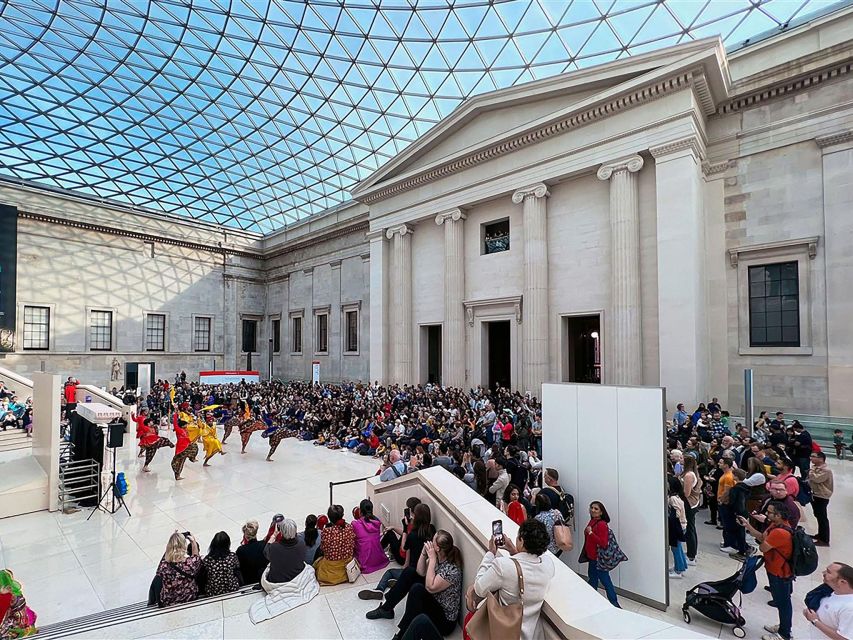
The Great Court is an attraction in its own right. Its glass roof gives the museum a bright, open central space and creates a sharp contrast with the older architecture around it. Your guide uses this opening to help you get your bearings before leading you into the collection.
This meeting point is convenient, but it can be busy. Keep your guide’s contact details and arrive early enough to find the entrance without rushing. Online support is available at the time of boarding the tour, which can help if you need assistance locating the group.
The experience is in English, and the guide is licensed. Because the tour is not private, you will share the route with other members of the group. That keeps the price lower than a private museum visit, but it also means you may need to stay close and listen carefully in crowded rooms.
The Rosetta Stone and the power of one inscription
The Rosetta Stone is one of those objects that rewards a guide’s explanation. At first glance, it is a dark slab covered in writing. Its importance comes from the fact that the same decree appears in three scripts, including Greek and two forms of Egyptian writing.
The Greek text gave scholars a known language for comparison. By studying the repeated names and phrases, researchers made progress toward reading Egyptian hieroglyphics. The stone did not solve the entire puzzle by itself, but it provided the critical bridge between a readable script and one that had remained undeciphered for centuries.
In person, you may find the object less grand than its fame suggests. That is part of the lesson. Major historical changes can turn on an object that looks plain and compact. Your guide can add the political, linguistic, and scholarly background that a label alone cannot easily provide.
This is a strong early stop because it gives you a clear idea of what the tour does best. You are not simply being shown a famous object. You are being shown how evidence, language, and patient study changed what people knew about ancient Egypt.
Parthenon sculptures and a continuing argument
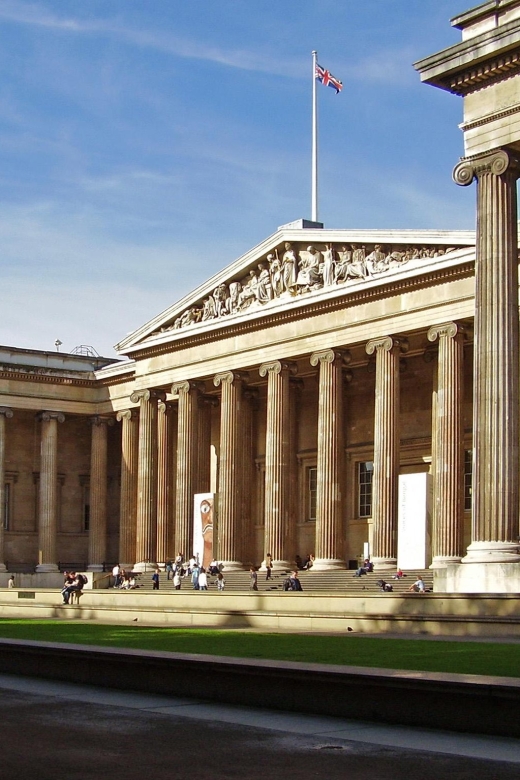
The Parthenon sculptures bring beauty and controversy into the same gallery. They were removed from the Parthenon in Athens by Lord Elgin, who was the British ambassador to the Ottoman Empire, and later brought to the British Museum.
The sculptures once formed part of a major temple complex dedicated to Athena. Their carved figures and architectural pieces offer a close look at Greek art, but their presence in London raises a difficult question about ownership and removal. The dispute remains an important part of the visit.
A good guide should give you the basic history without pretending the issue is simple. The story involves the Ottoman control of Athens, British collecting practices, changing ideas about cultural property, and Greece’s continuing claim for the sculptures’ return. You can admire the carving while still thinking hard about how it arrived here.
The gallery can also be a challenging place to take in quickly. The objects are large, and you may want time to look at details in the folds of clothing, bodies, and damaged surfaces. The two-hour format gives you an introduction, but not a long art study session.
A different sort of day out in London altogether:
- From London: Harry Potter Warner Bros Studio Tour
★ 4.7 · 26,588 reviews - London: Westminster to Greenwich River Thames Cruise
★ 4.5 · 22,836 reviews - Magical London: Harry Potter Guided Walking Tour
★ 4.7 · 22,044 reviews - London: Madame Tussauds London
★ 4.6 · 20,915 reviews
Egyptian mummies and burial customs
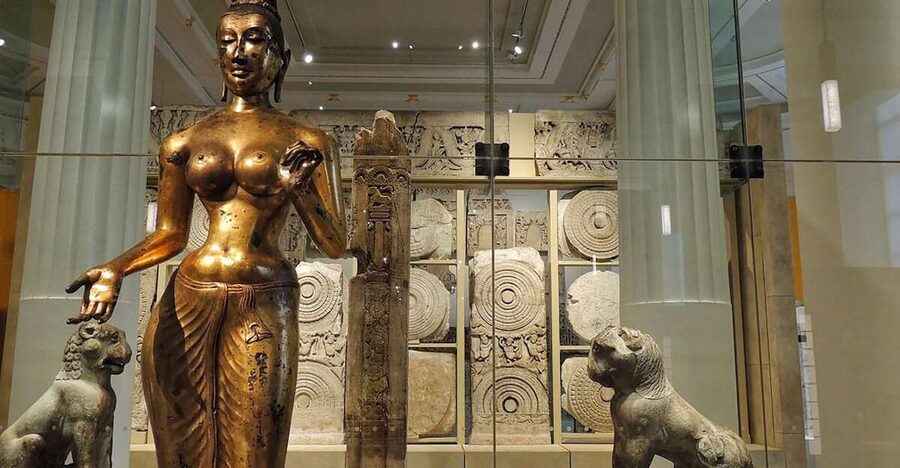
The Egyptian galleries offer a different kind of encounter. Here, the focus shifts from language and public monuments to death, memory, religious belief, and the practical work of preparing a body for the next life.
You will see mummies along with burial artifacts and other objects connected to ancient Egyptian life. These displays can help you understand that mummification was not simply a strange method of preserving the dead. It formed part of a larger belief system involving the body, the soul, the afterlife, and the need to equip the deceased for what came next.
The objects also give you clues about ordinary life. Burial goods reflect craft skills, social position, family customs, and religious ideas. Your guide can connect the case displays to the wider culture, making the galleries easier to read than they would be if you were moving from label to label alone.
Some visitors may want more time in this section than the itinerary allows. The Egyptian collection is extensive, and the mummies are only one part of it. Think of this stop as a well-directed introduction, not a complete study of Egypt at the British Museum.
Sutton Hoo and early medieval England
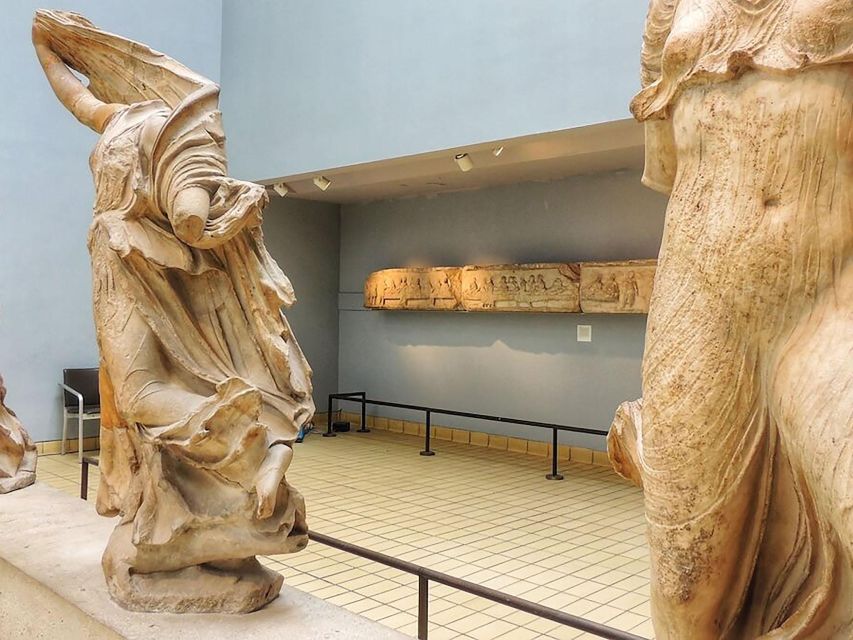
Sutton Hoo changes the tone of the tour. Instead of looking at ancient Mediterranean and Near Eastern cultures, you turn to an Anglo-Saxon burial site in England.
The site is known for a richly furnished ship burial associated with an early medieval elite. The objects give you a glimpse of power, trade, ceremony, and craftsmanship in England before the Norman Conquest. The famous helmet, weapons, personal items, and other burial objects help make a period that can seem distant feel more specific.
This stop is especially useful because it widens the idea of what belongs in a major museum. The British Museum is not only about Egypt, Greece, or Rome. Sutton Hoo shows that Britain’s own early medieval past can be just as visually striking and historically revealing.
You may find this gallery easier to appreciate after the guide has explained the burial setting. A single object can be impressive, but its meaning grows when you understand how it was placed, what it signaled about status, and what the burial tells us about the society that created it.
The Winged Bulls from Khorsabad
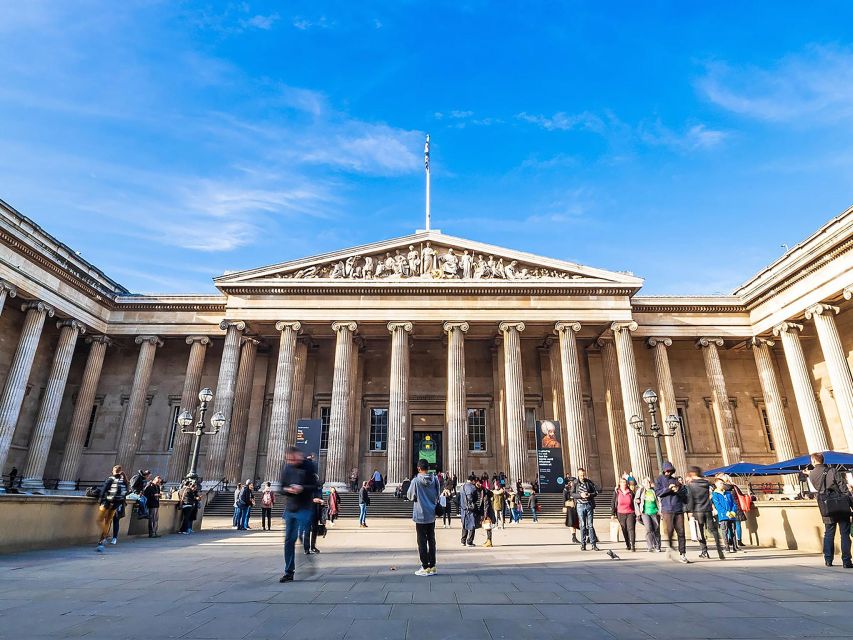
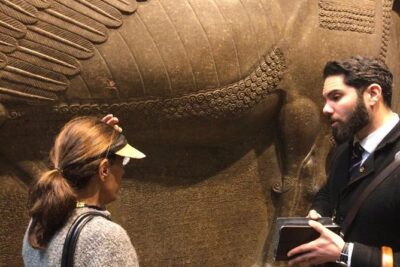
The final major highlight is among the most imposing: the Winged Bulls from Khorsabad. These large sculptures once guarded a grand palace in the ancient Assyrian city of Khorsabad, in what is now northern Iraq.
Their size is the first thing you notice. Their carved bodies, wings, and human features were designed to impress and protect. They are not small devotional objects meant to be held in the hand. They were architectural guardians, built to shape the entrance to a royal space.
The sculptures also reward a closer look at their unusual design. Assyrian artists combined several features in one creature, creating a powerful being that could watch over the palace. Their scale and detail show how rulers used art and architecture to project authority.
This is a fitting end to the route because it leaves you with a strong visual memory. After seeing inscriptions, carved temple pieces, burial objects, and mummies, you finish with monumental figures that communicate power before your guide even explains them.
What the guide adds to the visit
The guide’s biggest contribution is connection. Without help, you might see the Rosetta Stone, then walk to the Parthenon sculptures, then find the Egyptian mummies and Sutton Hoo objects as separate attractions. With commentary, the visit becomes a lesson in how museums gather, label, interpret, and sometimes dispute their collections.
The guide also provides background about the museum itself. That matters because the objects did not all arrive in London in the same way or at the same time. Their routes into the collection reflect archaeology, diplomacy, empire, private collecting, excavation, and changing views about ownership.
One review praised a guide for providing extensive historical and mythological background about prehistory and antiquity, as well as the museum’s own story. That is the kind of explanation that can make a short museum visit worthwhile.
There is one practical caution. Another review found the guide very well informed but sometimes too soft spoken for the crowded setting. Stay near the guide, listen for instructions, and do not hesitate to position yourself where you can see and hear. The museum can be noisy, and a shared tour is not the same as a private lecture.
Price, timing, and what you receive
The cost is $84.69 per person for a two-hour guided museum visit. That is not the cheapest way to enter a museum, so the value depends on what you want from your time.
If you already know the British Museum well and enjoy reading labels at your own pace, you may prefer an independent visit. If this is your first time and you want a clear route through the major highlights, the guide and structure can justify the extra cost.
You are paying for a licensed English-speaking guide, online support at the meeting point, and a planned walk through several important galleries. Food, drinks, and hotel pickup are not included. You also need to make your own way to the museum and meet the group after security.
The booking terms offer useful flexibility. You can cancel up to 24 hours before the activity for a full refund, and you can reserve now and pay later. Be careful with short-notice bookings: if there is no space, a booking made on the same day or from one day to the next may be moved to the following day.
Your chosen start time can also change if that slot is unavailable. You may be transferred to another time on the same day, so check your confirmation carefully and keep your schedule flexible. A priority queue may shorten the normal wait, but it is not a private entrance. You still enter with other people using the same option.
Who should book this British Museum tour?
I would recommend this tour to a first-time visitor who wants the main names and stories without spending a full day inside the museum. It also suits anyone who enjoys history but feels unsure about how to approach a huge collection.
Families with older children may find the variety useful, especially because the route includes writing, sculpture, mummies, burial treasure, and enormous animals. The tour is less suited to someone who wants a slow, detailed look at one gallery.
You should also be comfortable walking and standing for two hours. The activity is not suitable for wheelchair users, and the museum’s size means the route can feel tiring even when the distance is manageable.
Should you book it?
Book this tour if you want a firm two-hour plan built around the Rosetta Stone, Parthenon sculptures, Egyptian mummies, Sutton Hoo, and the Winged Bulls from Khorsabad. The strongest reason to choose it is the guide’s context, especially for the Parthenon dispute and the museum’s complicated collecting story.
Skip it if you already have a detailed personal plan or want to linger at every display. If you do book, arrive early, wear comfortable shoes, stay close enough to hear the guide, and treat the visit as an introduction. You will leave with a useful map of the museum and several clear reasons to return.
FAQ
How long does the British Museum tour last?
The tour lasts two hours.
Where does the tour begin?
Meet the guide on the stairs at the British Museum’s main entrance, after security checks.
Where does the tour end?
The activity ends back at the British Museum meeting point.
What language is the tour conducted in?
The tour is conducted in English with a live guide.
Is the tour private?
No. This is a shared tour, not a private experience.
Is hotel pickup included?
No. Hotel pickup is not included, so you must make your own way to the British Museum.
Is food or drink included?
No. Food and drinks are not included.
What should I bring?
Bring a passport or ID card.
Is the tour suitable for wheelchair users?
No. The activity is listed as unsuitable for wheelchair users.
Can I cancel for a refund?
Yes. You can cancel up to 24 hours in advance for a full refund.
Just added around London
- London: “Queen” Highlights Walking Tour★ 4.3 · 48 reviews
- Couple’s photo: Romantic photoshoot in London★ 4.8 · 22 reviews
- London: Private Tour with Locals – Highlights & Hidden Gems★ 5.0 · 8 reviews
- Luxury Private Tour in London with Lunch★ 5.0 · 7 reviews
- London 1- or 2-Hour Professional Photo Shoot★ 4.9 · 6 reviews
- London: Christmas Lights Tour – With Christmas Music★ 4.8 · 9 reviews
- London: Private Black Cab Night Tour with Hotel Pick Up★ 5.0 · 11 reviews
- London: Private Pub Tour★ 4.5 · 4 reviews
British Museum Tours, compared.
British Museum London Guided Tour Semi-Private 8ppl Max
Read our review →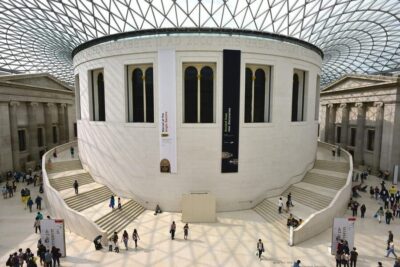
British Museum Audio Tour & Priority Entrance Ticket
Read our review →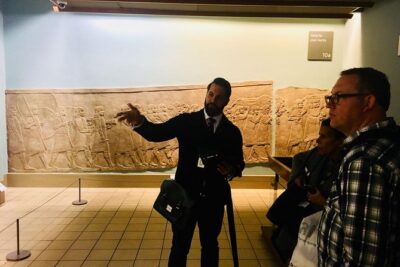
The British Museum London – Exclusive Guided Museum Tour
Read our review →
British Museum & National Gallery of London Semi-Private 8ppl Max
Read our review →Browse the lists this tour appears in