

Reviewed · BRITISH MUSEUM TOURS
British Museum Guided Tour
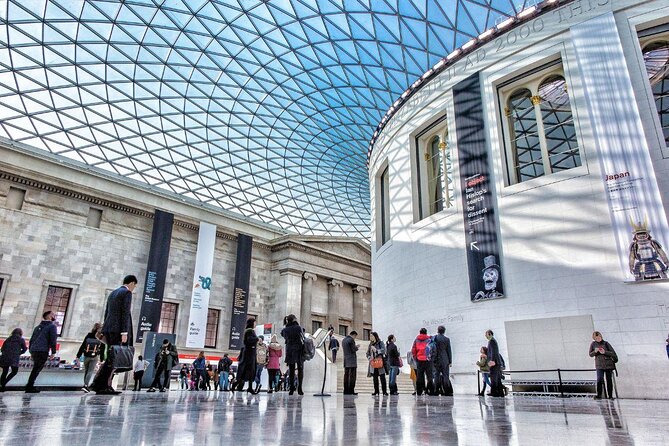
The biggest appeal here is simple: you get a quick, guided route through one of London’s most overwhelming museums. In about two hours, you can see Egyptian mummies, Greek sculpture, Roman relics, the Rosetta Stone, and the soaring Great Court roof without spending half your day figuring out where to start.
I like the low price of $18.02, especially if you want a basic introduction rather than a private museum lesson. I also like the chance to get context from a guide such as Paul, Denise, Joseph, or Christina, whose clear explanations and friendly approach have made strong impressions.
The main concern is meeting the guide. Several bookings have gone wrong because the meeting instructions were vague, guides were hard to identify, or no guide appeared at all. You should arrive early, check every message, and have a backup plan for entering the museum on your own.
Key points before you book
- Two hours covers the headline objects: Expect a brisk route through Egyptian, Greek, and Roman collections, not every gallery.
- The museum entrance itself is free: You are paying for the guide and arranged entry, not an admission charge.
- The meeting point needs care: The stated start is outside the British Museum on Great Russell Street, but some people have been redirected toward Montague Street.
- The best guides add real value: Paul, Denise, Joseph, and Christina have each been praised for clear explanations, good pacing, and enthusiasm.
- Sound can be a problem: There are no individual listening receivers listed, and soft-spoken guides may be difficult to hear in crowded rooms.
- Groups can reach 25 people: That is manageable, but a large group can make it harder to stay close to the guide.
What the two-hour British Museum route gives you
The British Museum is not a tidy, small collection where you can stroll from one masterpiece to the next. It holds objects from ancient Egypt, Greece, Rome, and many other parts of the world, spread across a large building with more than enough material for several visits.
That is why a short guided tour can work well. You are not trying to decide which room matters most while staring at a map. A good guide gives you a route and a story, then points out the objects you would most regret missing.
The advertised duration is about two hours. That is enough time for a useful first look, but not enough for leisurely reading in every gallery. You should expect a highlights tour, with stops at major objects and brief explanations of their age, purpose, style, and place in the museum.
The pace can vary. One praised guide, Paul, was described as keeping the group moving while offering just enough background. Another guide was so thorough that the tour ran more than two hours, which pleased some people but caused problems for anyone with a tight afternoon schedule.
Plan on the full two hours, then allow extra time if your guide is especially detailed. If you have theater tickets, a timed lunch, or another tour immediately afterward, leave a cushion.
More British Museum Tours:
- London: British Museum Guided Tour
★ 4.3 · 1,182 reviews - British Museum London Guided Tour Semi-Private 8ppl Max
★ 5.0 · 984 reviews - London: Tour of the British Museum
★ 4.1 · 678 reviews
Entering through the Great Russell Street meeting point
The official meeting point is the British Museum, Great Russell Street, London WC1B 3DG. The activity ends back at the same general meeting point, and the museum is near public transportation.
The museum entrance is free, but this experience is sold as a skip-the-line guided tour. That distinction matters. The $18.02 fee is mainly for the organized guiding and the effort to get the group into the museum together, not for a museum admission ticket.
Arrive early. The museum opens at 10 a.m., and some bookings have run into a basic timing problem: the tour start and museum opening can be almost the same. If you arrive at 10, then wait through entrance checks, you may already be late for the group.
The meeting instructions have been the weakest part of the experience. Some people waited on the Great Russell Street side, then learned from museum staff that groups were using the Montague Street side. Others looked for a Viator sign but found a guide carrying a flag marked Universal Tour Guide instead.
For that reason, do not assume the guide will be obvious. Read the final booking message closely, save the guide’s contact details, and look for the guide’s name or tour flag. If you cannot find anyone, ask museum security where the tour groups are gathering, but do not rely on security staff to know the exact operator.
Several serious complaints involve guides who did not appear or did not answer calls. That does not describe every departure, but it is a real risk you should weigh before booking a fixed morning schedule.
The Great Court is part of the experience
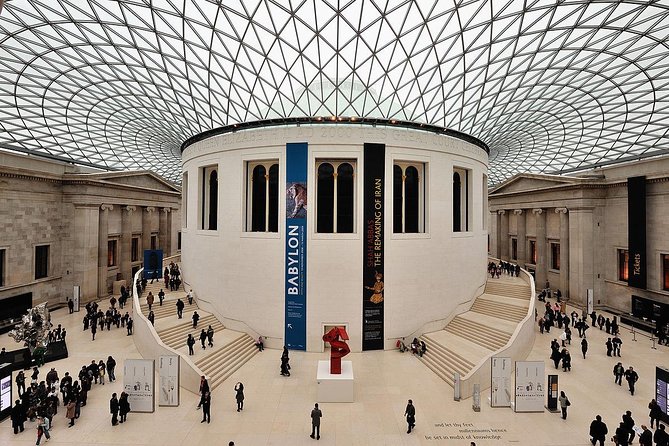
Even before you reach the ancient objects, the Great Court gives you one of the museum’s most memorable spaces. Its glass roof covers a bright central area and turns the heart of the building into an architectural attraction of its own.
A guide will likely use this space to orient the group before moving into the collection. It is a useful starting point because the museum can feel confusing at first. You can get a sense of the building, the scale of the collection, and the fact that you will see only a small section during this visit.
The Great Court is also a good reminder that this is not just a box filled with display cases. The building and its central hall shape the visit. If you have time after the tour, return here and take a slower look without trying to keep up with a group.
Egyptian mummies and the Rosetta Stone
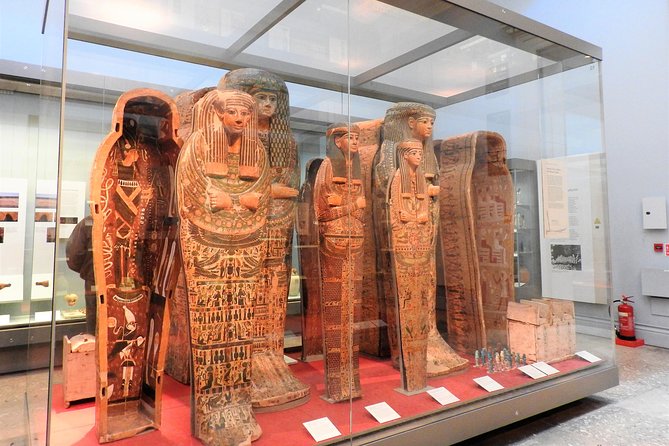
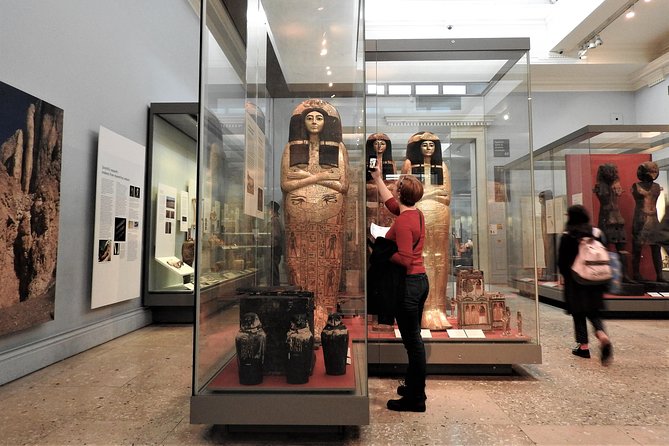
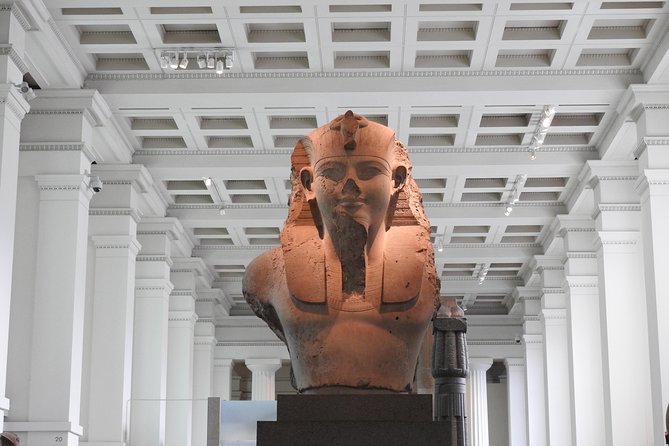
The Egyptian galleries are among the most important stops on a highlights route. You may see mummies, funerary objects, stone carvings, and other remains from a civilization that shaped art, writing, religion, and royal power for thousands of years.
The value of a guide here is not simply pointing at a mummy and naming it. A good explanation helps you understand why the object was made, how it was used, and what modern museum display can and cannot tell you about the people behind it.
The Rosetta Stone is another major stop. It is famous because the same decree appears in different scripts, helping scholars read Egyptian hieroglyphs. Even if you already know the basic story, seeing the actual stone gives the museum a strong anchor.
Expect a crowd around major objects. Your guide may need to keep the group moving rather than pause for long discussion. If you want detailed labels or a close look at every case, plan to revisit the gallery after the guided portion.
A different sort of day out in London altogether:
- From London: Harry Potter Warner Bros Studio Tour
★ 4.7 · 26,588 reviews - London: Westminster to Greenwich River Thames Cruise
★ 4.5 · 22,836 reviews - Magical London: Harry Potter Guided Walking Tour
★ 4.7 · 22,044 reviews - London: Madame Tussauds London
★ 4.6 · 20,915 reviews
Greek sculpture and the Parthenon collection
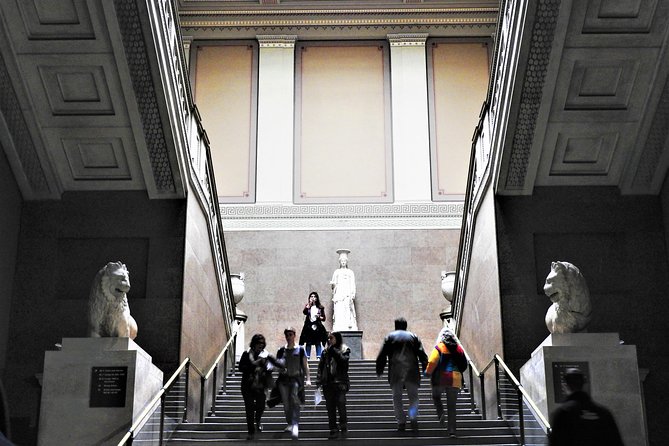
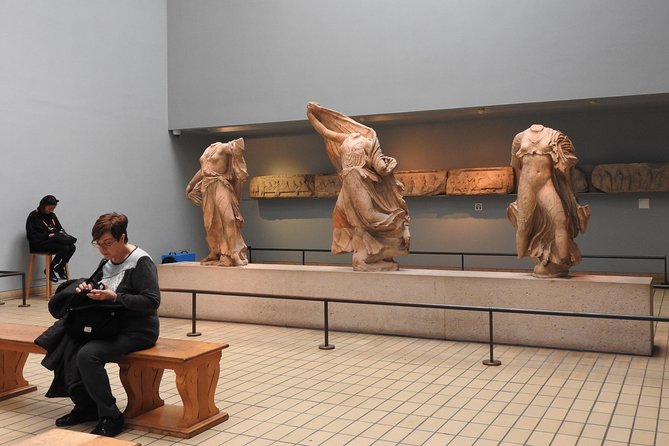
Ancient Greece is another core part of the route, with sculpture and architectural pieces from the world of Athens and beyond. The Parthenon sculptures are the likely headline stop, and they offer plenty to discuss beyond their size and age.
The displays raise questions about ownership, removal, preservation, and the role of major European museums. One guide apparently spent a fair amount of time discussing the fact that some objects may belong in their countries of origin. That subject matters, but the amount of attention it receives can shape your experience.
If you want a purely object-focused tour, you may find this discussion distracting. If you want to understand the museum as a modern institution, it can add useful context. You should be prepared for the guide to touch on the contested history of collecting, rather than treating every object as a neutral decoration.
A strong guide can keep this topic connected to the pieces in front of you. A less focused one may let the discussion pull time away from the galleries. This is one reason the individual guide matters so much.
Ancient Rome and the broader collection
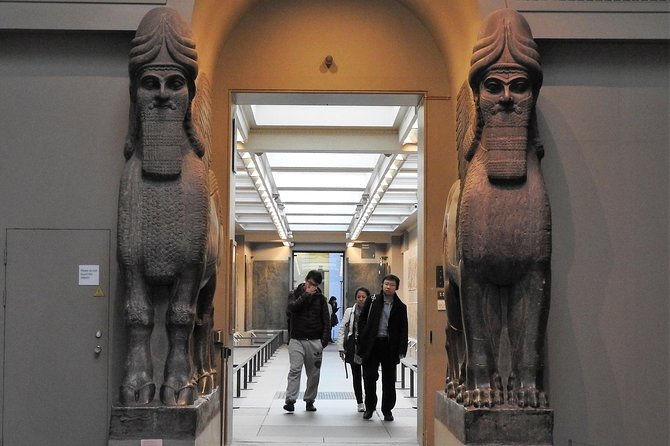
The Roman material gives the tour another way to show how cultures borrowed, adapted, and changed over time. You might see sculpture, objects tied to daily life, and works that help connect Greek influence with Roman power.
The tour is not designed to cover every region or period. Its strength is the broad outline. In two hours, you can move from Egypt to Greece to Rome and come away with a sense of how much the museum holds.
That overview suits a first visit. It is especially useful if you have children or adults in your group who lose interest when a museum visit becomes a long march through rooms with no clear plan. One guide kept four children engaged for the full two hours, which suggests that the right presentation can make a major difference.
Do not expect a specialist seminar on every object. One poor experience involved a guide who offered limited information and spent too much time discussing personal artistic ideas. The safer expectation is a general introduction, with the quality depending heavily on the person leading your group.
How much the guide changes the value
At $18.02, this tour is inexpensive by London standards. Since the British Museum does not charge general admission, the question is not whether the tour saves you a costly ticket. The question is whether two hours of direction and explanation are worth the fee.
For many people, yes. A good guide can prevent you from wandering past the key objects, provide a basic story for each stop, and help you use your remaining museum time wisely. One particularly effective approach is to see the headline pieces with the group, then explore other galleries independently afterward.
The price is also reasonable for families who want structure without paying for a private tour. A maximum group size of 25 is listed, so this is not an intimate one-on-one experience. Still, the actual group may be smaller, and one session had only two people.
The price does not protect you from a poor departure. If the guide is late, difficult to find, hard to hear, or absent, the value drops to zero. That makes communication more important than the low fee might suggest.
Group size, sound, and pacing
A group of up to 25 people is large enough to create practical problems in busy galleries. You may need to stand at the edge of a display, wait for everyone to gather, or move forward when you would prefer another minute.
Ask yourself how you like to visit museums. If you want a quiet, slow examination of labels and objects, self-guided entry may suit you better. If you prefer someone else to choose the route and explain the main pieces, the group format can save time and mental effort.
Sound is another consideration. One guide was difficult to hear over background noise and other tour groups. No personal audio receivers are included in the details, unlike some museum tours that provide headsets.
Stay close to the guide and position yourself near the front when possible. If you have hearing difficulties, this may not be the best choice unless the operator confirms that listening equipment is available.
The group can also run longer than planned. A passionate guide may want to keep explaining, but that can disrupt your later plans. I would not schedule anything important within at least half an hour of the advertised end.
Communication problems and how to protect your morning
The largest risk is not the museum. It is coordination.
Some bookings have involved messages arriving only shortly before the start, unclear directions, external payment requests, or no response when the guide did not appear. You should never pay an unexpected extra amount through an outside link for a tour you have already paid for. Contact the booking platform instead.
Keep the confirmation on your phone because this is a mobile-ticket experience. Check the meeting address, start time, operator name, and any last-minute instructions the day before and again on the morning of the tour.
Give yourself enough time to reach Great Russell Street and account for entrance checks. If the doors open at the same time as the tour, a little early is not excessive.
If no guide appears, document your arrival and attempts to contact the operator. The museum itself remains free to enter, so you can at least salvage the visit by going inside, but that will not replace the guided service you paid for.
Who will get the most from this tour
I would recommend this experience to a first-time British Museum visitor who wants a clear route through the biggest sights. It also fits families, short-stay visitors, and anyone who would rather hear a plain explanation than read hundreds of labels.
It suits you best if you can accept some uncertainty about the guide and meeting procedure. You should be comfortable joining a group of up to 25 people and possibly returning to favorite galleries on your own afterward.
You may want a different option if your schedule is tight, if you need guaranteed listening equipment, or if missing the guide would ruin your day. The museum’s free entry makes a self-guided visit a sensible backup, especially if you have time to study the map and choose your own route.
Free cancellation is available up to 24 hours before the start time. Changes or cancellations inside that window are not accepted for a refund, and the activity may be canceled if its minimum group size is not met.
Should you book the British Museum guided tour?
Book it if you want an inexpensive two-hour introduction to the British Museum and can build in extra time for meeting the guide, entrance checks, and a possible late finish. The strongest sessions offer clear explanations, a well-chosen route, and a useful first look at objects you might otherwise miss.
I would treat the tour as a guided orientation, not a complete museum visit. Confirm the meeting details, watch for the correct guide or flag, and keep the rest of your day flexible.
If reliable communication is your top concern, consider visiting independently. The museum is free, and you avoid the risk of spending your morning searching for a guide. If you want structure and the booking goes smoothly, $18.02 is a fair price for a focused introduction.
FAQ
How long does the British Museum guided tour last?
The tour lasts approximately two hours. It may finish later if the guide spends extra time explaining the collection.
What does the tour include?
The experience includes a local expert guide and a mobile ticket. It covers highlights of the British Museum, including Egyptian, Greek, and Roman objects.
Is British Museum admission included in the price?
The museum entrance itself is free. The tour price pays for the guided experience and arranged entry rather than a separate admission ticket.
Where does the tour start and finish?
The stated meeting point is the British Museum at Great Russell Street, London WC1B 3DG. The activity ends back at the meeting point.
How many people can join the tour?
The maximum group size is 25 people. Actual groups may be smaller.
Can I cancel for a full refund?
Yes, if you cancel at least 24 hours before the experience start time. Cancellations or changes made less than 24 hours before the start are not refundable.
Just added around London
- London: “Queen” Highlights Walking Tour★ 4.3 · 48 reviews
- Couple’s photo: Romantic photoshoot in London★ 4.8 · 22 reviews
- London: Private Tour with Locals – Highlights & Hidden Gems★ 5.0 · 8 reviews
- Luxury Private Tour in London with Lunch★ 5.0 · 7 reviews
- London 1- or 2-Hour Professional Photo Shoot★ 4.9 · 6 reviews
- London: Private Black Cab Night Tour with Hotel Pick Up★ 5.0 · 11 reviews
- London: Christmas Lights Tour – With Christmas Music★ 4.8 · 9 reviews
- London: Private Pub Tour★ 4.5 · 4 reviews
British Museum Tours, compared.
British Museum London Guided Tour Semi-Private 8ppl Max
Read our review →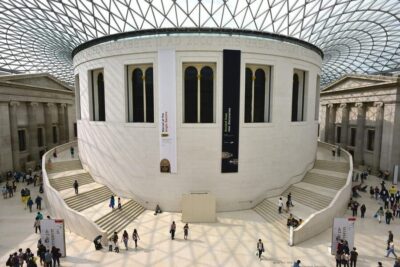
British Museum Audio Tour & Priority Entrance Ticket
Read our review →
The British Museum London – Exclusive Guided Museum Tour
Read our review →
British Museum & National Gallery of London Semi-Private 8ppl Max
Read our review →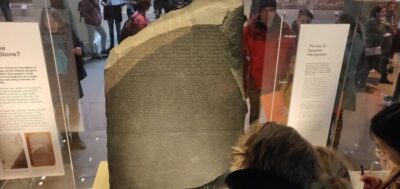
British Museum Archaeology Course and Guided Tour
Read our review →Browse the lists this tour appears in