
Reviewed · BRITISH MUSEUM TOURS
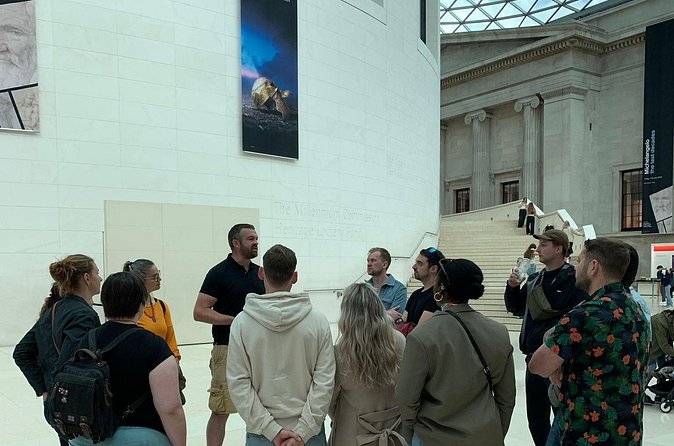
Shared British Museum Highlights Tour
The best reason to book this British Museum tour is its unusual route through a place that can easily overwhelm you. Instead of racing from the Rosetta Stone to the Egyptian mummies, you’ll follow a smaller, more thoughtful trail through objects from India, China, Egypt, and Mesopotamia, with time spent on lesser-known pieces that many visitors miss.
I like the maximum group size of eight, which makes questions and conversation practical. I also like that guides Andy and Sheldon connect old objects with issues the museum faces today, including the difficult questions surrounding how collections were built and displayed.
The main consideration is time. The museum holds at least 8 million objects, while the guided visit covers roughly two hours, or about two and a half hours depending on the day’s timing. You’ll get a focused introduction, not a complete museum visit, and the $124.82 price is easiest to justify if you want interpretation rather than simply entry.
Key points to know before you book
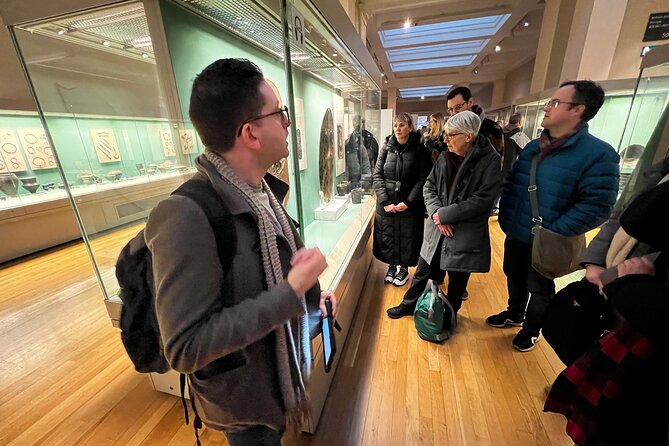
- A small group of no more than eight: You get a closer, more conversational experience than on a large museum walk.
- More than the standard highlights: The route includes the Rosetta Stone, but also Indian Uprising medals, a Mesopotamian board game, and fragments linked to the world’s first library.
- Andy and Sheldon lead with humor and context: Their approach links ancient objects to ideas and events that still shape life today.
- Free timed entry is included: You spend less time waiting to enter and more time inside the galleries.
- Morning and afternoon departures: You can fit the tour around other London plans.
- A serious look at the museum itself: The tour addresses the British Museum’s role and controversies in the 21st century.
Why this British Museum route is different
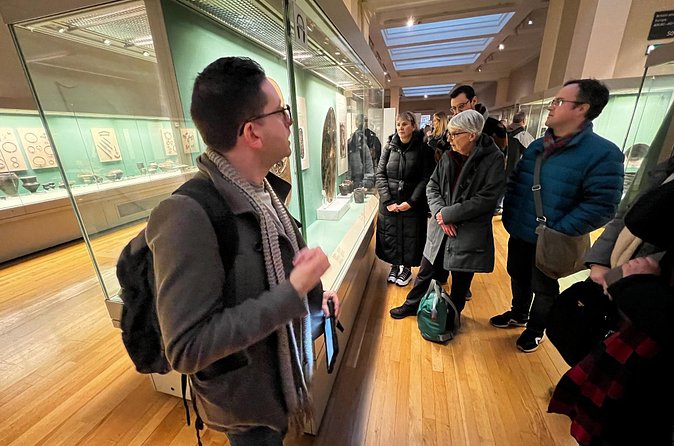
The British Museum is not short on famous objects. Its trouble is choosing where to begin.
Founded in 1759, it contains at least 8 million objects from across the world. Even a full day only gives you a sample, and a first-time visitor can easily spend an hour moving between galleries without understanding how the pieces connect.
This tour solves that problem with a clear route and a guide-led story. You are not left to study labels in random order. Instead, Andy and Sheldon guide you through well-known rooms and quieter displays, using selected objects to explain larger themes in world history.
That matters because museum labels often tell you what an object is, when it was made, and where it came from. A good guide adds the missing layer: why it mattered, how it was used, who collected it, and what its presence in London means today.
I especially like the choice to move beyond the usual checklist. The Rosetta Stone is still part of the experience, but it is not treated as the only reason to enter the museum. You may also stop for medals connected to the Indian Uprising of 1857, an ancient board game from Mesopotamia, and fragments associated with the world’s first library.
Those choices give you a better sense of the museum as a place of human stories, not simply a storage room for famous artifacts.
More British Museum Tours:
- London: British Museum Guided Tour
★ 4.3 · 1,182 reviews - British Museum London Guided Tour Semi-Private 8ppl Max
★ 5.0 · 984 reviews - London: Tour of the British Museum
★ 4.1 · 678 reviews
Meeting Andy and Sheldon at Great Russell Street
The meeting point is outside Starbucks at 51 Great Russell Street, London WC1B 3BA. The British Museum is at Great Russell Street, London WC1B 3DG, so the start and finish are close together.
That simple arrangement is useful in a busy part of London. You do not need to find a distant office or travel across town after meeting the guide. The walk ends at the museum, leaving you in a central location for lunch, another museum, shopping, or a return to your hotel.
Andy and Sheldon bring different strengths to the experience. Their style combines serious historical explanation with humor, which helps keep a long museum visit from becoming a string of dates and names. The tone is not purely academic, but it is also not a shallow sightseeing script.
I like that they seem to adjust their explanations to the people in the group. That is especially useful in a group of eight, where one person may want more context about empire and collecting while another wants practical help understanding an ancient object.
If you are traveling alone, the small format should feel easier than joining a large crowd. If you are visiting with family or friends, you have enough room to discuss what you are seeing without losing the guide in a mass of people.
The British Museum’s famous objects and lesser-known stories
The museum’s size is both its strength and its challenge. At least 8 million objects are connected to the institution, but only a portion can be seen on display. A guide must make firm choices.
The tour includes the Rosetta Stone, the museum’s most recognizable object and one of London’s most crowded displays. It is important, but its fame can make it easy to overlook the wider story. A guide can help explain why the stone mattered and how it changed the study of Egyptian writing.
The route also gives attention to pieces that do not attract the same crowd. Medals from the Indian Uprising of 1857 can open questions about British rule, resistance, memory, and the way political events are presented in a museum.
An ancient Mesopotamian board game offers another kind of connection. It reminds you that people thousands of years ago played, competed, and spent leisure time much as people do now. A small object can make the ancient world feel more familiar than a grand monument sometimes does.
Fragments from the world’s first library point toward the early preservation of written knowledge. They also raise a practical museum question: how do broken pieces, partial records, and objects removed from their original setting become part of a modern collection?
These stops are valuable because they widen the experience. You are not simply looking at the largest or prettiest objects. You are being asked to consider what each piece can reveal, what it cannot tell you, and why it is displayed in London.
India, China, Egypt, and Mesopotamia in one visit
The tour crosses several regions, including India, China, Egypt, and Mesopotamia. That range is one of its biggest strengths, but it also means the route will be selective.
You should expect an overview rather than a specialist seminar on any one culture. If you already have a particular interest in Egyptian art or Chinese ceramics, you may want more time in that section after the guided walk. The advantage is that you gain a framework for the museum as a whole.
The route can also help you notice how different societies approached writing, power, religion, trade, daily life, and memory. The objects may come from different periods and places, but the tour looks for links between them.
I would pay attention to the questions the guides ask, not just the dates they provide. Andy and Sheldon are praised for connecting the past to present-day beliefs and actions. That approach helps you understand why a centuries-old medal, game board, or manuscript fragment can still matter.
The subject is not always comfortable. The British Museum’s collections are tied to colonial expansion, collecting practices, and disputes over ownership. A tour that acknowledges those issues gives you a more honest visit than one that treats every object as a neutral decoration.
More London Sightseeing and Highlights Tours:
- London: London by Night Sightseeing Open-Top Bus Tour
★ 4.5 · 5,516 reviews - London: Tootbus Must-See Hop-On Hop-Off Bus Tour with Cruise
★ 4.0 · 3,653 reviews - London: River Thames Hop-On Hop-Off Sightseeing Cruise
★ 4.4 · 3,112 reviews - Westminster to Greenwich Sightseeing Thames Cruise in London
★ 4.5 · 2,969 reviews
A museum tour that discusses the museum itself
Many guided museum visits focus only on the objects. This one also considers the British Museum’s role today.
That means you may hear about the institution’s public purpose, the way it presents world cultures, and the questions raised by objects acquired during periods of imperial power. These subjects can make the visit more serious, but they also give you a better way to understand what you are seeing.
I value this part of the experience because the building is not separate from the history on display. The museum’s choices affect which stories are emphasized, how cultures are represented, and how visitors understand the past.
The tour is described as honest and insightful rather than a simple celebration of the collection. That makes it a good fit if you want context around the institution itself. It may be less suitable if you only want a fast route to the most famous objects with no discussion of modern museum debates.
The guides also bring humor into the experience. That balance matters. A visit can address empire, violence, ownership, and cultural loss without becoming a grim lecture from start to finish.
What the two-hour format gives you
The listed duration is approximately two hours and thirty minutes, while the museum portion is described as two hours. I would plan for at least the longer time window so you are not rushing to another booking.
Two hours is enough for a carefully chosen route. It is not enough to see the entire British Museum, and no honest tour can solve that problem. The benefit is that you leave with a manageable set of objects and ideas rather than a blurred memory of dozens of galleries.
The small group helps the time feel more useful. With no more than eight people, the guide can keep the pace moving while still allowing questions. On a large group walk, stopping for one object can create a long pause or make conversation difficult. Here, the format is better suited to discussion.
You should still wear comfortable shoes and arrive ready to stay focused. The supplied details do not promise a break, seating, or a café stop during the museum portion, so plan for a continuous guided visit.
Afterward, you can continue on your own if you want more time with a favorite gallery. The tour ends at the British Museum, which makes that easy.
Is $124.82 a fair price?
At $124.82 per person, this is not a cheap way to enter the British Museum. The value depends on what you want from your visit.
If you only want to walk through the building and see the major objects, paying this much may not make sense. The museum has at least 8 million objects, and the tour only covers a small selection. You are paying for guidance, a planned route, interpretation, and free timed entry, not just access to the galleries.
The price becomes easier to defend if you want a personal explanation of difficult material. A group of eight is much more intimate than a large scheduled tour, and Andy and Sheldon bring a clear interest in connecting objects to modern life.
The free timed entry also has practical value. London attractions can involve queues, and a set entry time helps you use your day more efficiently. It does not mean you will see the whole museum quickly, but it removes one common delay.
I would consider this tour worthwhile for a first visit when you have limited time and want a strong introduction. If you already know the museum well, the lesser-known objects and discussion of its present-day role may still offer something new.
Choosing morning or afternoon
Morning and afternoon departures make the tour easier to fit into a London schedule. The best choice depends on how you plan the rest of your day.
A morning booking gives you a clear start and leaves the afternoon open for more museum time, nearby attractions, or a meal. It can also work well if the British Museum is one of your main priorities.
An afternoon departure may suit you if you want a slower morning or have another central London activity first. The museum is a good anchor for a day in the area, though the supplied details do not give exact departure times, so check the available slot before booking.
Because the tour takes about two hours, or possibly two and a half, avoid placing a tight reservation immediately afterward. Give yourself extra time for the walking route, the guide’s final explanations, and the possibility that you will want to remain inside.
Who should book this experience
I would choose this tour if you:
- Want help making sense of a very large museum
- Prefer a group of eight or fewer
- Like history explained through objects and stories
- Want to see more than the standard famous sights
- Are interested in the British Museum’s role today
- Enjoy a guide who uses humor as well as serious discussion
- Have only a few hours and want a focused introduction
It is also a good choice for solo visitors, families, and friends. The group size creates room for conversation, and the guides’ style should work for people with different levels of interest in history.
I would hesitate if you want a private tour, a full-day museum study, or a narrow focus on one collection. The experience is shared, and the route crosses several regions rather than staying with one specialist subject.
A note about the local pub stop mentioned in the experience feedback: Andy and Sheldon have at times ended with a quick drink at a nearby pub, but that should not be treated as a guaranteed part of the advertised tour. The included experience is the guided museum visit.
Booking, timing, and cancellation
Confirmation is provided when you book, and the experience is offered in English with a mobile ticket. It is near public transportation, and most people can participate.
Free cancellation is available if you cancel at least 24 hours before the start time. If you cancel later, the amount paid is not refunded, and changes made within that 24-hour period are not accepted. The cutoff uses local London time.
Since the experience is often booked about 33 days in advance, popular morning and afternoon times may fill before your trip. If this tour is important to your plans, booking early gives you more choice.
Should you book the Shared British Museum Highlights Tour?
Book it if you want the British Museum explained rather than simply entered. The small group, timed entry, and unusual selection of objects make it more personal than a basic highlights walk.
The strongest reason to choose it is the balance between famous pieces and less familiar stories. You will see the Rosetta Stone, but you will also consider medals from the Indian Uprising, an ancient board game, and fragments tied to early written records. Andy and Sheldon add humor and present-day context, which can turn a crowded museum into a clearer and more thoughtful experience.
Skip it if you prefer to wander alone, need a private guide, or want to spend several hours in one particular collection. For everyone else, especially first-time visitors with limited time, this is a focused way to begin understanding one of London’s most demanding museums.
FAQ
Where does the tour start?
It starts at Starbucks Coffee, 51 Great Russell Street, London WC1B 3BA, UK.
Where does the tour end?
The tour ends at the British Museum on Great Russell Street, London WC1B 3DG, UK.
How long does the tour last?
The experience is listed as approximately two hours and thirty minutes. The museum visit itself is described as lasting two hours.
How many people can join the tour?
The maximum group size is eight travelers.
Is museum admission included?
Yes. The experience includes free timed entry to the British Museum.
Is the tour offered in English?
Yes. The tour is offered in English.
Are morning and afternoon departures available?
Yes. You can choose between morning and afternoon departure options.
What does the tour cover?
It covers selected British Museum galleries and objects connected with India, China, Egypt, Mesopotamia, and other parts of the world. The route includes the Rosetta Stone, medals from the Indian Uprising of 1857, an ancient Mesopotamian board game, and fragments associated with the world’s first library.
Can most people participate?
Yes. Most travelers can participate, and the meeting point is near public transportation.
Can I cancel for a full refund?
Yes, if you cancel at least 24 hours before the experience start time. Cancellations made less than 24 hours before the start time are not refunded.
Just added around London
- Up at The O2:Twilight Climb with Guided Tour with Panoramic Views★ 5.0 · 50 reviews
- Private Chauffeur-London Heathrow from/to Southampton Cruise Port★ 5.0 · 9 reviews
- Kensington Palace VIP Garden Tour with Royal High Tea★ 4.5 · 71 reviews
- Up at The O2: Sunset Climb with Guided Tour with Panoramic Views★ 5.0 · 110 reviews
- Secrets of the London Underground Small Group Walking Tour★ 4.5 · 38 reviews
- Urban Canvas: Exploring Shoreditch’s Vibrant Street Art★ 5.0 · 36 reviews
- Ultimate introduction to photography in Central London★ 5.0 · 19 reviews
- Full-Day Self-Guided Paris Tour from London by Eurostar with Seine River Cruise★ 3.5 · 22 reviews
British Museum Tours, compared.
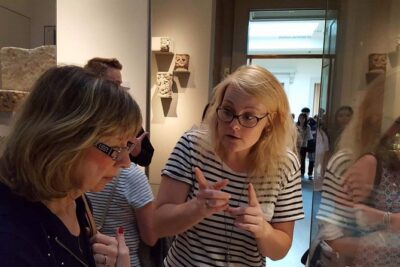
British Museum London Guided Tour Semi-Private 8ppl Max
Read our review →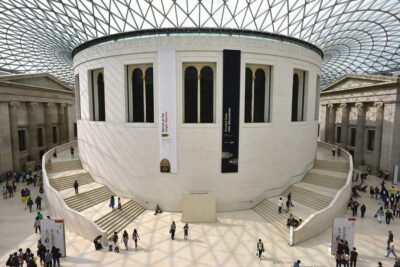
British Museum Audio Tour & Priority Entrance Ticket
Read our review →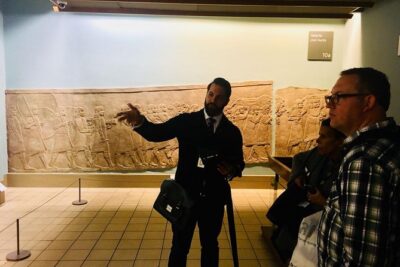
The British Museum London – Exclusive Guided Museum Tour
Read our review →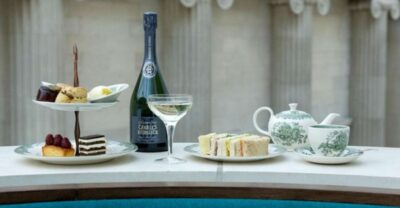

Private Guided Tour of the British Museum – Tickets Included
Read our review →Browse the lists this tour appears in