

Reviewed · BRITISH MUSEUM TOURS
London: British Museum Highlights Guided Small Group Tour
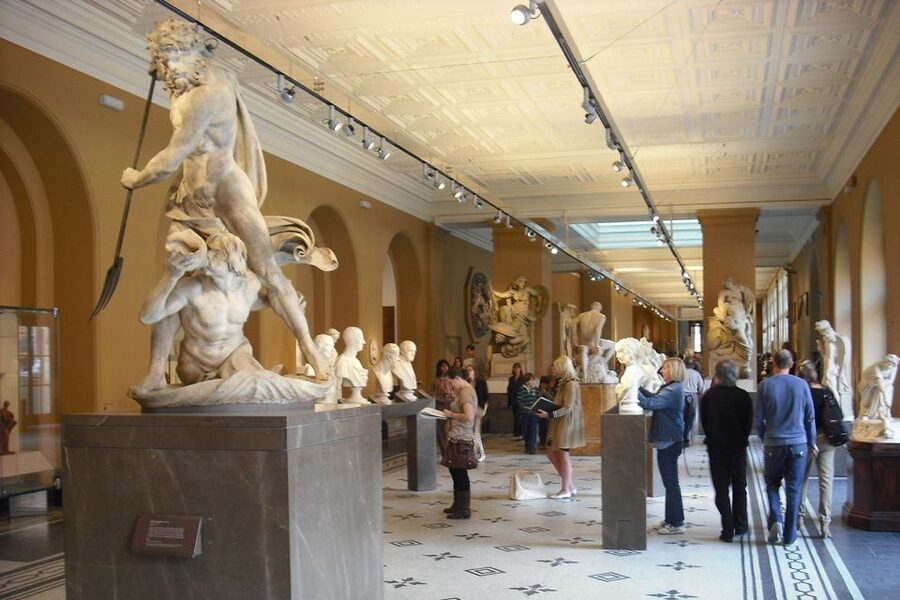
The British Museum can swallow an entire day, so the real value here is knowing where to go and why each object matters. In about two hours, your guide links the Rosetta Stone, ancient empires, royal games, and Samurai armour into a clear story of human achievement.
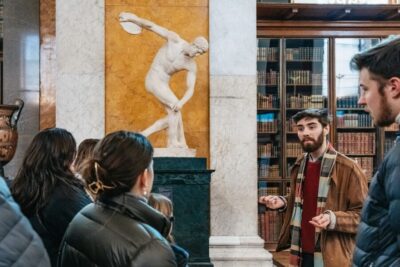
I like the small scale, with semi-private groups capped at eight, and I like the guides’ mix of facts, humor, and storytelling. Guides such as James, Andy, Sasha, Stef, Luis, and Sheldon have helped families, teenagers, and serious history fans get much more from the displays. The main drawback is time: two to two and a half hours is enough for major highlights, but not enough to see the museum in full.
Key points to know
- The Rosetta Stone anchors the visit: See the actual stone that helped scholars read Egyptian hieroglyphs.
- A guide saves you from wandering: The British Museum holds millions of objects, and this route focuses your attention on important pieces.
- The tour crosses continents and centuries: Expect Egyptian mummies, Assyrian reliefs, Greek sculpture, Celtic chess pieces, Persian treasure, and Japanese armour.
- The small group matters: Semi-private tours allow up to eight people, while private tours give your party the guide’s full attention.
- The style suits families: Guides use stories, questions, and humor to keep younger visitors involved.
- Plan for a highlights visit: If you want long, quiet time with each object, book a private tour or allow extra time afterward.
Why a British Museum guide helps
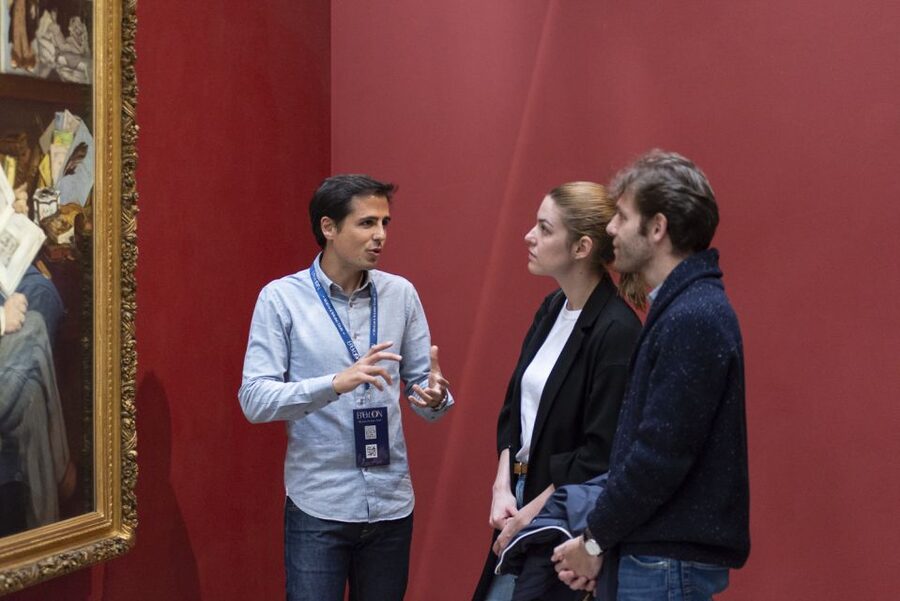
The British Museum is free to enter, but free entry does not make it easy to understand. Its galleries cover about 6,000 years of human history, with objects from many parts of the world. Without a plan, you can spend an hour admiring display cases and still miss the pieces that give the museum its shape.
I like this tour because it treats the museum as a connected story rather than a warehouse of famous objects. You move between cultures and eras, but the guide explains why each stop was chosen and what it tells you about the people who made, used, or worshipped around it.
The tone is serious without becoming stiff. Andy, who has a PhD in history, has led tours that connect objects to wider political and social questions. Other guides, including Matilda, Emily, Becks, Alex, Steph, and Tony, have been praised for making complicated subjects easy to follow.
That variety matters because the experience depends heavily on the person leading it. The tour is designed around the museum’s main treasures, but a good guide adds the human detail: how an object was used, what it meant in its own time, and how it reached London.
More British Museum Tours:
- London: British Museum Guided Tour
★ 4.3 · 1,182 reviews - British Museum London Guided Tour Semi-Private 8ppl Max
★ 5.0 · 984 reviews - London: Tour of the British Museum
★ 4.1 · 678 reviews
The Rosetta Stone and the start of written history

The Rosetta Stone is usually one of the first major stops, and it earns its fame. This is the real stone, not the language-learning company with a similar name. Its importance comes from the same message being written in different scripts, allowing scholars to compare them and begin reading Egyptian hieroglyphs.
A guide can turn the stone from a famous black slab into a practical lesson in how historians work. You learn why repeated text matters and why this one object changed the study of ancient Egypt.
The crowds around the Rosetta Stone can be heavy, especially as the day progresses. A guide helps you get a proper look instead of simply joining the line of people taking photographs. Do not expect a long private viewing, but you should get the context that a label alone cannot provide.
Assyrian Lion Hunt reliefs and royal power
The Assyrian Lion Hunt reliefs offer one of the tour’s most striking encounters. They show royal hunts with remarkable detail, including the physical power and suffering of the animals. These are not decorative scenes in the modern sense. They were political images, designed to show the ruler as strong, brave, and capable of controlling danger.
This is where storytelling makes a difference. You can look at carved figures on your own, but a guide can point out the repeated symbols, the court setting, and the way the king is presented. The reliefs become evidence of how an empire wanted to see itself.
The stop also adds balance to the idea of human progress. The museum’s objects show great skill, but they also reveal violence, hierarchy, conquest, and propaganda. That frankness is one of the tour’s strengths. Emily, who has led private visits, has been especially appreciated for discussing less flattering parts of British history and the complicated routes by which objects entered the museum.
Parthenon Sculpture and the museum’s harder questions
The Parthenon Sculpture provides the tour with a different kind of conversation. These Greek sculptures are admired for their craftsmanship and their influence on Western art, but their presence in London also raises questions about ownership, removal, and the role of major museums.
A strong guide will give you both sides of the story without turning the visit into a lecture. You can appreciate the carving while also thinking about how cultural treasures are collected and displayed. This is useful context, particularly if you are visiting from outside Britain and want more than a list of artistic achievements.
The galleries can feel busy, and the tour’s pace may not allow you to examine every figure closely. If the Parthenon material is a priority for you, tell the guide at the start. A private booking gives you more control over how long you spend here.
More London Sightseeing and Highlights Tours:
- London: London by Night Sightseeing Open-Top Bus Tour
★ 4.5 · 5,516 reviews - London: Tootbus Must-See Hop-On Hop-Off Bus Tour with Cruise
★ 4.0 · 3,653 reviews - London: River Thames Hop-On Hop-Off Sightseeing Cruise
★ 4.4 · 3,112 reviews - Westminster to Greenwich Sightseeing Thames Cruise in London
★ 4.5 · 2,969 reviews
Egyptian mummies, including Katebet
The Mummy of Katebet brings the Egyptian galleries down to a personal scale. A mummy is not simply an old body in a case. It reflects beliefs about death, identity, family, ritual, and the hope of continuing life beyond the grave.
Your guide may use Katebet to explain the decoration of the coffin, the role of religious images, and what museum experts can learn from preserved remains. This kind of stop works well for families because it is memorable without requiring specialist knowledge.
It is also a reminder that the museum’s collection is made up of individual lives, not just grand monuments. That human focus helps connect the Egyptian galleries with the other parts of the route.
The Lewis Chessmen and everyday medieval life
The Lewis Chessmen are among the most approachable objects on the tour. These small medieval figures, carved from walrus ivory, include kings, queens, bishops, knights, and other pieces. Their expressions are often more memorable than their size suggests.
I like this stop because it offers a break from royal sculpture and monumental reliefs. The pieces connect art with play, trade, travel, and status. They also give younger visitors something easy to grasp: people centuries ago played games, showed off craftsmanship, and enjoyed objects that were both useful and beautiful.
A guide can point out the character in the individual figures and explain why a chess set tells us something about the society that produced it. You may not spend long here, but the Lewis Chessmen often become one of the objects you remember best.
The Oxus Treasure and Persian craftsmanship
The Oxus Treasure brings the tour into the ancient Persian world. Its gold and silver objects show careful workmanship and the wealth of the people who owned them. The treasure also offers a chance to discuss exchange between cultures, since ancient empires were not isolated from one another.
This is a good example of why a guided route is useful. You might walk past a case of small metal objects without knowing how important it is. A guide gives the display scale and meaning, explaining what the objects reveal about power, religion, money, and artistic skill.
The pieces are smaller than the Parthenon sculptures or Assyrian reliefs, so you may want to stand close and listen carefully. In a larger group, this could be harder. The eight-person limit on the semi-private option helps, but a private tour remains the best choice if you want a slower look.
The Royal Game of Ur and ancient leisure
The Royal Game of Ur shows that board games are not a recent invention. The set is more than 4,000 years old and gives you a glimpse of leisure in ancient Mesopotamia.
This stop adds variety to the itinerary. Instead of focusing on rulers, temples, or funerary customs, it asks what people did in their spare time. A guide can use the game to explain trade, social life, and the practical skill needed to make objects for play.
It is also a useful family stop. Children who find long discussions of empire difficult often respond to the idea that someone in the ancient world sat down to play a game much as people do today.
Samurai armour and the reach of the collection
The Samurai armour reminds you that the British Museum is not only about Egypt, Greece, and Rome. Japanese armour combines protection, rank, craft, and visual drama. It shows how equipment can serve practical needs while also communicating identity and status.
The museum’s global range is one of its greatest strengths, but it can also be confusing. The jump from Assyria to Japan is large, and the guide’s job is to make those changes feel purposeful rather than random.
This is particularly helpful if you have only one London museum visit available. You will not see every region represented, but you will get a sense of the museum’s reach and the different ways societies used objects to express belief, authority, skill, and taste.
What the two-hour route is really like
The stated duration is two to two and a half hours, with daily departures available at different times. The exact meeting point can vary by booking, so check your confirmation carefully before setting out.
Expect a steady amount of walking through galleries. It is not a strenuous outdoor excursion, but you will be on your feet and moving between rooms. Large bags and luggage are not allowed, and you should bring a passport or ID card.
The route is designed for breadth and explanation, not for sitting with every object. Several guides have been praised for moving groups efficiently through crowded galleries, especially James and Luis. That skill has real value in a museum this large. You spend less time trying to find the next room and more time listening.
The semi-private format requires at least two people and allows no more than eight. If the minimum is not met, an alternative date or a full refund is offered. Private tours are a better fit if you have a fixed schedule, want to set the pace, or hope to focus on particular galleries.
Wheelchair tours are available on request only as private tours. The small-group option is not available for visitors who require a wheelchair, so make that request before booking. The activity information also lists wheelchair users under not suitable, which makes confirming the arrangement essential.
Is $112 good value?
At $112 per person, this is not the cheapest way to visit the British Museum. Entry to the museum itself is free, and you can explore independently with a map and your own research.
The price pays for direction, time, and interpretation. You are not simply buying access to objects. You are paying a professional local guide to select the key pieces, explain their meaning, answer questions, and help you move through a huge building without wasting the morning.
That value is strongest if this is your first visit, your London time is limited, or you are traveling with children and teenagers. It is also strong for anyone who has already wandered through the museum and left feeling overloaded. A private tour costs more in total, but can be worthwhile for a family or group that wants the visit shaped around its own interests.
The value is weaker if you prefer to read every label, move slowly, or spend an entire day in one collection. In that case, use the tour as an introduction, then stay afterward for independent exploration.
Who should book this British Museum tour?
I would choose this tour for a first-time visitor who wants a clear introduction to the museum’s most important objects. It also suits families, since guides such as Luis, Ivo, and Alex have been able to keep children engaged with humor and vivid stories.
Teenagers may respond especially well to the mix of mummies, battles, games, treasure, and armour. History fans should appreciate the context, while casual visitors can enjoy the major objects without needing to prepare beforehand.
If you have visited the museum several times and already know the main galleries, you may prefer a private tour with a special focus. Ask about the objects you care most about at the start, since the standard route cannot cover everything.
The high overall rating reflects a consistent pattern in the feedback: guides are praised for strong subject knowledge, friendly delivery, humor, and the ability to make objects feel alive. The most common practical criticism is also clear: some people want another half hour and a few extra stops.
My verdict: book it if you want meaning, not just famous objects
Book this tour if you want to understand what you are looking at and avoid wandering through five million objects without a plan. The Rosetta Stone, Assyrian Lion Hunt reliefs, Parthenon Sculpture, Lewis Chessmen, Oxus Treasure, Katebet, Royal Game of Ur, and Samurai armour make a strong route across time and continents.
Skip it if you want a slow, self-directed museum day or if the price feels high compared with free admission. Otherwise, the guide’s selection and storytelling make $112 reasonable for a focused first visit. Leave yourself extra time afterward if you want to return to a favorite gallery.
FAQ
How long does the British Museum tour last?
The tour lasts 2 to 2.5 hours.
What language is the tour offered in?
The live tour guide speaks English.
What objects are usually included?
Highlights generally include the Rosetta Stone, Assyrian Lion Hunt reliefs, Parthenon Sculpture, Lewis Chessmen, Oxus Treasure, Royal Game of Ur, Mummy of Katebet, and Samurai armour. Display access can change if an object is on loan or being restored.
Is the tour private or shared?
You can book a private tour or a semi-private tour. Semi-private groups have a maximum of eight people.
How many people are required for a semi-private tour?
At least two people are required for a semi-private tour to run. If the minimum is not met, an alternative date or a full refund is offered.
Is hotel pickup included?
No. Hotel pickup and drop-off are not included.
Are food and drinks included?
No. Food and drinks are not included unless specifically stated.
What should I bring?
Bring a passport or ID card.
Can I bring luggage or a large bag?
No. Luggage and large bags are not allowed.
Can wheelchair users join the tour?
Wheelchair tours are available on request only as private tours. A small-group tour is not offered for visitors who require a wheelchair, so confirm the arrangement before booking.
Just added around London
- Private Chauffeur-London Heathrow from/to Southampton Cruise Port★ 5.0 · 9 reviews
- Kensington Palace VIP Garden Tour with Royal High Tea★ 4.5 · 71 reviews
- Up at The O2:Twilight Climb with Guided Tour with Panoramic Views★ 5.0 · 50 reviews
- Up at The O2: Sunset Climb with Guided Tour with Panoramic Views★ 5.0 · 110 reviews
- Secrets of the London Underground Small Group Walking Tour★ 4.5 · 38 reviews
- Urban Canvas: Exploring Shoreditch’s Vibrant Street Art★ 5.0 · 36 reviews
- Ultimate introduction to photography in Central London★ 5.0 · 19 reviews
- Full-Day Self-Guided Paris Tour from London by Eurostar with Seine River Cruise★ 3.5 · 22 reviews
British Museum Tours, compared.
British Museum London Guided Tour Semi-Private 8ppl Max
Read our review →
British Museum Audio Tour & Priority Entrance Ticket
Read our review →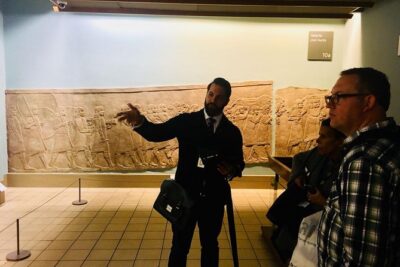
The British Museum London – Exclusive Guided Museum Tour
Read our review →
Private Guided Tour of the British Museum – Tickets Included
Read our review →Browse the lists this tour appears in