
Reviewed · BRITISH MUSEUM TOURS
London: Tour of the British Museum
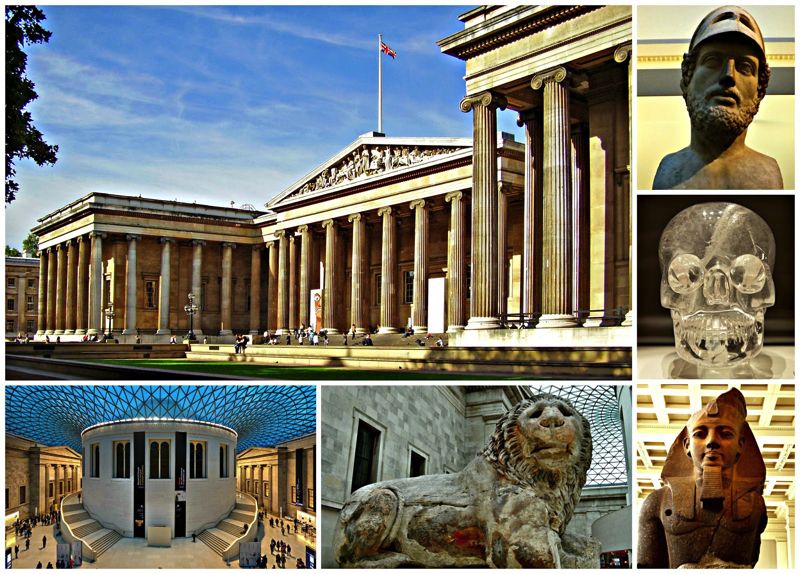
The British Museum holds thousands of years of human history under one roof, but its size can work against you. This two-hour highlights tour takes you straight to major objects from Egypt, Assyria, Greece, the Aztec world, and Easter Island, with a guide explaining why each piece matters.
I like the low $14 price and the practical route through the museum. I also like that guides such as Puri, Miguel, Eduardo, and Fernando have been praised for clear explanations, humor, and real enthusiasm for the subject. The main drawback is the meeting point: the blue-green flag can be hard to spot, and the entrance queues may slow you down.
Key points to know
- A fast route through major civilizations: See Egyptian, Assyrian, Greek, Aztec, and Polynesian objects in one visit.
- The Parthenon sculptures are a central stop: Learn about the important Greek pieces housed in the museum.
- The Easter Island moai is an unforgettable finish: Hoa Hakananai’a rises more than two meters high.
- Guides add order and context: You are not left guessing which objects deserve your limited time.
- The tour costs $14 per person: That is strong value for a two-hour guided visit to a free museum.
- Arrive early for security and the meeting point: Look for the Paseando por Europa blue-green flag after the checkpoint.
Why a guide helps inside the British Museum
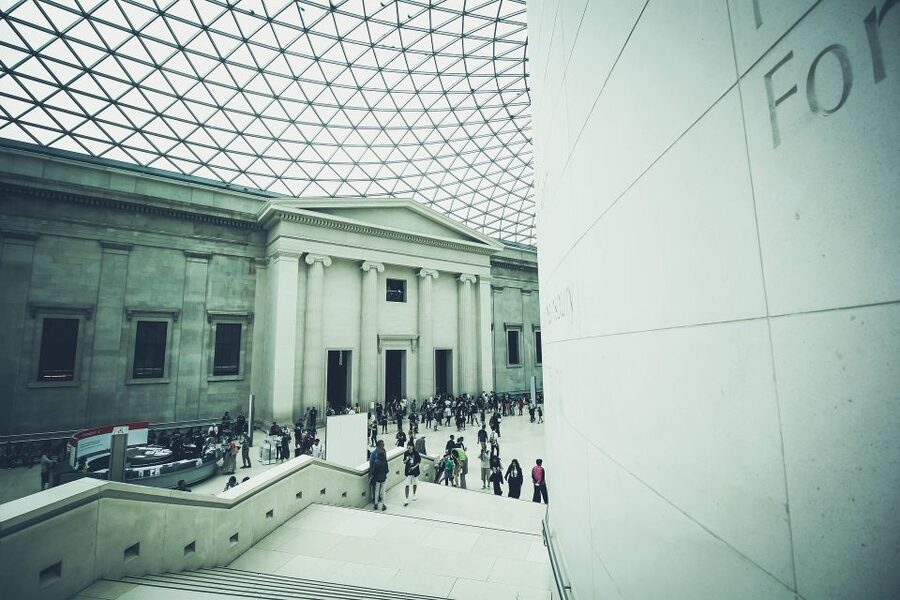
The British Museum is free to enter, but free does not mean simple. Its galleries cover enormous stretches of time and many parts of the world. You can walk in with good intentions and still spend much of your visit studying a map, searching for famous objects, or wondering which rooms are worth your energy.
This tour gives you a clear route. In two hours, you move from the museum’s exterior and early collections to Egypt, Assyria, Greece, Easter Island, and the Aztec world. That is not enough time to see everything, but it is enough to build a useful framework.
I see the guide as a time-saver first and a source of extra detail second. The best comments from the guides have focused on stories, beliefs, funerary customs, and the original purpose of objects, rather than a long list of dates. Guides named Puri, Miguel, Eduardo, and Fernando have received particular praise for their energy, humor, and ability to answer questions.
The route also helps you avoid the common museum problem of looking at famous objects without understanding them. A short explanation can turn a carved figure, fragment of architecture, or burial object into something far more memorable.
More British Museum Tours:
- London: British Museum Guided Tour
★ 4.3 · 1,182 reviews - British Museum London Guided Tour Semi-Private 8ppl Max
★ 5.0 · 984 reviews - London: British Museum Audio Tour & Priority Entrance Ticket
★ 4.5 · 631 reviews
Meeting at Great Russell Street
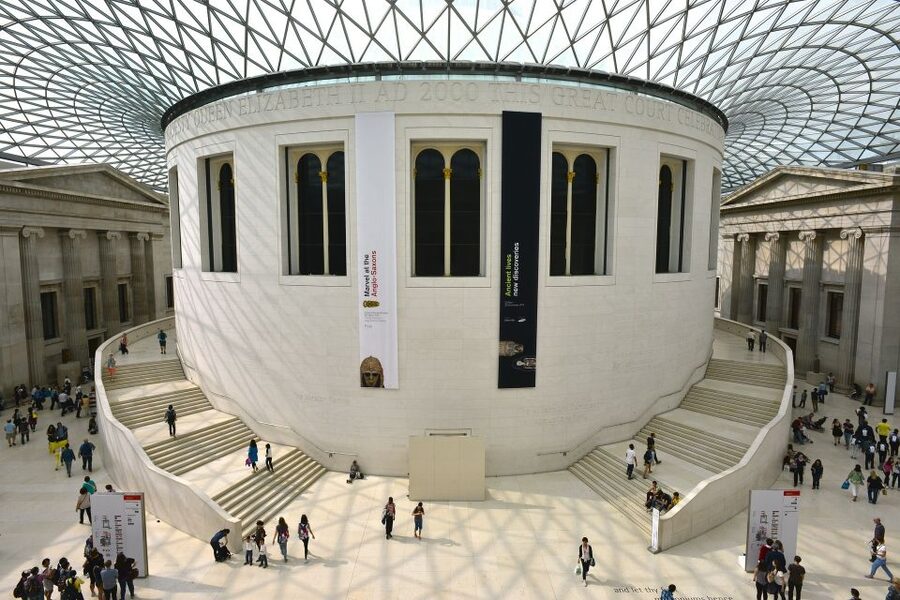
The meeting point is at the stairs to the main entrance on Great Russell Street, in front of Starbucks. You meet the guide after passing through the security checkpoint, so you should allow extra time before the official start.
This detail matters. The entrance can have queues, especially during school holidays and busy periods. One visitor arrived about an hour early, found the line moved faster than expected, and still had time to locate the guide. You probably do not need quite that much extra time every day, but arriving early is sensible.
Look for the blue-green flag with the Paseando por Europa logo. The flag is not especially large, so stand where you can scan the area instead of assuming the guide will be obvious. The meeting instructions ask you to show either a printed confirmation email or a mobile voucher.
The museum is free, but this paid tour is a guided service rather than a standard admission charge. The information provided does not clearly state that the tour itself replaces any separate museum entry reservation, so you may want to check the museum’s current entry arrangements before going.
Starting outside with Classical Greek design
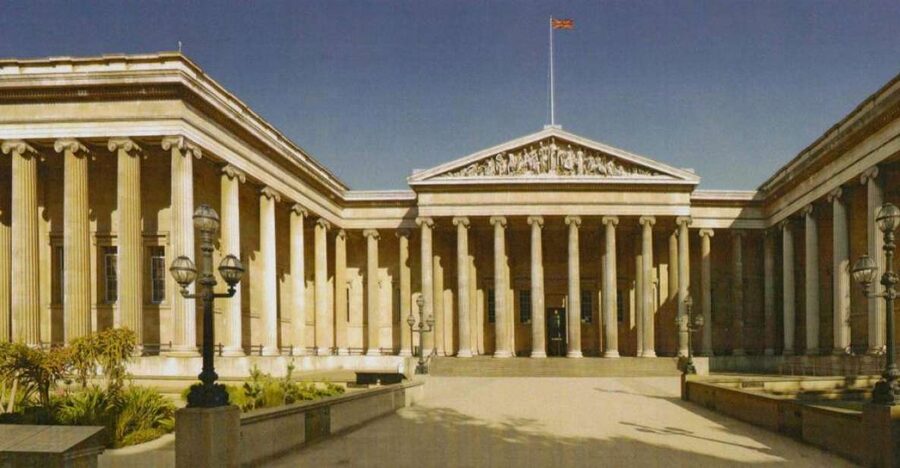
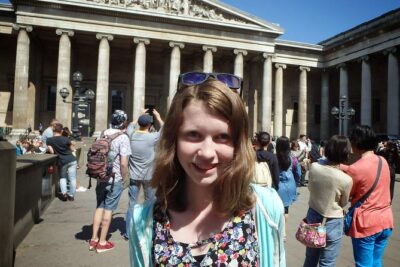
The tour begins outside the museum, where the guide points out the building’s resemblance to Classical Greek architecture. That is a useful opening because the building itself prepares you for the objects inside.
The grand entrance gives the museum an imposing feel, but the exterior also raises a question that follows the entire visit: how did objects from so many cultures come to be displayed in London? This tour focuses mainly on the art and civilizations themselves, so do not expect a full treatment of the museum’s collecting history or every debate connected with its holdings.
Still, beginning with the building gives you a sense of place. You are not simply entering a box filled with artifacts. The architecture presents a European idea of the ancient world before you even reach the galleries.
The Hall of Enlightenment and King George III’s books
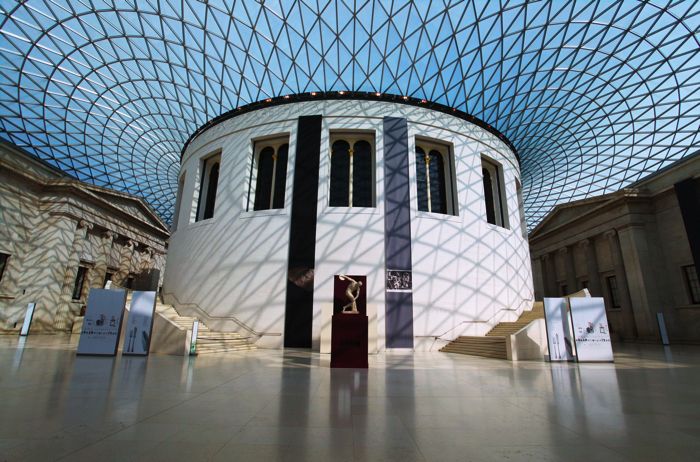
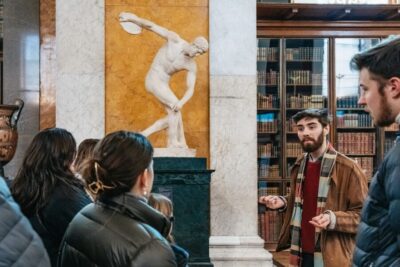
One of the first stops is the Hall of Enlightenment, described as the oldest room in the museum. It holds more than 60,000 books from the collection of King George III.
This room shifts the focus from ancient objects to the study of knowledge itself. You see how an institution built around world cultures also developed through books, classification, and the interests of European collectors.
The hall is particularly useful for understanding the museum as more than a row of famous displays. Its collections were shaped by people who wanted to record, compare, and explain the world. Your guide can connect this early library to the museum’s larger purpose and to the Enlightenment period.
Do not expect a long stop here. The tour has a lot to cover, and the main emphasis remains on the museum’s major civilizations and objects. But this early room gives the visit a thoughtful start.
A different sort of day out in London altogether:
- From London: Harry Potter Warner Bros Studio Tour
★ 4.7 · 26,588 reviews - London: Westminster to Greenwich River Thames Cruise
★ 4.5 · 22,836 reviews - Magical London: Harry Potter Guided Walking Tour
★ 4.7 · 22,044 reviews - London: Madame Tussauds London
★ 4.6 · 20,915 reviews
Egyptian funerary customs and the meaning of burial objects
The Egyptian section is one of the tour’s main highlights. Here, the guide explains Egyptian funerary rites and the beliefs that shaped the objects placed with the dead.
That context matters. Without it, Egyptian galleries can become a procession of coffins, statues, writing, and stone. With an explanation of burial customs, you begin to see how these pieces relate to ideas about the body, death, protection, and the afterlife.
The tour promises the main objects rather than every Egyptian gallery. That is a benefit if you have limited time, but it also means you will leave with a selection of key ideas instead of a complete study of ancient Egypt.
I would pay close attention to the guide’s explanation here and save questions for the end of the section. Egypt is often the part of the museum where visitors linger longest, and a clear route prevents the schedule from slipping too far behind.
Assyrian art and the power of empire
The route continues to the Assyrian civilization. This section gives you a different view of the ancient world, with art connected to royal power, warfare, and empire.
The shift from Egyptian funerary beliefs to Assyrian state power helps show how varied the museum’s collections are. You are not looking at one continuous story. You are comparing different ways societies represented authority, religion, death, and public life.
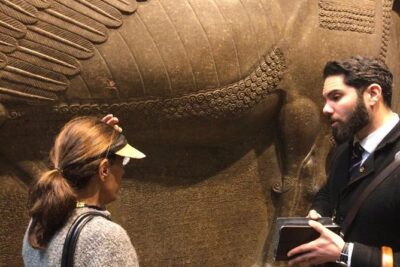
The guide’s role is especially useful here because the Assyrian material may be less familiar than the Egyptian and Greek displays. You might recognize the visual impact of the pieces without knowing what they depict or why they were made. A short explanation can provide the missing link.
The exact time spent in this section may depend on the group and the guide. The tour is designed to cover several civilizations, so it favors a focused introduction over an exhaustive look at every Assyrian object.
The Parthenon sculptures and ancient Greece
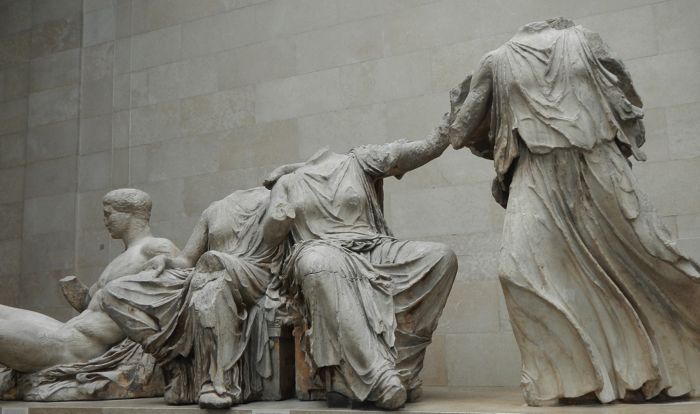
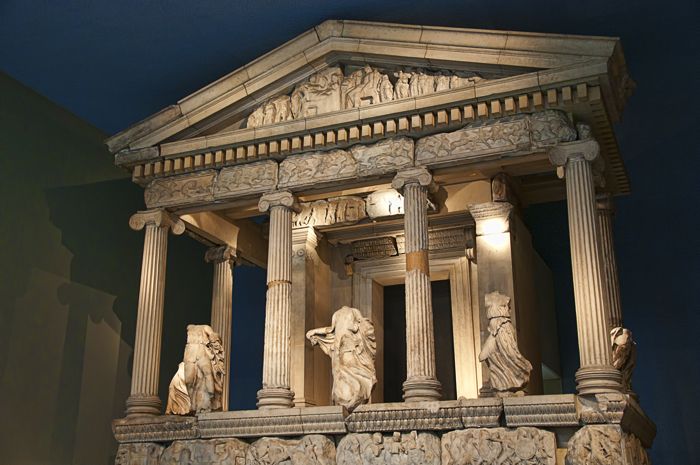
The Greek galleries bring you to one of the museum’s most famous collections: important sections of the Parthenon of Athens.
This is a major reason many people choose a British Museum tour. The sculptures are visually powerful, but they also raise questions about ownership, removal, and the relationship between modern museums and the countries where ancient monuments were built.
The supplied tour details emphasize the structure of the Parthenon and Greece’s historical legacy. Your guide can help you see the sculptures as part of a larger building rather than isolated figures placed in a gallery. That architectural connection is valuable, since fragments make more sense when you understand their original setting.
The Greek section can also be crowded. You may need to stand to one side while the guide speaks, and it may not always be possible to pause for long photographs. This is a highlights visit, not a slow sketching or quiet contemplation tour.
Hoa Hakananai’a, the Easter Island moai
The tour ends with Hoa Hakananai’a, an Easter Island moai more than two meters tall. After smaller objects, fragments, books, and detailed sculpture, the moai provides a dramatic change in scale.
Its size makes it easy to remember, but the value of the stop is not only visual. The guide can place the statue in the context of Easter Island and explain why it is one of the museum’s most striking objects.
Ending here gives the route a strong final image. You finish with a monumental figure from Polynesia before moving on to objects from the Aztec world. That broad geographical spread is one of the tour’s strengths. In a short period, you are not confined to one European tradition.
The moai also reminds you of the museum’s complicated nature. Objects from distant cultures are displayed far from their original homes. This tour will help you understand what you are seeing, but it may not explore every modern question about ownership and repatriation.
Aztec objects and a final look at the wider collection
The last part of the visit includes various Aztec pieces. After Egypt, Assyria, Greece, and Easter Island, the Aztec material extends the tour into the Americas.
This is a useful final stop because it reinforces the main idea of the experience: the museum can be read as a broad account of human creativity and belief. You see how different societies used objects to express religion, political power, identity, and ideas about the natural world.
Two hours cannot provide equal detail for every civilization. The Aztec section may feel shorter than Egypt or Greece, depending on the group’s pace. That is not necessarily a flaw, but you should book this with the right expectation. You are getting an organized introduction to major highlights, not a complete examination of each culture.
After the guided route, you can continue exploring on your own if you still have time and energy. The tour helps you identify the museum’s main points, then gives you a sensible base for a longer independent visit.
What the $14 price really buys you
At $14 per person, this is an inexpensive way to add structure to a museum visit. You are not paying for food, drinks, or a private tour. You are paying for a two-hour walking tour led in Spanish or English.
That price is especially strong if you have never visited the British Museum. A guide can save you from spending your first hour finding the galleries and your next hour trying to decide what to see. Several people found that the tour made it possible to cover important objects in limited time.
The value depends on your habits. If you enjoy wandering slowly, reading every label, and choosing your own route, a guided visit may feel restrictive. If you want a clear introduction before exploring alone, the price makes good sense.
The group size is not guaranteed in the information provided. One scheduled tour was expected to have 11 people, but only four attended. A small group can make questions easier, though attendance can vary. The guide may also adjust the pace if the group is small or if the museum is unusually crowded.
Language, accessibility, and practical limits
The tour is offered in Spanish and English, with a live guide. Make sure you select the language you want when booking and listen for the guide at the stated meeting point.
The experience is wheelchair accessible. It is still a walking tour through a large museum, so the exact ease of movement may depend on crowd levels and the route used that day. If you need specific access details, contact the provider before booking.
Pets, smoking, oversize luggage, and large bags are not allowed. Pack lightly. A small day bag is more practical than arriving with luggage, especially because you must pass through security and move through busy museum rooms.
Food and drinks are not included. Plan accordingly, but do not try to carry a large bag into the museum. The tour lasts two hours, and you can decide afterward if you want to eat or keep exploring.
Free cancellation is available up to 24 hours before the start time, and you can reserve now and pay later. Those options help if your London plans are still changing.
Who should book this museum tour?
I would choose this tour if you have two hours, want the major highlights, and prefer a guide to make sense of a huge collection. It suits first-time visitors, families with older children and teenagers, and anyone who wants a useful introduction before exploring alone.
The tour also works well if you are visiting London on a tight schedule. You will not see the entire museum, but you will get a route through several of its most important cultural sections.
I would be more cautious if your main interest is one narrow subject, such as Egypt or ancient Greece. You may prefer a longer visit focused on that collection. I would also allow extra time if crowds make you uncomfortable, since the museum can be very busy and the entrance process may take longer than expected.
Should you book the British Museum tour?
Yes, if you want a low-cost, well-organized first visit. The strongest reasons are the $14 price, the two-hour route, and the guides’ repeated ability to explain objects clearly while keeping the pace lively.
Arrive early, pass security, and look carefully for the blue-green flag near the Great Russell Street entrance. Once you meet the guide, expect a brisk trip through major civilizations, with enough explanation to make the objects memorable and enough time afterward to continue alone.
Skip it only if you strongly prefer independent wandering or want to spend your whole visit in one collection. For most first-time visitors, this is a sensible way to get your bearings fast without paying a high private-tour price.
FAQ
How much does the British Museum tour cost?
The tour costs $14 per person.
How long does the tour last?
The walking tour lasts two hours.
Which languages are available?
A live guide is available in Spanish and English.
Where is the meeting point?
Meet at the stairs to the museum’s main entrance on Great Russell Street, in front of Starbucks, after passing the security checkpoint.
How do I find the guide?
Look for a guide carrying a blue-green flag with the Paseando por Europa logo.
Should I arrive early?
Yes. The museum can have entrance queues, and the flag may be difficult to spot. Arriving early gives you time to pass security and find the guide.
Is the tour wheelchair accessible?
Yes, the activity is listed as wheelchair accessible.
What is not allowed during the tour?
Pets, smoking, oversize luggage, and large bags are not allowed. Food and drinks are also not included.
Just added around London
- London: “Queen” Highlights Walking Tour★ 4.3 · 48 reviews
- Couple’s photo: Romantic photoshoot in London★ 4.8 · 22 reviews
- London: Private Tour with Locals – Highlights & Hidden Gems★ 5.0 · 8 reviews
- Luxury Private Tour in London with Lunch★ 5.0 · 7 reviews
- London 1- or 2-Hour Professional Photo Shoot★ 4.9 · 6 reviews
- London: Private Black Cab Night Tour with Hotel Pick Up★ 5.0 · 11 reviews
- London: Christmas Lights Tour – With Christmas Music★ 4.8 · 9 reviews
- London: Private Pub Tour★ 4.5 · 4 reviews
British Museum Tours, compared.
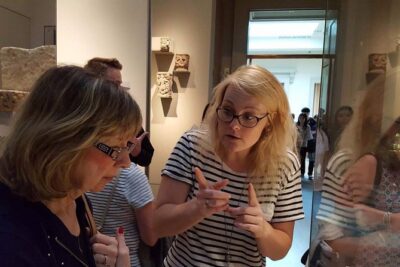
British Museum London Guided Tour Semi-Private 8ppl Max
Read our review →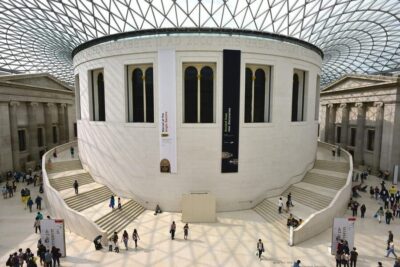
British Museum Audio Tour & Priority Entrance Ticket
Read our review →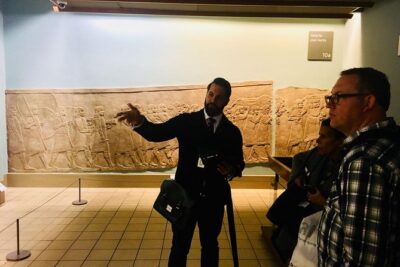
The British Museum London – Exclusive Guided Museum Tour
Read our review →
British Museum & National Gallery of London Semi-Private 8ppl Max
Read our review →Browse the lists this tour appears in