
Reviewed · MUSEUMS
London: Postal Museum Entry Ticket and Underground Rail Ride
London’s most unusual museum ride runs beneath the streets, not above them. At The Postal Museum, you’ll see how mail moved through Britain for more than 500 years, then board a small train for a 15-minute journey through the old Mail Rail tunnels.
I like the way the museum turns postal history into something you can touch and try, from sorting letters on a mock-up carriage to examining the first postage stamp, the Penny Black. I also like the glimpse into the people behind the system, including the workers who once stood on a moving, wobbly train to sort mail underground. The main drawback is that the train ride is short, and the museum’s hands-on areas can feel dominated by young children at busy times.
Key points to know before you go

- The underground Mail Rail ride is the main event: A miniature train carries you through the Post Office’s century-old tunnels, with projected films and recorded commentary along the route.
- The museum is far more interactive than a standard postal display: You can try mail sorting, explore educational games, and learn how communication changed across generations.
- The Penny Black is here: See the world’s first postage stamp alongside historic postal objects and flintlock pistols once used to protect mail.
- Plan for more than 90 minutes: The stated duration is 1.5 hours, but many people spend two or three hours here, especially with children.
- It works best for families and curious adults: Children have plenty to do, while adults get a thoughtful look at technology, work, and everyday communication.
- The ticket costs about $24 per person: That is fair value if you use the museum as well as the train, but less compelling if you only want the short underground ride.
Why London’s old Mail Rail is worth your time

The Post Office once operated its own underground railway beneath London. It was built to move letters quickly through the city, avoiding road traffic and the delays that came with horse-drawn transport. Today, you can ride part of that hidden system in a miniature rail car.
That unusual combination gives this attraction its appeal. You are not simply looking at old stamps behind glass. You are seeing the railway, hearing about its operation, and then handling exhibits that show how the wider postal network worked.
The ride is the most memorable part for many people, but the museum gives it needed context. Without the galleries, you might leave thinking only that you had taken a short novelty train journey. With them, you understand why an underground postal railway mattered and how much labor went into getting a letter from one person to another.
I would set aside at least two hours. The advertised duration is 1.5 hours, but that leaves little time for reading displays or letting children try the activities. If you enjoy museums at a relaxed pace, three hours is reasonable.
More British Museum Tours:
- Tower of London and Crown Jewels Exhibition Ticket
★ 4.5 · 6,677 reviews - London: Chelsea Football Club Stadium and Museum Tour
★ 4.8 · 4,576 reviews - Chelsea FC Stadium Tours and Museum
★ 5.0 · 1,908 reviews
Starting with 500 years of British postal history
The museum begins with the broad story of Britain’s postal system. The displays follow how mail developed from a slow, uncertain service into a more organized national network.
This is useful background because postal history is really social history. Letters carried news, business, family messages, and official orders. The exhibits show how changes in transport, communication, and public services affected ordinary life.
You’ll see objects connected with the people who moved and sorted mail, not just the machinery. The collection includes old communication equipment, postal boxes, and material about the development of telephone boxes. Several sections connect older methods with things you may remember from childhood, such as dialing a telephone or using a public post box.
The museum also has some wonderfully odd details. One display concerns a mail stagecoach horse being attacked by a lioness, a reminder that carrying letters was once a risky job. Stories like this keep the subject from becoming a dry timeline.
The Penny Black and the tools of the trade
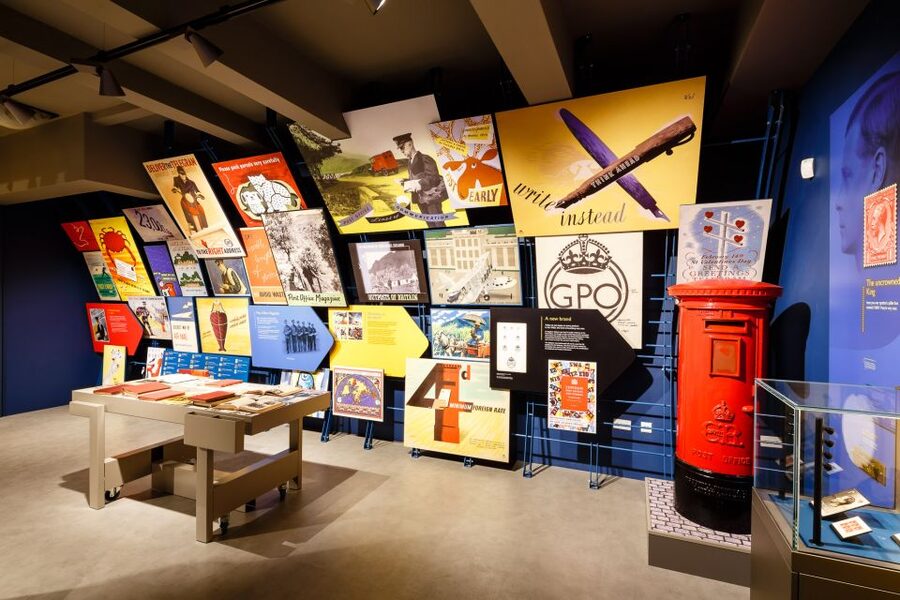
The Penny Black deserves a pause. Issued in 1840, it was the world’s first adhesive postage stamp. Its arrival changed the way people paid for letters and helped make postal service more practical for a wider public.
You can also see flintlock pistols once used to defend mail from theft. They tell a different story from the neat image of a postman delivering letters. Mail was valuable, and moving it across the country could involve real danger.
These objects are small, so do not expect grand theatrical displays at every turn. Their value comes from what they explain. A stamp, a weapon, or a battered piece of equipment can show how much trust, money, and effort sat behind a simple envelope.
The museum’s presentation helps younger visitors follow along, but adults should not dismiss these displays as only children’s material. I found the strongest sections were those that connected an ordinary object with a larger change in British life.
The Mail Rail ride through the tunnels
The underground ride usually lasts about 15 minutes. You board a miniature train and travel through the old postal railway, with projected films and commentary explaining what you are seeing.
The route is designed as a story, not just a loop through dark tunnels. Wall projections and audio material bring the railway’s past to life, including a former employee’s perspective. The visual effects add movement and context during sections where the tunnel itself might otherwise offer little to see.
The train is small, and that is part of its charm. It also means you should think about comfort before booking. One person found the ride unsuitable for very tall people or anyone who dislikes enclosed spaces. If darkness and confined surroundings make you uneasy, the ride may not be your best London attraction.
The experience is carefully organized. Bags are left in lockers attached to the train, and staff secure them before departure and open them when you return. That arrangement may seem unusual at first, but it keeps the small carriages clear and makes the boarding process easier.
Do not expect a long railway excursion. Fifteen minutes passes quickly, and some of the ride includes stops for projected films. If you want a lengthy train trip, you may find it too brief. If you are visiting with children, the short length is often an advantage.
More Tickets:
- London: Tower Bridge Entry Ticket
★ 4.7 · 15,560 reviews - London: St Paul’s Cathedral Entry Ticket
★ 4.7 · 9,813 reviews - London: London Eye and Madame Tussauds Combo Ticket
★ 4.7 · 7,428 reviews - Buckingham Palace: The State Rooms Entrance Ticket
★ 4.6 · 7,395 reviews
Sorting letters on a wobbly carriage
After or around the rail experience, the museum’s interactive areas let you try parts of the postal job yourself. One of the best activities places you on a mock-up train carriage with a deliberately unsteady floor.
Your task is to sort mail while the carriage moves beneath you. It sounds simple until you imagine doing it at speed, underground, during a full working shift. The activity gives you a quick sense of the physical skill required from railway mail sorters.
This is where the museum explains work through action rather than a long panel of text. Children can play, but adults quickly discover that the challenge is real enough to be funny. You may also find educational games, dressing-up opportunities, and activities linked to the history of communication.
Families with children around primary-school age will get the most from this section. Some adults may find the exhibits a little light if they prefer a traditional museum filled with long, detailed displays. Still, the interactive approach makes the subject easier to remember.
At busy weekend times, the most popular activities can be taken over by younger children. You may need to wait or choose a quieter corner of the museum. That is a normal trade-off for a family-friendly attraction, but it is worth knowing if you want to study every display without interruption.
A Victorian rail car and everyday communication
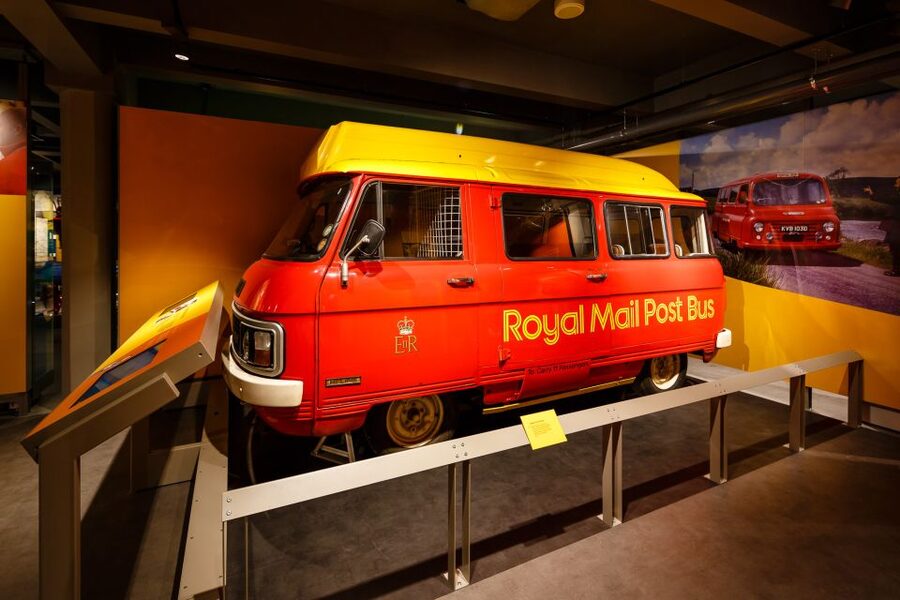
The museum also displays a Victorian miniature rail car that once operated on London’s streets. It helps show that postal transport was not only about underground tunnels. Mail moved through a changing mix of street vehicles, railway systems, sorting offices, and delivery routes.
The galleries also trace the development of post boxes and telephone boxes. These familiar objects become more interesting when you see how their design and use changed over time.
I especially like this part for multigenerational groups. Older family members can explain objects they remember using, while children can compare them with today’s phones and instant messaging. The museum gives you a natural way to talk about how communication has changed across generations.
You can also design a stamp, a small activity that works well for children and gives them something personal to take away in their memory. This is not a major exhibit, but it fits the museum’s larger idea: postal history becomes easier to grasp when you make, sort, carry, or operate something yourself.
How the visit works for families
The Postal Museum is strongly family-oriented, but it is not only for children. Adults who enjoy engineering, transport, social history, or unusual London attractions will find plenty to hold their attention.
For families, the best plan is to treat the visit as a flexible outing rather than a quick museum stop. Start with the rail experience if that is the main reason for your visit, then give children time in the interactive galleries. If you rush straight from the train to the exit, you will miss much of what makes the admission worthwhile.
A separate Sorted! Postal Play Space is available for children aged eight, but it must be booked separately through The Postal Museum. It is not included automatically with this entry ticket.
The museum is wheelchair accessible. Since the train uses small carriages and underground tunnels, check the arrangements for your particular needs before booking if you require specific assistance.
Time, price, and practical value
At about $24 per person, this is not the cheapest short attraction in London. The price makes better sense when you spend two or three hours exploring the galleries, not when you view it as a 15-minute train ride with a museum attached.
For a family, the interactive activities add real value. You are paying for something children can do, not just something they can look at. Adults also get a distinctive London story that is difficult to find elsewhere.
The main time issue is that 1.5 hours can feel tight. Some people finish in around two hours, while others want three hours or more because they stop to read the displays. Give yourself extra time if you plan to use the café or browse the shop.
The café provides tea, coffee, snacks, and refreshments, and it is useful for a family break. Keep expectations practical. At the end of a busy day, tables and chairs may need quicker cleaning, so you may have to look around for a tidy place to sit.
Tickets can be canceled up to 24 hours in advance for a full refund, and the reserve-now, pay-later option can help if your London schedule is still changing. Those policies are useful, but the attraction’s real value comes down to how much time you give it.
Who should book the Postal Museum?
I would recommend this experience to families, transport enthusiasts, museum fans, and anyone looking for an unusual indoor activity in London. It is also a good choice if you have already seen the major landmarks and want something connected to the city’s working past.
You will probably enjoy it if you like:
- Historic transport and underground infrastructure
- Hands-on museum exhibits
- British social history
- Activities suitable for several age groups
- Small, unusual attractions away from London’s headline sights
You may want to skip it if you want a long train ride, a quiet art museum, or a highly academic collection with little child-focused material. The Mail Rail ride is short, and the galleries are designed to encourage participation rather than silent study.
FAQ
How long does the Postal Museum experience last?
The stated duration is 1.5 hours. You may want two to three hours if you plan to explore the galleries, use the interactive displays, stop at the café, and visit the shop.
How long is the underground train ride?
The Mail Rail ride lasts about 15 minutes. It includes tunnel travel, projected films, and commentary about the railway and postal service.
What can I see at The Postal Museum?
You can see the Penny Black, a Victorian miniature rail car, flintlock pistols used to defend mail, postal equipment, and displays about the development of post boxes and telephone boxes.
Is the museum suitable for children?
Yes. The museum has educational games, hands-on exhibits, dressing-up opportunities, mail-sorting activities, and a miniature train ride. A separate Sorted! Postal Play Space for children aged eight can be booked independently.
Is the Postal Museum wheelchair accessible?
Yes, the activity information states that the museum is wheelchair accessible.
Does the ticket include the Sorted! Postal Play Space?
No. The Sorted! Postal Play Space must be booked separately through The Postal Museum website.
Can I cancel the booking?
You can cancel up to 24 hours in advance for a full refund. The reserve-now, pay-later option is also available.
Should you book it?
Book it if you want a hands-on museum with an unusual piece of London transport at its center. The Mail Rail ride is brief, but the Penny Black, old postal equipment, sorting challenge, historic films, and family activities give the visit substance.
I would not book it solely for a long underground railway journey. I would book it as a two or three-hour museum outing, with the train ride as the highlight and the galleries supplying the story. At roughly $24 per person, that is a fair deal for families and curious adults who give the attraction enough time.
Just added around London
- London: “Queen” Highlights Walking Tour★ 4.3 · 48 reviews
- Couple’s photo: Romantic photoshoot in London★ 4.8 · 22 reviews
- London 1- or 2-Hour Professional Photo Shoot★ 4.9 · 6 reviews
- London: Private Tour with Locals – Highlights & Hidden Gems★ 5.0 · 8 reviews
- Luxury Private Tour in London with Lunch★ 5.0 · 7 reviews
- London: Private Black Cab Night Tour with Hotel Pick Up★ 5.0 · 11 reviews
- London: Christmas Lights Tour – With Christmas Music★ 4.8 · 9 reviews
- London: Private Pub Tour★ 4.5 · 4 reviews
Museums, compared.
Tower of London and Crown Jewels Exhibition Ticket
Read our review →
Chelsea Football Club Stadium and Museum Tour
Read our review →

Official tickets: Moco Modern & Contemporary Art Museum
Read our review →
British Museum London Guided Tour Semi-Private 8ppl Max
Read our review →
British Museum Audio Tour & Priority Entrance Ticket
Read our review →Browse the lists this tour appears in