
Reviewed · SOHO AND MAYFAIR TOURS
Soho London Private Music Self-Guided Tour
Soho’s music story is packed into a surprisingly small part of London. On this self-guided walk, you trace the route from the Dominion Theatre and Denmark Street to Ronnie Scott’s, Soho Square, and Trident Studios, passing old clubs, recording studios, music shops, and places tied to Bowie, the Beatles, the Rolling Stones, the Sex Pistols, and Mozart.
I like the freedom to start whenever you wish, and I like having three weeks to repeat the route or stop for food, shopping, and another look. The audio is narrated by Evren, not a computer voice, and the app supplies maps, GPS directions, photos, videos, and background notes.
The main compromise is simple: this is not a guided group walk. Several stops are former venues or changed buildings, so you need to enjoy visual clues, stories, and context rather than expect a series of open museums.
Key points at a glance
- Denmark Street is the heart of the walk: Spend time among old music shops, studios, and places linked with Elton John, the Rolling Stones, the Sex Pistols, and David Bowie.
- You set the pace: Start at any convenient time, pause the audio, and use the route again during the three-week access period.
- The route connects several music eras: Expect references to Mozart, British rock ’n’ roll, 1960s pop, punk, jazz, and later recording history.
- Many famous venues are no longer operating: The Astoria, 12 Bar Club, Borderline, Marquee Club, and 2i’s Coffee Bar are remembered through their locations and stories.
- The price is low for a flexible city walk: At $12.47 per person, it costs far less than most private guided tours, though you give up live conversation and spontaneous local recommendations.
- The finish leaves you in central Soho: The walk ends at Trident Audio Post on Great Pulteney Street, with no need to return to the starting point.
Why Soho works so well as a music walk
Soho is not a single musical story. It is a collection of overlapping scenes. The route moves from West End theatre and concert halls to guitar shops, jazz clubs, publishing offices, cafés, punk addresses, and recording studios.
That variety is the chief strength. You are not simply looking at plaques or reading a list of famous names. The walk shows how music depends on ordinary city spaces: a narrow street lined with instrument shops, a café where songwriters met, a basement club, a theatre, or an office that handled publishing rights.
The experience is also useful for anyone who likes to connect music with the physical city. A song recorded decades ago may feel distant until you are standing outside the studio where it was made. At the same time, you should expect plenty of exterior viewing. The experience does not include entry to working theatres, studios, clubs, or shops.
More Soho and Mayfair Tours:
- Soho Music & Historic Pubs Tour
★ 5.0 · 1,993 reviews - London: Soho Music and Historic Pubs Walking Tour
★ 4.9 · 836 reviews - Eating London: Twilight Soho VIP Food & Drinks Tour
★ 5.0 · 590 reviews
Starting at the Dominion Theatre and former Astoria
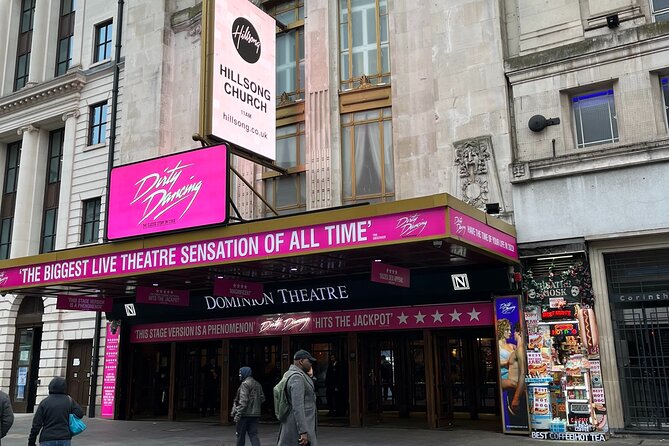
Begin at the Dominion Theatre, at 268 to 269 Tottenham Court Road. This grand West End venue gives the walk a theatrical opening and links Soho’s music story with London’s stage tradition.
The theatre has hosted musicals and concerts, including a noted David Bowie performance. It is a useful first stop because it reminds you that London music is not limited to nightclubs and recording rooms. Major theatres have long served as places where musicians reach large audiences and cross into popular culture.
From here, the route points toward the former Astoria Theatre. The Astoria once welcomed a wide range of important bands and performers before closing. You will not be entering a functioning music venue here, but the stop helps explain how much of London’s live music network has disappeared or changed use.
This is an early clue to the nature of the walk. Some of the most important places survive as buildings, addresses, or stories rather than as working clubs. If you want to see active performances, treat this walk as an introduction and plan a separate show.
Denmark Street, London’s old Tin Pan Alley
Denmark Street is the central chapter of the tour and deserves more than a quick pass. Allow about 20 minutes here, as suggested by the route, and take time to look at the shopfronts and narrow streets around you.
The street became known as the British Tin Pan Alley, a reference to its concentration of music businesses and songwriters. Songs were written and published here, while recording studios, instrument sellers, and small venues helped musicians develop their careers.
The stories attached to Denmark Street range across several generations. Elton John and the Rolling Stones are linked with its studios, while the street also connects to the Sex Pistols, David Bowie, Jimmy Page, and the broader British pop industry.
The app’s GPS route matters most here. Soho has many close-set streets and a steady stream of people, so having the next stop marked on a map keeps the walk moving. You can also pause to browse music shops rather than hurrying from one point to the next.
The 12 Bar Club and Regent Sounds
The 12 Bar Club was a small but important venue for new performers. It hosted early appearances by artists including Adele and the Libertines, giving the stop a grassroots angle. The club is no longer operating, but its story explains why small rooms matter in a city’s music life.
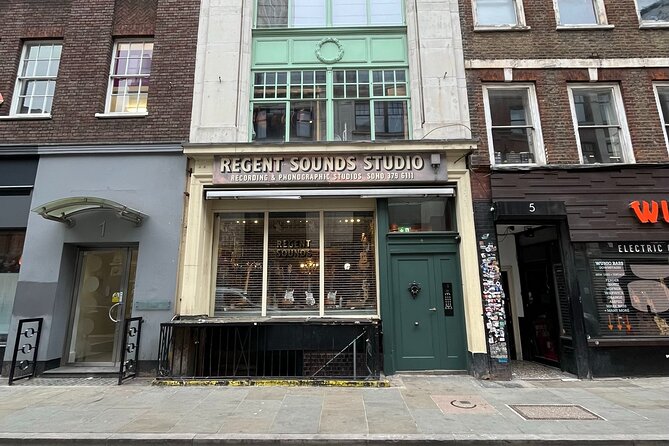
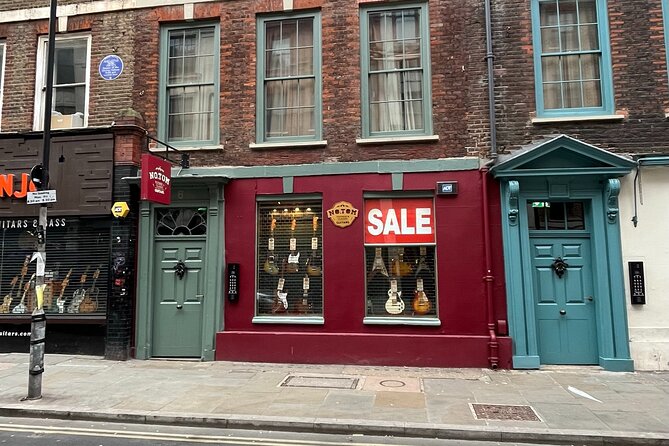
Nearby, Regent Sounds Studio carries a different kind of importance. It was connected with the Rolling Stones’ first album and sessions involving the Beatles. The site now functions as a guitar shop, so you can see how one music-related business has changed while keeping a link to the street’s past.
That change is worth noting. The tour does not pretend Soho has remained frozen in the 1960s. It shows an area where old studios become shops, clubs close, and commercial spaces take on new roles.
More London Self-Guided and Audio Tours:
- London: Emirates Stadium Entry Ticket and Audio Guide
★ 4.7 · 5,513 reviews - Westminster Abbey Entrance Ticket Including Audio Guide
★ 4.0 · 661 reviews - London: British Museum Audio Tour & Priority Entrance Ticket
★ 4.5 · 631 reviews - Windsor Castle Tour from London with Transportation & Audio Guide
★ 3.5 · 222 reviews
No. 6 Denmark Street, Mills Music, and La Giaconda
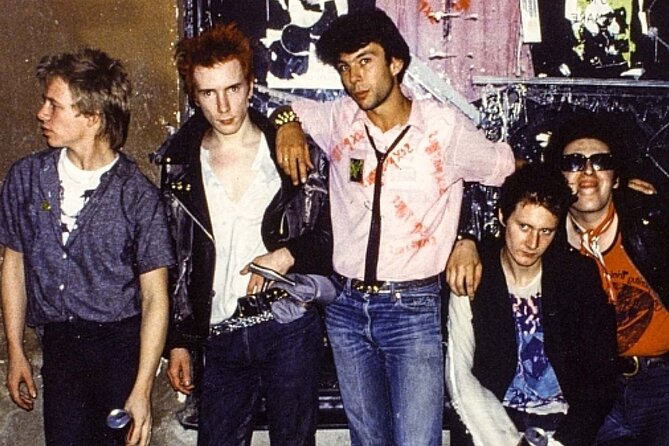
No. 6 Denmark Street is associated with the Sex Pistols, who lived and recorded there in the 1970s. This address brings punk into the route after the earlier focus on pop and recording studios.
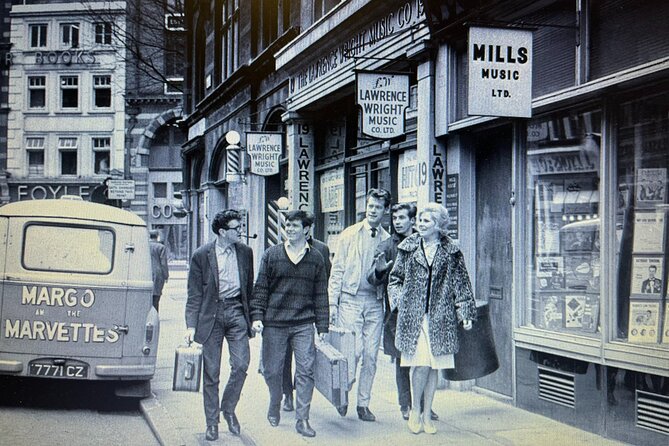
Mills Music represents the business side of songwriting. It was one of the original music companies on Denmark Street and was linked with artists such as Jimmy Page and David Bowie. That stop is useful because fame is only part of the music industry. Publishing companies, rights holders, and offices helped turn songs into lasting careers.
La Giaconda adds a more social note. This café was a meeting place for musicians and songwriters in the 1960s, with David Bowie, Jimi Hendrix, and Elton John among the names connected to it.
The café stop makes the route feel less like a parade of buildings and more like a portrait of a working creative district. You see where people met, talked, wrote, rehearsed, and waited for their next opportunity.
KPM Publishing and the music business behind the hits
KPM Publishing, linked with the historic KPM Music House, points to an often overlooked part of music culture. Its catalogue reached beyond pop songs into film and television scores and other production music.
I appreciate this inclusion because it widens the tour beyond famous performers. You learn that Soho’s importance came not only from clubs and recording rooms, but also from the companies that supplied music for broadcasters, filmmakers, and commercial work.
A few cultural detours beyond music
The walk includes several stops that are not directly tied to music. That may sound like padding, but these locations help you read Soho as a neighborhood rather than as a museum of rock history.
Forbidden Planet, reached near the route’s second major section, is a well-known shop for comics, science fiction, fantasy, and cult entertainment. The suggested stop lasts about five minutes and costs nothing to enter. It reflects Soho’s broad interest in popular culture.
The Phoenix Theatre follows, with its West End setting and connection to David Cassidy’s performance in Blood Brothers. Like the Dominion, it shows how theatre and music often share the same audiences, performers, and city spaces.
Phoenix Gardens offers a five-minute pause in a community garden. It has no direct music connection, but it gives you a quiet place to stop before continuing. On a self-guided walk, such pauses are valuable because you control the rhythm.
The route also passes the Odeon Covent Garden, formerly the Saville Theatre. In the 1960s, the theatre hosted performances by the Beatles and Jimi Hendrix and was managed by Brian Epstein, the Beatles’ manager. This is one of the stronger theatre stops because it ties a familiar cinema building to the era’s concert culture.
Macaris Guitar Shop, now an Apple Store, recalls the instrument trade that supported Soho’s musicians. Foyles Book Shop contributes another cultural angle, with its music section of scores, biographies, and music history books.
These stops do not all carry equal weight for a dedicated music fan. I would treat them as connective tissue between the major addresses, not as reasons to book the walk by themselves.
Soho Square and the streets around it
Soho Square is one of the route’s more attractive pauses. Allow about five minutes, though you may want longer if you need a rest or want to take in the surroundings.
The square is tied to Paul McCartney through a nearby building and to secret performances by Prince, including two performances in one night. It is also near music industry offices, making it a useful place to think about Soho as both a performance district and a business center.
The Dog and Duck pub follows. Its music ties are less direct, but the pub helps set the local mood. You can use it as a possible refreshment stop while listening to stories about the people and places connected with Soho.
Nearby, a Mozart blue plaque adds a much older musical layer. Mozart lived at the marked address as an eight-year-old and composed his first symphony in 1764. The building is now a private residence, so the plaque is the point of interest.
This stop prevents the route from becoming too narrowly focused on British rock. Soho’s music story reaches back well before guitars, amplifiers, and recording studios.
Ronnie Scott’s, 2i’s, and the lost club circuit
Ronnie Scott’s Jazz Club is one of the best-known active names on the route. Founded in 1959, it has hosted major jazz artists including Miles Davis, Ella Fitzgerald, and Nina Simone.
The scheduled stop is brief, about five minutes, but the club deserves attention. If you want to attend a performance, this walk can help you recognize the location before arranging a separate visit. The tour itself does not include a concert or club admission.
The former 2i’s Coffee Bar takes you back to the 1950s and early 1960s. It is remembered as a birthplace of British rock ’n’ roll and as a place where Cliff Richard and Tommy Steele were discovered.
The Marquee Club on Wardour Street continues that story. The club hosted early performances by the Rolling Stones and the Who and played a role in the 1960s music scene. Like the Astoria and 12 Bar Club, it no longer operates, so the value comes from knowing what happened at the address.
The Borderline Nightclub adds a later chapter. It was known for indie and folk performers but is currently closed. The route’s many closed venues may disappoint anyone expecting a working-club crawl, yet they also make a point about how quickly London’s entertainment spaces change.
Reckless Records and the final stretch to Trident Studios
Reckless Records is one of the most practical stops for music fans. It sells second-hand vinyl, CDs, and DVDs, and the route suggests about 10 minutes here.
Unlike the former clubs, this is a place where you can still browse music. I would save room in your schedule if you enjoy record shopping. The stop gives the walk a physical, hands-on moment after so many stories about buildings that have changed or vanished.
The route ends at Trident Audio Post, 33 Great Pulteney Street. The address connects with Trident Studios, where important recordings included David Bowie’s Hunky Dory and albums by the Beatles.
This is a fitting finish because it brings the story back to recording. You begin with theatres and live performance, pass through songwriting, publishing, clubs, instruments, and jazz, then finish with the studio work that turned ideas into finished records.
Afterward, you are free to continue around Soho. The ending is not at the start, so plan your day around a one-way walk. That is convenient if you already want to eat, shop, or visit another central London sight.
How the app format affects the experience
The tour lasts about two hours, but the three weeks of access change how you can use it. You can complete the route in one go, split it into sections, or repeat the Denmark Street and Ronnie Scott’s areas at a slower pace.
Evren provides the audio narration, supported by photos, videos, recommendations, maps, GPS directions, and stop-by-stop information. That mix should help you stay oriented while also giving context at addresses where little may be visible today.
You receive activation instructions by email. The booking reference is not the activation code, so read the instructions carefully before setting out.
There is no in-person guide, and only your group participates because this is a private self-guided activity. Most people can take part, service animals are allowed, and the route is near public transportation.
At $12.47 per person, the value is strong if you want a low-cost introduction to Soho’s music story. You are paying for a prepared route and audio material, not for access to studios, performances, or a live expert who can answer questions.
The non-refundable booking rule matters. Check your schedule before paying, since cancellations or changes do not produce a refund.
Who should choose this Soho music walk?
I would recommend it to fans of British rock, punk, jazz, pop, recording history, and West End culture. It also suits first-time visitors who want a structured way to explore Soho without committing to a fixed departure time.
It works particularly well for independent-minded people. You can stop for lunch, browse Reckless Records, spend longer at Denmark Street, or repeat a favorite section during the three-week access period.
I would be more cautious if you want a live guide, interior access, or a tightly focused rock ’n’ roll tour. The walk includes several cultural stops and former venues, so its subject is wider than a list of active concert sites.
The best way to approach it is as a story-led walk through changing city streets. Bring curiosity, allow time for pauses, and remember that some of the most important places survive only in names, plaques, shopfronts, and the audio explanation.
Should you book it?
Book this tour if $12.47 feels like a fair price for two hours of guided audio, route planning, and three weeks of repeat access. The strongest reasons are the low cost, flexible timing, clear GPS support, and concentration of music landmarks around Denmark Street and Soho.
Skip it if you need a person beside you or want live music included. For everyone else, it is a practical way to uncover the many musical layers of Soho, with enough flexibility to fit around the rest of a London day.
FAQ
How long does the Soho London Private Music Self-Guided Tour take?
The tour takes approximately two hours, though the three weeks of access allow you to pause, repeat sections, or take the route at a slower pace.
Where does the tour start?
It starts at the Dominion Theatre, 268 to 269 Tottenham Court Road, London W1T 7AQ.
Where does the tour end?
The route ends at Trident Audio Post, 33 Great Pulteney Street, London W1F 9NP. You can continue exploring Soho afterward.
Is there an in-person guide?
No. This is a private self-guided activity. Evren provides the audio narration through the app.
What language is offered?
The tour is offered in English.
How long can I access the tour?
You receive three weeks of unlimited access to the self-guided tour through the app.
What is included in the app?
The experience includes a map, directions, a GPS route, informative stops, audio narration, videos, photos, recommendations, and other tour information.
Is the tour refundable if I cancel?
No. The experience is non-refundable and cannot be changed after booking.
Just added around London
- Up at The O2:Twilight Climb with Guided Tour with Panoramic Views★ 5.0 · 50 reviews
- Private Chauffeur-London Heathrow from/to Southampton Cruise Port★ 5.0 · 9 reviews
- Kensington Palace VIP Garden Tour with Royal High Tea★ 4.5 · 71 reviews
- Urban Canvas: Exploring Shoreditch’s Vibrant Street Art★ 5.0 · 36 reviews
- Up at The O2: Sunset Climb with Guided Tour with Panoramic Views★ 5.0 · 110 reviews
- Secrets of the London Underground Small Group Walking Tour★ 4.5 · 38 reviews
- Ultimate introduction to photography in Central London★ 5.0 · 19 reviews
- Full-Day Self-Guided Paris Tour from London by Eurostar with Seine River Cruise★ 3.5 · 22 reviews
Soho and Mayfair Tours, compared.

Eating London: Twilight Soho VIP Food & Drinks Tour
Read our review →

London Soho Food Tour with 7+ Tastings of Delicious Hidden Gems
Read our review →
PRIVATE London Food Tours – Borough Market, Soho, East End
Read our review →
Browse the lists this tour appears in