
Reviewed · STRATFORD-UPON-AVON AND WARWICK DAY TRIPS
Shakespeare in the City Walk – In Shakespeare’s footsteps North of the Thames
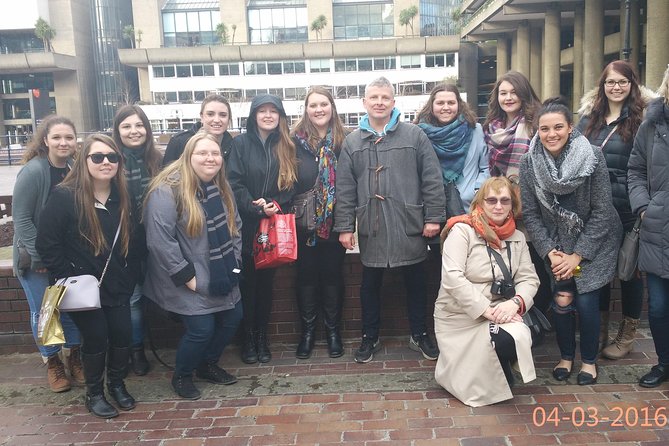
Shakespeare’s London is not confined to grand theaters and famous plaques. This two-hour walk leads you from Blackfriars to Barbican through churchyards, lanes, former house sites, and odd corners most visitors would pass without noticing. Declan, a former professional actor, brings the route to life with complete Shakespeare speeches, historical stories, and a sharp sense of theater.
I like the small-group feel, with no more than 15 people per booking, and the way the walk connects literary clues to real London streets. I also like that you get more than dates and names: you hear why Shakespeare’s family received a coat of arms, where he lived, how his daughters’ lives differed, and why certain plays may connect to particular places.
The main consideration is pace. There are many stops in about two hours, and the walk operates in all weather. You should be comfortable walking, standing, and listening outdoors, with sensible shoes and clothing for London’s unpredictable conditions.
Key points about Shakespeare north of the Thames
- Meet at the correct Blackfriars station: Use Blackfriars Underground on the Circle and District lines, not Blackfriars Overground south of the Thames.
- Hear full Shakespeare speeches: Declan uses his acting background to perform passages, including a haunting farewell from Shakespeare’s last play.
- Find places most people miss: The walk includes an overlooked statue, a fragment of Blackfriars Monastery, a hidden sculpture, and an unusual speech-based totem pole.
- Follow Shakespeare’s personal story: Learn about his homes, marriage, children, wealth, religion, and family ambitions.
- Finish at Barbican Underground: The endpoint connects with the Circle, Metropolitan, and Hammersmith & City lines.
- Best for literature and history fans: Children aged 10 and above are recommended, and all children must have an adult with them.
Starting at Blackfriars, where the city becomes Shakespeare’s stage
Meet Declan at 11 a.m. outside Blackfriars Underground Station. The station is on the Circle and District lines, and there is one exit, making the meeting point fairly simple. The important detail is to use the underground station north of the river. Blackfriars Overground station is south of the Thames, and arriving there will put you in the wrong place.
Look for Declan near the exit, carrying a rucksack with Shakespeare’s face on its sign. That small detail matters in a busy part of London, especially if you are arriving close to the start time.
The walk begins with a Shakespeare statue that many people miss. It is a useful opening because the subject is not just where Shakespeare lived or worked, but how his reputation grew. You also get a warning not to let conspiracy theories replace evidence. That gives the tour a sensible tone from the start: curiosity is welcome, but the facts need to lead.
From there, the route moves toward the original Blackfriars Theatre. You learn why attending a performance there required money and how Shakespeare himself became wealthy. This is one of the strongest early stops because it places the playwright inside the social and financial world of London, rather than treating him as a remote literary figure.
More Stratford-upon-Avon and Warwick Day Trips:
- Oxford, Stratford-upon-Avon, Cotswolds & Warwick Castle Day Trip
★ 4.5 · 2,943 reviews - England in One Day: Stonehenge, Bath, the Cotswolds and Stratford-upon-Avon Day Trip from London
★ 4.5 · 1,344 reviews - Warwick Castle, Oxford, Stratford-upon-Avon & Cotswolds Day trip
★ 4.5 · 828 reviews
Blackfriars Theatre and a surviving monastery fragment
The Blackfriars Theatre stop takes about 10 minutes and includes entry into a church. You see the site associated with the original theater and hear why its audience was more exclusive than the crowd at Shakespeare’s Globe.
That contrast helps explain Shakespeare’s career. His plays could speak to many levels of society, but the buildings where they were performed did not all serve the same audience. The discussion of Shakespeare’s growing wealth also gives you a more practical picture of his life. He was a writer, actor, business partner, and property owner, not only a poet working alone at a desk.
A short stop at Ireland Yard reveals the remaining fragment of the Blackfriars Monastery. The physical evidence is limited, but that is part of the appeal. You are looking at a small surviving piece and connecting it to Shakespeare’s recurring concerns and themes.
Next comes Carter Lane, a quiet street that links Shakespeare with King James. This is the sort of place that rewards a walking tour. You might pass through London’s older lanes without giving them a second glance, yet a guide can show how royal power, religion, theater, and literature crossed paths in the same compact area.
Saint Andrew’s Hill and Shakespeare’s London homes
At Saint Andrew’s Hill, the route turns to one of Shakespeare’s houses in London and what eventually happened to it. The stop also includes a church with a concealed sculpture of Shakespeare praying and an important document connected with the playwright’s world.
There is a particularly enjoyable American connection here through the researcher discussed at the stop. The information is presented as part of the larger effort to recover Shakespeare’s life from scattered documents and buildings. It is a reminder that the evidence is often pieced together from small clues rather than preserved in one tidy archive.
You also hear about Richard III and its connection to the area. This gives the stop a literary edge without losing sight of the physical city around you. Shakespeare’s London was not a museum. It was a working place of homes, churches, businesses, and public streets.
The next stop on Queen Victoria Street contains one of the walk’s strangest discoveries: an unusual totem pole built from a famous speech by William Shakespeare. You are unlikely to find it without help. Declan performs the entire speech, using the skills of his former acting career rather than simply pointing to the monument.
This is a good example of what makes the experience different from a standard sightseeing walk. You are not only told that a text mattered. You hear it spoken in the city connected with Shakespeare’s work.
Coats of arms, family fortunes, and a generous playwright

Queen Victoria Street also brings you to the College of Arms and the Shakespeare family coat of arms. Declan explains why the honor arrived two months too late, along with Ben Jonson’s joke at Shakespeare’s expense.
The story offers a useful look at status and ambition in Elizabethan and Jacobean London. Shakespeare’s family wanted social recognition, and the coat of arms became part of that effort. The timing and Jonson’s joke add human detail to what might otherwise be a dry piece of heraldry.
You also learn about Shakespeare’s children. Later, on Carter Lane, a plaque reveals something about his generosity and leads into the separate stories of his two daughters. Their fortunes were very different, and this part of the walk gives Shakespeare’s family a clearer shape.
I appreciate this focus because it avoids making Shakespeare seem like a solitary genius detached from ordinary obligations. His family, money, property, and decisions all mattered. The advice to keep looking in dusty attics also fits the wider point: small discoveries can change what we know about a famous person.
More Thames River Cruises:
- London: Westminster to Greenwich River Thames Cruise
★ 4.5 · 22,836 reviews - London Big Bus Hop-On Hop-Off Tour with Optional River Cruise
★ 3.5 · 10,803 reviews - London: Westminster to Tower Bridge River Thames Cruise
★ 4.5 · 6,127 reviews - London: London Eye, River Cruise, & Hop-on Hop-off Bus Tour
★ 4.4 · 5,332 reviews
St. Paul’s Cathedral and Shakespeare’s most personal questions
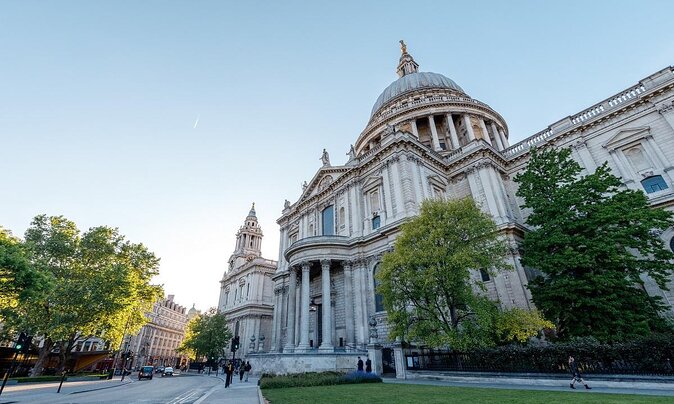
The walk continues to St. Paul’s Cathedral, but it does not include entry inside. You still get a striking view of the cathedral and a surprising revelation about it, followed by discussion of Shakespeare’s best-selling work and his sonnets.
This section turns toward interpretation. Declan offers a reasonable reading of Shakespeare’s sexuality rather than pretending every question can be settled with certainty. That approach suits the subject. The sonnets invite personal readings, but the evidence has limits, and a good guide should help you separate what is known from what is suggested.
You also hear Declan’s favorite four words by Shakespeare, described as cosmic in meaning. The full wording is part of the live presentation, so the moment works best when you hear it in person. It is a small but memorable detail that shows how the guide’s personal enthusiasm shapes the walk.
Since the cathedral visit is exterior only, this tour is not a substitute for a St. Paul’s admission ticket. If you want the interior, dome views, or cathedral galleries, plan those separately. Here, the focus stays on Shakespeare and the surrounding streets.
Cheapside, pubs, religion, and the limits of vocabulary
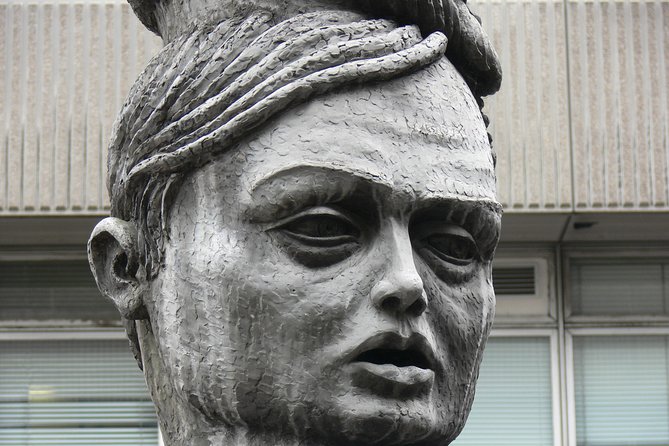
At Cheapside, the subject becomes Shakespeare’s huge vocabulary and the idea that even his command of language was not enough for every purpose. The stop also identifies a pub where he drank and names other figures associated with it.
The pub story helps bring Shakespeare down from the page. A celebrated writer still needed places to eat, drink, meet people, and withdraw from the pressures of work. The discussion of his religion and his lonely, reclusive side adds another layer to the portrait.
This is one of the more interpretive parts of the route, so you should expect ideas and reasonable readings alongside documented facts. That is not a weakness, provided you enjoy discussion as well as fixed historical detail. If you want only dates, addresses, and verified transactions, the literary interpretation may feel less direct.
Love Lane follows with a bust of Shakespeare and the men who honored him. The stop considers which plays might have been lost without their efforts and offers more detail about Shakespeare’s writing style.
The guide also warns you not to become too starry-eyed about the name Love Lane. That practical joke keeps the stop from becoming overly sentimental. London’s old street names can sound romantic, but their original meanings are often more ordinary.
London Wall and the final farewell at St. Giles Cripplegate
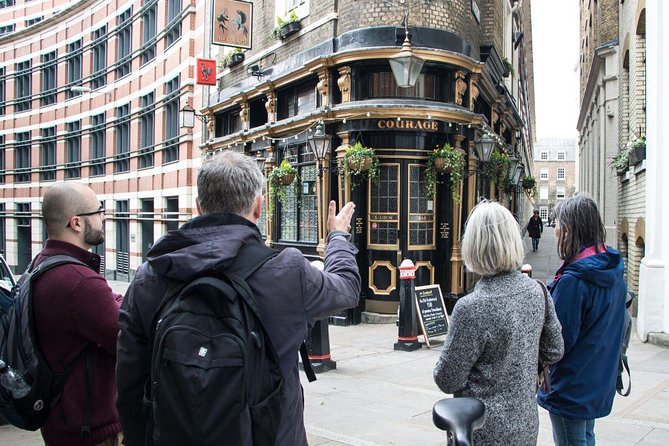
At London Wall, you learn about Shakespeare’s second London house and why he ended up in that part of the city. The story of his marriage is also discussed, including how he made the match and later regretted it.
This is a useful place to consider Shakespeare as a private person. The walk does not present him as a flawless hero. It gives you a man with professional success, family responsibilities, personal choices, and possible regrets.
The final major stop is St. Giles Cripplegate, a church Shakespeare knew. Here you hear about two of the best-known actors of his age and the sad story of his brother Edmund.
Declan finishes with a complete speech from Shakespeare’s last play. It is described as haunting and focused on goodbye, and the choice makes sense as an ending. After two hours of streets, names, family stories, buildings, and texts, the walk closes by returning to Shakespeare’s words themselves.
From St. Giles Cripplegate, Declan walks toward Barbican Underground Station if you want to accompany him. Barbican is served by the Circle, Metropolitan, and Hammersmith & City lines, so the endpoint is practical for continuing around London.
What the $20.83 price gets you
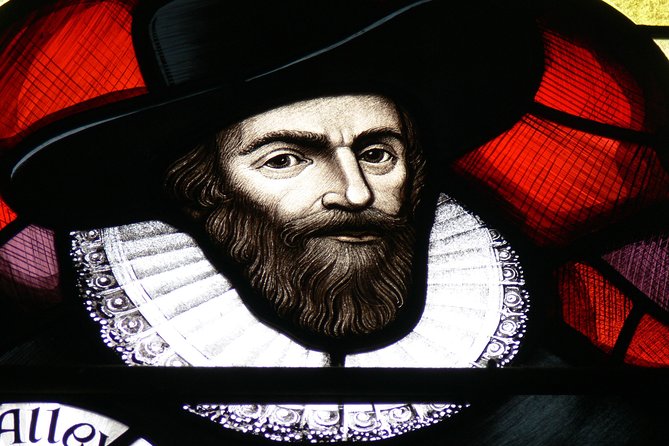
At $20.83 per person, this is a strong value if you have an interest in Shakespeare, London history, or live performance. You are paying for about two hours with a professional guide, a planned route through several lesser-known sites, and live recitations that would be difficult to reproduce with a guidebook.
The value is less obvious if you are looking for major paid attractions or a general introduction to London. The walk does not take you inside St. Paul’s Cathedral, and the stops are mainly outdoor locations, churches, plaques, statues, and surviving fragments.
The price works best because the route saves you research time. You could try to find the sites yourself, but several are easy to overlook, and the connections between them would be harder to build without a guide. The live performances also change the experience from a history lecture into something closer to a moving literary program.
The booking pattern suggests that people often reserve around 25 days ahead. That is not a rule, but booking early is sensible if your London dates are fixed, especially since the walk has a limited group size.
Practical details before you book
The walk starts at 11 a.m. and lasts about two hours. It ends near Barbican Underground Station, not back at Blackfriars, so consider that when planning your day.
A moderate level of physical fitness is recommended. You will be walking between stops and standing while Declan speaks, with no promise of indoor shelter throughout the route. The experience operates in all weather, so bring suitable clothing and shoes.
Children must be accompanied by an adult, and the recommended minimum age is 10. That age guideline makes sense because the walk deals with literary interpretation, family complications, religion, sexuality, and historical uncertainty. Younger children may enjoy the live acting, but the full content is aimed at people who can follow a sustained discussion.
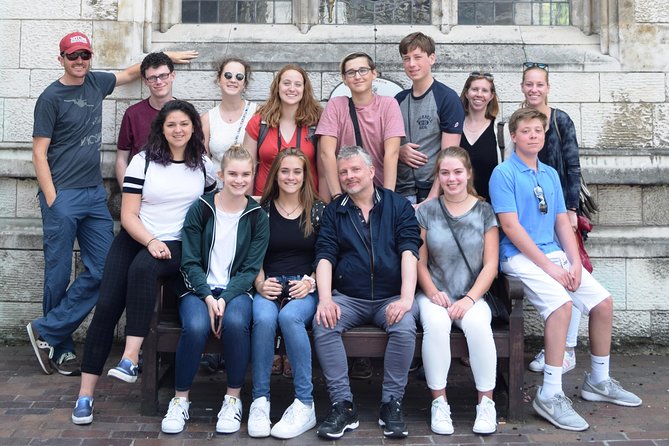
The maximum is 15 people per booking, with an overall activity limit of 45. A smaller booking can make it easier to hear the guide and ask questions, while a larger total group may feel less intimate.
Confirmation is provided at booking, and free cancellation is available up to 24 hours before the start time. Changes or cancellations inside that 24-hour window are not accepted for a refund.
Who should choose this Shakespeare walk?
I would choose this tour if you already like Shakespeare or want a more focused way to see the City of London. It suits readers, history fans, theater lovers, London residents looking for a fresh route, and visitors who have already seen the usual landmarks.
The tour is especially good for you if you enjoy hearing passages performed aloud. Declan’s acting background is not a minor extra. His full speeches give the walk its character and help explain why the words still matter.
You may prefer another activity if you want a general city tour, extensive interior visits, or a relaxed pace with long stops. This route covers many locations quickly, and the amount of material is high for two hours.
Should you book it?
Book it if you want to connect Shakespeare’s work with real streets, former homes, churches, family records, and odd public monuments. The strongest reasons are the unusual route, Declan’s live performances, and the attention given to Shakespeare’s family and private life.
Skip it if Shakespeare does not interest you or if you need a fully indoor activity. For everyone else, $20.83 buys a focused and lively look at a side of London that is easy to miss, ending with a memorable farewell at Barbican.
FAQ
Where does the Shakespeare in the City Walk start?
It starts outside Blackfriars Underground Station in London. Use the station on the Circle and District lines, and do not go to Blackfriars Overground station south of the river.
What time does the walk begin?
The walk starts at 11 a.m.
How long does the experience last?
The walk lasts approximately two hours.
Where does the walk finish?
It finishes at Barbican Underground Station. Barbican is served by the Circle, Metropolitan, and Hammersmith & City lines.
Who guides the tour?
The guide is Declan, a former professional actor who provides live performances of complete Shakespeare speeches during the walk.
Is the tour suitable for children?
Children must be accompanied by an adult. The recommended age is 10 and above.
What happens if the weather is bad?
The walk operates in all weather conditions, so you should dress appropriately and wear suitable shoes.
More London Walking Tours
- Magical London: Harry Potter Guided Walking Tour
★ 4.7 · 22,044 reviews - London: The Original Jack the Ripper Walking Tour
★ 4.7 · 7,833 reviews - Tour for Muggles The Ultimate Harry Potter Walking Tour in London
★ 5.0 · 4,684 reviews - London Jack The Ripper Guided Walking Tour
★ 5.0 · 3,131 reviews
Just added around London
- Private Chauffeur-London Heathrow from/to Southampton Cruise Port★ 5.0 · 9 reviews
- Kensington Palace VIP Garden Tour with Royal High Tea★ 4.5 · 71 reviews
- Up at The O2:Twilight Climb with Guided Tour with Panoramic Views★ 5.0 · 50 reviews
- Up at The O2: Sunset Climb with Guided Tour with Panoramic Views★ 5.0 · 110 reviews
- Secrets of the London Underground Small Group Walking Tour★ 4.5 · 38 reviews
- Urban Canvas: Exploring Shoreditch’s Vibrant Street Art★ 5.0 · 36 reviews
- Ultimate introduction to photography in Central London★ 5.0 · 19 reviews
- Full-Day Self-Guided Paris Tour from London by Eurostar with Seine River Cruise★ 3.5 · 22 reviews
Stratford-upon-Avon and Warwick Day Trips, compared.

Oxford, Stratford-upon-Avon, Cotswolds & Warwick Castle Day Trip
Read our review →
England in One Day: Stonehenge, Bath, the Cotswolds and Stratford-upon-Avon Day Trip from London
Read our review →
Warwick Castle, Oxford, Stratford-upon-Avon & Cotswolds Day trip
Read our review →
Oxford, Stratford, Cotswolds & Warwick Castle Tour from London
Read our review →
Oxford, Stratford, Cotswolds, and Warwick Day Trip
Read our review →
Oxford, Stratford-upon-Avon & Cotswolds Day Trip from London
Read our review →
Shakespeare’s Stratford-upon-Avon Day Trip by Coach
Read our review →Browse the lists this tour appears in