Reviewed · LONDON WALKING TOURS
Secrets of Central London Walking Tour
London’s transport story is written not only on its Tube map, but also in its streets, gardens, theatres, and riverside paths. This two-hour walk links Covent Garden, Kingsway, Holborn, and the Embankment, showing how London moved people from the 1500s to the present day. I like the focus on details you can actually see, including the oldest shop in the city, the Kingsway Tram Tunnel, and the quiet gardens where trains rumble below.
I also like that the walk connects major engineering projects with ordinary city streets. You’ll hear about the Thames as London’s first public transport thoroughfare, the construction of the Piccadilly line, and the Crossrail works of the 2010s. The main drawback is the pace: you may walk for two hours through busy areas and over uneven ground, and one English-language participant found the guide difficult to follow when speaking quickly while walking.
Key points at a glance
- Transport history in plain sight: Learn how familiar streets helped shape the Piccadilly line, Kingsway Tram Tunnel, and Crossrail.
- Covent Garden’s earlier identity: Hear how the area was originally known as Convent Garden and how its first theatres developed.
- The Thames as a transport route: See London’s river as the city’s first public transport thoroughfare.
- Holborn’s underground world: Find out about the many tunnels below the area, without entering disused stations or restricted spaces.
- A mysterious sound in Embankment Gardens: Learn why trains can be heard beneath this peaceful setting.
- A practical two-hour format: At $26 per person, the tour gives you a compact history lesson without requiring entry to the London Transport Museum.
Why this walk is different from a standard London sightseeing tour
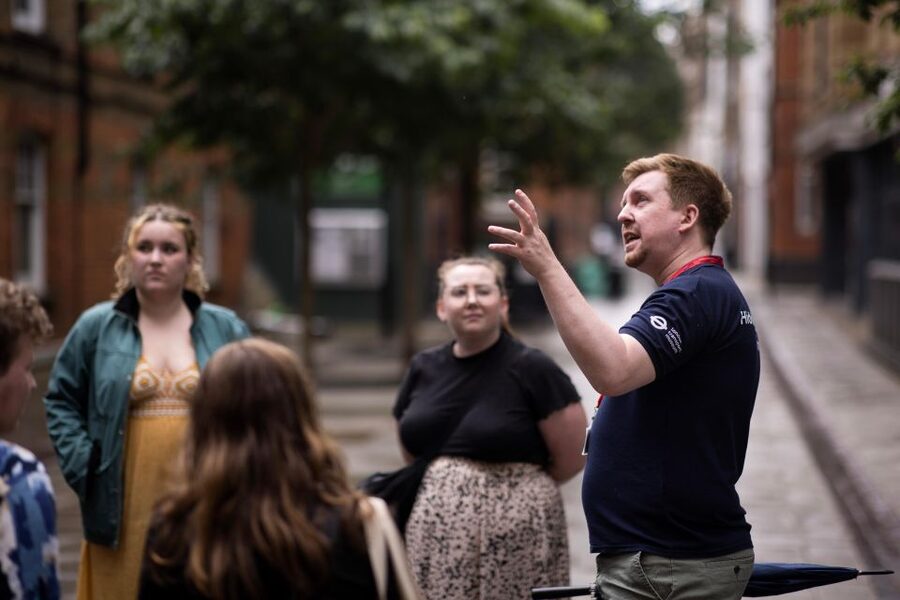
Many central London walks focus on famous buildings, royal landmarks, or theatrical stories. This one uses the city’s transport network as its organizing idea. That gives you a useful way to read the streets after the tour ends.
You are not simply shown a station and told when it opened. Instead, the route links transport with urban change. Streets were widened, tunnels were cut, tram routes were built, and major rail projects altered the ground below your feet. The result is a tour about how London works, not just how it looks.
The route covers Theatreland, Covent Garden, Kingsway, Holborn, and the Embankment. These areas are close together on a map, but each brings a different layer of London’s past. Theatreland offers early performance venues and changing public transport needs. Covent Garden brings market history and the story of Convent Garden. Kingsway and Holborn reveal large-scale underground engineering. The Embankment ties the walk to the Thames and the railway beneath the gardens.
I find this format especially useful at the start of a London visit. After two hours, you should have a better sense of how the city’s surface streets connect with its Tube lines, tram tunnels, river routes, and newer rail construction.
More London Walking Tours:
- Magical London: Harry Potter Guided Walking Tour
★ 4.7 · 22,044 reviews - London: The Original Jack the Ripper Walking Tour
★ 4.7 · 7,833 reviews - Tour for Muggles The Ultimate Harry Potter Walking Tour in London
★ 5.0 · 4,684 reviews
Starting at the London Transport Museum in Covent Garden

The meeting point is outside the main entrance of the London Transport Museum in Covent Garden Piazza. A member of the Hidden London team meets you 15 minutes before the scheduled start, so arrive with enough time to find the entrance and check in without rushing.
Entry to the museum is not included. That is worth noting because the meeting point can make the two experiences feel connected, but they are separate activities. You pay for the walking tour only, and you can visit the museum separately if you want a closer look at London’s buses, trains, trams, and other transport vehicles.
The tour begins with the area’s earlier identity. Covent Garden was originally known as Convent Garden, and its story helps explain how this central district changed over time. You also hear about the first theatres that opened nearby, linking entertainment with the movement of large crowds through narrow central streets.
This opening section should suit you if you enjoy learning why a familiar place has its name. It is less useful if you want an immediate visit inside a historic building, since the experience is an outdoor walk rather than a series of interior visits.
Theatreland and the birth of professional policing
As the route passes through Theatreland, the guide explains how the first theatres in the area developed. The subject is not only the stage. Theatres affected traffic, crowds, public order, and the need for better systems in central London.
One of the more unusual stories concerns the birth of London’s first professional police force. That detail gives the walk a wider social frame. Transport, theatre, and policing all grew in response to the same basic problem: more people were gathering in a dense part of the city.
I like this kind of connection because it turns a familiar theatre district into a working part of London’s past. You are not only looking at show venues. You are considering how the city responded when entertainment became a major public activity.
The route passes through busy areas and requires road crossings. You should expect urban interruptions, including traffic, pedestrians, and street noise. Since some explanations may happen while the group is moving, stay close enough to hear the guide clearly.
Covent Garden’s transport and street stories

Covent Garden is one of the most recognizable parts of the route, but the tour aims to move beyond its market atmosphere and popular photo spots. You’ll hear how the district developed from its earlier name and how nearby theatres helped shape the area.
The walk also includes a glimpse of some well-known Hidden London sites. The wording is important here: you see or pass by selected locations, but you do not enter disused Tube stations or underground spaces. If you are hoping for an abandoned-platform experience, this is not that tour.
You also get to see the oldest shop in the city. The supplied information does not identify the shop by name, so you should treat this as a visual stop and a story within the route rather than plan your visit around a particular shop interior.
This part is valuable because it helps you look upward and outward. Transport history is often hidden in street width, building placement, and the routes people take through a district. A guide can point out the clues faster than you could find them alone.
A different sort of day out in London altogether:
- From London: Harry Potter Warner Bros Studio Tour
★ 4.7 · 26,588 reviews - London: Westminster to Greenwich River Thames Cruise
★ 4.5 · 22,836 reviews - London: Madame Tussauds London
★ 4.6 · 20,915 reviews - Stonehenge, Windsor Castle, and Bath from London
★ 4.5 · 18,662 reviews
Kingsway and the engineering beneath your feet
The route then moves toward Kingsway, one of the most important places on this walk for transport enthusiasts. You’ll hear about the Kingsway Tram Tunnel, a major piece of infrastructure connected with London’s older tram system.
The tunnel is significant because it shows that London’s transport history did not begin with the Underground. Trams, surface streets, river routes, and railways all formed part of the city’s changing network. The story also helps explain why a street that looks ordinary today can have a much more complicated past below it.
The tour also covers the construction of the Piccadilly line. You’ll learn how this Tube route formed part of the larger effort to move people across central London. The useful point is not just when the line was built, but how the city had to make room for new transport while continuing to function above ground.
Kingsway is a good section for anyone who likes engineering but does not want a highly technical lecture. The route keeps the subject tied to visible streets and practical city planning. You can see where the stories happened rather than studying them only through dates and diagrams.
Holborn’s tunnels and London below street level
Holborn brings the most concentrated discussion of underground construction. The tour explains the multitude of tunnels below the area and shows how much of London’s transport system is hidden from ordinary view.
You will not enter these tunnels on this experience. That limitation matters. The attraction is the explanation of what lies below and why it was built, not a physical exploration of a disused station or restricted passage.
For me, this is one of the strongest reasons to choose the walk. London’s Tube system is familiar to almost everyone who uses the city, but the network’s less visible spaces are harder to understand from a station platform. A guide can connect old tram routes, Tube construction, and later rail works in one story.
The ground may be uneven in places, and the tour includes a lot of walking. Wear sturdy shoes rather than fashionable footwear with thin soles. You will also need suitable clothing for an outdoor walk, since the tour is not presented as a series of indoor stops.
The Thames and the Embankment Gardens railway sound

The walk eventually reaches the Embankment, bringing the Thames into the story. The river is presented as London’s first public transport thoroughfare, a useful reminder that people moved across and along the city long before the Tube became the fastest way around central London.
This section gives the route a welcome change of mood. After busy streets and underground engineering stories, the river and gardens offer a quieter setting. The tour explains how the Thames helped shape London’s movement and growth, rather than treating it only as a scenic backdrop.
The most intriguing detail comes in Embankment Gardens. Even though the gardens feel peaceful, you may hear trains running beneath them. The guide explains why that sound is there, connecting the tranquil surface with the railway infrastructure below.
That contrast captures the spirit of the whole walk. London often gives you a calm square above and a busy transport system below. The experience teaches you to notice those layers, especially the sounds and structures that most people pass without questioning.
Crossrail and the city’s newest transport chapter
The tour does not stop with Victorian railways or older Tube lines. It also covers the works involved in building Crossrail during the 2010s.
This adds a recent chapter to the route and keeps the experience from feeling like a walk through a sealed-off past. London continues to rebuild itself around transport. New tunnels require planning, excavation, road changes, and careful work beneath districts that are already crowded and heavily used.
The Crossrail section also gives you a useful comparison. Earlier projects such as the Piccadilly line and Kingsway Tram Tunnel were shaped by their own technology and city needs. Crossrail belongs to a later period, but the basic challenge remains familiar: moving people through a dense capital while keeping the city running above ground.
If you enjoy comparing old and new infrastructure, this part adds real value. If your interest is limited to historic buildings, the transport engineering focus may feel more technical than expected.
How much value do you get for $26?
At $26 per person, the price is reasonable for a two-hour guided walk in central London, particularly because the route covers several districts and includes specialist transport stories. You are paying for a live English-language guide who can connect sites that might otherwise seem unrelated.
The value is strongest if you would not think to research the Kingsway Tram Tunnel, Holborn’s tunnels, or the railway beneath Embankment Gardens on your own. The guide gives you a framework that turns ordinary streets into a readable transport map.
The value is weaker if you expect entry to the London Transport Museum or access to disused Tube stations. Neither is included. You also need to remember that the tour is relatively short, so each stop receives an explanation rather than a long visit.
Free cancellation up to 24 hours before the start and a reserve-now, pay-later option make the booking easier to fit into a changing London schedule. Check the available start times before committing, since the duration is fixed at about two hours.
Who should book this walking tour?
I would choose this tour if you enjoy urban history, public transport, civil engineering, or the small clues that explain how a city developed. It also suits repeat visitors who have already seen the main landmarks and want a different way to understand central London.
The walk can work well for families with older children, but children under nine are not suitable for this experience. Younger children may also find a two-hour history walk less engaging, especially because the tour relies on listening and walking rather than hands-on activities.
The tour is listed as wheelchair accessible, but the practical details deserve careful attention. It involves up to two hours of walking, uneven ground, road crossings, and busy areas. The same information says it is not suitable for people with mobility impairments, so contact the provider before booking if you need specific assistance.
The tour is conducted in English. One German-speaking participant found the pace and spoken English difficult, especially when the guide talked while walking. If English is not comfortable for you, consider whether you can follow a live outdoor explanation without frequent pauses.
Bring a passport or ID card, and leave luggage and large bags behind. There is no cloakroom. A small day bag may be practical, but the stated restriction means you should avoid arriving with suitcases or bulky shopping bags.
Should you book the Secrets of Central London Walking Tour?
Book it if you want a focused look at London’s transport past and present, especially the parts that remain visible only through street clues, distant sounds, and a guide’s explanation. The Thames, Kingsway Tram Tunnel, Holborn’s underground routes, and Embankment Gardens create a varied two-hour route for a modest price.
Skip it if you want to enter disused stations, spend time inside the London Transport Museum, or avoid long periods of walking. You should also think twice if following fast English outdoors is difficult.
For the right audience, this is a useful way to see central London with fresh eyes. Afterward, the Tube map may feel less like a diagram and more like a record of the city’s long effort to move people through a crowded capital.
FAQ
Where does the Secrets of Central London Walking Tour begin?
The meeting point is outside the main entrance of the London Transport Museum in Covent Garden Piazza, WC2E 7BB.
How early should I arrive?
A member of the Hidden London team meets you 15 minutes before the tour starts, so arrive before the scheduled departure time.
How long does the tour last?
The guided walking tour lasts approximately two hours.
What language is the tour conducted in?
The tour is conducted in English with a live guide.
Does the tour include entry to the London Transport Museum?
No. Entry to the London Transport Museum is not included in the walking tour.
Does the tour enter disused Tube stations or underground spaces?
No. The tour does not visit disused Tube stations or underground spaces.
How much walking is involved?
You should expect up to two hours of walking, including uneven ground, road crossings, and busy areas.
Is the tour suitable for children?
Children under nine are not suitable for this tour.
Is the tour wheelchair accessible?
The activity is listed as wheelchair accessible, but it also involves extensive walking, uneven ground, road crossings, and busy areas. The information says it is not suitable for people with mobility impairments, so check your needs with the provider before booking.
What should I bring, and can I bring luggage?
Bring a passport or ID card. Luggage and large bags are not allowed, and there is no cloakroom.
Just added around London
- Up at The O2:Twilight Climb with Guided Tour with Panoramic Views★ 5.0 · 50 reviews
- Private Chauffeur-London Heathrow from/to Southampton Cruise Port★ 5.0 · 9 reviews
- Kensington Palace VIP Garden Tour with Royal High Tea★ 4.5 · 71 reviews
- Up at The O2: Sunset Climb with Guided Tour with Panoramic Views★ 5.0 · 110 reviews
- Secrets of the London Underground Small Group Walking Tour★ 4.5 · 38 reviews
- Urban Canvas: Exploring Shoreditch’s Vibrant Street Art★ 5.0 · 36 reviews
- Ultimate introduction to photography in Central London★ 5.0 · 19 reviews
- Full-Day Self-Guided Paris Tour from London by Eurostar with Seine River Cruise★ 3.5 · 22 reviews
London Walking Tours, compared.

Magical London: Harry Potter Guided Walking Tour
Read our review →

Tour for Muggles The Ultimate Harry Potter Walking Tour in London
Read our review →

Harry Potter Movies Walking Tour (Kids Go Free)
Read our review →
Changing of the Guard Guided Walking Tour in London
Read our review →
The Great British Rock and Roll Music Walking Tour
Read our review →