Reviewed · LONDON WALKING TOURS
Secret Old London Walking Tour
London’s polished financial district hides a much rougher past. On this 90-minute walk from Barbican, you’ll pass plague grounds, an execution site, a Roman amphitheatre, and the roofless remains of a church damaged in the Blitz. It is a brisk lesson in how old London survives beneath modern office blocks.
I like two things here: the route reaches places many first-time visitors would miss, and the guides give the history a human voice. Guides including Jess, Rosie, Pepe, and Jeremy have been praised for clear storytelling, humor, and strong local knowledge. The main drawback is that the tour packs a lot into 1.5 hours, so some people may want more time at the major stops.
Key points to know
- Charterhouse Square was once a Black Death burial ground, but today it offers a calm start among old buildings and garden space.
- Smithfield connects jousts, public executions, and William Wallace, making it one of London’s grimmest historic locations.
- St Bartholomew the Great gives you a rare look at medieval London, with a church interior familiar from films and television.
- A quiet memorial honors heroic self-sacrifice, adding a moving human story to the darker material.
- The Roman amphitheatre is easy to miss without a guide, since modern London has largely grown over it.
- The tour costs $26 per person, a fair price if you value strong guiding and lesser-seen corners over major blockbuster sights.
Why this part of London feels so different
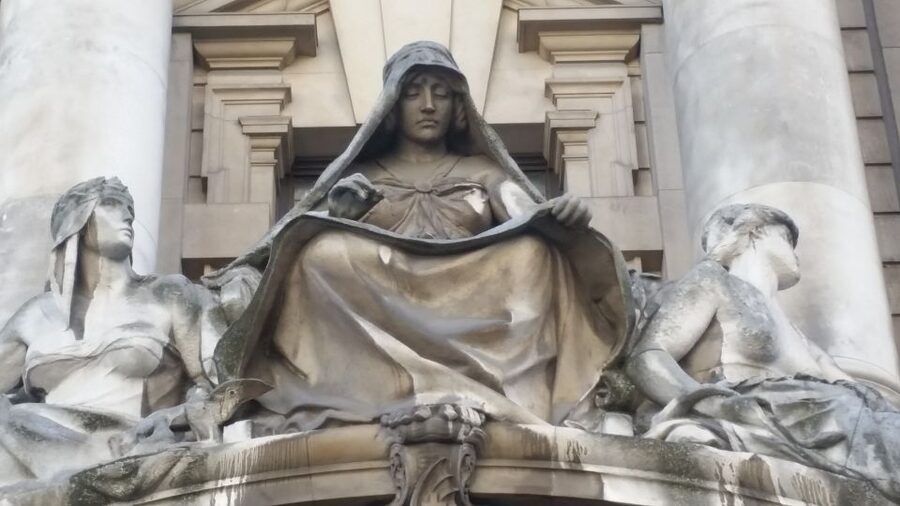
The City of London can seem all glass towers, banks, delivery vans, and hurried office workers. This walk shows you another layer. In a few streets, the modern business district gives way to churchyards, old lanes, ancient foundations, and spaces shaped by plague, punishment, war, and worship.
That contrast is the heart of the experience. You are not being led through a preserved medieval village. You are walking through a working part of London where the past has been folded into the present. A high-rise may rise behind a churchyard. A pavement may cover the edge of a Roman building. A quiet square may once have held thousands of plague victims.
I find this kind of tour more rewarding than a simple march between famous landmarks. You learn how to read the city. The guide points out clues that are easy to miss, then explains why they matter.
The mood is also unusual. This is not a cheerful royal-palace tour or a grand museum visit. The subjects include disease, execution, religious upheaval, war, and sacrifice. The guides keep the tone lively, but the material can be grim. If you enjoy London’s darker side, that is the attraction. If you prefer lighter sightseeing, the subject matter may feel heavy at times.
More London Walking Tours:
- Magical London: Harry Potter Guided Walking Tour
★ 4.7 · 22,044 reviews - London: The Original Jack the Ripper Walking Tour
★ 4.7 · 7,833 reviews - Tour for Muggles The Ultimate Harry Potter Walking Tour in London
★ 5.0 · 4,684 reviews
Starting at Barbican and reaching Charterhouse Square
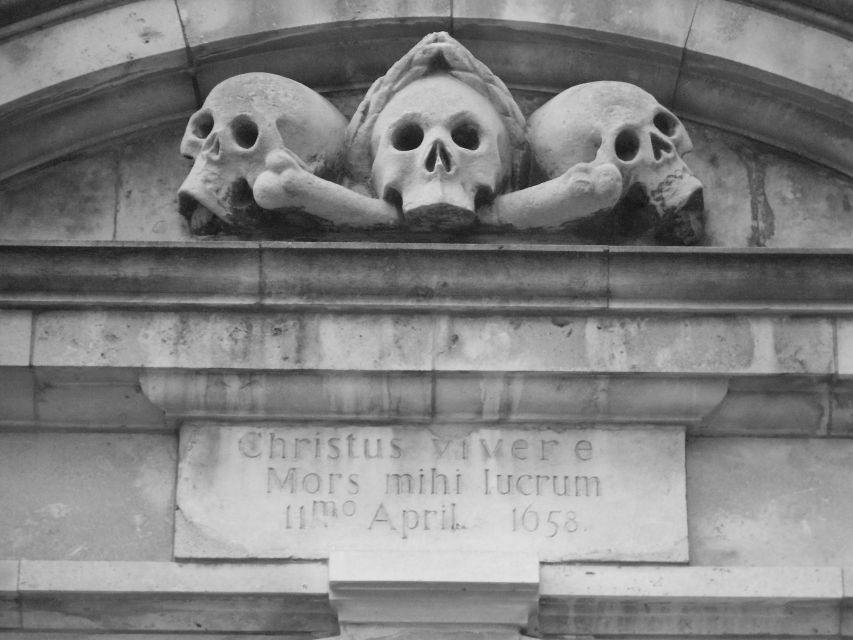
The meeting point is outside Barbican Underground Station. From there, the walk moves toward Charterhouse Square, an open space whose peaceful appearance hides one of the area’s bleakest chapters.
Around 600 years ago, this area was used as a dumping ground during the Black Death. That fact changes the way you see the square. A quiet patch of London greenery no longer feels like ordinary urban space. It becomes a reminder of how quickly disease could overwhelm a medieval city.
The value of this first stop is the contrast between appearance and history. You are not looking at a dramatic ruin or a marked battlefield. You are standing in an ordinary-looking place and learning what happened there. The guide’s job is especially important here because the site itself cannot tell the story.
This is also where comfortable shoes matter. The route is a walking tour through central London, and you will be on your feet for the full 1.5 hours. There are pauses for explanation, but this is not a seated sightseeing experience.
Smithfield, jousts, and the city’s execution ground
The route continues to Smithfield, a place with a long association with public spectacle. In the medieval period, it hosted jousts and other events. It also became one of London’s principal execution sites.
That combination tells you a lot about medieval public life. The same open area could serve as entertainment venue, market setting, and place of punishment. The guide helps connect those uses, giving you a clearer sense of how public spaces worked before modern ideas about privacy and justice.
The tour also brings in William Wallace, the Scottish resistance leader made famous by the film Braveheart. The location associated with his execution gives this stop a strong personal focus. Instead of hearing only about broad events, you are asked to picture an individual being led to his final moments.
One practical note: the tour description highlights William Wallace, but one participant specifically found that this subject was not covered on their walk. That makes it wise to treat him as a possible part of the Smithfield story, not a guaranteed extended stop. If Wallace is a main reason you are booking, ask the guide about him at the start.
Smithfield is also a good place to notice how little a city needs to preserve in order to retain a sense of age. The open space has changed function many times, but its historic associations remain powerful.
St Bartholomew the Great and the medieval churchyard mood
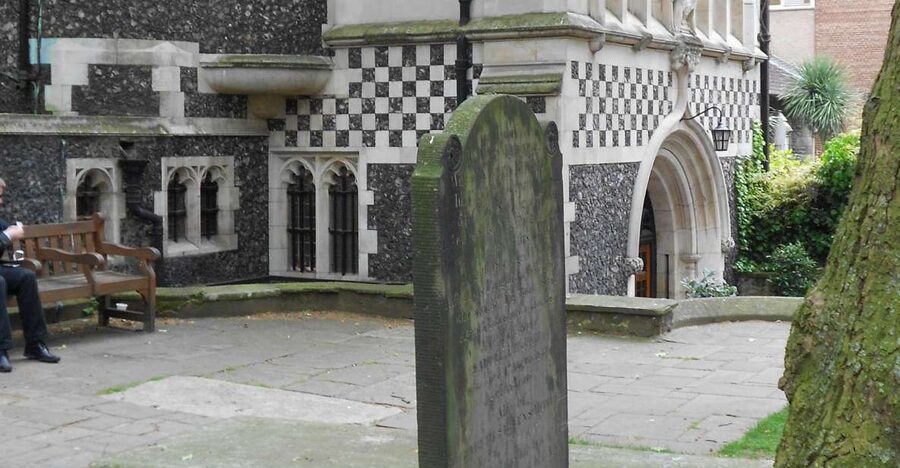
Between Charterhouse Square and Smithfield is St Bartholomew the Great, one of London’s most important medieval churches. It is also one of the visual highlights of the route.
The church has appeared in films including Four Weddings & a Funeral and Sherlock Holmes. Those screen appearances may make it familiar, but seeing it as part of the old City landscape gives it more meaning. You are not simply visiting a film location. You are seeing a surviving piece of medieval London in the middle of a modern district.
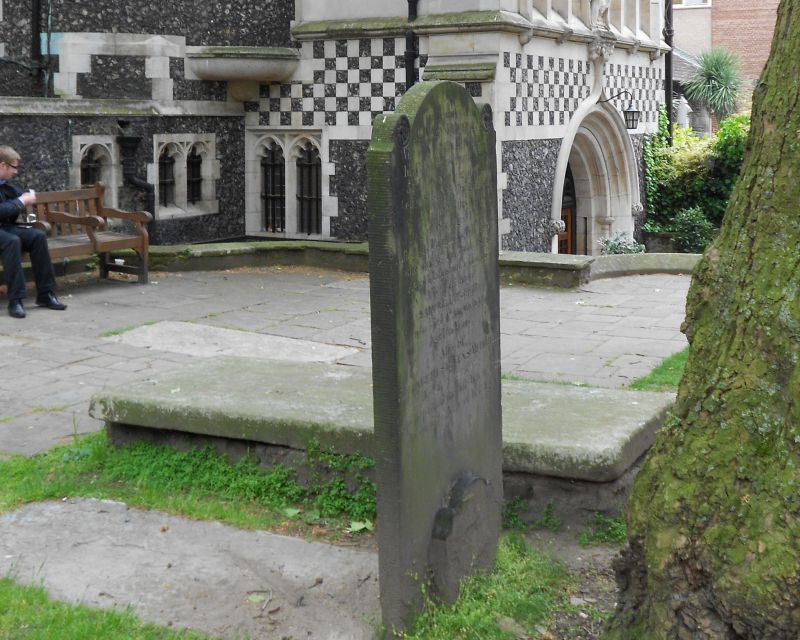
The church and its surroundings provide some of the tour’s best atmosphere. The route includes a medieval churchyard, and the older stonework gives the walk a welcome pause from traffic and office buildings. You might find this section especially appealing if you like architecture, religious history, or film locations without wanting a full-day church tour.
The guides do more than identify the building. Rosie, in particular, has been praised for connecting London’s past with architecture, politics, language, and the city’s former monasteries. That wider context matters. A church becomes more interesting when you understand the institutions around it and the changes that altered the area after the medieval period.
Do not expect an extended interior visit with unlimited time for close inspection. The whole tour lasts only 90 minutes and includes several locations. The reward is breadth and storytelling rather than a slow architectural study.
A different sort of day out in London altogether:
- From London: Harry Potter Warner Bros Studio Tour
★ 4.7 · 26,588 reviews - London: Westminster to Greenwich River Thames Cruise
★ 4.5 · 22,836 reviews - London: Madame Tussauds London
★ 4.6 · 20,915 reviews - Stonehenge, Windsor Castle, and Bath from London
★ 4.5 · 18,662 reviews
The hidden memorial and a more thoughtful pause
Not every stop is about gore. The route includes a less obvious memorial to heroic self-sacrifice, located in a park. This is likely to be one of the most touching moments of the walk because it shifts the focus from famous victims and public punishment to an act of courage.
The exact memorial is presented as something you might otherwise pass without noticing. That is the point. London contains many monuments that are not on a standard sightseeing route, and a guide can give them a place in your mental map.
I like this balance. A tour built around plague pits and executions could become a parade of grim facts. The memorial adds emotional range and reminds you that the city’s past includes ordinary people making difficult choices, not only rulers, criminals, and disasters.
This stop also gives the group a chance to slow down. Several people who have taken the tour praised the pacing, calling it comfortable and allowing time to absorb the information. Still, one cold-weather participant wanted less time looking at pictures and more movement. On a winter day, you may feel the same, particularly if the guide pauses outdoors.
The Blitz-damaged church shell
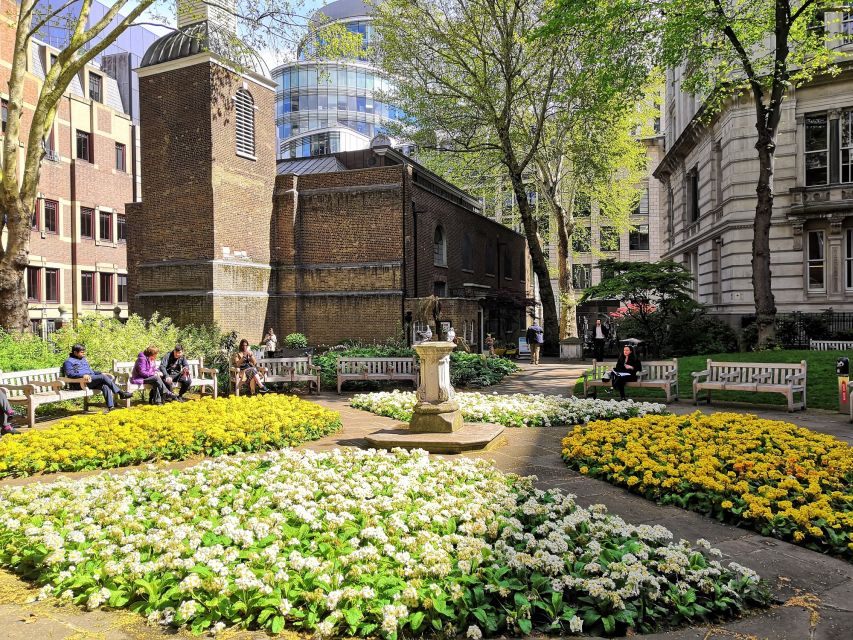
Another striking moment comes at the shell of a church destroyed during the Blitz. The remains offer a direct link to London’s 20th-century past and keep the tour from being trapped in the medieval period.
A ruined church in the middle of the City can be more powerful than a restored building. You see damage rather than reconstruction. The open shell makes wartime destruction physical, while the surrounding modern city shows how London rebuilt and carried on.
This section works well because it links different layers of time. Earlier stops deal with the Black Death, medieval religion, and public execution. Here, the story moves forward to the Second World War. London’s scars are not from one era only.
The site is also a reminder that old London is not always old in the same way. Some buildings survived centuries of change. Others were damaged or lost within living memory. If you are interested in urban history, this contrast gives the walk extra value.
Finding the Roman amphitheatre beneath modern London
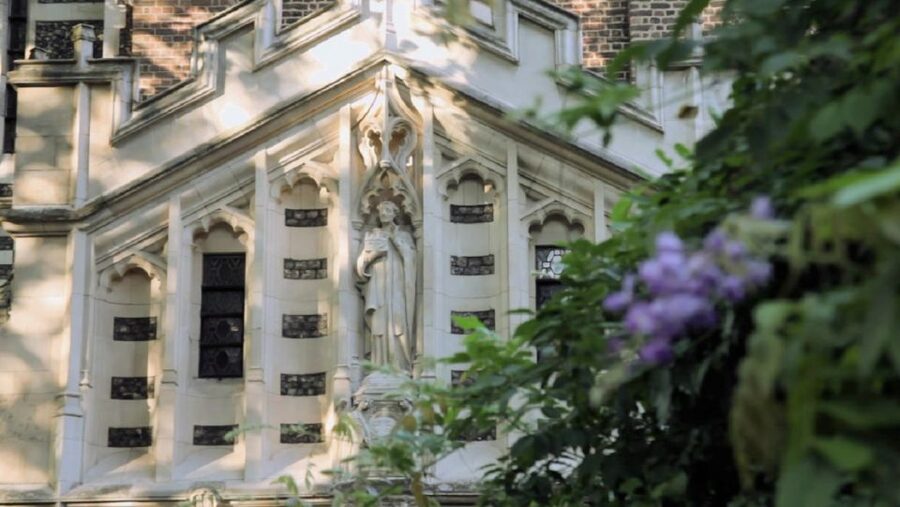
The tour also takes you to the location of London’s long-lost Roman amphitheatre. The word location is important. You should not expect a huge open ruin comparable to an amphitheatre in Rome or southern France.
This is an interpretive stop. The guide helps you locate the perimeter and picture the structure beneath the modern city. Without that explanation, you might walk past without knowing anything Roman had once occupied the ground.
For me, this is one of the strongest reasons to choose a guided walk rather than simply following a map. The physical remains are limited, but the setting becomes legible once someone explains where the boundary ran and what the site represented.
It also reinforces the tour’s main idea: London’s past is often under your feet rather than in front of your eyes. Roman, medieval, Tudor, Victorian, wartime, and modern layers occupy the same small area. You do not need a monumental ruin to feel the age of the city.
The guides make or break the experience
The route has plenty to work with, but the guide determines how much you take away. The strongest comments focus on lively delivery, clear explanations, humor, and the ability to make old events feel immediate.
Guides named Jess, Jesse, Rosie, Pepe, and Jeremy have all received warm praise. Jess has been described as enthusiastic, funny, and well prepared. Rosie has been noted for linking history with architecture, politics, and language. Pepe has been praised for broad London knowledge, while Jeremy has been valued for an entertaining presentation and approachable manner.
That range suggests a tour where personality matters. You will hear stories rather than only dates and names. A good guide can turn an execution site into a question about medieval justice, or a church fragment into a lesson about war and rebuilding.
The material moves quickly, so bring your attention as well as your shoes. One person found there was so much information that it was hard to remember everything. That is a fair warning. You will get more from the walk if you accept that you will not retain every detail and instead focus on the main stories and places.
Video recording is not allowed, so plan to listen rather than film the commentary. You can take in the surroundings, but the tour is built around live explanation.
Price, timing, and who will get the most from it
At $26 per person, this is reasonably priced for a 1.5-hour guided walk in central London. You are paying less for entry tickets and more for interpretation. The value is strongest if you want a route that connects several small sites rather than a single major attraction.
I would compare it with the cost of visiting a major London landmark. Many famous sights require a separate admission fee and can consume half a day. This tour gives you a compact history lesson and a different view of the City for a modest sum.
It suits:
- First-time visitors who want to see more than the usual London icons
- Repeat visitors who already know the main sights
- London residents looking for an easy local outing
- Fans of medieval history, Tudor stories, wartime ruins, and darker subject matter
- Film fans interested in locations connected with Sherlock Holmes and Four Weddings & a Funeral
- Small groups or team outings that want an unusual central London activity
The tour is suitable for people over 12. It is listed as wheelchair accessible, but the experience remains a walking route through historic streets and open spaces, so anyone with specific mobility concerns should confirm the practical details before booking.
Dogs are not allowed, except guide dogs. Large bags and luggage are also not permitted. There are no refreshments included, so have water or a snack before you meet the group if needed.
Free cancellation is available up to 24 hours before the start, and you can reserve now and pay later. Those terms are useful if your London plans are still shifting.
Should you book the Secret Old London Walking Tour?
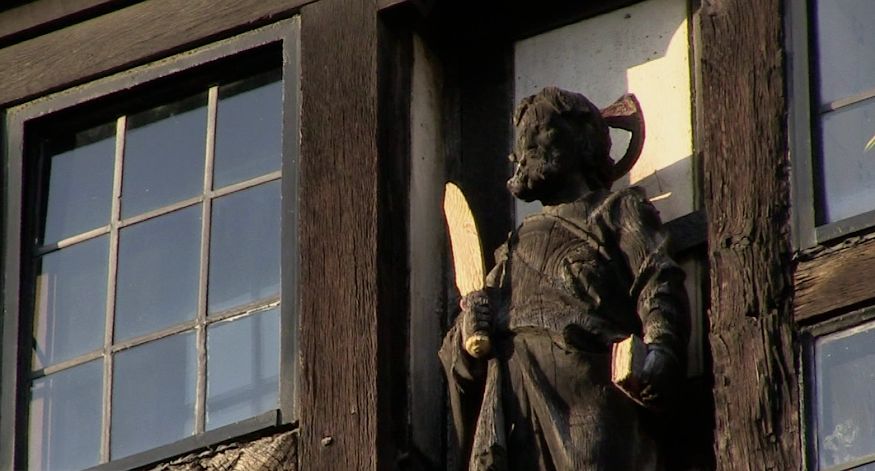
Book it if you want London to feel less polished and more layered. The route gives you plague history at Charterhouse Square, grim stories at Smithfield, medieval architecture at St Bartholomew the Great, a moving memorial, a Blitz-damaged church, and a Roman site that most people would miss.
I would not choose it if you want a relaxed stroll with little commentary, or if graphic history is not your style. The tour is short, information-heavy, and built around stories of death, punishment, and disaster, even though the guides add humor and variety.
For most people interested in atmosphere and overlooked history, the $26 price is fair. Wear comfortable shoes, keep your schedule open for 90 minutes, and ask about any specific story you especially want covered, particularly William Wallace. If the familiar London sights are already on your list, this is a smart way to see the City from a more surprising angle.
FAQ
Where does the Secret Old London Walking Tour begin?
The tour begins outside Barbican Underground Station.
How long does the tour last?
The walking tour lasts 1.5 hours.
What language is the tour conducted in?
The tour is conducted in English with a live English-speaking guide.
Is the tour suitable for children?
It is suitable for people over 12.
Is the tour wheelchair accessible?
Yes, the activity is listed as wheelchair accessible.
Are dogs allowed on the tour?
Dogs are not permitted, except for guide dogs.
What should I bring and what is not allowed?
Bring comfortable shoes. Luggage and large bags are not allowed, and video recording is prohibited. Refreshments are not included.
Just added around London
- Up at The O2:Twilight Climb with Guided Tour with Panoramic Views★ 5.0 · 50 reviews
- Private Chauffeur-London Heathrow from/to Southampton Cruise Port★ 5.0 · 9 reviews
- Kensington Palace VIP Garden Tour with Royal High Tea★ 4.5 · 71 reviews
- Up at The O2: Sunset Climb with Guided Tour with Panoramic Views★ 5.0 · 110 reviews
- Secrets of the London Underground Small Group Walking Tour★ 4.5 · 38 reviews
- Urban Canvas: Exploring Shoreditch’s Vibrant Street Art★ 5.0 · 36 reviews
- Full-Day Self-Guided Paris Tour from London by Eurostar with Seine River Cruise★ 3.5 · 22 reviews
- Ultimate introduction to photography in Central London★ 5.0 · 19 reviews
London Walking Tours, compared.

Magical London: Harry Potter Guided Walking Tour
Read our review →
Tour for Muggles The Ultimate Harry Potter Walking Tour in London
Read our review →
Harry Potter Movies Walking Tour (Kids Go Free)
Read our review →
Changing of the Guard Guided Walking Tour in London
Read our review →
The Great British Rock and Roll Music Walking Tour
Read our review →