
Reviewed · ROYAL LONDON TOURS
Royal London: from Saxons to Tudors & Stuarts Walking Tour
The most striking thing about this walk is how much royal drama is packed into central London. In two hours, you trace the places tied to William the Conqueror, Henry VIII, Anne Boleyn, Shakespeare, and Charles I, while your guide links them into the long story of British monarchy. It is history on the pavement, not behind glass.
I like the six-person limit, which gives you a real chance to ask questions. I also like the mix of famous names and less familiar rulers. Natalie has been praised for explaining the kings and queens who rarely appear in television dramas, while Nichole has been described as funny, friendly, and insightful. The main drawback is simple: this is an outdoor walk, and you do not enter any of the sites.
Key points at a glance
- Royal palace history: Learn about the site where London’s largest royal palace once stood.
- Tudor drama: Hear where Henry VIII married Anne Boleyn and why the Tudor period matters.
- Shakespeare connection: Visit the Stuart-era site linked with the first performances of his plays.
- Charles I’s fate: Follow the story of the love-torn king who was executed, including where Charles I lost his head.
- Small-group format: Each walk is limited to six attendees, making questions and conversation easier.
- Outdoor planning: Wear comfortable shoes, carry water, and bring an umbrella because the tour runs in rain or shine.
A royal walk built around stories, not interiors
This tour is for anyone who has watched a Tudor or Stuart drama and wanted to know what was real. The guide covers Saxons, Normans, Tudors, and Stuarts, with questions such as what William the Conqueror actually conquered, who Edward the Confessor was, and why the Tudors still fill television schedules.
I like this approach because it gives you a framework for London rather than a string of disconnected dates. Royal history can become a blur of Henrys, Edwards, and Williams. A live guide can pause, explain family links, and show how one royal decision led to another.
The tour also has a clear sense of place. You are not simply hearing about a marriage, execution, or theatrical performance in a classroom. You are standing near the locations tied to those events, even though the buildings or original settings may have changed.
That distinction matters. This is not a palace tour, museum visit, or castle admission. It is an exterior walking experience that uses central London as its setting and evidence.
More Royal London Tours:
- The Kensington Palace Gardens Royal High Tea
★ 4.5 · 934 reviews - Kensington Palace Entrance Ticket
★ 3.5 · 557 reviews - Highlights of Royal London Bike Tour including Hyde Park
★ 5.0 · 543 reviews
Meeting at Trafalgar Square
The walk begins at the entrance to Waterstones bookshop in Trafalgar Square, WC2N 5EJ. The guide is described as a short woman, which should help you identify the right person in a busy part of central London.
Trafalgar Square is a practical meeting point, but give yourself enough time to find the bookshop entrance. The tour description does not provide a detailed route map, so you should treat the meeting instructions as your main starting guide and arrive ready to walk.
The group size is one of the strongest practical features. With no more than six people, you are unlikely to feel lost at the back of a large crowd. You can ask about a particular monarch, check a confusing date, or request more detail on a royal figure who interests you.
The guides named in the feedback include Natalie and Nichole. Natalie is especially noted for her broad command of British history, her humor, and a podcast connected with the tour. Nichole is described as friendly, funny, and thoughtful in her explanations. The exact guide depends on the date, but the experience clearly relies on a personal guide rather than an audio recording.
Saxons, Normans, and the question of conquest
The early part of the story sets up the monarchy that later Tudors and Stuarts inherited. You learn about the Saxons, Edward the Confessor, and William the Conqueror, with the walk asking what William actually conquered and how his arrival altered England.
For someone new to British royal history, this is useful groundwork. The Tudor period can seem like the main event, but the political structure around kingship began much earlier. Edward the Confessor belongs to the pre-Norman story, while William’s conquest changed who held power and how that power was organized.
The value here depends on the guide’s ability to keep the names and dates clear. A short walking tour cannot give you every detail of medieval England. What it can do is show how the monarchy developed and explain why later rulers mattered.
You should expect interpretation rather than a formal academic lecture. The tone is lively, with humor and room for questions. That suits visitors who want a strong overview, especially if they know the television version of royal history better than the historical one.
The site of London’s largest royal palace
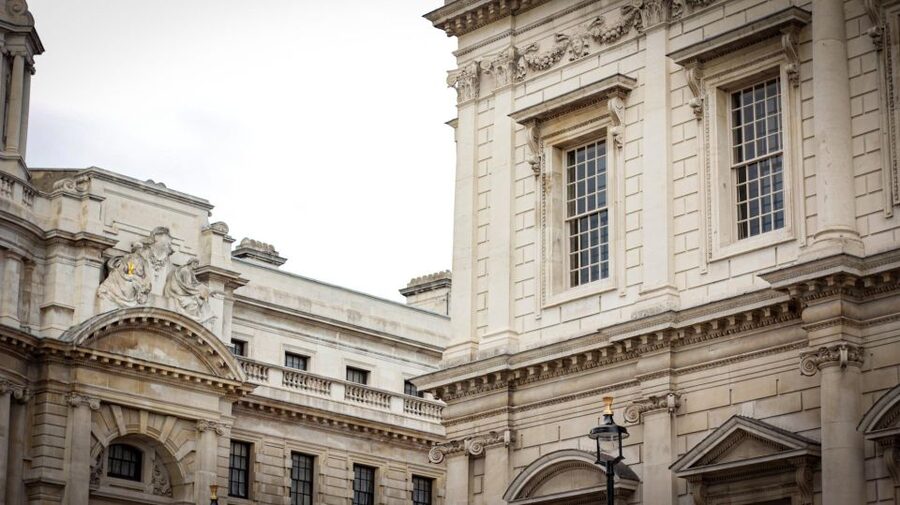
One highlight is the place where the largest royal palace once stood. This is the sort of stop that rewards imagination because the palace itself is no longer available for you to walk through.
Your guide explains what made the site important and helps you picture its former royal role. You will need to listen closely and use the surrounding streets as clues, since there is no promise of entering preserved rooms or seeing a complete palace complex.
I find this kind of stop valuable because it corrects a common London habit: assuming the city’s royal story is confined to the buildings that still look grand. Some of the most important places are now part of ordinary urban surroundings. The story has to do the work that surviving architecture cannot.
It is also a good example of the tour’s limits. If you want decorated chambers, royal portraits, or a preserved throne room, choose an indoor palace or museum instead. If you enjoy connecting modern streets with vanished buildings, this stop should be more rewarding.
More London Walking Tours:
- Magical London: Harry Potter Guided Walking Tour
★ 4.7 · 22,044 reviews - London: The Original Jack the Ripper Walking Tour
★ 4.7 · 7,833 reviews - Tour for Muggles The Ultimate Harry Potter Walking Tour in London
★ 5.0 · 4,684 reviews - London Jack The Ripper Guided Walking Tour
★ 5.0 · 3,131 reviews
Henry VIII and Anne Boleyn
The Tudor section includes the place where Henry VIII married Anne Boleyn. That single event opens the door to several major themes: Henry’s changing marriages, the position of the monarchy, and the religious and political pressures surrounding his reign.
The attraction here is not just the romance. Henry and Anne’s relationship is often reduced to costumes, scandal, and dramatic endings. A good explanation can show you why the marriage mattered politically and why the Tudor era continues to shape popular ideas of English history.
This is one of the best stops for fans of The Tudors, Becoming Elizabeth, or The White Queen, but you should expect the guide to separate drama from fact. The description makes a point of discussing rulers who do not usually receive screen time. That is helpful if you want more than familiar stories about Henry’s wives.
The tour does not include entry to the marriage site. You visit the exterior location and hear its story while walking. That keeps the price low, but it also means the experience depends heavily on the guide’s storytelling.
Shakespeare and the Stuart connection
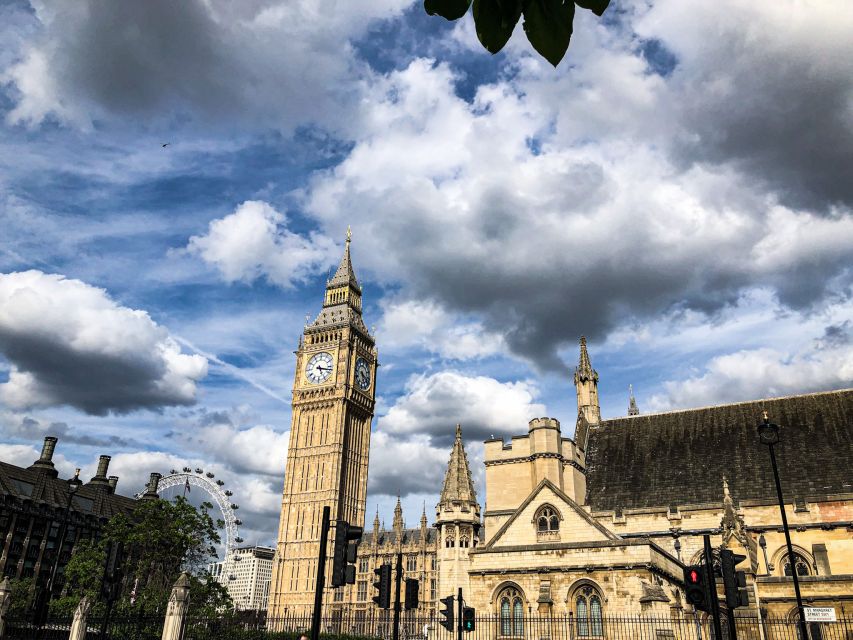
The walk also takes in the Stuart site where Shakespeare premiered his plays. This gives the tour a welcome change of pace. The route is not only about succession disputes, executions, and royal marriages. It also considers the relationship between monarchy, culture, and public performance.
The Stuart period can seem grim when presented only through civil conflict and Charles I’s downfall. The Shakespeare connection adds a glimpse of the period’s creative life and shows how royal London was also a place of theater and spectacle.
You should not expect a full Shakespeare tour or a performance. The focus remains the royal story, with the theater site serving as one important part of that story. Still, it is a strong inclusion for anyone who wants literature and political history in the same walk.
This is also where a small group helps. You can ask how Shakespeare’s performances fit into the period being discussed, or request more context if your knowledge of the Stuarts is limited.
The love-torn king and Charles I’s execution
The walk follows the story of the love-torn king doomed to be executed, then identifies where Charles I lost his head. These are among the more dramatic moments of the route, and they give the Stuart section a clear emotional center.
The execution site is not presented as a theatrical set piece. Its importance lies in what it tells you about the limits of royal power. A king could be tried and executed, an idea that shocked the political order and changed the way monarchy was understood.
The tour’s wording also points toward the question of the greatest royal love story of all time. The guide appears to use romance as a way into royal history, not as a replacement for politics. You may hear about loyalty, marriage, dynastic pressure, and the human cost behind public decisions.
Because the walk covers several centuries, no single story can receive unlimited time. If Charles I or Stuart politics is your main interest, ask questions as you go. The small group gives you a better chance of shaping the conversation than a large scheduled tour would.
What the guides add to the experience
The guide is the heart of this activity. The strongest praise focuses on clear explanations, humor, confidence, and the ability to answer questions. Natalie, in particular, is noted for giving a broad account of English royal history while bringing attention to monarchs who are often skipped by popular media.
That is an important strength. Royal period dramas usually concentrate on a few familiar figures. A walking guide can point out where the screen version leaves out awkward facts, less famous rulers, or the wider political setting.
The tone is not described as dry. Humor appears to be part of the presentation, and one person found that the two hours passed quickly. That suggests a brisk, conversational experience rather than a long lecture.
Still, guiding styles vary. Your guide may be Natalie, Nichole, or another member of the team. The activity is offered in English only, so you should be comfortable following spoken historical explanations for two hours.
Why the six-person limit matters
Small groups change the feel of a city walk. You can hear without straining, stop without forming a crowd, and ask for clarification. The guide can also respond to the interests of the people present, within the limits of a fixed two-hour schedule.
The group size is especially useful for complicated subjects. The line between Saxon, Norman, Tudor, and Stuart history is not always easy to follow. Questions can make the timeline clearer, particularly when one royal marriage or succession dispute leads into the next.
A small group does not guarantee a private tour. One person did receive a private walk for around £15, but that appears to have been the result of group size on that date rather than a standard private-tour promise. Book this as a small-group experience, not as a private guide.
The $29 price and what you receive
At $29 per person, the tour offers two hours of live guiding in central London. You are paying for the route, the guide’s preparation, and the chance to ask questions in a group capped at six.
That is fair value if you want a readable introduction to British royal history and prefer an outdoor walk to a museum audio guide. It is less compelling if you expect admission to palaces, theaters, or historic interiors, since the tour takes place outside and includes no entry tickets.
The value also rises if you are already interested in royal dramas. The route brings screen-famous figures into real London locations while adding context about rulers who do not get much attention on television.
Flexible booking helps if your schedule is uncertain. You can reserve and pay later, and cancellation is free up to 24 hours before the tour for a full refund. Check the available starting times when you book, since the tour lasts two hours but the supplied information does not give one fixed departure time.
Shoes, weather, and walking conditions
Wear comfortable shoes. You will be outside for the full two hours, and the route is not designed for people with mobility impairments or wheelchair users.
The tour runs rain or shine. Bring an umbrella, especially in London’s changeable weather, and carry a bottle of water. Toilets are available in Trafalgar Square, but their opening hours can change, so do not rely on them being open at the exact moment you need one.
Children under 13 are not suitable for this activity. Older children and teenagers may enjoy it if they already have an interest in monarchy, theater, or period dramas, but the experience is built around sustained historical conversation rather than child-focused entertainment.
There are no indoor breaks listed. Plan clothing accordingly, and do not choose this walk on a cold or wet day simply because the royal subject sounds appealing. The weather can shape your enjoyment as much as the history.
Who should book this royal history walk
I would recommend it most strongly to:
- Fans of The Tudors, Becoming Elizabeth, Gunpowder, The White Queen, Mary & George, or Outlander
- First-time visitors who want a quick orientation to London’s royal past
- History fans who prefer stories and questions to a formal museum display
- Solo visitors or couples who value a small group
- People curious about less famous English monarchs, not just Henry VIII and Elizabeth I
I would look elsewhere if you need step-free access, dislike outdoor touring, or want to enter historic buildings. You may also prefer a specialist museum or palace visit if one royal period matters more to you than the full Saxon-to-Stuart sweep.
Should you book the Royal London walking tour?
Book it if you want a lively two-hour introduction to royal London, especially if you enjoy period dramas but want a clearer line between television and history. The combination of famous sites, lesser-known rulers, and a group of no more than six gives the experience a personal feel at a reasonable price.
Skip it if you are seeking interior access or a relaxed route with frequent sitting. The walk is entirely outdoors, runs in all weather, and asks you to follow a broad historical story on foot.
For the right person, this is a smart way to put London’s royal past under your feet. Bring good shoes, water, and an umbrella, then let the guide connect vanished palaces, Tudor marriages, Shakespeare’s theater, and Charles I’s final chapter.
FAQ
How long does the Royal London walking tour last?
The tour lasts two hours.
Where does the tour meet?
Meet at the entrance to Waterstones bookshop in Trafalgar Square, London, WC2N 5EJ.
How many people are in each group?
Each walk is limited to six attendees.
What language is the tour conducted in?
The live tour guide speaks English, and English is the listed tour language.
Do I enter the palaces or other historic sites?
No. The walk takes place outside and does not include visits inside the places of interest.
What should I bring?
Wear comfortable shoes, bring a bottle of water, and carry an umbrella because the tour runs rain or shine.
Is the tour suitable for wheelchair users or people with mobility impairments?
No. The activity is listed as unsuitable for wheelchair users and people with mobility impairments.
Can I cancel for a full refund?
Yes. You can cancel up to 24 hours in advance for a full refund. You can also reserve now and pay later.
Just added around London
- Up at The O2:Twilight Climb with Guided Tour with Panoramic Views★ 5.0 · 50 reviews
- Private Chauffeur-London Heathrow from/to Southampton Cruise Port★ 5.0 · 9 reviews
- Kensington Palace VIP Garden Tour with Royal High Tea★ 4.5 · 71 reviews
- Up at The O2: Sunset Climb with Guided Tour with Panoramic Views★ 5.0 · 110 reviews
- Secrets of the London Underground Small Group Walking Tour★ 4.5 · 38 reviews
- Urban Canvas: Exploring Shoreditch’s Vibrant Street Art★ 5.0 · 36 reviews
- Ultimate introduction to photography in Central London★ 5.0 · 19 reviews
- Full-Day Self-Guided Paris Tour from London by Eurostar with Seine River Cruise★ 3.5 · 22 reviews
Royal London Tours, compared.

Highlights of Royal London Bike Tour including Hyde Park
Read our review →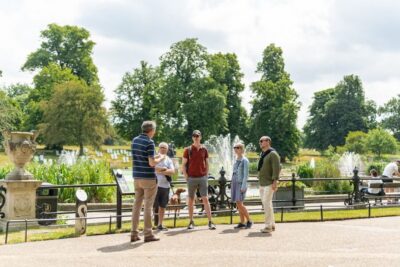
Kensington Palace Gardens Tour with Royal High Tea
Read our review →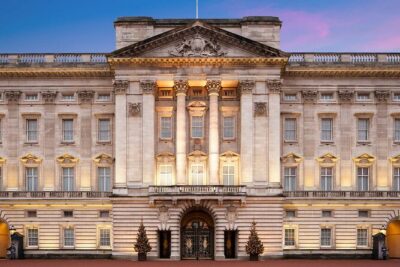
Royal London Guided Tour with Changing of the Guard
Read our review →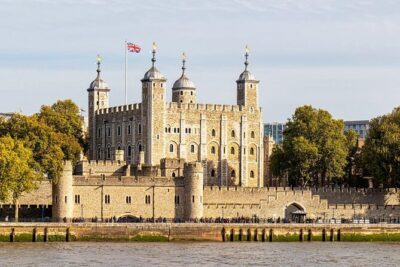
Tower of London Early Access, Opening Ceremony and Royal London
Read our review →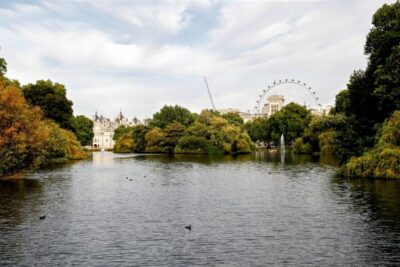
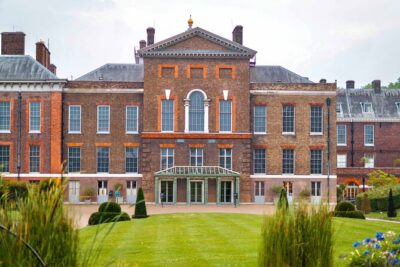
VIP Kensington Palace Gardens Tour & Royal Tea Crown Experience
Read our review →Browse the lists this tour appears in