
Reviewed · HISTORICAL TOURS
Roman Ruins to Blitz Bombings: London’s Fiery History
London’s oldest quarter is a history book you can walk through. On this tour, Roman Londinium, the Tower of London, the Great Fire, the Blitz, and modern finance all fit into one lively route. I like the small group of no more than 15 and the way the guide links famous sights with odd details, from Boudica’s connection to Harry Potter to the easiest way to tunnel into the Bank of England’s vaults.
I also like the clear pacing. Guide Tom has a large store of facts but focuses on the memorable ones, answers questions patiently, and speaks clearly without shouting. The tradeoff is that two hours and 2.5 miles give you only a short stop at each place. This is a sightseeing walk, not a museum tour, and entrance fees are not included.
Key points at a glance
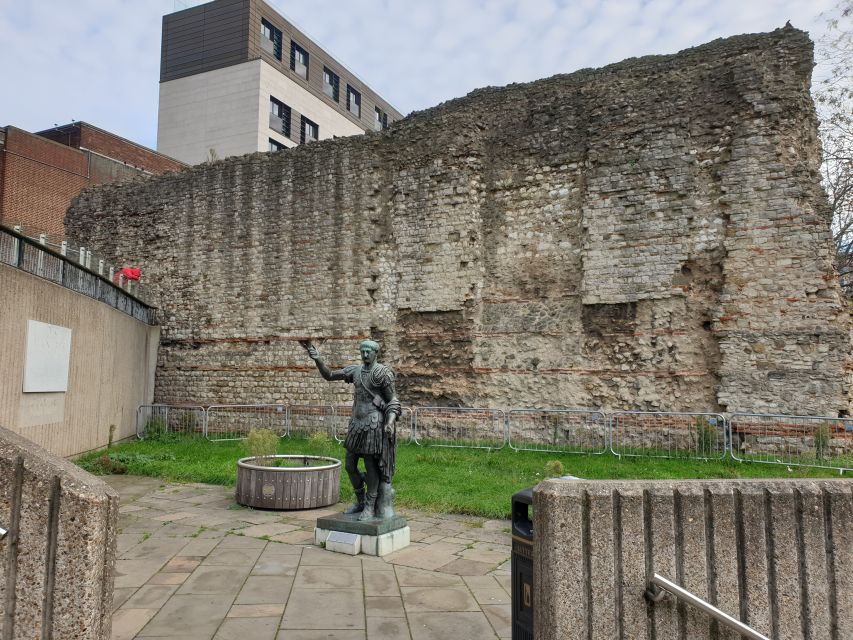
- Roman London in plain sight: See part of the old Roman wall and learn where Londinium began.
- A compact route through the City: Walk from Tower Hill to Ye Olde Cheshire Cheese near Blackfriars in about two hours.
- Stories behind familiar sights: Hear about Boudica, William the Conqueror, Anne Boleyn, Christopher Wren, the Blitz, and the Lord Mayor.
- A genuinely small group: Attendance is limited to 15, making it easier to hear the guide and ask questions.
- Good value at $26: You get a guided history walk covering several major sights without paying museum admission.
- Practical footwear matters: The route covers roughly 2.5 miles through historic streets and alleys, so wear comfortable shoes.
Why this City of London walk works
The best feature here is the scale. You are not crossing all of London. You are exploring the City of London, the ancient core packed into a relatively small area east of St Paul’s.
That makes the route useful on a first visit, especially if you want a quick sense of how London developed. Roman foundations, medieval power, royal punishment, merchant wealth, fire, war, and modern banking all appear within a short walk.
I like tours that give you a way to read the streets after the guide has gone. This one should do that. A church garden is not just a quiet place to sit. A stone fragment is not just an old object. A narrow alley can point to the City’s long survival through fire and war.
The guide is central to the experience. Tom’s style is precise and friendly, with enough humor to keep the historical names from becoming a blur. He is happy to handle questions, including unusual ones, and does not appear to fill every second with information. That restraint matters. London history can become a list of dates very quickly.
The maximum group size of 15 is another practical advantage. You should be able to hear without standing shoulder to shoulder with a large crowd, and you have a better chance of getting an answer when the guide pauses.
Still, set your expectations correctly. This is an outdoor walking tour with brief guided stops. The listed places are viewed along the route, and museum admission is not included. If you want to go inside the Tower of London, St Paul’s Cathedral, or another paid attraction, plan a separate visit.
More Historical Tours:
- London Small Group Tour of Historical Pubs
★ 5.0 · 10,422 reviews - Soho Music & Historic Pubs Tour
★ 5.0 · 1,993 reviews - London: Historic Pubs of Central London Walking Tour
★ 4.9 · 1,065 reviews
Starting beneath Tower Hill’s Roman past
Meet outside the exit of Tower Hill Station. Look for the guide at the bottom of the steps leading up to the sundial, holding a Historic London Tours sign.
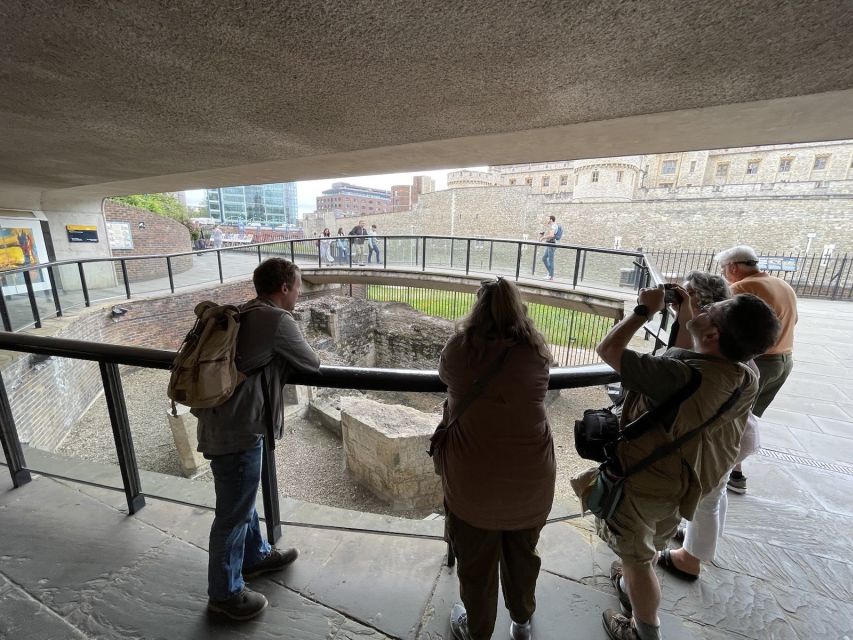
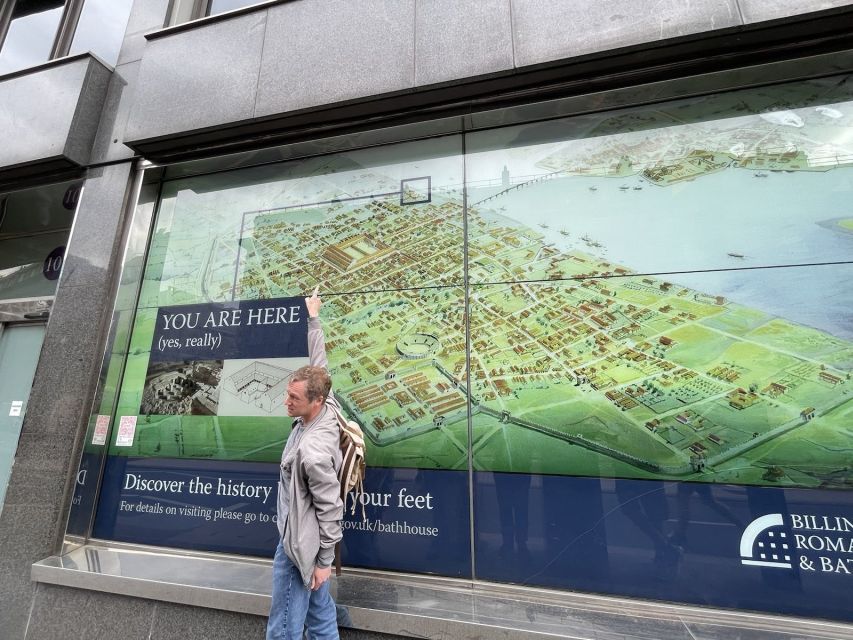
This is a sensible meeting point because the first history lesson is close at hand. The Roman Wall of Londinium gives you a physical introduction to the city’s earliest chapter. The remains are not a full Roman city waiting beneath glass. They are a surviving fragment, and that is precisely why a guide helps. You learn how to notice what is left and place it within the much larger Roman settlement.
The stop is listed at about five minutes, so expect an explanation rather than a long archaeological session. If Roman London is your main interest, you may want to return later and explore more on your own.
The Tower of London and its darker stories
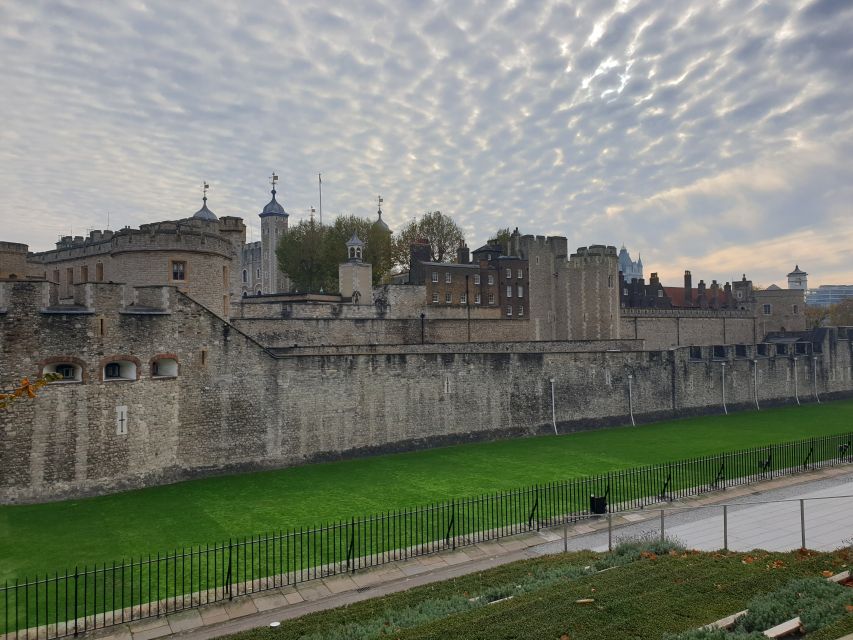
The next stop is the Tower of London, one of the most recognizable buildings in the capital. Its fame can make it easy to forget how much history is packed into its walls.
The tour focuses on the Tower’s sinister and bloody past, including stories connected with royal power, imprisonment, and execution. Anne Boleyn’s ghost is part of the storytelling, adding a supernatural thread to the political history.
You will not receive entrance to the Tower as part of the $26 ticket. The stop is a short outdoor introduction, not a replacement for spending time inside the complex. That is a limitation, but it can also be useful. You get the setting and the larger story before deciding if you want to pay for a separate visit.
The Tower also helps set up the tour’s main theme: London repeatedly changed, but it rarely erased its earlier layers completely.
St Dunstan in the East, a pause among ruins
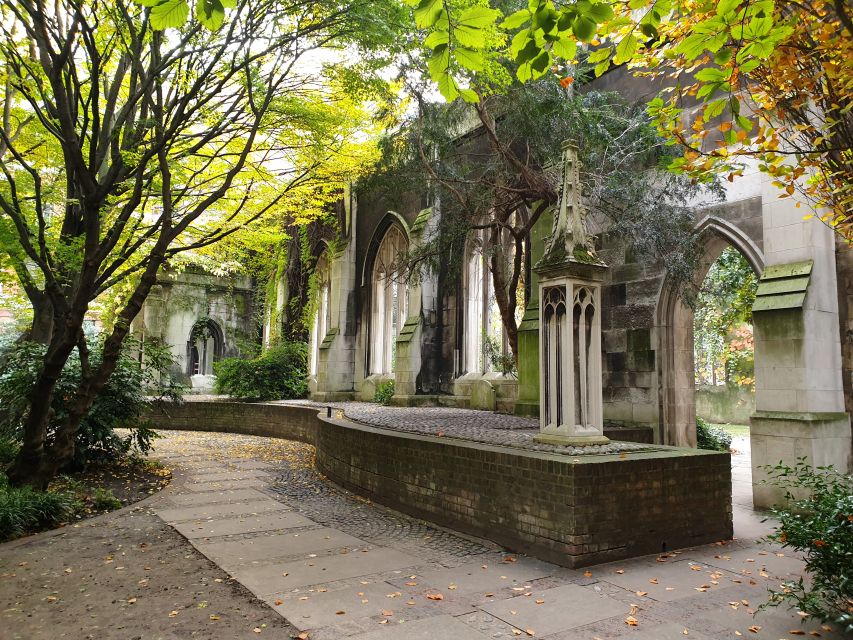
St Dunstan in the East Church Garden offers a sharp change of mood. The remains of the old church create a quiet space among the City’s modern buildings, and the stop shows how war and rebuilding shaped London.
The experience here is visual as much as historical. You see a place that no longer functions as a complete church, yet still gives you a sense of its former form. The connection to wartime London makes it a natural part of a tour titled around fire and bombings.
Again, the stop is brief. You will have time to take in the setting and hear why it matters, but not to linger for a long photographic session. If you like atmospheric places, keep your camera ready, but do not let photos make you lose the guide.
A different sort of day out in London altogether:
- From London: Harry Potter Warner Bros Studio Tour
★ 4.7 · 26,588 reviews - London: Westminster to Greenwich River Thames Cruise
★ 4.5 · 22,836 reviews - Magical London: Harry Potter Guided Walking Tour
★ 4.7 · 22,044 reviews - London: Madame Tussauds London
★ 4.6 · 20,915 reviews
The Great Fire and the London Stone
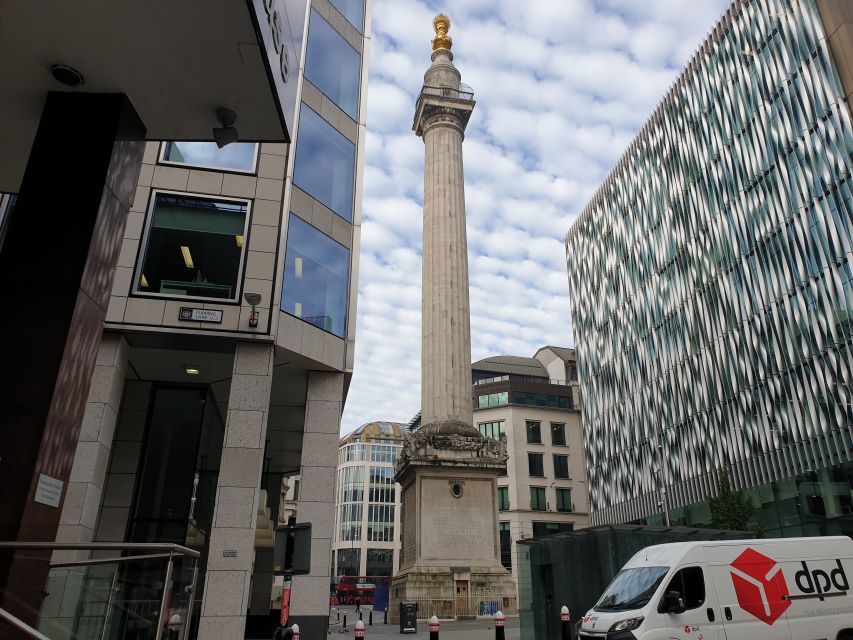
The Monument to the Great Fire of London marks one of the city’s great turning points. The Great Fire destroyed a huge part of London in 1666, and the monument gives the story a fixed point on the walk.
This is where Christopher Wren enters the picture. His name is tied closely to the rebuilding of London, and the tour uses him to explain how the city recovered and changed after the fire. The subject is more than a disaster story. It is about planning, rebuilding, and the way a catastrophe can reshape a capital.
The route then reaches the remaining part of the London Stone. Its exact meaning has attracted stories and speculation over the centuries, which makes it a good example of how London history mixes firm evidence with legend.
I like the pairing of these stops. The Monument represents a major citywide event. The London Stone is smaller and stranger, but it carries a sense of age that makes you think about what came before the modern streets.
The Bank of England and the City’s financial power
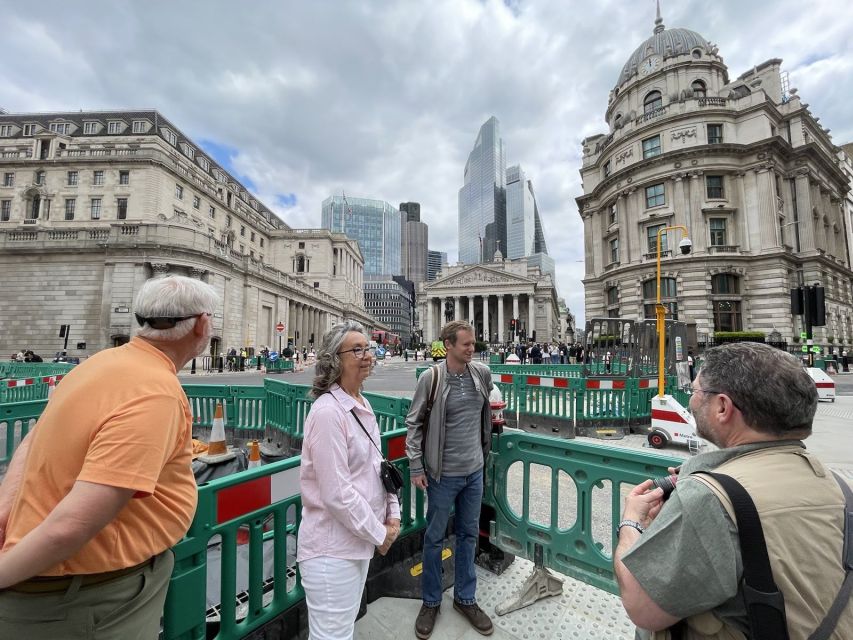
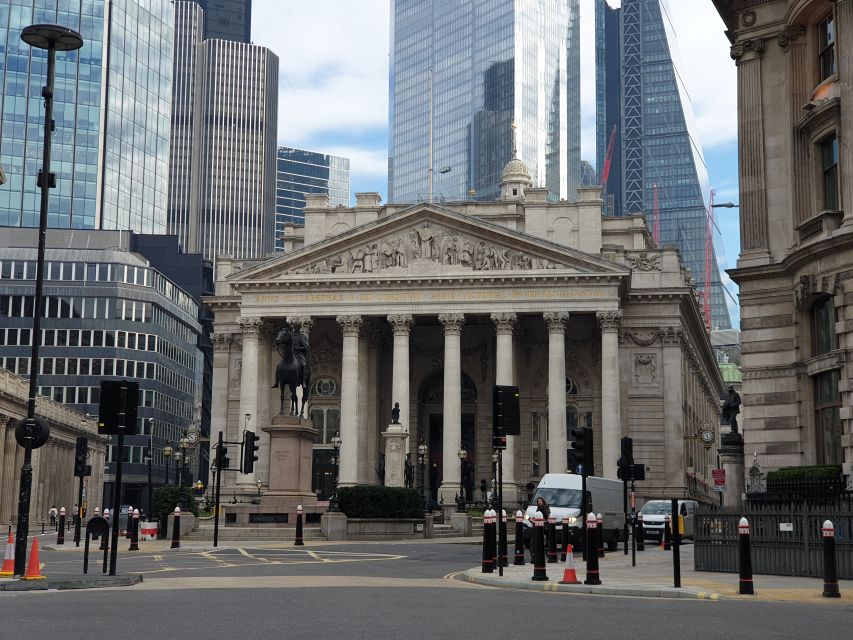
The Bank of England introduces a different London: the City as a center of money, trade, and financial power.
The tour includes the entertaining question of how someone might tunnel into the Bank’s vaults. Treat this as a story and piece of local trivia rather than a practical instruction. Its value is that it gives the bank a human angle. Instead of seeing only a formal institution, you start thinking about the security, wealth, and myths attached to it.
This part of the route also helps explain why the City of London remains distinct from the wider capital. The buildings may look modern, but the financial district grew from centuries of commercial activity.
You will not enter a bank vault. The stop is an exterior explanation, which keeps the tour moving while giving you a memorable detail to carry away.
Guildhall, the Lord Mayor, and civic London
Guildhall brings the focus back to civic power. The position of Lord Mayor is more than eight centuries old, and that long tradition helps show how the City developed its own institutions.
This is a good place to connect the ancient and modern City. London is not governed as one simple historic center. The City has its own traditions, ceremonies, offices, and identity, and the guide explains how those features fit into the wider capital.
The stop is also useful because it moves beyond kings and battles. A city’s history is shaped by merchants, officials, guilds, and local government as well as by famous rulers. You get a fuller picture when those less glamorous forces receive some attention.
As with the other locations, you should expect a short guided visit rather than an indoor tour. If you want to explore Guildhall in detail, set aside extra time after the walk.
St Paul’s Cathedral and Christopher Wren’s rebuilt London
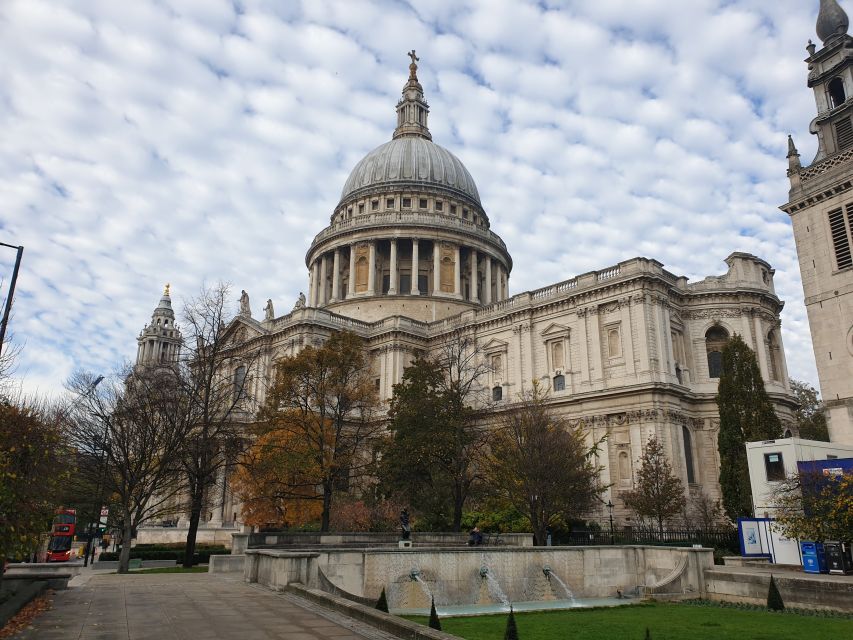
St Paul’s Cathedral is one of the route’s biggest visual landmarks. The tour uses it to discuss Christopher Wren and the rebuilding that followed the Great Fire.
The cathedral is a useful anchor because it lets you see the scale of Wren’s work in the setting of the City. You can connect the earlier stop at the Monument with the building in front of you, then consider how much planning and labor went into creating a new London after the old one burned.
Admission to St Paul’s is not included. The walk gives you context from outside, but you need a separate ticket if you want to enter.
That division between guided orientation and independent sightseeing is worth keeping in mind. At $26, the tour is priced as a way to understand several places, not as an all-inclusive attraction pass.
Ye Olde Cheshire Cheese and the final stretch
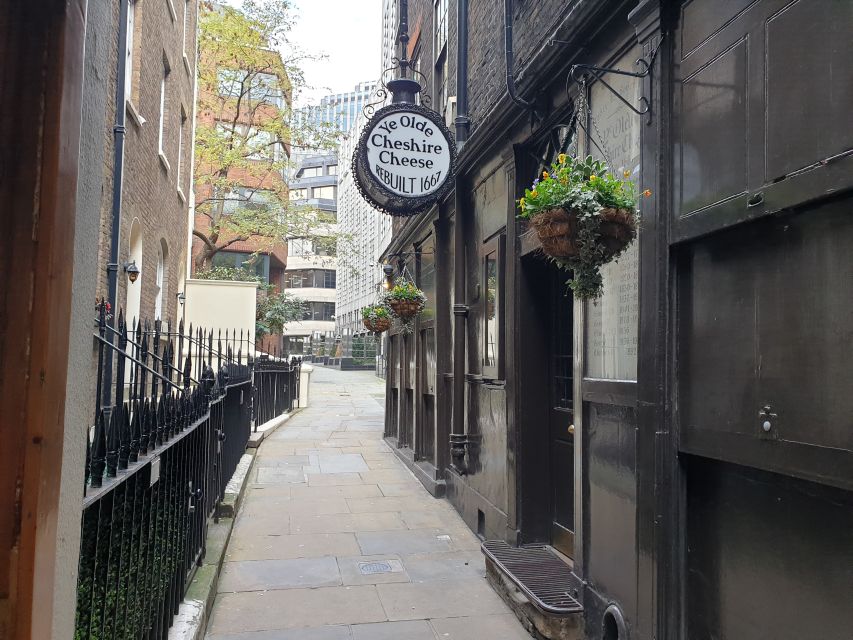
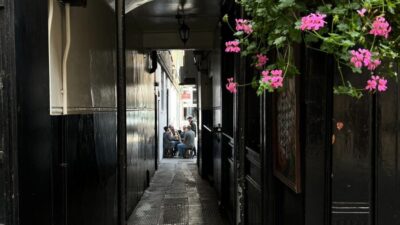
The tour finishes at Ye Olde Cheshire Cheese, a historic pub near Blackfriars Station. It is a fitting endpoint because pubs are part of London’s social history in a way grand monuments are not.
The stop gives the route a relaxed finish after its run of Roman walls, royal prisons, churches, banks, and civic buildings. You can end with a drink or meal on your own, but that is not included in the tour price.
The pub also gives you an option to continue exploring. The walk ends here rather than returning you to Tower Hill, so consider that when planning the rest of your day. Blackfriars Station is nearby, which makes onward travel straightforward according to the meeting and finishing points provided.
What the pace is really like
Two hours for 2.5 miles is a steady city walk, with frequent pauses for explanations. You need comfortable shoes, but this is not presented as a strenuous hike.
The route is long enough to give you a useful overview and short enough to fit into a morning or afternoon. It works well as an early activity because you can use the guide’s suggestions to choose which sites deserve a longer return visit.
The downside is time. Five-minute stops cannot give every location equal treatment. The Tower of London, St Paul’s Cathedral, Guildhall, and the Bank of England could each support a much longer visit. Think of this tour as a carefully chosen introduction rather than a complete study of each stop.
The English-language format suits visitors who can follow spoken explanations comfortably. Clear diction is especially helpful outdoors, and Tom has been praised for speaking distinctly without shouting. That is a small detail, but it can make or break a walking tour.
Who gets the most from this experience
I would choose this tour if you enjoy history told through places, stories, and surprising connections. It suits first-time visitors who want to understand the City quickly, as well as returning visitors who have seen the major landmarks but missed the smaller remains and side streets.
It is also a good choice if you prefer a small, conversational group. The 15-person limit gives the guide room to answer questions, and the format is more personal than a large coach excursion.
Families with older children may find the mix of Roman ruins, ghosts, royal drama, fire, war, and the Boudica and Harry Potter connection easier to enjoy than a formal lecture. The pace and distance still require everyone to manage a city walk for two hours.
You may want another option if your priority is entering attractions. There is no museum admission, and the tour does not promise extended time inside the Tower, St Paul’s, or Guildhall. It is also not the right pick if you want a deep focus on only Roman London, the Great Fire, or the Blitz. Its strength is the range.
Is $26 a fair price?
At $26 per person, the value depends on how you use it. You are paying for two hours with a live English-speaking guide, a small group, and a route that connects several major chapters of London history.
The price is reasonable if you would otherwise walk past these places without knowing what you were seeing. The guide adds the context that street signs and guidebooks often cannot provide, especially at the Roman wall, London Stone, St Dunstan in the East, and the Bank of England.
It is less of a bargain if you expected entry to major attractions. Museum and monument admission are not included, so budget separately for any interior visits.
The strongest value comes from the range of the route and the guide’s delivery. You can cover Roman London, the Tower, the Great Fire, Wren’s rebuilding, civic tradition, banking, and wartime damage in one compact outing.
Practical details before you book
Plan to arrive at the Tower Hill Station exit and find the guide by the sundial steps. The sign should read Historic London Tours.
Wear comfortable shoes. The total distance is about 2.5 miles, and the walk takes around two hours.
The tour is in English and is led by a live guide. Availability and starting times vary, so check the chosen date before booking. You can cancel up to 24 hours ahead for a full refund, and the reserve-now, pay-later option gives you some flexibility.
The experience has a rating of 5 from 15 reviews, with repeated praise for the guide’s clear delivery, broad knowledge, humor, and willingness to answer questions. Tom’s ability to choose interesting facts without overloading the group is particularly useful on a route with so many subjects.
Should you book Roman Ruins to Blitz Bombings?
Book it if you want a lively overview of London’s oldest central district, especially with a small group and a guide who can turn scattered ruins and grand buildings into one connected story.
The best reason to go is not any single stop. It is the sequence: Roman wall, Tower, ruined church, Great Fire, London Stone, bank, Guildhall, St Paul’s, and old pub. You see how London has been destroyed, rebuilt, governed, financed, and remembered.
Skip it if you want long indoor visits or a specialist tour focused on one period. But if $26 fits your budget, your shoes are ready for 2.5 miles, and you want to see the City with sharper eyes, this is a practical and entertaining choice.
FAQ
How long does the walking tour take?
The tour takes around two hours.
How far does the tour go?
The total walking distance is about 2.5 miles.
Where does the tour start?
Meet outside the exit of Tower Hill Station, at the base of the steps leading up to the sundial. Look for a guide holding a Historic London Tours sign.
Where does the tour finish?
The tour finishes at Ye Olde Cheshire Cheese, near Blackfriars Station.
Is the tour conducted in English?
Yes. The tour has a live English-speaking guide.
Are museum and attraction entrance fees included?
No. Entrance to museums and other attractions is not included.
How many people can join the tour?
Ticket sales are limited to 15 attendees.
Just added around London
- Kensington Palace VIP Garden Tour with Royal High Tea★ 4.5 · 71 reviews
- Up at The O2:Twilight Climb with Guided Tour with Panoramic Views★ 5.0 · 50 reviews
- Private Chauffeur-London Heathrow from/to Southampton Cruise Port★ 5.0 · 9 reviews
- Up at The O2: Sunset Climb with Guided Tour with Panoramic Views★ 5.0 · 110 reviews
- Secrets of the London Underground Small Group Walking Tour★ 4.5 · 38 reviews
- Urban Canvas: Exploring Shoreditch’s Vibrant Street Art★ 5.0 · 36 reviews
- Ultimate introduction to photography in Central London★ 5.0 · 19 reviews
- Full-Day Self-Guided Paris Tour from London by Eurostar with Seine River Cruise★ 3.5 · 22 reviews
Historical Tours, compared.


Royal Historic Pubs Walking Guided Tour in London
Read our review →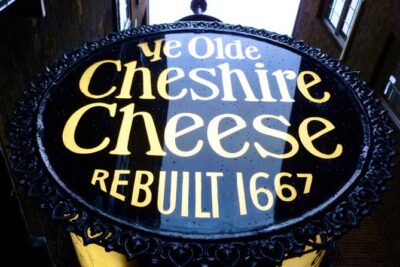
Private Group: Historical Pub Walking Tour of London
Read our review →
Browse the lists this tour appears in