
Reviewed · COVENT GARDEN TOURS
Private Tour: Photography Walking Tour from Trafalgar Square to Covent Garden
London becomes your classroom on this private photography walk from Trafalgar Square to Neal’s Yard. You’ll photograph lions, fountains, statues, street performers, Chinatown’s lanterns, Covent Garden’s architecture, and colorful little courtyards while learning how to make stronger images. The route is as useful for a phone camera as it is for a sophisticated digital model.
I like the one-to-one teaching and the practical mix of camera skills, composition, light, and framing. I also like that photographer Lou Smith reviews your work during the tour, so you get advice based on the pictures you are actually making. The main drawback is the price: at $347.77 per person, this makes the most sense if you value private instruction rather than simply a guided walk.
The pace is gentle, but you will be on your feet for about four hours. You’ll also need to bring your own camera, a charged battery, and extra memory cards. The tour runs in all weather, so London’s usual clouds and drizzle are part of the deal.
Key points at a glance
- Private instruction with Lou Smith: The tour is exclusive to your group, with the route and teaching adjusted to your interests and skill level.
- Five distinct photo settings: Move from grand civic monuments to theatrical squares, Chinatown details, market architecture, and tiny courtyards.
- Useful camera practice: Work on aperture, depth of field, shutter speed, focus modes, light, color, and composition.
- A real photo review: Use a refreshment break to look at your images and discuss what works and what you could try next.
- Good for beginners and returners: The teaching suits all digital cameras, including smartphones, and can help you get comfortable with a new camera.
- A costly but focused experience: The high per-person price is easier to justify for a couple or small private group seeking personal coaching.
Why this works as a London introduction
This tour does not treat photography as an afterthought. The camera gives you a reason to slow down and notice details you might otherwise pass on the way to Covent Garden.
You begin in one of London’s grandest public spaces, then move through entertainment districts, Chinatown, and market streets. The route offers a useful lesson in contrast. You start with formal monuments and long views, then work with people, color, architecture, and quick street action.
That variety matters. You are not spending four hours repeating the same exercise beside one landmark. At Trafalgar Square, you can practice composition on fixed subjects. In Chinatown, you work with color and crowded visual details. At Covent Garden, you try faster shutter speeds and different focus settings while street performers move through the frame.
The private format is the real point. Lou can spend more time on the settings you do not understand, skip material you already know, and shape the route around the kinds of pictures you want to make. If you arrive with a new camera and a manual full of menus, that personal attention can be much more useful than a standard group class.
The tour is offered in English and is limited to your own group. The minimum age is 16. Most people can participate, but remember that the entire route is on foot and includes several hours of standing and walking.
More Covent Garden Tours:
- London: London Food Tour of Soho & Covent Garden
★ 5.0 · 85 reviews - International Stand Up Comedy Show in Covent Garden
★ 4.5 · 67 reviews - Kid-Friendly Private British Museum Highlights and Walk to Covent Garden London
★ 5.0 · 54 reviews
Trafalgar Square: start with monuments, light, and scale
The meeting point is at Charing Cross, close to Trafalgar Square. This is a strong place to begin because it gives you large, familiar subjects and plenty of room to test your camera before the route becomes more crowded.
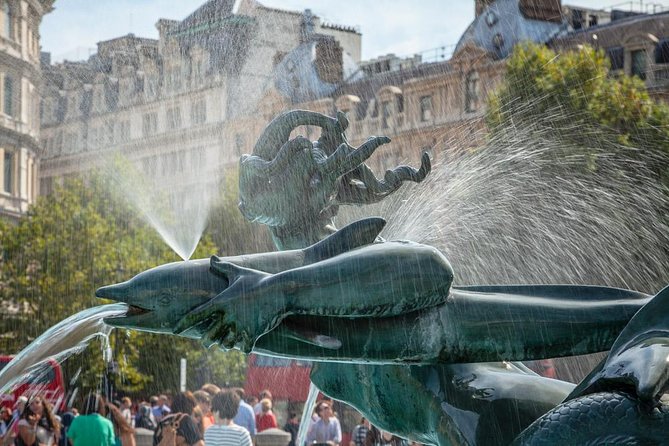
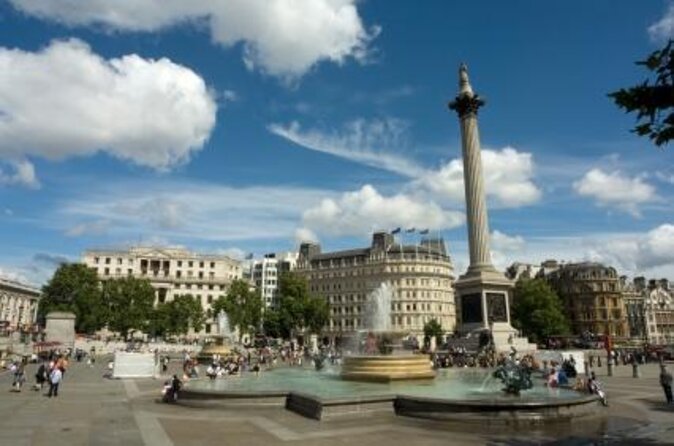
You can photograph the Landseer Lions, fountains, statues, monuments, and the National Gallery frontage. The square also gives you long views toward Whitehall, so you can try both close compositions and wider scenes that show the setting.
Lou’s opening lessons focus on aperture, depth of field, and light. These are basic tools, but they affect almost every photograph you make. A wide aperture can isolate a statue or performer from the background. A narrower aperture can keep more of the square clear and sharp.
This is also where framing begins to matter. A monument may be impressive in person but flat in a photograph if you simply place it in the middle of the frame. You’ll work on angles, the amount of sky or pavement to include, and how nearby details can help give the picture a sense of place.
Street entertainers and pavement artists add movement and color. They also give you subjects that are less predictable than stone figures. If you want to photograph people, this section can help you think about timing, background, and respectful distance.
The stop lasts about 45 minutes, with no admission charge. It is enough time to get comfortable without spending the whole morning in one square.
Leicester Square: use light and take a useful break
From Trafalgar Square, you walk at an easy pace to Leicester Square. The gardens, fountains, and statues give you a different kind of subject. The setting is more enclosed, so you can compare how the same camera behaves when the view is less open.
The statue of William Shakespeare offers a chance to practice a portrait of a fixed subject. You can change your angle, watch how light falls across the face and clothing, and look for a background that does not compete with the main figure.
You’ll also photograph the statue of Charlie Chaplin and return to aperture and depth of field. This is useful if you are still learning what the f-stops on your camera actually do. Rather than hearing a technical explanation in the abstract, you can make several versions and see how the background changes.
A short break for refreshments follows, with drinks or food paid for separately. This pause is more than a rest for your feet. Lou reviews the work you have made so far and helps you identify what is already working and what you can alter.
That review process received especially strong praise from the people who took the tour. One photographer used the break to compare different compositions of the same subject, including the use of positive and negative space, color, and close-up views. This kind of feedback can be more valuable than another landmark because it connects the lesson to your own habits.
Leicester Square is scheduled for about 45 minutes. The main limitation is that you should not expect a long café stop or a full meal. It is a working pause built into the photography lesson.
Chinatown: find photographs in color and small details
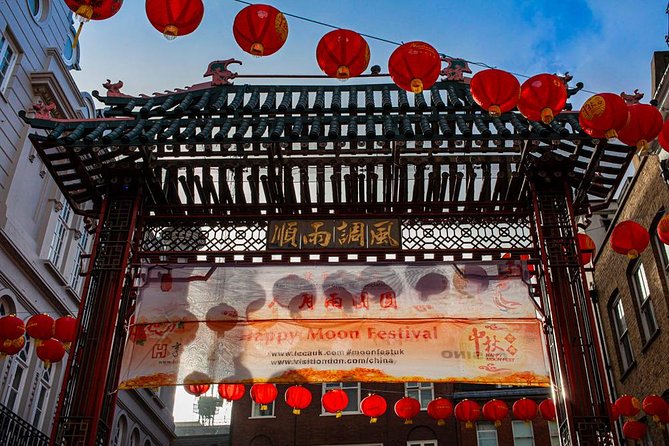
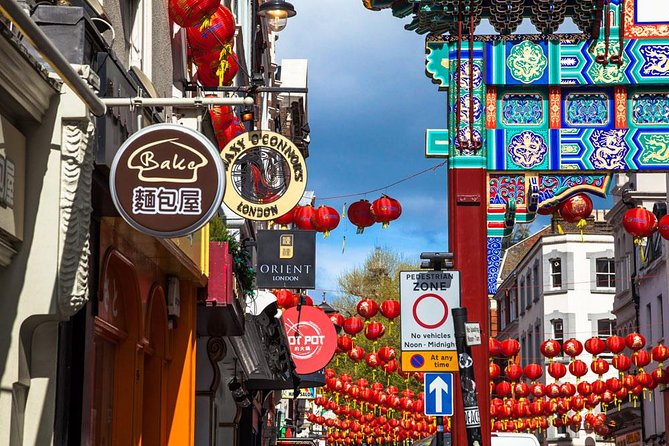
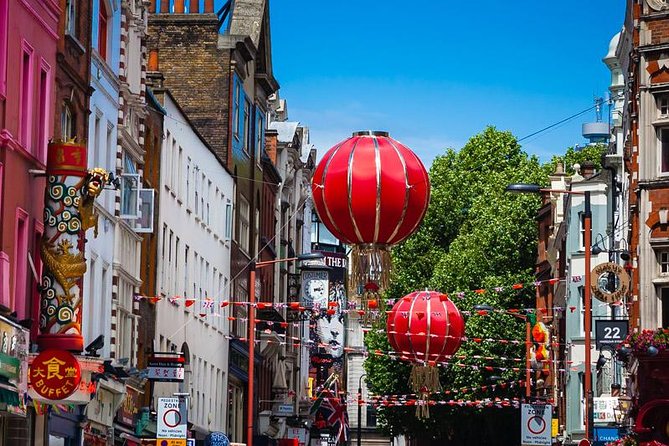
Chinatown is where the tour shifts from grand public monuments to signs, food displays, lanterns, shop fronts, and side streets. The entrance gate is an obvious first photograph, but it is only the start.
Lou directs you toward useful viewpoints and encourages you to work with the strong colors of the area. This is a good place to practice filling the frame, isolating one detail, and deciding how much surrounding information to leave in the picture.
Depth of field takes on a different role here. You might focus on a sign or shop display and let the rest soften. Or you can stop down to keep a row of details clear. The aim is not simply to record what you see, but to decide what your picture is really about.
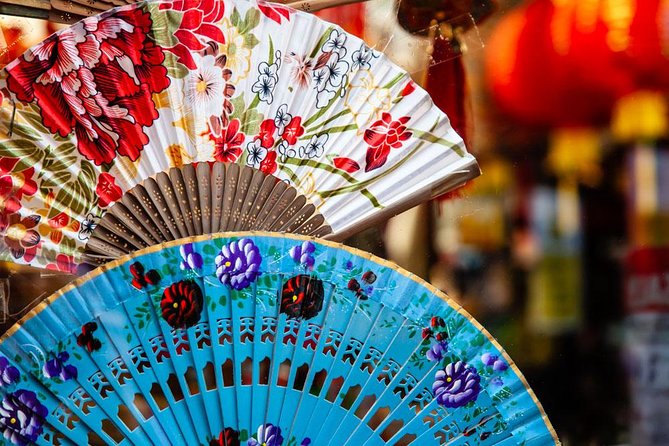
The side streets offer smaller scenes and cultural details. Colorful novelties, lanterns, and food displays can easily become visual clutter if you point and shoot without a plan. The teaching helps you look for patterns, repeated shapes, contrasts, and a clean focal point.
This is the longest stop, at about one hour. That extra time is welcome because Chinatown rewards patient looking. You may need several viewpoints before a gate, shop front, or display has the right balance.
For a first-time visitor, this section also gives you a more local street experience than a sequence of famous landmarks. You are still in central London, but your photographs can show the city’s cultural variety rather than only its grand civic architecture.
More London Photography Tours and Photo Shoots:
- London: Private Photoshoot with Video Clip Option
★ 4.8 · 182 reviews - Professional Photoshoot in London Photographer
★ 5.0 · 102 reviews - Private landmarks photoshoot for families and couples
★ 5.0 · 92 reviews - London: Private Landmark Tour with Professional Photographer
★ 4.7 · 91 reviews
Covent Garden: practice action and architecture together
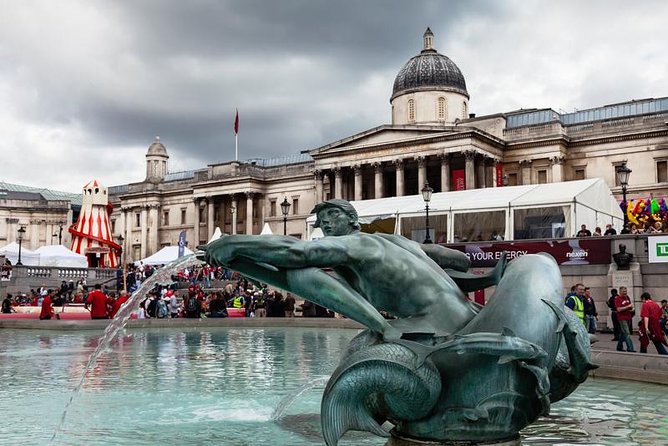
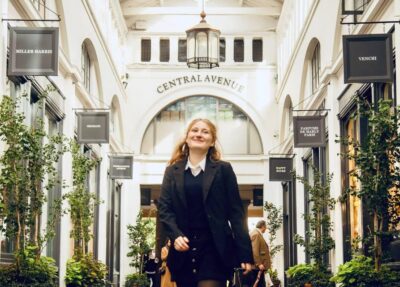
Covent Garden provides a strong final working area because it combines architecture, public performance, shopping, and open pedestrian space. You’ll photograph the Royal Opera House, the Apple Market, side streets, artisan stalls, cafés, pubs, and street entertainers.
The teaching here turns to shutter speeds and focus modes. Performers give you moving subjects, so you can experiment with freezing action or allowing movement to show in the frame. You will also need to think about when to press the shutter, not just where to point the camera.
Architecture presents a different challenge. The Royal Opera House and Apple Market have strong lines and formal shapes, but a straight-on photograph may look ordinary. Trying a lower viewpoint, a side angle, or a composition that uses the surrounding street can make the structure more interesting.
The market also gives you displays of color, design, and small objects. These are useful subjects for detail shots. You can work on framing and avoid letting too many signs, stalls, and people compete for attention.
The Covent Garden section takes about one hour. It is a good amount of time for practice, though the area can give you more subjects than you can possibly cover. If you are trying to photograph every performer, building, and stall, you may feel rushed. The better approach is to choose a few exercises and work them properly.
Your photographer remains available throughout this portion of the walk. That matters when you are switching between still subjects and movement, since focus settings and shutter speed may need to change quickly.
Neal’s Yard: finish with color and close framing
The final stop is Neal’s Yard, a compact courtyard known for colorful walls and shop fronts. After the larger spaces of Trafalgar Square and Covent Garden, this is a useful change of scale.
Here you work on composition and framing. The courtyards are intimate, so small adjustments can change the whole image. You might photograph a doorway, a painted wall, a sign, or the relationship between several bright surfaces.
This is also a good place to consolidate the day’s lessons. You have already worked with aperture, depth of field, light, color, shutter speed, focus, and different angles. Neal’s Yard asks you to bring those skills together without relying on a large monument to carry the photograph.
The stop lasts about 30 minutes and is the end point of the tour. It is close to Covent Garden, so the route finishes in a central area rather than sending you to a distant neighborhood.
What you will actually learn
The course covers a useful set of practical skills:
- Aperture and depth of field
- Light and changing viewpoints
- Framing and composition
- Positive and negative space
- Color and close-up photography
- Shutter speed for moving subjects
- Focus modes
- Architectural angles
- Image selection and review
The strongest part is the chance to apply each idea right away. You do not just hear about depth of field. You use it on statues, shop displays, and street details. You do not just discuss shutter speed. You test it on moving performers.
Lou Smith has extensive teaching experience and works with many types of cameras. That includes digital cameras with complex menus and smartphones. One participant who had returned to photography after many years found the initial help with camera settings particularly useful. If you have purchased a camera recently and feel that its controls are getting in the way, this could be a good use of the tour.
You should not expect a formal qualification or a studio-style technical course. The teaching is tied to London street photography. You learn by making pictures in real settings, then discussing them.
Price, group size, and overall value
The price is $347.77 per person. That is high for a four-hour walking activity, especially since the stops themselves have no admission fees and refreshments are not included.
The value comes from the private format and the instruction, not from entry tickets. You are paying for a photographer who adjusts the lesson to your camera, interests, and current ability. A private experience can also save time because you do not wait while a large group catches up or listens to material that does not apply to you.
The cost is easier to justify for two people who want a shared lesson, especially if you are traveling with a partner who has similar interests. Group discounts are available, but the exact reduction is not specified, so check the price for your party before booking.
If you mainly want a guided walk through central London, this is probably more than you need. You can see these districts without paying for instruction. If you want to improve your pictures and leave with a clearer understanding of your camera, the price has a stronger case.
The tour includes the professional fine art photographer, photo review, and private guiding. It does not include food, drinks, camera hire, or attraction tickets.
Who should book this photo walk?
I would recommend it most strongly to:
- First-time London visitors who want an introduction built around photography
- Beginners who need help with camera settings and composition
- People returning to photography after a long break
- Couples or small groups who want private instruction
- Smartphone photographers who want to improve framing and visual choices
- Experienced amateurs who want fresh ideas for street and architectural pictures
You should think twice if you dislike walking, need an indoor activity, or only want to collect quick snapshots at famous sights. The tour operates in all weather, and there is no promise of sunshine. Dress for conditions, wear comfortable shoes, and bring a charged battery plus extra memory cards.
Service animals are allowed. The route is near public transportation, and most people can take part, but the experience remains a four-hour walking activity.
You can cancel for a full refund if you do so at least 24 hours before the start time. Changes or cancellations made within 24 hours are not accepted for a refund.
Should you book it?
Book this tour if you want a personal photography lesson wrapped around a useful central London route. The combination of Trafalgar Square’s monuments, Chinatown’s color, Covent Garden’s action, and Neal’s Yard’s close details gives you plenty of subjects without wasting time on long transfers.
I especially like the built-in photo review. Lou Smith’s advice is based on the images you make during the walk, which makes the teaching direct and practical. That can help you understand why one composition works better than another.
Skip it if the $347.77 price feels too steep for a walking tour, or if you would rather explore independently. For anyone who wants to improve camera control, composition, and visual judgment during a private London outing, the cost can be worthwhile.
FAQ
How long does the photography tour last?
The tour lasts approximately four hours. The planned stops include about 45 minutes at Trafalgar Square, 45 minutes at Leicester Square, one hour in Chinatown, one hour in Covent Garden, and 30 minutes at Neal’s Yard.
Where does the tour start and finish?
The meeting point is Charing Cross, Strand, London WC2N 5HF. The tour ends at Neal’s Yard, London WC2H.
Can I use a smartphone instead of a camera?
Yes. The experience is suitable for all digital cameras, including smartphones. You should bring your own device and make sure its battery is fully charged.
Is the tour suitable for beginners?
Yes. The tour is designed for all skill levels. Lessons can include basic camera settings, aperture, depth of field, light, composition, shutter speed, and focus modes.
Are food and drinks included?
No. Refreshments and lunch are not included. There is a short break for refreshments, but you pay for anything you order.
What happens if the weather is bad?
The tour operates in all weather conditions. Dress appropriately for London weather and bring extra memory cards because you may take many photographs during the walk.
More London Walking Tours
- Magical London: Harry Potter Guided Walking Tour
★ 4.7 · 22,044 reviews - London: The Original Jack the Ripper Walking Tour
★ 4.7 · 7,833 reviews - Tour for Muggles The Ultimate Harry Potter Walking Tour in London
★ 5.0 · 4,684 reviews - London Jack The Ripper Guided Walking Tour
★ 5.0 · 3,131 reviews
Just added around London
- Up at The O2:Twilight Climb with Guided Tour with Panoramic Views★ 5.0 · 50 reviews
- Private Chauffeur-London Heathrow from/to Southampton Cruise Port★ 5.0 · 9 reviews
- Kensington Palace VIP Garden Tour with Royal High Tea★ 4.5 · 71 reviews
- Urban Canvas: Exploring Shoreditch’s Vibrant Street Art★ 5.0 · 36 reviews
- Up at The O2: Sunset Climb with Guided Tour with Panoramic Views★ 5.0 · 110 reviews
- Secrets of the London Underground Small Group Walking Tour★ 4.5 · 38 reviews
- Ultimate introduction to photography in Central London★ 5.0 · 19 reviews
- Full-Day Self-Guided Paris Tour from London by Eurostar with Seine River Cruise★ 3.5 · 22 reviews
Covent Garden Tours, compared.

International Stand Up Comedy Show in Covent Garden
Read our review →
Kid-Friendly Private British Museum Highlights and Walk to Covent Garden London
Read our review →
Covent Garden’s Hidden Gems: A Self-Guided Walking Tour
Read our review →
Photoshoot at Notting hill,Covent Garden,St Paul Cathedral
Read our review →
Camden Market, Borough Market and Covent Garden Market Private Tour
Read our review →Browse the lists this tour appears in