
Reviewed · LONDON GHOST AND HAUNTED TOURS
Private Ghosts and Gore Walking Tour of London
London’s darkest stories are tucked into ordinary streets, churchyards, pubs, and bank buildings. This private Ghosts and Gore Walking Tour traces a grim route from the Monument to Farringdon, linking hauntings to plague pits, public executions, grave robbing, and the old Newgate Prison.
I like the private format, since your group can ask questions and set the pace with one guide rather than being folded into a large crowd. I also like the historical range, from Roman walls and medieval churches to the Great Fire and modern Bank Station. The main drawback is simple: 24 stops in about two hours means most stories are short, and the tour requires a moderate level of fitness.
Key details at a glance
- Follow a 24-stop route: Walk from the Monument to Farringdon Station through the City of London and Smithfield.
- Hear more than ghost tales: Stories connect supernatural claims with plague, executions, church history, grave robbing, and London fiction.
- Meet the darker side of famous places: The Bank of England, Old Bailey, St Bartholomew the Great, and Temple Bar all appear in the route.
- A private group makes a difference: The price is $247.70 for up to 15 people, not per person.
- Guide Michael has a strong reputation: He is praised for combining macabre stories with clear historical context and an entertaining delivery.
- Finish near transport: The walk ends by the Elizabeth Line entrance at Farringdon Station.
A ghost walk with real London beneath it
This is not a tour of theatrical haunted houses. The stories come from old churches, burial grounds, prison sites, pubs, and streets where London’s violence actually happened. That gives the walk more weight than a simple collection of spooky claims.
You begin beside the Monument to the Great Fire of London and finish near Farringdon Station. Along the way, the route crosses the City of London and reaches Smithfield, one of the capital’s most unsettling historic areas. You will hear about ghosts, but also about the systems that created them: disease, harsh justice, religious upheaval, war, poverty, and the treatment of the dead.
Guide Michael receives special praise for bringing this context into the walk. His role is not only to point out haunted places. He explains how the tales grew from London’s past, which makes the experience useful for anyone who likes history as much as scares.
The format is fast. Each listed stop takes about five minutes, though the walking between locations adds to the two-hour total. That structure lets you see a lot of central London, but it also means you should not expect a long visit inside every church or pub.
More London Ghost and Haunted Tours:
- Ghost, Ghouls and Gallows Tour : Guided Tour with Boat Ride
★ 4.5 · 3,212 reviews - London: Comedy Horror Ghost Tour on a Bus
★ 4.4 · 2,084 reviews - London: Ghost Walk and River Thames Boat Ride
★ 4.5 · 1,251 reviews
From St Magnus to the Bank’s restless dead
The first section begins at St Magnus the Martyr, where a shadowy figure is said to point toward one particular grave. A medium visited the church in 1951 and offered an explanation for the apparition’s identity and its unfinished demand. It is a strong opening because the story combines a visible place, a specific grave, and a question that supposedly has never been settled.
At 54 to 55 Cornhill, look upward. Devils appear in the architectural details, tied to a dispute involving an architect and a local vicar. This is a quick stop, but it gives you a chance to notice a detail you could easily miss while hurrying through the financial district.
St Peter-upon-Cornhill brings Charles Dickens into the route. The churchyard is linked to Ebenezer Scrooge’s shock at seeing his own grave in A Christmas Carol. Here, the guide places London’s ghost stories beside the city’s fiction, showing how old churches and burial grounds helped shape stories that are still read today.
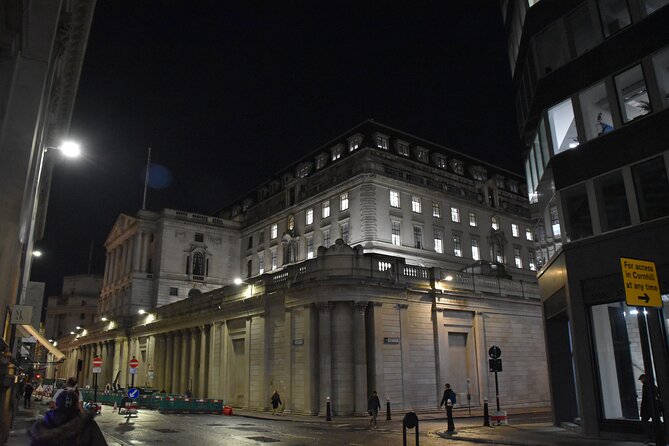
At St Michael’s Cornhill, the subject is a storm and the day the devil supposedly visited London. Then the route turns toward St Margaret Lothbury and the Bank of England, where a tall ghost is said to rattle guards’ guns, stomp up stairs, and frighten bank workers after bones were disturbed.
The Bank area is one of the best parts of the walk for people who like old stories set against modern surroundings. You are standing among financial institutions and busy streets while hearing about apparitions, bones, and long-held fears.
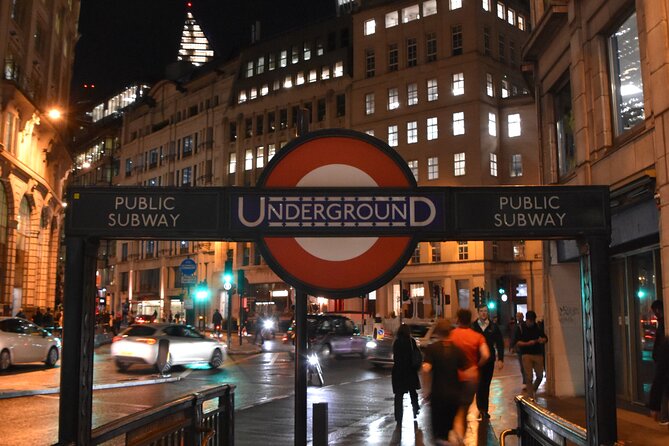
St Mary Woolnoth adds one of London’s better-known phantom tales. The Black or Bank Ghost is associated with Bank Station, the Bank of England, and the nearby streets. The story includes a woman in black asking about her brother, along with a grim secret connected to the station’s booking hall.
Churches, cats, and Jimmy the Mummy
At St Michael Paternoster Royal, the story shifts to a famous Lord Mayor and his cat. The animal is said to move between this church and the next stop, so the route follows its supposed path toward St James Garlickhythe.
That church has one of the tour’s strangest stories. In 1835, workers found a mummified body near the altar. The remains were displayed in a case until roughly two decades ago and were nicknamed Jimmy the Mummy. Children connected with the church reportedly played with it, a detail that is both bizarre and uncomfortable by modern standards.
The story says Jimmy still haunts the church and points toward the place where the body was buried. For me, this is the kind of tale that works because it is not polished or grand. It is odd, local, and tied to the way people once treated human remains.
Williamson’s Tavern brings the group into one of London’s haunted pubs. Doors reportedly bang, footsteps sound, and police dogs are said to refuse the premises. The pub has only one way out, which gives the guide an easy chance to add some tension to the stop.
At St Mary le Bow, the subject is less a single ghost than a pattern of bad luck. The church is tied to the definition of a Cockney, someone born within the sound of its bells, but its darker record includes fires, collapses, accidents, murders, and deaths. This is a good reminder that London’s supernatural reputation often grows from very real dangers.
Roman walls, plague pits, and ruined churches
Noble Street is one of the oldest parts of the route. It is linked to the Roman garrison and includes sections of the Roman and medieval walls. Strange photographs, orbs, and unusual events are associated with the area.
You should keep your expectations sensible here. A ghost walk can point out places where people report unexplained activity, but it cannot promise a supernatural sighting. The appeal is partly the setting itself: ancient defensive walls beside modern streets, with centuries of death attached to the ground.
At St Anne and St Agnes Garden, you hear about a plague pit beneath the church. The discussion covers the effect of plague on London and the orbs people claim to capture in photographs. You are even encouraged to take a picture and inspect it later.
Christchurch Greyfriars Church Garden has ruined walls and a large cast of supposed spirits. They include Queen Isabella and her lover, a quarrelling married couple, a religious prophetess, a monk, and a greyhound. The range of characters makes this one of the more story-heavy locations, though the short stop means the guide must keep each tale moving.
Temple Bar once marked the main western entrance to the City of London. Designed by Sir Christopher Wren, it later became associated with the public display of severed heads belonging to condemned traitors and criminals. The ghost stories here are linked directly to those executions and the souls of the dead.
From Amen Court, you can see remnants of the walls of Newgate Prison. The prison was notorious, and the ground around it carries stories about bones beneath homes and children playing above the dead. This is an important stop for understanding how London was built over older layers of suffering without always preserving the memory of what came before.
More London Walking Tours:
- Magical London: Harry Potter Guided Walking Tour
★ 4.7 · 22,044 reviews - London: The Original Jack the Ripper Walking Tour
★ 4.7 · 7,833 reviews - Tour for Muggles The Ultimate Harry Potter Walking Tour in London
★ 5.0 · 4,684 reviews - London Jack The Ripper Guided Walking Tour
★ 5.0 · 3,131 reviews
Newgate Prison and London’s most grim pubs
The Viaduct Tavern is described as London’s most haunted pub and is home to Fred, a mischievous ghost. His alleged tricks are more comic than violent, including flushing the women’s toilets while they are occupied. A medium once questioned his identity, adding another layer to the story.
The pub stops give the tour some tonal variety. Not every tale is about murder or execution. A ghost that creates confusion and embarrassment can be easier to enjoy than another account of torture, especially after several heavy churchyard stories.
At the Old Bailey, the route returns to the criminal justice system. The Central Criminal Court was built on the site of Newgate Prison, where people were hanged in the street until 1868. The Black Dog of Newgate is the famous spirit connected with the area. The warning attached to seeing a large black dog is grim enough to make this one of the walk’s clearest examples of fear growing from a place of punishment.
Holy Sepulchre Church has an execution bell. It tolled before executions at Newgate Prison and the Old Bailey, and one of the clerks who rang it became part of a notorious ghost story.
That story reaches its final chapter on Cock Lane. A young girl was said to channel the spirit of a murdered woman, and some of London’s leading minds became involved in an attempt to save a man’s life. This sequence is best understood as a story about belief, public fear, and the pressure created when a supposed supernatural witness enters a murder case.
Grave robbers, executions, and the Great Fire
The Golden Boy of Pye Corner marks the western limit of the Great Fire of London. The statue once stood on a notorious pub where stolen bodies were reportedly displayed for doctors connected with nearby St Bartholomew’s Hospital.
This section explains why fresh corpses became valuable to medical training, how resurrection men robbed graves, and how demand for bodies helped lead to murder. It is a useful piece of social history because it connects medical progress with practices that were cruel, illegal, and frightening for ordinary families.
West Smithfield was one of London’s major execution sites. William Wallace and Wat Tyler were among those killed there, and executions included hanging, drawing, and quartering, burning at the stake, and boiling alive. The nearby butcher’s market added the smells of meat and blood to a place already associated with public death.
The stop also brings in St Bartholomew’s Hospital, the oldest hospital in the world according to the tour’s description. Poltergeists, a haunted lift, and strange late-night incidents are associated with its rooms, laboratories, and study areas. Even if you do not accept the ghost claims, the location makes the point that hospitals often collect their own folklore because illness and death are part of daily work there.
At St Bartholomew the Great, Rahere, the church’s founder, is said to return as a hobbling ghost. The question is why he limps after centuries of walking normally, and who caused the injury. The church itself is one of the route’s most atmospheric settings, with a long religious past and a founder at the center of its supernatural story.
A final stop at the Charterhouse
The Rising Sun is another resurrectionist pub, but its ghost story is more personal and disturbing. A spirit nicknamed the sex pest ghost is said to trouble women, and the story explains why it has been hard to find female staff willing to live on the premises.
This is one of the points where the tour’s gore and humor may not suit everyone. The material is designed for adults who are comfortable with grim subjects and unsettling behavior. If you prefer gentle folklore, this walk may feel too blunt.
The final stop is the Charterhouse, near Farringdon. The site is associated with a major plague pit holding an estimated 50,000 people. It was also home to monks executed during the Reformation, and a phantom monk is said to appear praying there.
Another reported spirit is a duke who lost his head, a fitting final image after the route’s repeated stories of execution and public punishment. The stop also adds a modern angle: a respected school of psychiatry occupies Charterhouse Square, prompting the guide to discuss medical explanations for strange experiences.
That ending gives the tour a useful balance. You leave with ghost stories, but also with the idea that sleep, stress, suggestion, grief, architecture, and the mind may explain some experiences. The tour does not have to prove the supernatural to be worthwhile.
Price, pace, and practical value
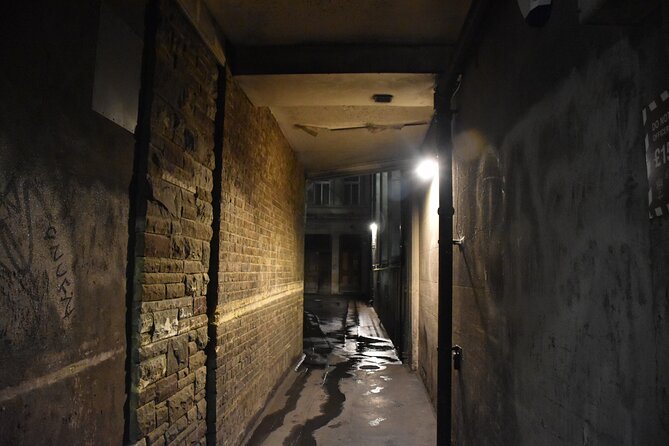
The price is $247.70 per group of up to 15 people. That makes the cost far more reasonable for a family or group than for one or two people alone. A full group would pay about $16.50 per person, while a couple would pay roughly $124 each.
The private setup is the key value. You get a personal guide for about two hours, and you can ask questions about the churches, streets, and historical events along the way. The route also functions as an unusual orientation walk through the City of London, especially if you want to understand how Roman, medieval, Georgian, Victorian, and modern London overlap.
You should wear comfortable shoes and expect steady walking. The tour is wheelchair and stroller accessible, service animals are allowed, and public transport is nearby. Still, the route includes 24 locations in two hours, so anyone with limited stamina should consider the pace before booking.
The meeting point is at the Monument to the Great Fire of London on Fish Street Hill. The tour ends near the Elizabeth Line entrance at Farringdon Station, which is convenient for continuing your evening elsewhere. The ticket is mobile, the tour is offered in English, and free cancellation is available until 24 hours before the start time.
Who should book this London ghost walk
I would choose this tour if you like history with a dark edge, want a private guide, and enjoy hearing how legends grow from real places. It is especially good for visitors who have already seen the major London sights and now want a more unusual route through the City.
The tour suits adults, history buffs, fans of Dickens, and anyone curious about plague, executions, old churches, and criminal justice. It can also work for a group that wants a night walk with a clear structure rather than a pub crawl or a theatrical scare show.
I would hesitate if you want long interior visits, dramatic special effects, or a guaranteed ghost sighting. The route is story-led, the stops are brief, and many locations are viewed from outside or in churchyards. The experience depends on the guide’s storytelling, with Michael receiving especially strong praise for his historical detail and lively delivery.
Should you book it?
Book it if you want London’s supernatural side tied to real streets, old institutions, and hard facts about death. The private price makes the most sense for a group, and the route covers an impressive stretch of central London in a short time.
Skip it if you dislike macabre subjects or prefer slow sightseeing. For the right audience, though, this is a smart, personal way to see the City after dark, with enough gore to unsettle you and enough history to make the stories stick.
FAQ
How long does the Private Ghosts and Gore Walking Tour of London last?
The tour lasts approximately two hours.
How many people can join the private tour?
The price covers one private group of up to 15 people.
Where does the tour begin?
The meeting point is the Monument to the Great Fire of London, Fish Street Hill, London EC3R 8AH.
Where does the tour finish?
The walk finishes near the Elizabeth Line entrance at Farringdon Station on Cowcross Street.
Is the tour wheelchair and stroller accessible?
Yes. The experience is described as wheelchair and stroller accessible. Service animals are also allowed.
What is the cancellation policy?
You can cancel up to 24 hours before the start time for a full refund. Cancellations or changes made less than 24 hours before the experience are not accepted for a refund.
Just added around London
- Kensington Palace VIP Garden Tour with Royal High Tea★ 4.5 · 71 reviews
- Up at The O2:Twilight Climb with Guided Tour with Panoramic Views★ 5.0 · 50 reviews
- Private Chauffeur-London Heathrow from/to Southampton Cruise Port★ 5.0 · 9 reviews
- Up at The O2: Sunset Climb with Guided Tour with Panoramic Views★ 5.0 · 110 reviews
- Secrets of the London Underground Small Group Walking Tour★ 4.5 · 38 reviews
- Urban Canvas: Exploring Shoreditch’s Vibrant Street Art★ 5.0 · 36 reviews
- Ultimate introduction to photography in Central London★ 5.0 · 19 reviews
- Full-Day Self-Guided Paris Tour from London by Eurostar with Seine River Cruise★ 3.5 · 22 reviews
London Ghost and Haunted Tours, compared.
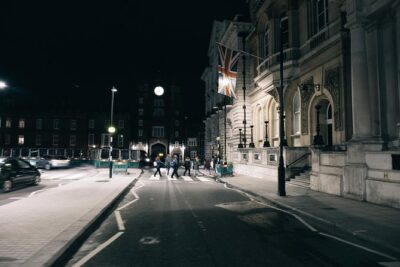
Ghost, Ghouls and Gallows Tour : Guided Tour with Boat Ride
Read our review →
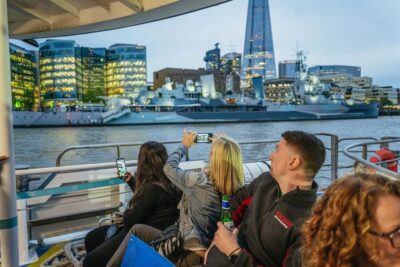

The Original Jack the Ripper Coach Tour of Haunted London
Read our review →
Ghosts and Legends of Mayfair Walking Tour – London
Read our review →Browse the lists this tour appears in