
Reviewed · WORKSHOPS
Private DJ Class
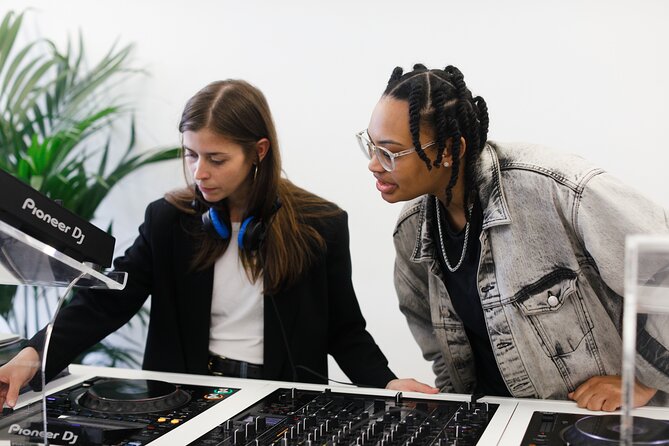
A private DJ lesson in a London studio gives you something a club night cannot: time at the controls without a crowd waiting for the next track. At 93a Bayham Street, a trainer walks you through Pioneer DJ decks and the basic skills behind a clean mix, from beatmatching to EQ and filters.
I like the one-to-one attention and the privacy. You can ask basic questions, repeat a technique, and make mistakes without worrying about anyone else hearing your rough attempts. The two-hour format also gives you enough time to move beyond a quick demonstration.
The main drawback is simple: this is an introduction, not a path to professional DJ work in one afternoon. At $137.13 per person, the value depends on how much you want hands-on coaching and whether you are ready to practice afterward.
Key points to know before booking
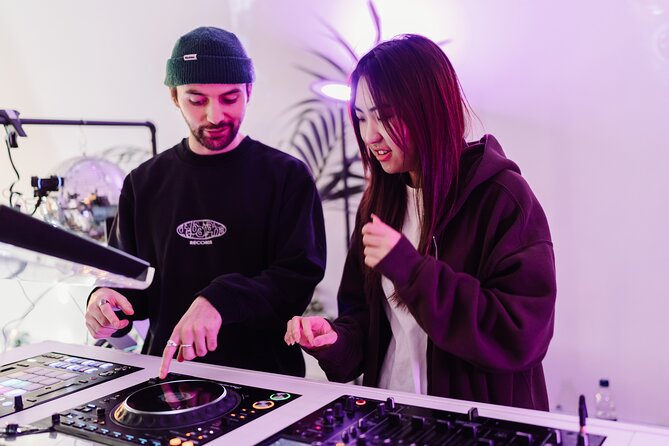
- Private studio setting: Only your group takes part, so you do not share the lesson with strangers.
- Pioneer DJ decks: You learn on industry-standard equipment rather than a basic home controller.
- Core mixing skills: The class covers beatmatching, phrasing, harmonic mixing, EQ, and filters.
- Two hours at the controls: The length gives you room to hear an explanation, try it yourself, and correct mistakes.
- Central London meeting point: The studio is at 93a Bayham Street, London NW1 0AG, near public transportation.
- Flexible cancellation: You can cancel up to 24 hours before the start time for a full refund.
What the private DJ class actually teaches
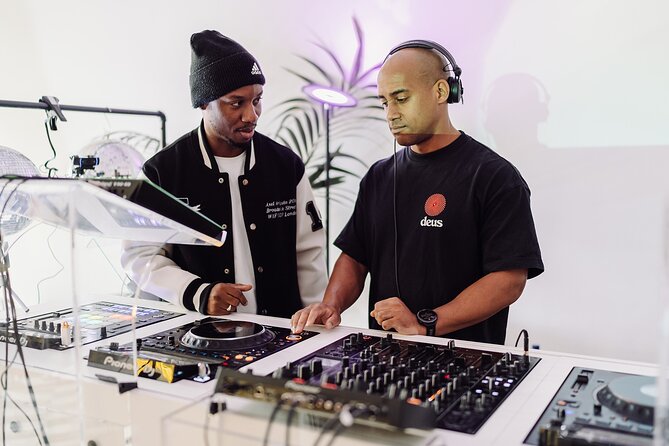
This class is built around the mechanics of mixing two tracks. You are not simply watching a DJ perform. You are learning how to line up songs, bring one into another, and shape the sound as the change happens.
The lesson covers beatmatching, the skill of matching the speed of two tracks so their beats land together. It sounds basic, but it is the foundation of DJ mixing. If the beats drift apart, the change feels messy. A trainer can show you what to listen for and how to make corrections on the decks.
You also work on phrasing. Music is arranged in sections, and a good mix usually changes at a sensible point in the structure. Learning when to bring in a new track helps your transitions sound planned rather than random.
Harmonic mixing is another part of the class. This concerns the musical relationship between tracks, helping you choose songs that work together instead of clashing. You do not need to arrive with music theory in hand. The point is to give you a practical way to make better track choices.
The class also covers EQ and filters. EQ lets you manage parts of the sound, such as bass, while filters can shape the feel of a transition. These controls help you avoid two full tracks fighting for attention at once. They are basic tools, but using them with restraint is what makes a mix easier to hear.
More Workshops:
- London: Traditional English Scone Making and Tea Workshop
★ 5.0 · 702 reviews - London: East End Street Art Tour and Spray Painting Workshop
★ 4.8 · 297 reviews - London Traditional English Scone Making and Tea Workshop
★ 5.0 · 271 reviews
Getting started at 93a Bayham Street
Your lesson begins at London Sound Academy, at 93a Bayham Street in London’s NW1 0AG area. The activity ends at the same place, so you do not need to arrange transport between separate parts of the lesson.
The studio location is useful for a short London activity. It is near public transportation, and the meeting point is specific rather than a vague instruction to wait somewhere in a busy district. Still, give yourself enough time to find 93a Bayham Street. Arriving late would cut into a lesson that already has a fixed two-hour length.
The class is offered in English. That matters because the trainer will need to explain timing, controls, and listening cues clearly. If you are comfortable with practical instruction in English, the format should be easy to follow.
Confirmation is provided at booking. Keep the meeting details available on your phone, since the experience uses a mobile ticket.
Your first time on Pioneer DJ decks
The equipment is a major part of the experience. You learn on industry-standard Pioneer DJ decks, the kind of setup that makes the class feel connected to real DJ practice rather than a simplified demonstration.
That does not mean the equipment will feel instantly familiar. Buttons, jog wheels, channel controls, EQ knobs, and filters can seem like a lot at first. A private trainer helps by focusing your attention on the controls that matter for the current exercise.
This is where the private format earns its keep. If you do not understand what a control does, you can stop and ask. If you need another attempt at a transition, you can repeat it without holding up a group. The lesson is designed around your pace within the available time.
A review of the experience described feeling comfortable with high-end software and technology during a one-to-one course. That detail is useful for beginners who worry that professional equipment will be intimidating. You should still expect a learning curve, but the setting is intended to help you get past the first hurdle.
How the two hours are likely to flow
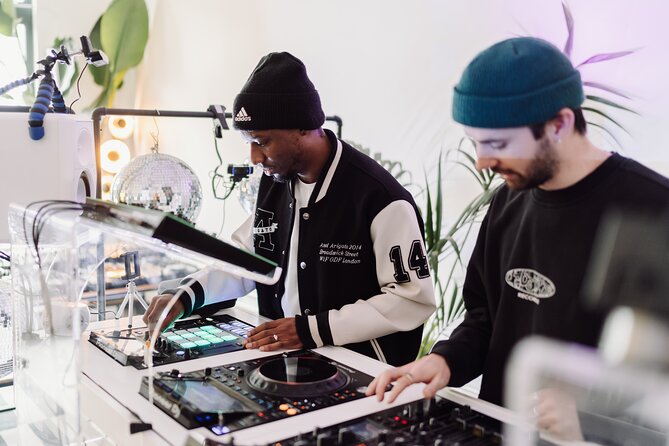
The exact order can vary with the trainer and your starting level, but the class has a clear progression. You begin by getting familiar with the decks and the basic idea of matching tracks. From there, you work on timing and transitions before adding musical phrasing, harmonic choices, EQ, and filters.
The early part may feel technical. Beatmatching asks you to listen closely while making small corrections. That can be harder than it looks when you are also watching the deck controls.
Once the basic timing is clearer, the lesson can focus on blending. This is where one track moves into another, rather than stopping one song and pressing play on the next. You get a practical sense of how DJs maintain a continuous flow.
The later skills add polish. Phrasing helps you choose the right moment for a change. Harmonic mixing helps the tracks fit musically. EQ and filters help you control the sound during the transition.
I like this order because it gives you a useful foundation before piling on effects. A beginner can easily get distracted by knobs and buttons, but a good mix starts with timing and song choice. The lesson’s subjects reflect that.
You should not expect a finished professional set after two hours. You can, however, leave with a clearer idea of what DJs are listening for and what you need to practice next.
More Private:
- The Premier Classic London: Private 4-Hour Tour in a Black Cab
★ 5.0 · 2,737 reviews - Stonehenge Inner Circle Private Tour from London with Bath Visit
★ 5.0 · 1,909 reviews - London: Tower of London Entry & Beefeater Private Audience
★ 4.4 · 1,441 reviews - Private Tour: Black Taxi Tour of London
★ 5.0 · 1,153 reviews
Why privacy matters for a first lesson
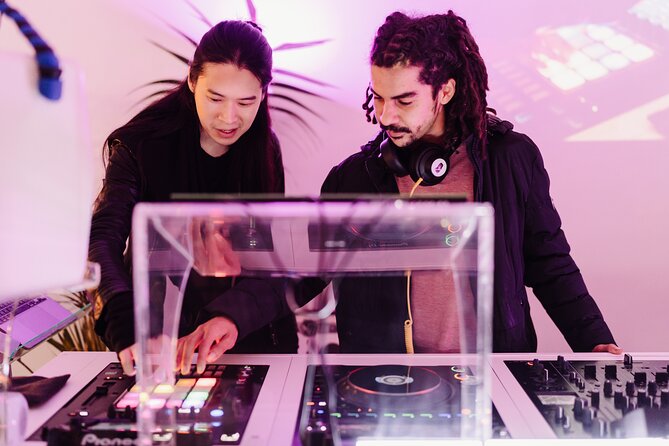
A private class removes one of the most common barriers for beginners: self-consciousness. You do not have to perform for a room full of strangers, and only your own group takes part.
That makes it easier to ask direct questions. You can say you do not understand a term, request another demonstration, or try a transition several times. If a mix goes wrong, it is part of the lesson rather than an awkward public moment.
The private setup also suits people with different goals. You may be a complete beginner, someone planning to buy a controller, or a music fan who wants to understand how club mixes work. You may also be booking the activity as a shared experience for a small private group.
There is one trade-off. A private lesson does not give you the energy or comparison of a larger workshop. You will not hear several students approach the same exercise in different ways. If you want personal coaching and quiet practice, that is a fair exchange. If you want a social class, it may feel more focused than you expected.
Is $137.13 per person fair value?
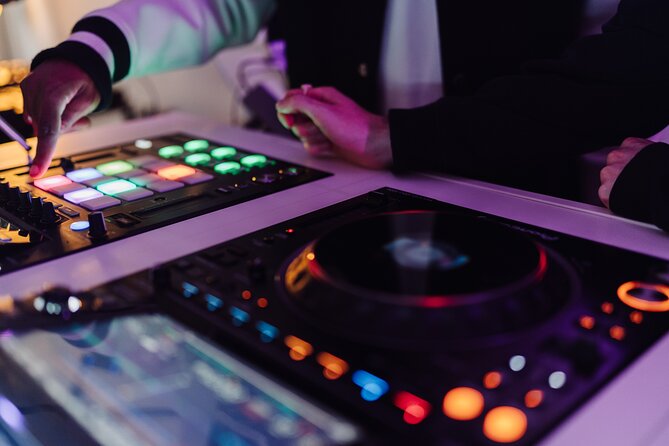
At $137.13 per person, this is not a cheap London filler activity. The price makes more sense if you treat it as a private skills lesson rather than a sightseeing stop.
You are paying for two hours of a trainer’s attention, use of a professional studio, and access to Pioneer decks. For someone curious about DJing, that combination can be more useful than buying equipment first and trying to work it out alone.
The private format is especially important when judging the cost. A shared class might reduce the price, but it would also reduce your time at the controls. Here, the lesson is built around your group, and you can spend more of the session practicing instead of waiting.
The value is lower if you only want a quick novelty experience and have no interest in music mixing. Two hours can feel long if you prefer watching rather than doing. It is also worth remembering that the lesson covers several skills, so you may not master each one fully during the session.
I would book this as a focused activity for someone who has a real interest in DJing, not simply as a random London attraction. The cost is easier to justify when you plan to keep practicing after the class.
Who should book this experience?
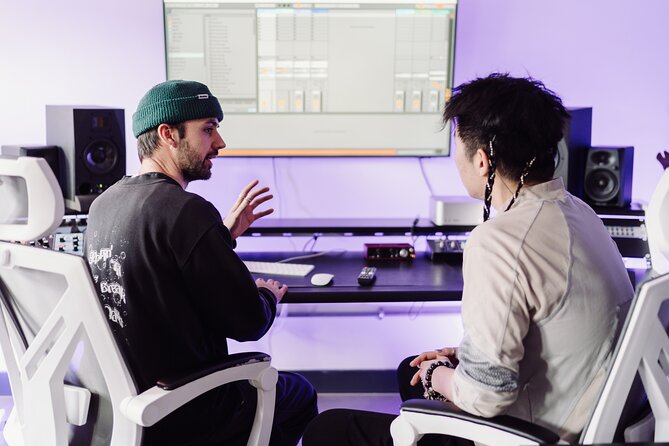
This class fits first-time DJs particularly well. You do not need to arrive knowing technical terms, and the private format gives you room to ask simple questions.
It also suits people who already enjoy electronic music, club music, or mixing playlists and want to understand the craft behind the sound. You can use the lesson to test your interest before spending money on a home setup.
A private group may enjoy it as a shared activity, especially if everyone wants a turn at the decks. Since the only participants are your group, you avoid the uneven experience that can happen in a large class, where one confident student takes over.
The class may not suit you if you want a nightclub visit, a live performance, or a full day of music production. The focus is mixing tracks on DJ decks. It is hands-on, but it is still a short introductory lesson.
The English-language format is another practical point. You will need to follow spoken instruction in English, especially when the trainer explains timing and controls.
Small details that affect your day
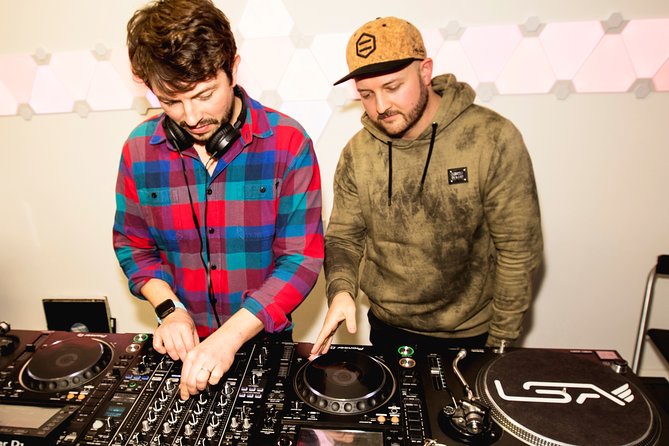
The activity lasts about two hours and returns you to the same Bayham Street meeting point. That makes it easy to fit into a London schedule, but do not place a time-sensitive booking immediately afterward. Your lesson has a stated duration, yet a little breathing room is sensible.
The activity is offered with a mobile ticket, and confirmation arrives when you book. Keep both the confirmation and meeting address easy to reach on your phone.
Most people can take part, and service animals are allowed. The studio is near public transportation, but no specific route or station is provided, so check your own route before leaving.
You can cancel for a full refund if you do so at least 24 hours before the local start time. A cancellation made less than 24 hours before the start is not refunded, and changes inside that window are not accepted. That policy is fairly flexible if you keep an eye on the clock, but it gives you little room for a last-minute change.
How to get more from the lesson
Go in ready to listen, not just press buttons. The trainer can explain the controls, but your progress will come from hearing when beats line up and when a transition begins to drift.
It also helps to accept imperfect first attempts. Beatmatching and blending are coordination skills. You may understand the idea before your hands can execute it smoothly.
Ask the trainer to repeat anything unclear. Privacy is one of the best reasons to choose this format, so use it. You can also pay attention to the difference between a technically correct transition and one that sounds musical. The class topics, especially phrasing and harmonic mixing, are there to help with that distinction.
Do not expect the equipment to turn you into a DJ on its own. The decks are tools. The real benefit is learning what to listen for and how to make a correction when a mix starts to lose shape.
Should you book the Private DJ Class?
Book it if you want a private, hands-on introduction to DJ mixing in London. The strongest reasons are the one-to-one attention, the quiet studio setting, and the chance to use Pioneer DJ decks while learning beatmatching, phrasing, harmonic mixing, EQ, and filters.
I would be more cautious if you are only looking for a quick entertainment stop or a party atmosphere. This is a focused lesson, and the $137.13 price is best value for someone who plans to keep exploring DJing after the two hours.
For a curious beginner, the format removes much of the pressure. You can make mistakes privately, ask basic questions, and leave with a clearer sense of whether DJing is for you.
FAQ
Where does the Private DJ Class take place?
The class starts at 93a Bayham St, London NW1 0AG, UK.
Where does the activity end?
The activity ends back at the meeting point on Bayham Street.
How long does the DJ class last?
The class lasts approximately two hours.
Is the lesson private?
Yes. This is a private activity, and only your group takes part.
What equipment will I use?
You will learn on industry-standard Pioneer DJ decks.
What skills are covered?
The class covers beatmatching, phrasing, harmonic mixing, EQing, and filters.
What language is the class offered in?
The experience is offered in English.
Is the meeting point near public transportation?
Yes. The meeting point is near public transportation.
Can I cancel for a full refund?
Yes. You can cancel at least 24 hours before the local start time for a full refund. Cancellations made less than 24 hours before the start are not refunded.
Just added around London
- Private Chauffeur-London Heathrow from/to Southampton Cruise Port★ 5.0 · 9 reviews
- Kensington Palace VIP Garden Tour with Royal High Tea★ 4.5 · 71 reviews
- Up at The O2:Twilight Climb with Guided Tour with Panoramic Views★ 5.0 · 50 reviews
- Up at The O2: Sunset Climb with Guided Tour with Panoramic Views★ 5.0 · 110 reviews
- Secrets of the London Underground Small Group Walking Tour★ 4.5 · 38 reviews
- Urban Canvas: Exploring Shoreditch’s Vibrant Street Art★ 5.0 · 36 reviews
- Ultimate introduction to photography in Central London★ 5.0 · 19 reviews
- Full-Day Self-Guided Paris Tour from London by Eurostar with Seine River Cruise★ 3.5 · 22 reviews
Workshops, compared.

Traditional English Scone Making and Tea Workshop
Read our review →
East End Street Art Tour and Spray Painting Workshop
Read our review →London Traditional English Scone Making and Tea Workshop
Read our review →


Street Art Tour and Spray Painting Workshop in London
Read our review →

Browse the lists this tour appears in