
Reviewed · LONDON SIGHTSEEING AND HIGHLIGHTS TOURS
Money and Power in the City Sightseeing Tour
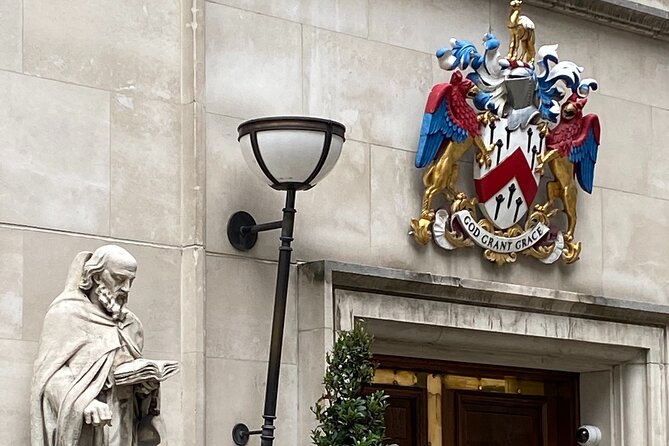
London’s financial district is more than glass towers and suited commuters. Beneath it sit Roman foundations, medieval guild halls, old coffeehouses, imperial business links, and the places where modern finance took shape. This two-hour walk with Terry Silvers connects those layers in a small group of no more than eight people.
I like the tour’s clear route from the City’s earliest days to its current stock market. I also like the mix of grand landmarks and small, easy-to-miss places such as Exchange Alley, where coffeehouse business helped shape the stock market. The main consideration is pace: two hours on foot covers a lot, so you get broad context rather than long visits inside individual buildings.
Key points to know before booking
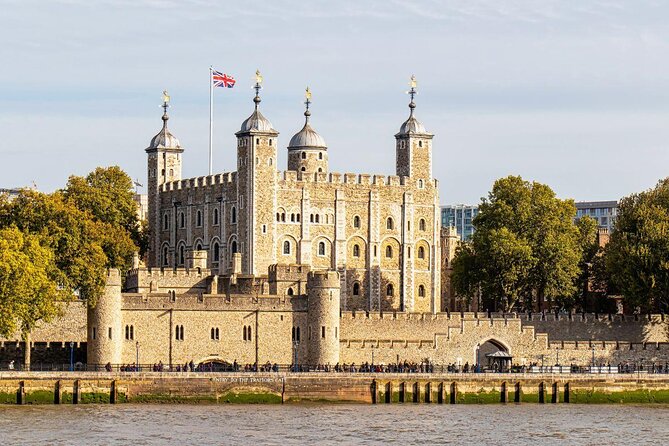
- A compact group of eight or fewer gives you a better chance to ask questions and hear the guide clearly.
- The story runs from Roman London to the present day, so you get a useful timeline rather than a string of unrelated sights.
- Exchange Alley adds a small-scale human story to the grand buildings of the Royal Exchange and Bank of England.
- Terry Silvers brings humor, gossip, and political context to subjects that can otherwise feel dry.
- The tour finishes near St Paul’s Cathedral and the London Stock Exchange, a strong pairing of old authority and modern finance.
- At $41.14 per person, the value depends on how much you want explanation and context while walking through the City.
Why the City of London needs a guided walk
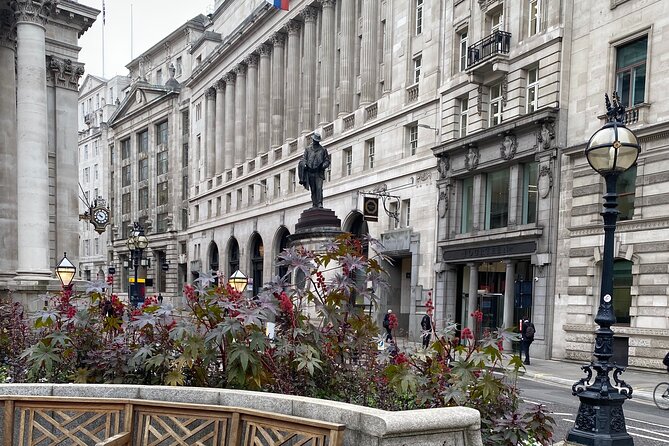
The City of London can be confusing on your own. Its streets are short, its boundaries are old, and major financial institutions sit beside tiny lanes that look almost accidental. A quick stroll may show you impressive stone buildings, but it does not always explain why they are there or how one institution led to another.
That is the useful role of this tour. It treats the City as a story about control: who had the right to trade, who collected money, who made rules, and who benefited from Britain’s expanding commercial power. You move from Roman and medieval foundations to royal finance, overseas trade, coffeehouse dealings, and the modern stock market.
The subject could easily become too technical. The experience instead leans on stories, scandal, and personalities. That matters if financial history usually makes your eyes glaze over. You do not need a background in banking or British politics to follow the route, and the guide adjusts explanations to the group’s level.
The small size helps here. With a maximum of eight people, the walk should feel more like a conversation than a speech delivered to a crowd. Several people who joined with different levels of background found the explanations easy to follow, and questions could be handled without derailing the whole group.
More London Sightseeing and Highlights Tours:
- London: London by Night Sightseeing Open-Top Bus Tour
★ 4.5 · 5,516 reviews - London: Tootbus Must-See Hop-On Hop-Off Bus Tour with Cruise
★ 4.0 · 3,653 reviews - London: River Thames Hop-On Hop-Off Sightseeing Cruise
★ 4.4 · 3,112 reviews
Beginning with Roman and medieval London
The opening section covers the Roman and medieval beginnings of the financial district. This is important groundwork because the City’s present role did not appear from nowhere. Its location, streets, institutions, and authority grew over many centuries.
You will hear how the area developed before modern banks and stock exchanges existed. The point is not simply to memorize dates. It is to see the financial district as an old civic center that slowly gathered power through trade, law, property, and public institutions.
This early section also gives you a way to read the streets. Buildings from different periods sit close together, sometimes with modern towers behind them. The contrast can seem disorderly until someone explains the layers. With Terry’s guidance, the City becomes easier to read as a place that has repeatedly rebuilt itself without losing every trace of what came before.
The limitation is that this is a walking overview. You should not expect a full Roman London tour or an extended study of medieval architecture. The early period serves as the foundation for the larger story, and the route soon moves toward the institutions that made London a center of money and authority.
The East India Company and overseas power
One of the stops focuses on the most important historic location connected with the East India Company, after seeing other sites linked to it. This part gives the walk a wider reach. The City’s money was not only made through local shops, markets, and lenders. It was also tied to overseas trade and imperial power.
The East India Company offers a useful example of how business and government could overlap. It was a commercial body, but its influence reached far beyond ordinary buying and selling. The subject lets Terry explain how financial success could bring political weight, and how decisions made in London affected places far away.
You should expect this section to connect economics with power rather than present the company as a simple success story. The tour’s title matters here. Money and authority are shown working together, sometimes uneasily.
This is also one of the stronger parts for anyone interested in the forces behind modern London. The financial district can look like a world of private firms and market prices, but its past involved charters, government support, overseas control, and public consequences. The East India Company provides a concrete case instead of leaving those ideas abstract.
The Royal Exchange, Bank of England, and Mansion House
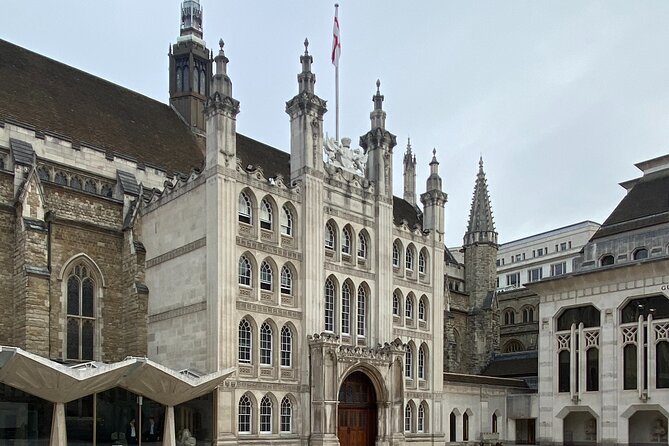
The walk then reaches three of the City’s most imposing institutions: the Royal Exchange, the Bank of England, and Mansion House. Their neoclassical design gives this section a grand visual lift, but the buildings matter for more than their appearance.
The Royal Exchange represents organized commerce. It was created as a place where merchants could meet and conduct business, giving trade a formal home in the City. Its scale and decoration make a clear statement about the importance of commerce to London.
The Bank of England brings another form of authority into view. Here the story shifts toward national finance, currency, lending, and the management of economic confidence. Even if you are not interested in banking, the building helps show how private dealings and public institutions became linked.
Mansion House adds the civic side of the story. It is associated with the Lord Mayor of London and the City’s traditional governing structure. Together, these three stops show different kinds of power: commercial, financial, and civic.
I like this part because the buildings are close enough for comparison. You can see how the City placed its key institutions within a compact area. The walk does not treat architecture as decoration only. It uses the buildings to explain who was making decisions and what sort of authority each institution held.
The drawback is that you see these places from the outside as part of a walking route. If your main goal is to tour the Bank of England or spend time inside the Royal Exchange, this is not that kind of visit. The benefit is the connection between them, which is harder to grasp when you visit each building separately.
More City Tours:
- City Sightseeing London Hop-On Hop-Off Bus Tour & Bookable Extras
★ 4.0 · 1,224 reviews - London: Go City Explorer Pass® – Tickets for 2-7 Attractions
★ 4.3 · 1,111 reviews - London: Speedboat Tour Through Heart of the City
★ 5.0 · 387 reviews - London: Upside Down House Westfield White City Entry Ticket
★ 4.0 · 338 reviews
Exchange Alley and the coffeehouse beginning of the stock market
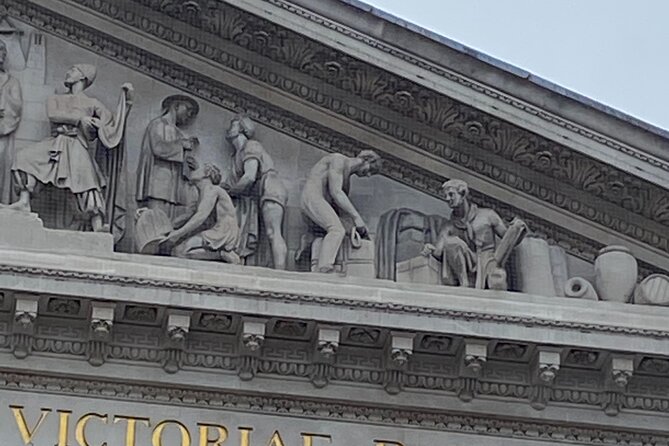
Exchange Alley, also called Change Alley, is one of the most memorable details on the route. It is a narrow passage linking Cornhill and Lombard Street, and it once offered a practical shortcut between the Royal Exchange and the Post Office.
Its size makes the story work. After the grand facades of the financial institutions, you enter a much tighter urban space. This is where the history of finance feels less official and more social. The City’s commercial life was not conducted only in formal halls. It also grew through meetings, talk, information, and deals made in coffeehouses.
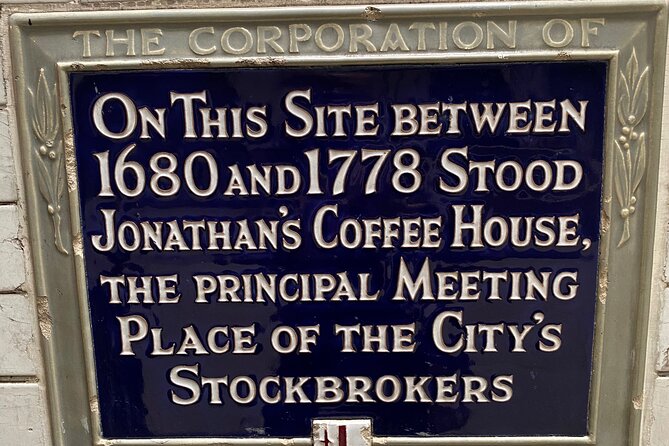
The tour points out the location of the coffee shop where the stock market was first based. That detail gives you a better feel for how business operated before modern trading floors and electronic systems. News, prices, rumors, and opportunities could circulate through a place where people gathered to drink coffee and talk.
This stop is especially good for anyone who likes the human side of history. It explains how a narrow lane and a coffeehouse could matter as much as a monumental building. It also gives useful context for the gossip and scandal promised by the walk. Markets depend on information, and information has always traveled through people.
Do not expect the original coffeehouse to be presented as a preserved attraction. You are seeing the location and learning what happened there. The value is in the explanation, not in a dramatic interior visit.
Medieval Guildhall and the nearby guild buildings
The next stage brings you to the medieval Guildhall and selected guild buildings nearby. Guild halls were used to store goods and to hold celebrations and formal events. When guild members did not need them, they could also be used for public entertainment, including religious plays.
This stop broadens the story beyond finance. Medieval guilds controlled trades, protected professional interests, managed goods, and helped organize civic life. They show that business in the City was once tied closely to membership, ceremony, status, and local authority.
The Guildhall is useful because it makes medieval commerce feel organized rather than primitive. Trade required rules, trusted relationships, storage, meeting places, and people with recognized roles. Those needs did not vanish when modern banks and exchanges arrived. They changed form.
You will also see how guild buildings fit into the City’s wider pattern. The route does not focus only on famous landmarks. It uses nearby structures to show how professional groups shaped the streets around them. That is the sort of information you might miss if you were simply walking from the Royal Exchange to St Paul’s Cathedral.
For families, this can be one of the easier sections to discuss afterward. The idea of a hall used for storing goods, parties, civic events, and plays is straightforward. Terry’s use of stories and humor also helps keep medieval institutions from feeling like a dry list of organizations.
The modern stock market beneath St Paul’s
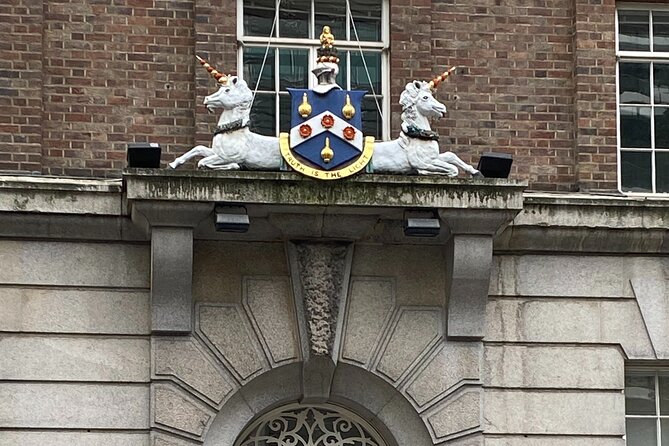
The final stretch brings the story into the present. You see the modern stock market, with the dome and structure of St Paul’s Cathedral nearby. This is a strong ending because it places today’s finance beside one of London’s most recognizable symbols of religious and civic authority.
St Paul’s sits on Ludgate Hill, the highest point in the City, and serves as the cathedral for the Diocese of London. Its setting gives the final stop a sense of scale. After tracing money through lanes, guild halls, coffeehouses, exchanges, and banks, you finish with a view that reminds you the City has never been devoted to commerce alone.
The contrast is the point. The stock market represents speed, calculation, investment, and modern systems. St Paul’s represents centuries of worship, ceremony, and public memory. They sit close together, showing how old and new London share the same ground.
The tour ends at Paternoster Square by the main column, near the London Stock Exchange at 10 Paternoster Square. That makes the finish practical if you want to continue exploring the City or spend time around St Paul’s afterward.
Terry Silvers and the storytelling style
Terry Silvers is the named guide associated with this experience. The strongest feature of his approach is the ability to explain complicated subjects in plain terms. He uses humor, anecdotes, and connections between past and present, so the tour does not feel like a lecture on financial institutions.
The subject matter can involve Roman settlement, medieval guilds, imperial trade, banking, civic government, and stock markets. That is a lot for two hours. Terry’s style helps by giving each period a role in the larger story.
You should also expect room for questions. The small group makes it easier to ask about a building, a person, or a point that was not clear. That is useful if you arrive with family members who have different interests. One person can ask about architecture while another asks about trade or politics.
The tone is lively, but this is still an information-heavy walk. If you want a relaxed photo walk with little explanation, it may feel too dense. If you want a guide who can supply context and make connections, the format is a good match.
Price, timing, and practical value
The price is $41.14 per person for about two hours. That is not the cheapest way to walk through the City, since you can see many exteriors without paying. The question is what you are buying. Here, you are paying for a route, a connected explanation, and a guide who can turn scattered sights into one story.
At roughly $20.57 per hour, the cost is easier to justify if you value guided context. The small group also matters. A large tour can cover the same streets but make it harder to hear, ask questions, or follow the guide’s attention. With no more than eight people, the experience has a personal scale.
The tour begins at 2:00 pm at Emperor Trajan, A100, London EC3N 4DR. It ends at Paternoster Square by the main column, near the London Stock Exchange. The starting and ending points are different, so plan your route accordingly. The walk is offered in English and uses a mobile ticket.
The experience is suitable for most people, and service animals are allowed. It operates outdoors and requires good weather. If poor weather causes cancellation, you are offered another date or a full refund.
Free cancellation is available up to 24 hours before the start time. Inside that window, refunds are not available, and changes are not accepted. The tour is booked an average of 33 days ahead, so reserving early makes sense if your London dates are fixed.
Who should book this City of London walk
I would recommend it to you if you want a short, focused introduction to the City rather than a general London sightseeing loop. It suits people curious about how business, government, trade, and old institutions shaped the capital.
It is also a good choice for families and mixed-age groups. The guide can meet people at different levels, and the stories give children or first-time visitors something concrete to remember. Adults interested in politics, economics, architecture, or British history will find plenty to discuss.
The tour may be less suitable if you need frequent indoor breaks, dislike walking, or want long visits inside major buildings. The route is built around seeing places and hearing their stories, not entering every institution.
It is a particularly good early activity in a London visit. The walk can help you understand the City before returning on your own to St Paul’s, the Royal Exchange, or nearby streets. You will recognize more on later visits because you have been given the connections first.
Should you book Money and Power in the City?
Book this tour if you want London’s financial district explained through people, places, and power, not just pointed out on a map. The route has a strong shape: Roman beginnings, medieval organization, overseas trade, grand financial buildings, coffeehouse markets, and the modern stock exchange beneath St Paul’s.
At $41.14, the value rests on the guide. Terry Silvers brings energy, humor, and clear explanations to a subject that could otherwise feel remote. The small group and two-hour length keep the experience focused.
Skip it if you mainly want indoor sightseeing or a slow architectural tour. Choose it if you want to understand why this compact part of London has mattered for centuries. For that purpose, it offers a useful, lively introduction with just enough gossip to keep the money and power from becoming too solemn.
FAQ
How long does the Money and Power in the City tour last?
The tour lasts approximately two hours.
What time does the tour start?
The tour starts at 2:00 pm.
Where does the tour begin?
The tour begins at Emperor Trajan, A100, London EC3N 4DR, United Kingdom.
Where does the tour end?
The tour ends at Paternoster Square by the main column, near the London Stock Exchange at 10 Paternoster Square, London EC4M 7LS.
How many people can join the tour?
The maximum group size is eight travelers.
What language is the tour offered in?
The tour is offered in English.
How much does the tour cost?
The listed price is $41.14 per person.
Is mobile ticketing available?
Yes. The experience includes a mobile ticket.
Can I cancel for a full refund?
Yes, if you cancel at least 24 hours before the experience start time. Cancellations made less than 24 hours before the start time are not refunded.
Just added around London
- Up at The O2:Twilight Climb with Guided Tour with Panoramic Views★ 5.0 · 50 reviews
- Private Chauffeur-London Heathrow from/to Southampton Cruise Port★ 5.0 · 9 reviews
- Kensington Palace VIP Garden Tour with Royal High Tea★ 4.5 · 71 reviews
- Up at The O2: Sunset Climb with Guided Tour with Panoramic Views★ 5.0 · 110 reviews
- Secrets of the London Underground Small Group Walking Tour★ 4.5 · 38 reviews
- Urban Canvas: Exploring Shoreditch’s Vibrant Street Art★ 5.0 · 36 reviews
- Ultimate introduction to photography in Central London★ 5.0 · 19 reviews
- Full-Day Self-Guided Paris Tour from London by Eurostar with Seine River Cruise★ 3.5 · 22 reviews
London Sightseeing and Highlights Tours, compared.
London by Night Sightseeing Open-Top Bus Tour
Read our review →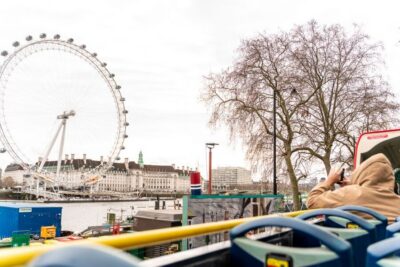
Tootbus Must-See Hop-On Hop-Off Bus Tour with Cruise
Read our review →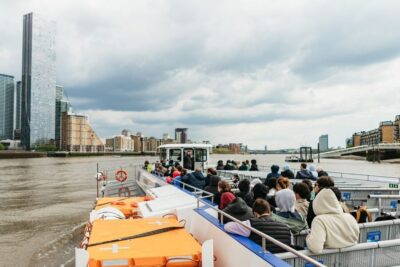
River Thames Hop-On Hop-Off Sightseeing Cruise
Read our review →
Westminster to Greenwich Sightseeing Thames Cruise in London
Read our review →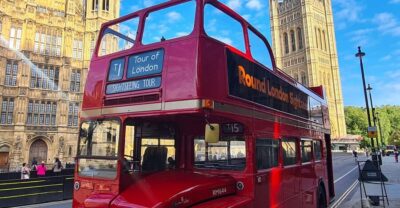
Guided Sightseeing Tour on a Vintage Open-Top Bus
Read our review →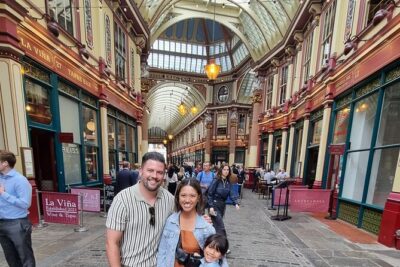
The Premier Classic London: Private 4-Hour Tour in a Black Cab
Read our review →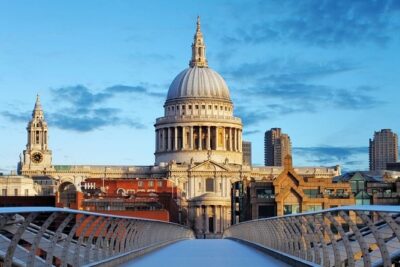
London Sightseeing Tour: Guard Change with Tower of London Option
Read our review →
Browse the lists this tour appears in