
Reviewed · LONDON GHOST AND HAUNTED TOURS
London’s Ghosts & Gruesome Past Nighttime Walking Tour
London’s darkest stories are waiting beneath ordinary streets. This two-hour nighttime walk links Farringdon, Smithfield, St. Bartholomew’s, and Old Bailey through tales of ghosts, executions, plague pits, grisly medicine, and grave robbers. The history is often more disturbing than the supernatural parts.
I like the strong storytelling and the way the route uses real places instead of relying on theatrical effects. I also like the manageable group size, capped at 20, and the steady pace reported by guides such as Matt. The main drawback is that this is an outdoor walking tour at night, so drizzle, cold, street noise, and limited visibility can affect the experience.
Key points to know before booking
- Farringdon to Old Bailey: A mostly historic central London route that ends within walking distance of St. Paul’s Underground Station.
- Nine atmospheric stops: Expect stories about a haunted station, public executions, plague pits, body snatching, medical treatment, and a notorious killer.
- Guide-led storytelling: Matt and Carolina have both led tours, with a focus on clear explanations, patience, and dramatic delivery.
- Two hours on foot: The route moves at a pleasant pace, but you should wear comfortable shoes and prepare for London weather.
- Best for dark history fans: The tour suits adults and older children who enjoy grisly facts more than jump scares.
- Good small-group value: At $49 per person, the price pays for a focused guide and an unusual view of central London after dark.
London after dark, with the city’s worst stories
The tour begins at 6:00 pm outside Cafe Pronto near Farringdon Station, at 43 Cowcross Street. That meeting point is practical, since Farringdon is easy to reach by public transport and gives the group a clear place to gather before heading into the older streets nearby.
From there, you walk through an area where modern London and medieval history sit close together. Office workers, commuters, pubs, and traffic form the everyday setting. Your guide then turns those familiar streets into places of punishment, disease, burial, and fear.
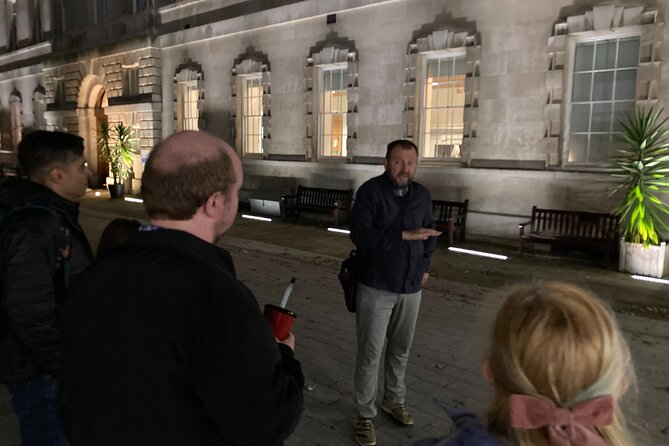
This contrast is one of the tour’s best features. You are not being taken to a specially built haunted attraction. You are hearing unsettling stories while standing in the actual parts of London connected with them. That makes the walk feel more like a history lesson with a dark edge than a standard ghost show.
The tour is advertised as guided by a scholar or local guide. Matt has been praised for his storytelling, patience, walking pace, and willingness to answer questions. Carolina has also led the route with clear enthusiasm for London’s past. Guides may vary, but the experience depends heavily on who is leading it, as any story-based walk does.
More London Ghost and Haunted Tours:
- Ghost, Ghouls and Gallows Tour : Guided Tour with Boat Ride
★ 4.5 · 3,212 reviews - London: Comedy Horror Ghost Tour on a Bus
★ 4.4 · 2,084 reviews - London: Ghost Walk and River Thames Boat Ride
★ 4.5 · 1,251 reviews
Farringdon Station and the girl who never left
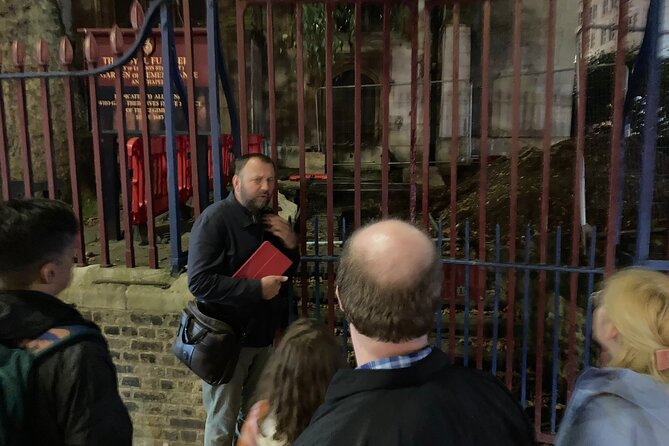
The first stop is just outside Farringdon Station. Your guide introduces the ghost of a girl said to haunt the station, linking the modern transport hub with a tragic story from the 18th century.
This opening works well because it starts with a familiar London setting. You may be surrounded by commuters and city noise rather than darkness and silence. The guide must project clearly, and you may need to move close enough to hear every detail.
The story concerns a young girl who was badly treated in life and, according to the tale, suffered an even worse fate after death. You are invited to consider whether she still lingers nearby and what you might notice if you know where to look.
This is not presented as a haunted-house attraction with actors or special effects. The pleasure comes from deciding how much of the story you believe. If you enjoy folklore, local legends, and the space between documented history and ghost story, this is a fitting start.
Smithfield Market and London’s public executions
At Smithfield Market, the tone becomes more historical and much more brutal. The market is now known for meat, but its earlier identity included centuries of public executions.
Your guide asks you to picture the area before modern buildings, traffic, and commerce changed its appearance. Heroes, religious martyrs, criminals, and innocent people could all become part of a public spectacle of punishment.
The stories cover torture and execution methods in direct detail. That is important to know before booking. This is not a gentle history walk. The subject matter includes the deliberate destruction of the human body, and the guide does not soften the period’s cruelty.
Smithfield is a strong stop because the location helps you understand how public punishment once functioned. Executions were not hidden events. They were staged in visible places and watched by crowds. The setting also gives the tour a useful historical rhythm: after beginning with a ghost story, it moves into documented violence.
Charterhouse Square and the plague beneath your feet
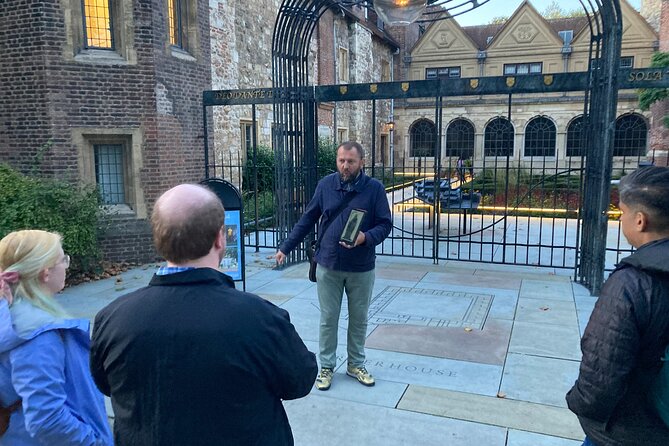
Charterhouse Square provides a quieter pause in the route. Today, it is a peaceful green space surrounded by busy London, but the stories here concern plague, disease, and the burial pits left beneath the city.
The guide explains how repeated outbreaks changed London, how deadly they were, and how doctors tried to respond. You also hear what happened to people who survived. The subject is grim, but it gives the tour more substance than a series of isolated ghost tales.
The setting matters. Standing in a calm square while hearing about mass illness creates a sharp contrast. The city above ground looks orderly and modern, while the ground below is tied to generations of death and hurried burial.
Listen carefully here, since traffic and city sounds may still compete with the guide. The tour is capped at 20 people, which helps, but it is still a street walk rather than a quiet museum talk. Stay near the guide if you want every detail.
More London Walking Tours:
- Magical London: Harry Potter Guided Walking Tour
★ 4.7 · 22,044 reviews - London: The Original Jack the Ripper Walking Tour
★ 4.7 · 7,833 reviews - Tour for Muggles The Ultimate Harry Potter Walking Tour in London
★ 5.0 · 4,684 reviews - London Jack The Ripper Guided Walking Tour
★ 5.0 · 3,131 reviews
Cloth Fair, pubs, and the grim business of an execution day
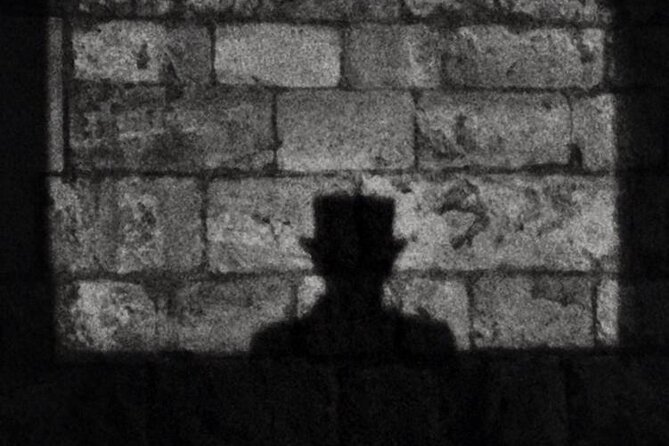
Cloth Fair is a short stop, but it connects daily life with public punishment. The guide points out where you could get a drink before attending an execution.
That small detail says a great deal about the period. Executions were treated as public events, and the surrounding streets served the crowds who came to watch. Food, drink, conversation, and violence could exist side by side.
This is one of the shorter sections, lasting around 10 minutes, but it helps place the previous Smithfield stories in a social setting. You begin to see how punishment was not only a legal act. It was also entertainment, commerce, and a gathering point.
The area also gives the group a chance to keep moving through narrow streets and older passages. The route feels more atmospheric as evening settles, though the experience will depend on the weather and the amount of activity around you.
St. Bartholomew the Great and a disturbed burial
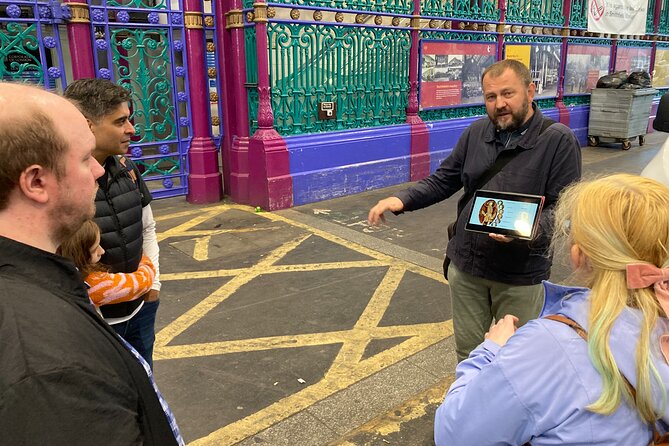
St. Bartholomew the Great is one of the route’s most atmospheric locations. You move through narrow passages and older streets before reaching one of London’s oldest churches, with a graveyard that has served the living and the dead for centuries.
The stories here focus on burial and the church’s founder. Your guide explains how his rest was disturbed, what is now missing from him, and how the dead figure in the tale of revenge.
You are not simply hearing about an old church from the pavement. You are surrounded by historic stonework and tombstones while the guide explains why the place has a reputation for being haunted. The quiet setting helps the stories land more effectively than they would beside a busy road.
This stop also gives you a break from the more graphic material. The mood is eerie rather than purely gruesome. If you enjoy old cemeteries, church legends, and stories that leave some room for doubt, this may be one of the strongest parts of the walk.
William Wallace, historical fact, and movie fiction
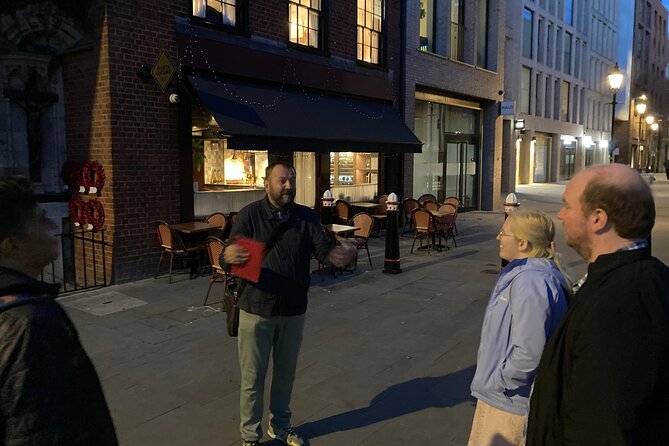
The William Wallace Memorial introduces a different kind of horror story. Here, the tour moves back to the conflict between England and Scotland and the fate of the Scottish freedom fighter.
You hear about Wallace’s execution and the harsh treatment of his body afterward. The guide also explains later consequences for the relationship between England and Scotland, along with inaccuracies in the film loosely based on his life.
This section broadens the tour beyond London ghost stories. It shows how a city walk can connect local places with wider British history. The subject is violent, but the focus is also on how popular culture reshapes the past.
If you know the film version of Wallace’s life, this stop should be especially useful. The guide separates the historical figure from the screen version without turning the discussion into a long academic lecture.
St. Bartholomew’s Hospital and the dangers of old medicine

The hospital section is among the most unsettling because it deals with real medical practice rather than legends. You pass another church before reaching the hospital yard, where the guide explains how doctors once treated illness and performed surgery.
The stories include medicines that patients had to drink, eat, or apply to their bodies. You also hear about unwashed hands, shared hospital beds, public surgery, and amputations watched by an audience.
The point is not simply to shock you. The stop shows how limited medical knowledge shaped everyday life. A hospital could offer care, but it could also expose patients to serious danger. Even watching a medical procedure could carry a deadly risk.
This part may be uncomfortable for anyone sensitive to surgery or bodily injury. At the same time, it gives the tour a useful historical purpose. You leave with a clearer sense of how much modern medical care has changed.
Holy Sepulchre and the grave-robbing trade
At Holy Sepulchre London, the subject turns to empty graves and the business of stealing bodies. The church and graveyard remind you of a period when some people earned money by removing corpses and selling them.
The guide explains why bodies were wanted, who bought them, and why the line between taking and stealing could become a legal question. The nearby hospital and pub form part of the story, linking medical demand, commerce, and nightlife.
This is one of the route’s cleverest connections. You have just heard about old medical practice, and you have passed places where people could drink before executions. Now the tour joins those details into a disturbing account of a body trade.
The section also shows how law often failed to keep pace with public need. The demand for medical knowledge created an incentive for grave robbers, while families feared that burial did not guarantee rest. The promise of a book with a disturbing cover hints at how the trade eventually came to an end.
Old Bailey and the final story
The tour finishes at Old Bailey, the imposing courthouse near the site of a former prison. This final stop is designed to be the most disturbing, and the guide introduces a woman described as England’s worst serial killer, rather than the more familiar Jack the Ripper.
The story concerns an ordinary-looking woman with a deadly method, a financial motive, and victims who were innocent. The guide also explains how she was caught twice and still allowed to continue. Her role as a mother adds another uncomfortable layer.
Ending here works because the route has gradually moved from legend to public violence, disease, medicine, and crime. By the time you reach Old Bailey, the most frightening stories are not necessarily supernatural. They are accounts of people who acted deliberately and profited from harm.
The tour ends at 19 Old Bailey, within walking distance of St. Paul’s Underground Station. That makes it easy to continue your evening, though you should remember that you will finish after dark in central London.
Is $49 good value for two hours?
At $49 per person, this is not the cheapest way to hear London history. You are paying for a guided, themed walk rather than entry to a major attraction, and the tour includes no admission tickets or food.
The value comes from the route and the guide. Nine stops are connected into one story, and the walk uses locations that are easy to pass without understanding their darker past. A good guide adds context, keeps the group moving, and adjusts the delivery to the streets around you.
The group limit of 20 is also useful. It is small enough to feel more personal than a large city walk, though you should still stay near the guide, especially at noisy stops such as Farringdon and Smithfield.
The tour is best value if you enjoy history told through stories and places. If you want theatrical scares, actors, props, or a haunted building you can enter, this may feel too restrained. If you prefer real events, local legends, and a clear route through central London, the price is easier to justify.
Practical details for a comfortable night walk
Wear comfortable shoes. The tour lasts about two hours, and the route moves between stations, markets, churches, memorials, hospital grounds, and courthouse streets.
Bring a coat or waterproof layer. One tour took place in drizzle, which added atmosphere but also showed the main weakness of any nighttime walking experience. London weather can change, and there is no indoor shelter for the entire route.
The mobile ticket is convenient, and confirmation is provided when you book. Service animals are allowed, and the activity is near public transportation. Most people can participate, but you should be comfortable walking outdoors at night and listening in public spaces.
Free cancellation is available if you cancel at least 24 hours before the start time. Changes made inside that window are not accepted, and a minimum group size is required for the tour to operate. If the minimum is not met, you are offered another date or experience, or a full refund.
Who should book this tour?
I would choose this walk if you want an evening activity that combines London sightseeing with grim history. It works particularly well for fans of ghost stories, crime, old churches, plague history, and the less polished side of British history.
You should also book it if you like a guide who can correct popular myths. The William Wallace section, for example, does more than repeat a famous movie story. The tour often asks you to compare what sounds good with what may have actually happened.
Families need to judge the material carefully. The tour is suitable for most participants according to the available information, but executions, grave robbing, disease, surgery, and murder are central subjects. Younger children or anyone sensitive to graphic stories may find it too much.
Should you book London’s Ghosts and Gruesome Past?
Book it if you want real locations and strong storytelling more than jump scares. The walk offers a memorable route through Farringdon, Smithfield, Charterhouse Square, St. Bartholomew’s, and Old Bailey, with guides such as Matt and Carolina bringing the details to life.
Skip it if bad weather, street noise, or grisly subjects will spoil your evening. For everyone else, $49 buys a focused two-hour look at a London most sightseeing routes leave out: a city of plague pits, public punishment, disturbed graves, failed medicine, and stories that may still cling to the dark.
FAQ
Where does the tour begin?
The tour begins at Cafe ProntoFarringdon Station, 43 Cowcross Street, London EC1M 6BY.
What time does the tour start?
The stated start time is 6:00 pm.
How long does the walking tour last?
The tour lasts approximately two hours.
Where does the tour finish?
It finishes at 19 Old Bailey, within walking distance of St. Paul’s Underground Station.
How many people can join the tour?
The maximum group size is 20 travelers.
What is included in the price?
The experience includes an entertaining guided tour with a local guide. Admission tickets to attractions are not listed as included.
Can I cancel for a full refund?
Yes. You can cancel at least 24 hours before the start time for a full refund. Cancellations or changes made less than 24 hours before the start time are not accepted for a refund.
Just added around London
- Up at The O2:Twilight Climb with Guided Tour with Panoramic Views★ 5.0 · 50 reviews
- Private Chauffeur-London Heathrow from/to Southampton Cruise Port★ 5.0 · 9 reviews
- Kensington Palace VIP Garden Tour with Royal High Tea★ 4.5 · 71 reviews
- Up at The O2: Sunset Climb with Guided Tour with Panoramic Views★ 5.0 · 110 reviews
- Secrets of the London Underground Small Group Walking Tour★ 4.5 · 38 reviews
- Urban Canvas: Exploring Shoreditch’s Vibrant Street Art★ 5.0 · 36 reviews
- Ultimate introduction to photography in Central London★ 5.0 · 19 reviews
- Full-Day Self-Guided Paris Tour from London by Eurostar with Seine River Cruise★ 3.5 · 22 reviews
London Ghost and Haunted Tours, compared.
Ghost, Ghouls and Gallows Tour : Guided Tour with Boat Ride
Read our review →

The Original Jack the Ripper Coach Tour of Haunted London
Read our review →
Ghosts and Legends of Mayfair Walking Tour – London
Read our review →Browse the lists this tour appears in