

Reviewed · LONDON STREET ART TOURS
London: Street Art and Graffiti Guided Walking Tour
East London’s walls change by the week, but this two-hour walk gives you a sharp way to read them. From the white goat statue at Old Spitalfields Market, you’ll follow your guide toward Brick Lane and Shoreditch, spotting work by Banksy, ROA, Invader, Shepherd Fairey, Stik, and dozens of other artists. I love the first-hand scene knowledge and the way the tour links art to the East End’s past. I also like that it points out small stickers, floor pieces, and tucked-away works you would probably miss alone.
The main consideration is that this is an outdoor walking tour, so rain gear matters. Street art is temporary, and a piece highlighted on one visit may be painted over or gone on the next. The changing route keeps the walk fresh, but you should come for the ideas, stories, and culture as much as for any one famous mural.
Key points at a glance
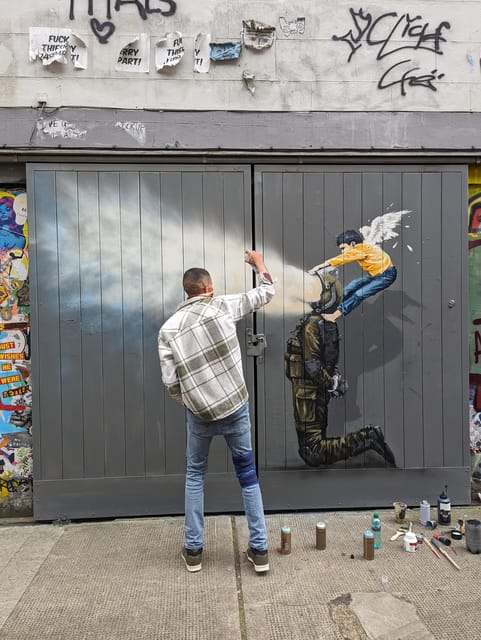
- About 40 artists in two hours: See a wide range of styles, from large murals to tiny stickers and hidden pieces.
- Brick Lane and Shoreditch: Walk through two of East London’s best-known areas for urban art.
- Banksy and more: The route can include work by Banksy, ROA, Invader, Shepherd Fairey, and Stik.
- Art with context: Learn about tagging, graffiti rules, materials, techniques, and the meaning behind different works.
- East End history included: The guide explains how the area’s past helped shape its creative culture.
- Strong guide lineup: Guides including Eva, Josh, Laura, Gabi, and Natalie are praised for clear, friendly, personal tours.
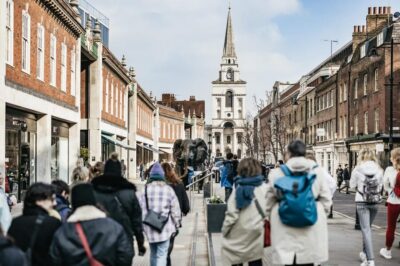
Starting under the white goat at Old Spitalfields Market
The meeting point is easy to find once you know the landmark: the White Goat Statue on Brushfield Street, just outside Old Spitalfields Market. Liverpool Street is the closest station. From the station, walk along Bishopsgate, turn left, then take Brushfield Street between Pizza Express and the RBS building. The statue is about 100 meters along the street.
Arrive about 10 minutes early. That gives you time to find the guide without rushing through the busy streets around Liverpool Street. The starting point also makes sense geographically. You begin beside the City of London, the capital’s historic financial district, then move into the very different streets of Spitalfields, Brick Lane, and Shoreditch.
The opening section helps you understand that East London street art did not appear in isolation. Your guide connects the work on the walls with the East End’s changing identity, local communities, migration, nightlife, fashion, music, and creative industries. That background gives the art more weight than a simple list of artist names.
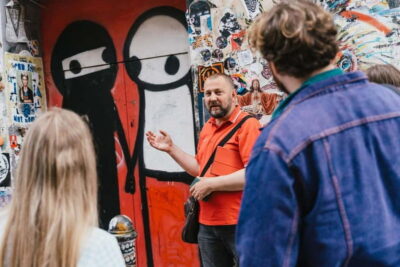
The guides bring different strengths. Eva is praised for clear explanations and for changing people’s views of street art. Josh is especially good at explaining graffiti culture, technical details, and the way the route develops from quieter walls to areas with much more art. Laura is noted for adjusting the walk to the interests of the group, while Natalie brings personal experience as a street artist. Gabi is also praised for adding historical detail and explaining materials such as paint and stickers.
Guide assignments can change, so book this for the subject and format rather than expecting one particular person. Still, the range of guide backgrounds is a real benefit. You are not just being led from wall to wall. You are hearing how artists work, why some pieces are placed in particular locations, and how different forms of street art relate to each other.
More London Street Art Tours:
- London Bike Tour: Landmarks, Secret Gems, Pub Stop & Street Art
★ 5.0 · 943 reviews - Shoreditch Street Art Tour London
★ 5.0 · 481 reviews - London: Landmarks & Secrets Bike Tour with Pub & Street Art
★ 4.9 · 314 reviews
From Spitalfields to Brick Lane
The walk gradually leads you from Spitalfields toward Brick Lane. This part of the route is useful because it lets you watch the setting change. You begin near formal commerce and office buildings, then move into streets where independent shops, food businesses, markets, music, and street art overlap.
Brick Lane is the best-known part of the walk, but it is not simply a parade of giant murals. Your guide may point out work on signs, doors, roofs, walls, and even the pavement. Some pieces are made with spray paint, while others use paste-ups, stencils, stickers, tiles, or mixed materials.
That variety is one of the tour’s strongest features. If you only look for painted walls, you will miss much of what makes the area interesting. Small works can carry as much personality as large ones, and some are easy to overlook unless someone directs your attention to them.
The guide also explains the difference between graffiti and street art without treating one as automatically better than the other. You learn about tagging, lettering, commissioned murals, illegal work, and the unwritten rules that shape the scene. This is especially useful if you arrive with little background in urban art, but it also gives experienced art fans more to think about.
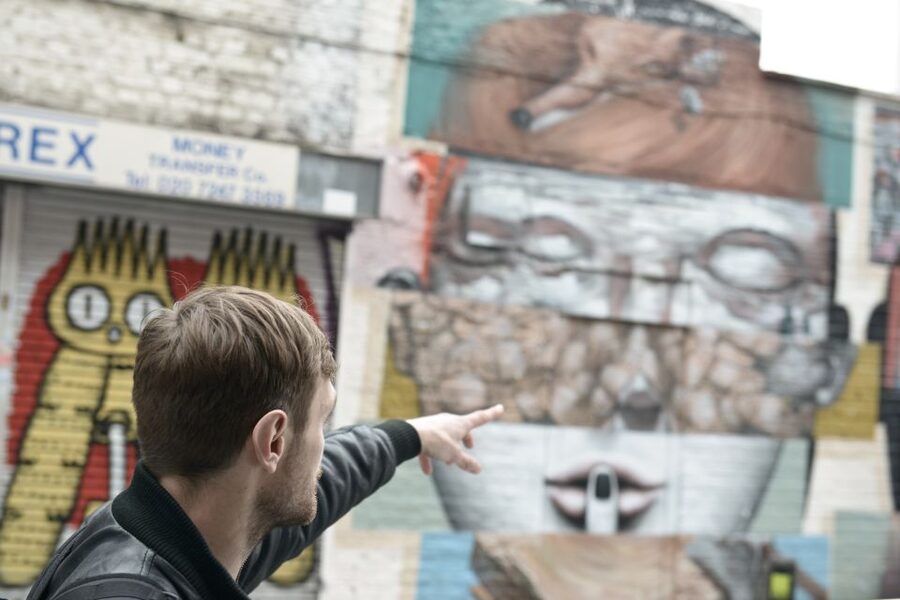
You may see work connected with famous names such as Banksy, ROA, Invader, Shepherd Fairey, and Stik. A Banksy sighting can be a highlight, but it should not be the sole reason to book. The point of the tour is the wider scene: local and international artists working at different scales, with different aims and levels of fame.
Reading the art instead of just photographing it
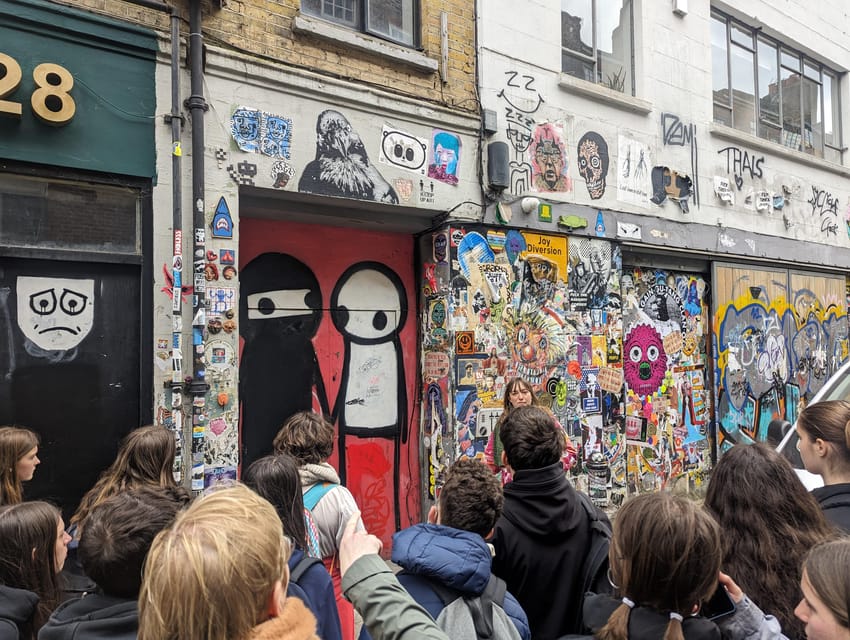
You can walk down Brick Lane alone and take plenty of pictures. What you cannot easily recreate is the guide’s explanation of what you are seeing. Several guides are artists themselves or have worked with artists, and that gives the tour a more direct link to the scene.
The best moments come when a guide slows down beside a piece and breaks it into parts. You may hear about the artist’s usual symbols, the choice of surface, the time needed to make the work, or the technical limits of working in public. You may also learn why a sticker, stencil, or paste-up is placed at a particular height or in a particular location.
The tour can change your eye. After two hours, you are more likely to notice a small sticker on a lamppost, a painted detail above a shopfront, or a character tucked into a larger mural. One guide explained that the walk starts in an area with little visible street art and builds toward streets with much more of it. That structure helps you see how location affects the work.
The explanations also cover meaning and emotion. A wall may be political, playful, personal, commercial, or simply a display of skill. You are encouraged to ask questions, and the guides make room for different levels of knowledge. Someone familiar with hip-hop and graffiti culture can follow the finer points, while a newcomer can still understand the basic ideas.
This is not a museum tour transplanted onto the street. The works remain exposed to weather, construction, new paint, and changes in ownership. That uncertainty is part of the subject. You are looking at art that belongs to a living public space, not a fixed collection.
Shoreditch and the larger East End story
As the walk continues toward Shoreditch, the art becomes a way to read the neighborhood. Your guide explains how the East End’s past affected its creative culture and why certain streets became important to artists.
The historical material is not separate from the art. It helps explain why these areas attract different communities and why public walls can become places for protest, identity, humor, or competition. You get a stronger sense of how the neighborhood has changed over time, even though the tour remains focused on art.
Shoreditch also offers a useful contrast with Brick Lane. Brick Lane is often the area people already know from photographs and guidebooks. Shoreditch gives the walk more room to show how street art spreads through side streets and less obvious corners. The route may include works on walls, signs, roofs, and floors, so keep looking above eye level and underfoot.
The tour’s pace is generally described as easy and unhurried. One recent walk took about an hour and a half rather than the full two hours, while most descriptions present the experience as two hours. Allow the full two-hour window when planning your day, since walking time and the amount of discussion can vary.
You will be standing and walking throughout. That makes comfortable shoes a good idea, and rain gear is essential in London. The activity is listed as wheelchair accessible, but street surfaces and the changing nature of the route can still matter. If you have specific mobility concerns, confirm the current route before booking.
More London Walking Tours:
- Magical London: Harry Potter Guided Walking Tour
★ 4.7 · 22,044 reviews - London: The Original Jack the Ripper Walking Tour
★ 4.7 · 7,833 reviews - Tour for Muggles The Ultimate Harry Potter Walking Tour in London
★ 5.0 · 4,684 reviews - London Jack The Ripper Guided Walking Tour
★ 5.0 · 3,131 reviews
Why the changing route matters
Street art is temporary by nature. Walls get cleaned, buildings are renovated, stickers disappear, and fresh work covers older pieces. That means no route can promise a permanent checklist of exact artworks.
For some people, this is a drawback. If you are hoping to see one specific Banksy or recreate a particular photograph, the current condition of the streets may disappoint. The tour also cannot guarantee that every famous artist named in the description will appear on every departure.
I see the changing route as part of the value. The guides update the walk so it does not become a stale list of old pieces. You get a look at what is active and visible now, along with the larger story of the area. The tour teaches you how to keep exploring after it ends, rather than giving you only a set of sights to tick off.
That is also why the experience works well for repeat visits. A return trip may reveal a new mural, a different sticker campaign, or a wall that has been altered since your first walk. The neighborhood itself becomes part of the lesson.
Is $33 a fair price for two hours?
At $33 per person, this is not the cheapest way to stroll around East London, but it is a fair price if you want interpretation rather than a self-guided photo walk. You are paying for a live English-speaking guide, route planning, access to local knowledge, and the ability to ask questions as you go.
A free walk around Brick Lane will show you plenty of art. It will not reliably explain the artists, the techniques, the rules of graffiti culture, or the East End setting behind the work. You also risk walking past small pieces that are easy to miss. The guided format earns its price by helping you see more and understand it better.
The value is strongest for first-time visitors to the area, families with teenagers, art students, and anyone curious about the difference between graffiti and street art. It also suits people who have taken similar tours in other cities and want a more personal look at London’s scene.
If you are already an expert on East London street art, some introductory material may feel familiar. Even then, the guide’s current route and personal contacts with artists can add something. For a short London activity, two hours gives you a useful amount of substance without taking over your day.
Who will enjoy this walk most?
I would recommend it to you if you like cities best when you can see how people use them. The tour is not built around grand monuments. It focuses on walls, alleyways, shopfronts, stickers, and small details that most sightseeing routes ignore.
It is particularly good for teenagers. Several families found that the walk gave young people ideas for their own art projects, and a workshop option is available separately. The tour itself is not the spray-paint session, so book the workshop only if your group wants to make art as well as look at it.
It also suits couples looking for something different from the usual London attractions. One pair chose it as a Valentine’s Day activity, which makes sense if you prefer a shared discovery to a formal museum visit.
You should think twice if you dislike walking in all weather or want a predictable list of permanent sights. The art can change, the route can adapt, and the focus is on explanation rather than spectacle alone.
Booking details and practical choices
The tour is conducted in English and lasts about two hours. It is wheelchair accessible, and you should bring rain gear because the entire experience takes place outdoors.
You can cancel up to 24 hours before the start for a full refund, and the reserve-now, pay-later option lets you keep your plans flexible. The meeting point is outside Old Spitalfields Market, under the white goat statue at Brushfield Street, London E1 6AA.
There are also two workshop combinations. A shorter 45-minute to one-hour option is available daily for people over 10. A longer two-hour version with a break is available for people over 12. If some members of your group want only the walk and others want the workshop, book the activities separately for the same day. Anyone under 16 must stay with an adult throughout.
Should you book the London Street Art and Graffiti Tour?
Book it if you want to understand East London’s street art instead of simply photographing it. The strongest parts are the guide explanations, the connection between art and East End history, and the attention to small works that you would likely pass without noticing.
I would not book it only for a guaranteed Banksy sighting, since the route changes and public art can vanish. Book it for the wider experience: Brick Lane and Shoreditch seen through the eyes of guides such as Eva, Josh, Laura, Gabi, or Natalie, with enough context to keep spotting and interpreting street art after the walk is over.
FAQ
Where does the street art tour meet?
Meet under the White Goat Statue on Brushfield Street, outside Old Spitalfields Market. Liverpool Street Station is the closest station.
How long does the walking tour last?
The tour is scheduled for two hours. The exact length can vary slightly, with one recent walk taking about an hour and a half.
Which areas does the tour visit?
The walk starts near Old Spitalfields Market and continues toward Brick Lane and Shoreditch in East London.
Is the tour wheelchair accessible?
Yes, the activity is listed as wheelchair accessible. The route takes place outdoors on changing city streets, so confirm any specific mobility needs before booking.
What language is the tour in?
The live tour guide speaks English.
Can I combine the walking tour with a street art workshop?
Yes. A shorter 45-minute to one-hour workshop is available for people over 10, and a longer two-hour option with a break is available for people over 12. You can also book the walking tour and workshop separately for members of the same group.
Just added around London
- London: “Queen” Highlights Walking Tour★ 4.3 · 48 reviews
- Couple’s photo: Romantic photoshoot in London★ 4.8 · 22 reviews
- London: Private Tour with Locals – Highlights & Hidden Gems★ 5.0 · 8 reviews
- Luxury Private Tour in London with Lunch★ 5.0 · 7 reviews
- London 1- or 2-Hour Professional Photo Shoot★ 4.9 · 6 reviews
- London: Private Black Cab Night Tour with Hotel Pick Up★ 5.0 · 11 reviews
- London: Christmas Lights Tour – With Christmas Music★ 4.8 · 9 reviews
- London: Private Pub Tour★ 4.5 · 4 reviews
London Street Art Tours, compared.

London Bike Tour: Landmarks, Secret Gems, Pub Stop & Street Art
Read our review →

Landmarks & Secrets Bike Tour with Pub & Street Art
Read our review →
East End Street Art Tour and Spray Painting Workshop
Read our review →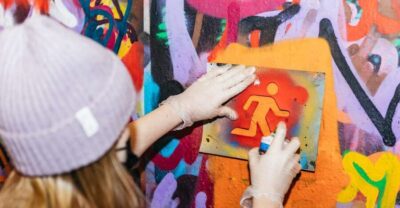
East End Instagrammable Street Art & Graffiti Tour
Read our review →
Browse the lists this tour appears in