
Reviewed · JACK THE RIPPER TOURS
London Private Jack The Ripper Tour
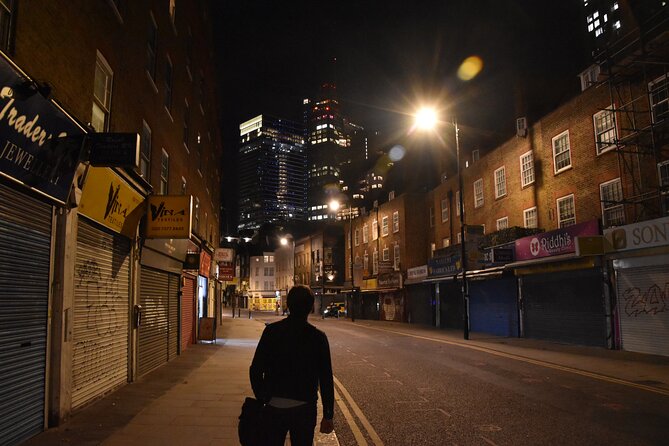
Jack the Ripper’s story is most powerful when you walk the actual streets tied to it. This private London tour takes you from the first canonical murder near Whitechapel Station through Mitre Square and Goulston Street, ending near Spitalfields Market, where Mary Kelly was killed.
I like the private format, since your group can ask questions without keeping pace with a large crowd. I also like the focus on evidence, inquests, newspaper panic, and police work, rather than only spooky storytelling. The main consideration is price: $246.91 is a serious outlay for one group, and you’ll also pay separately for the London Underground ride between Whitechapel and Aldgate.
Key points to know before you book

- Eight stops connect the main Whitechapel murder sites, including Hanbury Street, Henriques Street, Mitre Square, and Goulston Street.
- The tour lasts about two and a half hours, with roughly ten minutes at each listed stop.
- Your guide leads a private group of up to 15 people, so the cost can make more sense when shared among family or friends.
- The story goes beyond the murders, covering Victorian inquests, newspaper coverage, policing, forensic work, and the origin of the Ripper name.
- The route finishes at Liverpool Street Station, making it easy to continue sightseeing or catch onward transport.
- Comfortable shoes matter, since this is a walking tour across several East London locations.
Why the private format changes the experience
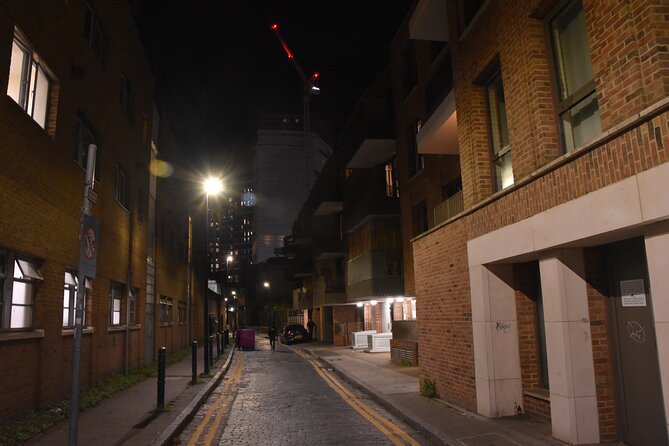
The central appeal here is not simply seeing old murder sites. It is having an expert guide connect scattered locations into one clear story. Whitechapel, Aldgate, Mitre Square, Goulston Street, and Spitalfields Market are now part of an ordinary working part of London. Without someone explaining what happened at each place, you could easily walk past many of them without noticing anything unusual.
A private tour gives you room to ask the questions that often get skipped on a larger outing. You can ask why Polly Nichols is counted as the first canonical victim, why Liz Stride’s death is disputed, or how a series of newspaper letters helped create the name Jack the Ripper.
The group limit is 15 people. That is small enough for personal attention, though not necessarily intimate if your party reaches the maximum. For a couple, the price is expensive. For a family or group of friends sharing the total, the value improves considerably.
Michael is one guide specifically associated with this experience. A solo woman who took the tour with him felt comfortable throughout and said he walked her to the Tube station at the end. That detail matters if you are booking alone or feel uncertain about an evening tour centered on violent crimes. The operator also states that a live guide leads the experience in English.
More Jack the Ripper Tours:
- London: The Original Jack the Ripper Walking Tour
★ 4.7 · 7,833 reviews - London Jack the Ripper Guided Tour with Ripper-Vision
★ 4.5 · 4,840 reviews - London: Jack the Ripper Small Group Tour
★ 4.7 · 3,159 reviews
Starting near Whitechapel Station and Polly Nichols
The tour begins at 277 Whitechapel Road, a short walk from Whitechapel Station. This is a useful starting point because you can arrive by public transport without having to search for a distant meeting point.
The first stop concerns Polly Nichols, identified here as the first official or canonical victim. Your guide explains what happened to her, how her body was found, and why historians and investigators place her first in the commonly accepted sequence.
This opening stop sets the tone. You are not only hearing a grisly account. You are also learning that the term canonical victim reflects a later effort to decide which murders were most likely connected. Jack the Ripper was never identified, and even the number of murders linked to him remains uncertain. That uncertainty is a major part of the story.
You spend about ten minutes at this stop. That may sound brief, but it keeps the walk moving. If you want long periods at each location, this tour may feel brisk. If you prefer a clear route with frequent changes of scene, the timing works well.
Victorian inquests at the former Working Lads Institute
The second stop is outside the former Working Lads Institute, where inquests into the murders took place. This gives the tour a useful change of focus. Instead of standing only at the places where bodies were found, you learn how the official investigations were handled afterward.
Your guide explains how Victorian inquests worked, which witnesses were called, and how the proceedings connected to the murders. This helps you picture the legal and administrative machinery behind the newspaper headlines.
The word inquest can sound dry, but it is important here. The proceedings reveal what authorities knew, what they did not know, and how evidence was handled before modern forensic methods. You also get a better sense of how much of the case rests on witness statements, incomplete records, and later interpretation.
Again, the scheduled time is about ten minutes. Listen closely and ask questions early, since this is one of the stops where your private format can be especially useful.
Hanbury Street and the panic after Annie Chapman
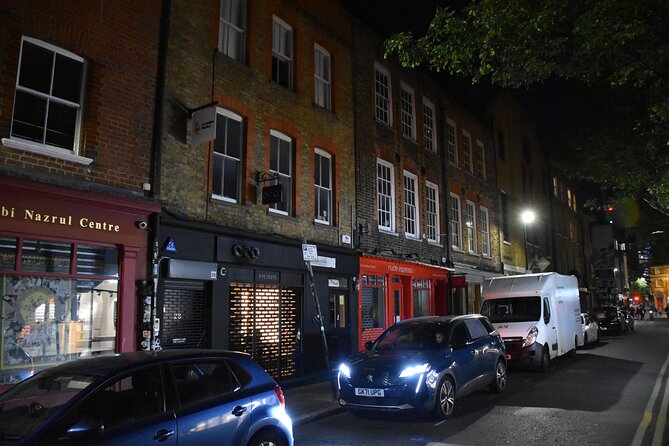
At 29 Hanbury Street, you learn about Annie Chapman, the second canonical victim. Her death created a new level of public and media alarm, increasing pressure on the local police.
This stop is valuable because it explains how the Ripper story became a public event. The murders were tragic, but the newspapers helped turn them into a wider London drama. Sensational reporting, fear, rumor, and competition for attention all fed the image of an unknown killer moving through Whitechapel.
I would pay attention to the guide’s explanation of how the press shaped the case. Many people approach a Jack the Ripper tour expecting a simple hunt for clues. The more useful question is how the public came to believe the murders formed one pattern, and how that pattern grew into a lasting legend.
The site itself is not presented as a preserved crime scene. You are seeing a modern street connected to a historical event, so the guide’s explanation does most of the work.
More Private:
- The Premier Classic London: Private 4-Hour Tour in a Black Cab
★ 5.0 · 2,737 reviews - Stonehenge Inner Circle Private Tour from London with Bath Visit
★ 5.0 · 1,909 reviews - London: Tower of London Entry & Beefeater Private Audience
★ 4.4 · 1,441 reviews - Private Tour: Black Taxi Tour of London
★ 5.0 · 1,153 reviews
Henriques Street and the disputed case of Liz Stride
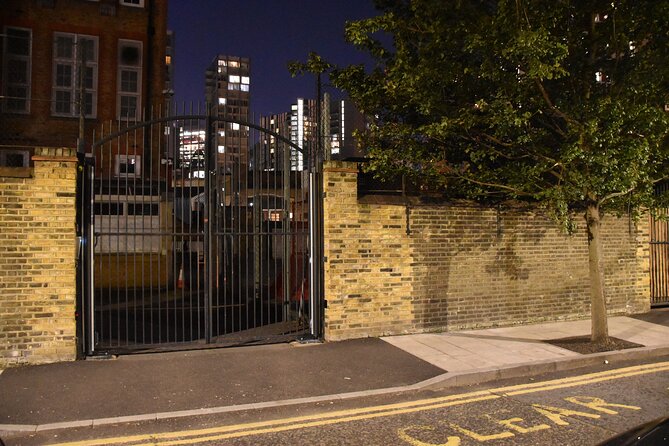
The fourth stop is Henriques Street, formerly Berner Street. This is where Liz Stride was found dead.
Stride’s inclusion raises one of the key questions of the tour. She was not mutilated after her murder, which led some people to argue that she was not a true Ripper victim. Your guide explains why the case remains disputed and why the list of canonical murders is not as fixed as it may first appear.
This is one of the better stops for anyone who wants more than a standard horror story. It shows how investigators and later writers weigh similarities and differences between cases. A missing detail can be just as important as a matching one.
Henriques Street also prepares you for the next stop, Mitre Square. The two murders are linked as the double event, but that connection depends on timing, geography, and interpretation.
Mitre Square and the double event
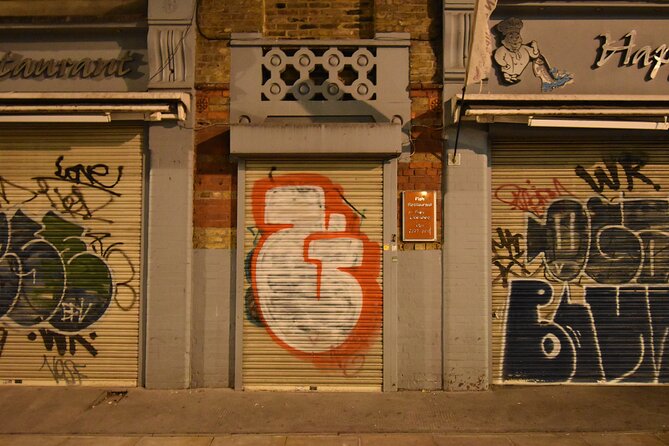
Mitre Square marks the murder of Catherine Eddowes, the fourth canonical victim. Her death, together with Liz Stride’s, is known as the double event because both women were killed on the same night.
This was the moment when fear intensified. The idea that one killer had struck twice in a single night made the case more alarming, and it helped draw wider attention to the Whitechapel murders.
The tour also explains how communications sent to the Central News Agency contributed to the name Jack the Ripper. The story of the name is important because it shows how a label can shape public memory. The murderer was often described in different ways before the Ripper name caught on.
Mitre Square is one of the most significant locations on the route, but you should keep your expectations practical. London has changed dramatically since the 1880s. The meaning comes from understanding the location and its role in the case, not from seeing a preserved Victorian setting.
Goulston Street and the clue that drove speculation
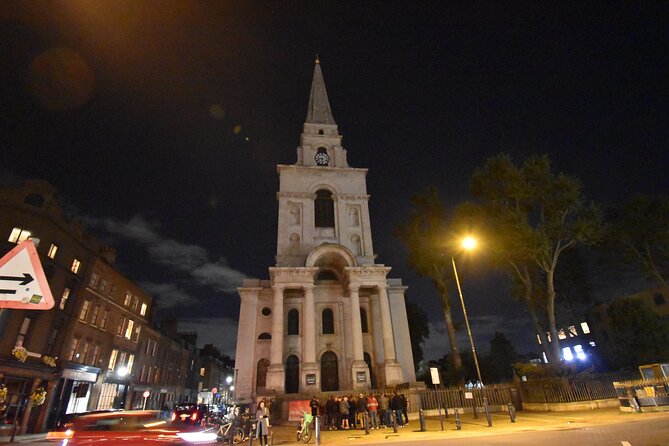
The sixth stop is Goulston Street, where a major clue connected with the investigation was found. Your guide explains why it mattered and how it affected the search for the killer.
This is a good place to ask about the limits of evidence. A clue can appear important without providing a clear answer. The Ripper investigation generated plenty of suspicion, but no conclusive identification. Goulston Street helps show why the case continues to attract competing theories.
The stop also links the crime scenes to the wider police response. You are not just following a killer’s movements. You are following the way authorities tried to build a case from fragments, hurried observations, and uncertain testimony.
Because the tour gives you a private guide, you can ask for clarification if the evidence becomes confusing. That is useful here, where the story can quickly become crowded with names, dates, and theories.
Gunthorpe Street and the question of an earlier murder
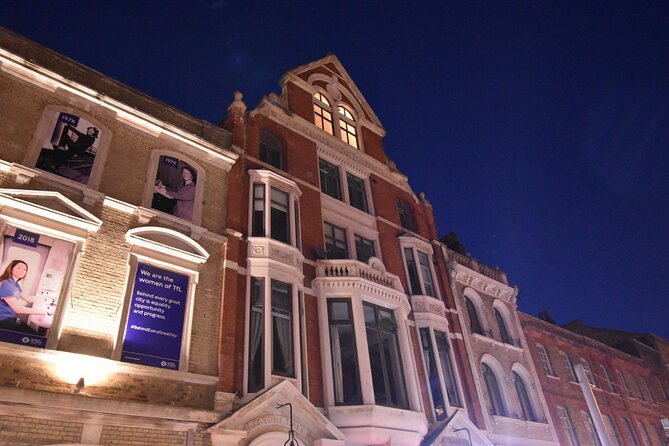
At Gunthorpe Street, the guide discusses an earlier possible murder. This may have been the Ripper’s first killing, though it is not treated in the same certain way as the five canonical cases.
The distinction between confirmed, probable, and possible cases is one of the strongest educational parts of the route. It is easy for popular accounts to fold every unsolved murder into the Ripper story. A careful explanation should show you where the evidence becomes weaker.
This stop also brings the story into the present by discussing modern policing techniques and forensic science. Investigators today can revisit old cases with tools that Victorian police did not have. Even so, modern analysis cannot repair every missing record or prove every theory.
You also explore why these murders still hold public attention. The lack of a confirmed killer is part of the reason. So are the narrow streets, anonymous victims, sensational newspapers, and the uneasy gap between what is known and what people want to believe.
Spitalfields Market and Mary Kelly
The final stop is near Spitalfields Market, the area associated with Mary Kelly, the fifth and final canonical victim. Her case is often treated as the most severe of the five, and it has played a major role in the lasting image of Jack the Ripper.
Ending near Spitalfields Market gives the tour a clear final point. You move from the first canonical murder near Whitechapel to the last in the accepted sequence, with the intervening stops filling out the investigation.
The area today serves ordinary London life, so you will not find a frozen Victorian crime scene. That contrast is part of the experience. You are standing in a modern city while hearing about events from a very different London.
The tour finishes at Liverpool Street Station. This is practical, especially if you plan to continue around the City, return to your hotel, or connect to another Underground or rail route.
Timing, walking, and transport between stops
The full experience lasts approximately two hours and 30 minutes. The eight listed stops each allow about ten minutes, with the remaining time used for walking and explanations along the route.
You should wear comfortable shoes. The route covers several East London locations, and the short stops do not mean you will spend most of the tour standing in one place. A moderate level of physical fitness is recommended.
Travel on the London Underground between Whitechapel and Aldgate is not included. Plan for that extra fare and listen carefully to the guide’s instructions about when the transfer takes place. The meeting point is near Whitechapel Station, while the tour ends at Liverpool Street Station.
The experience is offered in English and uses a mobile ticket. Service animals are allowed, and the tour is near public transportation. Since the group is private, only your party takes part.
Is $246.91 good value for your group?
The price is $246.91 per group of up to 15 people. That makes the cost look high if you are booking for one or two people, but more reasonable if you are splitting it among a larger party.
For example, a group of 10 pays roughly $24.69 per person before any Underground fare. A full group of 15 pays about $16.46 per person. The private guide is the main value: you get a route designed for your group rather than joining a standard shared walk.
I would choose this option for a family, small group of friends, or private occasion where questions and flexibility matter. I would hesitate if I were traveling alone on a tight budget, since a shared walking tour would likely be easier to justify financially.
The tour does not include food, drinks, or transport fares. The listed sites are outdoor locations, and there is no admission fee for the stops themselves.
Who will enjoy this London walking tour?
You should consider booking if you enjoy:
- Unsolved crimes and historical investigations
- London stories that connect streets to major events
- Questions about evidence, police work, and newspaper influence
- Private tours where you can ask detailed questions
- Walking routes that finish near a useful transport hub
The tour is also a good fit if you want a different view of London beyond royal landmarks and major museums. It presents Whitechapel through working-class Victorian life, police investigations, public fear, and newspaper culture.
You may want to skip it if you dislike murder stories or expect theatrical scares. The focus is on the case, the locations, and the evidence. Also think twice if walking for two and a half hours would be uncomfortable.
The private setting can be reassuring for solo participants. Michael’s reported habit of walking a solo guest to the Tube station is a useful personal touch, though guide assignments can vary.
Booking, cancellation, and final advice
You receive confirmation at booking, and free cancellation is available up to 24 hours before the start time. Changes or cancellations inside that 24-hour window are not accepted for a refund.
The tour is often booked well ahead, with an average booking time of about 45 days. If your London dates are fixed, reserve early rather than assuming you can arrange it at the last minute.
Should you book the London Private Jack the Ripper Tour?
Book it if you want the case explained in place, with a private guide who can answer questions and separate solid evidence from later speculation. The route covers the major canonical murders and adds useful context about inquests, newspapers, police work, and forensic science.
I would especially recommend it for a group of friends or family members who can share the $246.91 cost. Solo visitors and couples should weigh the price carefully. If you do book, wear good shoes, allow extra money for the Underground, and approach the tour as a historical investigation rather than a haunted walk.
FAQ
How long is the London Private Jack the Ripper Tour?
The tour lasts approximately two hours and 30 minutes.
Where does the tour start?
It starts at 277 Whitechapel Road, London E1 1BY, a short walk from Whitechapel Station.
Where does the tour finish?
The tour finishes at Liverpool Street Station, London EC2M 7QA.
Is transport included in the tour price?
No. Travel on the London Underground between Whitechapel and Aldgate is not included.
How many people can join the private tour?
The private tour is for your group only, with up to 15 people.
Can I cancel for a full refund?
Yes. You can cancel at least 24 hours before the experience start time for a full refund. Cancellations or changes made less than 24 hours before the start time are not accepted for a refund.
Just added around London
- Up at The O2:Twilight Climb with Guided Tour with Panoramic Views★ 5.0 · 50 reviews
- Private Chauffeur-London Heathrow from/to Southampton Cruise Port★ 5.0 · 9 reviews
- Kensington Palace VIP Garden Tour with Royal High Tea★ 4.5 · 71 reviews
- Urban Canvas: Exploring Shoreditch’s Vibrant Street Art★ 5.0 · 36 reviews
- Up at The O2: Sunset Climb with Guided Tour with Panoramic Views★ 5.0 · 110 reviews
- Secrets of the London Underground Small Group Walking Tour★ 4.5 · 38 reviews
- Ultimate introduction to photography in Central London★ 5.0 · 19 reviews
- Full-Day Self-Guided Paris Tour from London by Eurostar with Seine River Cruise★ 3.5 · 22 reviews
Jack the Ripper Tours, compared.
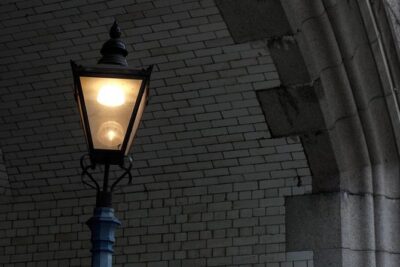
London Jack the Ripper Guided Tour with Ripper-Vision
Read our review →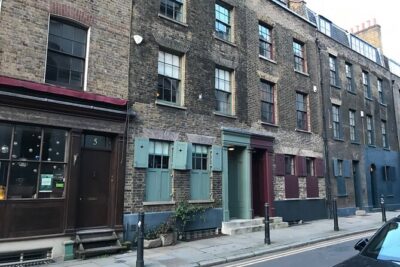
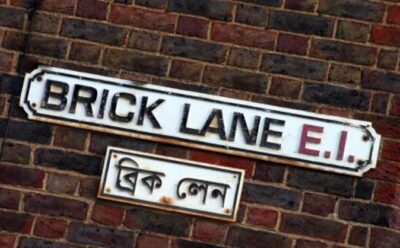
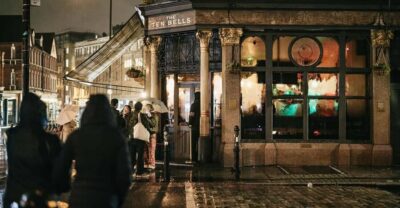
German Language : Original Jack the Ripper Tour
Read our review →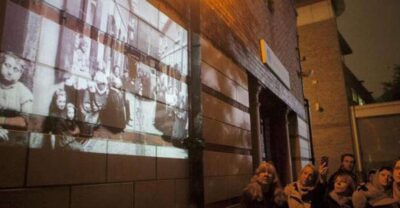
Jack the Ripper Walking Tour – Ripper Vision Tours
Read our review →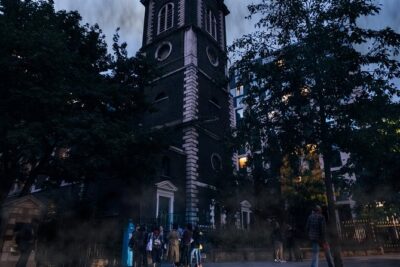
Ultimate Jack the Ripper : Guided Tour of London
Read our review →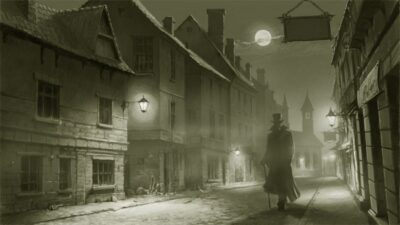
Browse the lists this tour appears in