
Reviewed · LONDON PHOTOGRAPHY TOURS AND PHOTO SHOOTS
London Photography Tour – Private Tour
London becomes your classroom on this private photography walk, with a professional fine-art photographer turning famous sights into practical lessons. You will photograph Trafalgar Square, Piccadilly Circus, Horse Guards, Big Ben, Westminster Abbey, and the London Eye while working on composition, light, focus, and camera settings.
I like the personal tuition, since your guide can adjust the pace and advice to your camera and skill level. I also like the range of subjects, from lions and statues to red buses, mounted guards, architecture, and river views. Guide Lou receives especially warm praise for her patient, clear instruction.
The main consideration is the price: $336.40 per person is a serious sum for a four-hour walk. The value is strongest if you want to improve your photography, not simply tick off London sights.
Key points to know before you book
- A private four-hour lesson: Your group gets the photographer’s full attention, rather than sharing camera advice with strangers.
- Lou’s practical teaching: She helps with exposure, composition, focusing, aperture, shutter speed, white balance, and lens choices.
- Nine central London photo stops: The route links Trafalgar Square, Piccadilly Circus, Whitehall, Westminster, and the London Eye.
- Useful for any camera: You can bring a DSLR, another digital camera, or a smartphone.
- A walking tour with a real purpose: You cover major sights while making photographs, not just hearing descriptions.
- Bring power and storage: A fully charged battery and extra memory cards matter when you may take hundreds of pictures.
What this private London photo walk really offers
This is part sightseeing tour, part hands-on photography class. You meet near Charing Cross and spend about four hours walking through central London with a professional photographer who teaches while you shoot.
The guide is not simply taking you to attractive places and telling you to point your camera. You work on specific skills at each stop. That can mean changing aperture to control background blur, using shutter speed to freeze movement, choosing a better angle, or finding a frame that gives a familiar landmark more impact.
That personal format is important. In a large group, a guide may explain camera settings once and move on. Here, you can ask about your own camera and get help as you use it. Lou is praised for being encouraging, clear, and patient, which matters if you are still finding your way around manual settings.
The tour suits beginners, but it is not limited to beginners. Someone who already knows the basics can use the walk to sharpen composition, exposure, and visual judgment. A 17-year-old with an SLR joined one outing, so it can work well for families with older children who enjoy taking pictures.
You are responsible for bringing your own equipment. The tour works with digital cameras and smartphones, and the photographer knows a range of cameras, but you should arrive with a full battery and enough memory. One outing produced hundreds of images, including statues, shop windows, cabs, parks, telephone boxes, architecture, portraits, and skyline views.
More London Photography Tours and Photo Shoots:
- London: Private Photoshoot with Video Clip Option
★ 4.8 · 182 reviews - Professional Photoshoot in London Photographer
★ 5.0 · 102 reviews - Private landmarks photoshoot for families and couples
★ 5.0 · 92 reviews
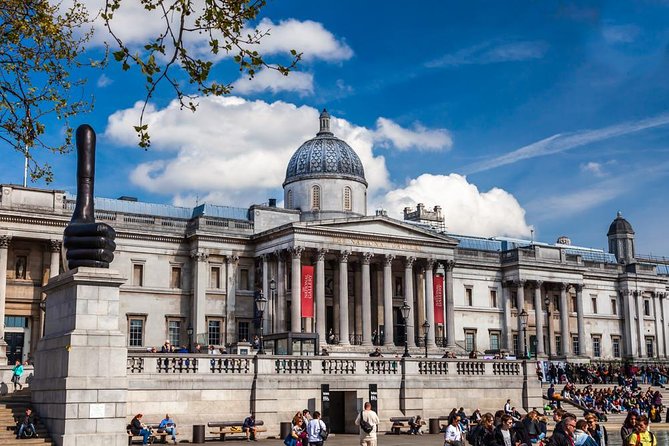
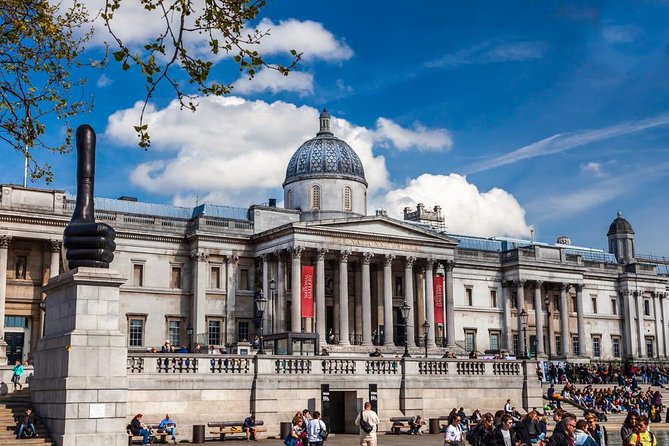
Trafalgar Square: start with light, framing, and scale
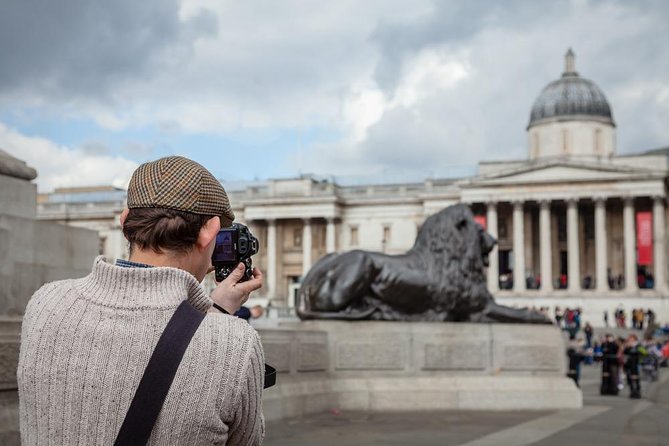
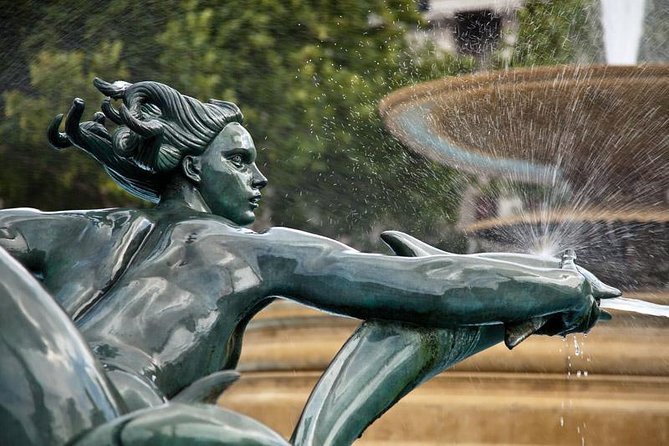
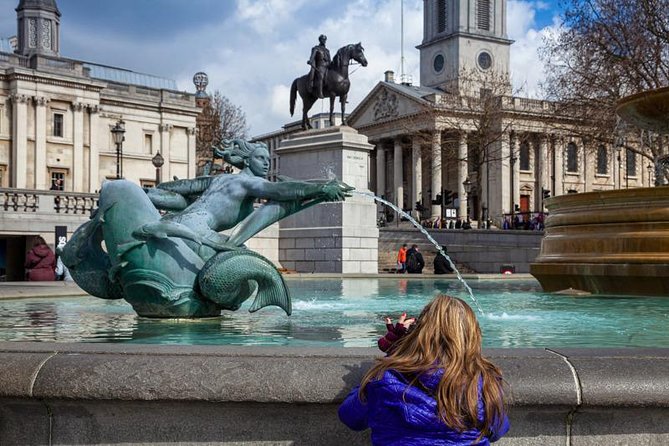
Trafalgar Square is a useful opening lesson because it gives you many subjects in one place. You can photograph the Landseer Lions, fountains, statues, the National Gallery, street entertainers, and pavement artists creating chalk drawings.
The wide space also gives you room to experiment. Your guide can show you how aperture affects depth of field, how light changes the mood of a scene, and how framing can make a busy public square feel more orderly. You will also work with the long view toward Whitehall, where distance and perspective become part of the photograph.
This is one of the better places to learn composition because the square contains both grand monuments and small human details. Try a wide view for the full setting, then move closer to a statue or performer. Your guide can help you decide which lens or focal length fits each approach.
The stop lasts about 35 minutes. Admission is free, and you do not enter a paid attraction here. Crowds can affect the shot, though that is also part of the lesson. People, movement, and street activity give the square its character, so you learn to work with changing conditions rather than wait for a perfectly empty scene.
The National Gallery: use architecture as your subject
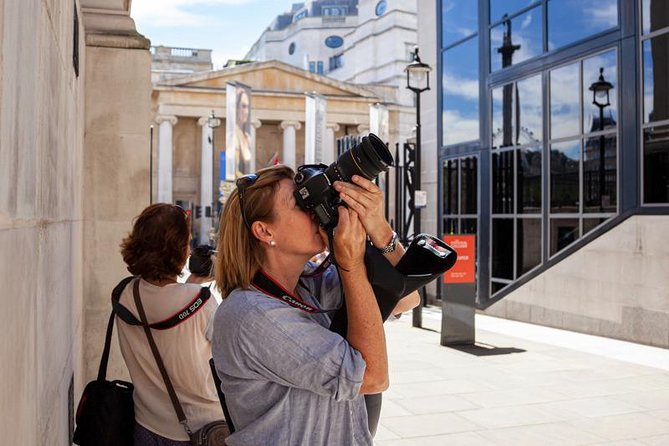
The National Gallery stop lasts about 15 minutes and focuses on the building’s visual structure. You work on angles of view, depth of field, and focusing techniques while photographing the exterior and surrounding details.
This is a short stop, so do not expect a museum visit or time inside the galleries. The value comes from learning to notice lines, surfaces, scale, and contrast in a building you might otherwise photograph quickly and forget.
If you tend to take only straight-on pictures, this is where the guide can push you to change your position. A low viewpoint, a tighter crop, or a frame that uses architectural lines can give a familiar facade more force. You also get help setting the camera correctly before moving on.
Leicester Square: statues, gardens, and changing viewpoints
The walk continues to Leicester Square, a lively entertainment area known for movie premieres and red-carpet events. The gardens, fountains, William Shakespeare statue, and Charlie Chaplin statue provide different subjects and different ways to handle light.
This stop lasts about 25 minutes. You will practice composition and framing, then use aperture and depth of field to photograph the statues. A portrait of Charlie Chaplin gives you a clear exercise: focus carefully on the face, control the background, and watch how light shapes the subject.
The square also teaches flexibility. A statue is fixed, but your image changes when you alter your angle, focal length, or distance. The same applies to the garden and fountain views. Your photographer helps you see these differences and explains how to develop your own photographic judgment.
A different sort of day out in London altogether:
- From London: Harry Potter Warner Bros Studio Tour
★ 4.7 · 26,588 reviews - London: Westminster to Greenwich River Thames Cruise
★ 4.5 · 22,836 reviews - Magical London: Harry Potter Guided Walking Tour
★ 4.7 · 22,044 reviews - London: Madame Tussauds London
★ 4.6 · 20,915 reviews
Piccadilly Circus: work with classic London details
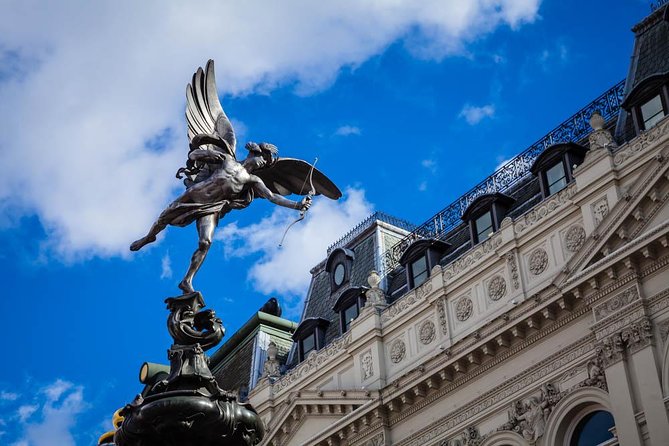
From Leicester Square, you walk through side streets and small shops toward Piccadilly Circus. This section gives you a mix of old-fashioned details and familiar London symbols, including red telephone boxes, red buses, the Statue of Eros, and the banners above Regent Street.
The 45-minute stop is one of the longer teaching sessions. You cover camera handling, composition, light, white balance, and fresh ways to view a location. The guide also takes a short working break to review your progress and discuss what to concentrate on during the rest of the walk.
Piccadilly Circus can be visually crowded, which makes it a useful place to learn editing in the camera. You need to decide what belongs in the frame and what distracts from the subject. A red bus may be the main subject, or it may add scale to a building. A telephone box can work as a bold foreground detail rather than a stand-alone postcard image.
You should expect walking between stops, not a vehicle-based tour. Comfortable clothing and weather protection are sensible because the experience operates in all weather.
Horse Guards Parade and Whitehall: photograph movement
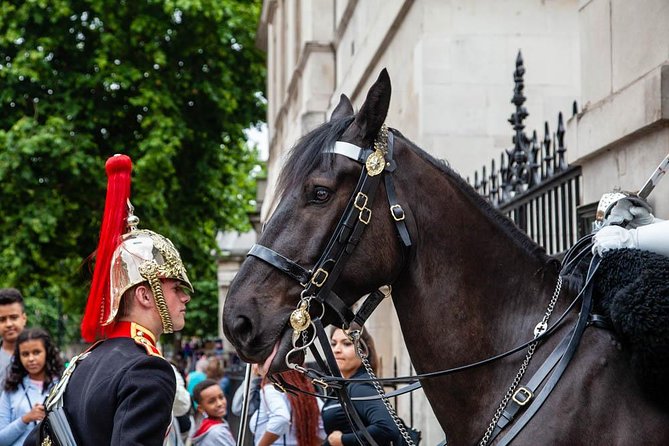
The route then reaches Admiralty Arch, Horse Guards Parade, and Whitehall. Here you can photograph horse guards and sentries in colorful uniforms, along with mounted guards, statues, the Cabinet War Rooms, and the memorial to the Women of the Second World War.
The 40-minute session focuses on portrait settings, shutter speed, focusing, and fill flash. Mounted guards give you a chance to freeze action, while stationary sentries let you concentrate on detail, posture, and composition.
This stop has strong visual variety. You can make a formal portrait of a guard, then switch to a wider image showing the setting and surrounding architecture. Your guide can help you decide when to use a faster shutter speed and how to focus on a moving subject.
You also pass a fine London Underground sign near Westminster. Small details like this can help tell the story of the walk. The tour is not just about the biggest landmarks. It trains you to notice signs, uniforms, street furniture, and public memorials.
Big Ben and Parliament Square: make icons less ordinary
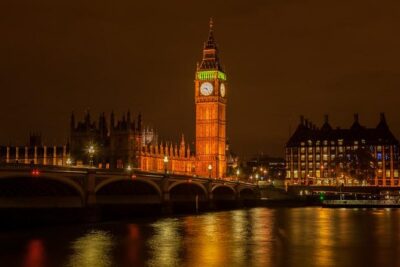
At Westminster, you photograph Big Ben, the Houses of Parliament, and a red telephone box. This is classic London territory, but famous subjects can be difficult because everyone recognizes the usual view.
That is where personal instruction earns its keep. Your guide can help you choose a useful viewpoint, balance the tower with the surrounding architecture, and avoid a flat snapshot. The 15-minute Big Ben stop is brief, so have your camera ready before you arrive.
The following 30 minutes in Parliament Square give you more time with statues of Winston Churchill, Mahatma Gandhi, and Nelson Mandela. You photograph the figures against the Houses of Parliament, working with scale, background, and placement.
This section is especially good for learning how to combine a person or statue with its setting. A tight photograph shows expression and detail. A wider frame explains where the statue is and why it matters. You can practice both approaches without needing an admission ticket.
Westminster Abbey: photograph the outside with scale
The Westminster Abbey stop lasts about 15 minutes and stays outside. You photograph the architecture while working on composition, framing, scale, lens choice, zoom selection, and creative aperture settings.
The building’s size makes scale important. A wide view can show the full structure, while a closer crop can highlight stonework or architectural detail. Your photographer can help you decide when a wider lens is useful and when zooming in will create a cleaner image.
Do not book this tour expecting an interior visit to the Abbey. The focus here is external photography and the building’s place in London’s royal and political story, including its connection with royal weddings.
The London Eye: finish with river views
The final stop is across the river from the London Eye. At about 443 feet, the wheel gives you a clear lesson in scale and proportion. You can photograph the structure itself, then include river views and activity to show how it relates to the city around it.
The 20-minute session covers light, depth of field, shutter speed, focusing, composition, and general camera handling. The river gives you moving subjects and changing reflections, so you may need to adjust settings instead of relying on one approach.
This is a fitting finish because it brings together many of the day’s skills. You consider the whole frame, not only the landmark. You choose how much sky, river, and surrounding city to include. Your guide remains available to help you try another angle or correct a setting before the tour ends.
The stated end point is Victoria Embankment. From there, you can continue exploring London, though the tour itself does not include lunch or refreshments.
The price, walking pace, and practical tradeoffs
At $336.40 per person, this is expensive if your main aim is a quick orientation to London. You can see many of the same sights on your own for the cost of local transport and a self-guided walk.
The price makes more sense for a private lesson. You are paying for a photographer’s time, personalized advice, camera help, photo review, and a route that combines major sights with repeated practice. A private group can also move at its own pace, ask more questions, and spend longer on a subject that catches your eye.
The tour is advertised with group discounts, but the amount of any discount is not given. The booking is private and only your group participates. English is the tour language.
Plan for a substantial walk lasting around four hours. The separate stops add up to the full tour time, and you should dress for the forecast since the walk runs in all weather. Bring a charged battery, extra memory cards, and your preferred camera. A smartphone is acceptable, but you will get the most from the session if you know how to access its camera controls.
You can cancel free of charge up to 24 hours before the start time. Changes or cancellations made inside that period are not accepted for a refund.
Who will get the most from this experience?
I would choose this tour for someone who wants to return from London with better photographs and better control of a camera. It is particularly useful if you understand basic photography but struggle with exposure, focus, or composition in real street conditions.
It also suits couples, families, and small private groups with mixed skill levels. A beginner can work on camera handling while a more experienced photographer concentrates on viewpoint and visual choices. An older child or teenager who enjoys photography can take part, too.
I would not choose it if you want a relaxed sightseeing walk with long stops inside museums or historic buildings. You do not enter the National Gallery or Westminster Abbey, and refreshments are not included. You should also think carefully about the cost if you plan to use only automatic smartphone snapshots.
Should you book the London Photography Tour?
Book it if the private teaching is the main attraction. Lou’s patient guidance, the chance to review your progress during the walk, and the variety of subjects make this more useful than a standard photo stop at a famous landmark.
Skip it if you mainly want information about London history or a low-cost way to see central London. For the right person, though, the tour turns a half-day of sightseeing into practice you can use on every future trip. You leave with photographs, but the more lasting benefit is knowing how to make the next photograph better.
FAQ
How long does the London Photography Tour last?
The tour lasts approximately four hours.
Where does the tour start?
It starts at Charing Cross, London WC2N 5DP. Charing Cross rail and Tube stations are nearby.
Where does the tour end?
The tour ends at Victoria Embankment in London.
Is this a private tour?
Yes. Only your group participates in the private tour or activity.
What language is the tour conducted in?
The tour is conducted in English.
What kind of camera can I bring?
The experience is suitable for all types of digital cameras, including smartphones. You should bring your own camera.
What equipment should I bring?
Bring a fully charged battery and additional memory cards, since you may take many photographs during the walk.
Are food and drinks included?
No. Refreshments and lunch are not included.
Can I cancel for a full refund?
Yes, if you cancel at least 24 hours before the experience start time. Cancellations made less than 24 hours before the start time are not refundable.
Just added around London
- Up at The O2:Twilight Climb with Guided Tour with Panoramic Views★ 5.0 · 50 reviews
- Private Chauffeur-London Heathrow from/to Southampton Cruise Port★ 5.0 · 9 reviews
- Kensington Palace VIP Garden Tour with Royal High Tea★ 4.5 · 71 reviews
- Urban Canvas: Exploring Shoreditch’s Vibrant Street Art★ 5.0 · 36 reviews
- Up at The O2: Sunset Climb with Guided Tour with Panoramic Views★ 5.0 · 110 reviews
- Secrets of the London Underground Small Group Walking Tour★ 4.5 · 38 reviews
- Ultimate introduction to photography in Central London★ 5.0 · 19 reviews
- Full-Day Self-Guided Paris Tour from London by Eurostar with Seine River Cruise★ 3.5 · 22 reviews
London Photography Tours and Photo Shoots, compared.
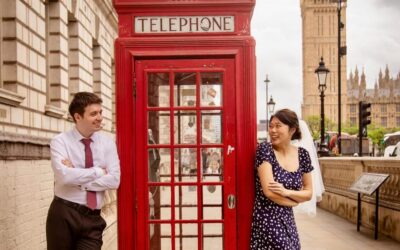
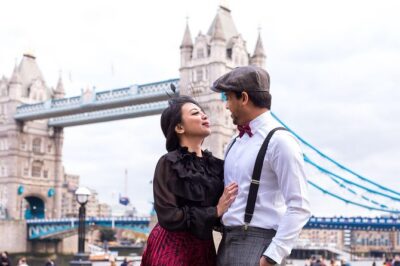
Professional Photoshoot in London Photographer
Read our review →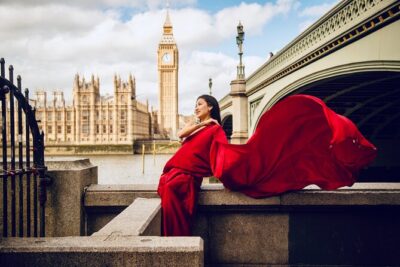
Browse the lists this tour appears in