
Reviewed · JACK THE RIPPER TOURS
London – Jack the Ripper Small Group Tour
Jack the Ripper’s story is best understood on foot, in the East London streets where the murders happened. This tour follows a compact route from Whitechapel Road through Brick Lane and Spitalfields, focusing less on cheap shocks and more on the victims, the police investigation, and the people who might have been responsible.
I like the small maximum group of 15 and the radio headsets, which let you hear guide Richard Walker even beside traffic and evening crowds. I also like the iPad images, which help you picture streets and buildings as they appeared in 1888. The main drawback is that you spend long periods standing while Richard talks, so this suits people comfortable with a brisk, 1.5-mile walk and limited chances to sit.
Richard’s approach is educational rather than spooky. You’ll hear theories, crime-scene details, and social history, but this is not a haunted walk built around gore. That makes it a good fit for serious true-crime fans and families with older children, but less so if you want theatrical scares.
Key points to know before booking
- Richard Walker leads the walk with an iPad and radio headsets, so you can follow the story clearly while moving through busy streets.
- The route covers four murder sites and about 1.5 miles, ending near Liverpool Street Station.
- The victims receive unusual attention, with discussion of their lives and the assumptions made about them in Victorian London.
- The tour examines several suspects and competing theories, including police profiles and geographical clues.
- The group can include up to 15 people, smaller than many Jack the Ripper walks in London.
- This is a factual, theory-based tour rather than a scary ghost walk, with much of the time spent standing and listening.
A serious look at Jack the Ripper in Whitechapel
Many Jack the Ripper tours treat the killer as a theatrical character. Richard Walker takes another route. He uses the murders as a way into the lives of the women who died, the poverty of Victorian Whitechapel, and the uncertain evidence left behind.
That distinction matters. You will hear about how the crimes happened, where they happened, and who might have committed them. But the emphasis is not on turning murder into entertainment. Richard also questions familiar claims, including the idea that all five women were definitively prostitutes. He examines what witnesses actually saw, what police assumed, and how later writers shaped the popular story.
The tone can be lively. Richard is described as an enthusiastic storyteller with a strong personal interest in the case, and the small group gives you room to ask questions. Still, the format is mainly a guided talk at several locations. If you prefer constant movement or a highly interactive role-play, you may find parts of the walk slow.
The radio system is a useful touch. Each person receives an earpiece, allowing Richard to speak without shouting. That helps when the group is near roads, pubs, or other tour groups. You also receive images on an iPad, giving you a visual link to vanished streets and older versions of the buildings around you.
More Jack the Ripper Tours:
- London: The Original Jack the Ripper Walking Tour
★ 4.7 · 7,833 reviews - London Jack the Ripper Guided Tour with Ripper-Vision
★ 4.5 · 4,840 reviews - London: Jack the Ripper Small Group Tour
★ 4.7 · 3,159 reviews
Whitechapel Road and the first victim
The tour begins at 7 p.m. at 279 Whitechapel Road, opposite the London Hospital. This is where Emma Elizabeth Smith died after being attacked on April 3, 1888.
Richard uses this opening to place the case in its setting. Whitechapel was not an isolated crime zone. It was a crowded East London district shaped by poverty, lodging houses, migration, work, drink, and poor housing. The first stop is brief, about 10 minutes, but it gives you the basic frame for the evening.
The meeting point is close to public transportation, which is helpful after a full day in London. Because the walk takes place after dark, arriving with enough time to find 279 Whitechapel Road is wise. You do not want to begin the tour by rushing along an unfamiliar stretch of street.
Buck’s Row and Polly Nichols
From Whitechapel Road, the group moves to Buck’s Row, the site linked to Polly Nichols, commonly identified as the first canonical victim of Jack the Ripper.
Here Richard examines the crime scene: when the body was found, what the location looked like, and how the murder may have been carried out quickly and quietly. He also introduces an early suspect and asks you to consider how the evidence fits, or fails to fit, the theory.
This section lasts about 20 minutes. The subject is grim, but the presentation is not designed to shock you with graphic detail. Richard’s method is closer to a historical investigation. You listen, look at the location, and weigh the evidence.
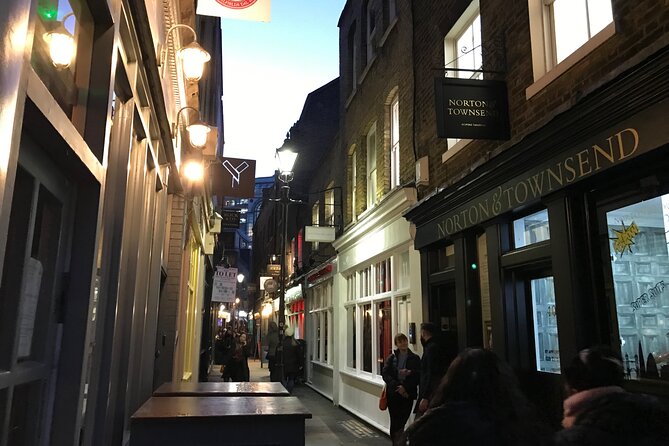
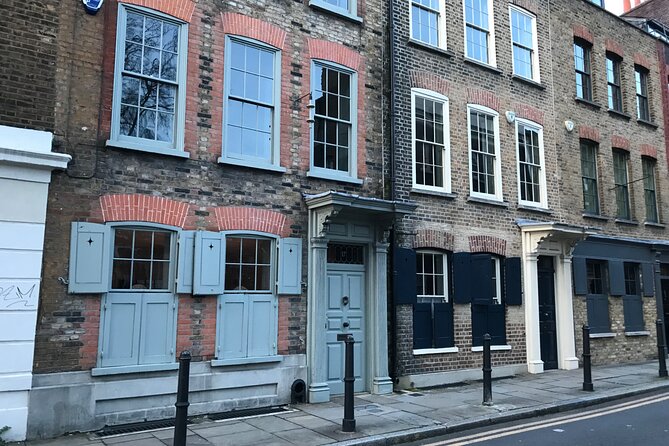
The modern street is not a perfect recreation of 1888, so you should not expect preserved crime scenes. The value comes from understanding distance, location, and movement. Walking the route makes the police reports and witness accounts easier to picture than they are in a book.
Brick Lane, lodging houses, and the police profile
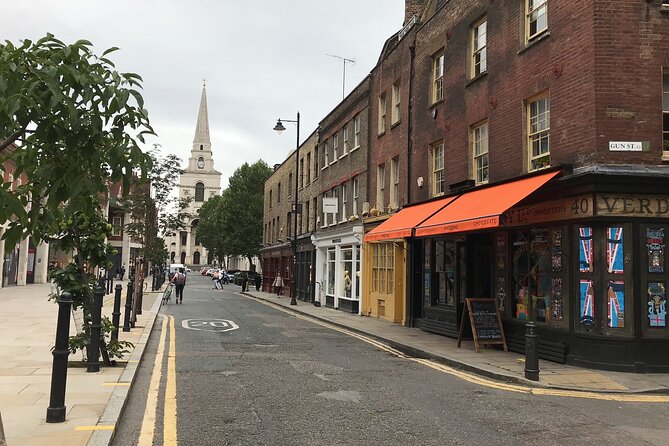
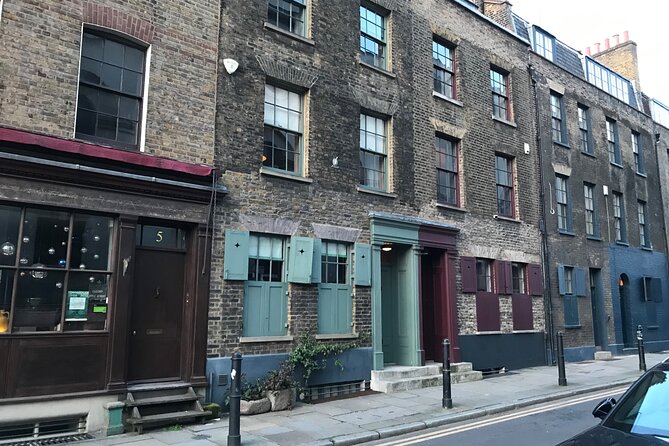
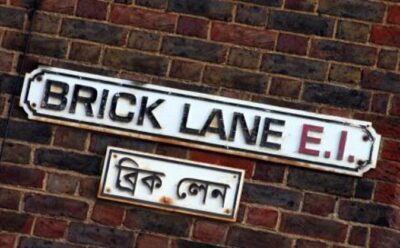
Brick Lane is one of the most recognizable parts of the route. Today it is famous for curry restaurants, food stalls, and street culture. In the Ripper story, it also helps define the eastern edge of the area where the five victims lived at the time of the murders.
Richard connects Brick Lane with Thrawl Street, Commercial Street, and the lodging house where Polly Nichols stayed. He also discusses Flower and Dean Street, associated with the third and fourth victims. These details show how close the women lived to one another and why geography became an important part of the investigation.
This is one of the strongest parts of the tour for anyone who wants more than a list of suspects. Scotland Yard developed ideas about where the killer might live based on the location of the murders. Richard also discusses a geographical profile created much later by the FBI, then compares it with a specific suspect.
You spend about 20 minutes here. Some of that time may be spent standing in one place while Richard explains the evidence. Wear comfortable shoes and dress for an evening outdoors. The distance is manageable, but the combination of walking and standing can be tiring if you have mobility concerns.
A different sort of day out in London altogether:
- From London: Harry Potter Warner Bros Studio Tour
★ 4.7 · 26,588 reviews - London: Westminster to Greenwich River Thames Cruise
★ 4.5 · 22,836 reviews - Magical London: Harry Potter Guided Walking Tour
★ 4.7 · 22,044 reviews - London: Madame Tussauds London
★ 4.6 · 20,915 reviews
Christ Church Spitalfields and the Ten Bells
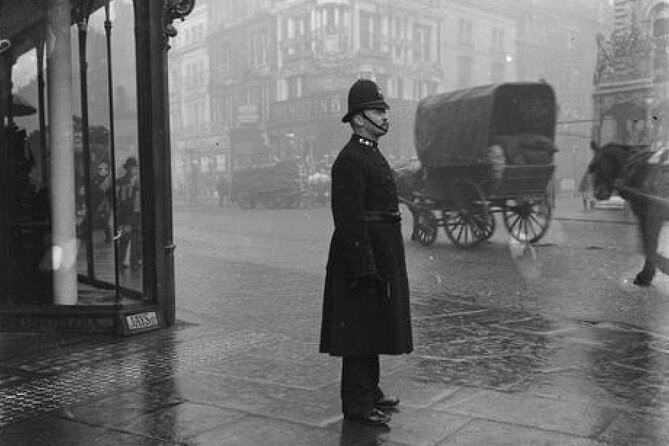
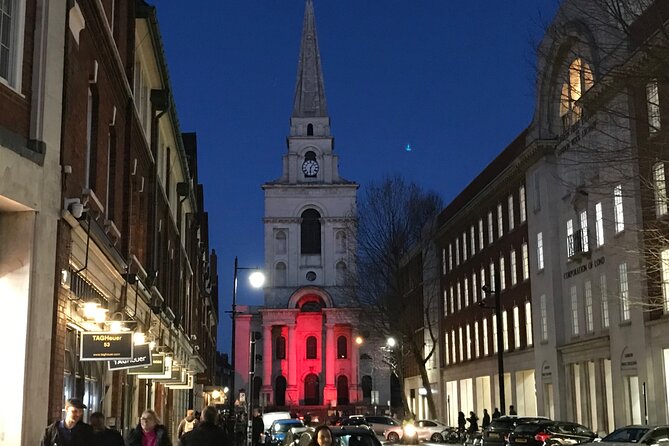
Christ Church Spitalfields provides one of the route’s clearest visual breaks. Designed by Nicholas Hawksmoor, the church is an impressive example of English Baroque architecture and a major landmark in the district.
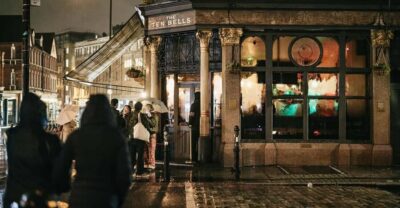
Across from it is the Ten Bells pub, associated with the women who lived and drank nearby. The pub’s name refers to the church bells. Richard uses this stop to connect the physical neighborhood with the social world of the victims.
The stop lasts about 15 minutes. Entry to the pub is not included, and the walk does not promise a break for coffee or tea. You may see the building from outside, but you should not assume you will have time to sit inside.
This is also a useful reminder that the tour is not only about murder. Churches, markets, streets, pubs, and lodging houses all formed part of daily life in Spitalfields. The setting gives the case a human scale that a book or podcast cannot quite provide.
Old Spitalfields Market and Victorian poverty
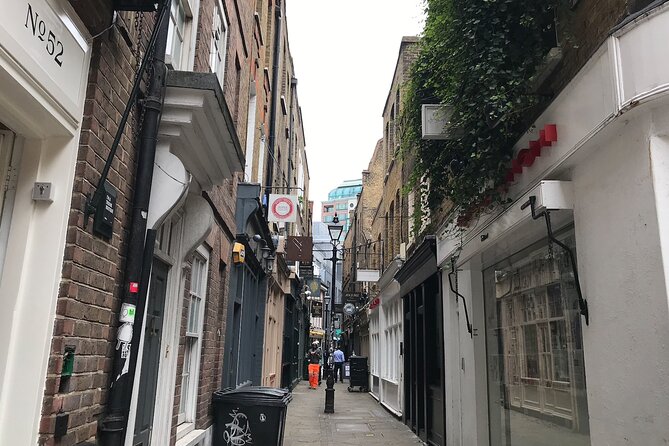
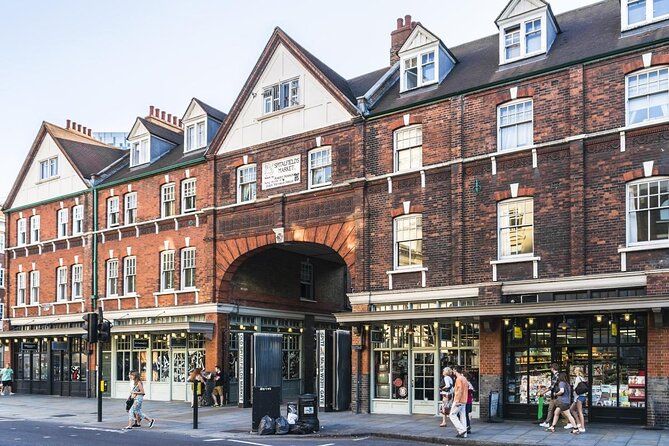
Old Spitalfields Market has served as a community market for centuries. During the walk, Richard connects it with the American writer Jack London, who witnessed severe poverty in Victorian London.
This stop broadens the story beyond the killer. The murders happened in a society where extreme poverty was visible, widespread, and often treated as a nuisance rather than a public crisis. Understanding that setting helps explain the housing conditions, insecurity, and limited choices facing many people in Whitechapel.
You spend about 15 minutes here. The market is also a good orientation point because it links the older district with modern East London. The area has changed greatly, but the route still lets you consider how the streets functioned in the late 19th century.
If you are visiting London for architecture and social history as much as true crime, this section adds real value. If you only want suspect names and murder details, it may feel like a detour.
Spitalfields, Dorset Street, and Mary Kelly
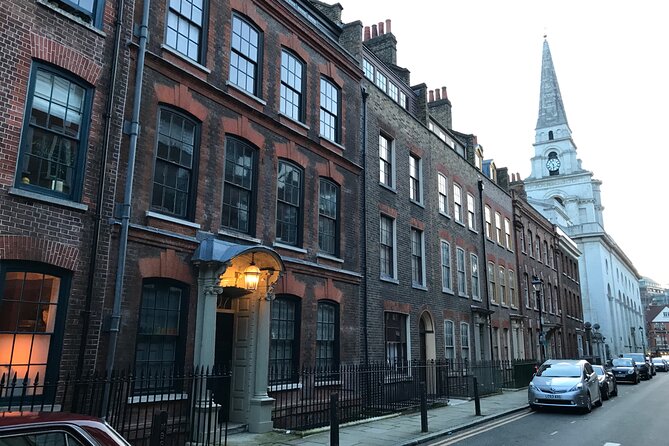
The final part of the route takes you through Spitalfields, including the area once associated with Dorset Street, described at the time as one of London’s worst streets.
Annie Chapman lived in this area until the night she was killed. Mary Kelly also lived and died nearby. Richard treats Kelly as a particularly important part of the story because her circumstances differed from those of the other victims, leading to another possible suspect.
This section is where the tour brings together the locations, victim stories, and theories introduced earlier. You will hear why the women may have been vulnerable, how the district shaped police thinking, and why the identity of the killer remains uncertain.
The walk ends at 126A Middlesex Street, close to Liverpool Street Station. From there you can use the Central, Circle, Hammersmith and City, Metropolitan, and Elizabeth lines. Ending at a major transport hub is practical, especially after an evening walk.
What the small group and technology add
A maximum of 15 people is a real advantage in this part of London. Large Ripper walks can become hard to hear and difficult to keep together, especially around narrow streets and busy junctions. A smaller group also makes it easier to ask Richard about a suspect, a victim, or a detail that interests you.
The radio headset is more than a gimmick. You do not need to crowd around Richard or worry about missing his explanation when the group stretches along the pavement. The iPad images serve a different purpose. They help show older views and illustrate details that no longer exist in the modern streetscape.
The small group does not guarantee a private tour. The maximum is 15, and some evenings may be close to that number. Still, it is considerably more intimate than a mass walk with 30 or 40 people.
The tradeoff is that the format depends heavily on Richard’s delivery. Much of the experience involves listening while standing. Some people will enjoy the focused storytelling. Others may wish for more movement, sitting breaks, or group discussion.
Who will enjoy this walk most
I would choose this tour if you want:
- A serious look at the Jack the Ripper case
- More attention to the victims than to the killer myth
- Discussion of suspects, police work, and geographical clues
- A small group rather than a large evening procession
- Victorian social history alongside true crime
- A guide who presents his own theories and invites questions
- A family-friendly approach that avoids a horror-show tone
I would think twice if your main goal is a scary night out. The tour is not presented as especially creepy, gory, or theatrical. One of its strengths is also its limitation: Richard favors evidence, context, and theory over sensational detail.
The tour is also not ideal for anyone with walking difficulties. The route covers about 1.5 miles, and the total experience lasts around 2 hours and 15 minutes. You should expect to remain on your feet for much of that time.
Is $41.67 a fair price?
At $41.67 per person, this is not the cheapest way to hear the Jack the Ripper story. You can find free material in books, podcasts, and online documentaries. The price pays for a live route through the district, a small group, the radio equipment, Richard’s research, and the chance to ask questions in the places being discussed.
The value is strongest if you care about the setting. You are not simply standing in a room listening to a lecture. You are moving from Whitechapel Road to Buck’s Row, Brick Lane, Spitalfields, and Liverpool Street, while the geography becomes part of the evidence.
There are no included drinks, and the Ten Bells admission is not included. Think of this as a focused walking tour, not an evening package with refreshments or indoor attractions.
Practical details for a smoother evening
The start time is 7 p.m. at 279 Whitechapel Road, opposite the London Hospital. The tour is offered in English and uses a mobile ticket.
Choose shoes you can walk and stand in comfortably. Bring layers or rain protection because the experience takes place outdoors and London weather can change quickly. Since the route ends at Liverpool Street Station, you can plan dinner or onward transport from that area.
The tour is listed for people with a moderate level of physical fitness. If you need regular seating, this may not be the right choice. The walk is not described as suitable for people with walking difficulties.
Booking confirmation arrives at the time of booking. The activity is non-refundable and cannot be changed after booking, so select your date carefully. Information supplied for the tour indicates Thursday and Friday availability, but check the date offered when you reserve.
Should you book the Jack the Ripper Small Group Tour?
Book it if you want the case treated as history and criminal investigation rather than as a ghost story. Richard Walker’s strongest qualities are his preparation, clear enthusiasm, use of visual material, and willingness to challenge familiar assumptions. The focus on Emma Smith, Polly Nichols, Annie Chapman, Mary Kelly, and the other victims gives the evening more substance than a simple parade of gruesome facts.
Skip it if you want actors, jump scares, graphic storytelling, or a fast-moving route with frequent stops. Also skip it if standing for long stretches is difficult.
For true-crime fans, history lovers, and curious first-time visitors, this is a well-focused way to see East London after dark. The small group, headsets, and ending at Liverpool Street Station make it practical. Just arrive expecting an informed walking talk, not a horror attraction.
FAQ
Where does the Jack the Ripper tour begin?
The tour begins at 279 Whitechapel Road, London E1 1BY, opposite the London Hospital.
What time does the tour start?
The scheduled start time is 7 p.m.
Where does the tour end?
The walk ends at 126A Middlesex Street, near Liverpool Street Station.
How long does the experience last?
The tour lasts approximately 2 hours and 15 minutes.
How far do you walk?
The route covers about 1.5 miles, or 2.5 kilometers.
How many people can join the tour?
The maximum group size is 15 people.
Is the tour offered in English?
Yes. The tour is offered in English.
Are food or drinks included?
No. Coffee and tea are not included, and admission to the Ten Bells pub is also not included.
What equipment is provided?
You receive a radio microphone and earphones, and Richard uses an iPad to display images.
Is the tour suitable for people with walking difficulties?
No. The tour information says it is not suitable for people with walking difficulties and recommends a moderate level of physical fitness.
Just added around London
- London: “Queen” Highlights Walking Tour★ 4.3 · 48 reviews
- Couple’s photo: Romantic photoshoot in London★ 4.8 · 22 reviews
- London: Private Tour with Locals – Highlights & Hidden Gems★ 5.0 · 8 reviews
- Luxury Private Tour in London with Lunch★ 5.0 · 7 reviews
- London 1- or 2-Hour Professional Photo Shoot★ 4.9 · 6 reviews
- London: Private Black Cab Night Tour with Hotel Pick Up★ 5.0 · 11 reviews
- London: Christmas Lights Tour – With Christmas Music★ 4.8 · 9 reviews
- London: Private Pub Tour★ 4.5 · 4 reviews
Jack the Ripper Tours, compared.
London Jack the Ripper Guided Tour with Ripper-Vision
Read our review →
German Language : Original Jack the Ripper Tour
Read our review →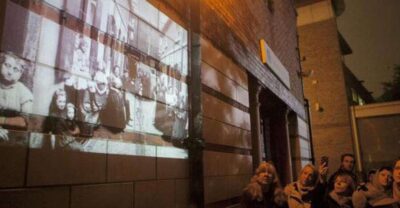
Jack the Ripper Walking Tour – Ripper Vision Tours
Read our review →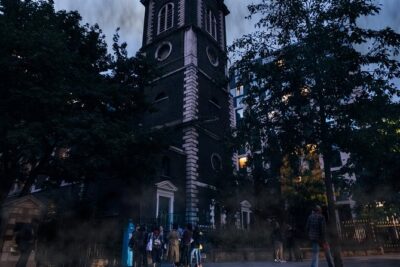
Ultimate Jack the Ripper : Guided Tour of London
Read our review →
Browse the lists this tour appears in