
Reviewed · JACK THE RIPPER TOURS
Jack the Ripper Walking Tour with Expert Ripperologist
Jack the Ripper’s crimes are best understood on foot, where the old City boundary, narrow lanes, pubs, markets, and former lodging-house districts make the story more immediate. This 2.5-hour Whitechapel walk links the murder sites with the poverty and police confusion of 1888, rather than treating the case as a collection of spooky anecdotes.
I like the costumed guides and the clear images shown on a large backlit tablet. I also like the attention given to the victims and the lives around them, not just the mystery of the killer. The main drawback is the group size, which can reach 30 people, and the walk offers very few toilet stops.
Key points to know before you go

- You visit the main murder sites: Mitre Square, Hanbury Street, Buck’s Row, and the area linked with Mary Kelly.
- The old City boundary matters: The route explains why two separate police forces complicated the investigation.
- Period images add useful context: Your guide uses a 14-inch backlit tablet to show victims, sites, and the streets as they appeared in 1888.
- The victims remain central: Elizabeth Stride, Catherine Eddowes, Martha Tabram, Mary Ann Nichols, Annie Chapman, and Mary Kelly each receive individual attention.
- Expect a serious walking tour: You need to walk and stand for more than two hours, with limited toilet access.
- The price is reasonable: At $23.61 per person, this is a low-cost way to get a guided introduction to one of London’s most notorious stories.
Why this Whitechapel walk feels different from a standard ghost tour
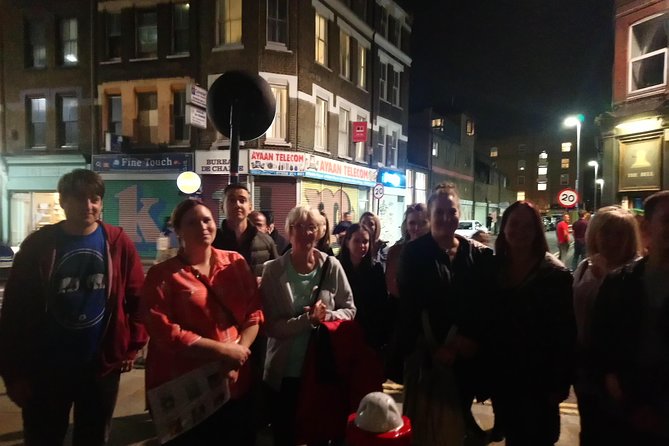
This is not simply a nighttime scare walk built around fog, alleys, and theatrical whispers. The focus is the real setting of the murders, the women who were killed, and the conditions that shaped Whitechapel in 1888.
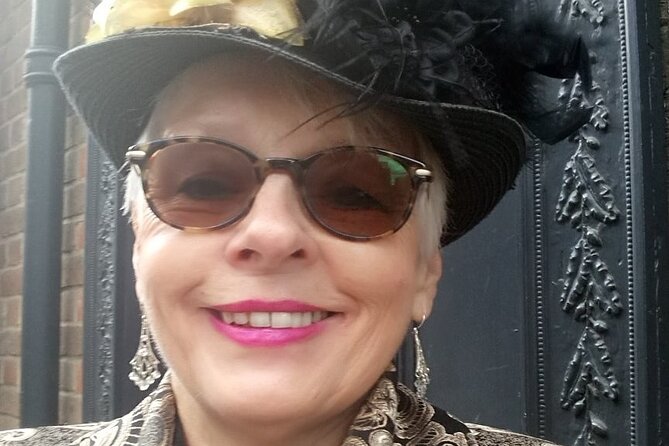
Your guide adds some theater through period clothing, but the stronger feature is the research and visual material. Lindsay, Jenny, and Paul are among the guides named in the feedback, and Lindsay receives particular praise for combining historical detail with a respectful treatment of the victims. The tone can be witty at moments, but it is not just entertainment.
The backlit tablet is especially useful. Old photographs and images of the murder sites can be hard to see on a small phone, particularly in a crowded street. A larger 14-inch screen lets the guide show you what the area looked like before modern roads and buildings altered the view.
You should still know what kind of subject you are booking. This is a murder tour, and the discussion includes mutilation, death scenes, and photographs connected with the case. It is aimed at people aged 15 and above. Anyone aged 16 or 17 must be accompanied by an adult.
More Jack the Ripper Tours:
- London: The Original Jack the Ripper Walking Tour
★ 4.7 · 7,833 reviews - London Jack the Ripper Guided Tour with Ripper-Vision
★ 4.5 · 4,840 reviews - London: Jack the Ripper Small Group Tour
★ 4.7 · 3,159 reviews
Starting at St Botolph’s Church and Aldgate Square
Meet outside St Botolph’s Church at Aldgate Station. The church is connected with the old nickname the Prostitutes Church, because women once solicited on the island where it stood. This gives the guide an immediate way to explain the social setting rather than opening with a list of dates and names.
The first stop is brief, about five minutes. You then move to Aldgate Square, where the tour sets out what life was like in overcrowded Whitechapel. The discussion covers poverty, crime, poor housing, and the struggle to survive on very little money.
This background is important because it stops the murders from becoming a detached puzzle. You begin to see why the streets held so many lodging houses, drinkers, casual laborers, and people living in unstable conditions. It also helps explain why witnesses, police officers, and local residents had such difficulty reconstructing events.
You will not spend long at either opening stop. That is a benefit if you want the tour to reach the key sites quickly, though anyone hoping for an extended architectural tour of Aldgate will find this section short.
Mitre Square and the double event
At Mitre Street and Mitre Square, the story turns to Elizabeth Stride, known as Long Liz. She was killed on the night often called the double event. The guide then moves only a short distance to discuss Catherine Eddowes, murdered around 45 minutes later.
The timing is one of the case’s most gripping details. Two killings in such a short period created panic and placed enormous pressure on the police. Standing near the locations helps you understand how close the scenes were and why investigators considered them part of the same night.
This is one of the strongest parts of the route for anyone who already knows the basic story. You are not just hearing that two women died in the same night. You are following the movement between places and considering how quickly the killer may have acted.
The location is also useful for understanding jurisdiction. The City of London and the Metropolitan Police area met nearby, and the difference between the two police forces becomes a repeated theme during the walk. That division mattered when evidence and suspects had to be tracked across boundaries.
Petticoat Lane and the problem of two police forces
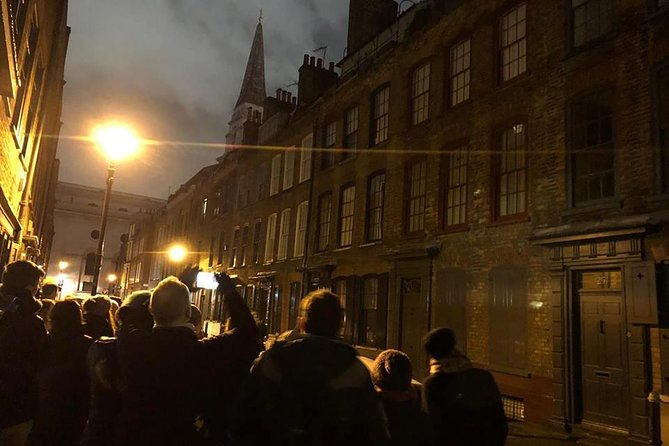
The route continues toward Petticoat Lane Market, now called Middlesex Street. This is described as the boundary between the City of London and the Metropolitan area.
The market itself is not presented as a major stop for shopping. Instead, it helps explain the confusing police structure surrounding the murders. Different forces were responsible for different streets, and the boundary cut through the area where the crimes and clues unfolded.
I find this kind of detail more useful than another round of speculation about the killer’s identity. It explains a practical problem: information, officers, and authority did not always move easily from one part of Whitechapel to another.
The stop is short, so you will not need time to browse the market during the main tour. If the market is open and you want to return later, the route gives you a useful orientation for doing so.
More London Walking Tours:
- Magical London: Harry Potter Guided Walking Tour
★ 4.7 · 22,044 reviews - Tour for Muggles The Ultimate Harry Potter Walking Tour in London
★ 5.0 · 4,684 reviews - London Jack The Ripper Guided Walking Tour
★ 5.0 · 3,131 reviews - London: Harry Potter Movies Walking Tour (Kids Go Free)
★ 4.7 · 3,071 reviews
Goulston Street and the only clue
At Goulston Street, you stop at the doorway associated with the only clue found along the police route that night. The guide connects the location with the officers who were following the trail after the murders.
This is a key moment because it shifts the story from the victims and streets to the evidence. The clue itself has long been part of the Ripper case, and its location raises questions about what the police saw, what they recorded, and how much they could prove.
The stop lasts about ten minutes. The tablet images help here, since the modern street does not look exactly as it did in 1888. Seeing the old setting alongside the present one gives you a better sense of how much has changed.
Gunthorpe Street and Martha Tabram
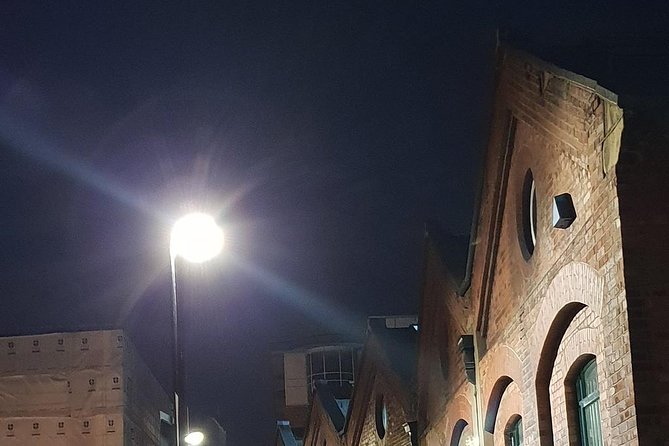
From Wentworth Street, you view Gunthorpe Street toward the spot where Martha Tabram was found murdered in George Yard Buildings on August 7, 1888. She is now considered by some Ripper researchers to be the most likely first victim.
The wording matters. Martha Tabram is not treated as an unquestioned member of the canonical group. Her possible connection to the killer remains part of the wider case, and the guide uses her story to show where the accepted sequence becomes uncertain.
This is a good stop for people who want more than the familiar five victims. It broadens the story and shows that the case is not tidy. You will encounter competing ideas and unanswered questions, not a neat detective story with every fact settled.
Thrawl Street, Brick Lane, and Mary Ann Nichols
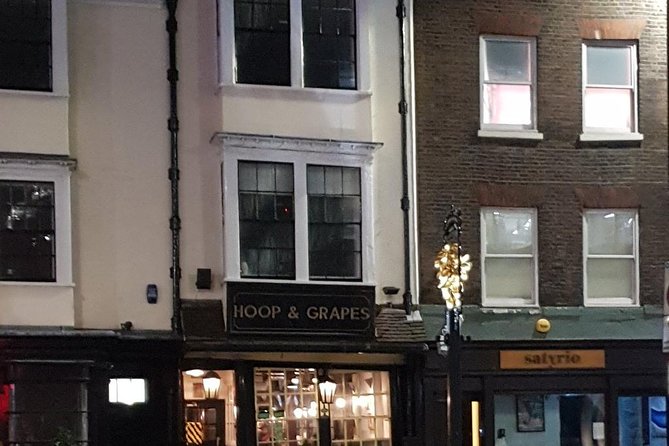
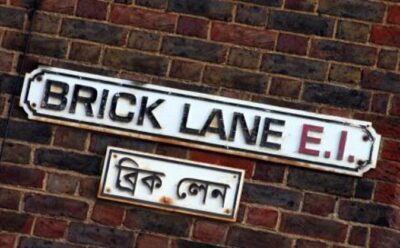
The next stop is opposite the Frying Pan pub, at the corner of Thrawl Street and Brick Lane. Here you hear about Mary Ann Nichols, who had her last drink at the pub before making her way down Whitechapel Road. She was later killed in Buck’s Row behind Whitechapel Station.
This section connects a final known part of a victim’s evening with the place where she was found. It also brings the daily life of the neighborhood into the story. A pub, a busy street, and a route home become part of the final hours of a woman whose name is often reduced to a line in a crime timeline.
You continue through Brick Lane toward Hanbury Street. Brick Lane is a busy modern street, so you should expect present-day traffic, shops, and pedestrians around you. The tour does not recreate 1888 physically, but the guide’s narration and images help bridge the gap.
Hanbury Street and Annie Chapman
In Hanbury Street, the group turns toward the backyard of 29 Hanbury Street, where Annie Chapman was murdered. The stop lasts about twelve minutes, giving the guide time to describe the site and the circumstances surrounding her death.
This is one of the more important locations on the walk because the setting shows how close private yards and public streets could be in the old neighborhood. The case depended heavily on small details, uncertain witness accounts, and the movement of people through spaces that no longer look exactly the same.
The route is not a museum visit. You are standing on public streets, so the guide must explain rather than present original interiors or preserved crime scenes. The value comes from location, context, and visual comparison.
Wilkes Street, Puma Court, and the Ripper letters
Wilkes Street is described as one of the sections that has changed least since the 1800s. You turn into the street and continue toward Puma Court, where the guide discusses the Dear Boss letter.
This is a welcome change of pace after several murder sites. The letter became one of the most famous pieces of evidence linked with Jack the Ripper, but the question of its authenticity and meaning remains part of the wider debate. Your guide uses the location to explain how the public image of the killer developed alongside the actual police investigation.
The older-looking street also gives the best sense of the physical scale of the neighborhood. You can see why a walking tour works better here than a lecture in a hotel room. The route links the spaces together, and each turn adds another piece to the story.
The Ten Bells and Itchy Park
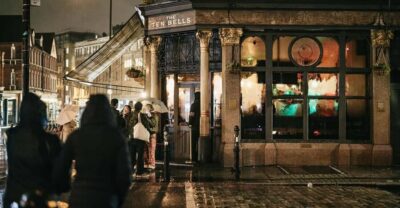
The walk pauses opposite the Ten Bells, a pub associated with Mary Kelly. You also view Christchurch Graveyard, known as Itchy Park, where homeless people would sleep during the day.
The Ten Bells is a familiar name in Ripper history, but the guide keeps it tied to the lives of the women and the neighborhood rather than treating it as a themed attraction. You stop outside, so do not expect a pub visit to be part of the tour.
Itchy Park adds another layer to the social history. The cemetery was not only a religious site. It was also a place where people without shelter tried to rest during daylight hours. Details like this help explain the poverty and insecurity that shaped the area.
The stop is short, around five minutes, but it is an effective reminder that Whitechapel was a working district full of people living close to the edge.
Old Spitalfields Market and the letter to George Lusk
Near Old Spitalfields Market, the route pauses at the entrance of the London Fruit and Wool Exchange. Here you hear about the letter sent to George Lusk, head of the Whitechapel Vigilance Group.
The vigilance group formed because local residents felt that the police were not doing enough to protect the area. This part of the story shows how fear spread beyond the individual crimes. Local people organized, searched the streets, and tried to gather information themselves.
The market and exchange also help you picture the commercial side of the district. Whitechapel was not an isolated village. It was tied to trade, transport, work, lodging, pubs, and crowded public streets. That setting is essential to understanding how many people could be nearby while reliable evidence remained scarce.
The final stop and Mary Kelly
The tour ends in the square behind the London Fruit and Wool Exchange, with the murder of Mary Kelly, identified as the final victim in the standard Ripper sequence. She was killed on November 9, 1888.
The ending brings the group back to the human cost of the case. Mary Kelly is often the subject of the most sensational accounts, but the tour’s broader approach keeps attention on her life and the circumstances that placed her at risk.
From the end point at 66 to 68 Bell Lane, your guide directs you toward Liverpool Street Station, about a five-minute walk away. This makes the finish practical if you need to continue sightseeing or catch a train. The tour begins at Aldgate Station, so public transport is convenient at both ends.
Price, group size, and what the walk requires
At $23.61 per person, this is a fair price for a two-and-a-half-hour guided walk in central London. You are paying for a specialist subject, a route that covers many locations, and a guide who brings visual material rather than simply reciting dates.
The value is strongest if you want structure. You could walk through Whitechapel on your own, but it would be hard to connect the police boundaries, murder sites, letters, victims, and local conditions in the right order. The guide also saves you from constantly checking a map.
The group can reach 30 people. That is not an intimate walk, and one person specifically found the group larger than ideal. The guide uses a microphone, which helps, but you may still need to stay close to see the tablet clearly and hear every explanation.
The route requires a moderate level of fitness because you will walk and stand for more than two hours. Toilet access is very limited, so plan accordingly before meeting at Aldgate Station. Rain does not stop the tour, and suitable shoes and weather protection will make the experience easier.
Free cancellation is available up to 24 hours before the start time. Changes or cancellations made inside that period are not refunded, and the tour requires a minimum number of participants to operate.
Who will get the most from this tour
I would choose this walk if you enjoy crime history, old city streets, and the social conditions behind famous events. It also suits anyone who knows only the popular version of Jack the Ripper and wants a more grounded account of the period.
The tour is a good fit for you if:
- You want the victims and local residents treated as people, not props.
- You like walking tours that connect several sites in a clear sequence.
- You value period photographs and visual comparisons.
- You are comfortable with grim subject matter.
- You can walk and stand for at least two hours.
- You do not need a small private group.
It may not suit you if you want a gentle ghost walk, a short evening activity, or a detailed investigation focused mainly on suspects. The guide does discuss possible suspects, particularly toward the end, but much of the time goes to the victims, the neighborhood, and the police response.
Should you book the Jack the Ripper Walking Tour?
Book it if you want a serious, location-based look at the 1888 murders for a modest price. The strongest reasons are the route through the real Whitechapel streets, the tablet images, the explanation of the City and Metropolitan police boundary, and the respectful focus on women whose stories are often pushed aside.
Choose a private tour instead if you need individual attention or want to set the balance between victims, suspects, and police evidence. For most people who are comfortable in a group of up to 30, this public tour offers a well-organized and atmospheric way to understand one of London’s darkest stories.
FAQ
Where does the Jack the Ripper walking tour start?
The tour starts at Aldgate Station on Aldgate High Street, London EC3N 1AH.
Where does the tour finish?
It ends at 66 to 68 Bell Lane, in the square inside the London Fruit and Wool Exchange on Brushfield Street. Liverpool Street Station is about a five-minute walk away, and your guide will direct you.
How long does the tour last?
The walk lasts approximately two hours and 30 minutes.
What language is the tour offered in?
The tour is offered in English.
How much does the tour cost?
The listed price is $23.61 per person.
Is the tour suitable for children?
Children under 15 are not allowed. Anyone aged 16 or 17 must be accompanied by an adult.
How large can the group be?
The maximum group size is 30 people. The guide uses a microphone to help the group hear the commentary.
Are photographs included?
Yes. The guide shows photographs of the victims, murder sites, and local area on a 14-inch backlit tablet.
Can I cancel for a full refund?
Yes, if you cancel at least 24 hours before the experience start time. Cancellations made less than 24 hours beforehand are not refunded.
Just added around London
- London: “Queen” Highlights Walking Tour★ 4.3 · 48 reviews
- Couple’s photo: Romantic photoshoot in London★ 4.8 · 22 reviews
- London: Private Tour with Locals – Highlights & Hidden Gems★ 5.0 · 8 reviews
- Luxury Private Tour in London with Lunch★ 5.0 · 7 reviews
- London 1- or 2-Hour Professional Photo Shoot★ 4.9 · 6 reviews
- London: Private Black Cab Night Tour with Hotel Pick Up★ 5.0 · 11 reviews
- London: Christmas Lights Tour – With Christmas Music★ 4.8 · 9 reviews
- London: Private Pub Tour★ 4.5 · 4 reviews
Jack the Ripper Tours, compared.
London Jack the Ripper Guided Tour with Ripper-Vision
Read our review →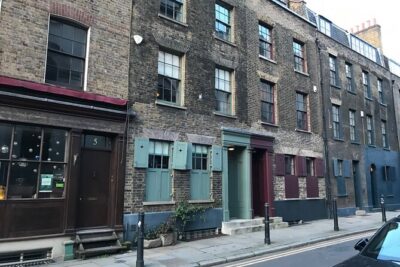
German Language : Original Jack the Ripper Tour
Read our review →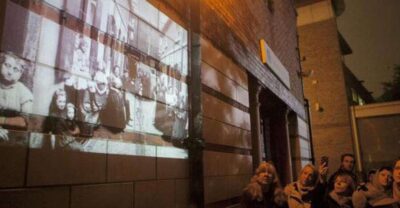
Jack the Ripper Walking Tour – Ripper Vision Tours
Read our review →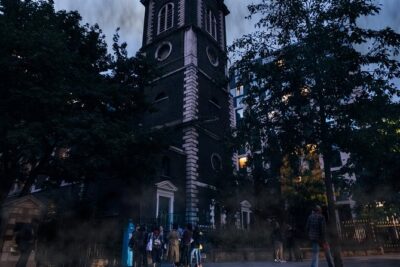
Ultimate Jack the Ripper : Guided Tour of London
Read our review →
Browse the lists this tour appears in